TikTok has become the breakout media platform during this year's Olympic Games, boosted by its heavy use by young athletes.
Why it matters: Unlike the social media apps that came before it, TikTok's algorithm is built so that almost any person can go viral overnight. No other medium has ever given athletes, particularly ones that weren't famous before, that same level of instant exposure.
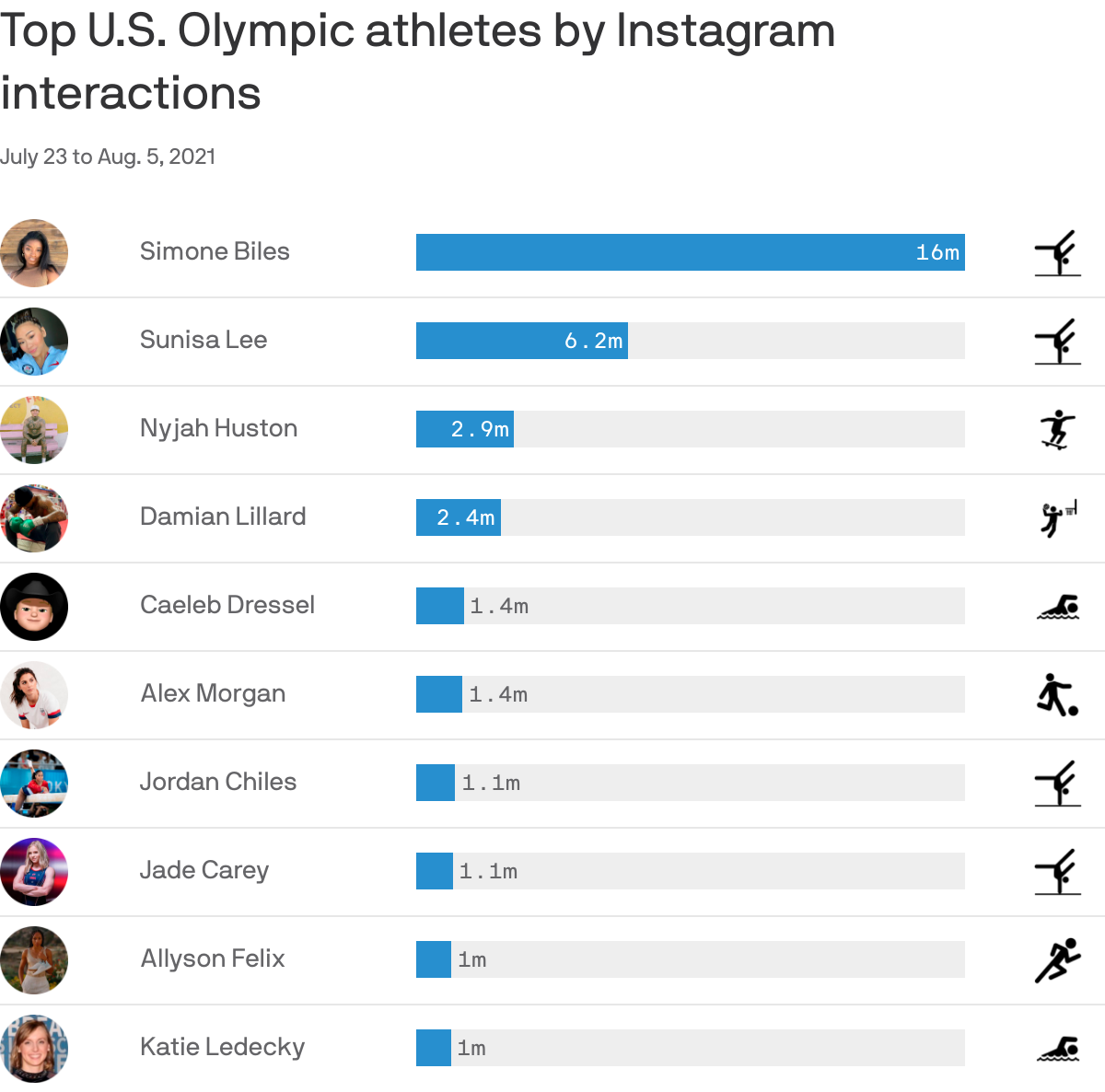
Simone Biles was a singular presence on social media during the Olympics, with her Instagram account generating more interactions than the next six Americans combined, according to data from CrowdTangle.
Why it matters: Already a premier name on the U.S. Olympic roster, Biles' struggles in Tokyo shifted the focus from athletics to human interest as she dealt with her mental and emotional health.
Technology may not have made up for the impact of COVID-19, but its presence was felt at the Tokyo Games, from advances in timing to giant displays that brought the sailing action from sea to shore.
Even the venerable Olympic pin got a digital upgrade, with sponsor Alibaba distributing an electronic button, complete with a small display and pedometer built in.
TOKYO — The Tokyo Olympics have shown that the global sporting event is increasingly tied to events beyond athletics — a reality that will be inescapable in future Games.
Why it matters: From the handling of COVID to protest rules and shaky economics, there are lessons for Olympicsorganizers in Beijing, Paris and beyond, as well as things to ponder for those considering hosting or sponsoring upcoming Olympics.
The Winter Games are just six months away, kicking off in Beijing on Feb. 4.
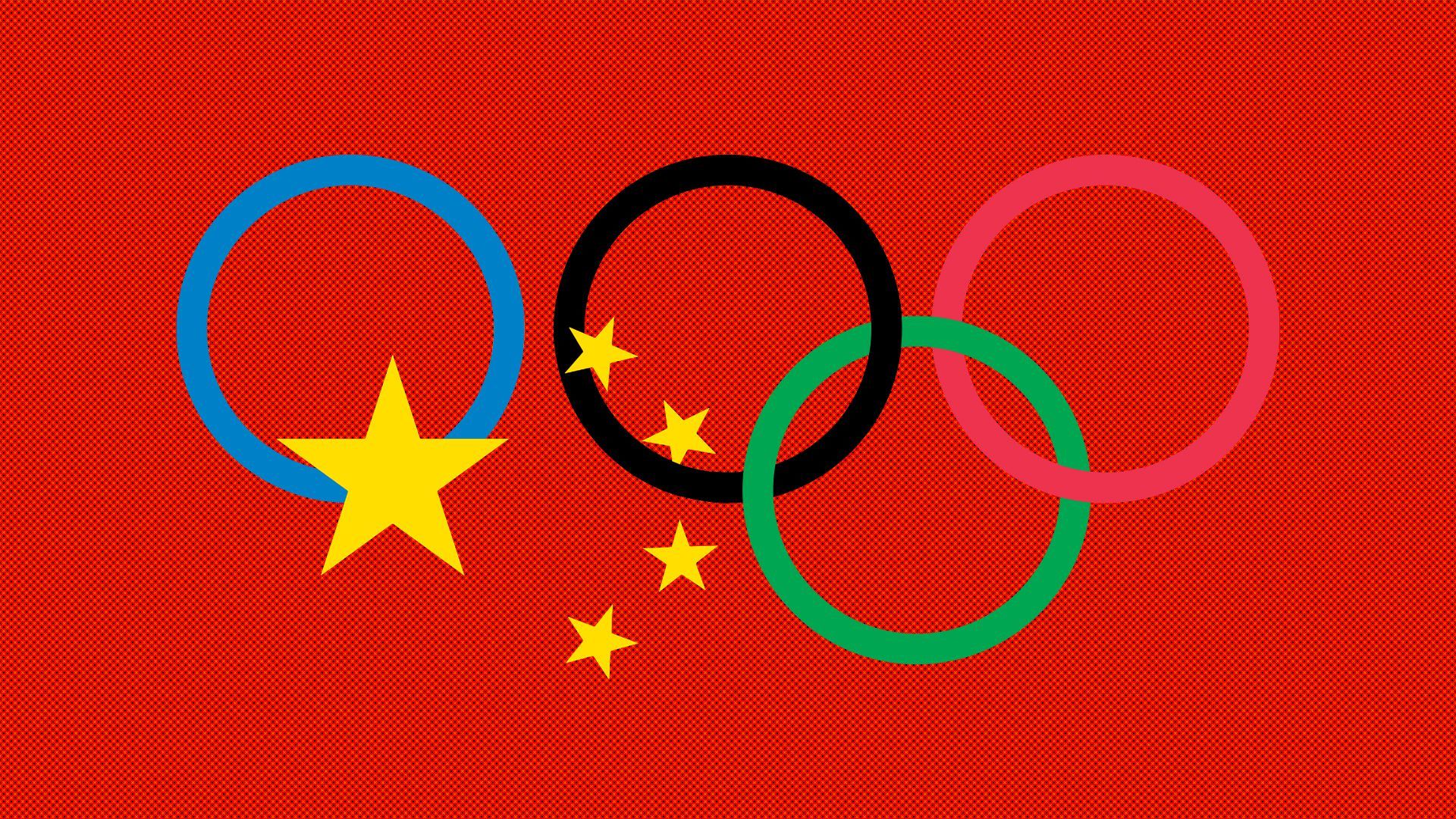
Why it matters: Beijing will become the first city that has hosted both the Summer and Winter Olympics, and it will do so when the virus that originated in China will still be wreaking havoc on the world.
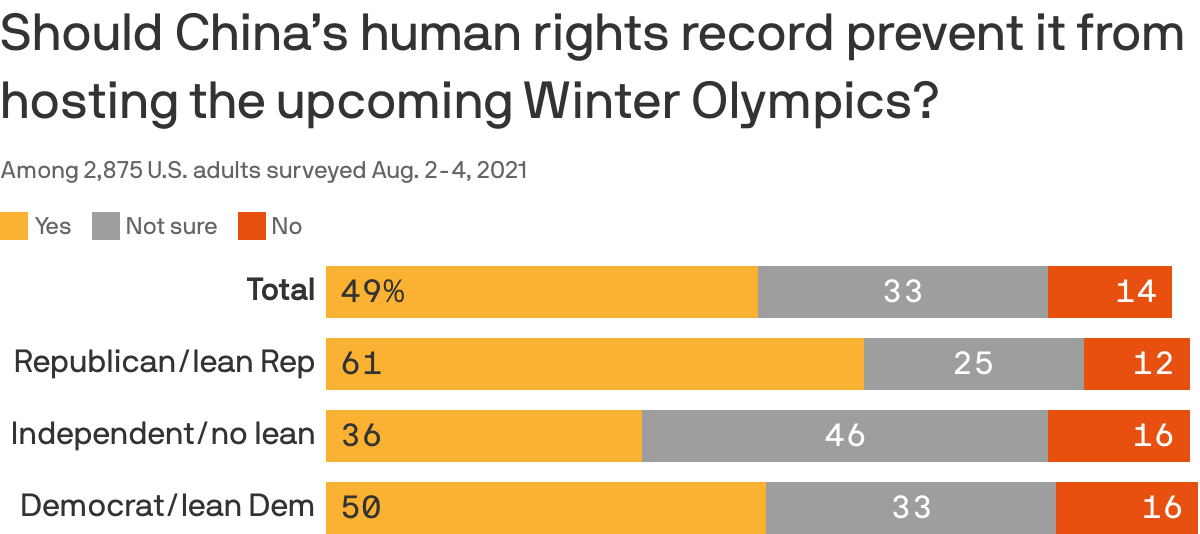
Nearly half of Americans say China shouldn't be allowed to host the Winter Games in 2022 because of its record of human rights abuses, a new Axios/Momentive poll finds.
Why it matters: These results suggest that, in addition to facing public health challenges over the continued spread of COVID, the Beijing Games will be politically divisive for a large segment of the American audience.
The Tokyo Games were a wake-up call for the mental health of Olympic athletes and a groundbreaking event for the LGBTQ community — but a big loss for NBC and anyone who wanted Russia to actually get punished for the doping scandal.
Welcome to our Axios AM Deep Dive wrapping up the Tokyo Olympics detailing what we learned and looking ahead to next year's Winter Games, led by Ina Fried, who's on the ground in Tokyo, and Kendall Baker, who's been covering the Games every day in his Axios Sports newsletter.
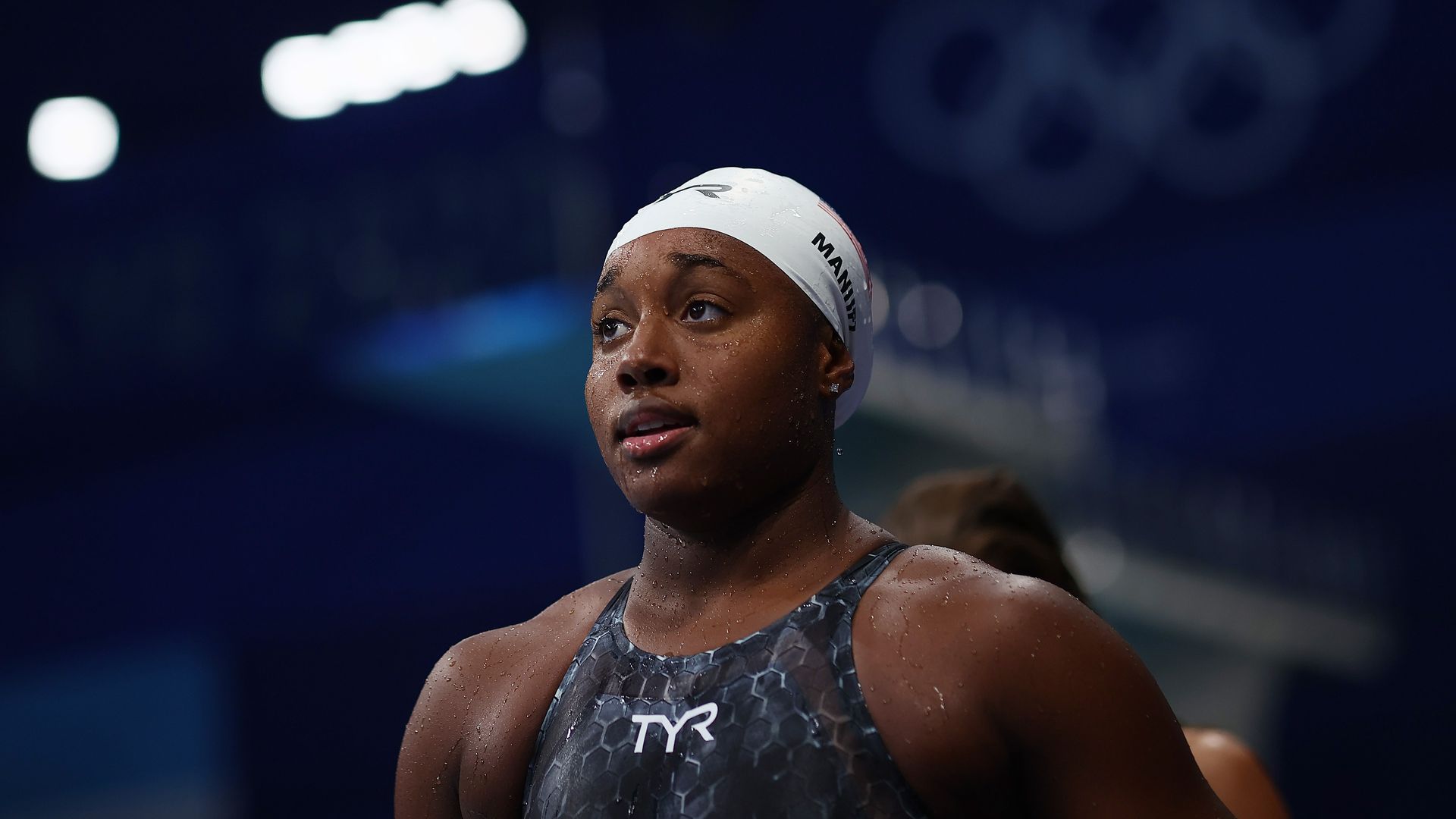
Olympic gold medalist Simone Manuel suggested this week that journalists should stop the practice of interviewing athletes after "disappointing" performances.
The big picture: Athletes have stepped up to advocate for their own mental health at this year's Games and beyond.
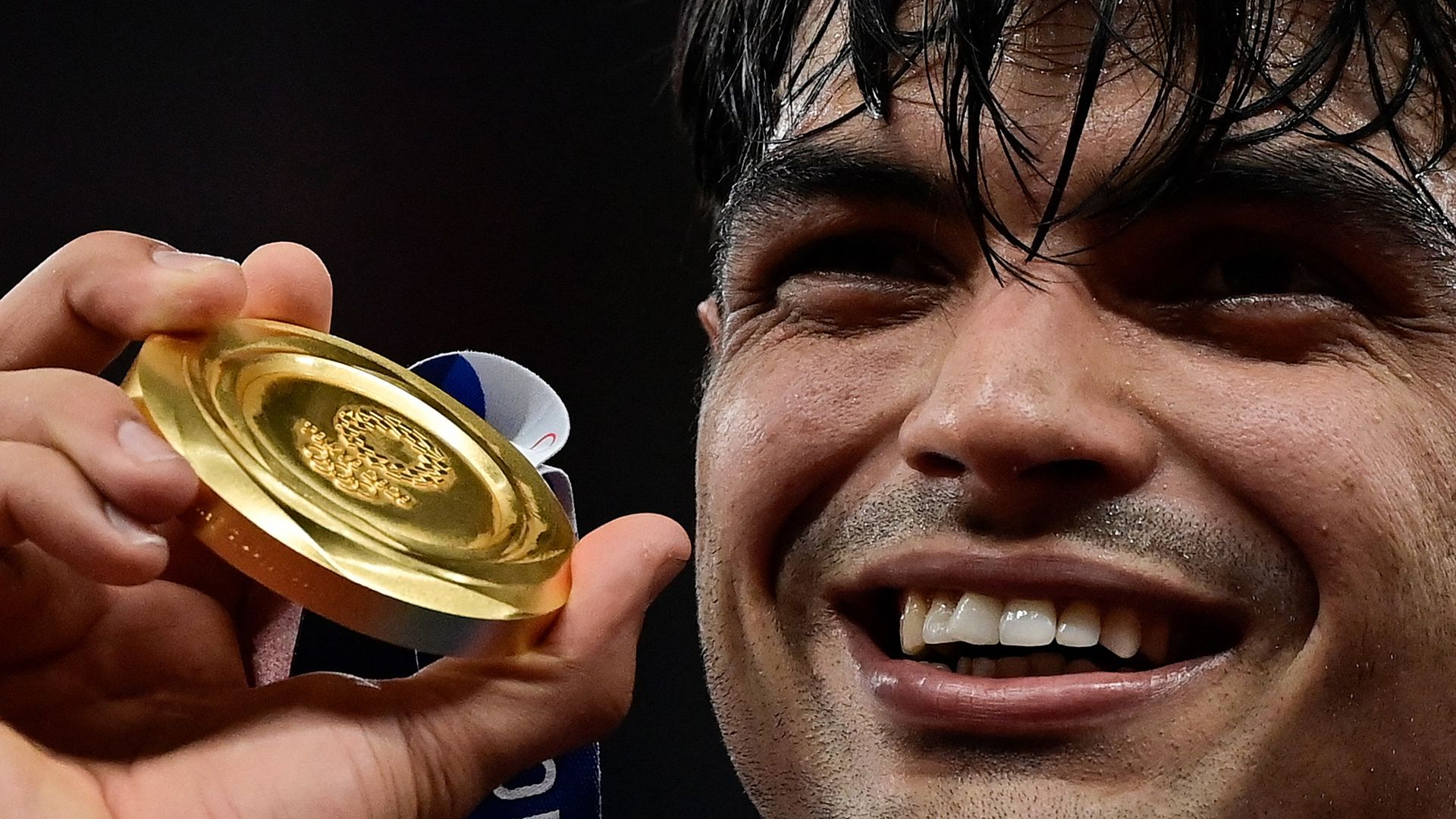
Neeraj Chopra won India's first gold medal in Olympic track and field on Saturday with a javelin throw of 87.58 meters to finish first, AP reports.
The big picture: India's previous track and field medals included two silvers that Norman Pritchard won in the 200 meters and the 200-meter hurdles at the 1900 Paris Games.
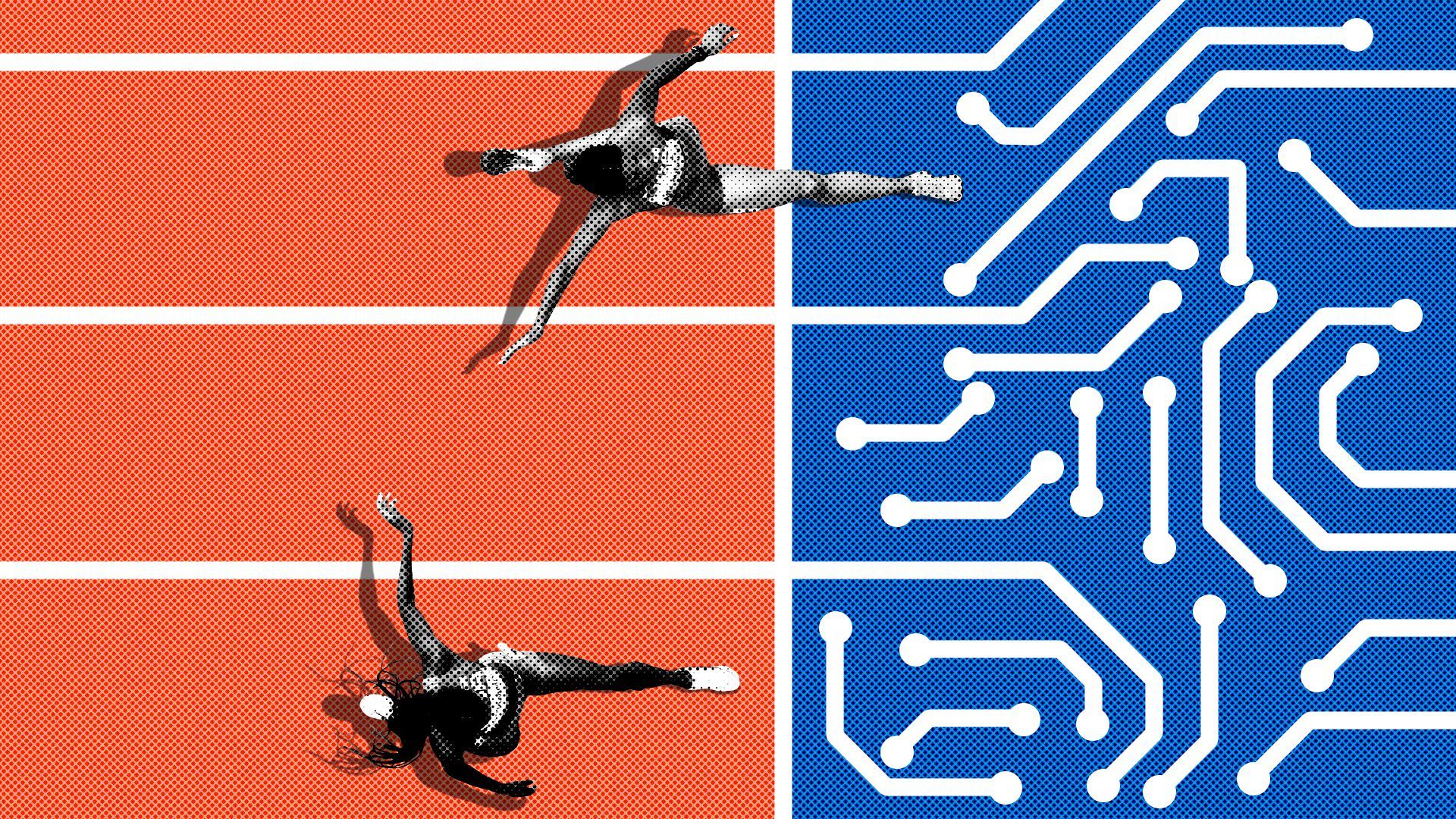
The Olympics are designed to showcase the frontiers of human athletic achievement, but technology has always played a role in helping athletes push the limits.
Why it matters: With some data suggesting that pure human athletic ability in many Olympic events may be plateauing, technology will become even more important to helping the best become better.
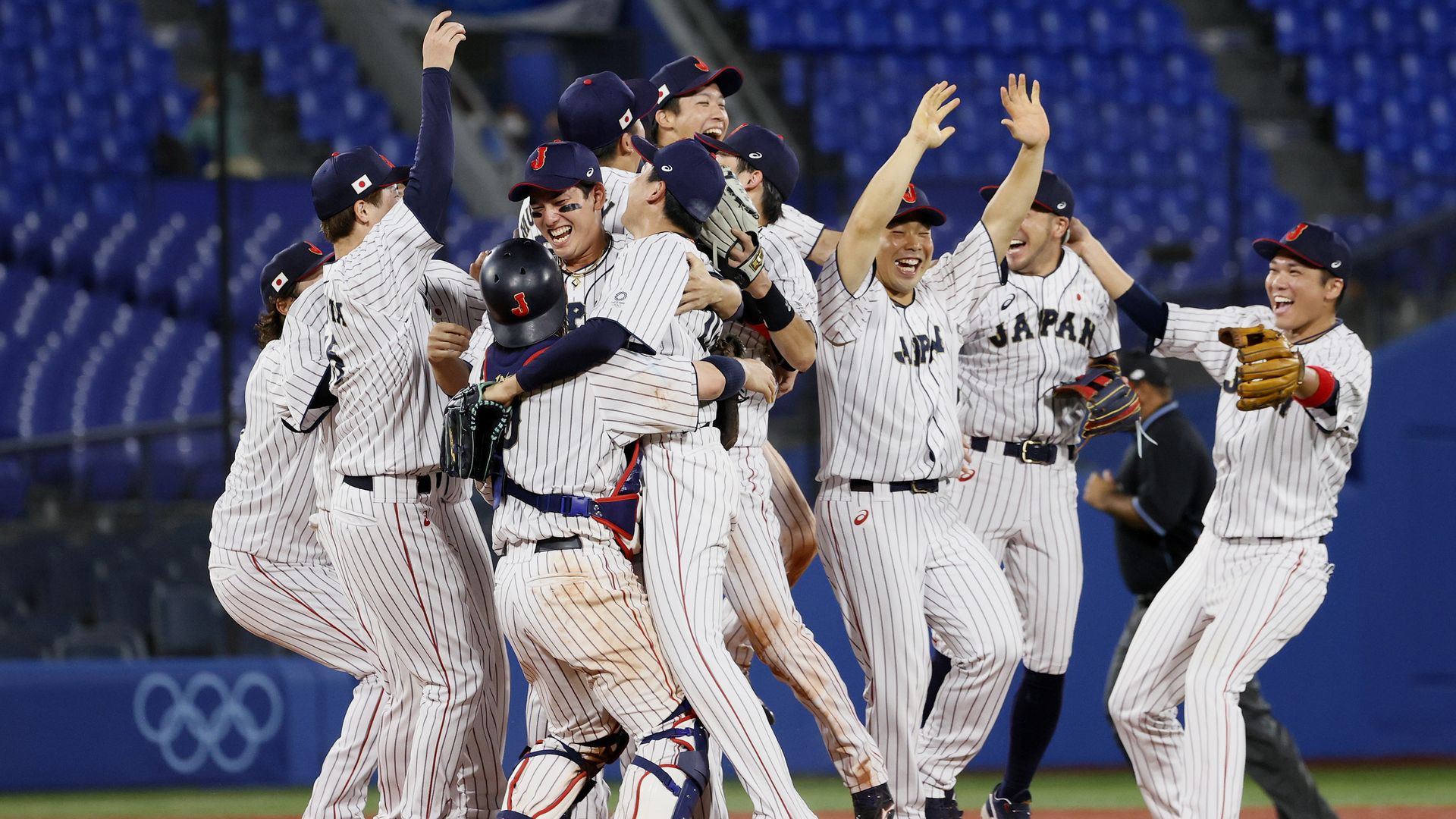
Japan outplayed Team USA on Saturday evening, winning 2-0 in the baseball final at the Tokyo Olympics.
The big picture: This is Japan's first-ever Olympic gold medal in baseball — the country's most popular sport. The country earned a silver in 1996, and received the bronze in 1992 and 2004.
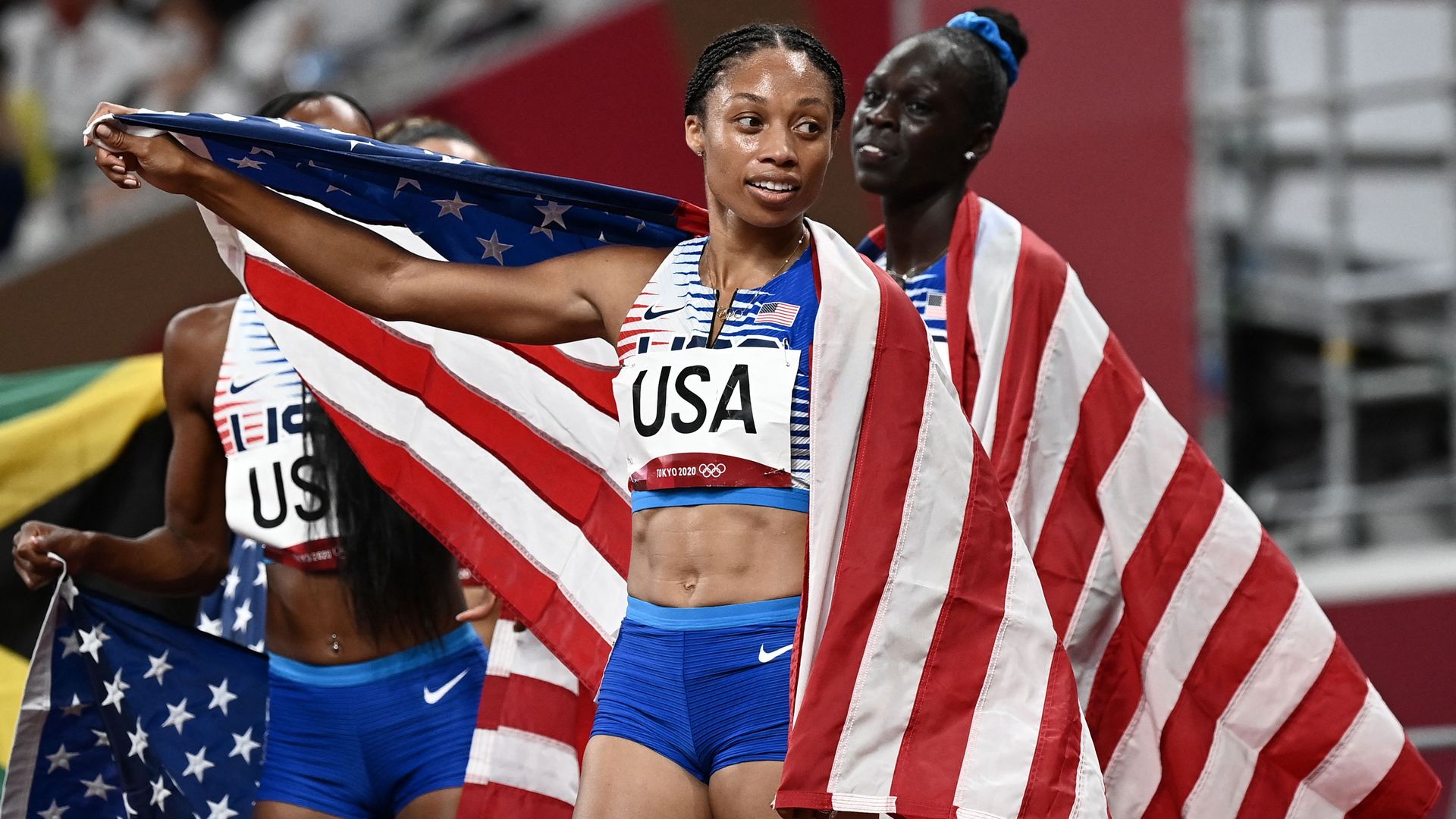
Team USA sprinter Allyson Felix won her 11th Olympic medal on Saturday night, making her the most decorated American Olympic athlete in track and field.
Why it matters: The win for Team USA means that Felix has topped Carl Lewis for most medals in U.S. track and field history.
The withdrawal of Greece's entire 12-woman artistic swimming team was just one high-profile example of athletes who had their experience at the Games cut short due to the virus.
The big picture: The worst fears may not have been realized, but COVID still had an impact on the Olympics despite the protocols — and Tokyo had an even bigger spike of virus cases outside the Games.
A majority of Americans — especially women and Black Americans — support gymnast Simone Biles in her decision to withdraw from some of the Tokyo competitions to protect her mental health, our latest Axios/Momentive Olympics poll found.
The big picture: Biles unexpectedly sparked awareness around Olympians' struggles with media coverage and intense pressure to perform and win. Survey respondents by a nearly two-to-one margin said they believe Olympic athletes’ mental health issues are not taken seriously.
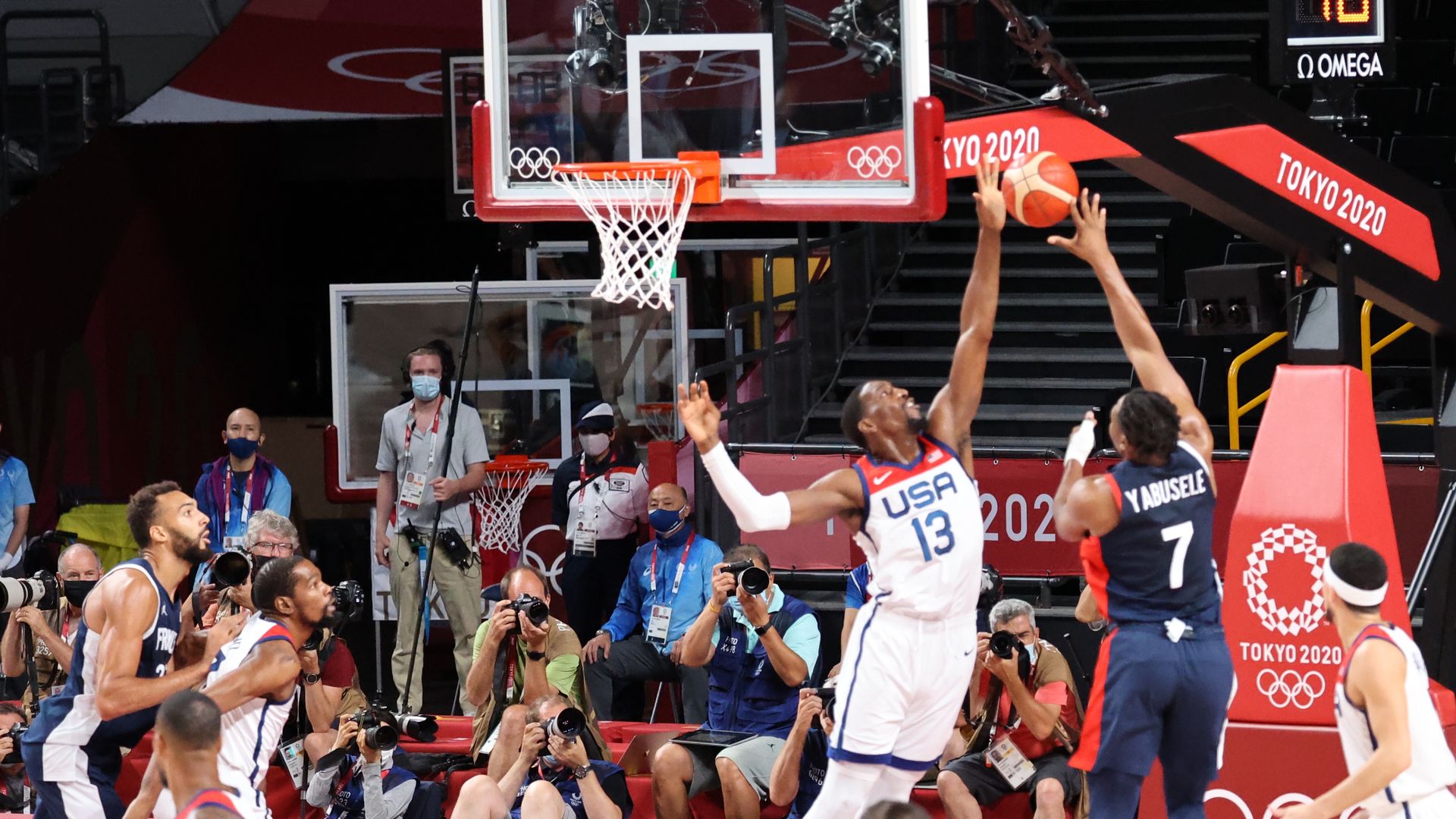
The U.S. men's basketball team won its fourth consecutive Olympic gold medal in Tokyo on Saturday, beating France 87-82.
The big picture: The U.S. men's basketball team is the most dominant team in Olympic history, medaling in every Olympics it has competed in, with 16 golds, a silver and two bronzes.