Thursday's science stories


Trump: Anyone saying "AI" is "THE ENEMY!" The White House uses it
President Trump on Thursday called anyone who uses "Artificial Intelligence" instead of "Super Intelligence" "THE ENEMY!" — even as the White House continues using the term "AI."
Why it matters: Trump's push to rebrand AI as "super intelligence" clashes with established terminology in the technology industry.

Axios Live: Americans don't have to accept AI risk, policymaker says
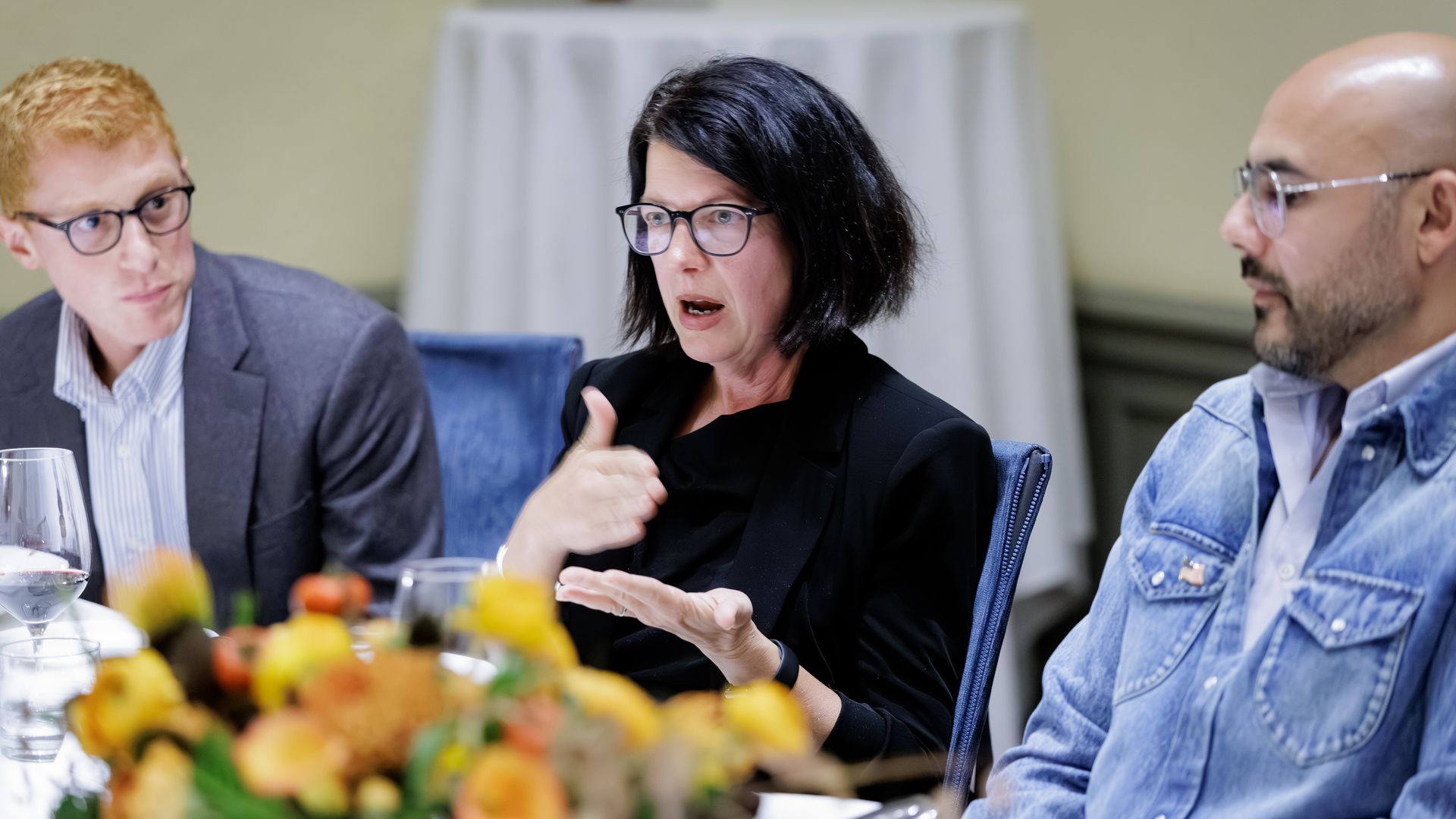
SAN FRANCISCO — Balancing AI innovation with safety requires stronger oversight, targeted development and greater public education about the technology, business and policy leaders said at an Axios roundtable event.
Why it matters: As AI becomes more integrated into Americans' daily lives, businesses and government operations face growing pressure to address potential harms without stifling innovation.
Axios' Nathan Bomey moderated the Oct. 6 roundtable discussion. The event was sponsored by IBM.
5 big takeaways from the conversation:
- Accepting an intolerable level of AI risk is "a false choice," said Rep. Sam Liccardo (D-Calif.), who warned that an expectation of "tolerance for bad things" could justify regulatory inaction.
- Americans aren't sufficiently prepared for how AI is going to influence their lives, said aiEDU founder and CEO Alex Kotran. "If we don't figure that out … we're still going to have a crisis."
- Feeding superintelligent models "everything and anything" may heighten runaway AI concerns, said Overlook Ventures founder and managing partner Amir Kabir. Developing more specialized models that stay in their own lane, such as voice or text tools, could help limit those risks.
- Third-party audits can help enterprises maintain accountability to themselves and customers as they adopt agentic AI, said Workday vice president and chief privacy and digital trust officer Barbara Cosgrove.
- America should mitigate "the most catastrophic risks" so that it can focus on AI's economic and political implications, which the country is "better" equipped to manage, said ID.me CEO Blake Hall.
Content from the sponsor's remarks:
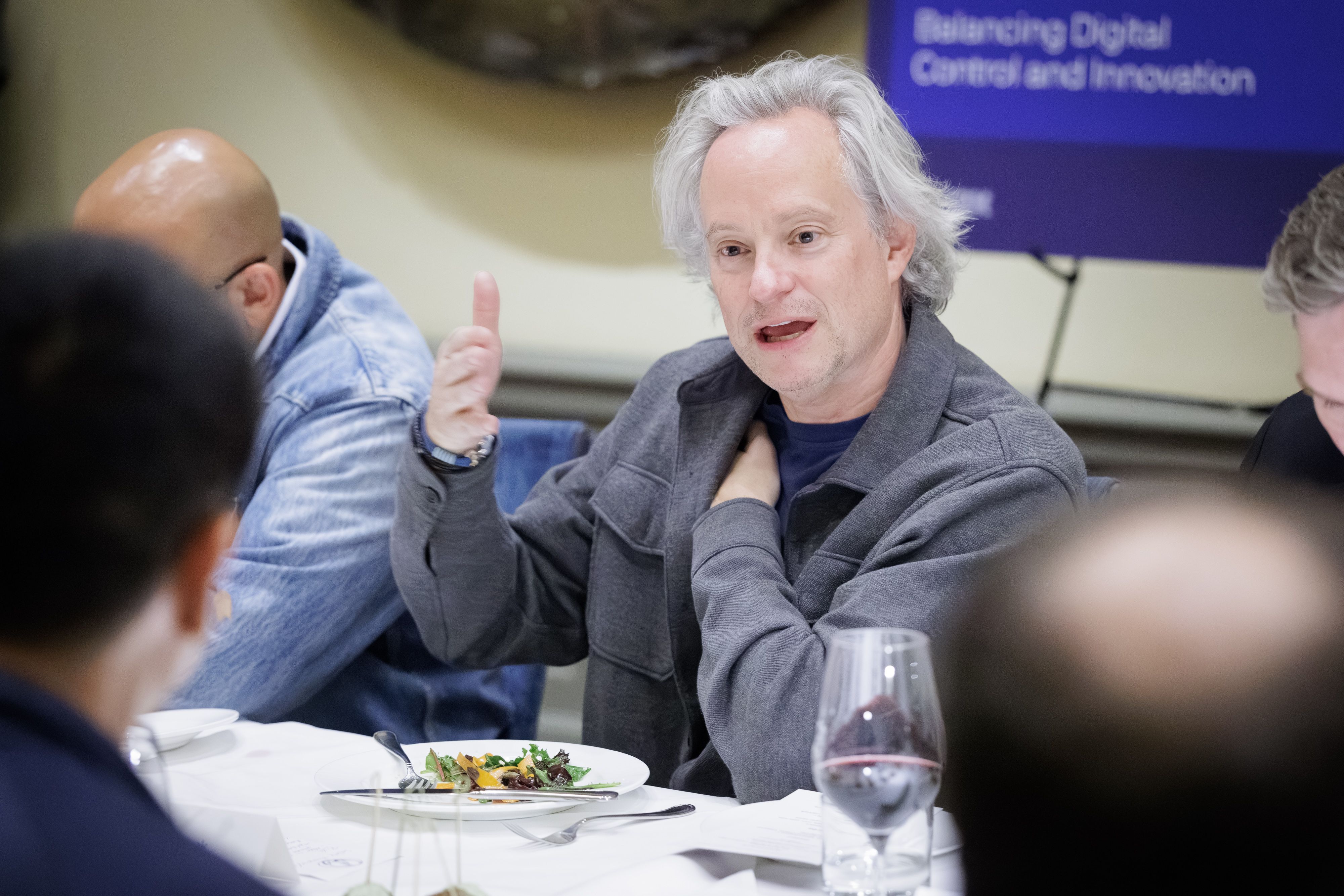
IBM senior vice president and chief global affairs officer Jonathan Adashek said that how technology is governed should be context-dependent.
- "A lot of people are talking about AI regulation at the higher level … [but] there's a different level of regulation that needs to be happening. It needs to occur at the use case, which is really essential … to mitigate that risk."


QuantumScape makes its move on data centers
Solid-state battery company QuantumScape on Thursday announced its first product for data centers.
Why it matters: It's a key moment in the firm's diversification beyond the automotive market and into AI, defense and other applications.

The Axios Show: Bryan Johnson's prescription for immortality
Tech entrepreneur turned wellness influencer Bryan Johnson wants to be remembered as a longevity pioneer, telling The Axios Show" that he wants people to embrace the idea that they may never experience death.
Why it matters: Johnson and his online brand Blueprint have become the personification of a controversial wellness culture that believes aging can be a solvable problem, if you measure the body's physiological functions enough.
- The question is whether all the data collection aided by AI can really slow aging, or whether it's biohacking with a fancy dashboard.
What they're saying: "We are at this inflection moment as a species where we are transitioning to don't die. And that means we have a different value system," Johnson, who's 49, tells Axios.
- "So what creates status and power and prestige is going to be different. And as crazy as it sounds, it may be your nighttime erections. It may be your fertility strength. It may be your ability to dunk a basketball at age 49."
Zoom in: Johnson made his fortune with Braintree, a payment technology firm that he later sold to PayPal. Since then, he's been at the vanguard of a longevity boom driven by billionaire tech entrepreneurs seeking to extend their lives and, in some cases, share their experiences on social media.
- Johnson's "Don't Die" mantra is built around protocols he's subjected himself to, including regular blood-testing, whole-body MRIs, and sleep, exercise and nutrition hacks.
- Long term, he's outlined a vision in which advanced diagnostic tools and next-generation therapies can make chronic illness curable, not just something to manage.
- He likens the evolution of Blueprint to Amazon, scaling up offerings from nutrition products to high-end concierge care and technology he says allows people to measure the effectiveness of GLP-1s and peptides.
- Its rise has coincided with a DIY health movement, in which patients frustrated with the medical system are seeking to self-manage more of their care — sometimes with heavily touted but loosely regulated products that haven't been shown to work.
Yes, but: There is no proven medical intervention that extends human life. One early-stage clinical trial is exploring whether a gene therapy can safely "reprogram" human cells, a requirement for any anti-aging claim.
- Johnson's health-support claims are largely built on personal results and haven't been validated by trials.
- He's also drawn criticism in medical circles for questionable practices like using donor plasma from his young son as an anti-aging treatment, a practice that's drawn warnings from the Food and Drug Administration for having no clinical benefit and carrying risks.
Zoom out: Combining exercise and adequate sleep with experimental treatments and stacks of supplements can make it difficult to separate the substance from the hype.
- Johnson concedes he's a performance artist. And with 8 million social media followers and a flair for self-promotion, he isn't without his detractors.
- Diagnosed with hypothyroidism at age 21, Johnson tells Axios he's trying to "carbon date" his autoimmune conditions to shut down critics who question whether his health interventions have caused him harm. Many critics "really want me to die," he adds.
He brushes off suggestions that instead of focusing on himself, he could fund clinical trials that would benefit humanity. Those kinds of trial findings would be "insignificant in the grand scheme of things," he says.
- "What I care about is, will the 25th century give me a head nod, be like, 'Thank you.' ... That's the goal. Can you change the species to think about themselves differently enough?"
Asked what advice he'd give President Trump, Johnson says he'd welcome the chance to take care of his health.
- "Surely he's got the best possible care," Johnson says. "But you know what? Doctors miss things all the time. Biden had many things that are missing. And so my experience has been when I jump into a situation, I can usually find several areas of improvement instantaneously just because we're so non-standard in what we do."

"The Axios Show": Inside Bryan Johnson's quest to make 300 the new 70
Bryan Johnson, the face of the longevity movement, wants to make staying alive more important than making money.
- The famous/infamous biohacker spends over $2 million a year on his health, talks about living forever and publicly tracks everything from his erections to his sperm strength.
Why it matters: As Johnson fights to "live forever," he's doing so with a wink to his 8 million social media followers, a link to his business in his bio and a knack for drawing attention to himself.

OpenAI's math breakthrough points beyond math
AI's conquest of computer programming offered an early demonstration of what happens when models become good enough at a specialized field that experts can no longer treat them as a novelty.
- Mathematics appears to be next.
Why it matters: OpenAI's latest mathematical results — which involved releasing hundreds of new proofs generated by a powerful, unreleased model — demonstrate that the startling advances of AI are likely to continue moving across entirely new fields.

This "Don't Die" guy has his limits for AI
When it comes to health care and longevity, "Don't Die" influencer Bryan Johnson says AI is not ready for primetime.
- "We are in an in-between state where AIs are brilliant and dumb. They make really stupid mistakes all the time. I would never trust my health to an AI," he said in an exclusive interview with "The Axios Show" on Monday.
Why it matters: Johnson is a successful tech founder, is close to a number of top AI execs and is at the forefront of a movement to prolong and improve health that's grown into an obsession for many in Silicon Valley. That is to say, his perspective on AI and health is tested and well-honed.

Ukrainian drone startup is building at home
Russia's war on Ukraine has sparked a boom in global defense-tech investing, particularly around drones. But very few of those startups are actually based and building in Ukraine.
- Buntar Aerospace is an exception.
Driving the news: Buntar this week raised $16 million led by U.S.-based Freedom Fund VC, following a $10.4 million round earlier this year.
Zuckerberg teams with Google, U.S. in push to map cells
Mark Zuckerberg's Biohub is partnering with Google and the federal government in its ambitious effort to use AI for generating vast quantities of biological data that can predict how cells behave.
Why it matters: The ultimate goal is an AI model that lets scientists test potential experiments virtually, helping them identify the most promising ones before spending the time and money to perform them in the lab.
- AI is capable of understanding proteins and other pieces of biology, but modeling an entire living cell is orders of magnitude more complex — and researchers don't yet have enough of the right data to do it.

Senators question Golden Dome feasibility
Top senators are questioning the effectiveness and cost of President Trump's Golden Dome missile defense effort.
Why it matters: Trump's sprawling plan is still failing to win needed support from lawmakers — and it's in dire financial straits.

America's changing disaster risk hits energy
Hurricanes have long dominated efforts to make the power system more resilient to extreme weather. But America's energy buildout is running into growing risks from severe thunderstorms.
Why it matters: New energy infrastructure and data centers are being built in harm's way as severe weather risks shift, leaving more for developers and insurers to lose when storms hit.