Wednesday's politics & policy stories

Exclusive: Why Antares is bringing nuclear power to Fort Bragg
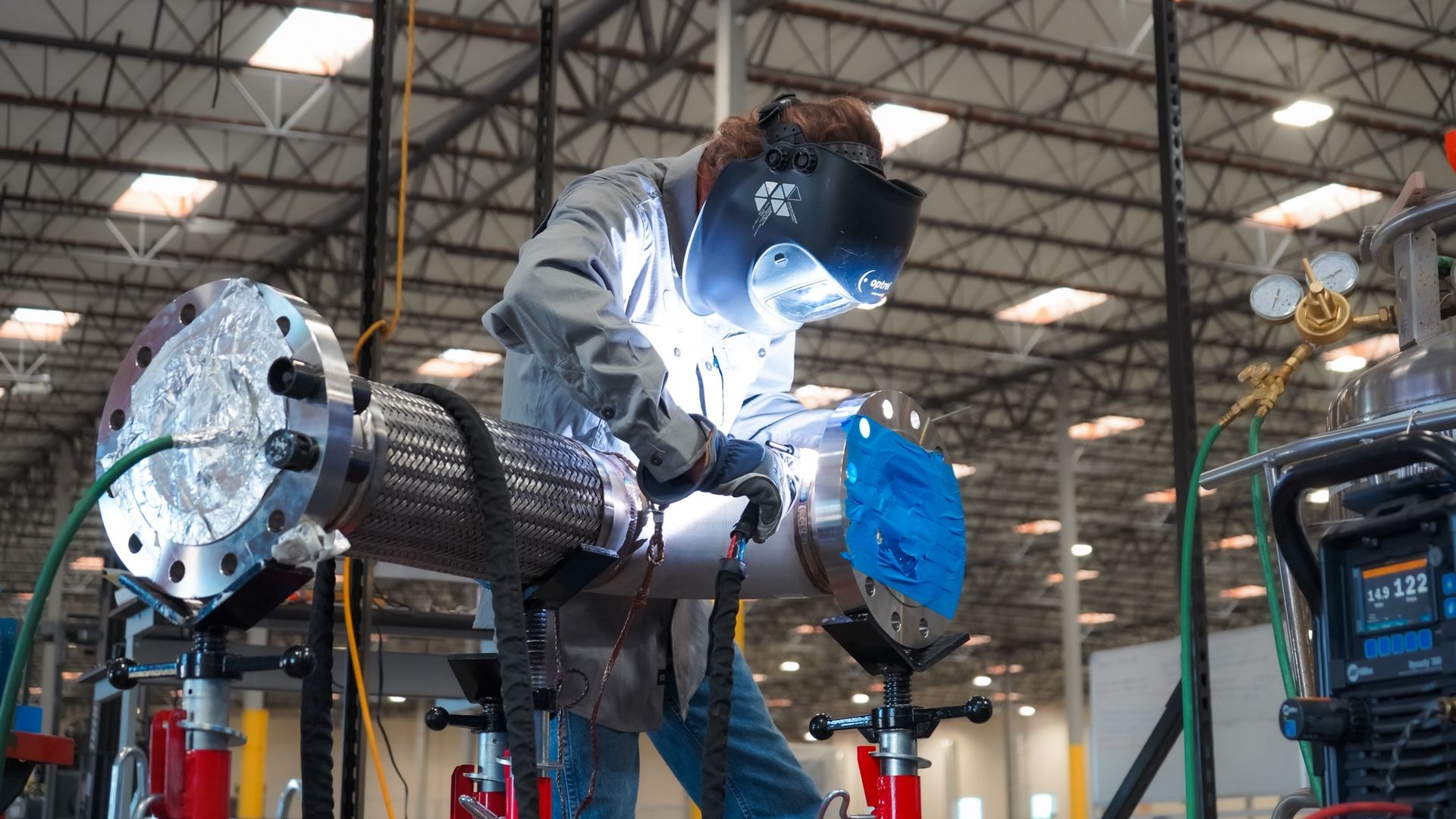
The U.S. Army and the Defense Innovation Unit have selected Antares to build and operate nuclear microreactors at Fort Bragg, North Carolina, chief executive Jordan Bramble told Axios.
Why it matters: The military's sky-high energy demand — for reusable batteries, computer farms, radars, housing, weapons and more — is an ideal pressure test for nuclear, which has mounted a comeback in recent years.

Judge lifts nationwide block on Trump's mail voting order

A federal judge removed a nationwide ban on President Trump's sweeping mail-in voting policy Wednesday after the Supreme Court cleared the way earlier this week.
The big picture: The decision removes the last major legal obstacle to the administration's plan, though it does not end the court challenges over the embattled rule.
States renew fight against Trump's mail-in voting rule

A coalition of states is again seeking to block President Trump's sweeping Postal Service rule on mail-in voting, just days after the Supreme Court lifted a lower court's injunction against his executive order.
The big picture: The Supreme Court's decision essentially said the states sued too early. Now, they're hoping the timing is right to kneecap the plan ahead of the midterms.


Meta settlement highlights Congress deadlock on kids' online safety

Meta's landmark settlement over claims its products harmed children underscores years of congressional deadlock over kids' online safety legislation.
Why it matters: The settlement will force Meta to make changes to its products and pay billions after Congress repeatedly failed to pass federal rules to protect children online.

Labor Department taps tech giants for AI jobs data

The Trump administration has struck data-sharing deals with major technology firms to help track how AI is affecting jobs and hiring, acting Labor Secretary Keith Sonderling told Axios.
Why it matters: AI could reshape the labor market faster than traditional government statistics can capture it. That could make it difficult for economic policymakers to see major shifts in jobs and hiring in real time.

Scoop: Senate Republican investigates Flock cameras
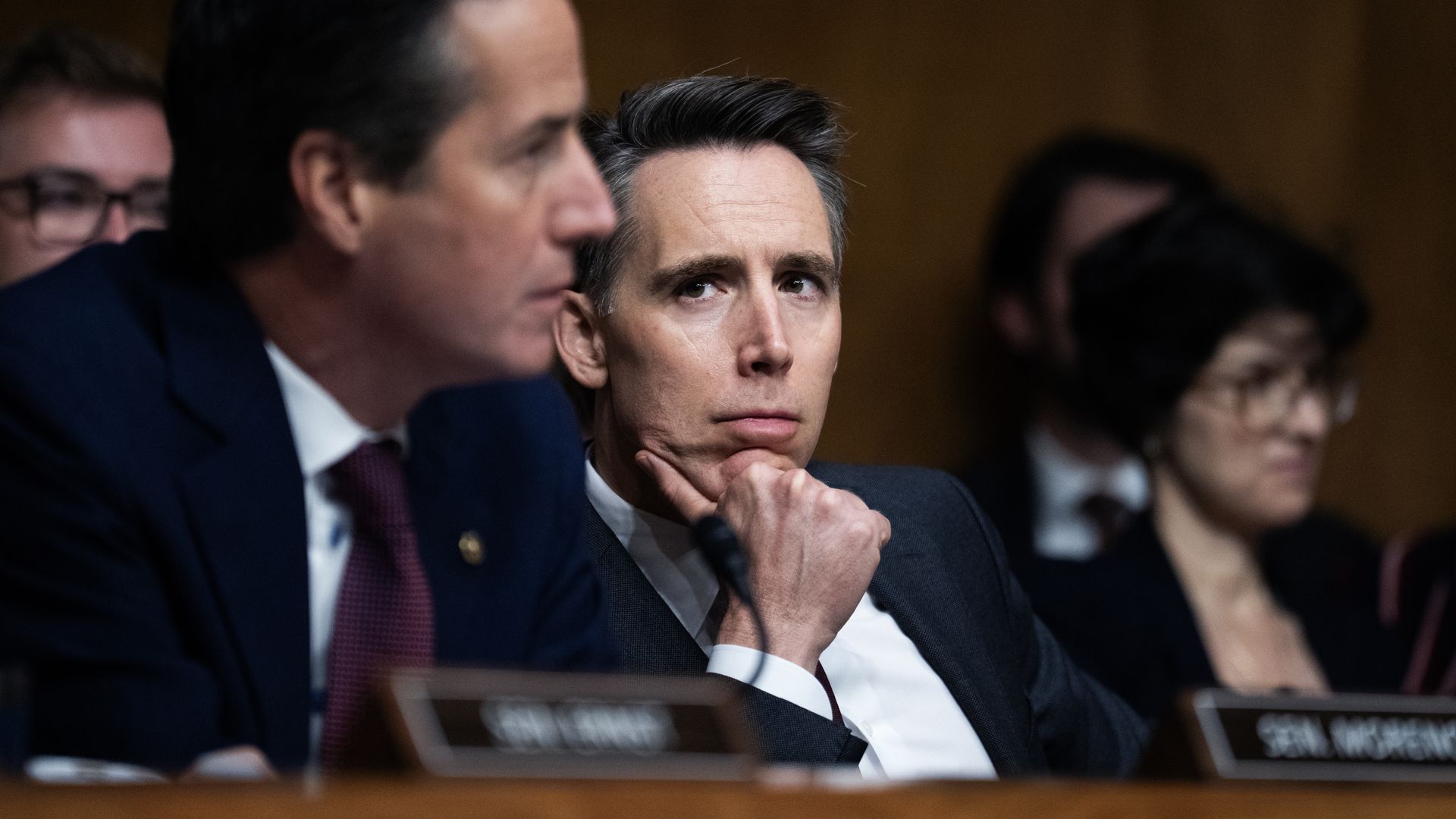
The chair of a key Senate Judiciary subcommittee is launching an investigation into Flock Safety's "collection, retention, and dissemination of the data" from its AI-powered surveillance cameras, Axios has learned.
Why it matters: The probe represents the highest level of backlash to date towards Flock cameras, which have rapidly evolved from the target of local governments and activists to a major national political issue.
Trump's perplexing North Korean nukes assessment

President Trump recently blurted out that North Korea has 57 "very powerful" nuclear weapons.
- Experts told Axios that is believable, but is most likely an undercount.
Why it matters: Nuclear arsenals are often spoken of in generalities — round numbers, increases and decreases, confidence levels. Specifics like this, especially from the very top, are rare and raise hackles.
Rolls-Royce bets big on Indiana for defense production
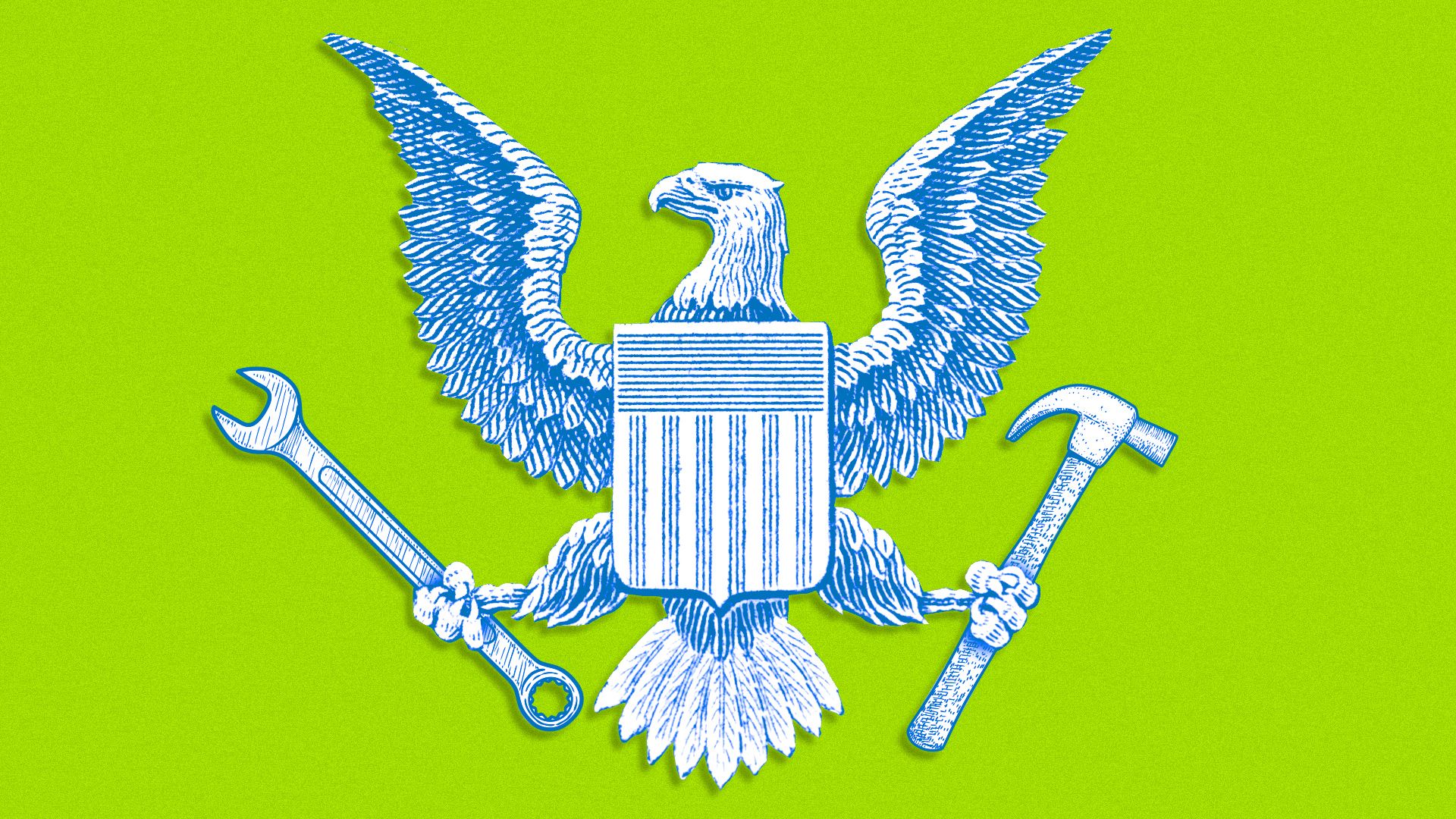
Rolls-Royce will this week mark the completion of a $1 billion investment in Indiana, where the company has expanded and renovated its manufacturing, assembly and test facilities.
The big picture: The overhaul competitively positions Rolls-Royce amid wartime-production messaging from the Pentagon and a growing portfolio of projects, including propulsion for the Army's MV-75, the Air Force's B-52J and the Navy's MQ-25A.
- "If you go back to 2014, we knew that we were at an inflection point. We had aging facilities, some dating back to World War II," Adam Riddle, president of Rolls-Royce Defense, told Axios.
At Fort Bragg, a jam session for a "new era of warfare"

FORT BRAGG, North Carolina — The scrubby, scorching-hot hills of Range 63 bustled last week with soldiers and contractors. Some nursed cans of Monster. Some rocked sunglasses and sun shirts. Some handled shotgun magazines.
- A futuristic Ford F-250 was posted at one end of the range. Atop sat a 12-gauge turret, dubbed Edda, that shredded two targets as they flew overhead. A small shipping container labeled "Bee Hive" was parked at the other end. It brimmed with Bumblebee V2 drones, which zipped toward the horizon one after the other.
- In the middle, a crew with Safe Pro AI pored over aerial imagery and algorithms to identify hidden mines. And somewhere farther off, another F-250 finessed a slurry line charge into place. Its detonation, seen and felt, hurled into the air smoke and dust.
The big picture: This hourslong jam session was part of Sandhills 2.0, an ongoing experiment meant to remove U.S. troops from some of the bloodiest battlefield tasks, like breaching.

Jeffries faces impeachment dilemma if Dems win back the House
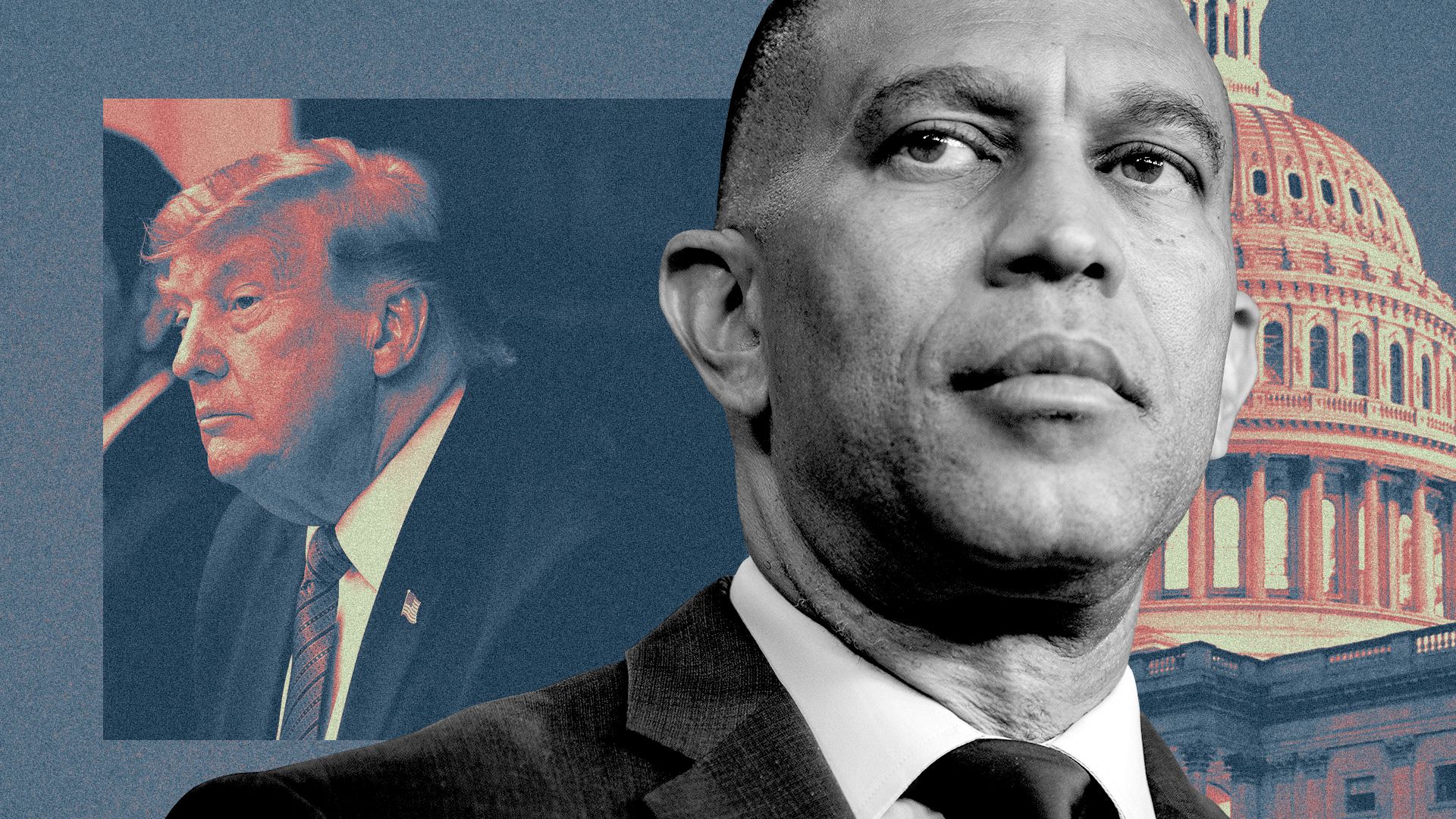
With just 10 weeks left until the midterms, House Minority Leader Hakeem Jeffries (D-N.Y.) gave CNN's Wolf Blitzer a preview yesterday of what to expect should Democrats regain control of the House:
- "Hold every single member of the Trump cartel accountable."
- "Make sure that we've got people in government focused on doing the things necessary to address the affordability crisis."
- On impeachment, "we haven't ruled anything in and we haven't ruled anything out", with any move guided by "moments of accountability."

Trump's "election integrity" threat: Defunding police

State and cities nationwide are rebelling against the White House's push to withhold millions of dollars in police and anti-terrorism funding unless they impose new voting rules.
Why it matters: President Trump's effort to impose election policies that he hasn't been able to get through Congress has now drawn two lawsuits from state and local governments that accuse the administration of threatening to defund the police unless Trump gets his way.
- "They are trying to defund public safety and counterterrorism," Harris County (Texas) Attorney Abbie Kamin told Axios.
- Harris County, which includes Houston, and the other jurisdictions stand to lose millions in public safety grants unless they impose the controversial voting rules Trump wants: a plan to transition to paper ballots, proof of citizenship verifications, mandatory hand-counted audits of 5% of all ballots, and more.
- (A separate part of Trump's "election integrity" push got a boost Monday when the Supreme Court lifted a block on his plan to use the Postal Service to help limit deliveries of mail-in ballots. The plan still faces legal challenges.)
Zoom in: Harris County joined Columbus, Ohio, Nashville, Tenn., and El Paso County, Texas, last week in suing the Department of Homeland Security over the agency's effort to withhold grant money.
- State and local officials say DHS's demands for costly and unnecessary voting restrictions have put them at risk of losing money for anti-terrorism teams, equipment to counter drone and bomb attacks, protective gear and overtime pay, among other things.
- "We have dedicated public servants of again all political backgrounds that are involved in ensuring that elections are run securely and fairly," Kamin said.
- "But what's happening here is the threat to public safety funding and withholding counterterrorism dollars that local law enforcement relies on for partisan political purposes for one individual, and that is Donald Trump."
The other side: In July, DHS Secretary Markwayne Mullin threatened to withhold federal funding from state governments, echoing Trump's claim that there were thousands of noncitizens on state voter rolls.
- "I obviously can't force the states" to work with the administration, Mullin said then. But "we are not going to spend taxpayer dollars reimbursing the states that are refusing to secure their elections."
- "We fully expected opposition to common-sense measures designed to protect election security and safeguard the integrity of American democracy," a FEMA spokesperson said in a statement.
- "Election security is national security, and protecting our critical infrastructure remains a top priority for the Trump administration."
Zoom out: Besides the lawsuit filed last week, 25 Democrat-lead states filed suit earlier this summer contesting Trump's demands on election procedures.
- Some Republican-led jurisdictions have expressed a willingness to go along with at least some of the voting changes Trump wants, particularly the use of a federal database to check against voter rolls for citizenship.
- But for the most part, officials nationwide have said state and local laws already are sufficient to run elections, audit them and maintain voter rolls — work that's constitutionally tasked to state and local governments.
- "This type of ask ... feeds into this false narrative that our elections are not secure, and that if we do not do these things that the federal government is demanding that local elections are compromised," El Paso County attorney Christina Sanchez. "That is so far from the truth."
- Just transitioning to paper ballots alone would cost her county $3 million, Sanchez said.
The big picture: Losing the public safety grants would have a huge impact on their jurisdictions, officials said in the lawsuit filed last week.
- In Texas, Harris and El Paso counties are planning to use the grant funds to buy equipment that can detect hazardous materials and chemicals, explosives and biological weapons.
- Nashville and Columbus' city governments said they've previously used such funds to buy machines that can detect explosives and purchase SWAT team gear.
Between the lines: This isn't the first time Trump's administration has tried to withhold federal funding from governments that it views as non-compliant with its wishes.
- Trump has threatened to cut funding to state and local governments that have sanctuary immigration laws preventing local police from collaborating with ICE agents, for example.
- The administration's threats have failed when challenged in court before.
- "We've been prepared for this since the beginning of the Trump administration, that they're going to try and play games with cities like Columbus' funding," City Attorney Zach Klein told Axios.
- "This is the latest example of Trump coming in," he added "It's illegal and it's unconstitutional."
Inside the backlash over the Jeffries-Kushner meeting
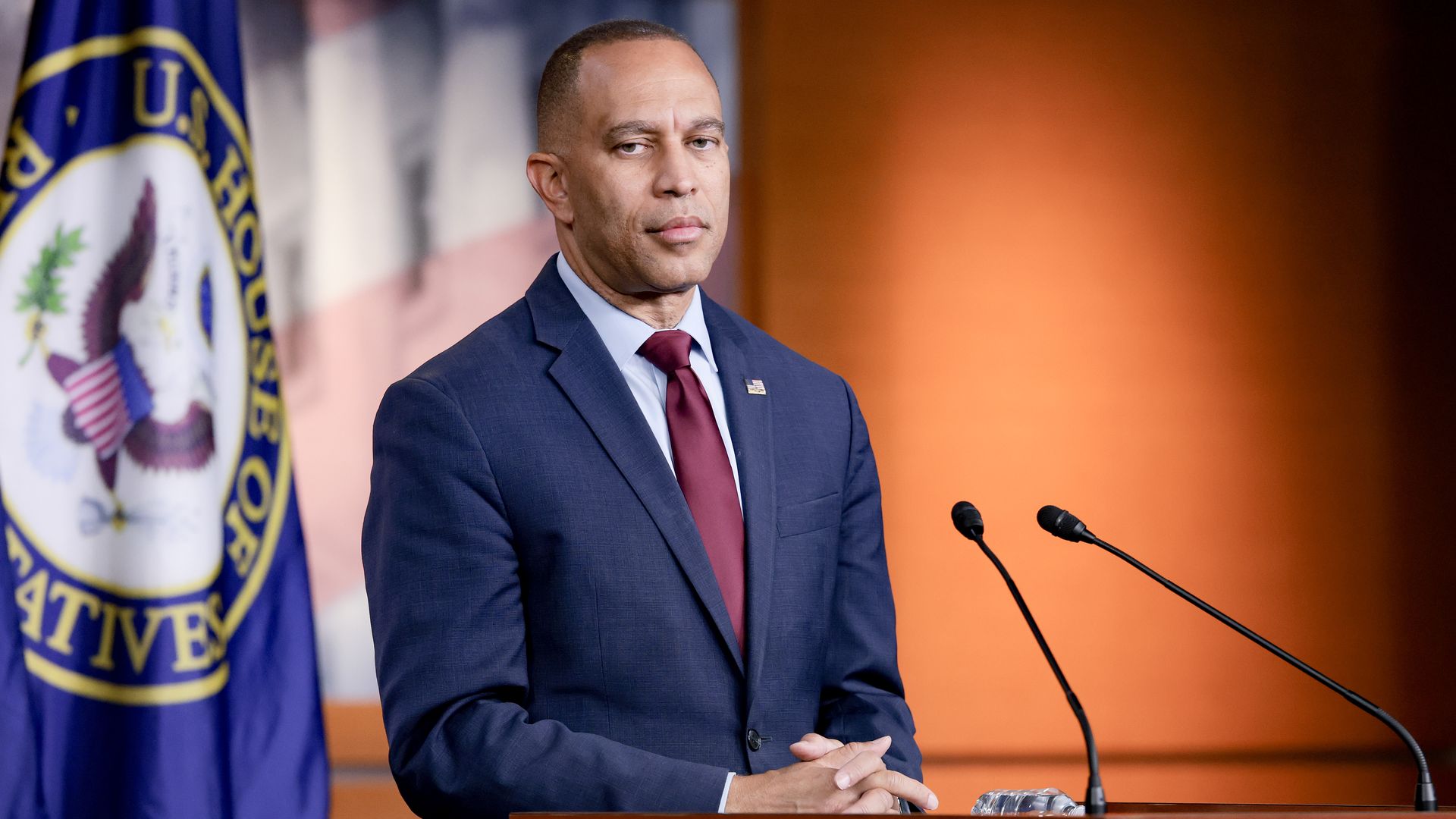
House Minority Leader Hakeem Jeffries' long-standing tensions with his party's left flank resurfaced this week after news broke of his meeting with President Trump's son-in-law Jared Kushner.
Why it matters: Jeffries will have to make nice with the left next year if Democrats win back the House with only a narrow majority. Blowups like this are not helping.

Court ruling threatens GOP cash advantage
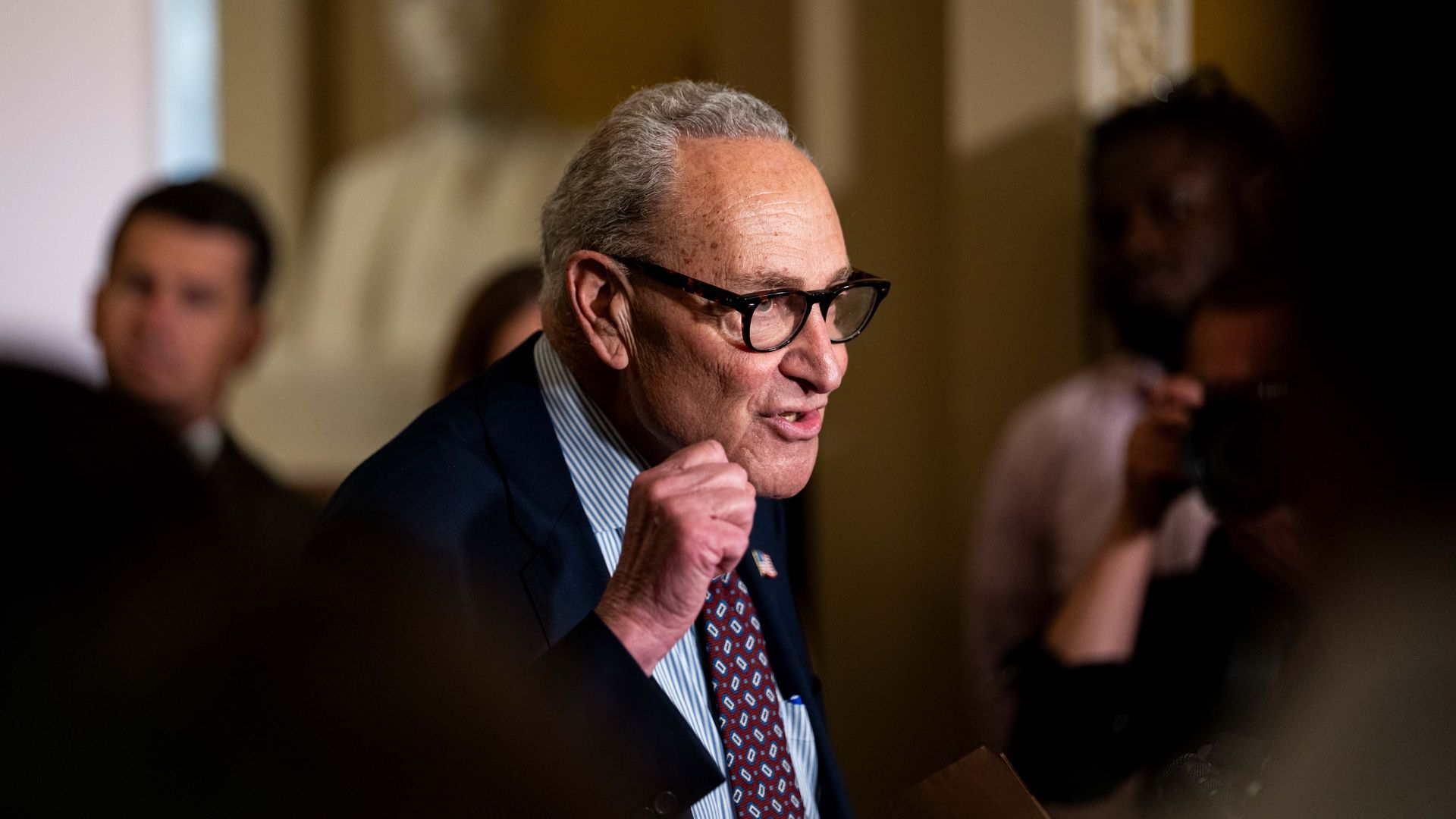
A federal appeals court ruling Tuesday could erase a new midterm advantage for Republicans.
Why it matters: The 2-1 ruling would block Republicans from using cash-rich party committees to buy more political TV ads at discounted rates.

Darline Graham wins South Carolina GOP Senate runoff

Sen. Darline Graham, President Trump's endorsed candidate, won the Republican nomination Tuesday to fill the Senate vacancy created by her brother Lindsey Graham's death, per the AP.
Why it matters: The victory underscores Trump's continued sway with Republican voters and positions Graham as the odds-on favorite to win a full term in November.