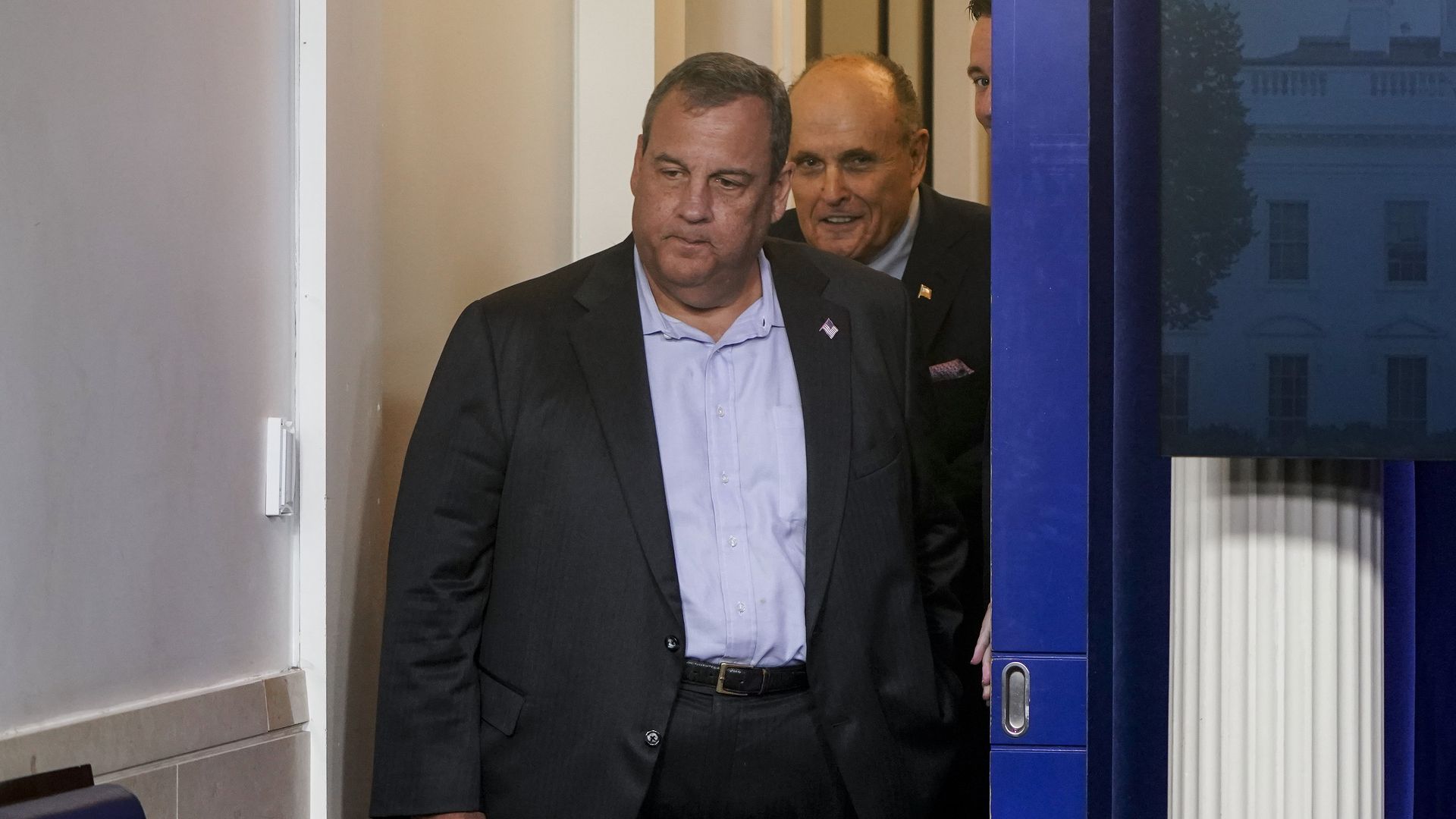
Former New Jersey Gov. Chris Christie (R) told the New York Times on Thursday that he spent several days in the intensive care unit after checking into the hospital with COVID-19, and that he was "wrong not to wear a mask" at the White House.
Driving the news: Christie, 58, appears to have contracted COVID-19 in the White House coronavirus outbreak, which saw positive tests from President Trump, first lady Melania Trump and more than a dozen others.
Vexillology is the study of flags — their history, symbolism and use — and people like me who love flags (in a not-at-all nerdy way) are vexillophiles. This distinguishes us hobbyists from the people who actually design flags, who are vexillographers.
Background: A relatively modern science, the term "vexillology" was coined in the late 1950s by the grandfather of the field, Whitney Smith. A vexillology prodigy, he designed the national flag of Guyana while still a Harvard undergrad.
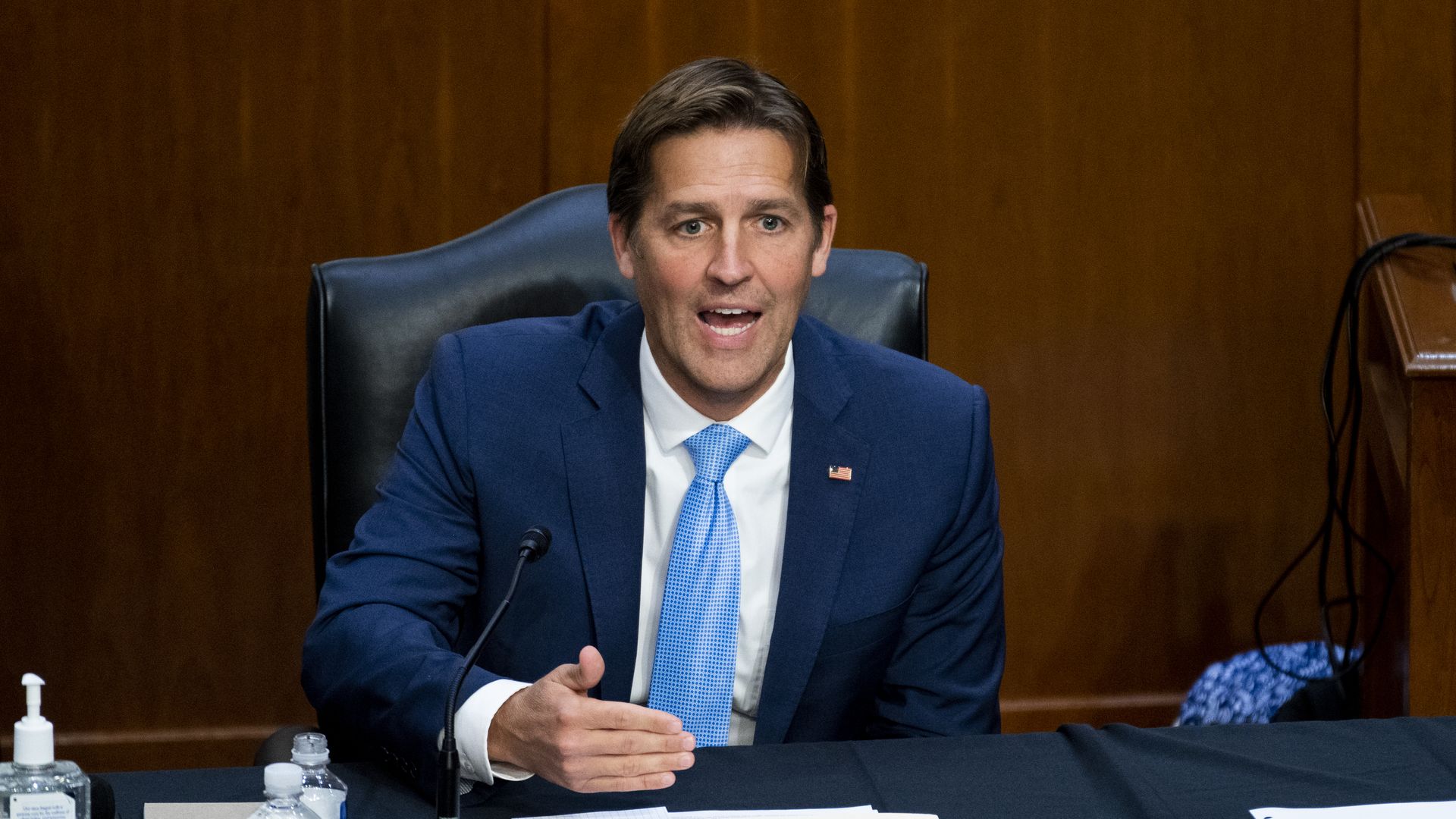
Sen. Ben Sasse (R-Neb.) said in a call with constituents this week that President Trump mishandled the pandemic, "kisses dictator's butts," "sells out allies," "mocks evangelicals," and has "flirted with white supremacists," according to audio obtained by the Washington Examiner.
Why it matters: The comments mark one of the sharpest criticisms of the incumbent president at a time when many Republicans fear his unpopularity could cost them the White House, Senate and House.
Sen. Dianne Feinstein (D-Calif.), the top Democrat on the Senate Judiciary Committee, was widely criticized by liberal groups on Thursday after she gave Chairman Lindsey Graham (R-S.C.) a hug and called Supreme Court nominee Amy Coney Barrett's confirmation hearings “one of the best" that she's participated in.
Why it matters: Democrats have cast the Republican effort to confirm Barrett in an election year as "illegitimate," warning that it will shatter norms and transform the court for decades.
Twitter today is alight with conversations about a New York Post story on Hunter Biden. But you can't find a link to the story on Twitter, and you'll be temporarily blocked if you try to share it — due to concerns that the story is based on hacked, or possibly manipulated documents. Facebook has also put sharing limits on the story.
Axios Re:Cap talks with Sen. Ted Cruz (R-Tex.) about Big Tech censorship, election disinformation, and why he plans to subpoena Jack Dorsey, but not Mark Zuckerberg.
President Trump again criticized Anthony Fauci, the government's top infectious disease expert, during a campaign rally in North Carolina on Thursday, claiming without evidence that the NIAID director is "a Democrat," and accusing him of downplaying the coronavirus.
Why it matters: Since the onset of the pandemic, Trump has repeatedly undermined Fauci, who has five decades of public service, describes himself as apolitical and is not registered with either party. In public statements and tweets, Trump has accused Fauci of blundering the government's response to the virus.
A new study from Redfin, the online real estate brokerage, helps connect the dots on whether migrations patterns from blue cities (like Milwaukee, Boston and Portland) to Sun Belt cities (like Tampa, Phoenix and Miami) during the pandemic could have political implications — though the line is a bit blurry.
The big picture: Daryl Fairweather, Redfin's chief economist, told me there was no way to tell if the people moving from blue to red places were attracted by the more right-leaning politics or whether they were Democrats who could potentially shift the center of gravity.
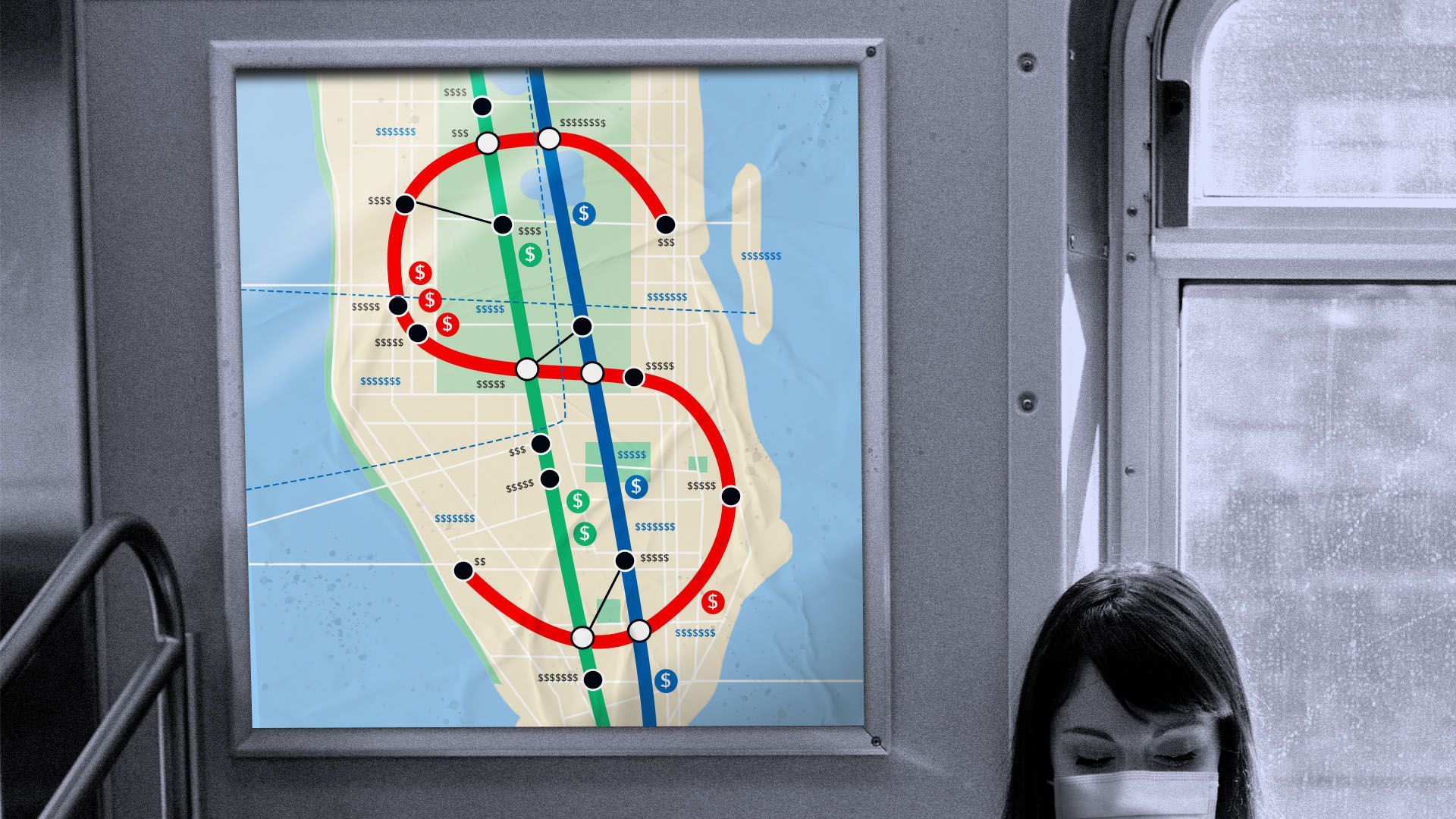
Cities have been trying to persuade residents to return to buses and trains, as transit systems face a financial challenge of a lifetime in the middle of the pandemic. Now state officials are pleading for Washington to act on a stimulus that would help the biggest mass transit systems.
Why it matters: As more people stay put, transit systems are seeing lower levels of fares and tax revenues — blowing a hole in budgets across the country.
NBC News is facing backlash, including from some of its own talent and employees, for agreeing to air a town hall with President Trump on Thursday night at the same time that former Vice President Joe Biden will appear at an ABC town hall.
Why it matters: Critics argue that by airing the town hall during ABC's previously scheduled program, Americans won't be able hear from both candidates at the same time.
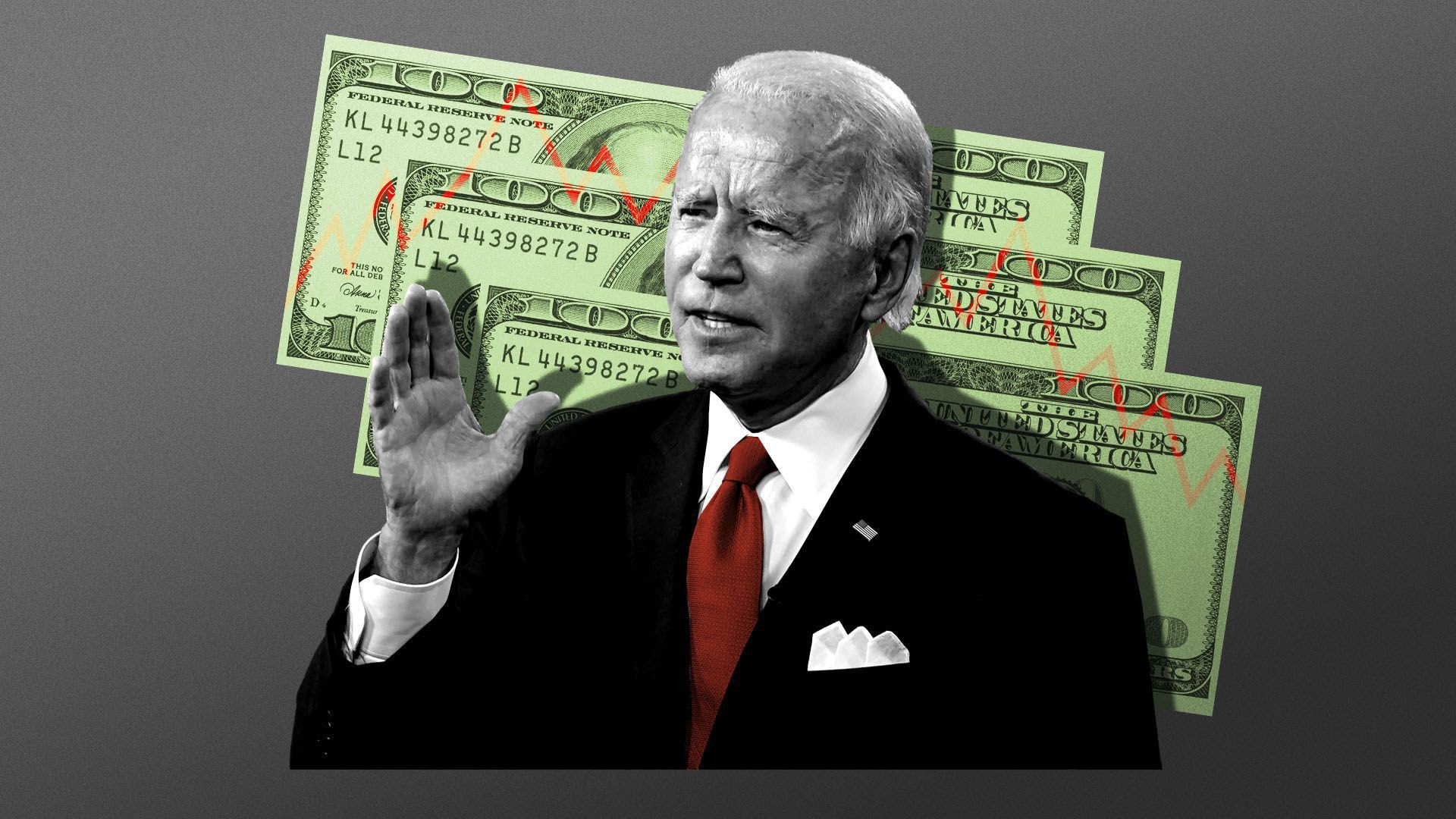
The Biden administration's top priority, after virus control, will be "building a fiscal bridge to the other side of the crisis." That's what Jared Bernstein, a senior Biden economic adviser, told an IIF conference this week.
Why it matters: Biden has a very large and complex Building Back Better agenda, which includes some 800 different policy proposals and will cost some $3 trillion. But before even getting started on that, the Biden team plans to spend a lot of money — probably north of $1 trillion — on a short-term stimulus package.
Democratic Senate candidates are reporting record-setting fundraising numbers for the third quarter, a sign of a potential blowout loss for Senate Republicans this November.
Why it matters: Democrats need just four seats in order to win back the Senate. Of the 12 incumbent Republicans believed to be facing competitive challenges, the Cook Political Report has rated seven as "toss ups" and two as "lean Democratic." One Democratic Senate seat, held by Sen. Doug Jones (D-Ala.), is rated "lean Republican."
The stimulus negotiations are beginning to remind me of running on a treadmill — lots of effort, no forward motion.
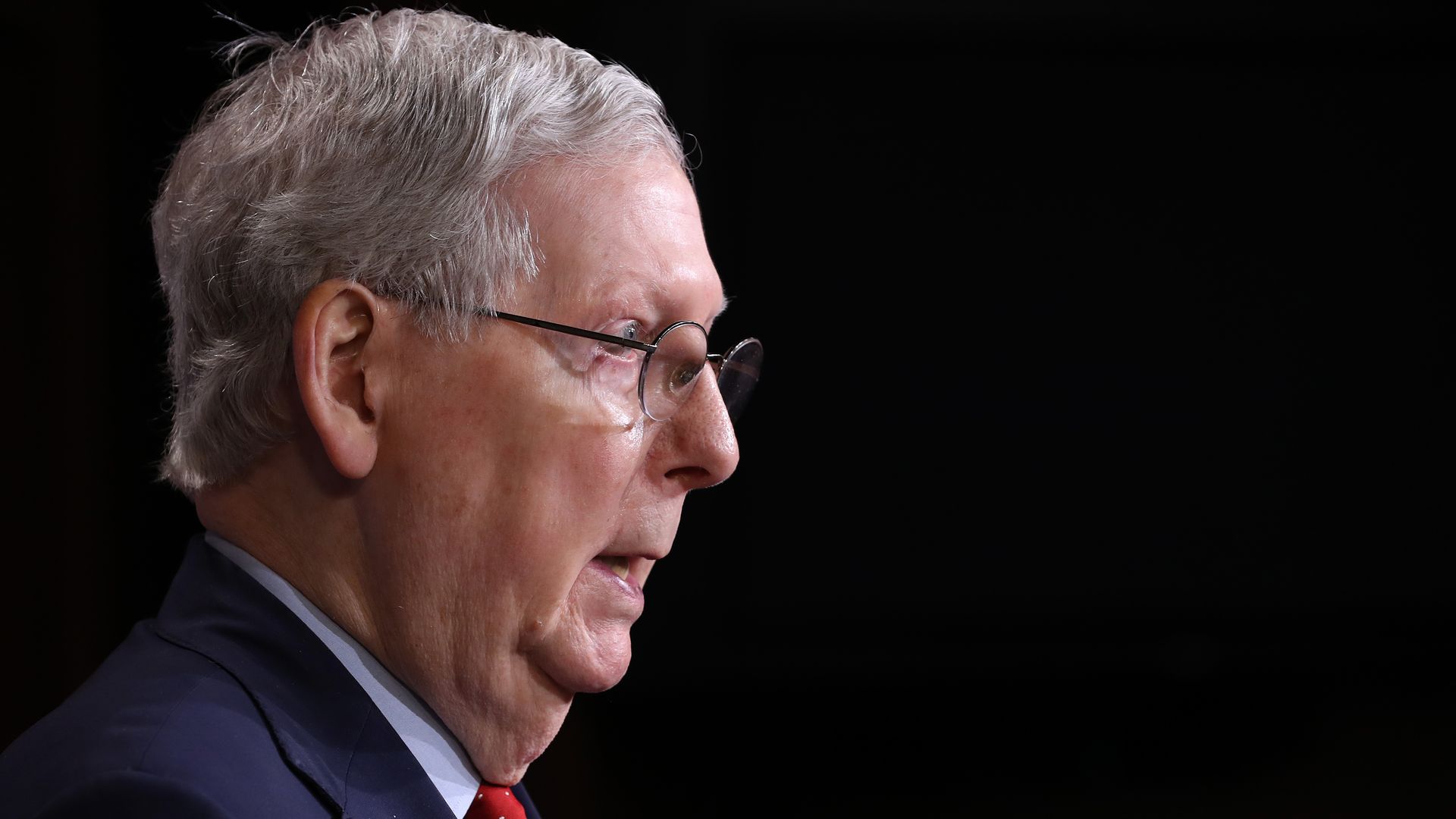
Driving the news: Senate Majority Leader Mitch McConnell (R-Ky.) said Thursday that he would not put a potential $1.8 trillion+ deal struck by Democrats and the Trump administration on the Senate floor. "My members think half a trillion dollars, highly targeted is the best way to go," he said.
YouTube announced Thursday that it is expanding its hate and harassment policies to prohibit content that targets an individual or group with conspiracy theories, like QAnon, that have been used to justify real-world violence.
Why it matters: It is the latest tech giant to crack down on QAnon content, which has seen record online interest in 2020.
President Trump told Fox Business on Thursday that he's tested for the coronavirus "a lot," but "not every day."
Why it matters: The White House relied heavily on testing as a protective measure against COVID-19, but critics began raising questions about that strategy after the president and at least a dozen other staffers and members of the press corps tested positive earlier this month.
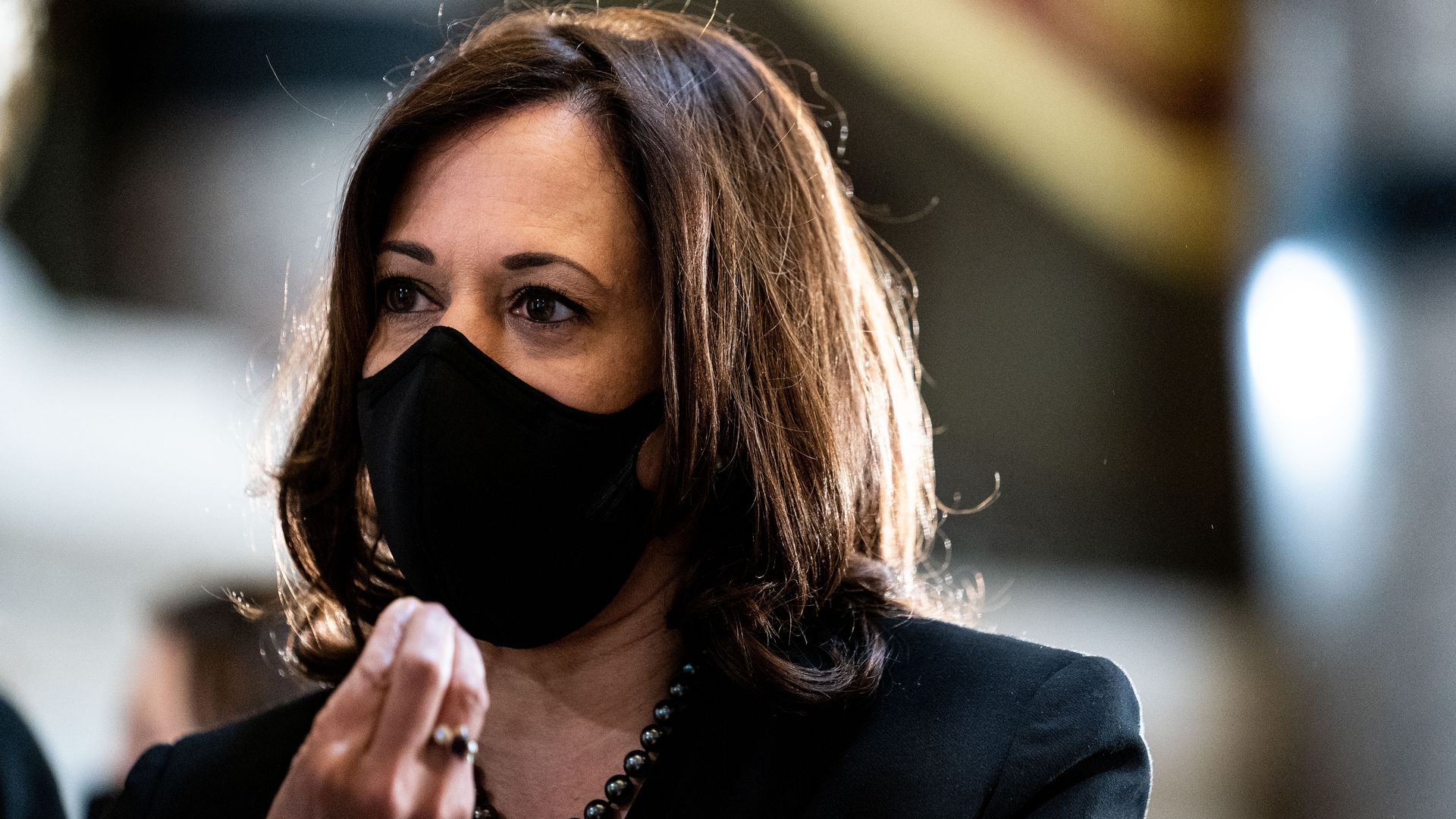
Sen. Kamala Harris (D-Calif.) will pause her travel through Sunday after her communications director tested positive for the coronavirus, the Biden campaign announced Thursday.
The state of play: The campaign said that the vice presidential nominee, who tested negative for the virus on Wednesday, was "not in close contact" with the aide, Liz Allen, under CDC guidelines. She will still pause her travel "out of an abundance of caution and in line with [the] campaign's commitment to the highest levels of precaution," the campaign said.
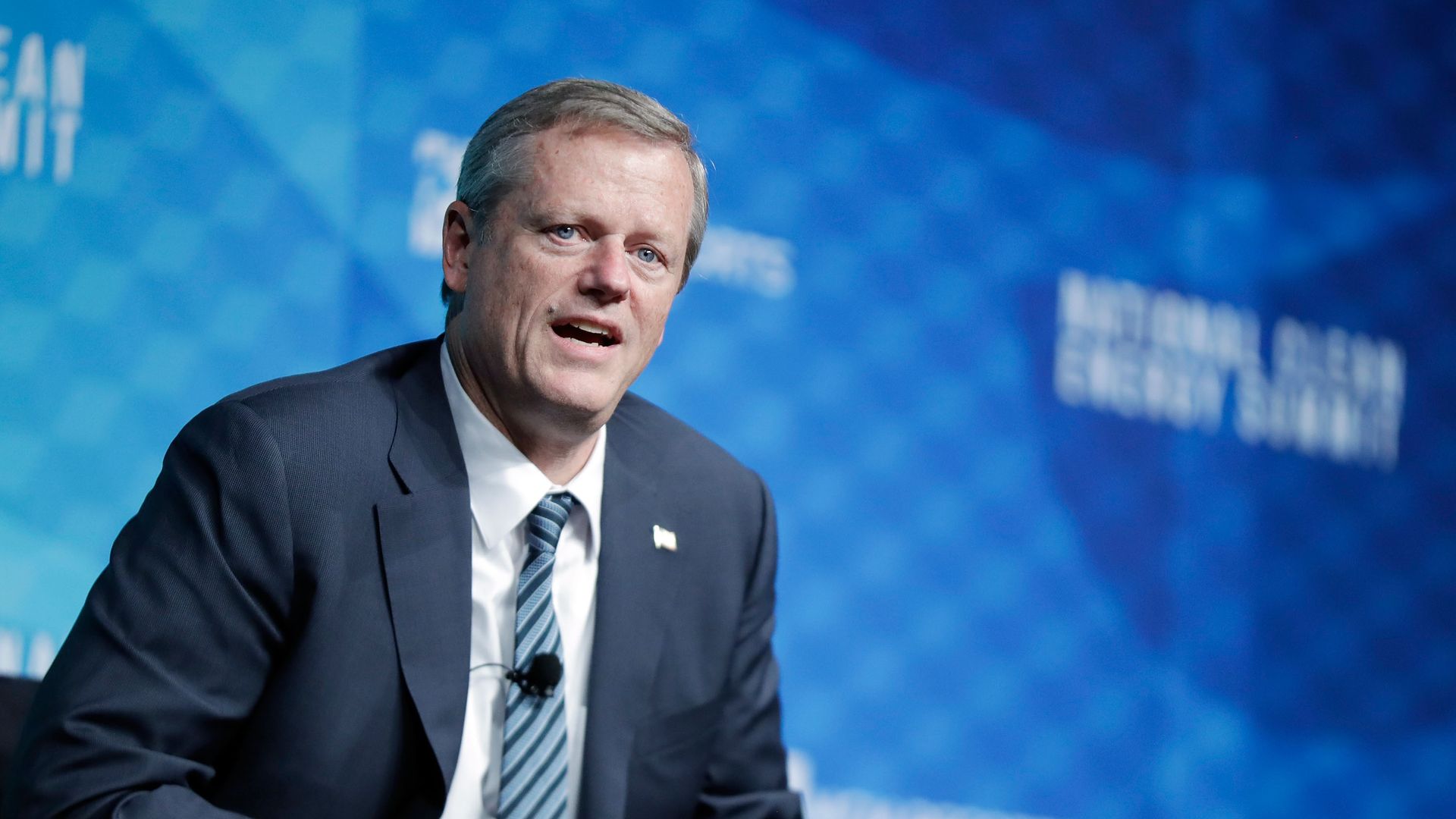
Massachusetts Gov. Charlie Baker, a Republican, will not be supporting President Trump in the election, a spokesperson said in a statement to the Boston Globe.
Why it matters: Baker is one of two Republican governors currently in office who have expressly said they will not support the president's re-election bid, with the other being Vermont Gov. Phil Scott. Baker, a moderate Republican in a deep-blue state, said in 2016 that he did not vote for either Trump or Hillary Clinton.
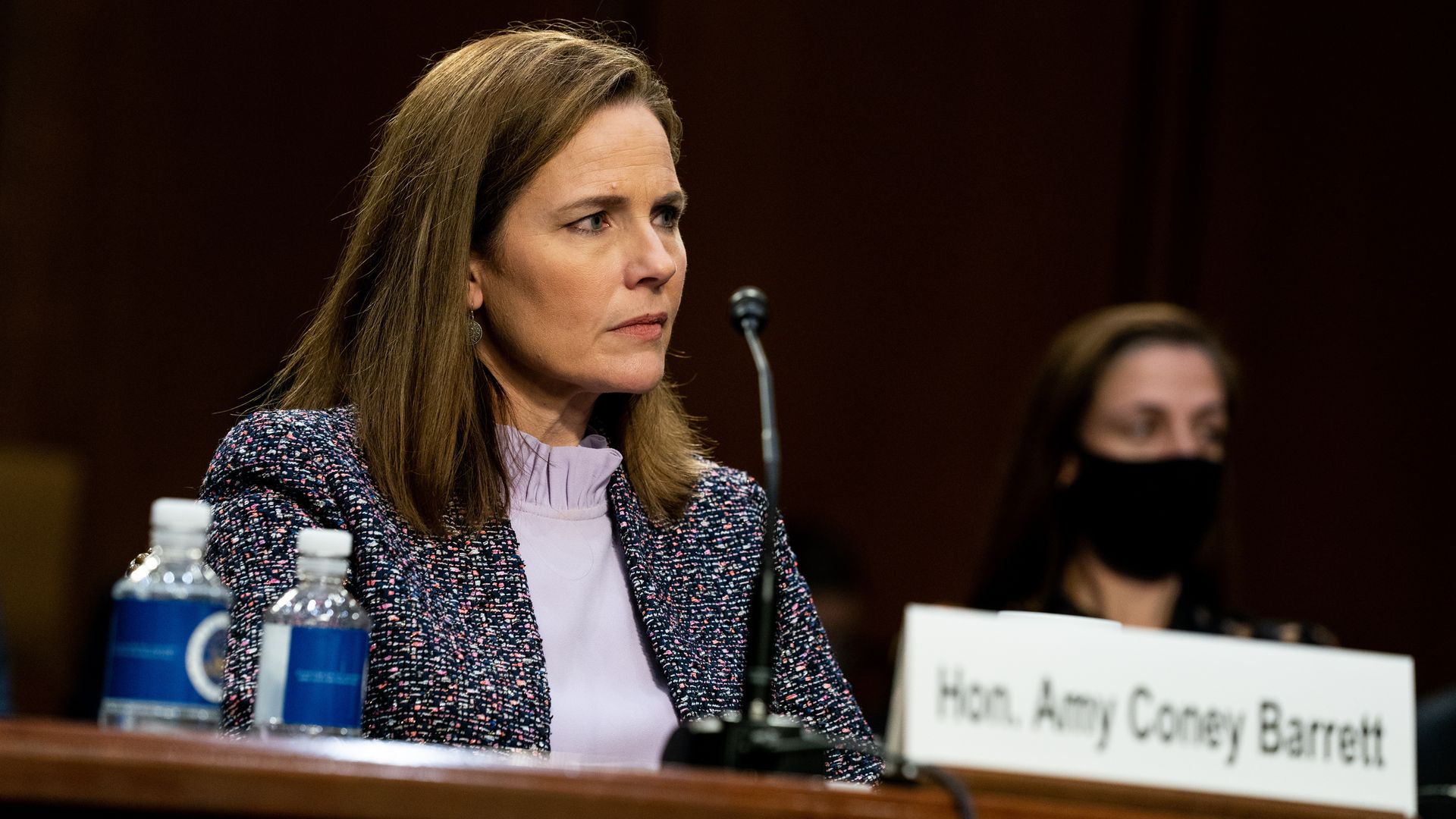
Judge Amy Coney Barrett's Supreme Court nomination will move forward with a committee vote on Oct. 22, Sen. Lindsey Graham (R-S.C.) announced Thursday, following standard procedure.
The big picture: Senate Republicans have said they plan to confirm Barrett with a full floor vote before Election Day — only 12 days after the committee vote.
The U.S. presidential election is 19 days away and investors are growing increasingly certain of a Joe Biden victory, as the former vice president has maintained and added to his sizable lead over President Trump in national polling and betting odds.
What's happening: Biden's edge recently rose above 10 percentage points, according to polling averages from FiveThirtyEight and Real Clear Politics, an important milestone.
In a striking new sign of the broader role corporations are shouldering in society, Business Roundtable — the CEOs of America's biggest companies — today announced a raft of initiatives "to advance racial equity and justice."
Why it matters: Big companies are bluntly admitting, and tackling, injustices they so long ignored and perpetuated.
In private, some top Democrats remain nervous about the presidential race, despite Joe Biden's lead in swing state after swing state — and strength in states that had looked out of reach (including Georgia, Ohio and Iowa).
Why it matters: The ghost of 2016, when most "experts" looked foolish, haunts Democrats, who see a big win in their data, but fear being blindsided again.
If Joe Biden wins the presidency, his advisers plan to assemble the most diverse Cabinet in U.S. history as he works to fulfill a pledge to build the Democratic Party on a new generation of leaders.
The big picture: Many of Biden's longtime aides, most of whom are white and male, are expected to follow him to the West Wing. That means the pressure will be on to recruit a Cabinet that's both younger and more diverse.
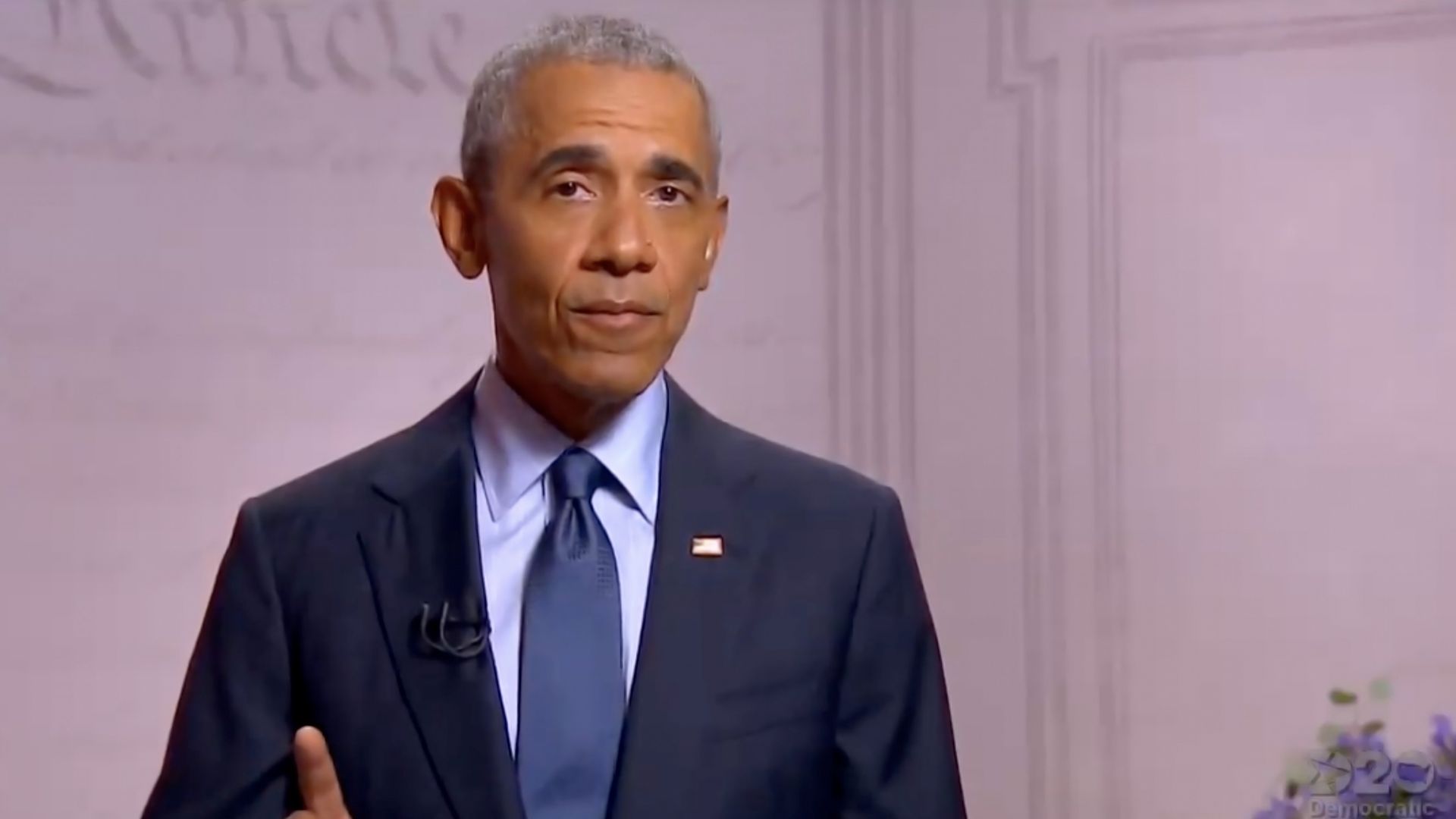
Former President Obama said Joe Biden would "have to rebuild" the State Department if he were elected next month, as he lambasted his successor and the Trump administration on the "Pod Save America" podcast Wednesday.
Details: Obama praised Biden for his "restraint and humility" and confidence in diplomacy. "[T]hat instinct that I think is going to trickle out, partly because he's gonna have to rebuild a State Department where some of the best people have been driven out systematically because they weren't willing to tow Trump's ideological agenda," he said.
Why it matters: The news comes just 20 days before the election and is believed to be the most-ever raised by a presidential candidate in a single month, likely driven by the first presidential debate.