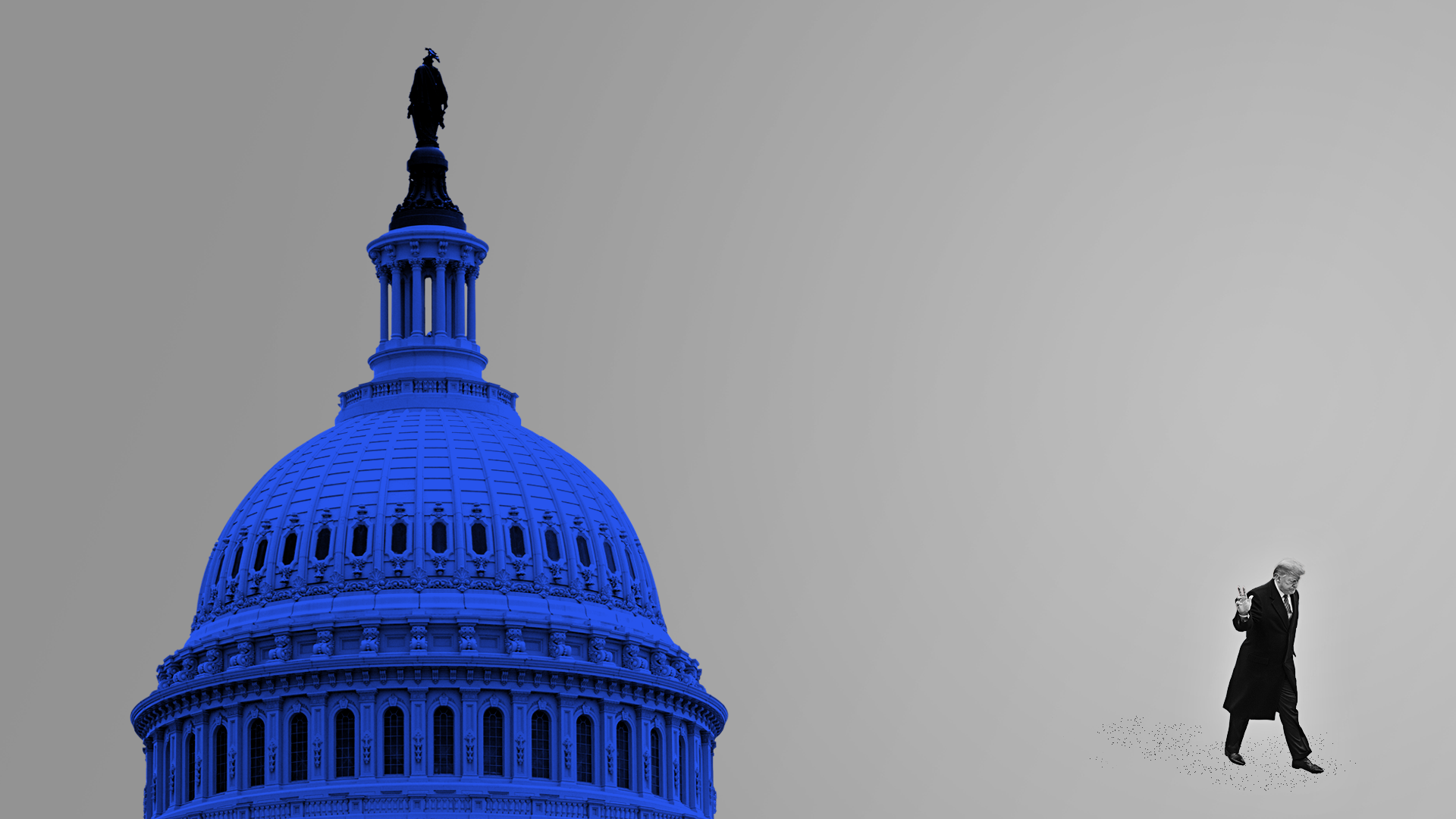
President Trump created the longest government shutdown in U.S. history so he could get $5.7 billion for a border wall, and today he caved in exchange for $0.
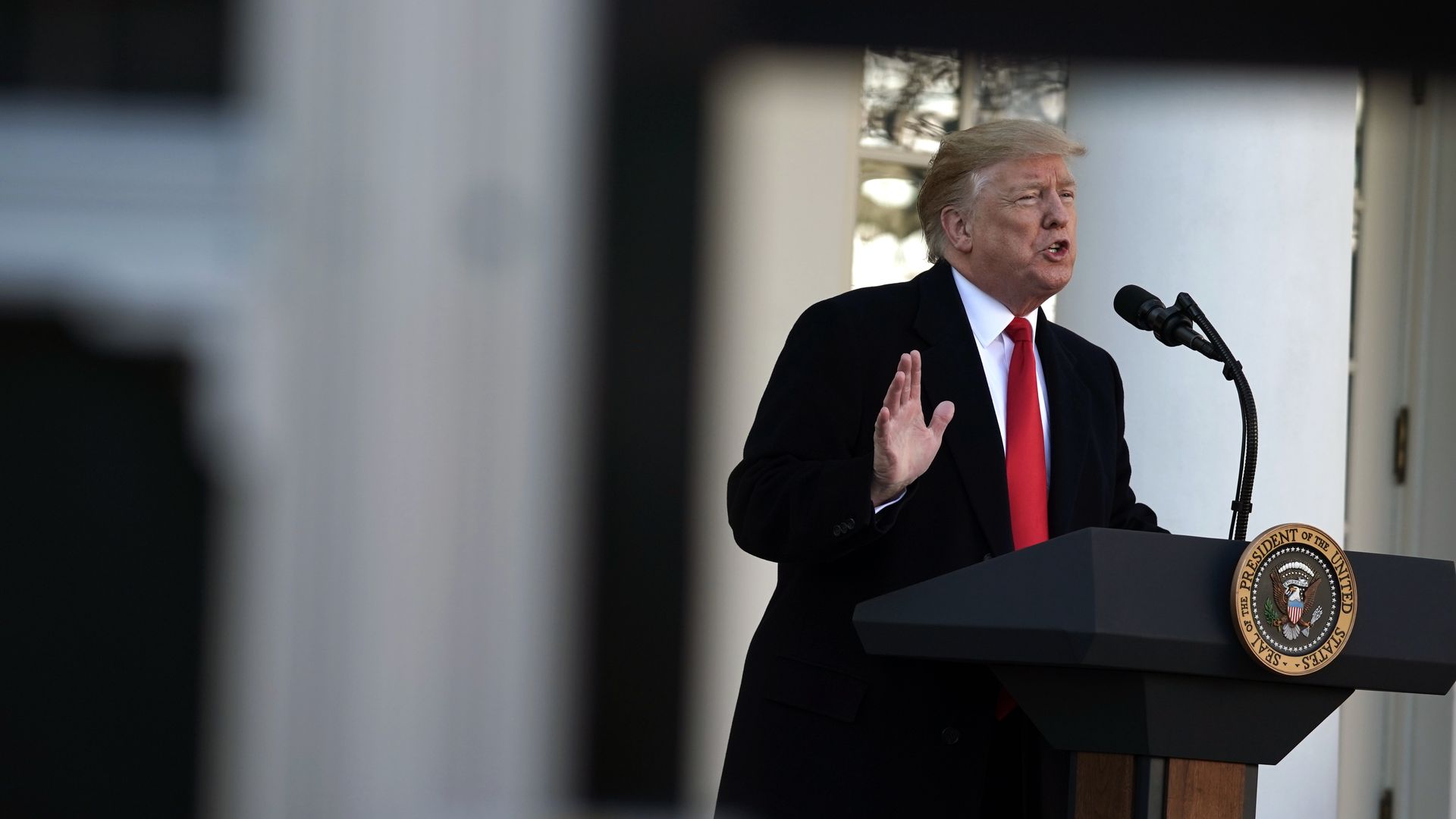
Driving the news: Trump will sign a short-term dealthat will open the government for three weeks. During that stretch, the House and Senate will go to conference to discuss border funding. “If we don’t get a fair deal from Congress, the government will either shut down on Feb. 15, again, or I will use the powers afforded to me under the laws and Constitution of the United States to address this emergency," Trump said today.
The indictment of Roger Stone has given us new insight into what special counsel Robert Mueller knows — and raised a lot of questions about the unnamed people and organizations listed in the indictment.
Between the lines: The biggest mystery focuses on the statement that "a senior Trump Campaign official was directed to contact Stone" about future Wikileaks dumps that would be damaging to Hillary Clinton. The vague passiveness of "was directed" has led to questions about whether it was President Trump who gave the order, as a reporter asked White House press secretary Sarah Sanders. But this falls under the category of things we just don'tknow yet.
President Trump announced Friday that he would sign a temporary short-term spending bill to reopen the government until Feb. 15 — one that does not include funding for his border wall.
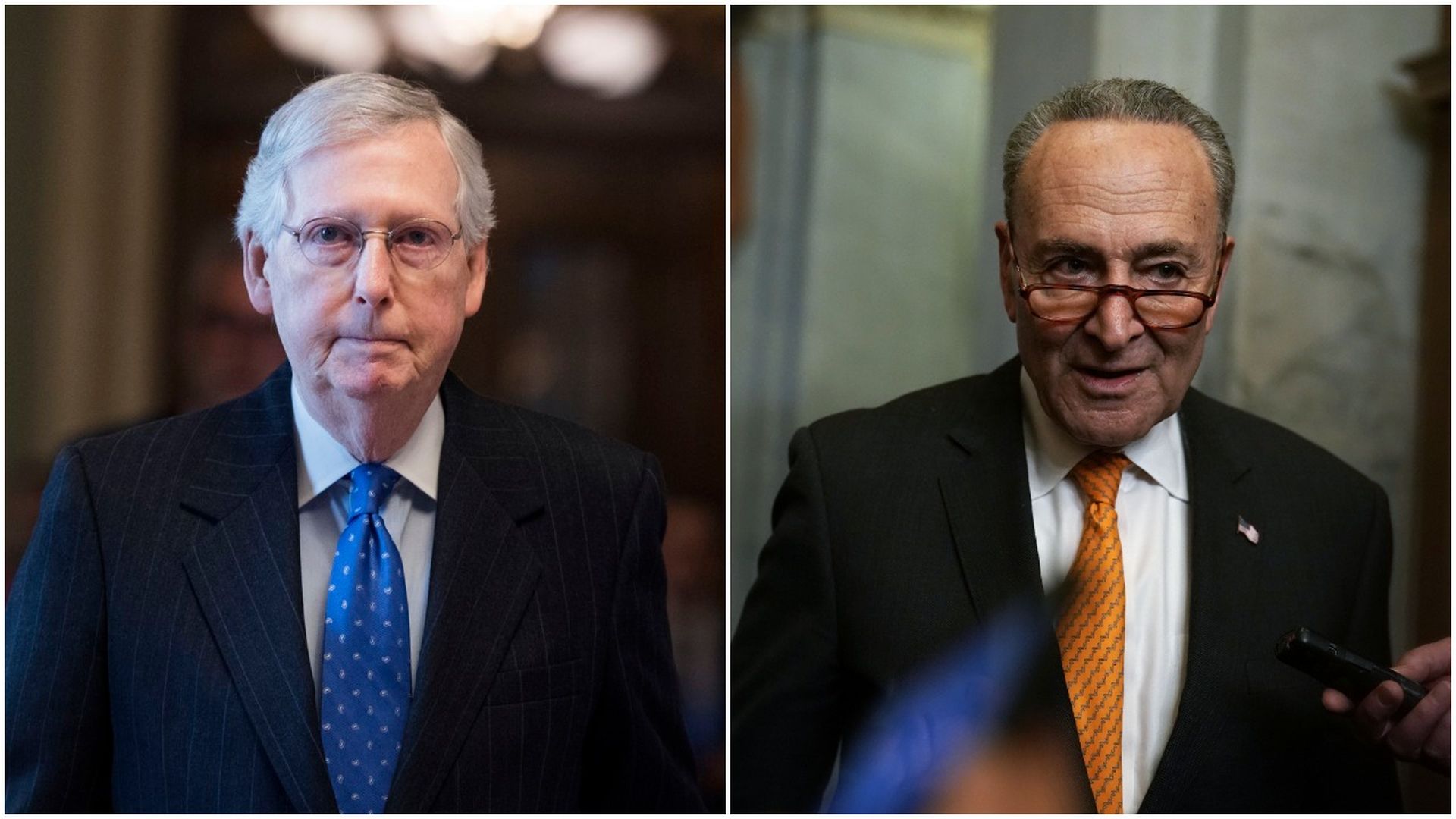
Between the lines: While the deal includes a motion for the House and Senate to go to conference to negotiate on border security, Democratic leaders Chuck Schumer and Nancy Pelosi have made their red line clear: They will not support funding for a border wall. The short-term spending bill will lapse in 3 weeks, and barring a significant breakthrough in negotiations, the government may be headed for its second shutdown of 2019 — or possibly an emergency declaration.
President Trump announced Friday afternoon that he will sign a short-term spending bill as soon as today that would reopen the government until Feb. 15, postponing the stalemate over funding for his border wall and other immigration measures for three weeks.
The big picture: This is a significant concession by Trump, with Democrats long having argued that the government should be reopened before negotiations on border wall funding begin. As part of the deal, the House and Senate will go to conference to attempt to reach a consensus on border security. The 800,000 federal workers on furlough for the past 35 days will also receive backpay.
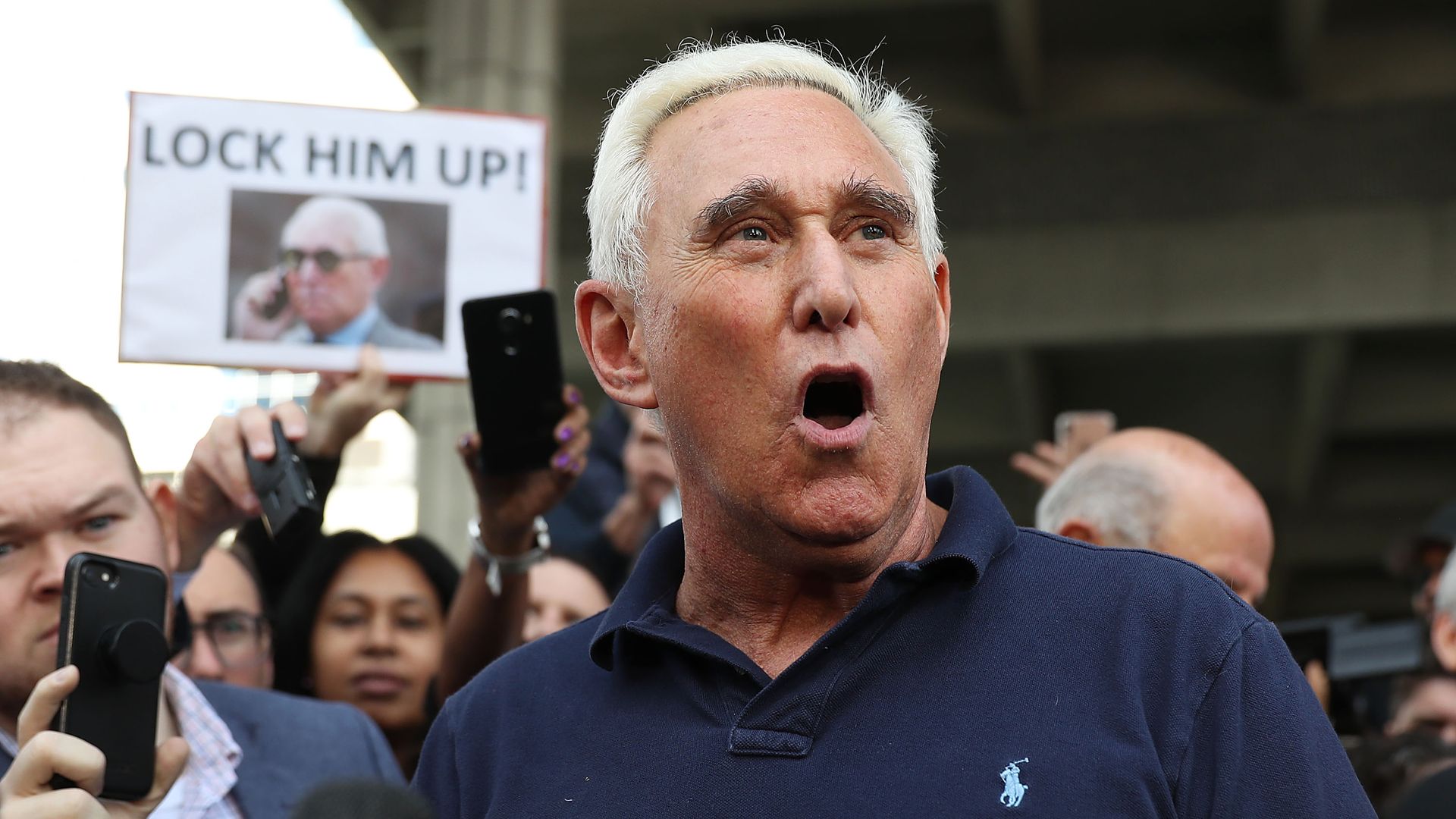
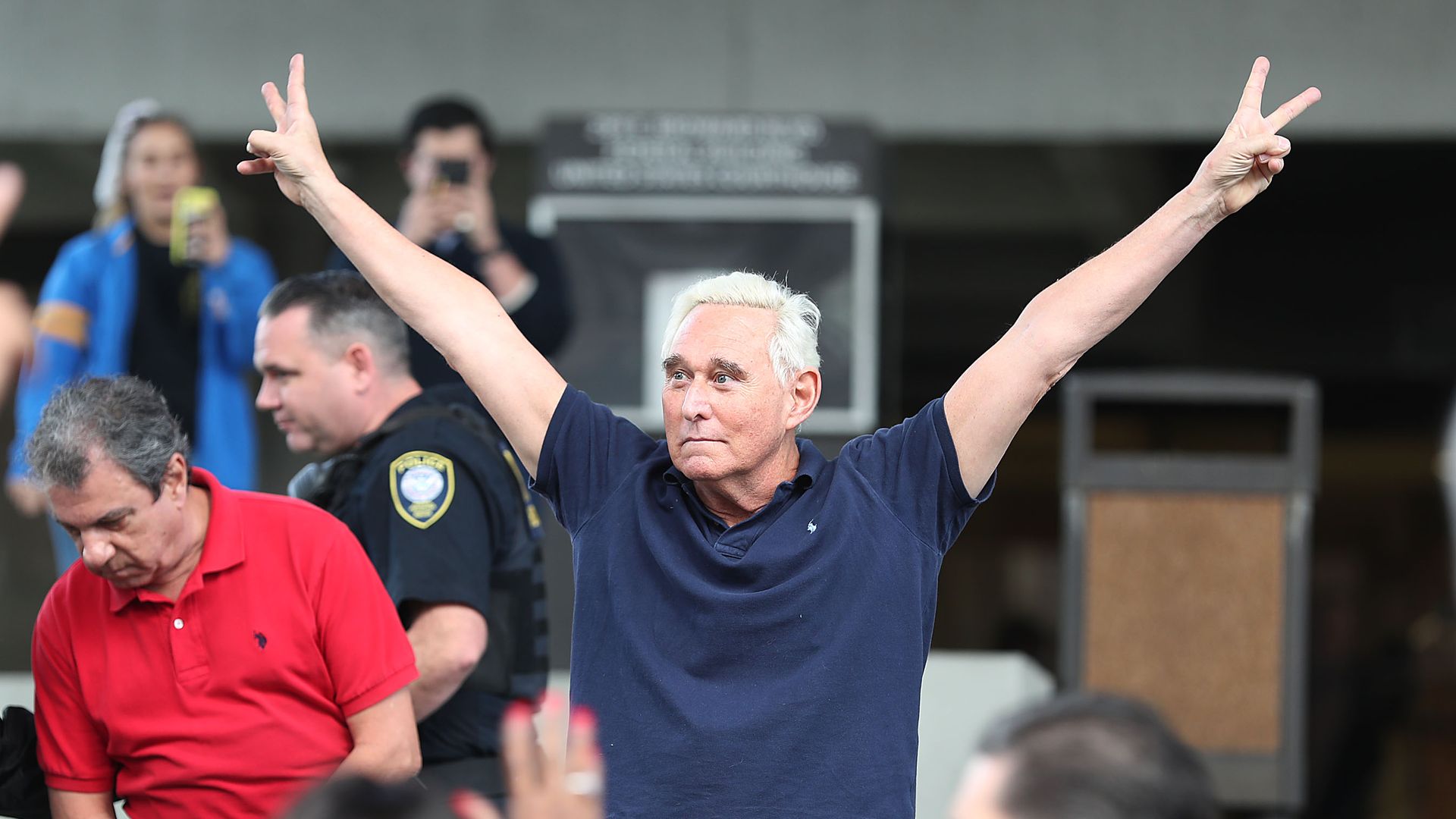
Trump associate Roger Stone told a crowd of reporters outside his court hearing Friday that he will plead not guilty to charges brought by special counsel Robert Mueller, and that he will never testify against President Trump, who he called one of his "oldest friends."
"As I have said previously, there is no circumstance whatsoever under which I will bear false witness against the president, nor will I make up lies to ease the pressure on myself. I look forward to being fully and completely vindicated."
The backdrop: Stone was arrested in a raid in Florida early Friday, after being indicted by the Mueller investigation on seven counts, including obstruction of an official proceeding, making false statements and witness tampering. He told reporters that the Mueller investigation is "politically motivated" and that there is no evidence of collusion.
The long trail of legal news about President Trump's associates — which now includes the indictment and arrest of Roger Stone — makes it easy to lose track of the broader storyline of Robert Mueller's Russia investigation. Here's a map to help you keep every move straight.
How it works: The map shows the people have been convicted, pleaded guilty or charged. Go deeper for other key figures and moments of the investigation. Note that Cohen's first guilty plea and Manafort's conviction were on charges unrelated to Russia — but they highlight Trump's broader legal jeopardy.
Roger Stone's indictment by the Mueller investigation reveals a series of alleged conversations between the Republican operative and Trump campaign officials regarding the timing and content of Wikileaks' email dumps during the 2016 campaign — which Stone allegedly lied about under oath.
Why it matters: Multiple Trump campaign officials — although we don't know who — were allegedly told by Stone ahead of time about WikiLeaks releases considered damaging to Hillary Clinton. One campaign official was even instructed to reach out to Stone about future releases following the DNC email release in July 2016.
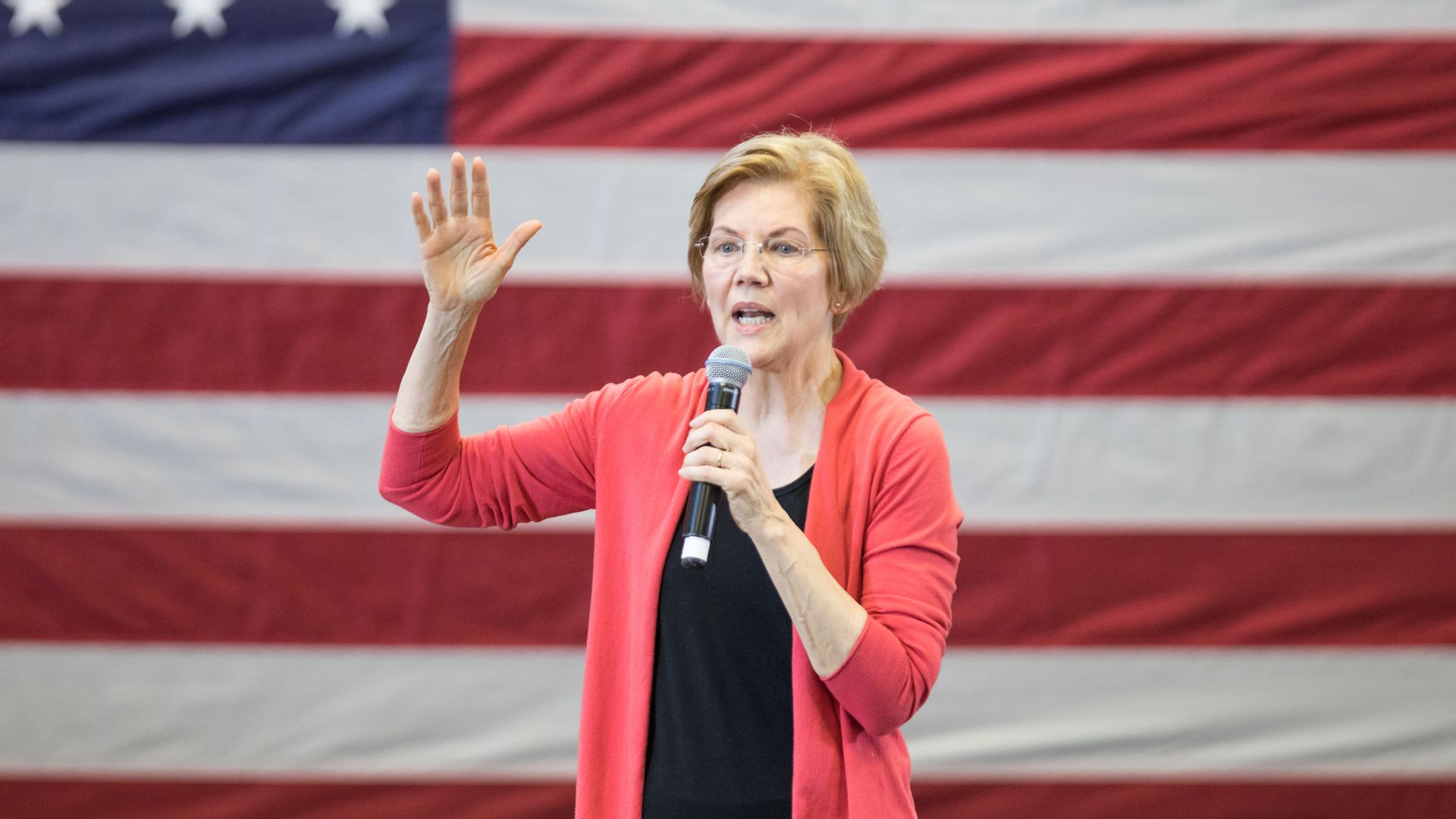
The “wealth tax” reportedly being considered by Sen. Elizabeth Warren (D-Mass.) reflects the fact that income inequality has become an early battleground of the 2020 campaign.
Why it matters: This is new in American politics, pushed by rising awareness of — and efforts to weaponize — the top 1%. At the same time, the left has more of a platform than ever, with liberal ideas dominating the primary so far, and Democrats in control of the House.
The U.S. will begin evacuating non-essential diplomatic personnel from Venezuela, but will keep its embassy open, amid fears of a potential clash with Nicolás Maduro's regime.
Why it matters: Maduro's 72-hour deadline for the U.S. to evacuate all diplomats set the stage for a confrontation between an authoritarian leader desperate to hold power and a U.S. administration determined to see it taken from him. The risk of escalation in the coming days remains high.
NASA's Lyndon B. Johnson Space Center in Texas has asked its 200 non-furloughed employees, who are already working without pay due to the government shutdown, to help clean bathrooms until the impasse ends, the Houston Chronicle reports.
Details: About 94% of the 3,055 federal employees at Johnson have been furloughed. ANASA manager on Thursday tweeted a photo of a sign seeking volunteers to clean the bathroom once a week: "This is our reality at the Johnson Space Center. We now have no custodial services while we work without pay to keep the International Space Station operating."
The check isn't in the mail: 800,000 federal workers are set to miss their second payday this month, with no reprieve in sight as the shutdown approaches Day 35.
Why it matters: The drought of federal worker paychecks — not to mention the contractors who will never be repaid for their furloughs — is starting to sting surrounding businesses, with escalating dangers for the broader economy.
Both the Republican-backed Senate proposal to reopen the government — which included $5.7 billion to fund President Trump's border wall — and the Democrat-backed clean funding bill failed to garner the 60 votes necessary to advance either measure.
The big picture: Neither bill was expected to pass. However, the Democratic proposal, which would have funded the government through Feb. 8, earned 2 more votes than Trump's plan to trade temporary DACA and TPS protections for a border wall. Six Republicans — Sens. Susan Collins (Maine), Lisa Murkowski (Alaska), Cory Gardner (Colo.), Mitt Romney (Utah), Lamar Alexander (Tenn.) and Johnny Isakson (Ga.) — voted in favor of both bills.
Sen. Elizabeth Warren (D-Mass.) is planning to propose a 2% "wealth tax" on Americans with more than $50 million in assets and a 3% tax on those with more than $1 billion, an economist advising the senator told the Washington Post.
The big picture: The proposal would raise $2.75 trillion from fewer than 0.1% of U.S. households over the course of a decade, according to University of California, Berkeley economist Emmanuel Saez. Warren, who announced earlier this month that she would run for president in 2020, has sought to cast herself as a working-class populist, railing against "billionaires and big corporations" for their role in contributing to mass economic inequality.
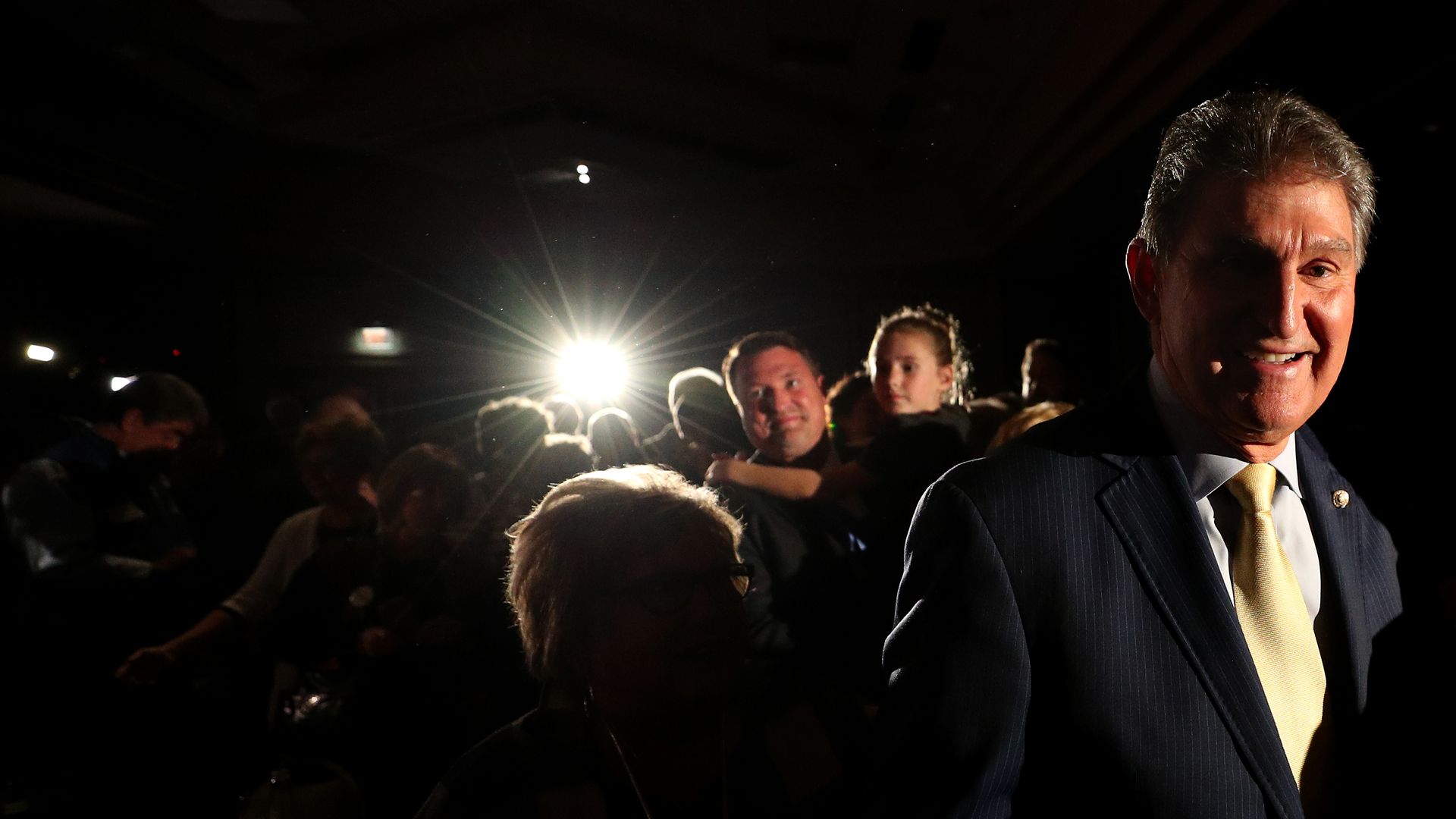
Sen. Joe Manchin (D-W.Va.) announced Thursday that he will vote for President Trump's proposal to reopen the government, making him the first Senate Democrat to back the plan that includes $5.7 billion for a border wall.
The big picture: Manchin will also vote for a Democrat-backed clean spending bill, joining at least 3 Republicans — Sens. Cory Gardner, Susan Collins and Lisa Murkowski — who have said they will vote for both bills in an effort to end the shutdown. Manchin acknowledged that neither bill is likely to pass the Senate, but said his votes "are a start to finding a way to reopen the [government and getting West Virginians] back to work."
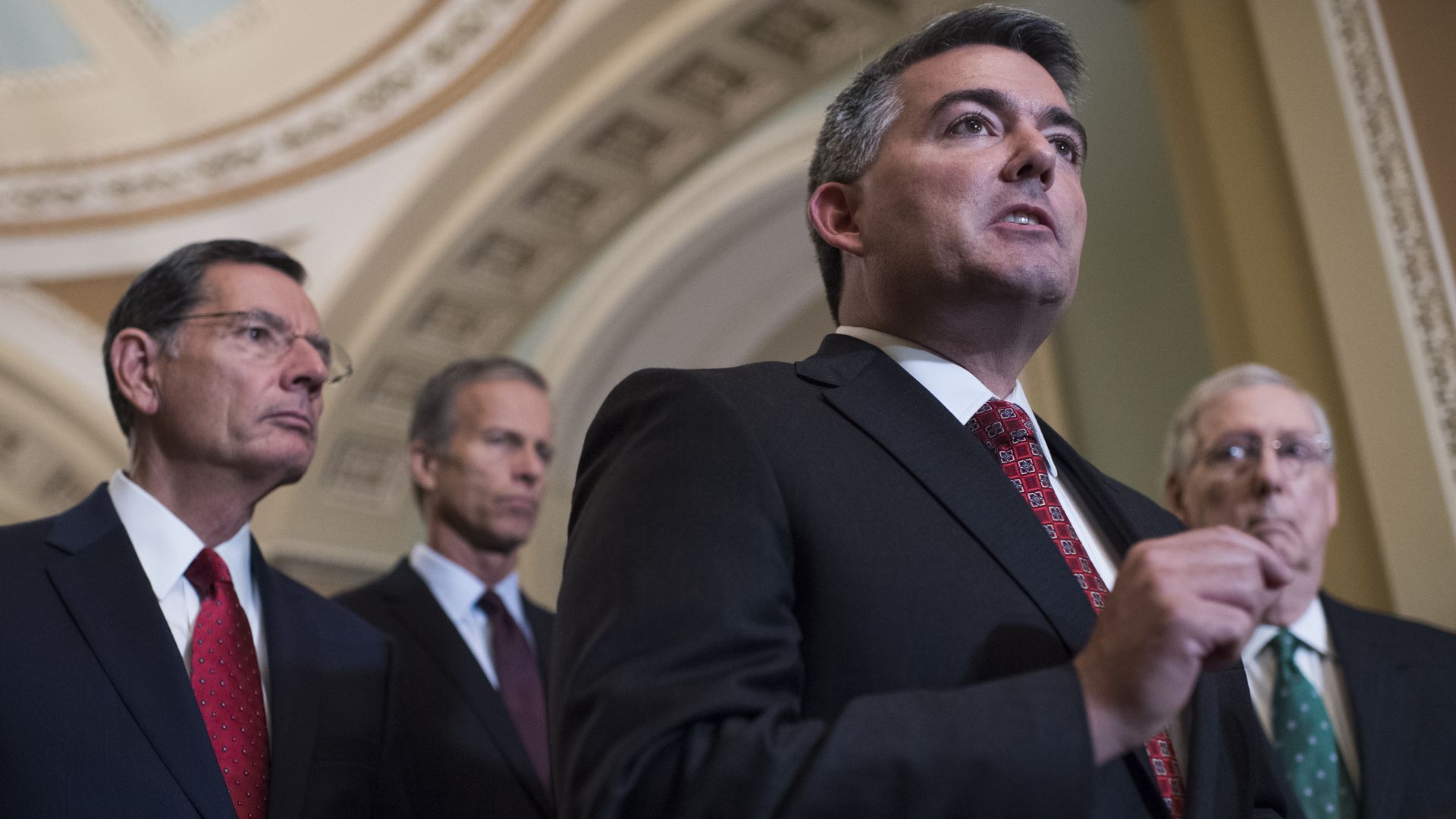
Colorado Republican Sen. Cory Gardner's spokesman told the Denver Post that he intends to vote on Thursday — the 34th day of the ongoing government shutdown — for a clean funding bill that would reopen the government without funding for President Trump's border wall.
Why it matters: Gardner, the chairman of the National Republican Senatorial Committee, is a member of Senate Republican leadership. He's expected to join Sens. Lisa Murkowski (R-Alaska) and Susan Collins (R-Maine) in backing the clean funding bill, a move they first signaled earlier this month. Gardner, like Murkowski and Collins, will also vote for a Republican-backed bill on Thursday that includes Trump's desired funding.
Vanity Fair's Hive last night posted one of the juiciest dishes in the sumptuous buffet that is "Team of Vipers" — the memoir by former White House aide Cliff Sims, which is out Tuesday but is already the subject of much West Wing gossip.
The backdrop: Sims writes about a day in May 2017, when "Morning Joe" accused White House counselor Kellyanne Conway of being disloyal to President Trump and he was called to her upstairs West Wing office to discuss a response.