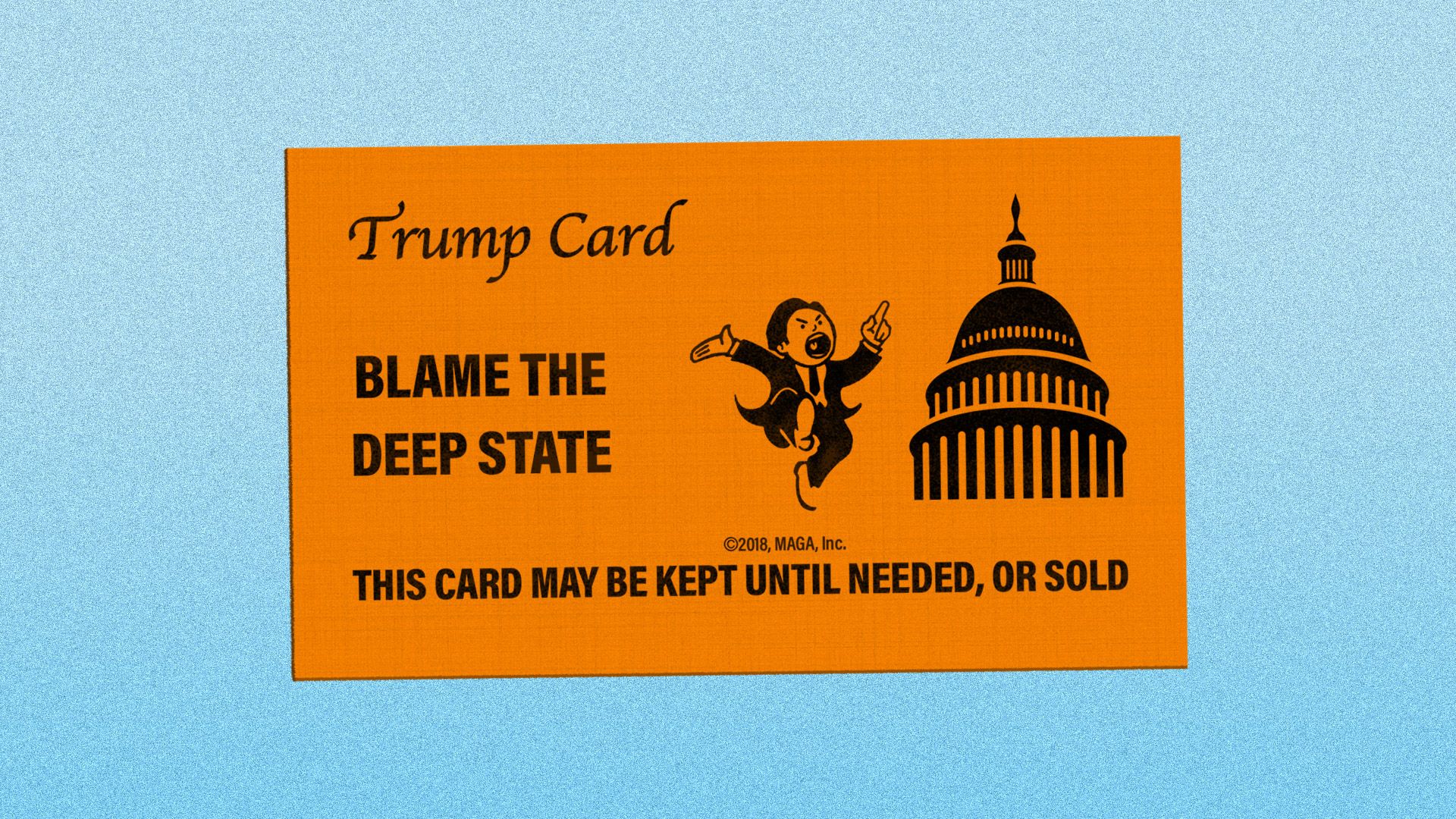
Politicians and government officials across Trumpworld are adopting the "never admit defeat" tactics of their boss and crying "WITCH HUNT!" after finding themselves in legal hot water.
Why it matters: By appealing to the president’s distrust of the nefarious "Deep State," these Trump acolytes attempt to convince him — and his base — that they're being targeted by shadowy forces inside the government.
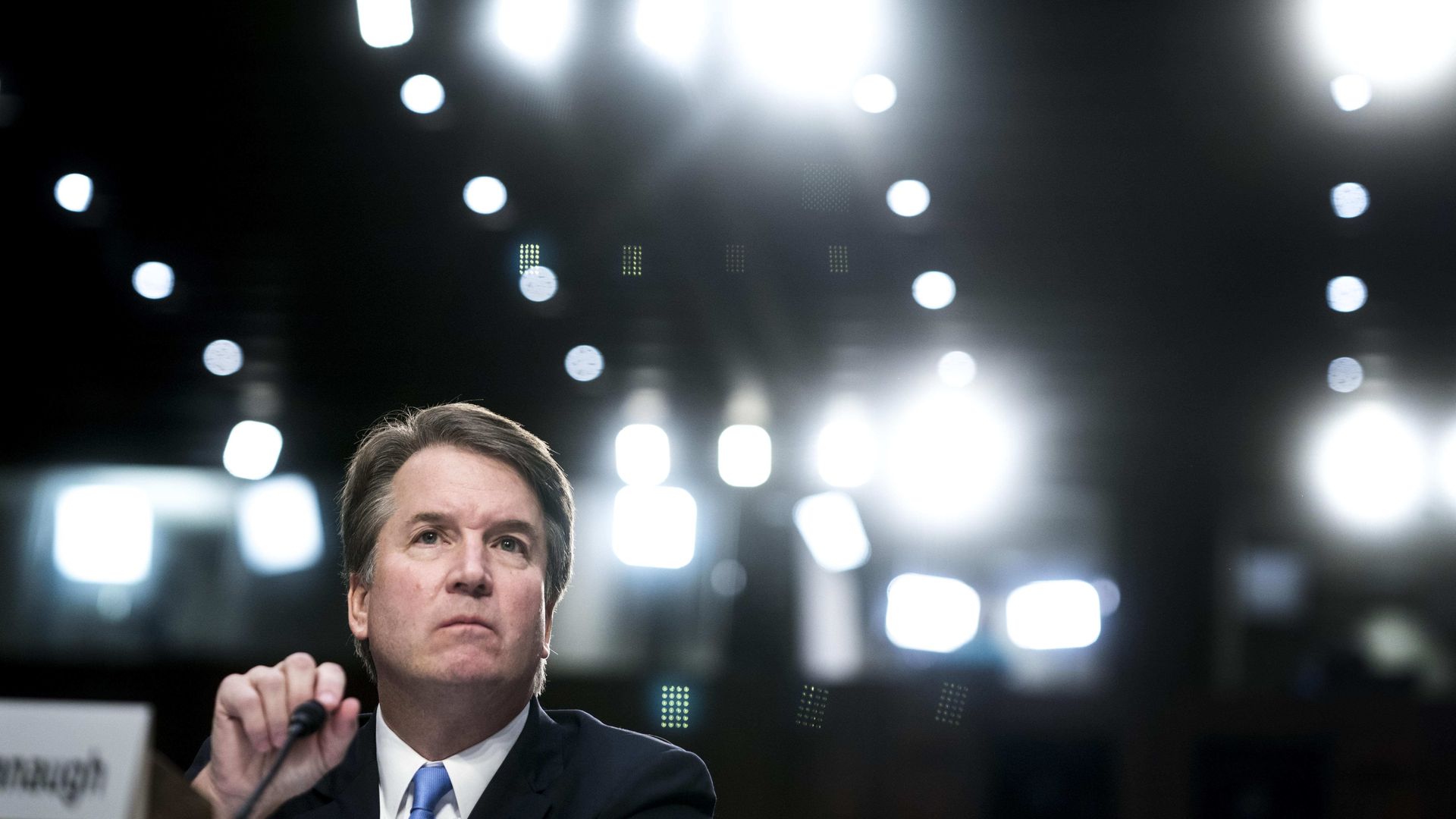
What was previously an allegation of sexual misconduct against Brett Kavanaugh by an unidentified person — without a lot of details or evidence — is now backed by a name, a specific allegation and therapist's notes. A senior Republican official involved in Kavanaugh's confirmation privately admitted to me that they felt queasy when they read The Washington Post story.
Driving the news: There was one sign Sunday that these allegations could actually derail Kavanaugh's confirmation to the Supreme Court — which was previously a sure thing. Jeff Flake told the WashPost's Sean Sullivan that the Senate Judiciary Committee should wait to hear more from Kavanaugh's accuser, Christine Blasey Ford: "For me, we can’t vote until we hear more."
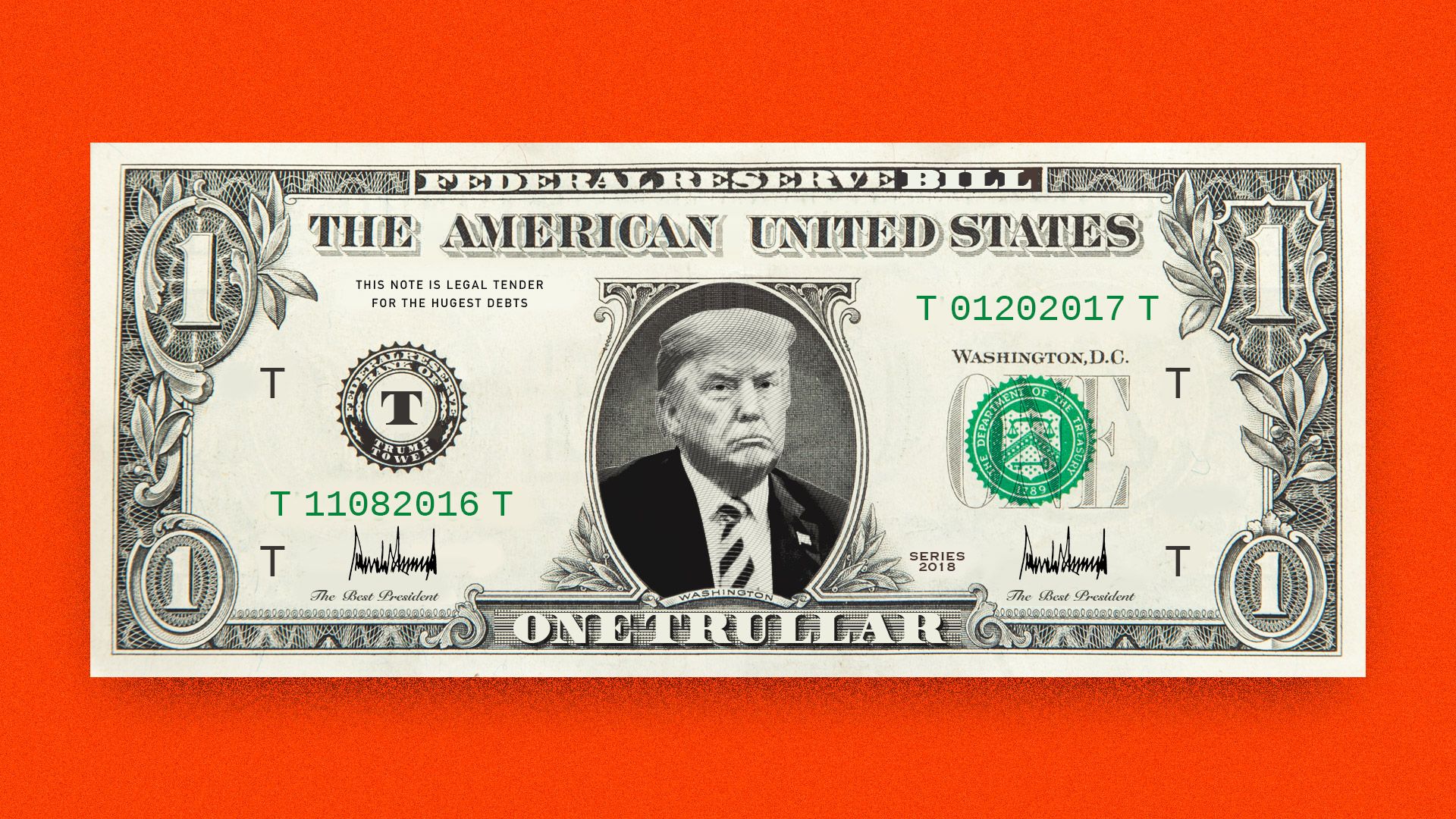
Donald Trump wants to rebuild America’s infrastructure the same way he built his buildings: debt, debt and more debt. His then-economic adviser, Gary Cohn, learned this the hard way in a fraught meeting last year, the details of which haven’t been previously reported.
What happened: As Cohn and his team were putting together their $1.5 trillion infrastructure package, Cohn tried to use a real estate analogy to sell Trump on his plan to pair public and private investment. It backfired.
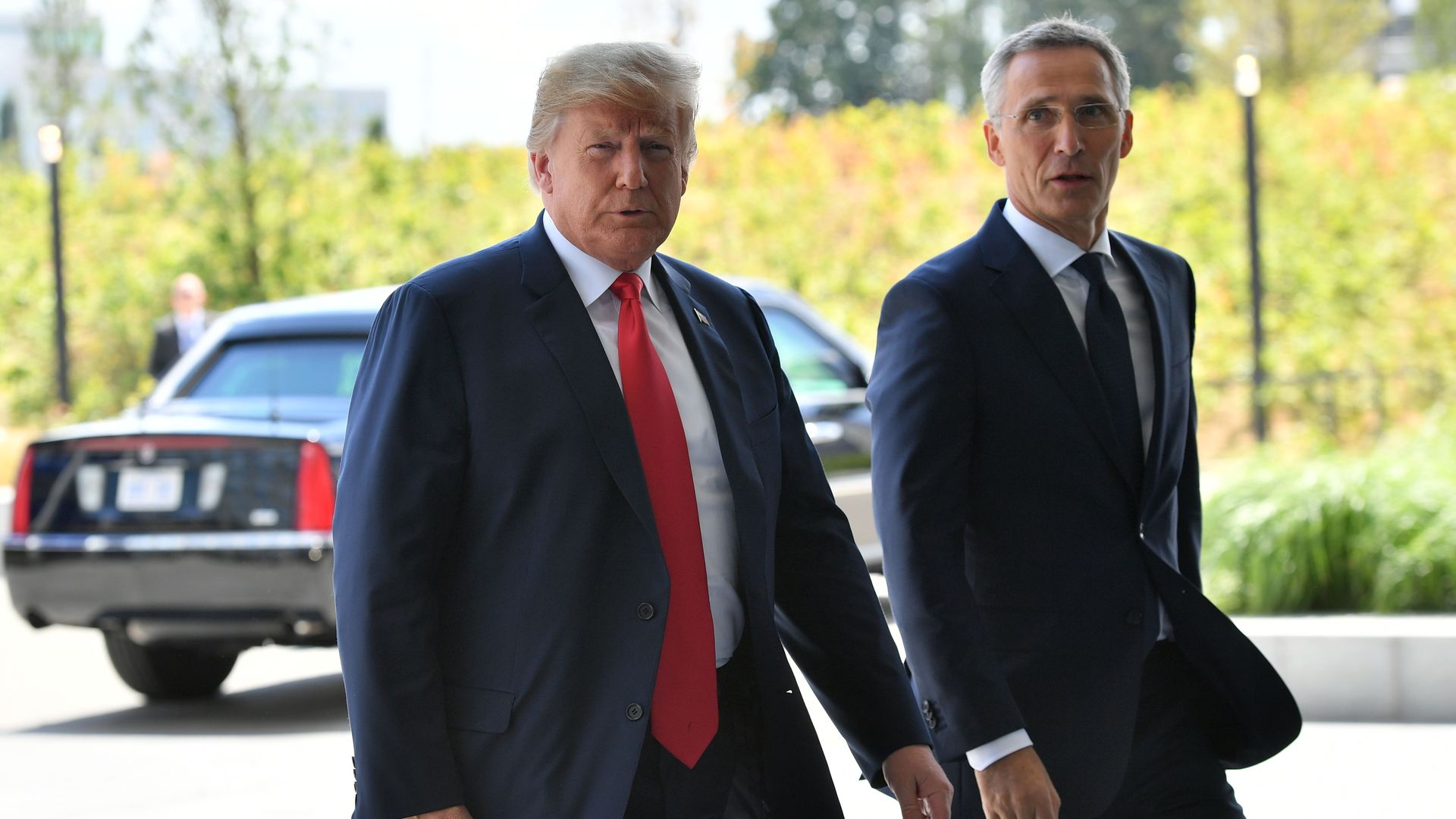
NATO Secretary-General Jens Stoltenberg told me he reassured Montenegro after President Trump publicly questioned whether it was worth it for the United States to defend the tiny NATO ally if an enemy attacked. "I have reassured Montenegro," Stoltenberg told me in an interview on Friday, "and I also know that the United States has clearly stated that they are fully committed to Article 5 and NATO and the collective defense."
Why this matters: NATO's foundational principle is that an attack on one member country is an attack on all. America's willingness to honor that commitment provides the security blanket that keeps the transatlantic alliance alive.
By all measures of American politics, this should be the moment Republicans cement an unstoppable governing majority. Charlie Cook of The Cook Political Report emails: "From the presidency, to Congress, governors and state legislatures, Republicans hold more offices than any time since the 1920s. ... This is the most favorable Senate map that either party has had in modern history, maybe ever. ... Things don’t get much better."
Instead, Republicans are blowing it — often in mind-boggling ways, officials tell Axios.
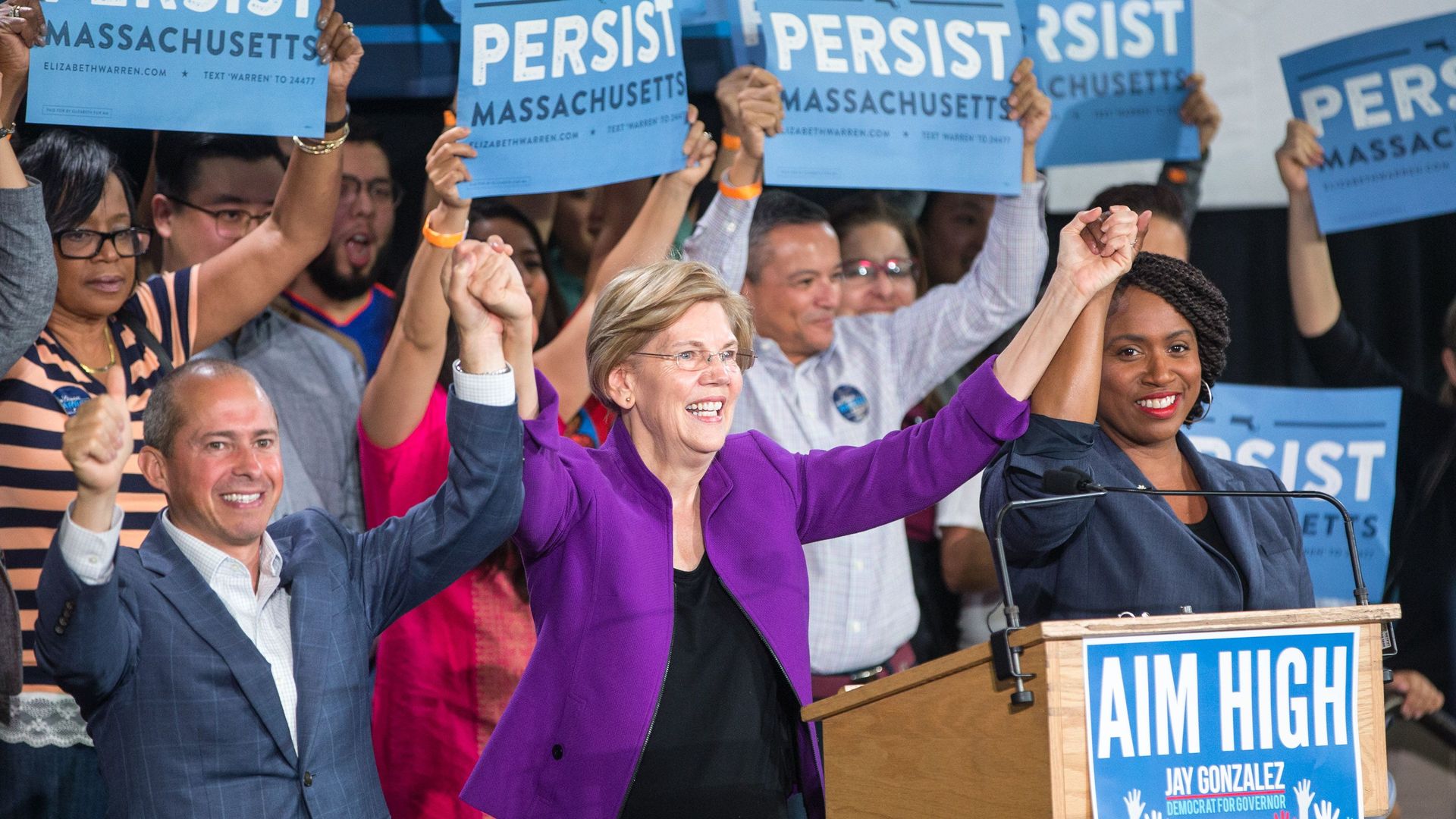
"HUGE lesson for Dems in 2020 from the primary results," Josh Kraushaar, National Journal's politics editor, tweeted Sunday morning.
The big picture: There's a "limited audience for a white progressive (like Warren/Sanders) outside of a narrow ideologically-driven base ... huge opportunity for someone like Kamala Harris to build multi-racial coalition."
The economy is better for President Trump's first midterm election than it was for either of Barack Obama's two midterm elections — largely because it has been steadily improving since the 2008 financial crisis.
Why it matters: In 2010, Democrats lost the House, and in 2014, they lost the Senate — two losses for Obama, and both under weaker economies than Trump has now. Yet it's very possible that Republicans will lose the House under Trump's watch despite the strong economy.
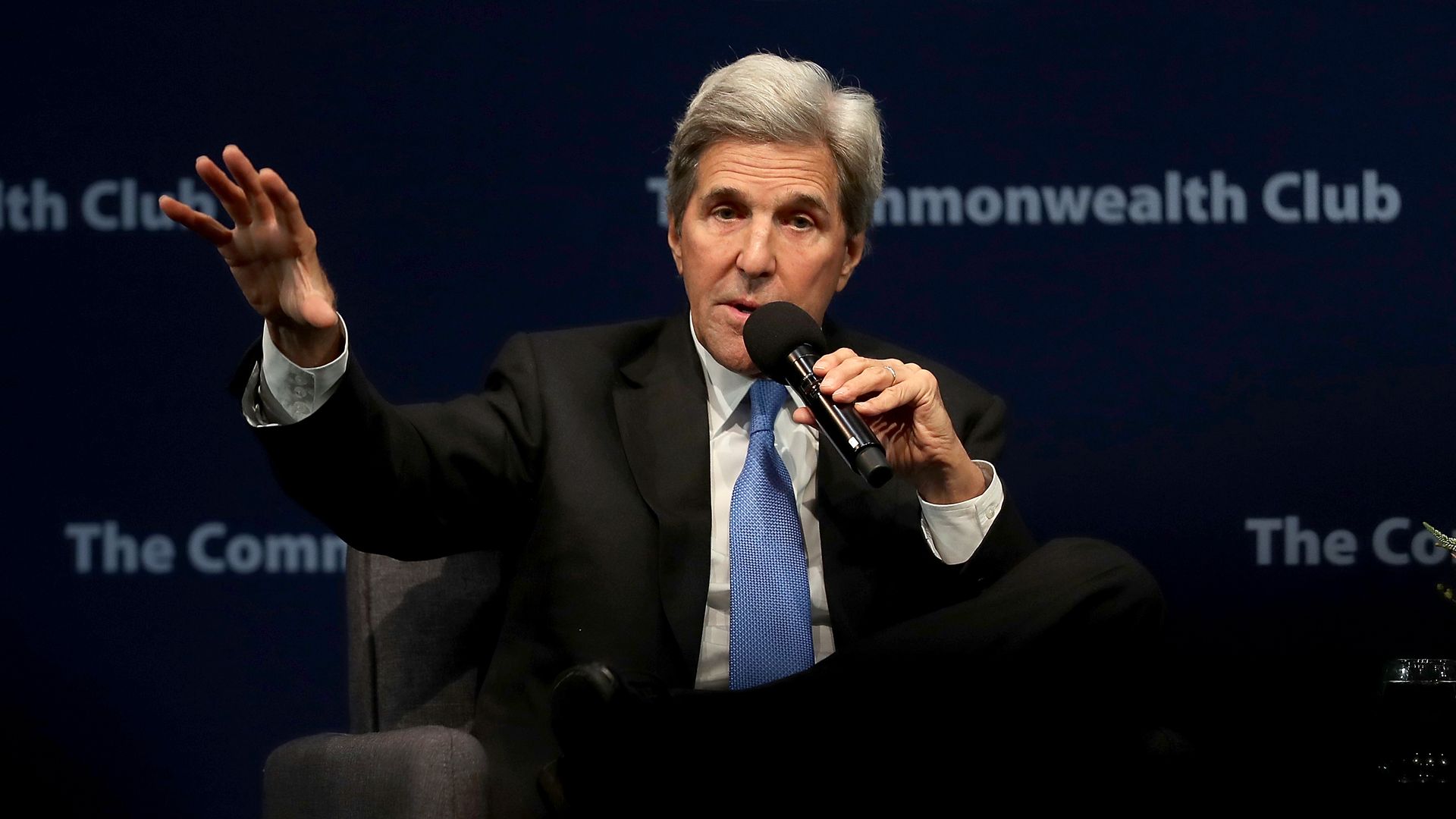
Former Secretary of State John Kerry fired back at President Trump and Secretary of State Mike Pompeo over their criticism of his meetings with Iran's Prime Minister, saying the administration should be more "worried about Paul Manafort" than his meetings, ABC News reports.
The big picture: Trump and Pompeo both criticized Kerry for meeting with Iranian officials on Friday. Pompeo said Kerry is directly undermining the current administration with his meetings and Trump called them "illegal." Kerry defended himself saying he only tried to figure out what Iran may be willing to do in order to "change the dynamic of the Middle East for the better."
President Trump is expected to announce new tariffs of likely 10% on $200 billion in Chinese goods after final details are ironed out over the weekend, the Wall Street Journal reports, citing people familiar with the matter.
The details: The tariff level expected is well below the initial 25% rate proposed by Trump earlier this year. The president is aiming to keep the level low ahead of midterm elections and holiday shopping season, but could potentially increase the rate at a later date, per WSJ. The announcement comes just before a high-level meeting with Chinese and U.S. officials to discuss trade tensions.
The most telling split among 2020 Democratic hopefuls won’t be over policy, but whether to match President Trump's scorched-earth tactics, top Democrats tell Jonathan Swan and me.
"The key question is: How crazy will Trump make us?" asked a veteran of Democratic presidential campaigns. "How far out there will you go to be like Trump?"
The Federal Emergency Management Agency will be testing a new system that allows the president to send a warning message directly to your cellphone, the agency announced.
The details: The Wireless Emergency Alerts will send a test message on September 20th that reads, "Presidential Alert." It will be used "to warn the public about dangerous weather, missing children, and other critical situations," FEMA explained. Only users whose providers participate in WEA will receive the test.
Despite President Trump's crackdown on immigration, there were more than 44.5 million people living in the U.S. last year who had been born in foreign countries — the highest share of the population since 1910, according to new data released by the Census Bureau.
Data: U.S. Census Bureau; CHART: Naema Ahmed/Axios
Two noteworthy trends: 1)Of the immigrants who arrived in the U.S. in the past 8 years, 41% were born in Asia and 39% in Latin America — a dramatic shift as more than half of those who arrived in the U.S. before 2010 had been born in Latin America. 2) A higher share of this population had at least a bachelor's degree in 2017 than in 2016.