Thursday's politics & policy stories

Microsoft, Facebook, Uber among tech companies taking stand in support of 'Dreamers'
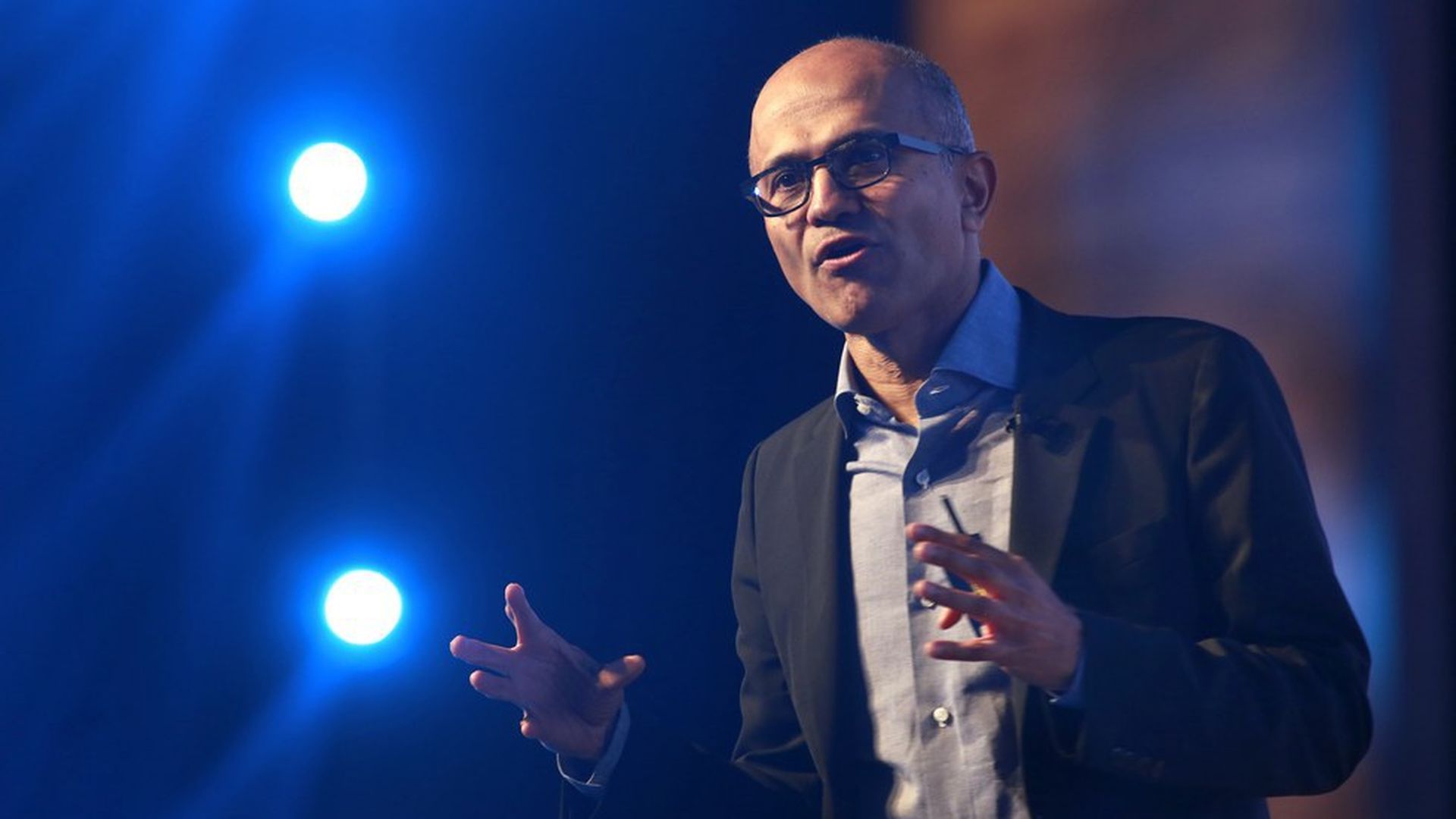
Microsoft, Uber and Facebook have issued strong statements of support for DACA, the Obama-era policy that shields 800,000 undocumented immigrants who came to the U.S. as children from deportation. President Trump is reportedly on the verge of ending the program, though the White House said Thursday that he hadn't made up his mind.
What's Next: Expect more tech companies to weigh in strongly in support of keeping the protections. Axios' Mike Allen reported this morning that top CEOs plan to speak out if Trump ends DACA, which also allows the "Dreamers" to obtain work permits.

White House: Final decision on DACA hasn't been made
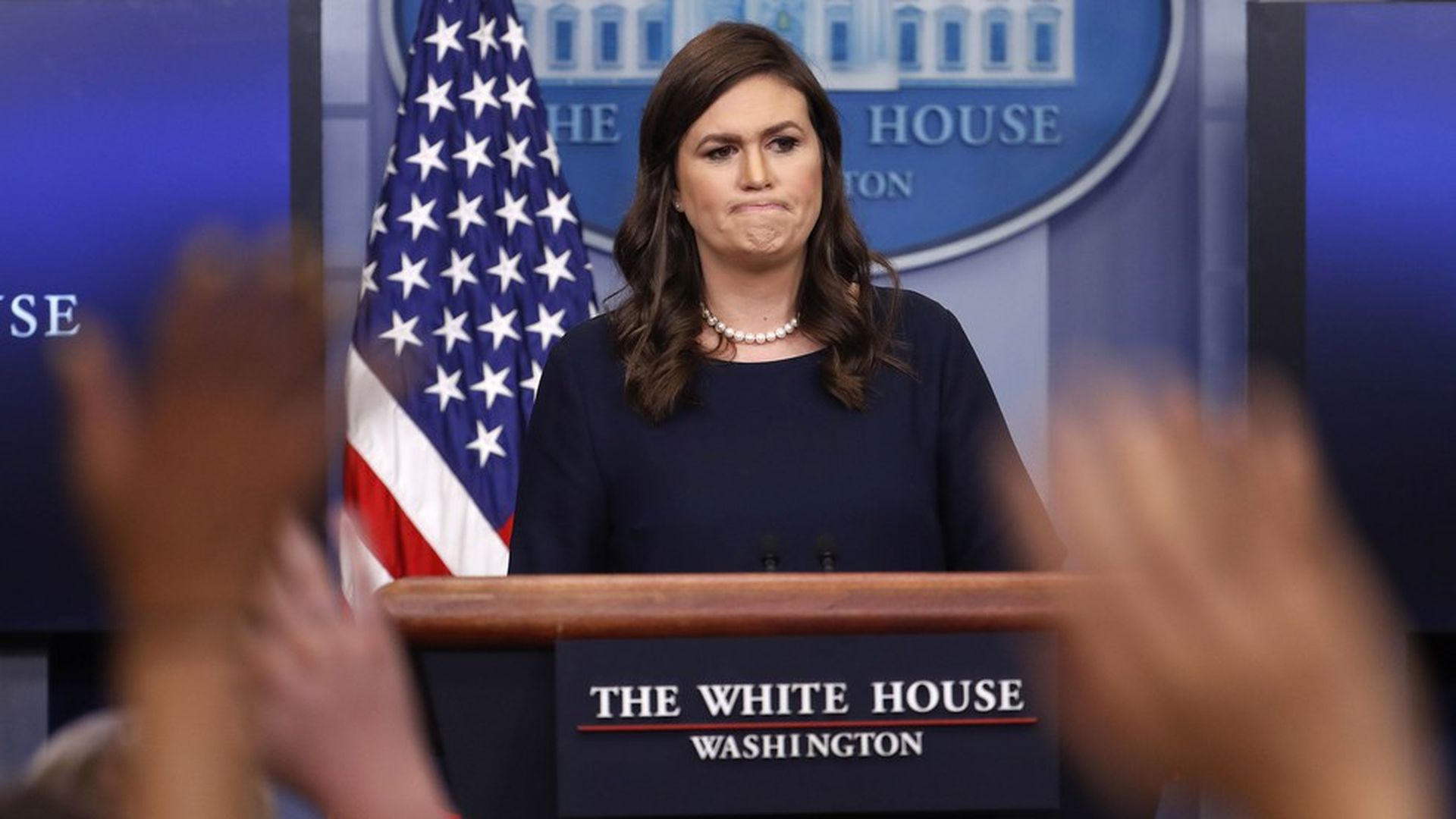
Sarah Sanders told reporters Thursday that the president has not made a final decision on what will happen to the Obama-era deferred action for childhood arrivals (DACA) program. But she declined to comment when asked whether Trump's previous comments that DREAMers "shouldn't be worried" still stands. Other highlights from her Thursday briefing:

Trump's lawyers present case that firing Comey wasn't obstruction
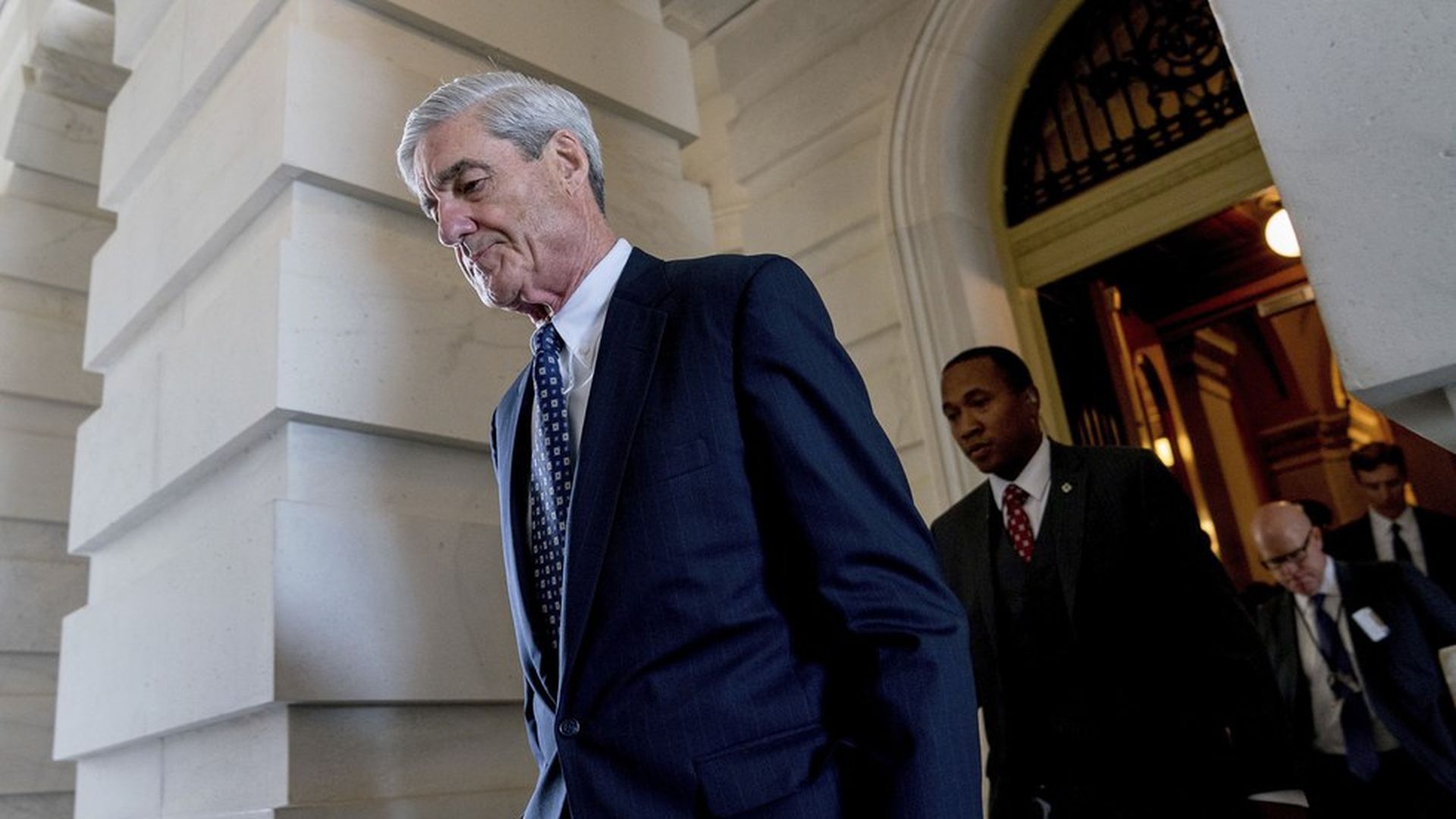
President Trump's lawyers have presented memos to Special Counsel Robert Mueller making their case as to why Trump did not obstruct justice when he fired former FBI Director James Comey, per the WSJ.
- What the memos say: One says that Trump, as president, has the power to hire and fire whomever he pleases under the Constitution. It also cites additional case law meant to strengthen the argument that Trump didn't obstruct justice. Another details why they believe Comey is an unreliable witness prone to exaggeration.
- Why it matters: It makes sense that Trump's legal team would try to get ahead of the Mueller team's expected arguments — it's what any good defense team would do. But there's no indication that Mueller has been persuaded to stop investigating possible obstruction.
Report: Manafort notes from Russia meeting referenced 'donations'
Paul Manafort's notes taken during the infamous meeting with Russian officials at Trump Tower last summer — which also included Donald Trump Jr. and Jared Kushner — use the word "donations" and "RNC" in close proximity, per NBC News. A spokesman for Manafort told Axios, "It is 100 percent false to suggest this meeting included any discussion of donations from Russian sources to either the Trump campaign or the Republican Party."
Who's seen them: Manafort's notes were taken on a smart phone — NBC's source refers to them as "cryptic" — and are in the possession of the House and Senate Intelligence Committees as well as Special Counsel Robert Mueller's investigation.
Why it matters: Foreign individuals can't contribute any money to American election campaigns. It's impossible to know exactly what Manafort's notes mean based on this report, but it's another blast of smoke surrounding the Russia investigation just when the Trump administration needs it least.

Report: Afghan officials and Taliban talk nearly every day

Afghan officials are speaking by telephone with Taliban military leaders nearly every day about the country's constitution and a political future, the AP's Kathy Gannon reports. Afghanistan's national security adviser talks with the Taliban every other month, per officials familiar with the efforts.
Why it matters: The documents detailing the conversations, which the AP obtained, show the Taliban may be willing to sign on to Afghanistan's constitution as well as future elections. The Taliban wants amendments to the constitution and potentially an Islamic system of governance, according to a senior Afghan security official.
These aren't public peace negotiations, and the Taliban is unlikely to enter talks without an American withdrawal, according to Abdul Hakim Mujahed, a member of the Afghan government's High Peace Council. Trump announced last week a withdrawal would be unacceptable.

Immigrant kids’ mental health increases when moms aren't threatened with deportation

The mental health and wellbeing of children of unauthorized immigrant parents increases by as much as 50% when their mothers are protected and not threatened with deportation, new research shows.
Why it matters: The study in the journal Science has important implications in the political debate in the Trump White House and Congress about whether to eliminate or expand the Deferred Action for Childhood Arrivals, or DACA program created by President Obama to protect children of illegal immigrants. DACA currently offers temporary protection from deportation to roughly 750,000 children brought to the U.S. as children. There are 11 million unauthorized immigrants in America who are also parents to 4 million children who are U.S. citizens by birth.
Freedom Caucus chair urges against Harvey aid in debt-ceiling increase
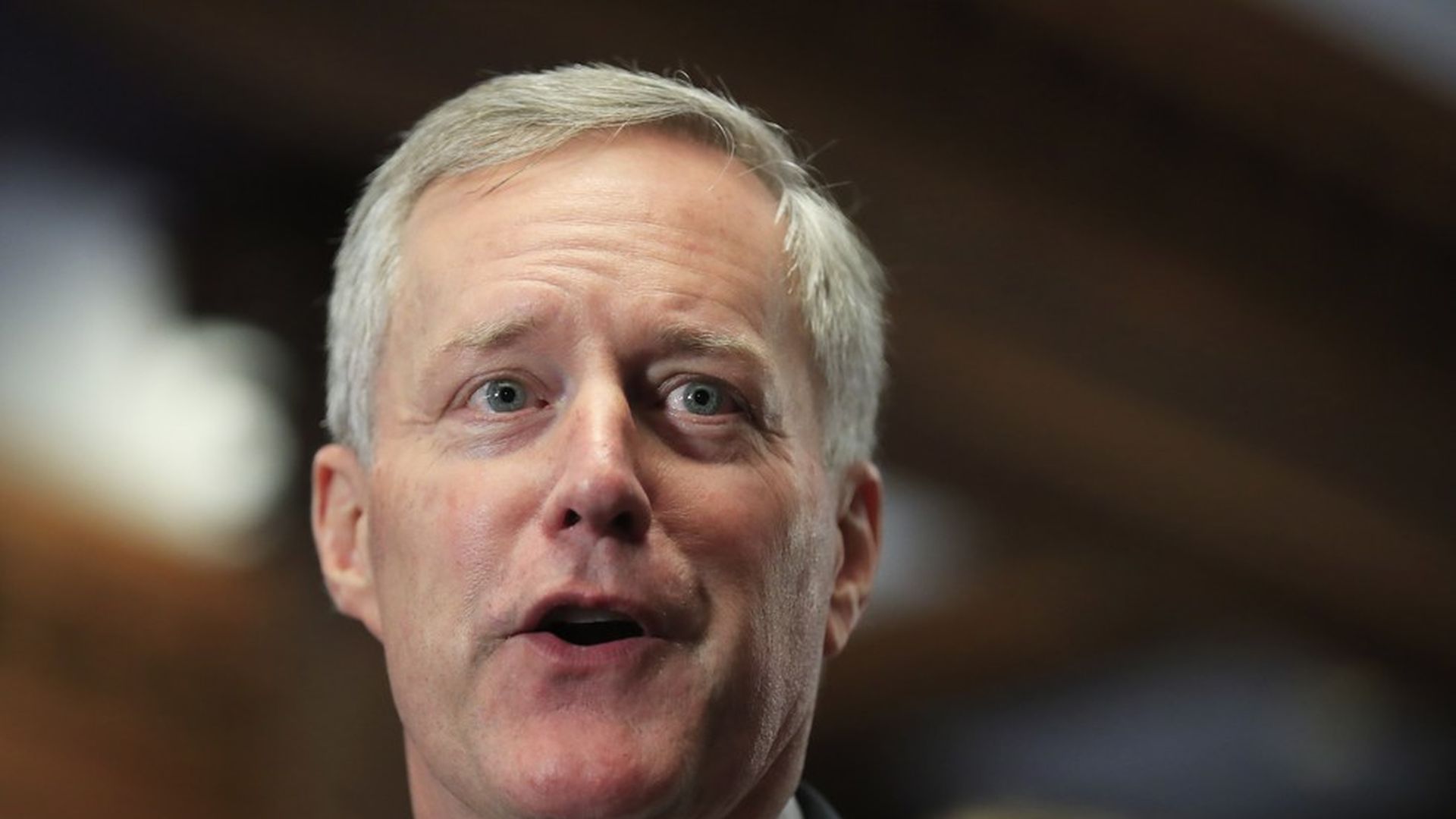
House Freedom Caucus leader Mark Meadows urged Congress not to attach Hurricane Harvey funding to a debt-ceiling increase, calling it a "terrible idea" that would conflate "two very different issues," per The Washington Post. "The Harvey relief would pass on its own, and to use that as a vehicle to get people to vote for a debt ceiling is not appropriate," Meadows said.
- Timing: Congress has yet to announce how it plans to respond to Harvey. Meanwhile, Texas lawmakers are ramping up pressure for swift action on an aid package that was needed yesterday. At the same time, the deadline to raise the debt-ceiling is rapidly approaching at the end of September.
- Why it matters: Meadows' warning reveals that passing a bill will still be difficult, despite administration assurances that the debt-limit will be raised by the end of September and the hurricane making government funding easier.
- Go deeper: What will happen if the government fails to raise the debt ceiling.
Poll: 60% of Americans oppose Trump's Arpaio pardon
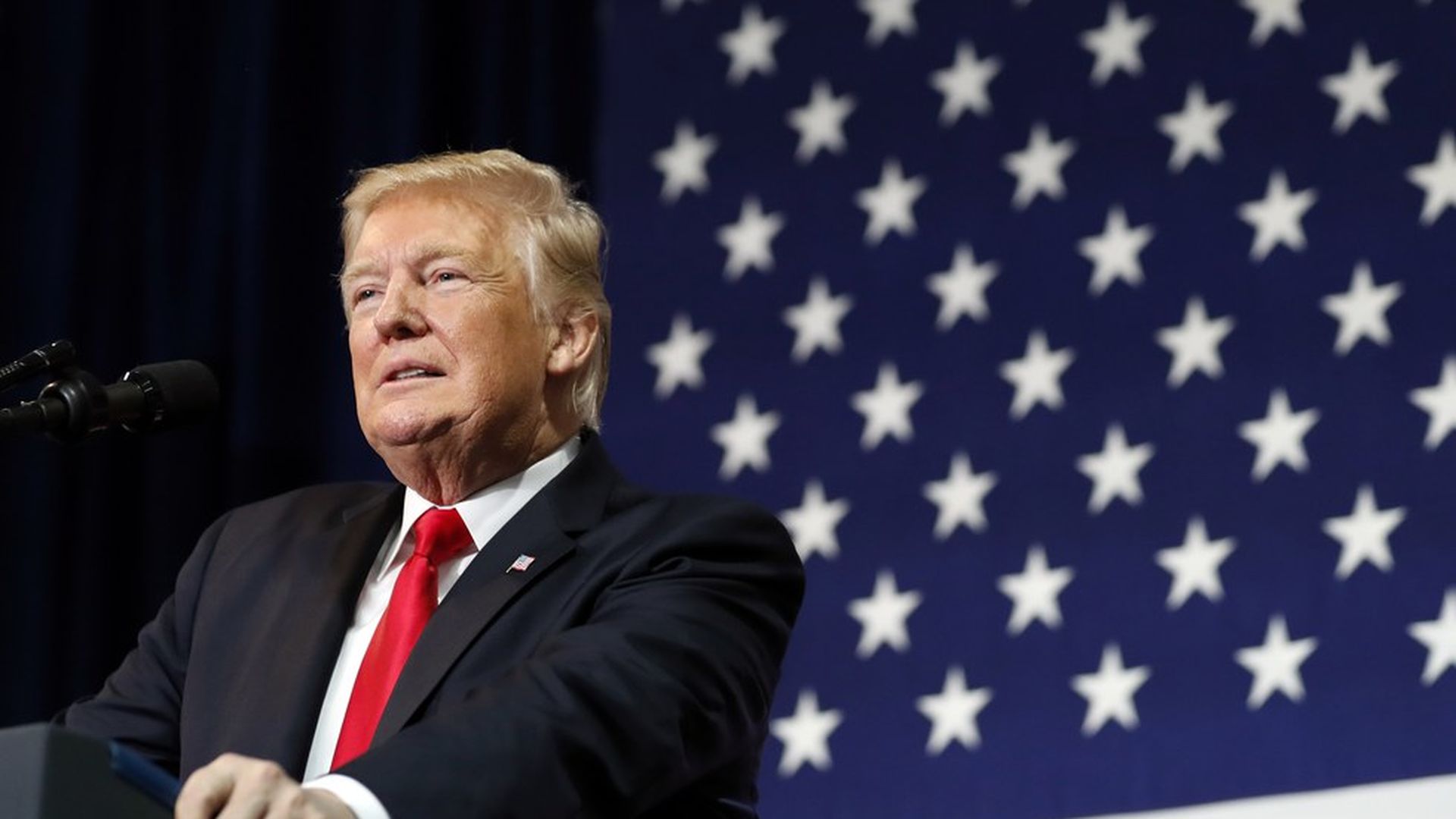
The majority of Americans disapprove of President Trump's decision to pardon ex-Arizona sheriff Joe Arpaio, according to a new NBC News/Survey Monkey poll, while nearly two-thirds said they support the Obama-era DACA program, which Trump is seriously considering axing.
Between the lines: Trump knew his decision to pardon Arpaio would enrage half the country, but he didn't care. And now, compounded with his aggressive stance on "Dreamers", his behavior is hitting him hard in the polls. According to Gallup, Trump's overall approval rating has remained in the mid-30s since Aug. 20.
Poll: Public generally approves of Trump's Harvey response
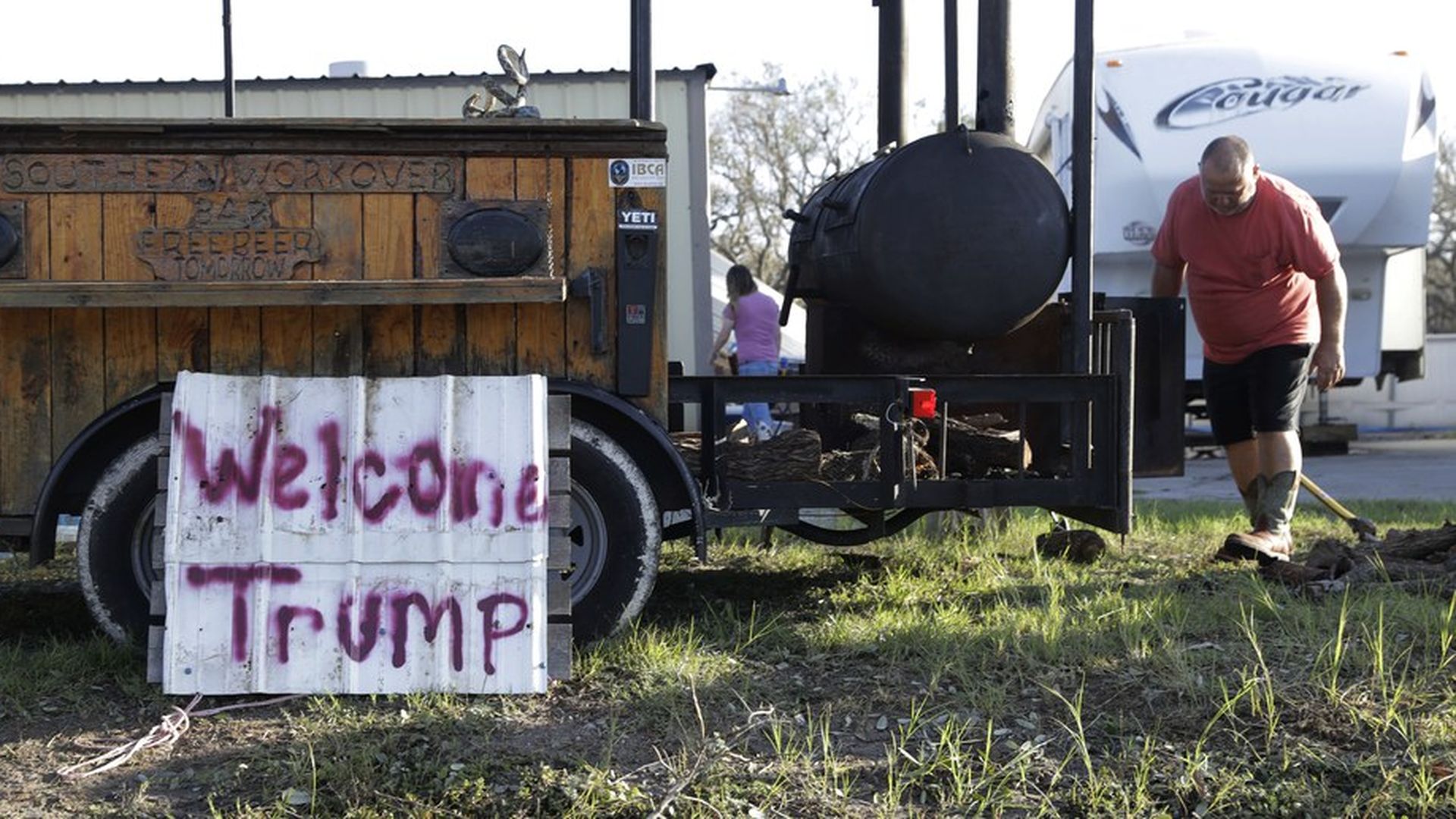
A new Huffington Post/YouGov poll found that a plurality of Americans have a positive initial reaction to the way President Trump and the federal government have handled the response to Hurricane Harvey.
Between the lines: Trump's overall approval rating is in the mid-30s, according to Gallup, so even some who disapprove in general are supportive of his response.
- 51% approve of the federal government's handling of Harvey, while 16% disapprove. 42% approve of Trump's efforts, and 24% disapprove.
- 32% said the U.S. currently spends too little on disaster relief, 33% said it spends the right amount, and only 6% said the country spends too much.
- 47% believes climate change played at least somewhat of an important role in Harvey, and just under a third believe it played little or no role.
- Those impacted: 4% said they've been directly affected, 12% said someone in their family has been affected, and 22% said someone they know has been affected.
How Trump's tax plan compares to his predecessors'
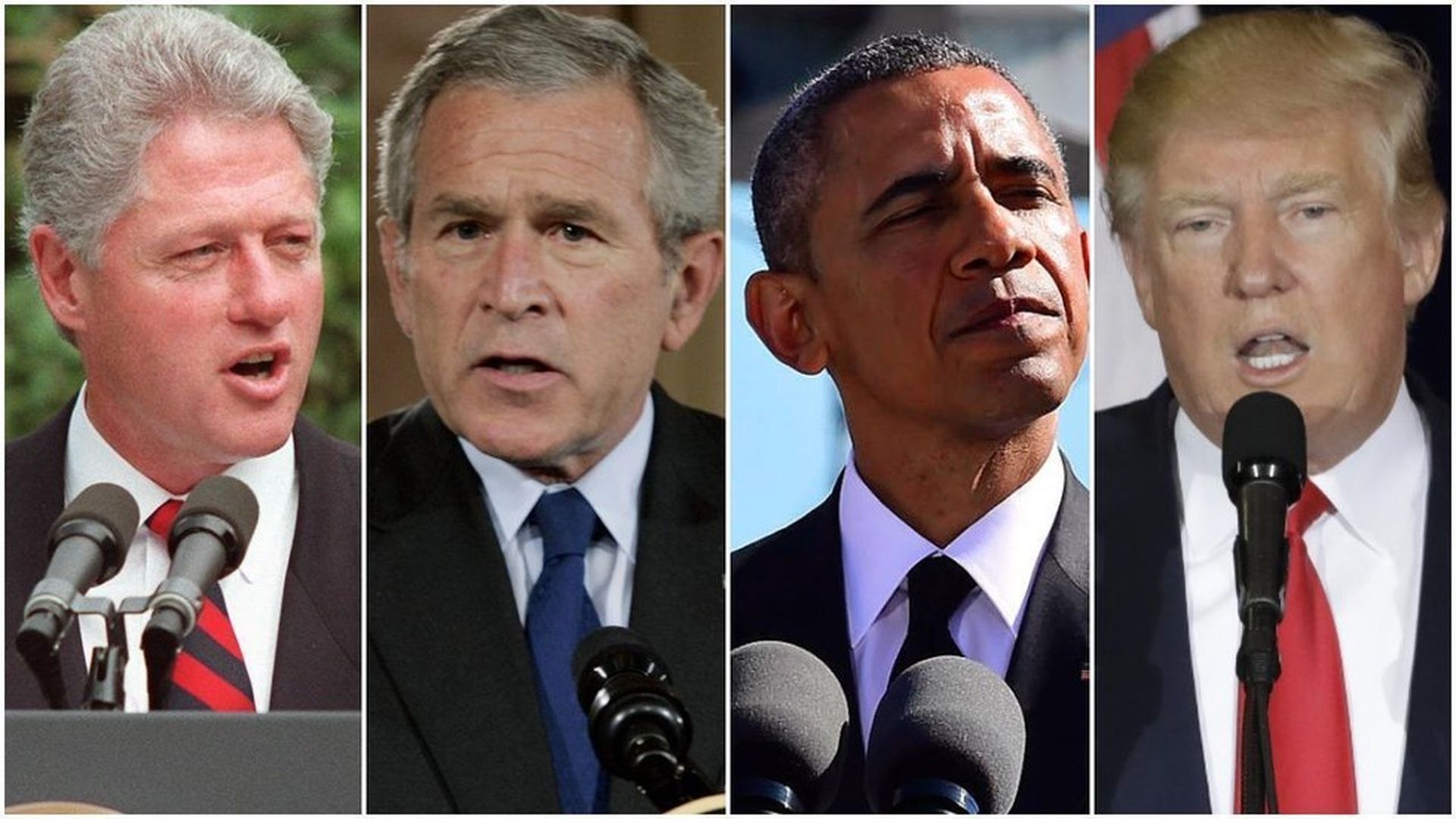
President Trump laid out his tax reform plan, which Steve Mnuchin has said will be "the biggest tax cut and the largest tax reform in US history," at a speech in Springfield, Missouri Wednesday, and confirmed it will include a 15 percent corporate tax rate.
How it compares to his predecessors:
- Barack Obama: Obama called for a progressive tax system that would ensure an equitable level of taxation for every income bracket, with tax increases targeted at the rich.
- George W. Bush: In 2001 and 2003, Bush proposed massive tax cuts, which reduced the top marginal tax rates and the average tax rate for nearly all taxpayers. His new tax rates ranged from 10 percent to 35 percent.
- Bill Clinton: Clinton's plan raised taxes for 40 percent of Americans in order to lower the Federal budget deficit.
Why it matters:
Trump's early tax plans largely follow Republican tradition — major, across-the-board tax cuts. The only tangible figure he discussed today was his plan to lower the corporate tax rate from the current 35% to 15% to help businesses better compete on a global level, something Axios' Jonathan Swan has called "fantasy."
Meanwhile, the Trump administration continues to insist that their plan will pay for itself by delivering increased economic growth, which in turn would generate higher tax revenues. Similar changes under Bush resulted in higher deficits.
Trump to Congress on tax reform: "I don't want to be disappointed"
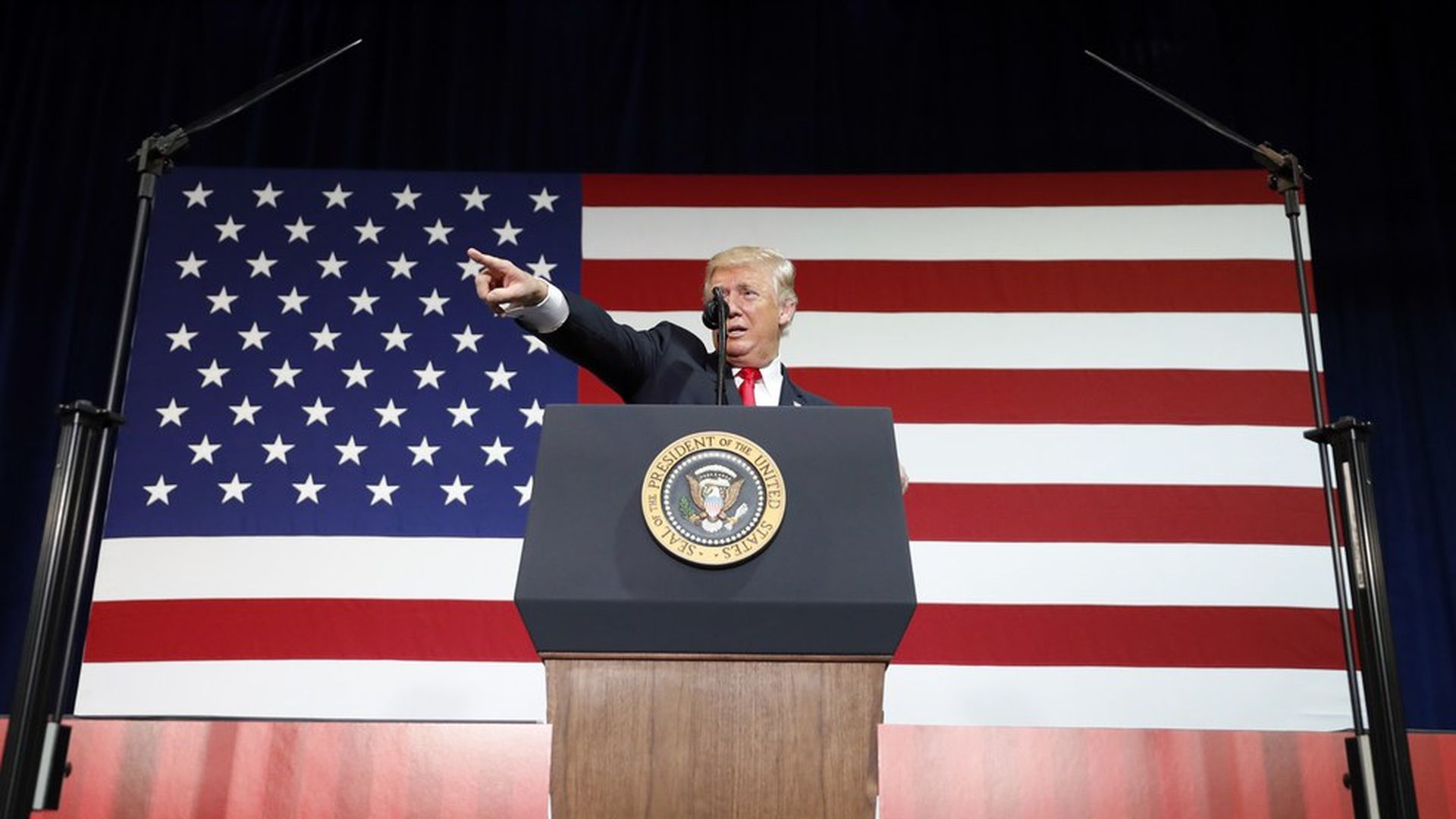
In his tax reform speech today in Missouri, President Trump called on Congress to "get this job done" and repeatedly stated that he doesn't want to be "disappointed."
- "I don't want to be disappointed by Congress, do you understand me? Do you understand? I think Congress is going to make a comeback. I hope so. I'll tell you what, the United States is counting on it."
- He later instructed the crowd to pressure their Democratic senator: "Your senator, Claire McCaskill must do this for you, and if she doesn't... you have to vote her out of office."
- As Axios' Jonathan Swan previewed, the speech was light on policy, but Trump signaled that he's willing to play hardball to push tax reform through.
AFL-CIO President: White House split between "racists" and "Wall Streeters"
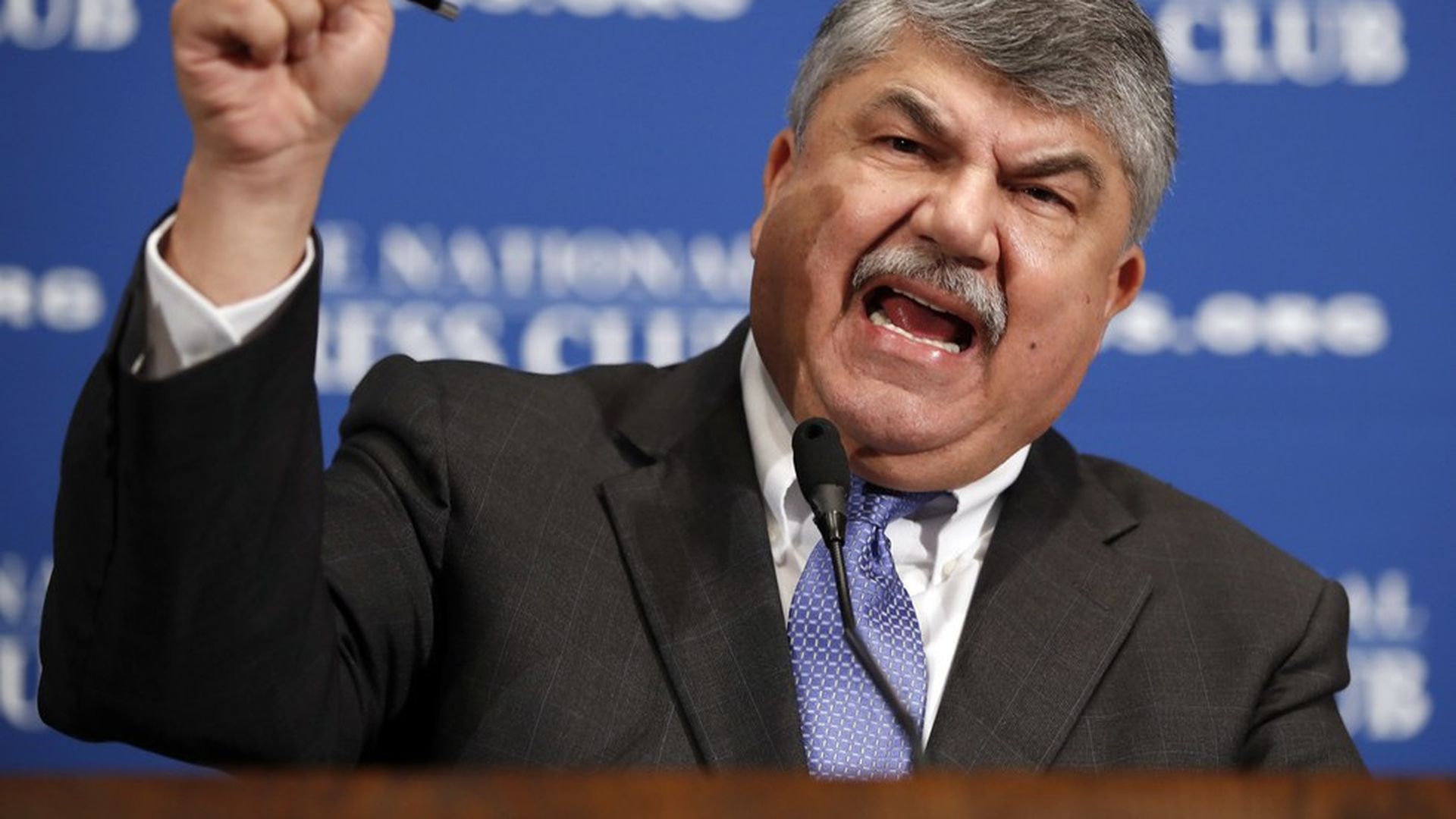
AFL-CIO President Richard Trumka expressed disappointment with President Trump's economic message at a Christian Science Monitor breakfast this morning, branding his White House as divided between "racist[s]" and "Wall Streeters" and telling reporters that "a lot of the optimism has faded" surrounding Trump, per NBC News.
The juiciest quote: "You had two factions in the White House. You had one faction that actually had some of the policies that we would have supported on trade and on infrastructure — but they turned out to be racist. And on the other hand, you had people who weren't racist, but they were Wall Streeters. And the Wall Streeters began to dominate the administration and have moved [Trump's] agenda back to everything he fought against in the election."
Why it matters: It's startling language from the country's most powerful labor leader, who resigned from Trump's manufacturing council after Charlottesville, and a sign that the "Trump coalition" that included blue collar workers in states like Ohio, Pennsylvania and Wisconsin, could be breaking down.

Goldman Sachs lowers shutdown probability due to Harvey
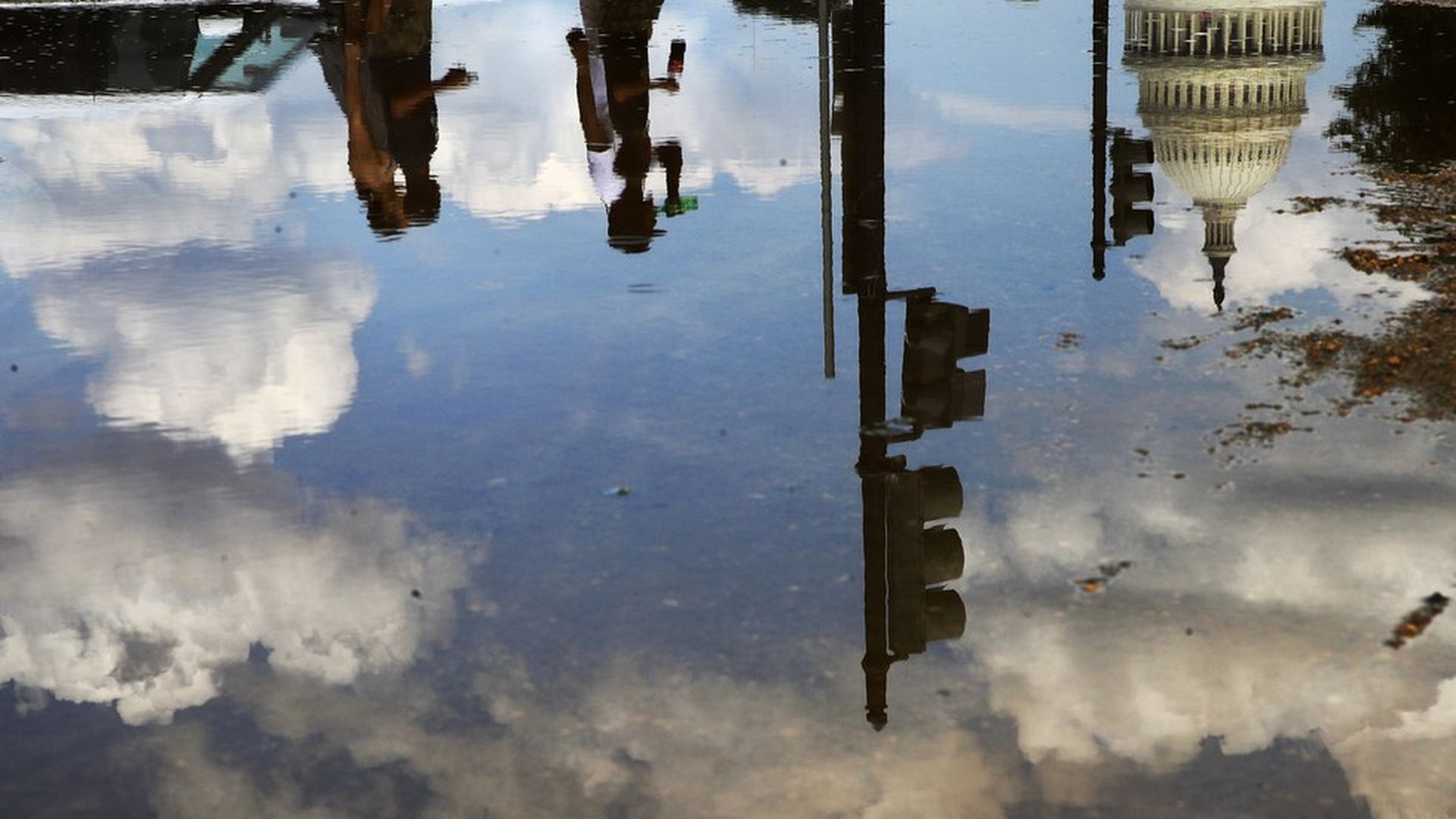
Citing the Harvey catastrophe, Goldman Sachs Economics Research lowers the "probability of a shutdown in early October [to] 35%, down from our prior view of 50%":
- "Allowing a partial government shutdown when federal relief efforts are underway would pose greater political risks than under normal circumstances, raising the probability that lawmakers will find a way to resolve disagreements."
- CNBC's Jim Cramer says Trump's proposed tax overhaul could face delays once again as the administration and Congress focus on the hurricane's devastating impact: "If it's a Katrina-like event, it's all hands on deck."
- A Hill aide disagrees about delay: "[L]egislatively, there won't be much hold-up getting them the resources they need, and ... the people working on that are different than the people working on tax reform."