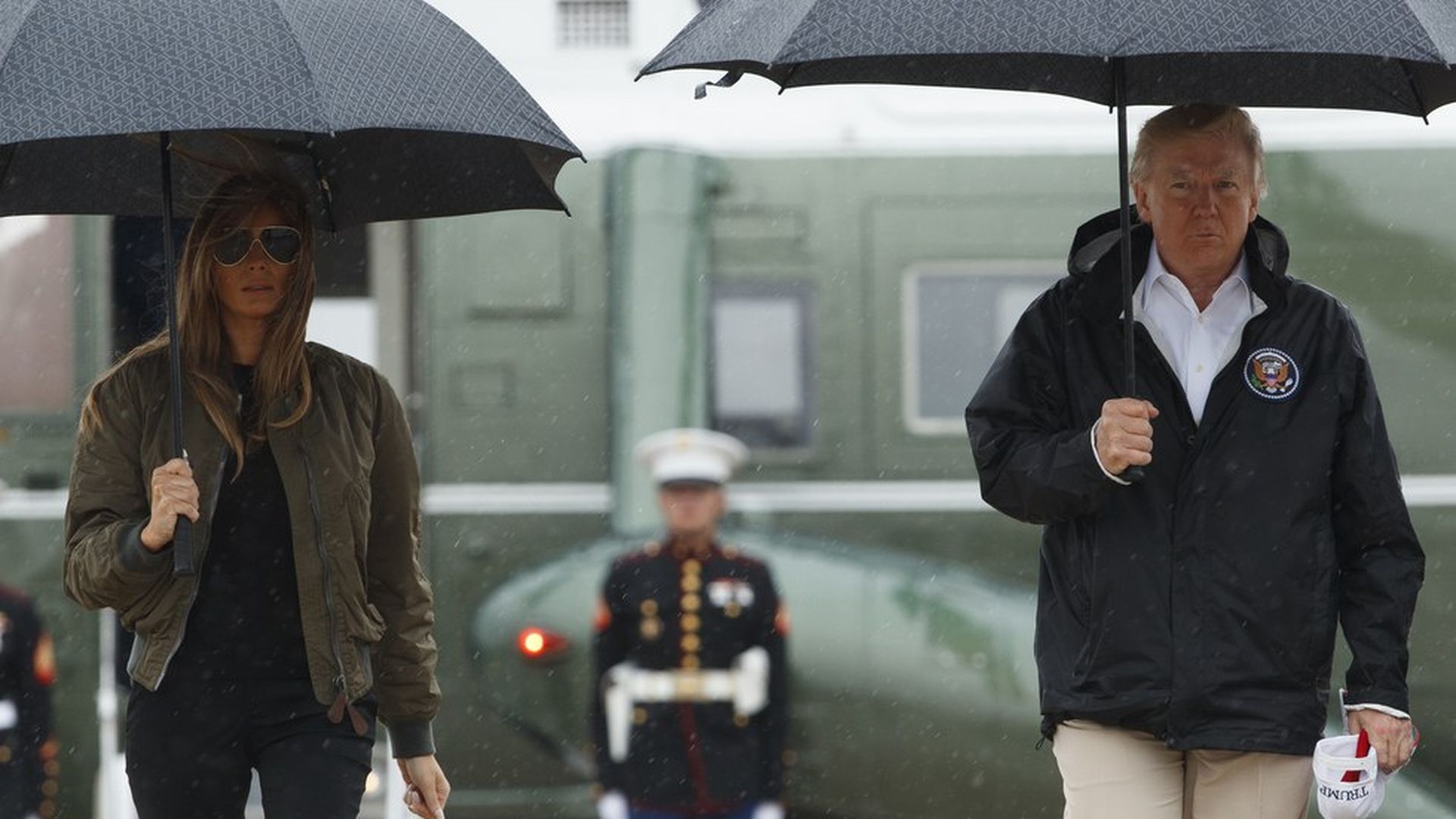
A new Huffington Post/YouGov poll found that a plurality of Americans have a positive initial reaction to the way President Trump and the federal government have handled the response to Hurricane Harvey.
Between the lines: Trump's overall approval rating is in the mid-30s, according to Gallup, so even some who disapprove in general are supportive of his response.
51% approve of the federal government's handling of Harvey, while 16% disapprove. 42% approve of Trump's efforts, and 24% disapprove.
32% said the U.S. currently spends too little on disaster relief, 33% said it spends the right amount, and only 6% said the country spends too much.
47% believes climate change played at least somewhat of an important role in Harvey, and just under a third believe it played little or no role.
Those impacted: 4% said they've been directly affected, 12% said someone in their family has been affected, and 22% said someone they know has been affected.
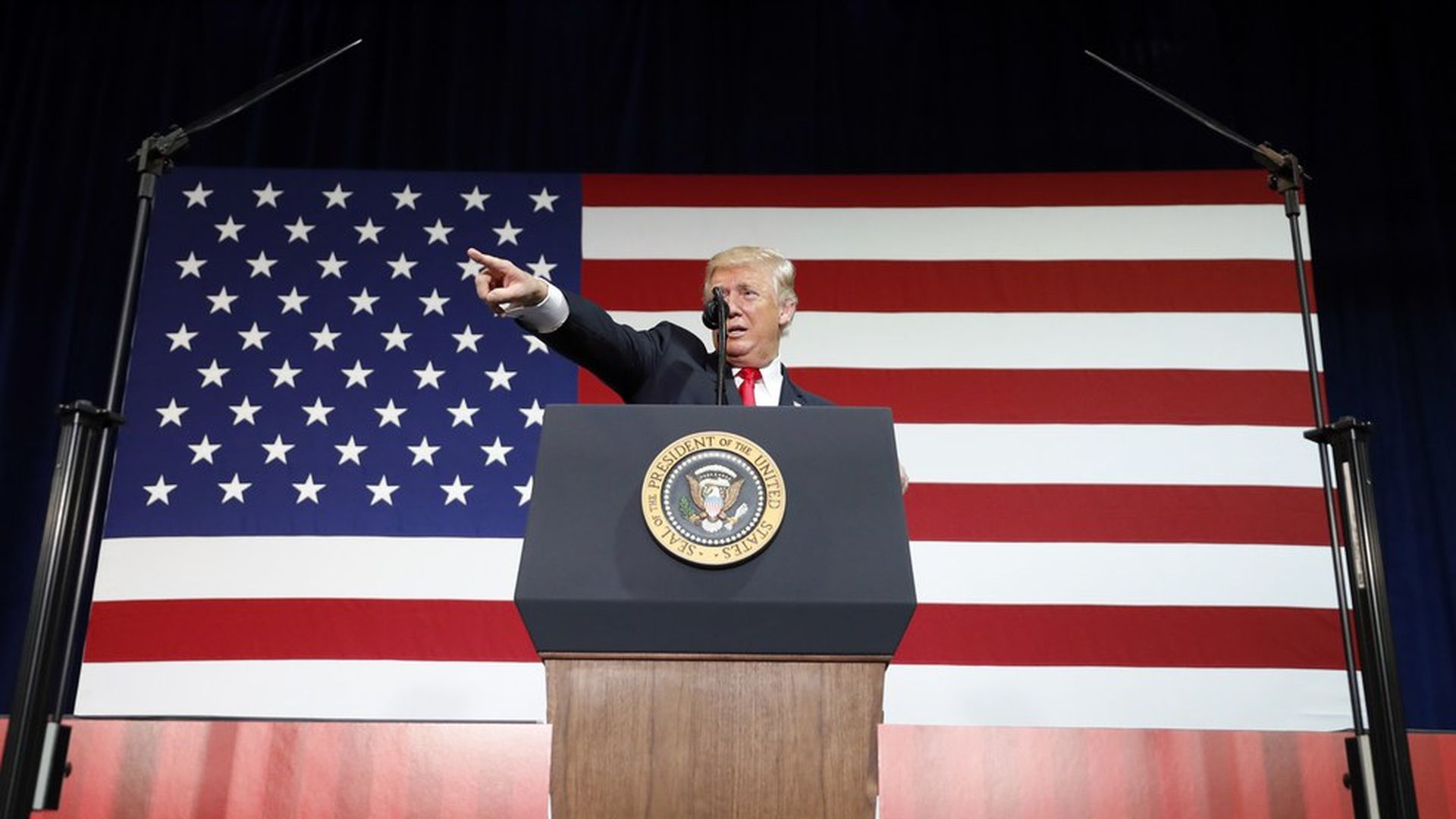
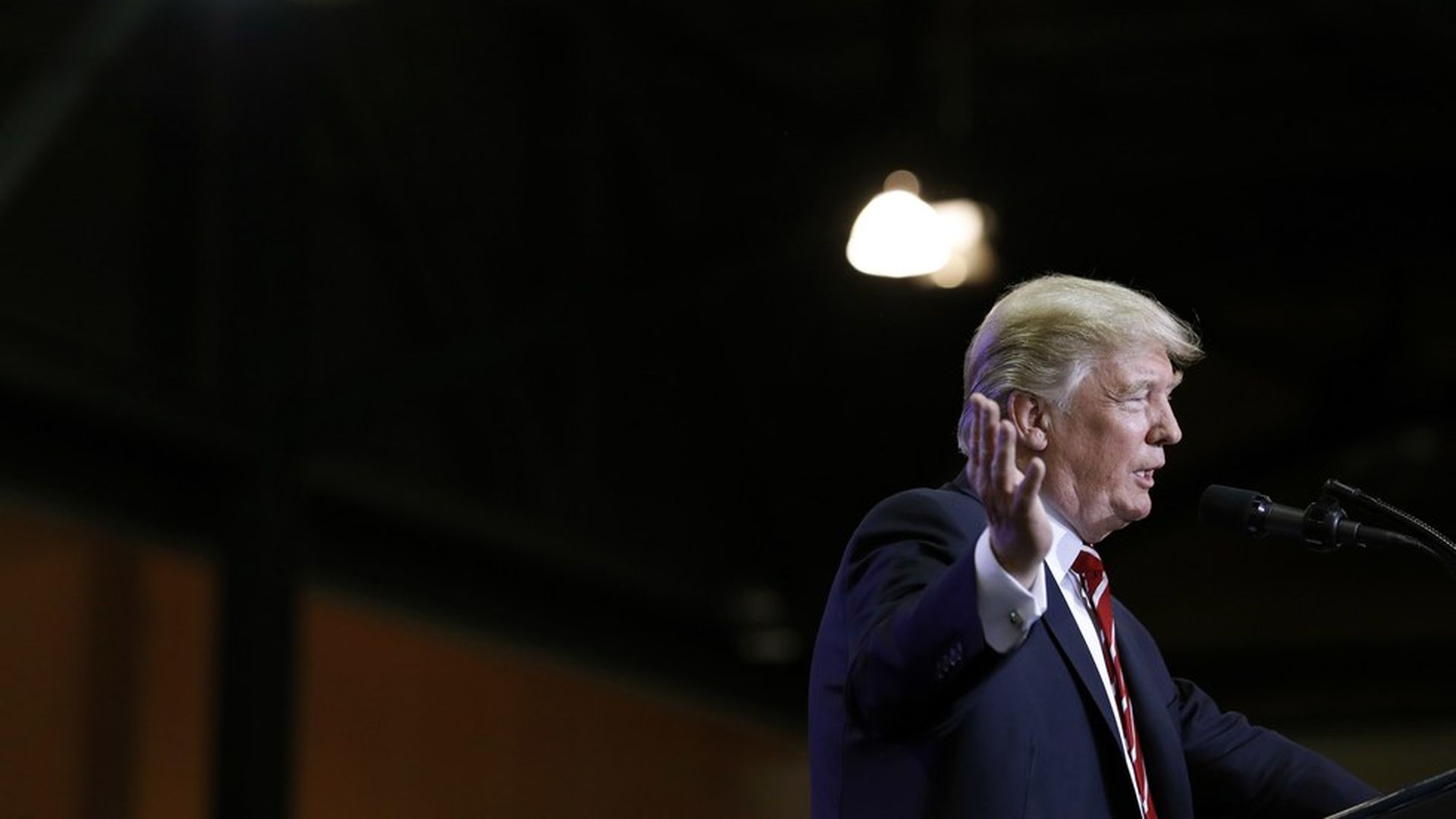
President Trump laid out his tax reform plan, which Steve Mnuchin has said will be "the biggest tax cut and the largest tax reform in US history," at a speech in Springfield, Missouri Wednesday, and confirmed it will include a 15 percent corporate tax rate.
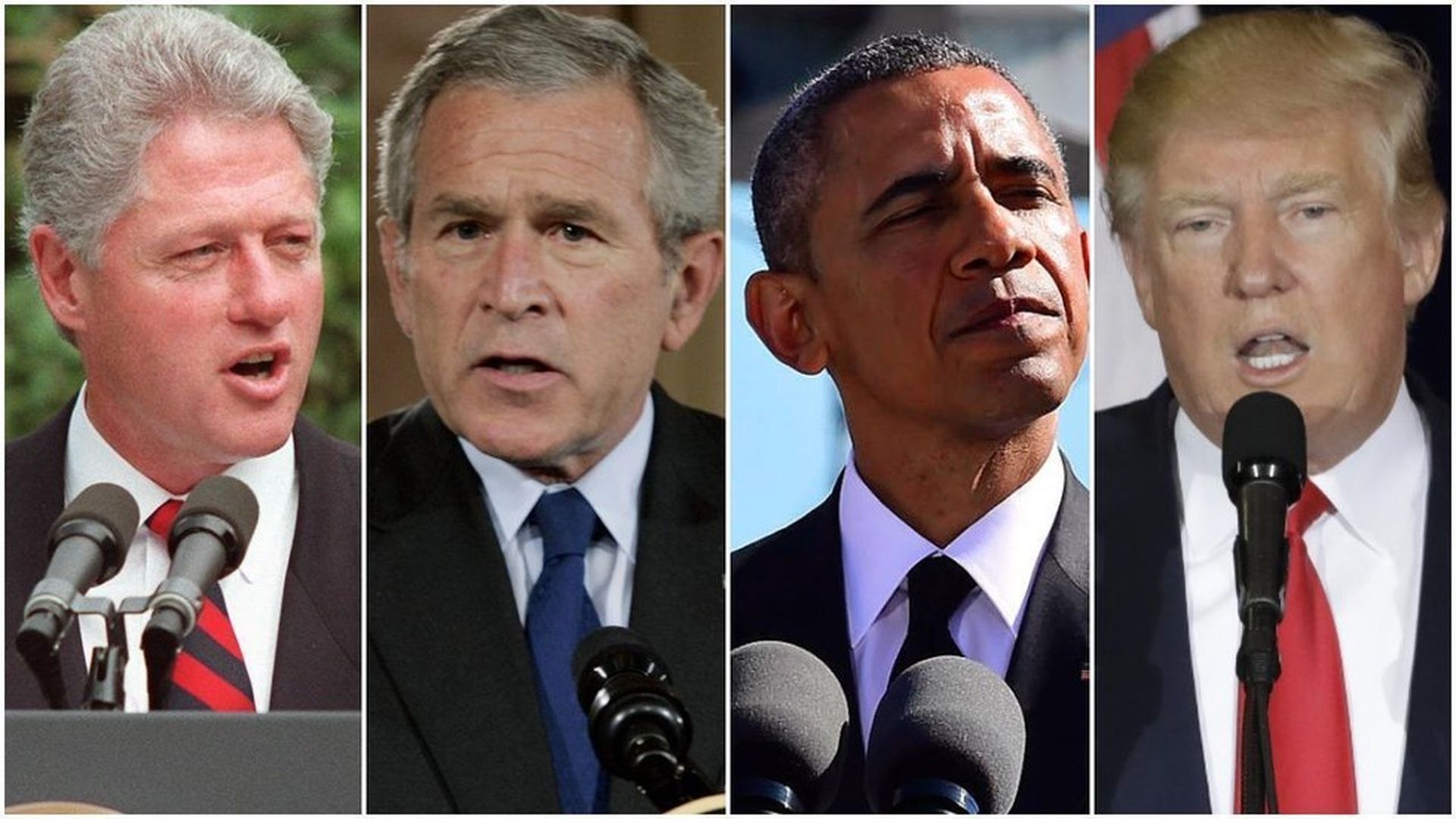
How it compares to his predecessors:
Barack Obama: Obama called for a progressive tax system that would ensure an equitable level of taxation for every income bracket, with tax increases targeted at the rich.
George W. Bush: In 2001 and 2003, Bush proposed massive tax cuts, which reduced the top marginal tax rates and the average tax rate for nearly all taxpayers. His new tax rates ranged from 10 percent to 35 percent.
Bill Clinton: Clinton's plan raised taxes for 40 percent of Americans in order to lower the Federal budget deficit.
Why it matters:
Trump's early tax plans largely follow Republican tradition — major, across-the-board tax cuts. The only tangible figure he discussed today was his plan to lower the corporate tax rate from the current 35% to 15% to help businesses better compete on a global level, something Axios' Jonathan Swan has called "fantasy."
Meanwhile, the Trump administration continues to insist that their plan will pay for itself by delivering increased economic growth, which in turn would generate higher tax revenues. Similar changes under Bush resulted in higher deficits.
In his tax reform speech today in Missouri, President Trump called on Congress to "get this job done" and repeatedly stated that he doesn't want to be "disappointed."
"I don't want to be disappointed by Congress, do you understand me? Do you understand? I think Congress is going to make a comeback. I hope so. I'll tell you what, the United States is counting on it."
He later instructed the crowd to pressure their Democratic senator: "Your senator, Claire McCaskill must do this for you, and if she doesn't... you have to vote her out of office."
As Axios' Jonathan Swan previewed, the speech was light on policy, but Trump signaled that he's willing to play hardball to push tax reform through.
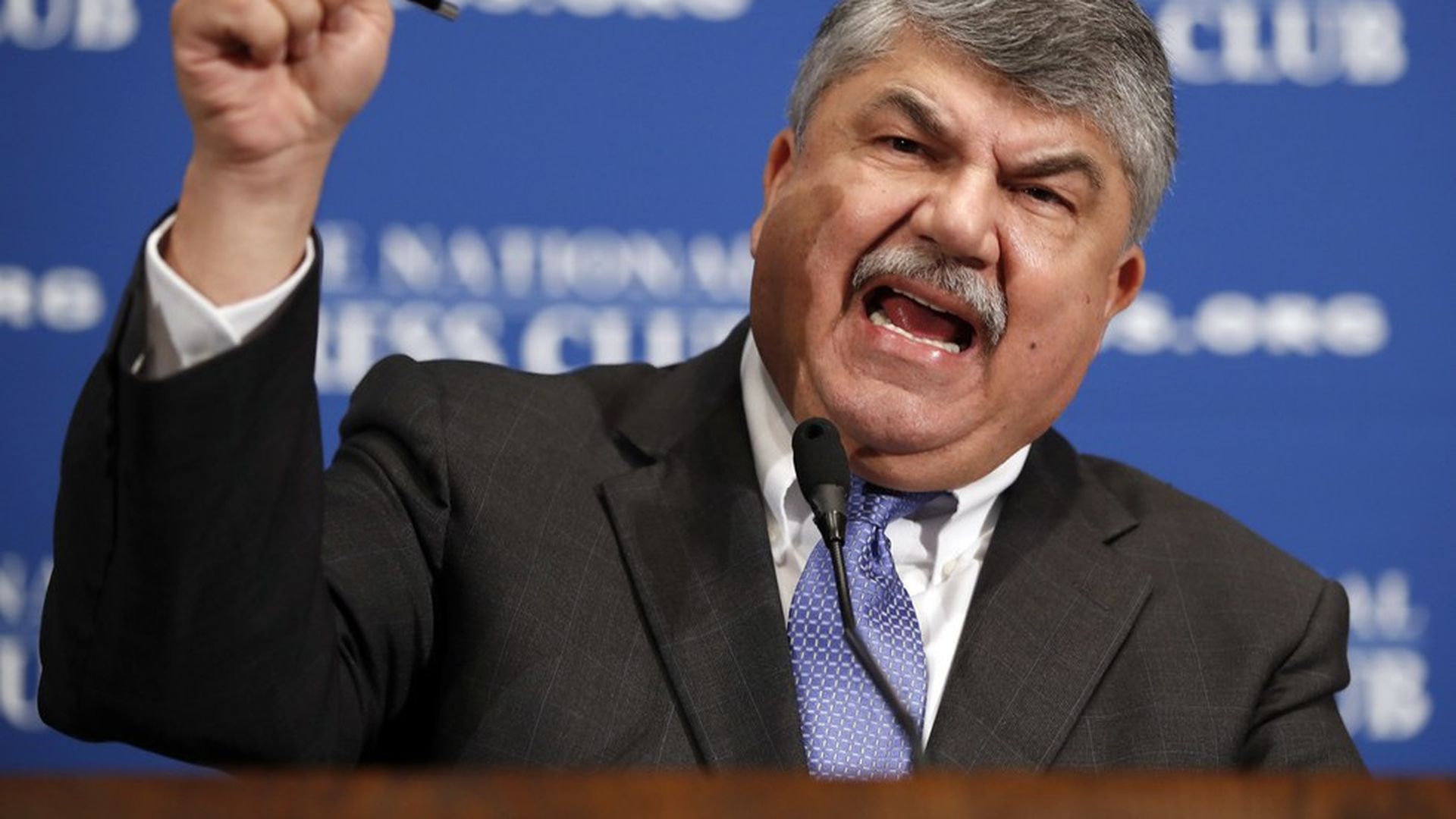
AFL-CIO President Richard Trumka expressed disappointment with President Trump's economic message at a Christian Science Monitor breakfast this morning, branding his White House as divided between "racist[s]" and "Wall Streeters" and telling reporters that "a lot of the optimism has faded" surrounding Trump, per NBC News.
The juiciest quote: "You had two factions in the White House. You had one faction that actually had some of the policies that we would have supported on trade and on infrastructure — but they turned out to be racist. And on the other hand, you had people who weren't racist, but they were Wall Streeters. And the Wall Streeters began to dominate the administration and have moved [Trump's] agenda back to everything he fought against in the election."
Why it matters: It's startling language from the country's most powerful labor leader, who resigned from Trump's manufacturing council after Charlottesville, and a sign that the "Trump coalition" that included blue collar workers in states like Ohio, Pennsylvania and Wisconsin, could be breaking down.
Citing the Harvey catastrophe, Goldman Sachs Economics Research lowers the "probability of a shutdown in early October [to] 35%, down from our prior view of 50%":
"Allowing a partial government shutdown when federal relief efforts are underway would pose greater political risks than under normal circumstances, raising the probability that lawmakers will find a way to resolve disagreements."
CNBC's Jim Cramer says Trump's proposed tax overhaul could face delays once again as the administration and Congress focus on the hurricane's devastating impact: "If it's a Katrina-like event, it's all hands on deck."
A Hill aide disagrees about delay: "[L]egislatively, there won't be much hold-up getting them the resources they need, and ... the people working on that are different than the people working on tax reform."
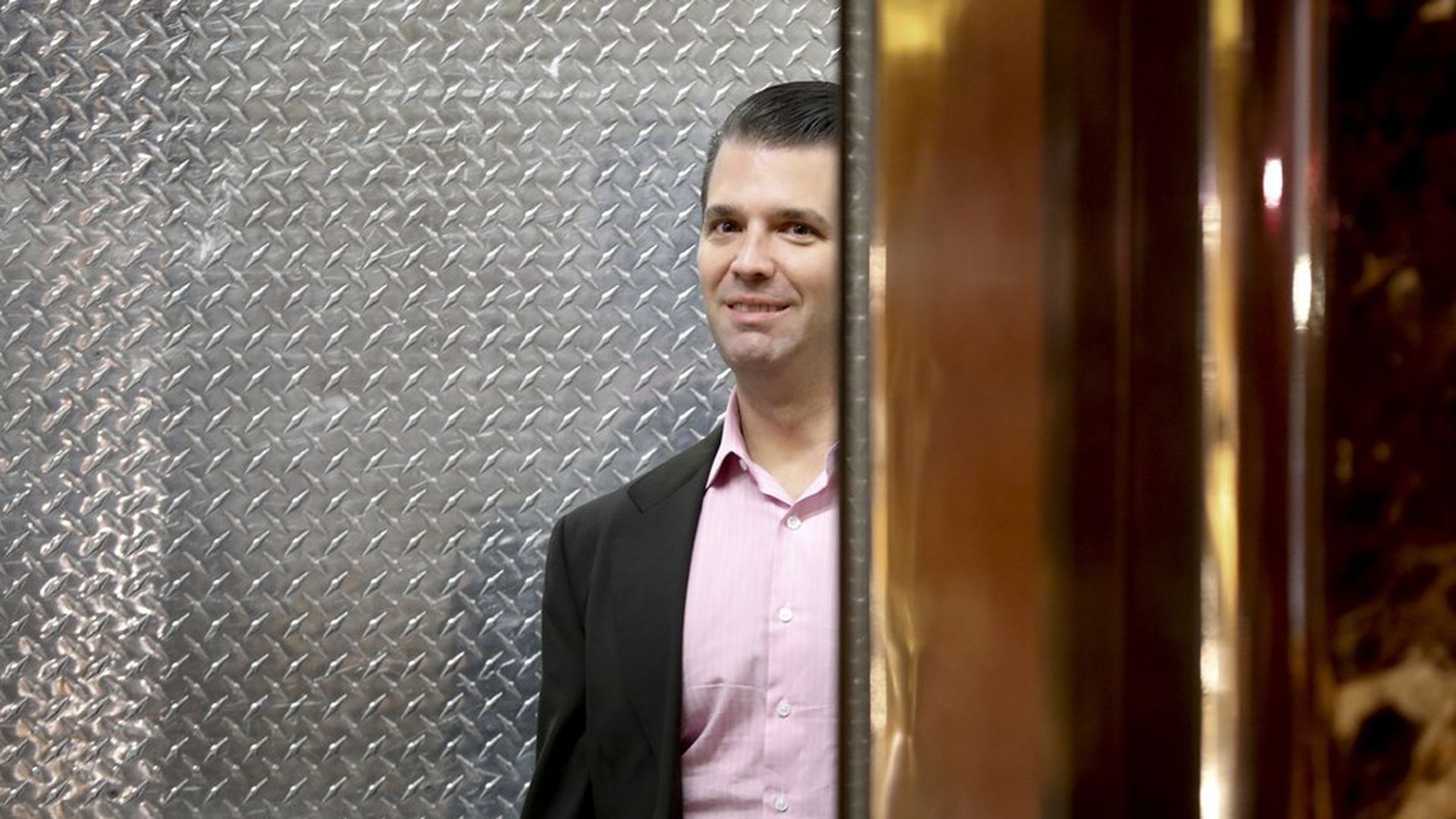
Donald Trump Jr. will meet with the Senate Judiciary Committee in a closed session about his meeting with a Russian government lawyer during his father's campaign for the presidency last year, CNN reports. A committee spokesman wouldn't say when it will happen, but Senators Chuck Grassley and Dianne Feinstein have both previously said they expect Trump Jr. to appear as soon as September.
The discussion between Trump Jr. and the Senate panel will be transcribed.
Why it matters: Before the meeting, Trump Jr. was promised damaging information about Trump's opponent, Hillary Clinton. Special Counsel Bob Mueller is reportedly looking into whether the president tried to cover up the purpose of the meeting.
Bonus: Mueller has issued subpoenas for the former attorney and current spokesman for former Trump campaign manager Paul Manafort, per CNN.
Residents evacuate their homes near the Addicks Reservoir as floodwaters from Tropical Storm Harvey rise Tuesday, Aug. 29, 2017, in Houston. (David J. Phillip / AP)
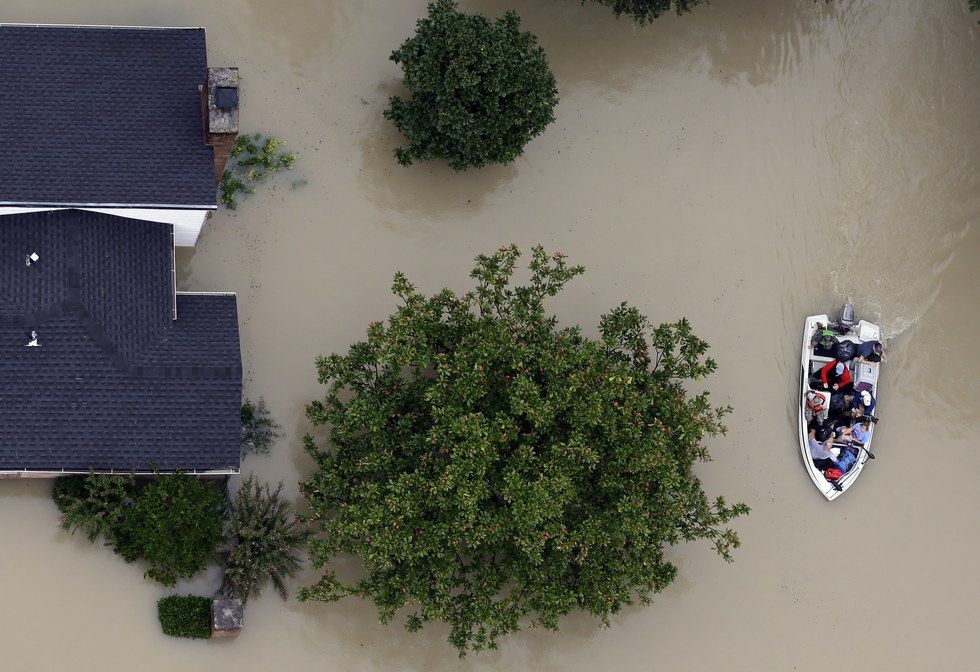
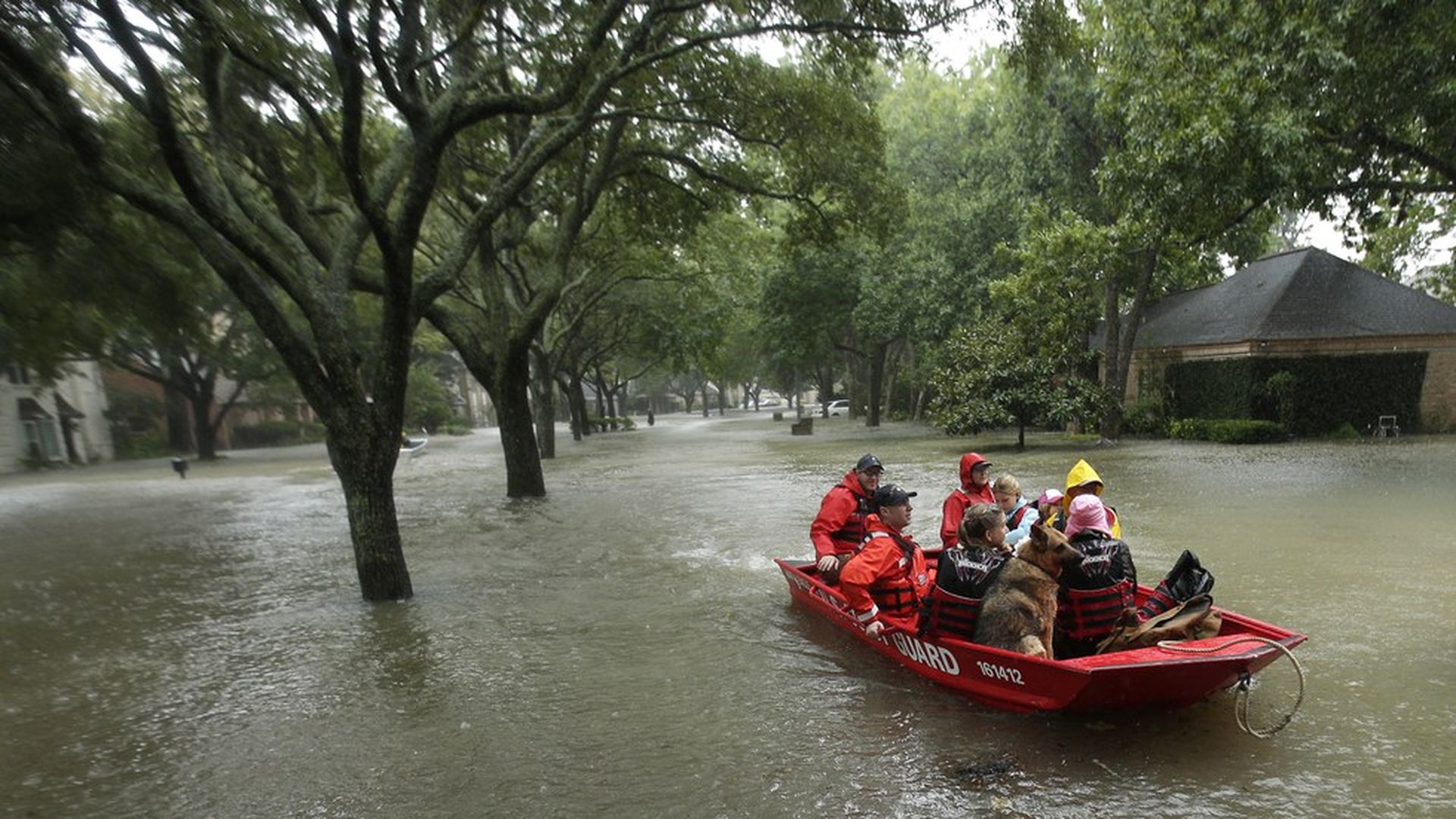
President Trump is visiting Corpus Christi and Austin, Texas today as heavy flooding from Tropical Storm Harvey continues to drown the coast for a fifth straight day as it heads toward Louisiana, putting even more strain on cities struggling to keep up with emergency rescues, power outages, packed shelters, and rising floodwaters.
The human toll, by the numbers: The death of a Houston police officer who drowned in his patrol car Tuesday has brought the death toll up to at least least 15, and it is expected to rise further. Houston Police Chief Art Acevedo said more than 3,500 people have been rescued in the city alone, and shelter capacity has been expanded to over 9,000.
What's next: The National Hurricane Center predicts that Harvey will make landfall again late Wednesday or early Thursday, most likely near Lake Charles, Louisiana. The state is already being pounded with rain from the storm.
During a press gaggle on board Air Force One Tuesday, Sarah Sanders briefed reporters on President Trump's Texas visit:
Trump wants to be "very cautious" about making sure his visit doesn't disrupt the recovery efforts that are still ongoing.
Once there, Trump plans to start laying the foundation "for what we know will be a long recovery effort." He will be joined by Texas Senators John Cornyn and Ted Cruz for much of visit from Corpus Christi to Austin.
The president plans to return to the storm zone on Saturday, but no details were given.
President Trump has heatedly denied campaign connections to Russia. But congressional investigators are looking into claims by one of his closest business associates that he briefed the candidate three times on a frantic effort to get a Trump Tower in Moscow.
Why it matters: A Republican close to the White House tells Axios' Jonathan Swan: "It gives Mueller all the excuse he needs to open a full-blown investigation into Cohen. And it's worth noting that Cohen's financial affairs are inextricably intertwined with the president's."
It will soon take longer to get an employment-based green card, thanks to a new policy announced by U.S. Citizenship and Immigration Services on Monday that requires applicants to have an in-person interview to be cleared. Adding the extra hurdle will draw out an already slow process that employers and applicants have long complained about.
Why it matters: Usually, green-card applicants who are sponsored by an employer as part of a work visa — especially those on high-skilled work visas — are able to get the interview waived, helping to speed up the vetting process. That process (without an interview) already takes nearly a year, according to USCIS data.