Bipartisan attorneys general in 42 states and D.C. support a federal effort to add a surgeon general warning to social media platforms for risks to youth wellbeing, they said in a letter on Tuesday.
Why it matters: This demand shows mounting support for U.S. Surgeon General Vivek Murthy's plea to Congress.
Prosecutors in Michigan and Georgia used tools that have long existed to hold parents accountable for actions that allegedly contributed to a school shooting.
The big picture: The parents' alleged negligence was central to charges in school shooting cases in both states, but it's unclear whether a precedent is now set for future mass shootings.
Candid Therapeutics, a San Diego-based biotech focused on T cell engagers, raised $370 million co-led by Venrock, Fairmount, TCGX, and venBio Partners.
Why it matters This is a big bet that bispecifics are superior to cell therapy when it comes to treating autoimmune disease, by an entrepreneur who sold his last startup for over $4 billion.
Blinking every 20 minutes and then looking at a point 20 feet away for 20 seconds can protect your eyes during long periods of screen time.
Why it matters: Data suggests we're spending more than 18 years of our adult lives online — and that's not great news for our eyeballs.
How it works: When we stare at a screen, we forget to blink and our eyes dry out. The 20-20-20 rule relaxes eye muscles and encourages hydrating blinks.
"It affects us every decade of our life that we age more because the amount of tears we produce decreases," says Raj Maturi, spokesperson for the American Academy of Ophthalmology and ophthalmologist at Midwest Eye Institute in Indianapolis.
A fightis brewing between drug giantsand pharmacy compounders that have seized on the consumer demand for blockbuster obesity drugs.
Why it matters: The clash is testing the boundaries of Food and Drug Administration policy that allows pharmacies to make versions of drugs — including Eli Lilly's Zepbound and Novo Nordisk's Wegovy — that are otherwise protected by patents when there are shortages.
About one in five U.S. COVID deaths during the Delta wave were because of overwhelmed hospital capacity, an analysis of data from 620 facilities showed.
Why it matters: The findings in Annals of Internal Medicine reinforce the need to minimize surges of patients during future health emergencies or staffing crises.
Vice President Kamala Harris and former President Trump are set to face off in their first presidential debate on Tuesday, giving voters a chance to finally compare the them side-by-side.
Why it matters: This is the only presidential debate scheduled between Harris and Trump so far, making it a high-stakes opportunity for both candidates to lay out their priorities as voters begin casting ballots.
For Vice President Harris, tonight's debate against Donald Trump is a high-risk, high-reward moment that will test whether her re-introduction to voters can carry her to the White House.
Why it matters: Most voters already know how they feel about Trump, but fewer know how they feel about Harris.
The bond between people and their pets is stronger than ever. About 87 million people in the U.S. have a pet and a staggering 95% of pet parents globally consider their pets to be integral members of their families.
But when it comes to the costs of caring for pets, Synchrony's Lifetime of Care study found that one-third of pet parents will face an unexpected vet bill that causes financial worry.
Kate Middleton, the Princess of Wales, announced in a video message shared Monday that she has completed chemotherapy.
The big picture: The princess revealed in March that she had been diagnosed with cancer and was undergoing treatments following an abdominal surgery months prior.
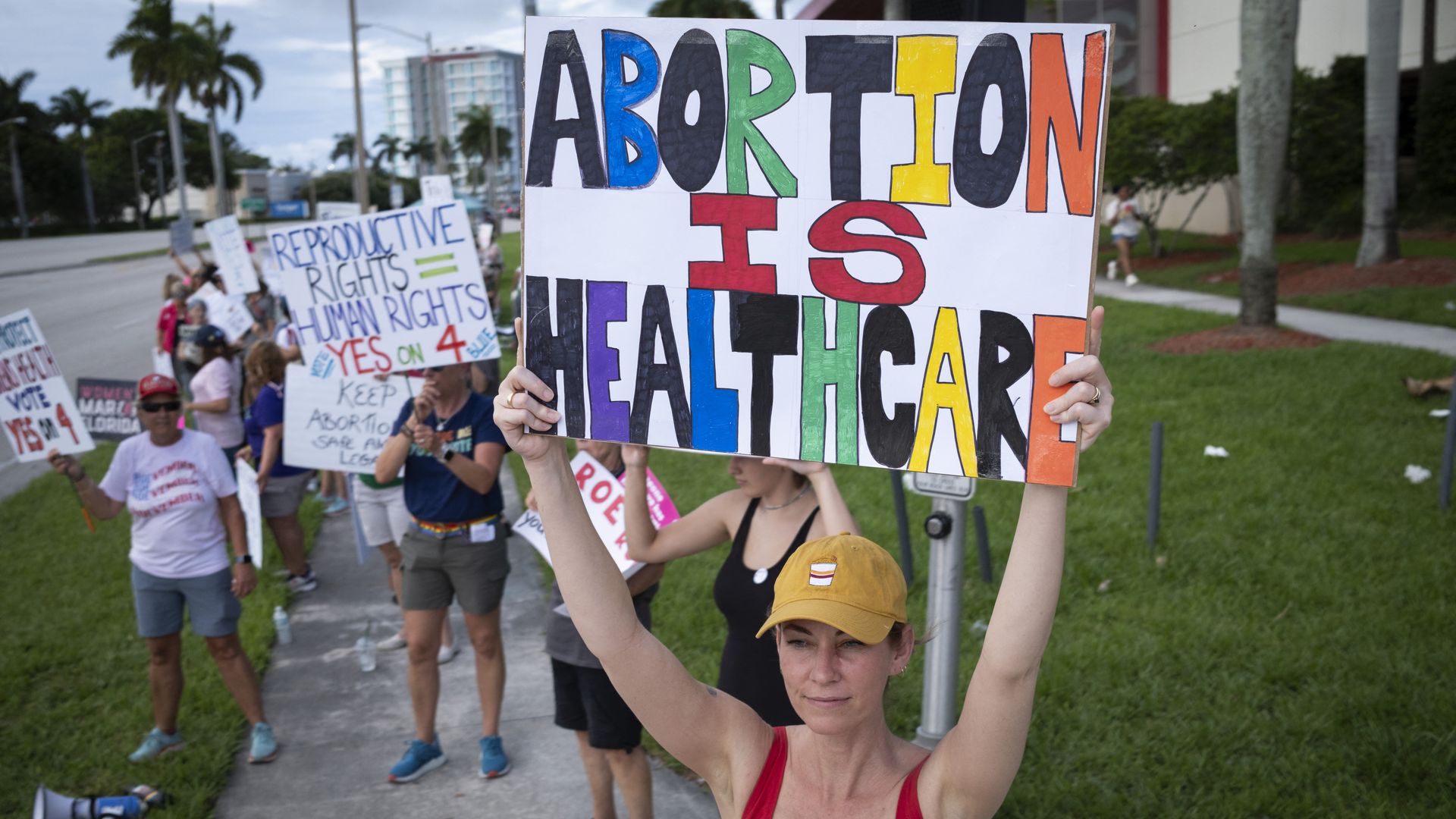
The DeSantis administration is escalating its war on Amendment 4, using state agencies to combat the abortion rights referendum on November's ballot.
Why it matters: Gov. RonDeSantis' use of state resources to oppose a ballot initiative in Florida is unusual, and critics argue it violates a statute that prohibits the state from "influencing" a person's vote.
🏈 Philadelphia mental health therapists are bracing for more cases of stress and anxiety as Eagles fans' moods swing with the fortunes of the NFL team. (Axios)
📉 Half a million fewer teens said they used e-cigarettes this year compared to last, bringing use to its lowest level in a decade. (Axios)
💼 Health care continues to add jobs in a slowing labor market ahead of a highly anticipated interest rate cut later this month. (Axios)
🥚 A salmonella outbreak linked to eggs sold in Michigan, Wisconsin, and Illinois has resulted in hospitalizations in nine states. (Axios)
The personal information of nearly 1 million Medicare beneficiaries may have been exposed in a data breach last year, when an unauthorized third party accessed a file transfer system used to handle medical claims.
Why it matters: It was part of a pattern in which hackers target vulnerabilities in outside vendors' systems — in this case, the popular file-transfer program MOVEit — and use them to steal customer information.
Driving the news: The Centers for Medicare and Medicaid Services said it is notifying 946,801 beneficiaries in Wisconsin that their names, Social Security numbers, hospital account numbers, and insurance claim information could have been stolen between May 27 and May 31, 2023, before the flaw was discovered and patched.
CMS and its contractor, the Wisconsin Physicians Service Insurance Corp., said they're not aware of any reports of identity fraud or improper use of the personal information. But they're offering beneficiaries 12 months of free credit monitoring and other identity protection services.
Those whose Medicare Beneficiary Identifier numbers were affected will get new Medicare cards with new numbers.
WPS is one of many organizations in the U.S. that have been hit by the MOVEit vulnerability, which allowed intruders to bypass an authentication process that enables encrypted file transfers, per Axios' Sam Sabin.
What's next: CMS said it's continuing to investigate the breach with law enforcement and cybersecurity consultants.
Giving birth became measurably riskier during the pandemic, as factors causing complications — from obesity and diabetes to mental health issues — rose 20% between 2020 and 2023, according to a FAIR Health analysis shared first with Axios.
Why it matters: The findings, gleaned from a database of roughly 47 billion commercial insurance claims, bring into better focus the COVID-era spike in pregnancy complications that not only contributed to the maternal mortality crisis but also drove up health costs.
The Biden administration today is taking new steps to make insurers cover mental health on a par with physical health, rekindling a fight with health plans that say such requirements are unworkable amid a shortage of providers.
Why it matters: The coverage requirements mark the most significant action on mental health parity in a decade and address persistent complaints that insurers are dodging existing regulations.