Fatal drug overdoses in the United States declined last year for the first time since before the COVID-19 pandemic, new preliminary federal data show.
The big picture: It's a rare glimmer of positive news amid a drug epidemic that's gripped the nation for over two decades and still continues to kill over 100,000 people each year.
Nearly 1 in 5 women seeking an abortion at the end of 2023 turned to telehealth, a new report finds.
About 8,000 people per month in states with near or total bans accessed medication abortion through telehealth thanks to shield laws in progressive states that protect providers who prescribe the drugs.
Hundreds of young adults will be trained to help their peers access mental health care and other supports in a first-of-its-kind service program aimed at addressing the youth mental health crisis.
Clinical trials using the drug known as ecstasy to treat PTSD may have been tainted by investigator biases and understated possible harmful effects, the Institute for Clinical and Economic Review said in a report on Tuesday.
Why it matters: The influential nonprofit's assessment could complicate prospects for the therapy, which has been touted as a treatment for veterans with PTSD and is part of a cohort of psychedelic drugs that has shown promise for treating addictions and mental health disorders.
Lawmakers in the House of Representatives on Wednesday are expected to set in motion a massive reordering of how U.S. pharmaceuticals are developed and made, by advancing a contracting ban on five key Chinese research firms.
Why it matters: It's a sign of how trade and national security concerns have spread from steel, semiconductors and TikTok to the life sciences, where U.S. biotechs and drugmakers are highly reliant on China for testing, ingredients and, in some cases, manufacturing.
Google may have dissolved its formal health division years ago but the company remains active in the sector, per chief health officer Karen DeSalvo.
Why it matters: Google Health was formally dismantled in 2021, with its units scattered throughout the search giant, raising questions about the company's strategy.
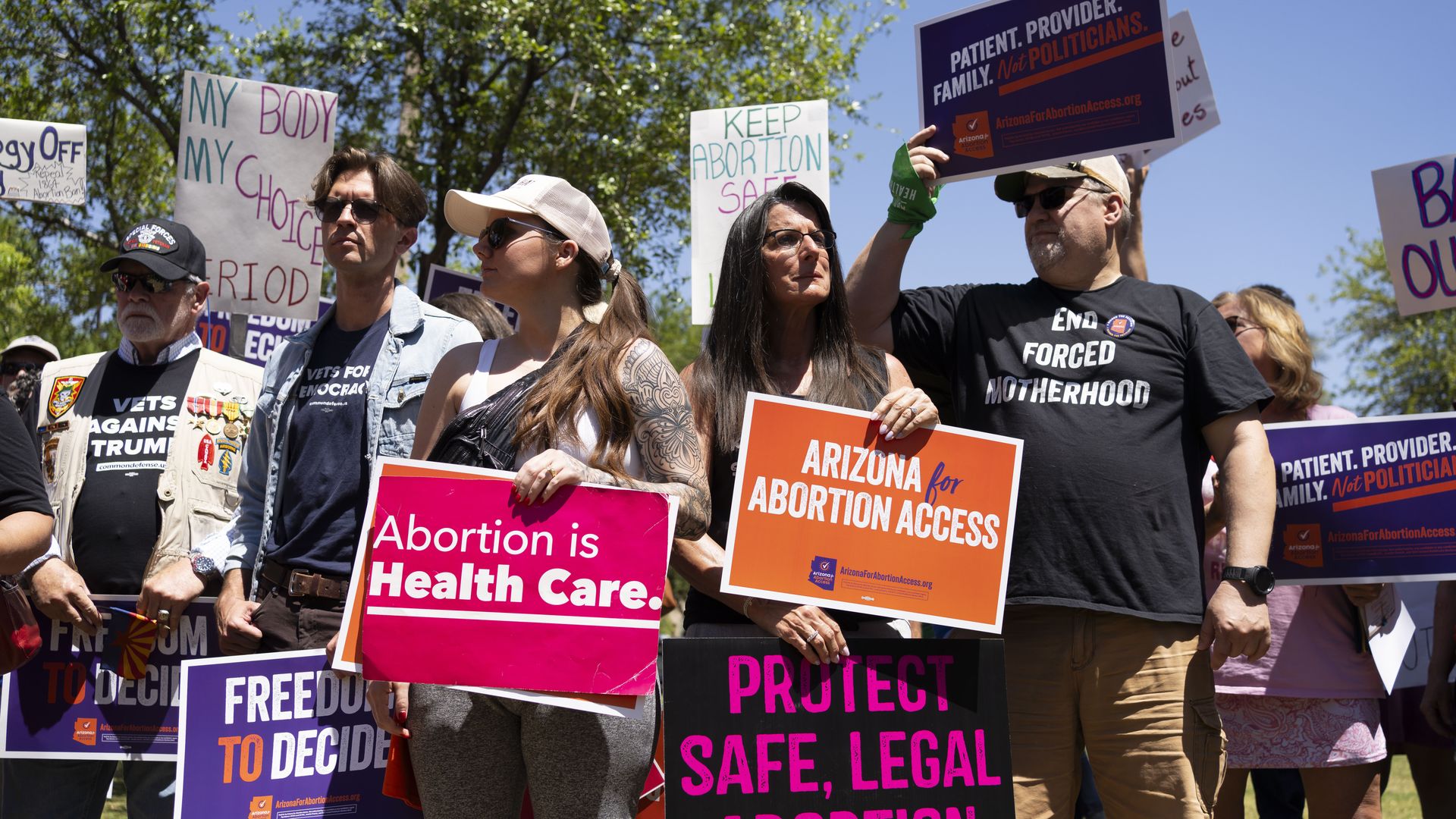
Nearly one in five women seeking an abortion at the end of 2023 turned to telehealth for treatment, allowing them to circumvent state laws banning the procedure, according to a national report released Tuesday.
The big picture: Since the Supreme Court overturned Roe v. Wade, the volume of abortions has increased in part due to new state laws providing legal protections to clinicians who offer telehealth abortion care to patients in places with restrictions, according to the Society of Family Planning's #WeCount report.
The Arizona Supreme Court on Monday agreed to delay for another 90 days enforcement of an 1864 ban on nearly all abortions.
Why it matters: The ban was recently repealed and the delay narrows the window during which it could be temporarily enforced, a win for reproductive rights advocates.
Private equity is breathing easier this morning, after a federal judge in Texas dismissed what could have been a landmark antitrust lawsuit against Welsh Carson Anderson & Stowe.
Why it matters: The Biden administration took a big swing against private equity. And it missed.
President Biden has come closer than any of his Democratic predecessors to reaching the party's long-standing goal of universal health coverage, but unaffordable care costs may overshadow the achievement.
Why it matters: Having health insurance by itself doesn't guarantee that care will be affordable, and voters feeling the pain of inflation are more concerned about their own health costs than whether everyone will have some level of coverage.
Some people say a tomato is a fruit while others say it's a vegetable — and then there are people who say there actually is no such thing as a vegetable. That could all be correct.
Why it matters: Technical "vegetable" definitions can confuse people who are trying to eat well.