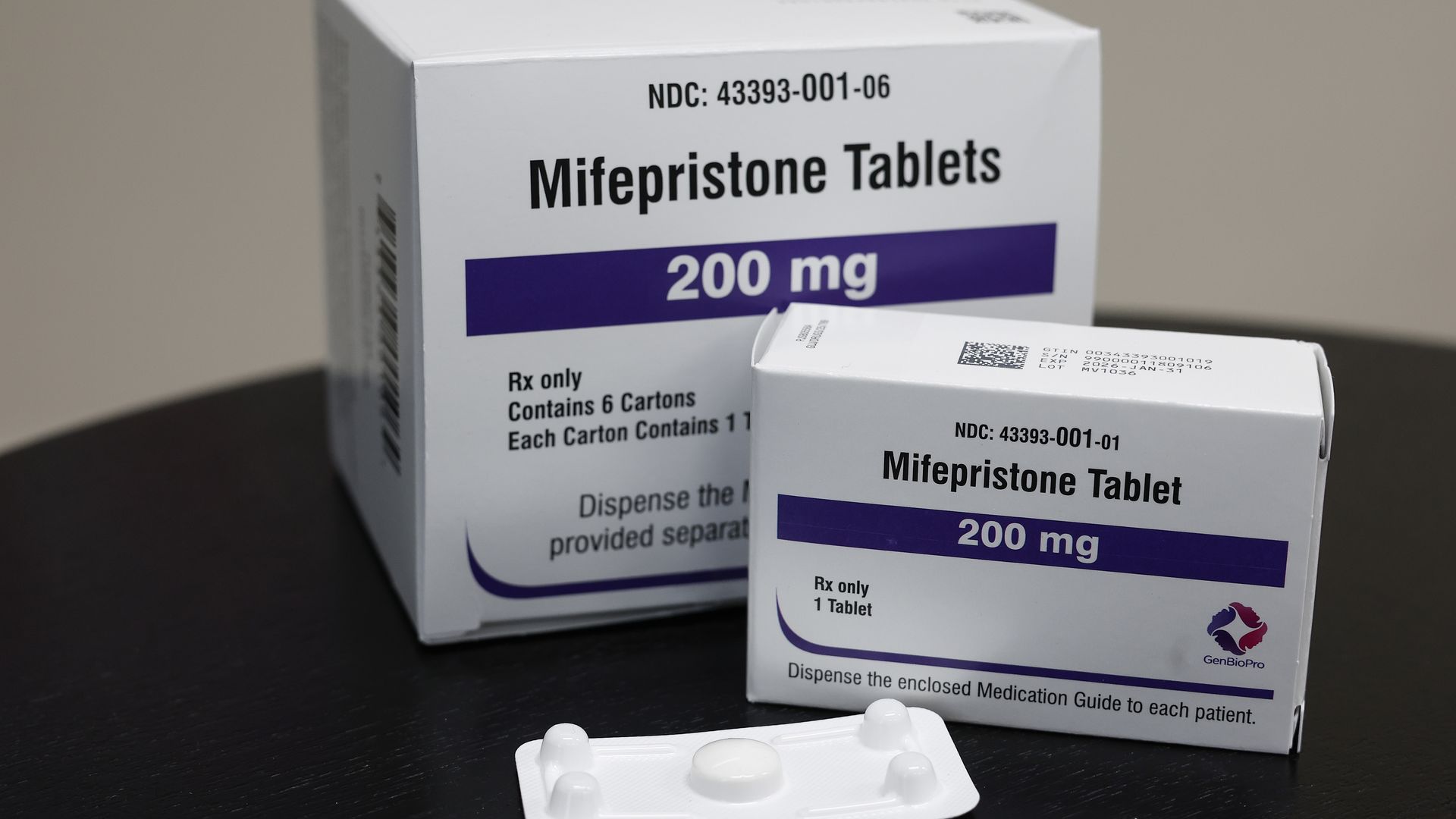
Louisiana is moving to criminalize possession of two medications used to induce abortion without a prescription, with punishments including prison time.
Why it matters: If approved, Louisiana would become the first state to categorize mifepristone and misoprostol as controlled dangerous substances, a class of drugs that includes medications that can be abused such as narcotics, steroids and depressants.
Nearly half of illicit fentanyl seized by U.S. law enforcement now comes in pill form, representing an alarming shift in the country's illegal drug supply, according to a new federally funded study.
Why it matters: Fentanyl in pill form often looks like common prescription pills including oxycodone, Xanax or Adderall, increasing the risk that people will unknowingly consume the powerful synthetic opioid that's the leading cause of fatal drug overdoses.
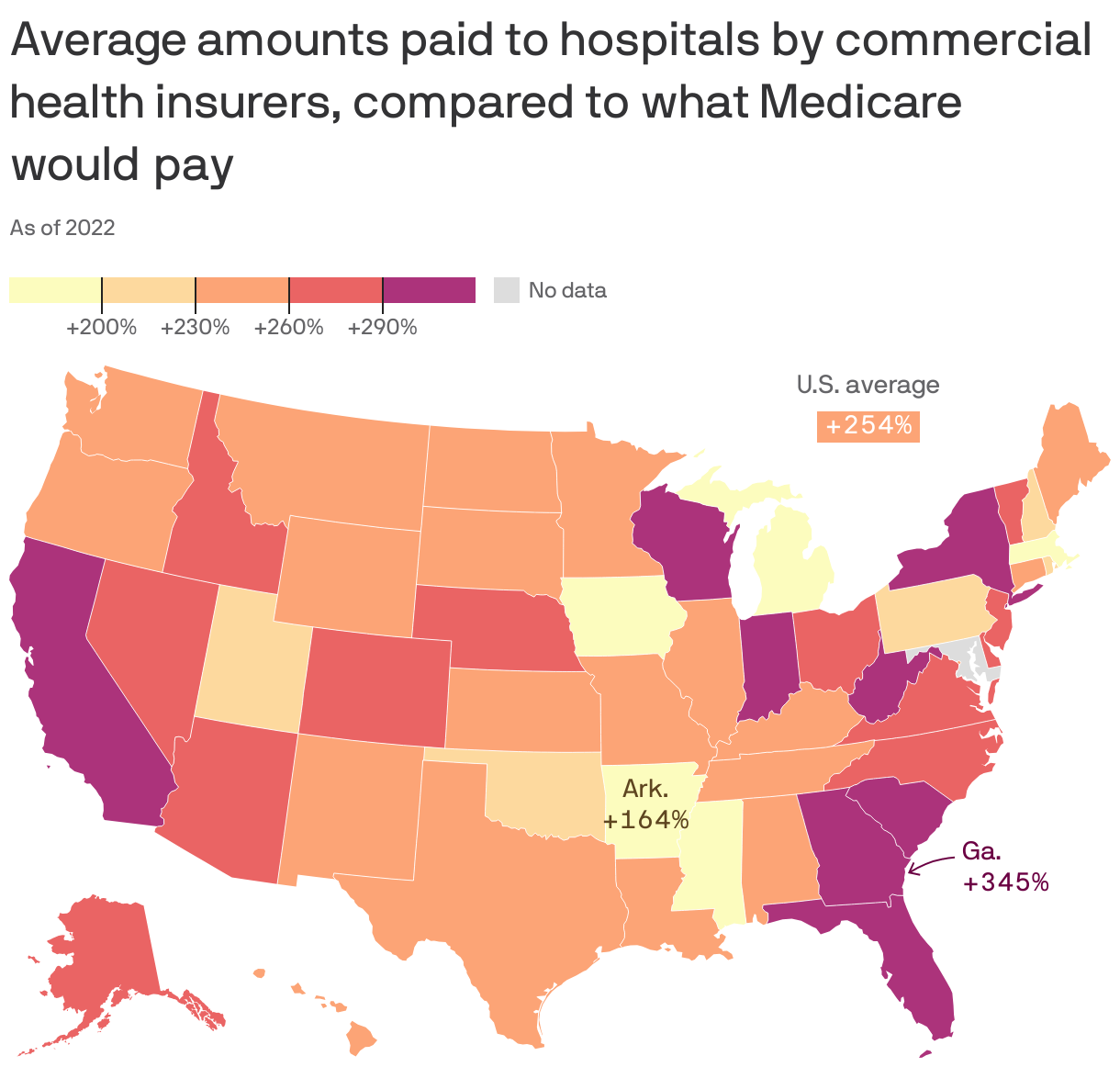
Private health insurance on average pays hospitals 2.5 times what Medicare does for the same services, with some states seeing relative prices of more than 3 times greater, according to a new RAND report.
Why it matters: The wide range of prices can't be explained by differences in quality, report authors said.
Employers trying to rein in rising health costs are also taking the fight directly to health care providers.
Why it matters: New transparency around the price of health care services and workers' mounting frustration with costs are emboldening some employers to get tough in negotiations with hospitals and provider groups.
An emerging legal battle over workplace health insurance could empower employees to fight back against high costs and put new pressure on their employers.
Why it matters: Workers fed up with rising health care costs, which also eat into their wages, are filing lawsuits aiming to hold employers accountable for cutting what they say are bad deals with firms that manage their health benefits.
For the decade-ish that I've been reporting on health care, insurance coverage has dominated conversations about who has access to care. But in the post-pandemic era, it's become clear that having insurance is only the first step toward receiving quality care.
Why it matters: Where Americans live, their health status and a range of socioeconomic factors increasingly determine their experience with the health care system, and in many cases that experience appears to be getting worse.





/2024/05/10/1715368217253.gif?w=3840)