Smoking has overtaken injections as the leading method of drug use in deadly overdoses, a new CDC analysis suggests.
Why it matters: The data points to the shifting nature of the U.S. drug epidemic, as more people using fentanyl and fentanyl analogs smoke rather than inject the powerful opioids.
More than half of health care workers say racial discrimination against patients is a major problem or crisis, while nearly half report seeing it happen in their own workplaces, according to a large national survey.
Why it matters: It's well-documented how racism in health care settings can harm patients' health. But witnessing it can also hurt health care workers' wellbeing, potentially making it more difficult to hire and retain staff as serious provider shortages loom, according to the Commonwealth Fund and the African American Research Collaborative, who conducted the survey.
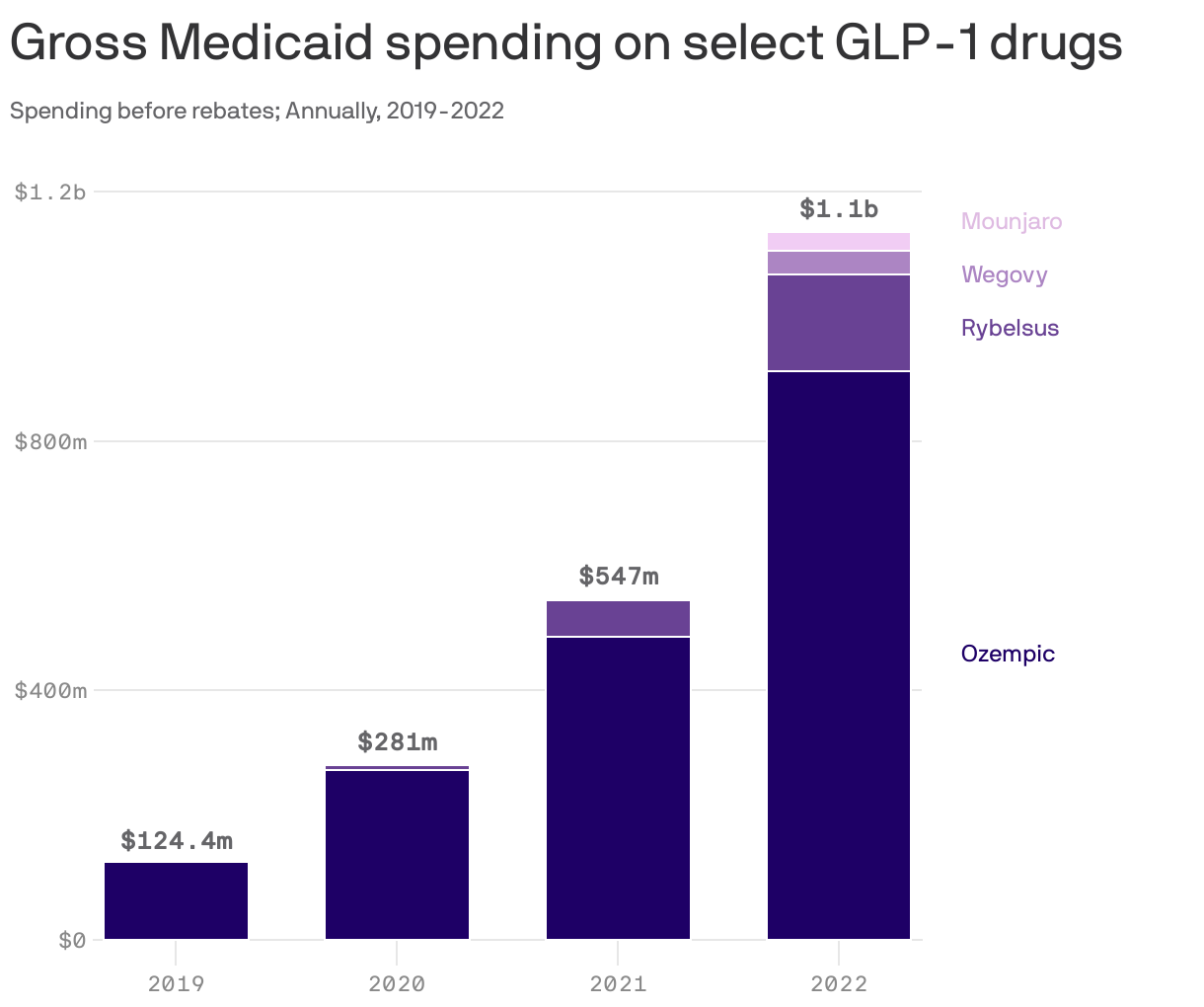
States are tightening access to blockbuster weight-loss and diabetes drugs to protect against the pricey treatments from blowing up their budgets.
Why it matters: State employee health benefits and Medicaid programs have seen a surge in costs from a class of drugs known as GLP-1 agonists. With limited taxpayer dollars at hand, some state officials say they have no choice but to clamp down amid the drugs' soaring popularity.
When it comes to love, more people are considering options other than monogamy.
Why it matters: Mediacoverage, a buzzy new memoir and shows like "Couple to Throuple" are bringing polyamory into mainstream conversations, but limited laws are only beginning to protect people from the stigma that can come with being in relationships with more than one person.
The Federal Trade Commission is exploring how drug distributors and group-purchasing organizations may be contributing to ongoing shortages of generic drugs at health care facilities.
Why it matters: It's the latest effort to untangle a complex web of factors driving high levels of shortages in the United States, which have affected cancer drugs and antibiotics, among others.
At least 120 prescriptions were written for the first pill treating postpartum depression in the days following its launch, drugmaker Sage Therapeutics disclosed in its year-end earnings report on Wednesday.
Why it matters: Postpartum depression affects an estimated 500,000 people each year. But with a launch price of $15,900 for the drug Zurzuvae, analysts had expressed uncertainty about its potential market and how insurers may cover the treatment.
While nearly every state now provides Medicaid coverage for a full year after giving birth, cost concerns and political opposition in some states have prevented the policy from being fully adopted nationwide.
The big picture: The country's maternal health crisis and loss of abortion rights in many states have spurred rapid uptake of a new extended coverage option, even in conservative statehouses that have long resisted the much broader Medicaid expansion under the Affordable Care Act.
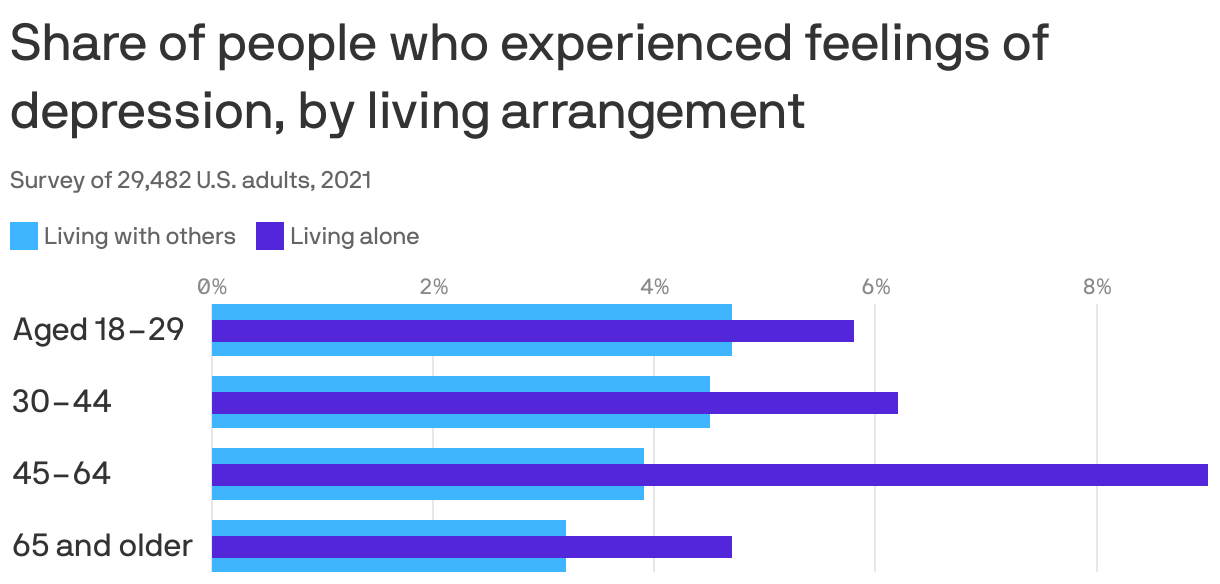
Data: National Health Interview Survey; Chart: Will Chase/Axios
Living alone is linked to higher rates of self-reported depression than living with others, according to data released today from a 2021 National Health Interview Survey.
Why it matters: It's clear — even to Elmo — that many Americans are having a hard time and that the loneliness epidemic has become a major threat to their well-being.