Gen Z largely entered the workforce as remote and hybridwork went mainstream.
Why it matters: Early career professionals are hungry for mentorship and real connections (even friends) on top of flexibility and work-life balance. With Gen Z expected to overtake Baby Boomers in the workplace this year, those preferences are reshaping the modern workplace.
Meeting friends for dinner at 6pm, throwing on some jazz to relax, and drifting off to sleep by 9pm may sound like perfect weekend plans for grandma. But many in Gen Z are also embracing the early bird lifestyle.
The big picture: Today's youth is surprisingly well-rested, as the big business of sleep and a culture that ditches late night drinks in favor of shut eye flourish.
Smoking has overtaken injections as the leading method of drug use in deadly overdoses, a new CDC analysis suggests.
Why it matters: The data points to the shifting nature of the U.S. drug epidemic, as more people using fentanyl and fentanyl analogs smoke rather than inject the powerful opioids.
More than half of health care workers say racial discrimination against patients is a major problem or crisis, while nearly half report seeing it happen in their own workplaces, according to a large national survey.
Why it matters: It's well-documented how racism in health care settings can harm patients' health. But witnessing it can also hurt health care workers' wellbeing, potentially making it more difficult to hire and retain staff as serious provider shortages loom, according to the Commonwealth Fund and the African American Research Collaborative, who conducted the survey.
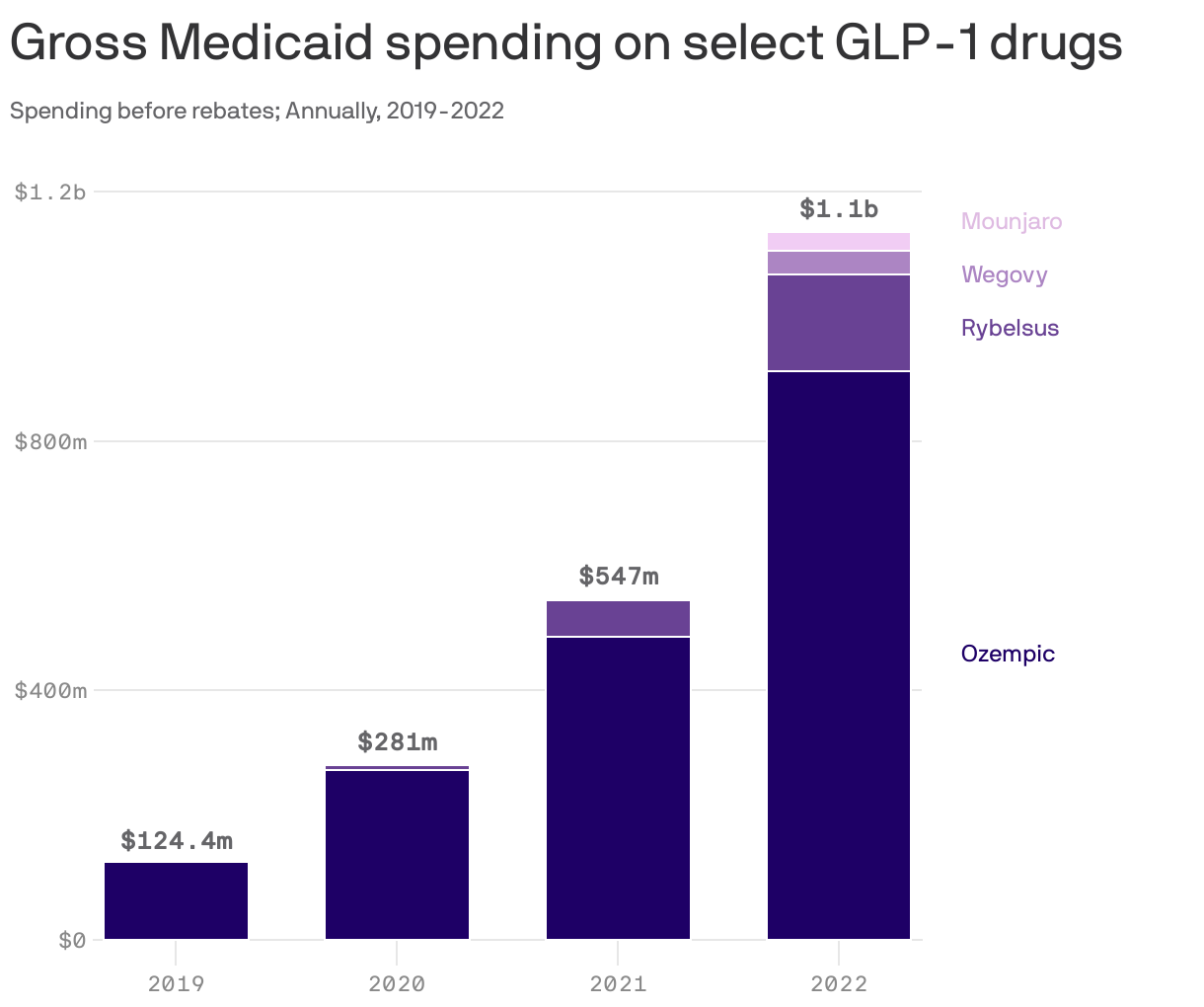
States are tightening access to blockbuster weight-loss and diabetes drugs to protect against the pricey treatments from blowing up their budgets.
Why it matters: State employee health benefits and Medicaid programs have seen a surge in costs from a class of drugs known as GLP-1 agonists. With limited taxpayer dollars at hand, some state officials say they have no choice but to clamp down amid the drugs' soaring popularity.