When it comes to love, more people are considering options other than monogamy.
Why it matters: Mediacoverage, a buzzy new memoir and shows like "Couple to Throuple" are bringing polyamory into mainstream conversations, but limited laws are only beginning to protect people from the stigma that can come with being in relationships with more than one person.
The Federal Trade Commission is exploring how drug distributors and group-purchasing organizations may be contributing to ongoing shortages of generic drugs at health care facilities.
Why it matters: It's the latest effort to untangle a complex web of factors driving high levels of shortages in the United States, which have affected cancer drugs and antibiotics, among others.
At least 120 prescriptions were written for the first pill treating postpartum depression in the days following its launch, drugmaker Sage Therapeutics disclosed in its year-end earnings report on Wednesday.
Why it matters: Postpartum depression affects an estimated 500,000 people each year. But with a launch price of $15,900 for the drug Zurzuvae, analysts had expressed uncertainty about its potential market and how insurers may cover the treatment.
While nearly every state now provides Medicaid coverage for a full year after giving birth, cost concerns and political opposition in some states have prevented the policy from being fully adopted nationwide.
The big picture: The country's maternal health crisis and loss of abortion rights in many states have spurred rapid uptake of a new extended coverage option, even in conservative statehouses that have long resisted the much broader Medicaid expansion under the Affordable Care Act.
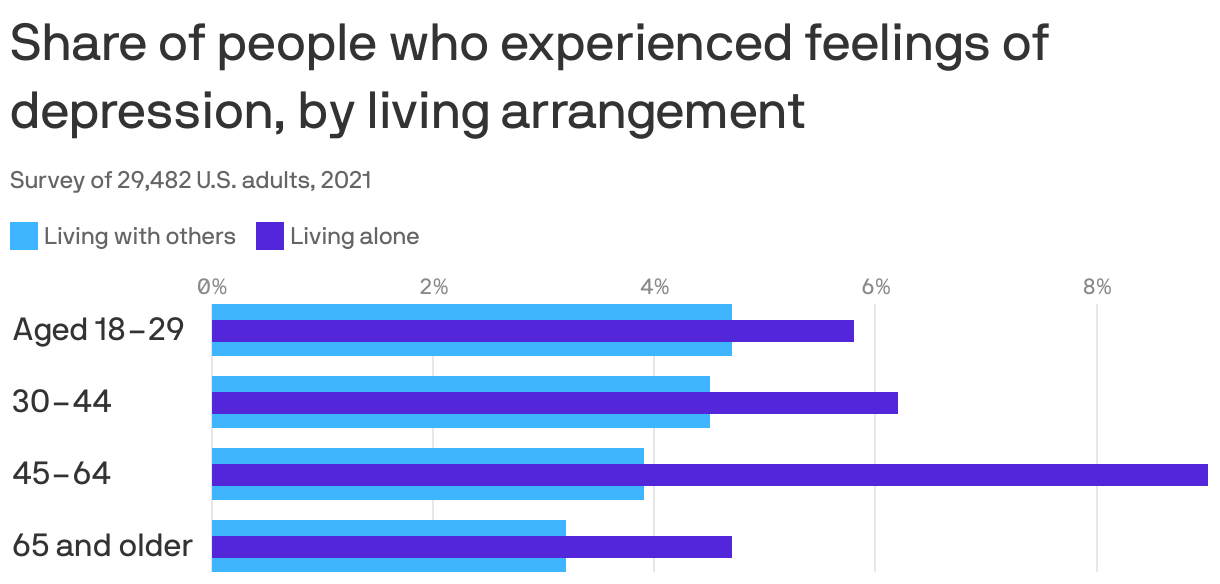
Data: National Health Interview Survey; Chart: Will Chase/Axios
Living alone is linked to higher rates of self-reported depression than living with others, according to data released today from a 2021 National Health Interview Survey.
Why it matters: It's clear — even to Elmo — that many Americans are having a hard time and that the loneliness epidemic has become a major threat to their well-being.
Editor's note: After this article was published Jan. 11, 2024, the company that was the source of the data, Definitive Healthcare, retracted its report and removed the link to the findings.
Axios pressed Definitive Healthcare for an explanation multiple times. On Feb. 2, the company sent Axios a statement: "Upon review, we determined that the analysis cited in the referenced article was below our standards, so we elected to retract the article."
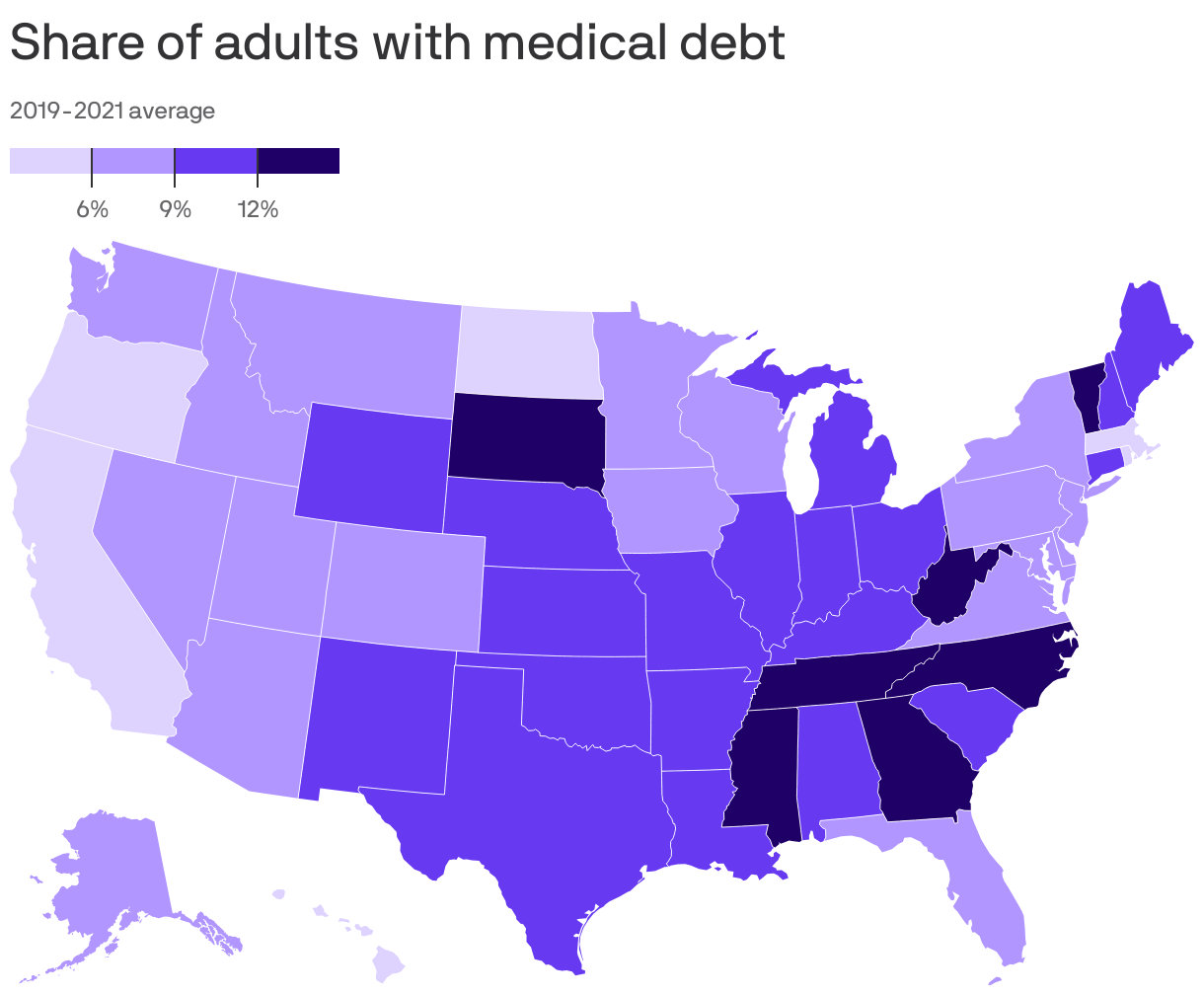
Based on that statement, Axios is no longer confident in the report. For transparency, the original article remains below. The maps have been removed.
About 1 in 12 U.S. adults have unpaid medical bills of at least $250, with people in the South and rural areas reporting the greatest burden of medical debt, according to a study from the Peterson Center on Healthcare and KFF.
The big picture: Medical debt remains a big problem, even for insured patients who struggle to afford co-pays and deductibles. People in poor health, those with lower incomes and those lacking insurance are more likely to struggle to pay medical bills.
The level of care patients receive in a medical emergency varies widely based on where 911 is being dialed.
Why it matters: A first-of-its-kind study of emergency medical service systems' performance across the country points to opportunities to improve patient care when the pressure is on.
An uptick in demand for the Alzheimer's drug Leqembi provided a bright spot for Biogen on Tuesday as the biotech missed Wall Street expectations and forecast flat sales for 2024.
Why it matters: Biogen continues to feel a financial drag from the withdrawal of its earlier controversial Alzheimer's drug Aduhelm and is trying to affect a turnaround by focusing on newer treatments like Leqembi, which it developed with Japanese drugmaker Eisai.
People who are eligible for both Medicare and Medicaid — a group that is generally low-income with complex health needs — are expected to generate billions in profit for health insurers in the coming years, despite being a group that typically racks up expensive health care bills.
Why it matters: This is part of a major shift in how insurers make their money, with profits increasingly coming from their provision of government plans like Medicare Advantage and Medicaid managed care.