Editor's note: After this article was published Jan. 11, 2024, the company that was the source of the data, Definitive Healthcare, retracted its report and removed the link to the findings.
Axios pressed Definitive Healthcare for an explanation multiple times. On Feb. 2, the company sent Axios a statement: "Upon review, we determined that the analysis cited in the referenced article was below our standards, so we elected to retract the article."
Based on that statement, Axios is no longer confident in the report. For transparency, the original article remains below. The maps have been removed.
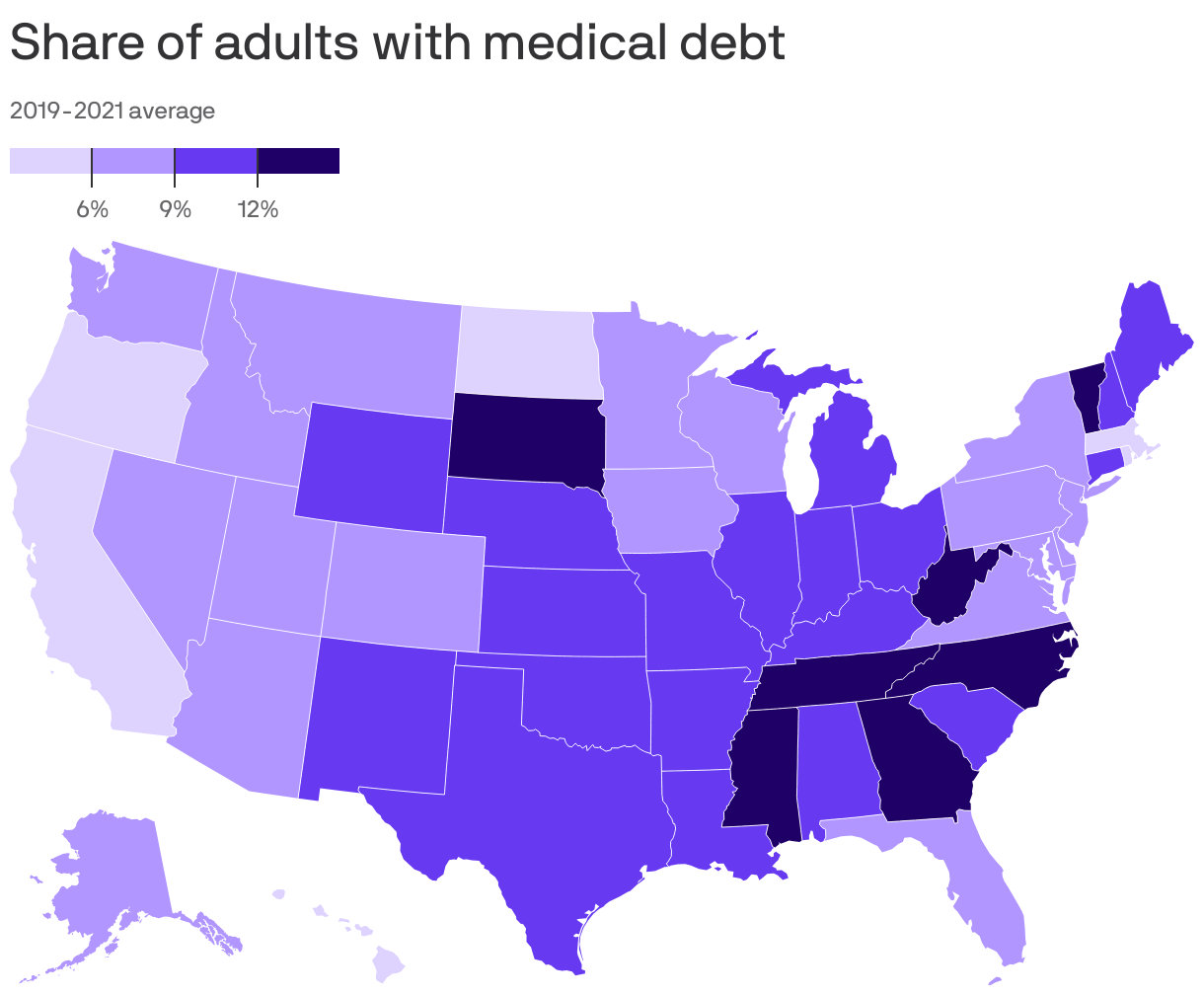
About 1 in 12 U.S. adults have unpaid medical bills of at least $250, with people in the South and rural areas reporting the greatest burden of medical debt, according to a study from the Peterson Center on Healthcare and KFF.
The big picture: Medical debt remains a big problem, even for insured patients who struggle to afford co-pays and deductibles. People in poor health, those with lower incomes and those lacking insurance are more likely to struggle to pay medical bills.
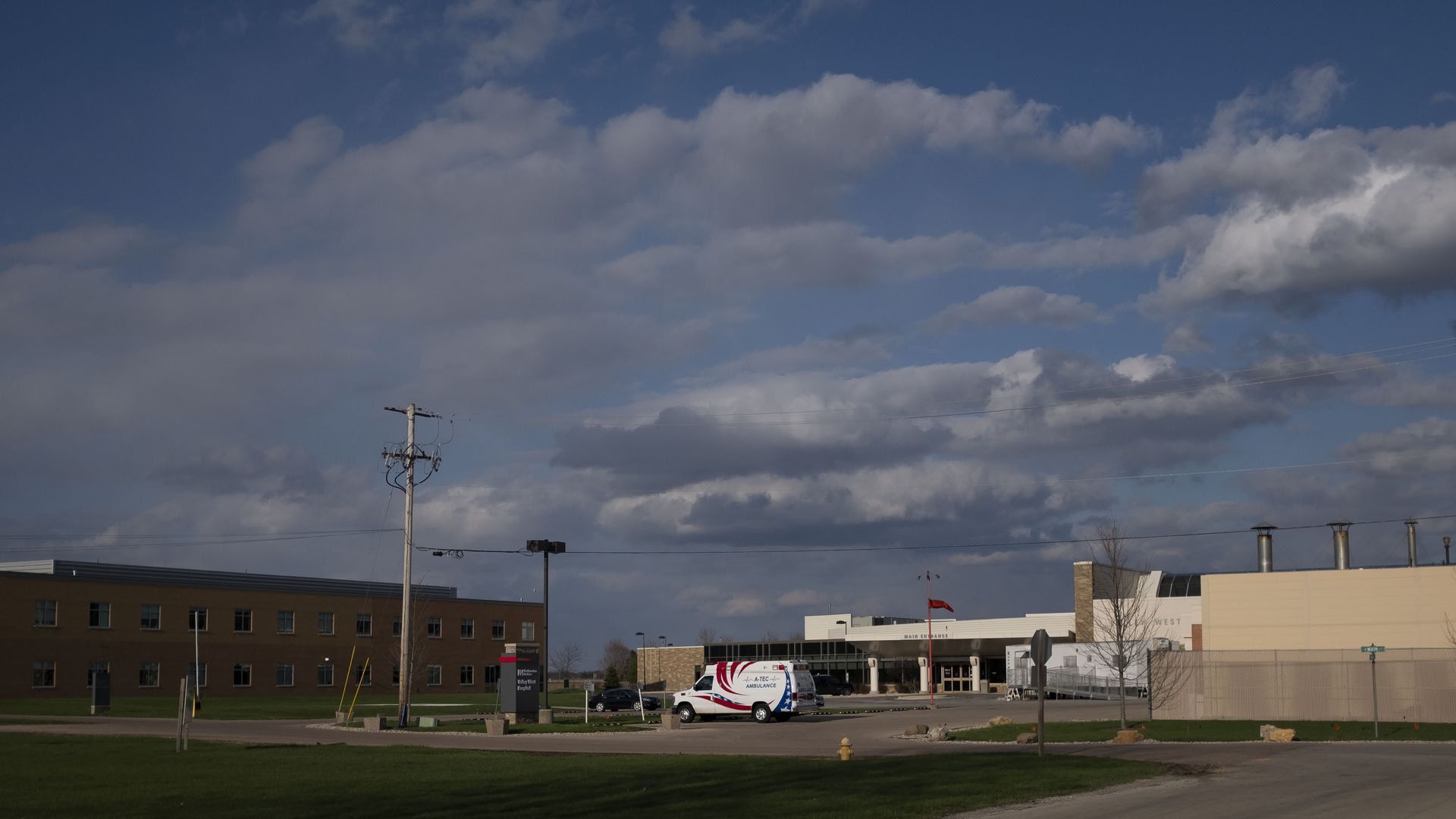
The level of care patients receive in a medical emergency varies widely based on where 911 is being dialed.
Why it matters: A first-of-its-kind study of emergency medical service systems' performance across the country points to opportunities to improve patient care when the pressure is on.
An uptick in demand for the Alzheimer's drug Leqembi provided a bright spot for Biogen on Tuesday as the biotech missed Wall Street expectations and forecast flat sales for 2024.
Why it matters: Biogen continues to feel a financial drag from the withdrawal of its earlier controversial Alzheimer's drug Aduhelm and is trying to affect a turnaround by focusing on newer treatments like Leqembi, which it developed with Japanese drugmaker Eisai.
People who are eligible for both Medicare and Medicaid — a group that is generally low-income with complex health needs — are expected to generate billions in profit for health insurers in the coming years, despite being a group that typically racks up expensive health care bills.
Why it matters: This is part of a major shift in how insurers make their money, with profits increasingly coming from their provision of government plans like Medicare Advantage and Medicaid managed care.
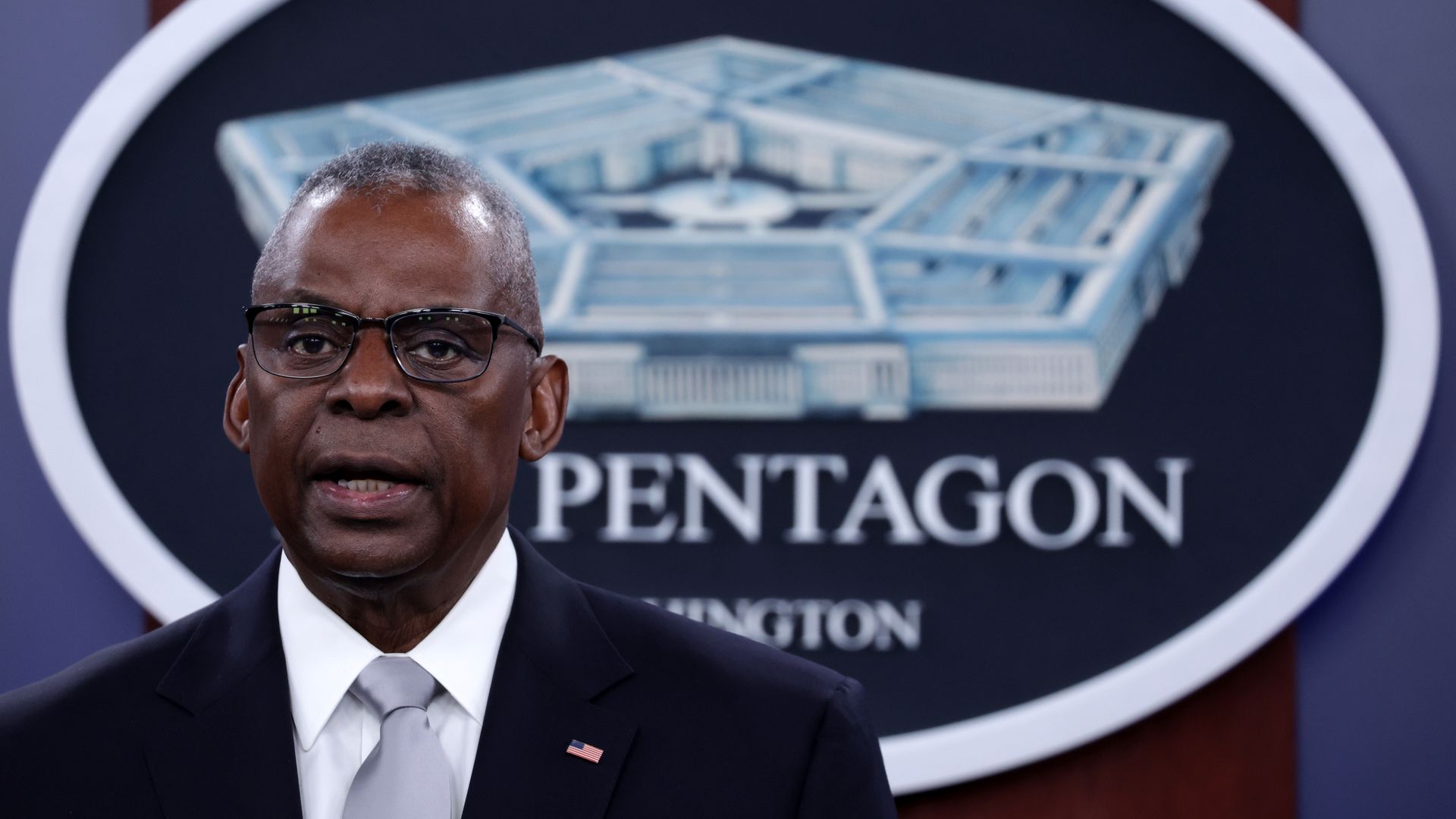
Defense Secretary Lloyd Austin was released from the hospital on Tuesday after being treated for a bladder issue.
The big picture: Austin was admitted to Walter Reed Medical Center on Sunday "with discomfort and concern from a bladder issue related to his December 2023 prostate cancer surgery," per a Tuesday evening statement from doctors at the hospital.
Data: 2018-2022 American Community Survey, Texas Health & Human Services Commission; Map: Erin Davis/Axios Visuals
More than 2 million people have been removed from Texas' Medicaid program since federal pandemic-era coverage protections were lifted last April,new state data shows.
The big picture: That's the most of any state and nearly equivalent to all of Houston — Texas' most populous city, with 2.3 million residents — losing coverage in less than a year.
As the Biden administration mulls a politically sensitive decision on whether to ban menthol cigarettes, another corner of the tobacco industry — cigar makers — is fighting to be left alone.
The big picture: The fate of a proposed ban on flavored cigars has been linked to a separate and closely scrutinized proposal to outlaw menthol cigarettes that's been under White House review for months.







![[ Insert title here ]](https://datawrapper.dwcdn.net/EOkSk/full.png)