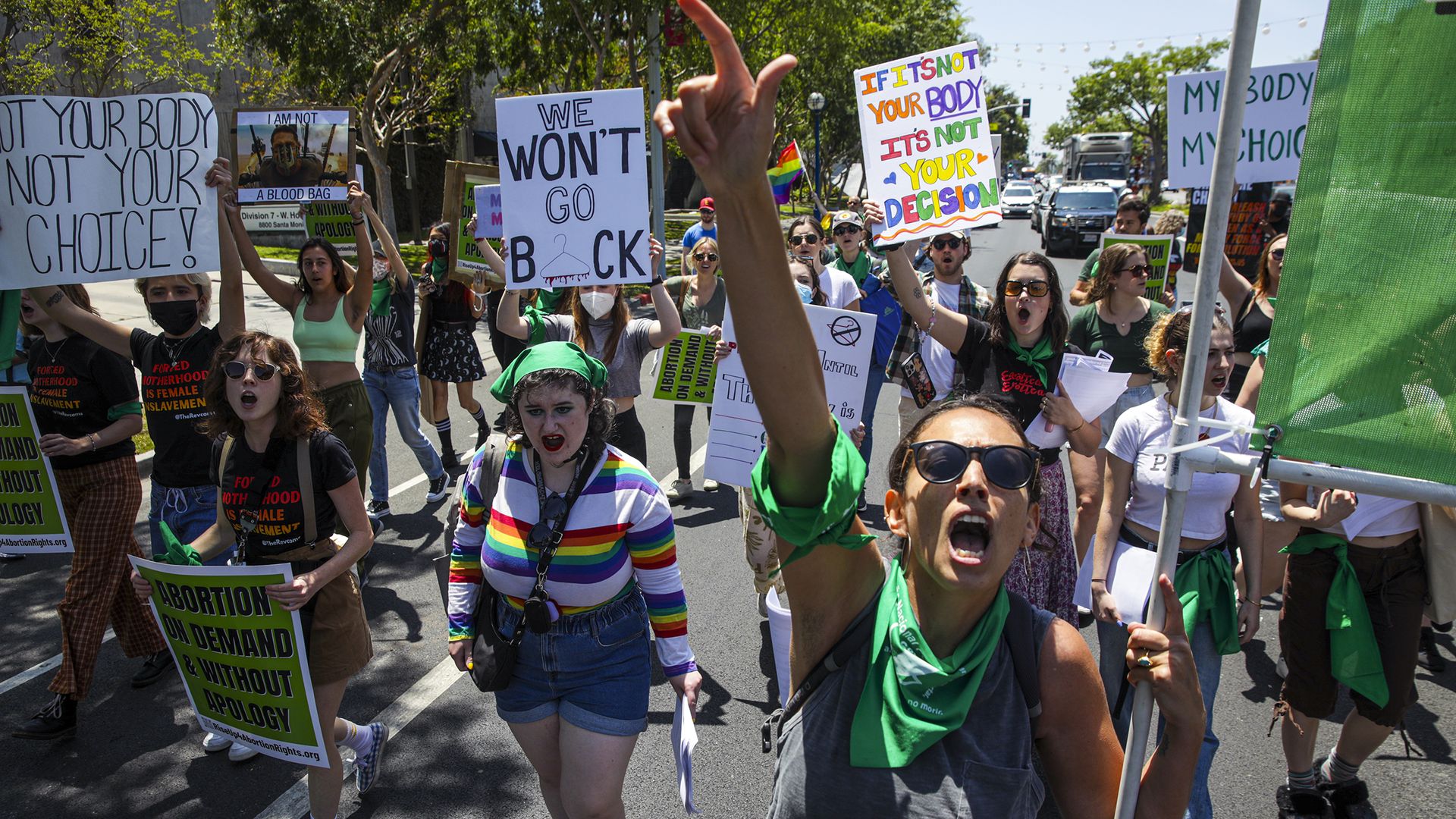
Most people who support upholding Roe v. Wade view its possible overturn as a danger to women and think that development would put other rights in jeopardy, a CBS News poll out Sunday indicates.
The big picture: The poll comes after the leak Monday of a draft opinion that signaled the U.S. Supreme Court is prepared to overturn the landmark abortion case.
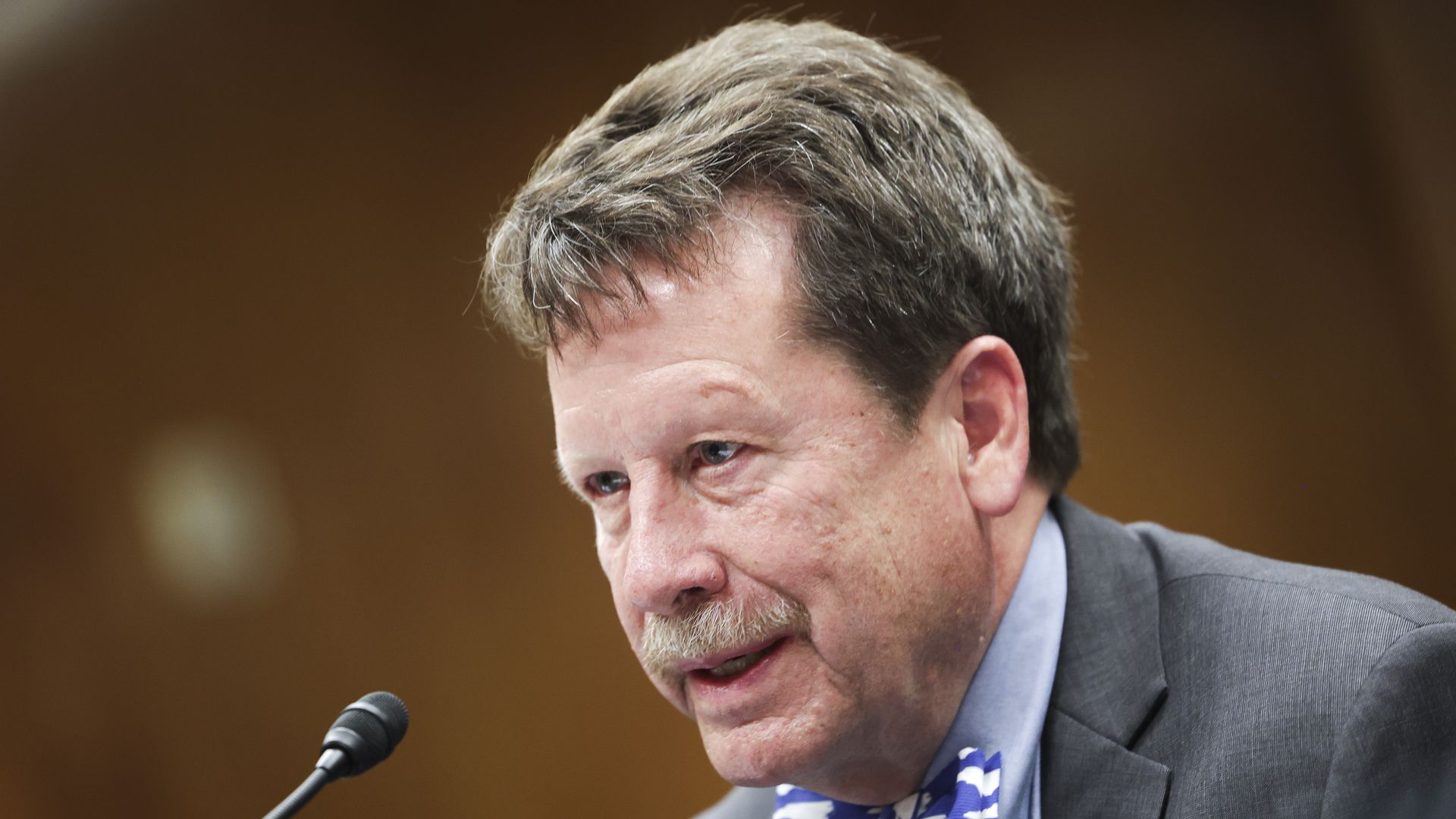
U.S., Food and Drug Administration commissioner Robert Califf told CNN on Saturday evening "almost no one" in the U.S. should be dying from COVID-19, but misinformation was impacting the death toll.
By the numbers: Nearly 998,000 people have died of COVID in the U.S. since the pandemic began as of Sunday night, according to data from Johns Hopkins University.
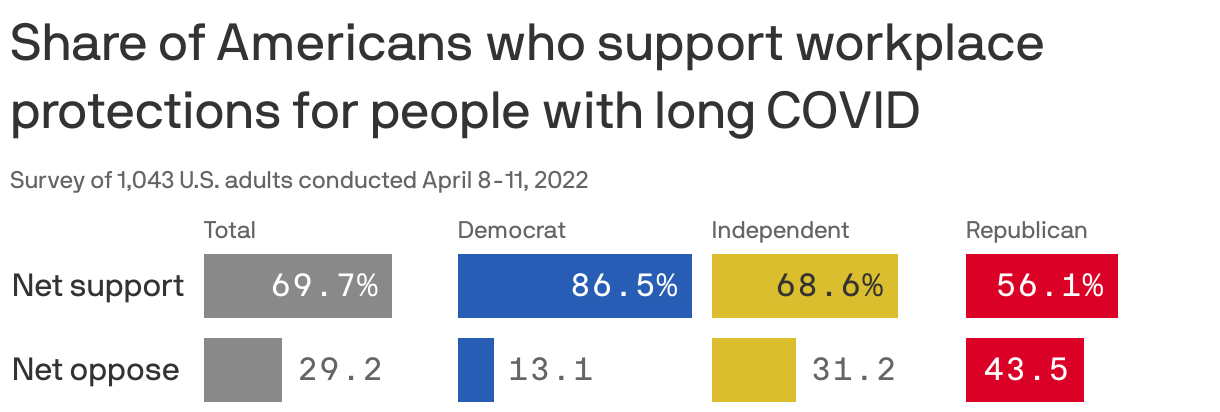
Most Americans think long COVID is a disability and approve of giving stronger support to people who have it, including workplace protections and free medical care, according to an Axios-Ipsos poll.
And they overwhelmingly favor requiring health insurance companies to cover treatment for it.
Dozens of health systems across the country have opened new clinics in the past two years to provide care to long COVID patients.
Why it matters: These long COVID clinics are providing a multidisciplinary approach that cuts across medical specialties to treat the wide range of symptoms patients face — but some providers say their resources are stretched thin in the face of a mounting public health crisis.
Long COVID is likely not just a single illness, but instead a number of different types of disorders sparked to life by a COVID infection.
Why it matters: The hydra-headed nature of the condition is just one of the complexities researchers are only beginning to tease out as they try to understand why some people develop multiple chronic symptoms after what often starts as a mild coronavirus infection.
Americans suffering from long COVID are running into the obstacles presented by health and safety net systems that are difficult to navigate in the best scenarios —and certainly aren't set up to deal with the ambiguity of a new chronic disease.
Why it matters: Long COVID patients can be hit with the financial double whammy of expensive medical bills and a reduction of income, if the condition impairs their ability to work.
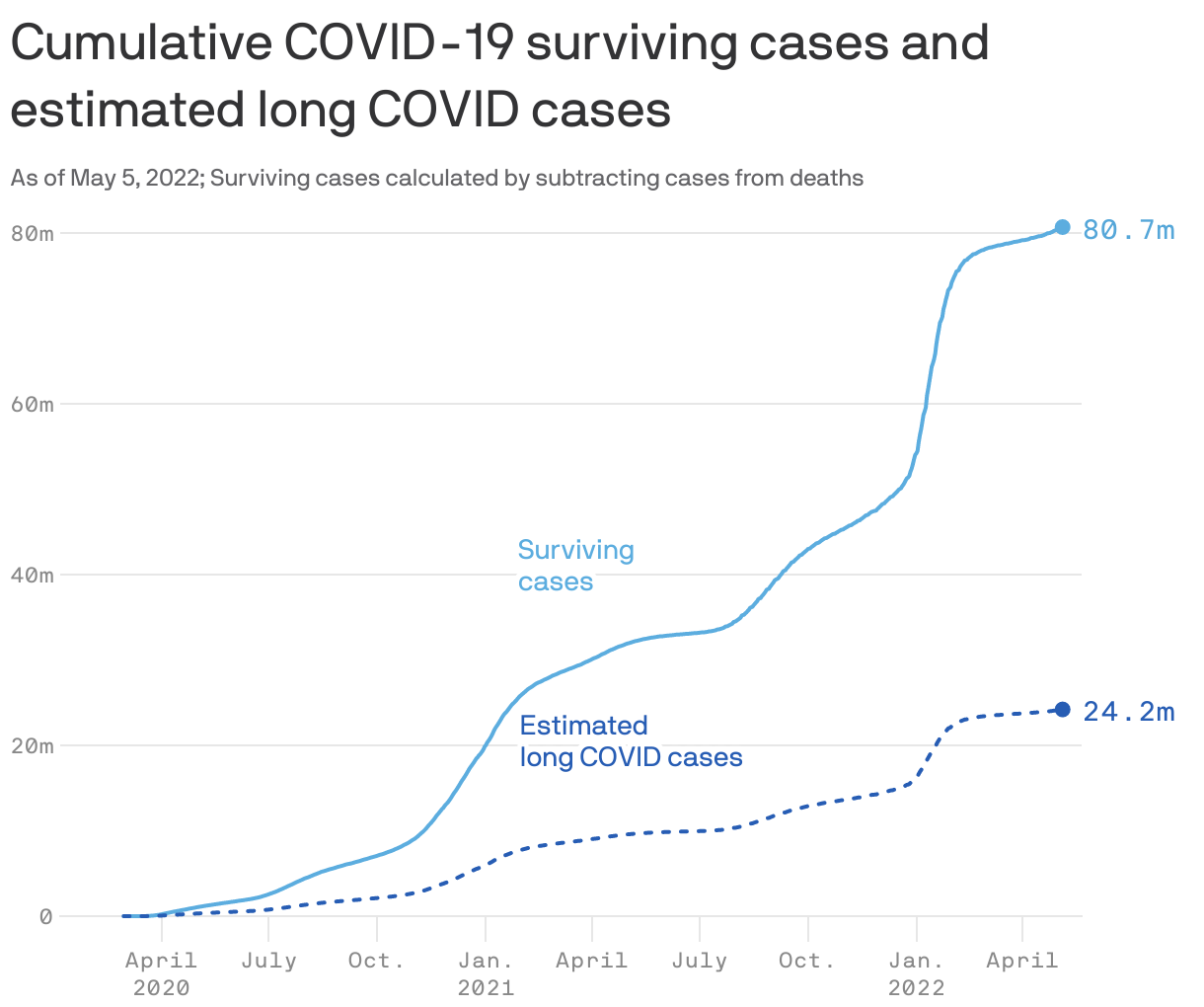
Data: Our World In Data, Johns Hopkins University; Chart: Thomas Oide/Axios
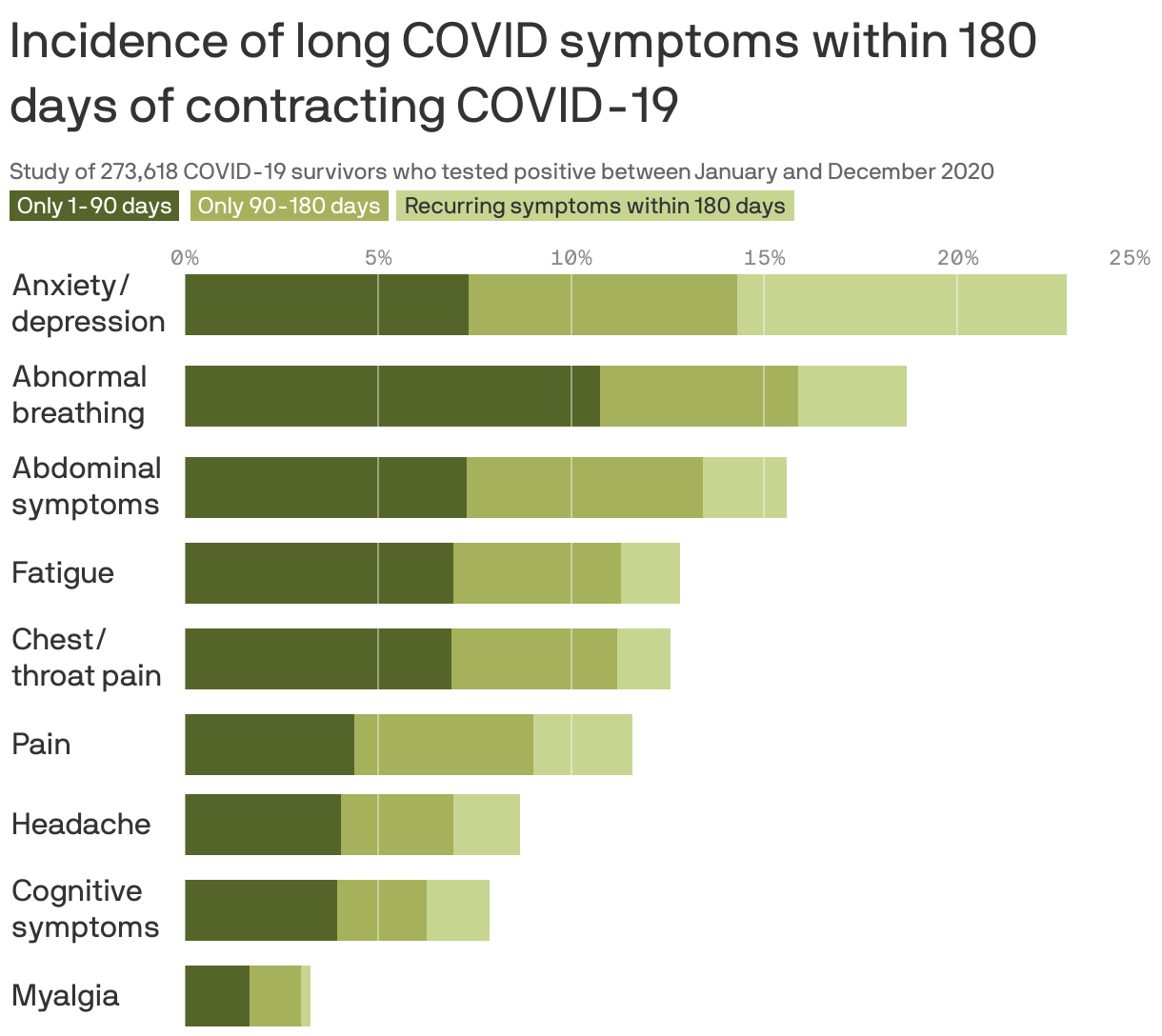
Long COVID is emerging as the next phase of the global health crisis, afflicting millions of people with neurological issues, cognitive difficulties, breathing problems and organ damage months after they fell ill.
It's also testing already overtaxed health systems with waves of chronic illness and patients who may never truly get better.
Employers that reimburse workers who travel for reproductive care may be a response to the current political climate, but it's only the latest way in which they're adding medical travel to their list of benefits.
The big picture: Rising health care costs drove employers to design policies that make cheaper or higher-quality services accessible long before the wave of red-state abortion restrictions.
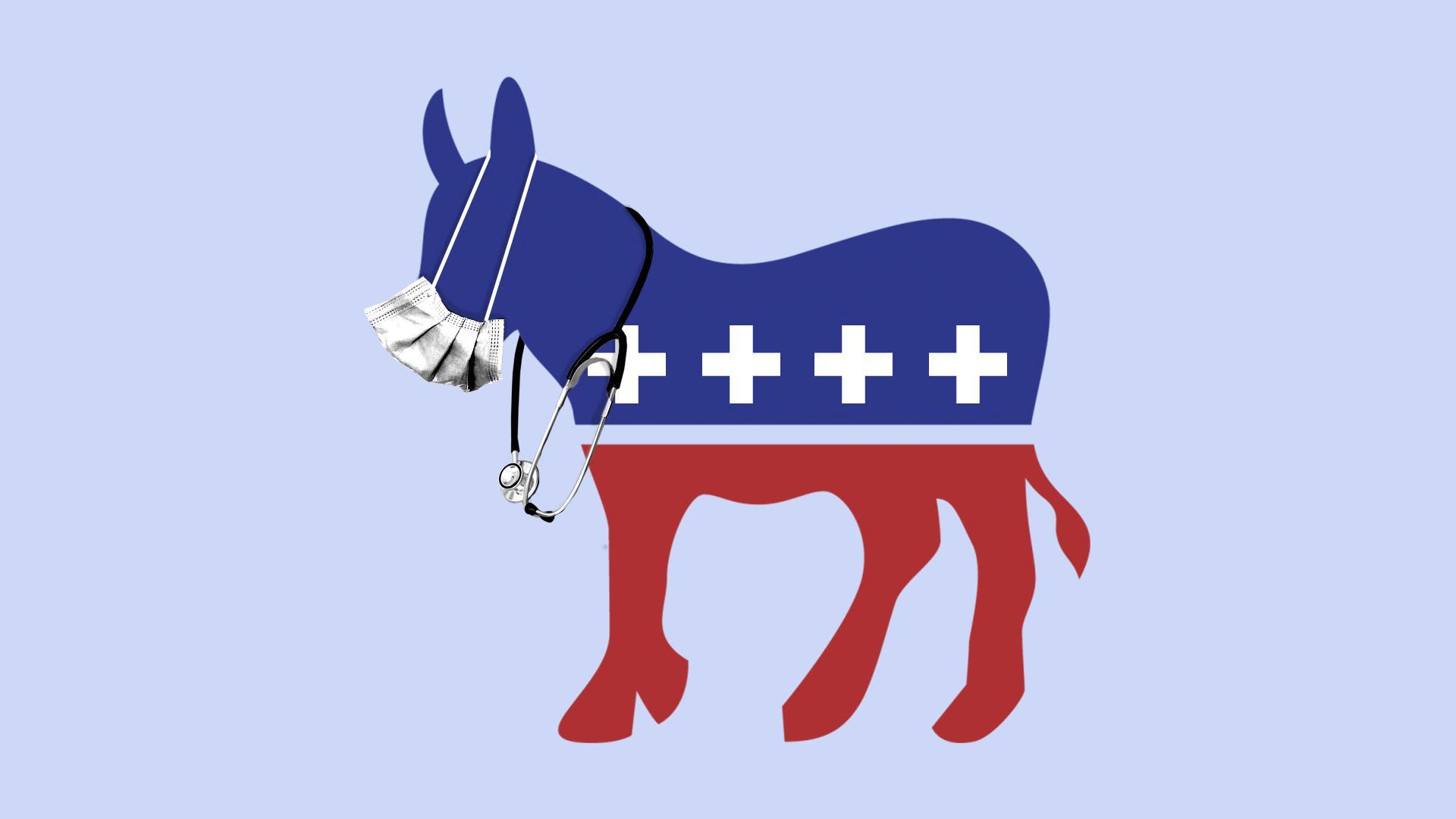
Democrats are testing a midterm strategy combining abortion rights with a broad array of health care expansion plans, as they try to direct voters' attention away from vulnerabilities on inflation, crime and the border.
Why it matters: While campaigning on health care helped put Democrats over the top in 2018 and 2020, in this cycle, COVID's economic and psychological fallout is putting President Biden's party on its heels.
But with this week's Supreme Court leak, many voters' intense opposition to ending Roe v. Wade — particularly among women, people 35 and younger and people of color — could nudge health issues front and center.
Driving the news: Democratic group Navigator Research on Friday released a memo with new polling data citing strong public support for elements of Biden's economic agenda — and opposition to implications of a plan proposed by Sen. Rick Scott (R-Fla.), chair of the National Republican Senatorial Committee. Many of the memo's data points highlight specific Democratic health care proposals.
These include calls to expand seniors' Medicare to cover hearing aids, empowering Medicare to lower drug prices, capping monthly insulin costs for diabetics and lowering health insurance premiums for families who must purchase their own coverage.
What they're saying: Democratic Congressional Campaign Committee spokesperson Chris Taylor told Axios: “Here’s a guarantee: By November every voter will know Republican extremists want to implement a nationwide abortion ban, voted against lowering drug prices and want to end Medicare as we know it.
"Democrats want to protect women’s rights, lower health care costs, and expand access to care. It’s just that simple.”
Jesse Ferguson, a Democratic strategist and advisor to Navigator, said Republicans have moved from a posture of wanting to restrict abortion to trying to ban it altogether. He said Democrats also can make a compelling argument to voters about Republican policies enabling corporate greed while talking about Democratic plans that aim to bring down health costs propelled by greed.
The other side: NRSC spokesman Chris Hartline said Democrats are misleading voters about Scott's proposal and that it "does not call for ending Social Security and Medicare nor does he support raising taxes on half of all Americans."
Hartline said Democrats' polling arguments "have no basis in reality" and that inflation and surging gas prices on Biden's watch is tantamount to thousands of dollars in tax increases per person. He said Democrats had "created a crisis at our Southern border all while crime is raging across the country... they can’t defend a single thing they’ve done."
Be smart: While Biden's Build Back Betterplanincluded a number of legislative solutions like giving the government the authority to negotiate prescription drug prices, putting caps on drug prices that rise faster than inflation and reducing the cost of insulin, it's unclear how many of those proposals will be signed into law — if at all.
But framing abortion as a health protection issue gives Democrats a way to push back on Republican claims that Democrats want radical abortion rights.
And talking about health care in the context of not just medical but economic benefits gives Democrats a way to show voters how they're addressing economic challenges in a time of inflation.
Only 34% of voters approve of the way Biden is handling the economy, per a recent Washington Post/ABC News poll. But new polling from Pew finds 61% of Americans believe abortion should be legal while 37% believe it should be illegal.
Previously, Democrats won back the House in 2018 — flipping 41 seats — in large part due to messaging on health care. Over half of the TV ads boosting Democrats in the lead-up to Election Day that cycle mentioned health care, according to the Wesleyan Media Project.