The Solomon R. Guggenheim Museum has removed the Sackler name from an education center following years-long controversies over the family's role in the opioid crisis.
Why it matters: The Sacklers made billions from the sale of highly addictive opioid painkillers and were embroiled in several litigation battles until March, when they reached a $6 billion settlement with U.S. states.
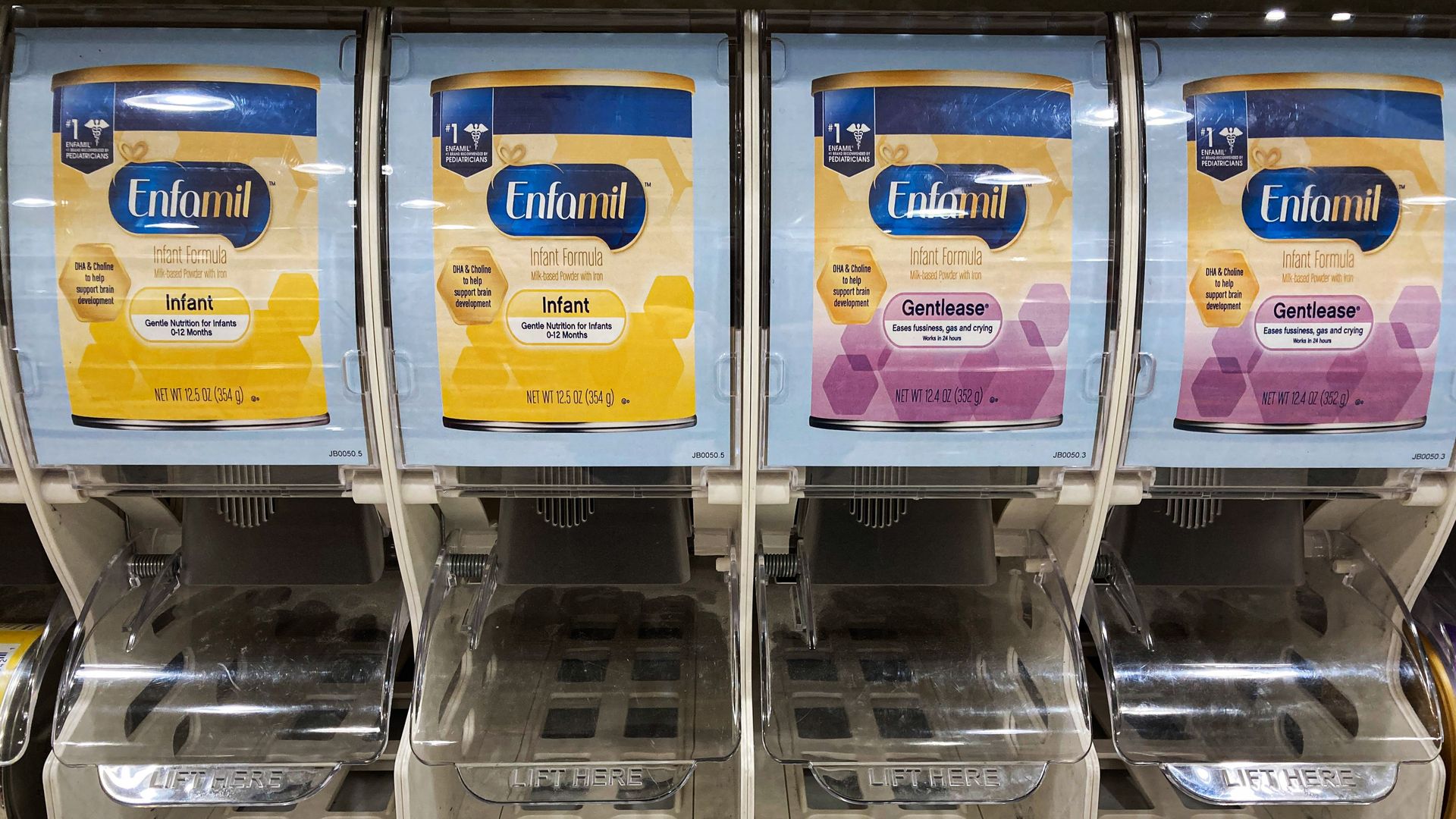
The Food and Drug Administration (FDA) said Tuesday that it is "doing everything in our power" to improve the supply of baby formula.
Driving the news: The nation's baby formula shortage has intensified in recent weeks due to supply chain issues and a recent recall of Abbott Nutrition products.
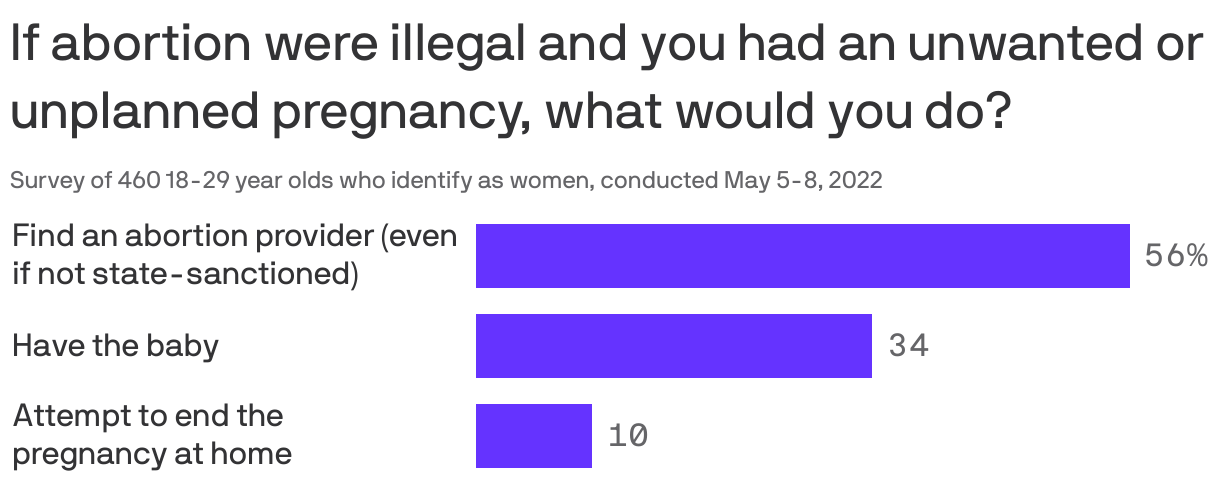
Over half of young women aged 18-29 say they would get an abortion if they had an unwanted or unplanned pregnancy — even if it were illegal, according to a new Generation Lab flash poll first provided to Axios.
Why it matters: Last week's news that the Supreme Court is prepared to overturn Roe v. Wade has raised questions on what access would look like without a federal right to an abortion. Even in states where they remain legal, abortions could be harder to access because those clinics could be flooded with patients from states that have cracked down.
The firearm homicide rate in the U.S. reached its highest level since 1994 during the first year of the COVID pandemic, with significant racial and class disparities, according to a CDC report published Tuesday.
Driving the news: 2020 saw a historic rise in homicides in the U.S., and the upward trend continued into 2021.
China's "zero-COVID" strategy isn't sustainable given the virus' ever-evolving nature, World Health Organization director-general Tedros Adhanom Ghebreyesus said at a media briefing Tuesday.
The big picture: Tedros said WHO officials have spoken to Chinese experts about the policy. The extreme measures have saved lives, but they've also led to food shortages, a lack of workers and movement restrictions, writes Axios' Bethany Allen-Ebrahimian.
Between 5.3 million and 14.2 million people could lose their health coverage when temporary pandemic-inspired reforms to Medicaid expire at the end of the public health emergency, according to a new Kaiser Family Foundation analysis.
The big picture: Democrats who hoped they'd enact transformational health legislation with control of the White House and Congress could instead face a historic jump in the U.S. uninsured rate.
If the U.S. Supreme Court overturns Roe v. Wade, it could begin a ripple effect that subsumes many other facets of reproductive health care — a reflection, in part, of decades' worth of medical advances that make the subject much more complicated than it was 50 years ago.
Why it matters: Striking down the federal right to abortion could impact how people prevent becoming pregnant, how families grow and how miscarriages are managed.
Data: Texas Christian University; Chart: Baidi Wang/Axios
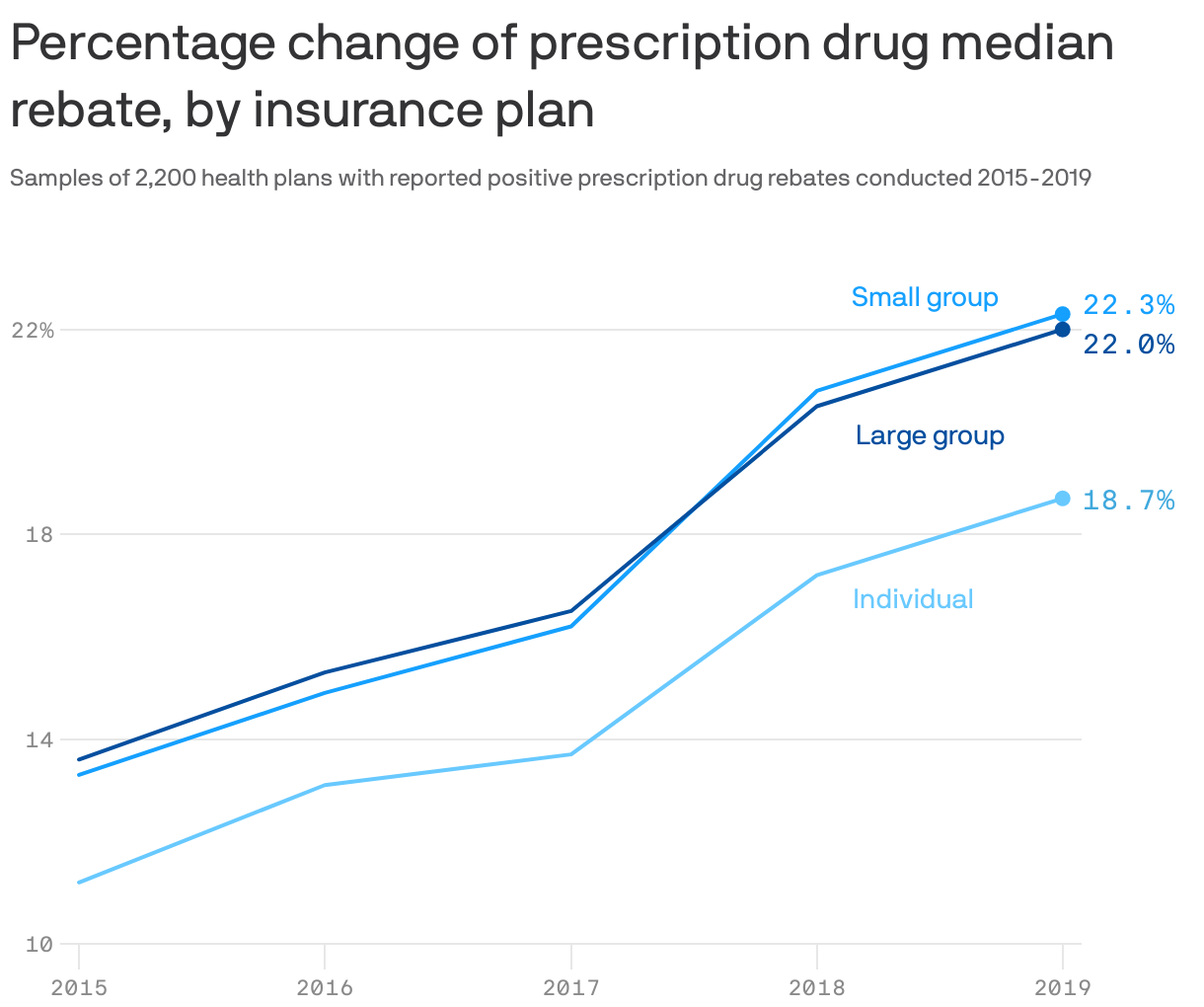
Prescription drug rebates from drugmakers to commercial health plans are steadily increasing, a study published in JAMA Health Forum shows.
Why it matters: This is all part of a system in which drugmakers negotiate to get their product on the formularies of middlemen known as pharmacy benefit managers and health plans.
As COVID-19 began to spread in the U.S. in March 2020, Trump administration officials estimated 100,000 to 200,000 Americans might die. A worst-case scenario, they said, meant between 1.6 million and 2.2 million might perish. The figures felt staggeringly high.
Two years later, the U.S. has reached 1 million deaths even as COVID has faded from the headlines.