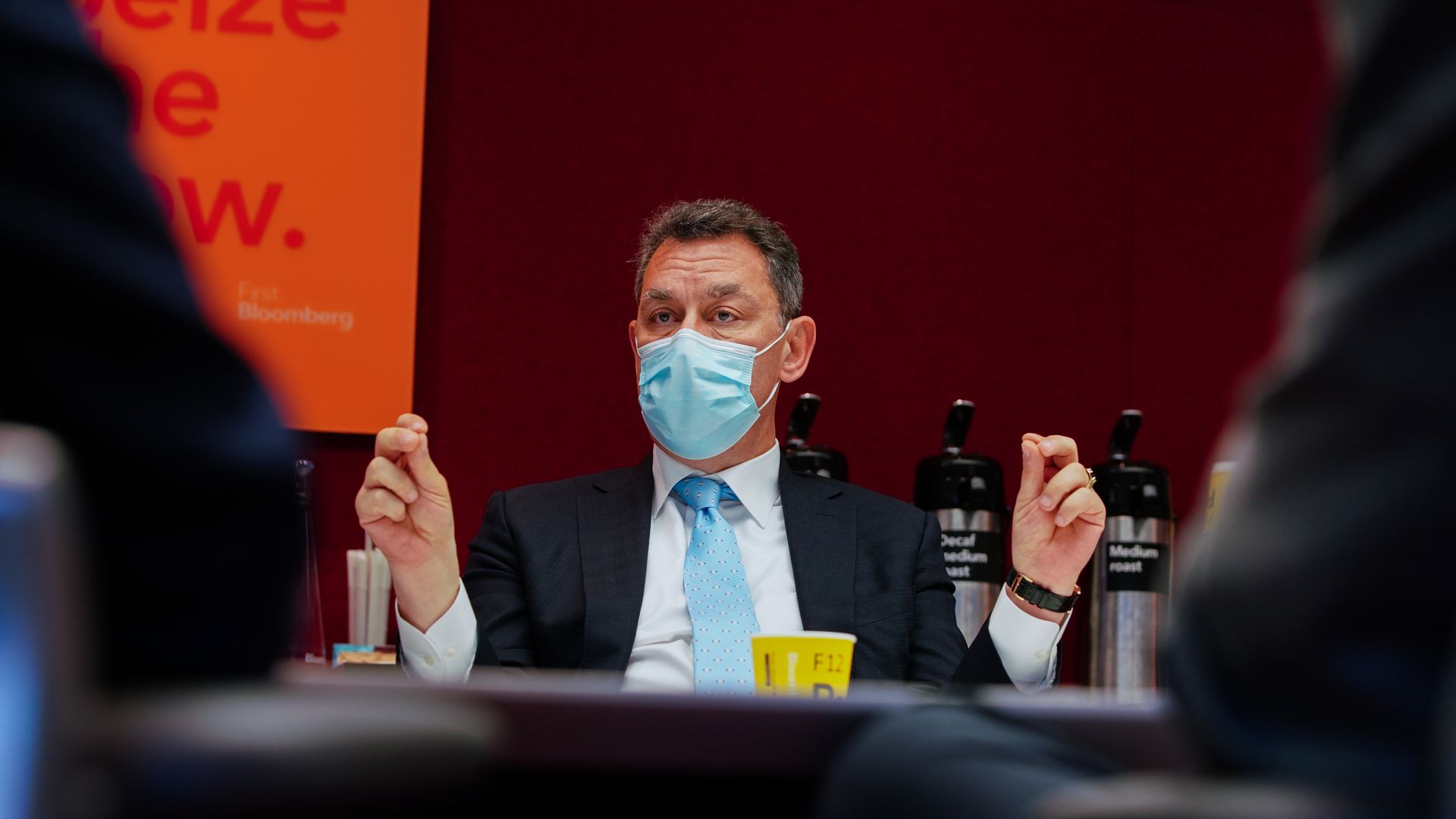
Pfizer CEO Albert Bourla said Saturday he would recommend an annual COVID-19 vaccine over frequent booster shots, Reuters reports.
Driving the news: The rise of the Omicron variant has pushed the need for vaccine boosters, and businesses, universities and others have begun to require the booster shots.
As Saturday marks the 49th anniversary of Roe v. Wade, the Supreme Court's landmark decision that legalized abortion access in the U.S., advocates warn the ruling is "more at risk now than ever."
The big picture: The Supreme Court in December heard a challenge to a Mississippi 15-week abortion ban that could throw Roe's survival into question, or at least narrow its scope.
The Food and Drug Administration on Friday authorized the antiviral drug remdesivir as a treatment for some non-hospitalized adults and pediatric patients with mild to moderate COVID symptoms.
Why it matters: The move expands use of remdesivir, previously limited to only patients who were hospitalized, and comes as doctors face shortages of FDA-authorized treatments, per the Washington Post.
Arizona Gov. Doug Ducey (R) filed a lawsuit Friday against the Biden administration for ordering the state to stop allocating federal COVID relief funds to schools that don't comply with public health recommendations such as masking, the Arizona Republic reports.
Why it matters: The Treasury Department said last week that the state would have to pay back the money if Ducey does not redesignate the $173 million programs to ensure they don't "undermine efforts to stop the spread of COVID-19."
Anti-abortion rights activists rallied in D.C. for the 49th annual March for Life on Friday.
Why it matters: As the Supreme Court considers restrictive abortion bans in Texas and Mississippi, opponents of Roe v. Wade have doubled down on their push to overturn the precedents that established the constitutional right to an abortion.
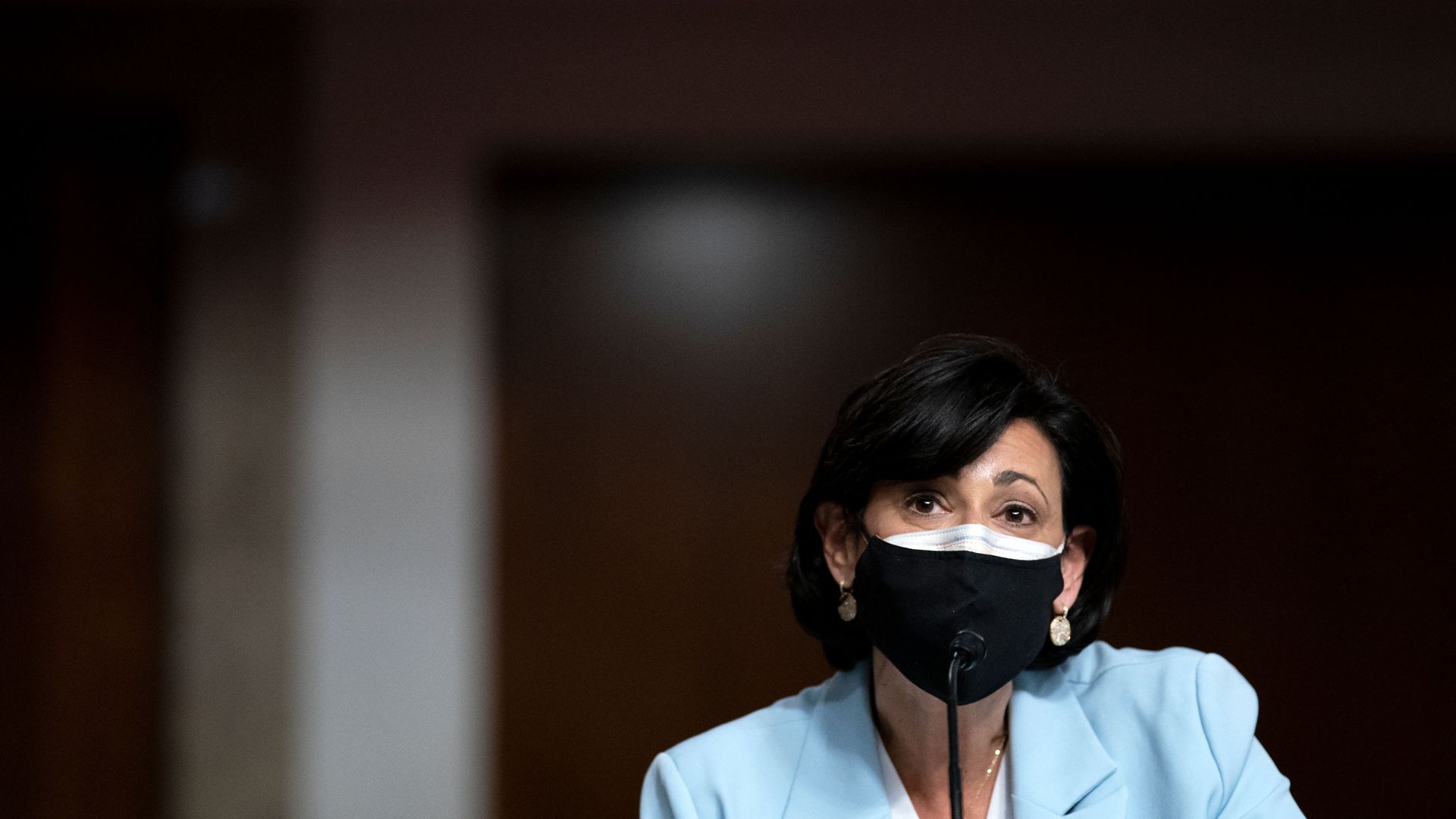
The Centers for Disease Control and Prevention is not changing the definition of "fully vaccinated," but is instead "pivoting the language" to get people "up to date" on their vaccinations, CDC director Rochelle Walensky said Friday.
The big picture: Walensky's remarks come after health officials and Walensky herself have gone back and forth on whether or not they would change the definition of "fully vaccinated" with the emergence of the Omicron variant.
The widespread toll on children's mental health is one of the most potentially harmful impacts the pandemic has had, actress Goldie Hawn told Axios in an interview.
"We are dealing with a global epidemic of mental illness," Hawn said.
Driving the news: Nearly 20 years after founding MindUP for Life, an organization that has provided tools to help schools teach millions of kids about brain health, Hawn announced this week the organization expanded onto a digital platform.
Called MindUP for Life Digital, Hawn said the pandemic heightened the need for scaling the evidence-based program developed by neuroscientists and mental health practitioners to teach kids how to better cope with difficult emotions.
Hawn said she's also been meeting with legislators to put money toward addressing the "public health emergency" of mental health needs in schools.
What she's saying: "It's become right in our face now because of the pandemic. Now we at least get to see it, now we get to talk about it. But is it too late? We need prevention and we needed it before the pandemic," Hawn said. "And this is where we're not doing it. Our classrooms should be filled with how you teach a child to be a human and healthy and happy."
Here are a few excerpts from what else Hawn told Axios this week.
On her involvement in addressing kids' mental health: "I don't pretend to know all the answers ... My philosophy is I'm going to put one damn foot in front of the other and I'm going to learn as much as I can to be able to put as many smart people in the seat to be able to change what we're doing for children."
On the importance of kids understanding their brains: "I always wanted it to be something with young children to get their brains building appropriately, to get them into an understanding of the brain and how it works, how to calm down, how to self-regulate, how to recognize their emotions and also know the pre-frontal cortex doesn't behave very well when you're upset or angry or uncertain. All the things that happen to children ... the point is, these kids now know all that. And they're seven."
On why mental health should be taught in schools: "Our children are going to inherit the world. Why aren't we preparing them to have much more of an ability to see a problem from 100,000 feet up rather than becoming entangled with a problem?"
On the bigger picture: "I'm looking at people who are fearful, I'm looking at angry people on the road. I've never seen more speeding and moving around people in anger. I mean, there is so much uncertainty and fear that it's creating polarity, it's creating aggression. And I get it: Everybody's mad. They're shutting things down again. But you know what? We only live once and there is a point where we have to look at this and say 'We're going to get through this together."
With $30 million in fresh funds, health monitoring startup Casana is readying to debut a toilet seat that takes your vitals.
Why it matters: Casana’s clinical commode is part of a broader trend that is seeing health care move out of the doctor’s office and into the home — or bathroom.
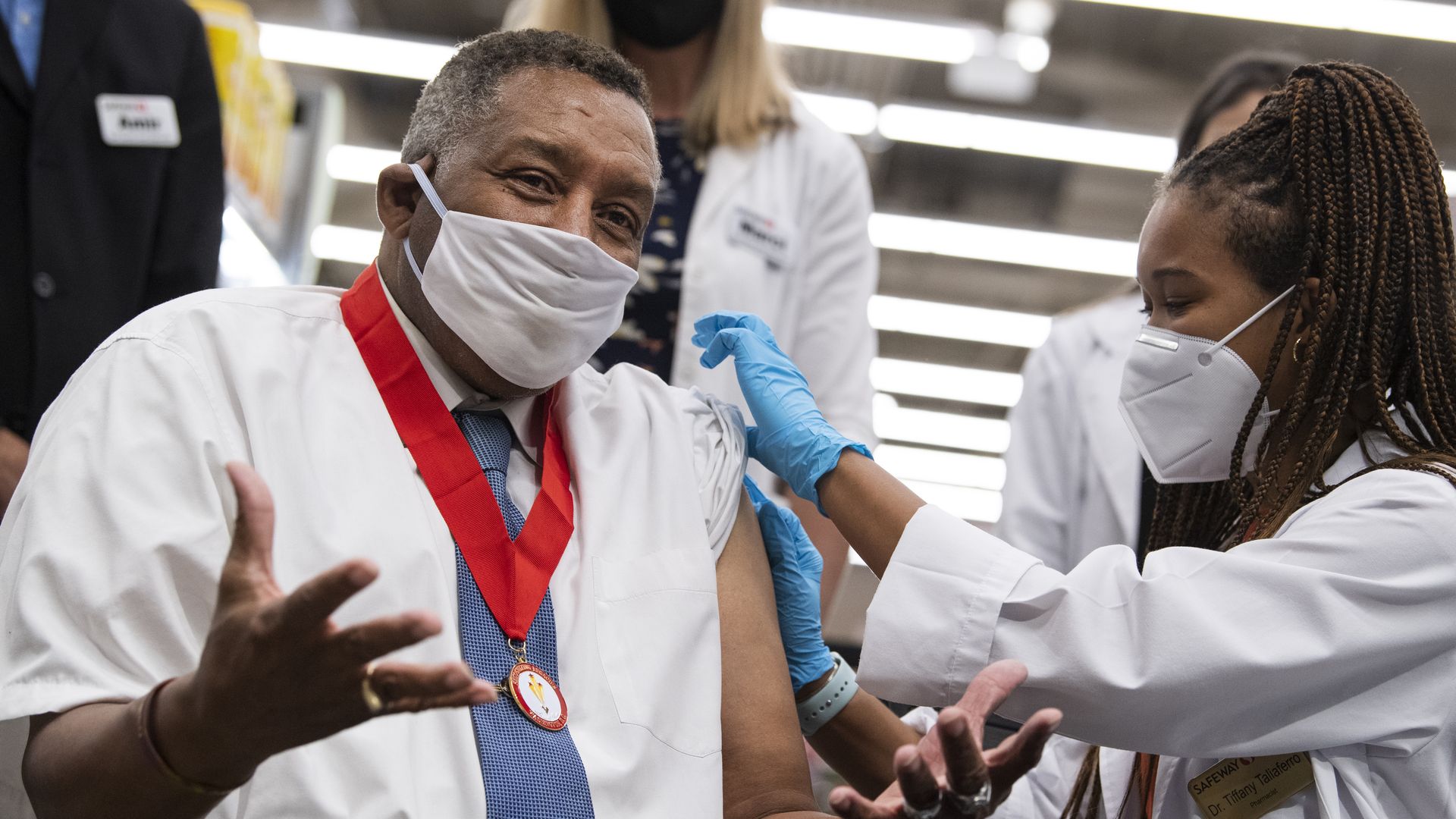
Booster doses of the Pfizer-BioNTech and Moderna vaccines overwhelmingly prevented hospitalizations from the Omicron variant, according to CDC data out Friday.
Driving the news: Pfizer and Moderna boosters were 90% effective at preventing people infected with the Omicron variant from ending up in the hospital, per the data.
Google Health formally disbanded last year, with the unit instead choosing to spread its efforts across the organization. In this iteration, the company is working to imbue each of its numerous divisions with health expertise, Google chief medical officer Karen DeSalvo said during the Axios Pro kickoff event.
Why it matters: Google isn’t backing away from health, but rather deepening its investment in the category by infusing its work into virtually every sector of the company, from wearables to partnerships with hospitals and health systems.
Omicron's blitz around the world has underscored the need for a new arsenal of COVID vaccines and therapeutics, experts say — and that may require an effort akin to Operation Warp Speed 2.0.
Why it matters: The virus will continue to evolve, potentially in a way that further escapes vaccine protection, and the best way to prevent more global disruptions to everyday life is to have tools ready to combat whatever comes next.
While the vaccine focus has centered around COVID, American teens and adults have missed out on tens of millions of other CDC recommended shots, a new analysis released exclusively to Axios shows.
Why it matters: It's yet another example of deferred preventative care during the pandemic — including kidney care and cancer screenings — which could ultimately turn into a major problem across the U.S. later.
All of the roughly 240 American athletes going to next month's Beijing Winter Olympic Games have been fully vaccinated against COVID-19, Team USA's top doctor told AP on Thursday.
The big picture: There was no vaccine requirement for American Olympians at last year's Summer Games in Tokyo, and about 100 of the 613 Team USA athletes competing in the event were unvaccinated.
The risk of unvaccinated U.S. residents aged 50-64 being hospitalized with COVID-19 is 44 times greater than those in the same age group who've been fully vaccinated and had a booster shot, new CDC data suggests.
By the numbers: For unvaccinated people over 65, that risk is 49 times greater than vaccinated Americans who've had booster shots, notes the New York Times, which first reported on Thursday night's data.
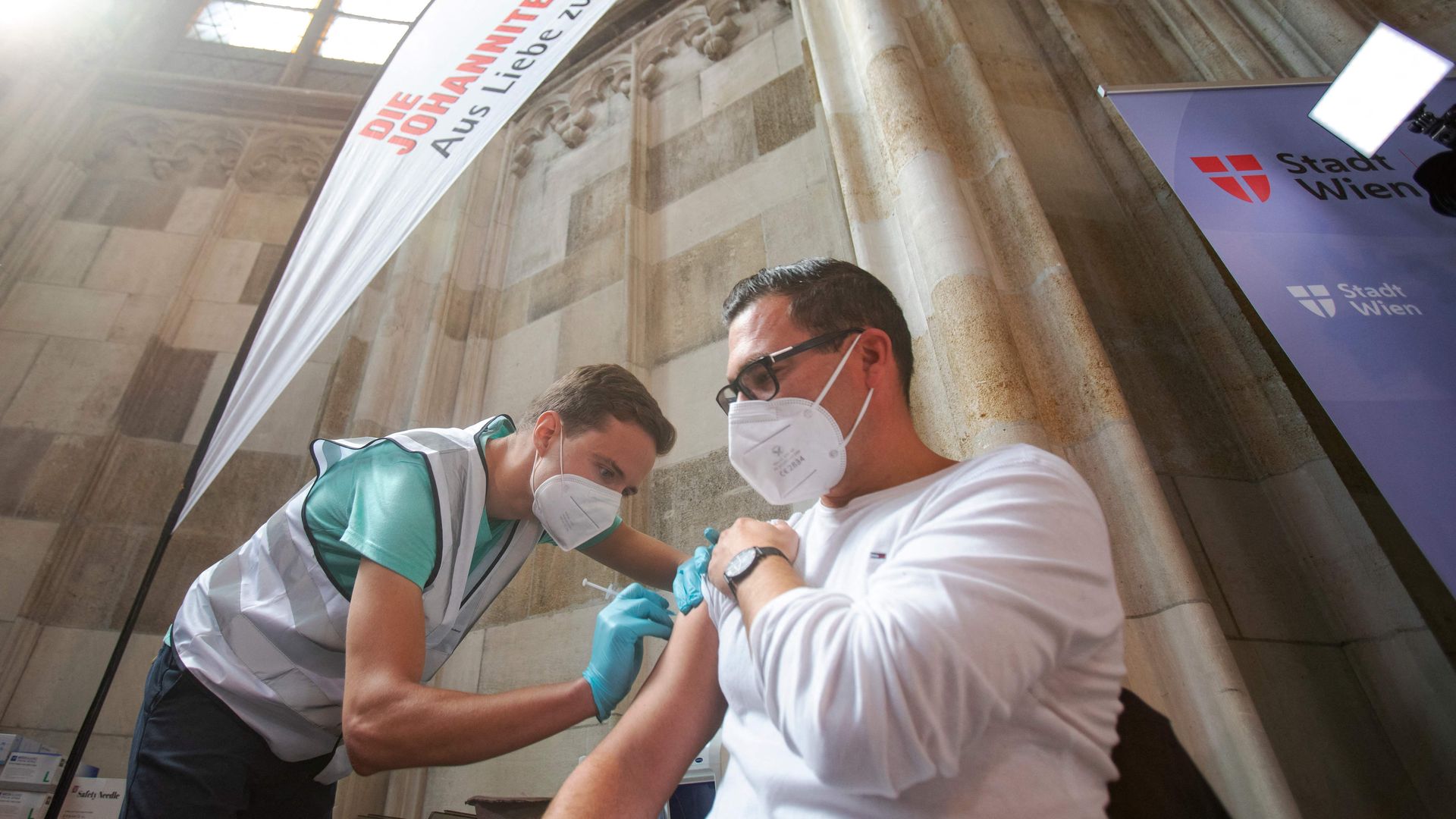
Austria's lower house of parliament voted on Thursday in favor of making COVID-19 vaccinations compulsory for most adults from next month.
Why it matters: The bill is expected to soon pass the upper house and be signed by President Alexander Van der Bellen in order for the law to take effect Feb. 1, per Reuters. It'd make Austria the first EU nation to impose such a sweeping mandate.














/2022/01/20/1642714431717.gif?w=3840)