ESPN announced Thursday that it will not be sending news personnel to the Beijing Olympics due to concerns about COVID-19 and related pandemic restrictions.
What they're saying: "The safety of our employees is of utmost importance to us,” Norby Williamson, ESPN executive vice president, event and studio production & executive editor, said in the press release.
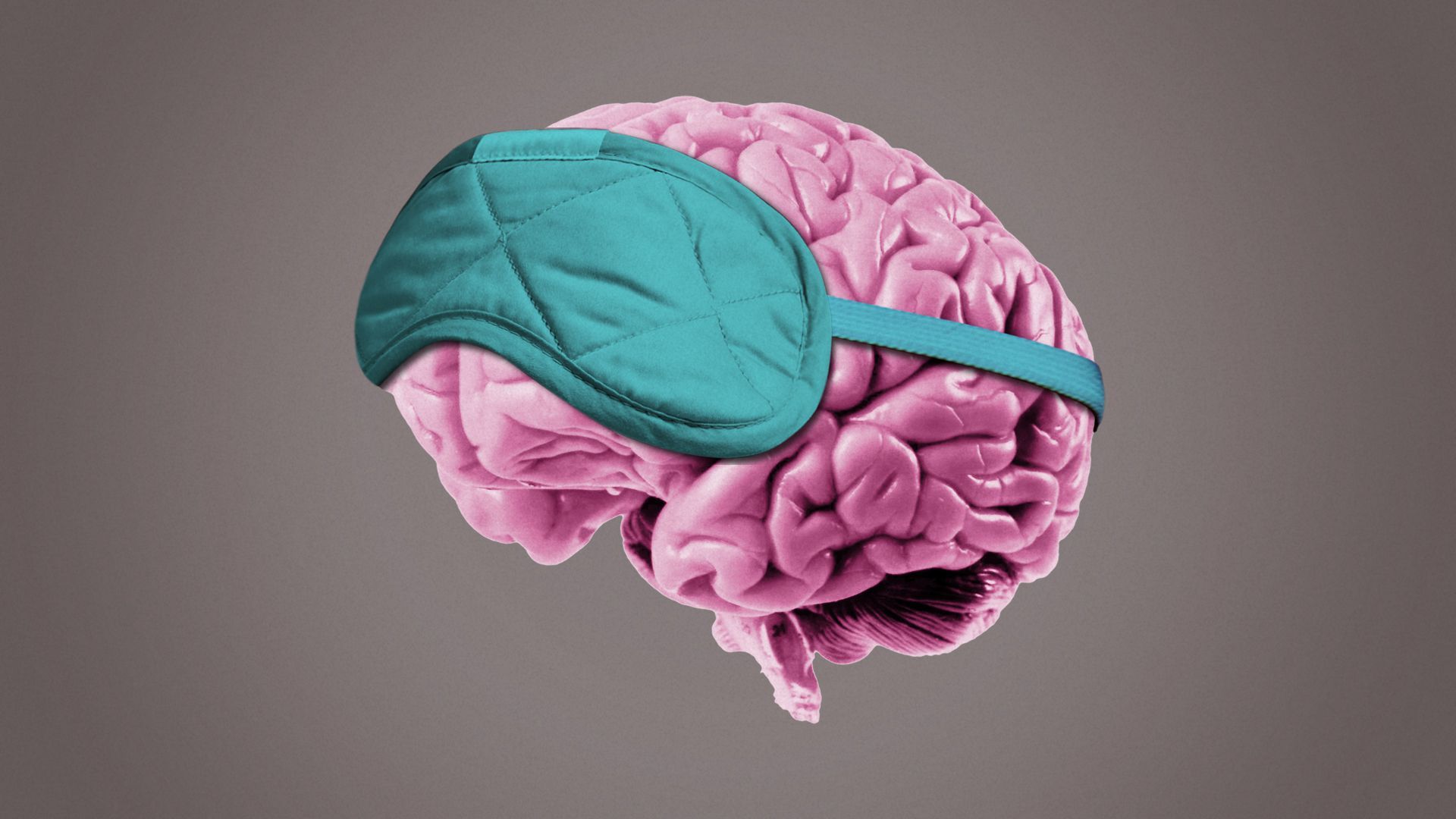
Sleep-tracking startup Earable has raised $6.6 million from lead investor Founders Fund and Smilegate Investment as it prepares to introduce a wearable headset aimed at improving sleep and productivity.
Why it matters: Earable hopes to reawaken the field of sleep tracking, which has been on snooze for several years as most available devices can't provide more than an estimate of the time you spent in bed.
The big question: With dozens of sleep trackers already on the market, how will Earable's device differentiate itself? And will people want to sleep with a headset?
"If someone is struggling with their sleep, they might be willing to wear a headband, but they also might be more sensitive to the disruption caused by it, saysSeema Khosla, medical director of the North Dakota Center for Sleep. "The less obtrusive, the less annoying, the better!"
How it works: Earable isn't just a sleep tracker, Tam Vu, the company's founder and chief executive officer, tells Axios.
The headset includes bone-conduction headphones and biometric sensors designed to improve sleep during the night and focus during the day.
"We’re not a sleep tracking company. We’re a neuroscience and AI company designed to improve humans' cognitive function," says Vu, who is also an associate professor of computer science at Oxford University.
Those sensors include an electroencephalogram (EEG) to measure brain signals, an electrooculogram (EOG) to track eye movements, and an electromyograph (EMG) to measure muscle response, as well as others.
What's next: Vu intends for the Earable headset to eventually be capable of sharing medical-grade data with a user's clinician.
Last year, he co-authored a small study suggesting an early version of the device measured sleep with similar accuracy to what you'd get from a sleep clinic. The findings build on earlier research from 2016 and 2018.
For now, he plans to sell the tool as a non-medical wellness gadget while he and his team perform more studies.
"The challenge is we need to make sure the data has been validated, and not just in healthy individuals," says Khosla. "We need to see how this technology behaves in disease states like obstructive sleep apnea, insomnia, [and] heart failure."
One fun thing: It's highly unusual for Founders Fund, the venture firm known both for its contrarian creator Peter Thiel and its early bets on companies including Facebook and SpaceX, to invest in companies that haven't yet generated significant revenue.
Earable is an exception, and general partner Keith Rabois led the investment, bringing Earable's total funding to $10 million.
Rabois says he expects the device to help "enhance human potential."
Erin is co-author of the Axios Pro Health Tech Deals newsletter. Subscribe at AxiosPro.com to follow her scoops and insights.
Black patients were more than two-and-a-half times as likely as white patients to have negative descriptors about them in their electronic health record, according to a study published Wednesday in Health Affairs.
Why it matters: The study is further evidence of bias in the U.S. health care system, which can ultimately result in worse care and disparately poor outcomes.
An American Airlines flight en route to London from Miami was forced to turn around about an hour into the trip due to a passenger "refusing to comply with the federal mask requirement," an airline spokesperson said Thursday.
State of play: The flight, which carried 129 passengers and 14 crew members, was about 500 miles into its over 4,000-mile journey when it was diverted back to the Miami International Airport.
Although net prices of brand-name drugs have increased significantly over the last decade, the savings produced by generics have actually driven average prescription prices down in Medicare's pharmacy benefit and Medicaid, according to a new analysis by the Congressional Budget Office.
Why it matters: The analysis reiterates that the generic market is largely working as intended.
The second year of the pandemic did not dampen UnitedHealth Group's finances, and the company actually surpassed its initial 2021 revenue and profit projections.
The big picture: UnitedHealth's revenue has tripled from 2010 to 2021, and profit has almost quadrupled. The company continues to make more of its money from owning doctor groups and controlling pharmacy benefits instead of relying on health insurance.
Patients who take pre-exposure prophylaxis (PrEP), a medication that prevents HIV, should not be paying anything out of pocket for the drug — or for any blood work or doctor visits associated with getting PrEP.
The big picture: The federal government specifically reminded health insurers last year to make sure those types of ancillary services for PrEP were free at the point of care, but some patients are getting hit with bills anyway.
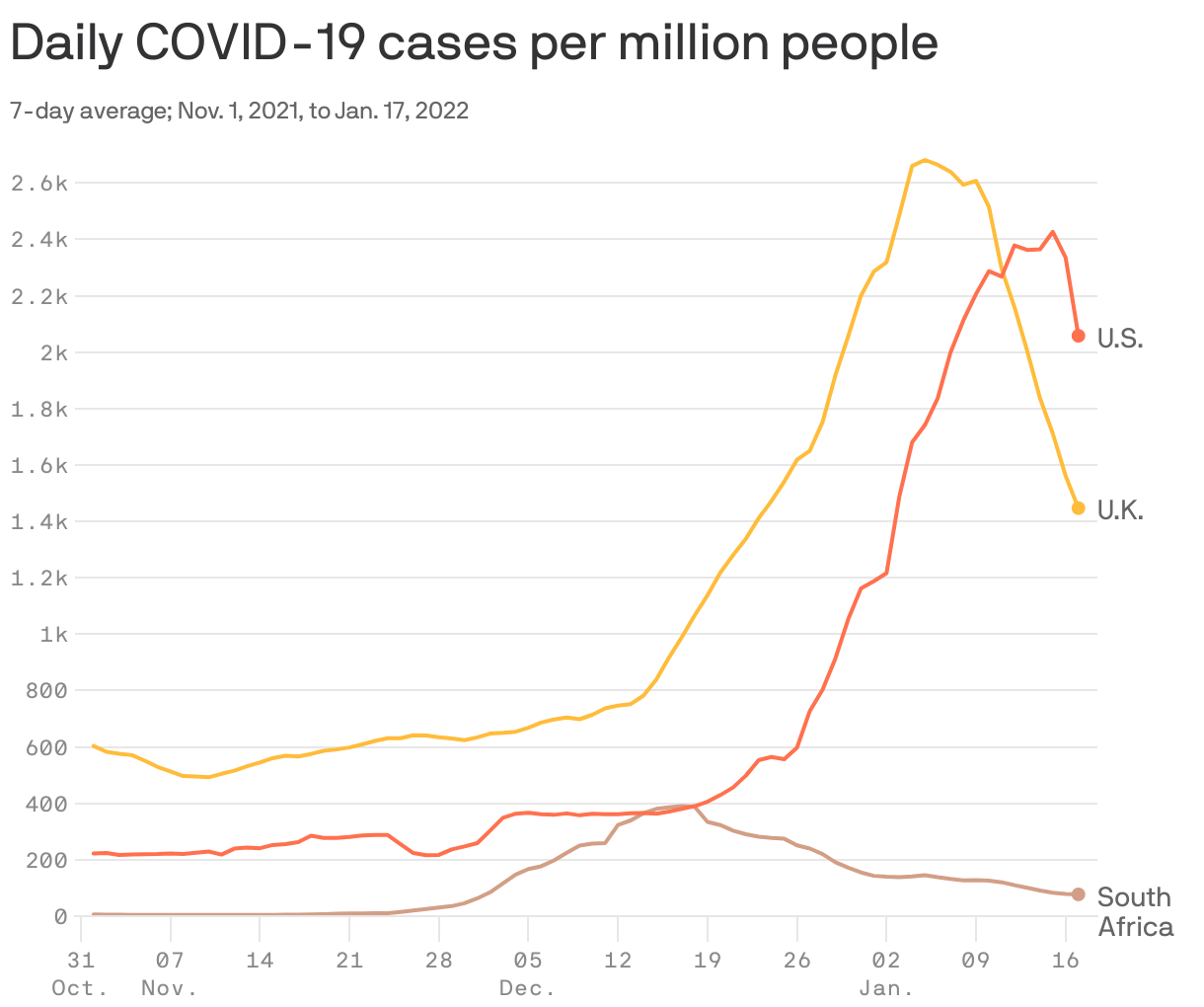
The U.S. Omicron wave may be peaking, but now COVID deaths are climbing as cases continue to soar in most of the country.
The big picture: Omicron's stranglehold in the U.S. started about a month ago. Its death toll — while almost certain to be smaller than previous waves of the pandemic — is only now starting to take hold, and deaths will likely continue to rise for several weeks.
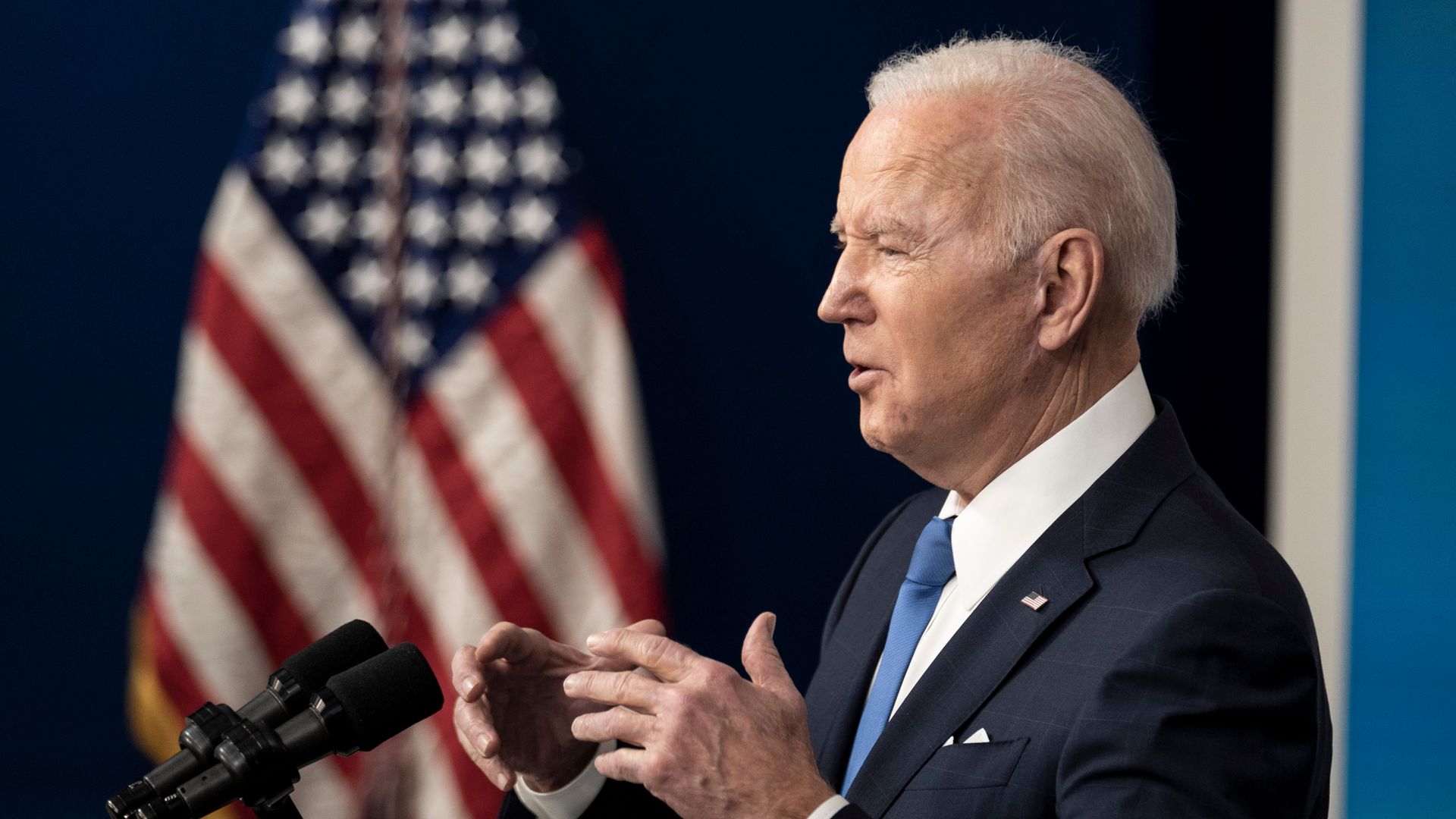
President Biden acknowledged Wednesday that the U.S. should have done more COVID-19 testing earlier on during his first year in office.
Why it matters: The administration has faced criticism for the timing of the free tests that it distributed. A widespread shortage impacted millions across the country during the holidays as Omicron cases surged.
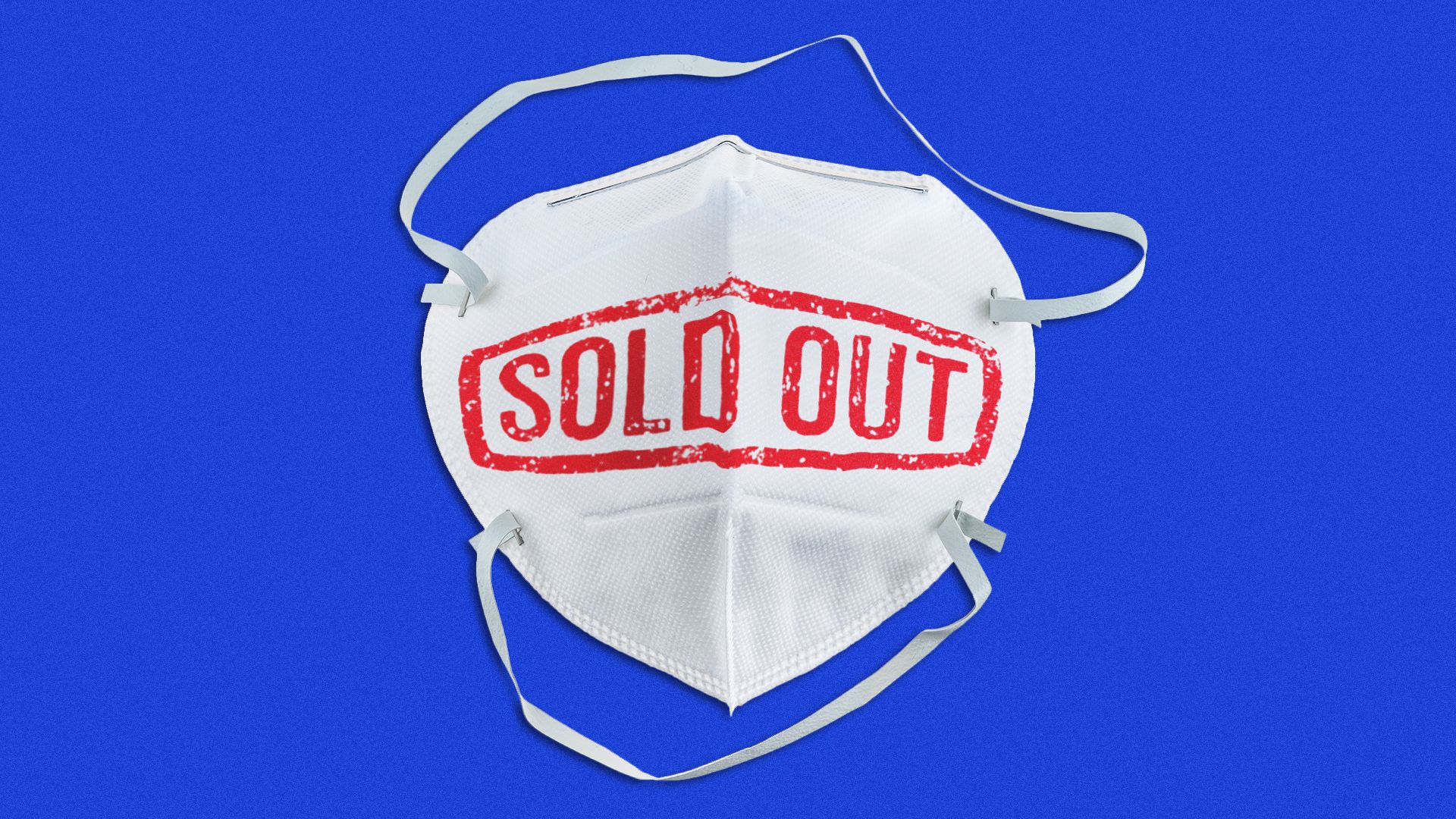
American mask manufacturersare getting whiplash, having gone from sleepy sector to mission-critical industry overnight — only to see sales collapse before now being suddenly in demand again.
Why it matters: As the highly contagious Omicron variant of COVID-19 rages, health experts now say Americans need legitimate N95 or KN95 masks to best protect themselves — not widely available fakes or less effective cloth masks.
Arizona Attorney General Mark Brnovich on Wednesday sent a letter to Treasury Secretary Janet Yellen responding to the Biden administration's threat that it will take back and withhold the state's COVID-19 relief aid over anti-masking school policies.
Driving the news: "[W]e will not be intimidated by the heavy-hand of the Biden Administration forcing Arizona to comply with ambiguous and unrealistic national standards," Brnovich said.
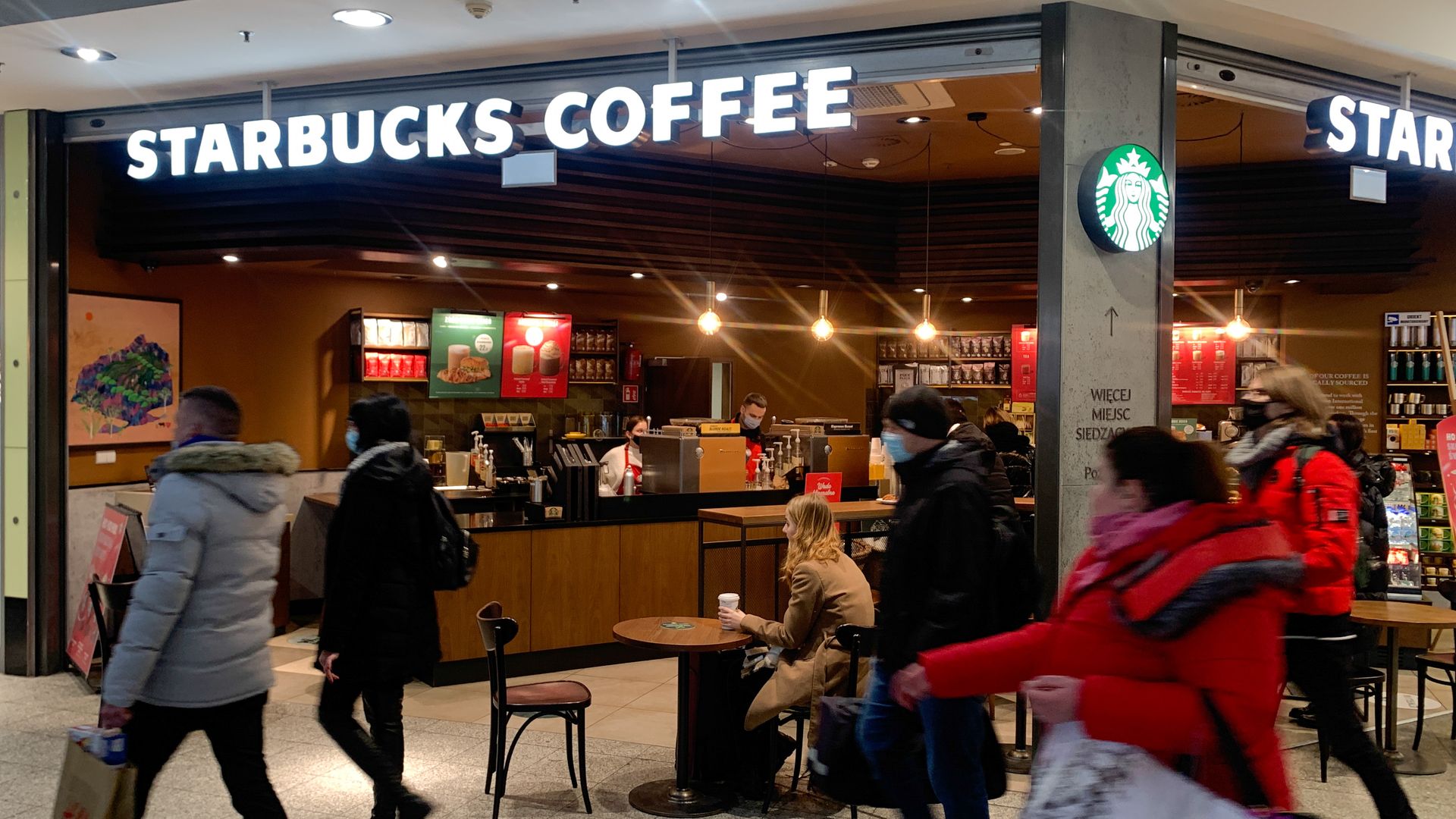
Starbucks has dropped plans to require that U.S. workers get the COVID vaccine or submit to weekly testing, the company announced Tuesday in a memo to employees.
Why it matters: The company's decision comes in response to the Supreme Court's ruling last week to block the Biden administration's COVID-19 vaccine-or-test requirement for large employers.
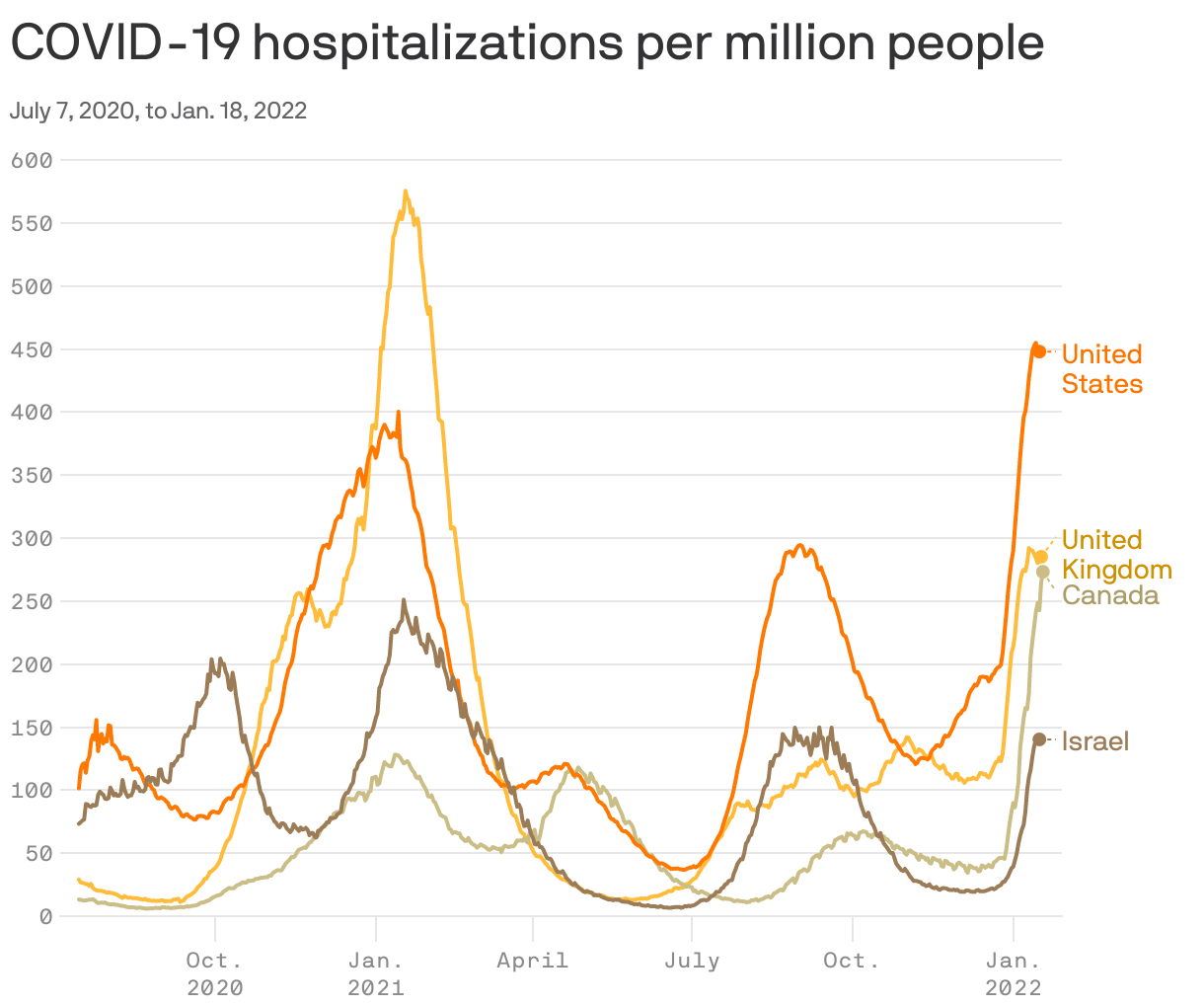
America is seeing more COVID hospitalizations than other wealthy countries during the Omicron surge, according to Our World in Data.
Why it matters: Vaccines keep the vast majority of COVID cases out of the hospital, but vaccination rates are also lower in the U.S. than these other countries.
The Biden administration will announce Wednesday that 400 million non-surgical N95 masks will be made available to the public for free at thousands of "convenient locations" across the U.S.
Why it matters: This is the largest deployment of personal protective equipment in U.S. history, according to a White House official. The masks are slated to be available at numerous local pharmacies.
The Omicron wave is likely beginning to recede in the U.S., experts say.
Why it matters: Omicron is still wreaking havoc in parts of the country, but infectious disease experts are optimistic that relief is around the corner.
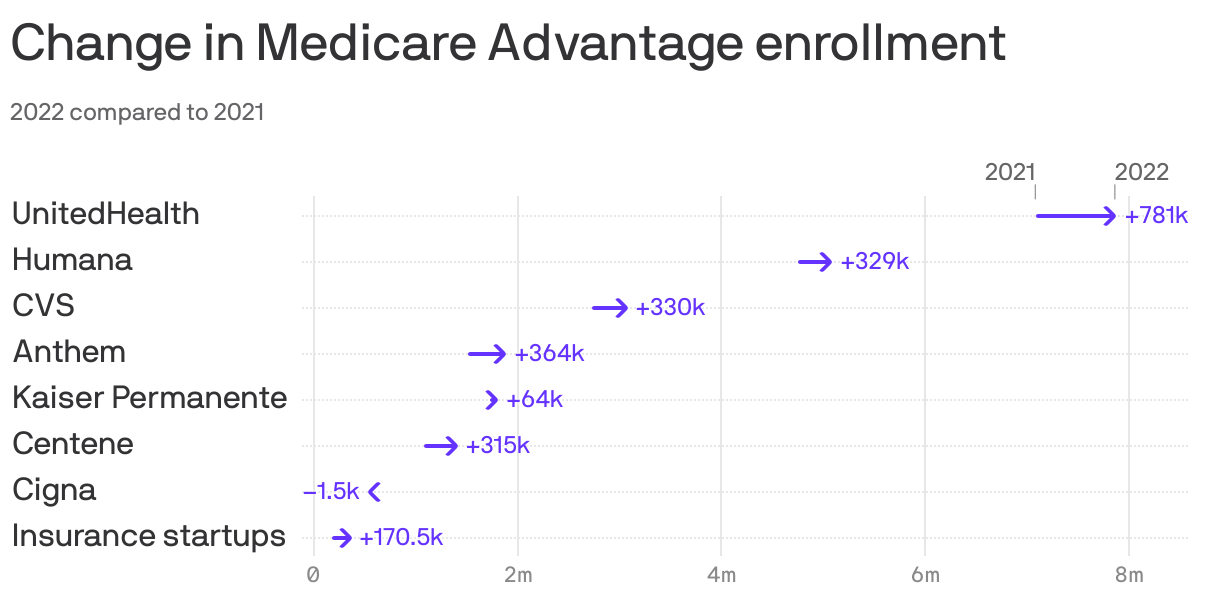
Note: Insurance startups include Alignment Healthcare, Bright Health, Clover Health and Devoted Health; Data: Centers for Medicare & Medicaid Services; Chart: Jared Whalen/Axios
Six health insurers control roughly three-quarters of the fast-growing Medicare Advantage market, according to an Axios analysis of federal data.
Why it matters: Medicare Advantage enrollment hasn't slowed down in 2022, even though dismal projections from Humana and Cigna freaked out Wall Street earlier this month, and concentration at the top remains high.
NASA scientists estimate that the power of Tonga's volcanic eruption over the weekend was equivalent to 5-6 megatons of TNT.
Threat level: Saturday's eruption of the Hunga Tonga-Hunga Haʻapai volcano and subsequent tsunami killed at least three people. Scientists warn an "ash-seawater cocktail" poses a potentially toxic health threat, and drinking water could be contaminated.
The COVID-19 pandemic could be over this year if inequalities in vaccinations and treatments are addressed, the head of emergencies at the World Health Organization said Tuesday.
Driving the news: The WHO's Michael Ryan said that although the coronavirus may never end, there was a chance the worst was over and that it could become a "part of the ecosystem."