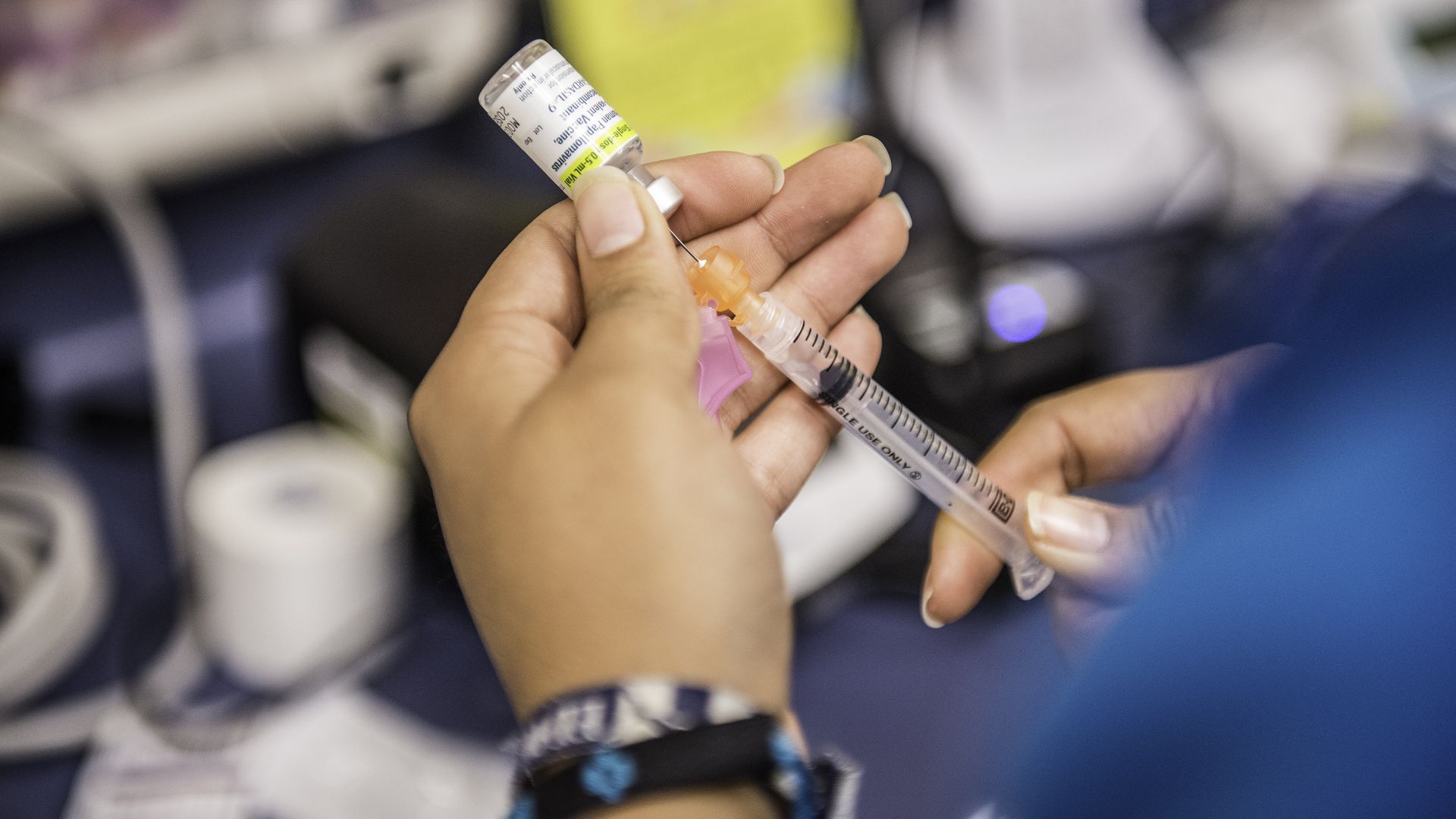
New, real world data shows the human papillomavirus,or HPV, vaccine cut cervical cancer rates among women in the U.K. by nearly 90%, according to a study published Wednesday in The Lancet.
Why it matters: Cervical cancer is the fourth most common cancer among women in the world, per the World Health Organization, killing more than 300,000 women each year.
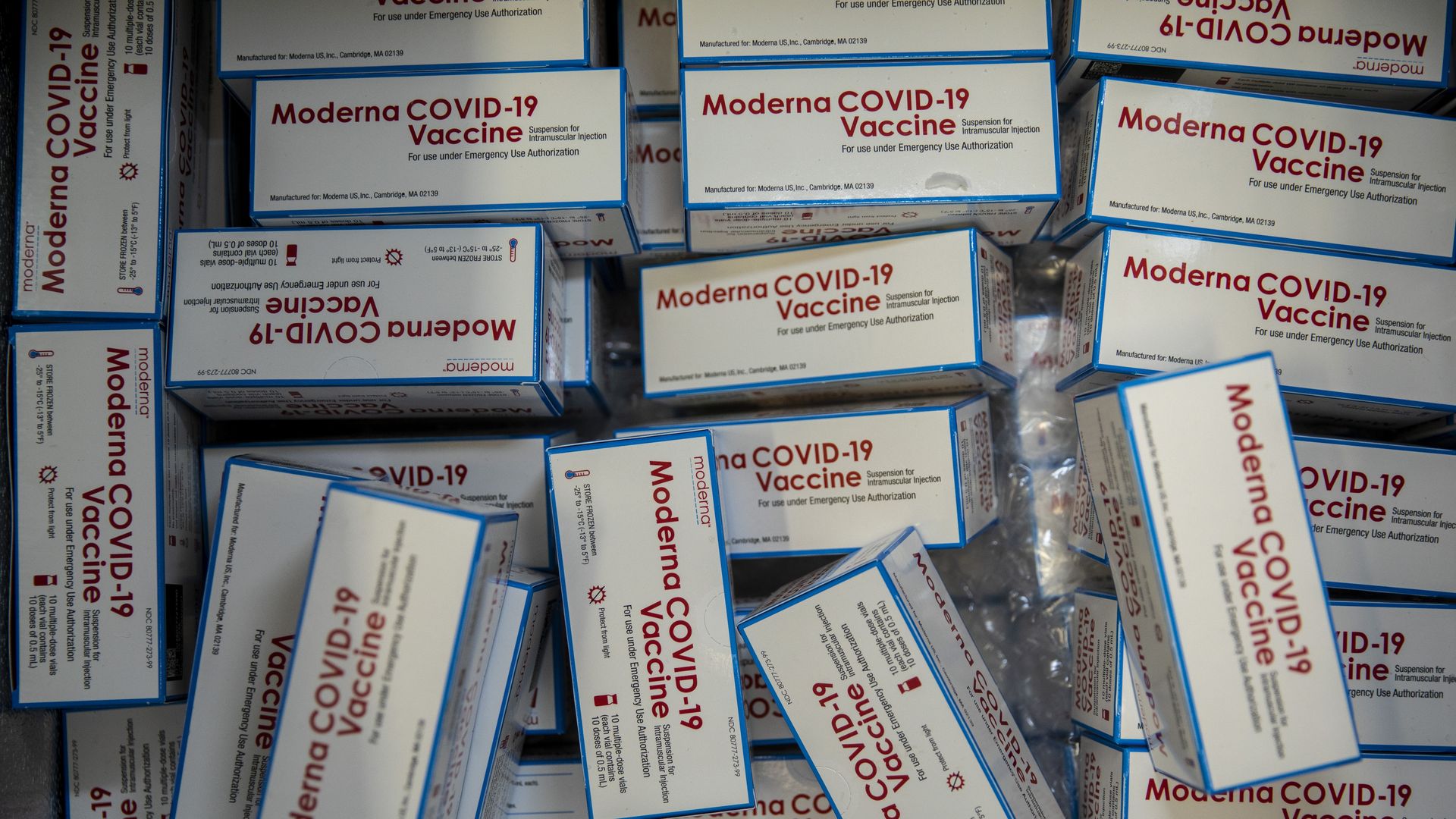
Moderna lowered the expected number of its COVID-19 vaccine doses that will be delivered this year, from a previous high of 1 billion doses down to 800 million.
Driving the news: Exporting vaccines outside of the U.S. to more countries took longer than expected, and is the primary reason behind the reduced shipments, CEO Stéphane Bancel said on an earnings call Thursday.
Abbott on Wednesday said it will spend $5 million over the next five years for about 300 scholarships for medical schools at historically black colleges and universities and minority nursing associations to better support future generations of diverse clinical investigators.
Why it matters: A historic lack of inclusion in clinical trials and dismal numbers of diverse people running them has contributed to thehuge trust problem Latinos often have with medicine manufacturers and institutions.
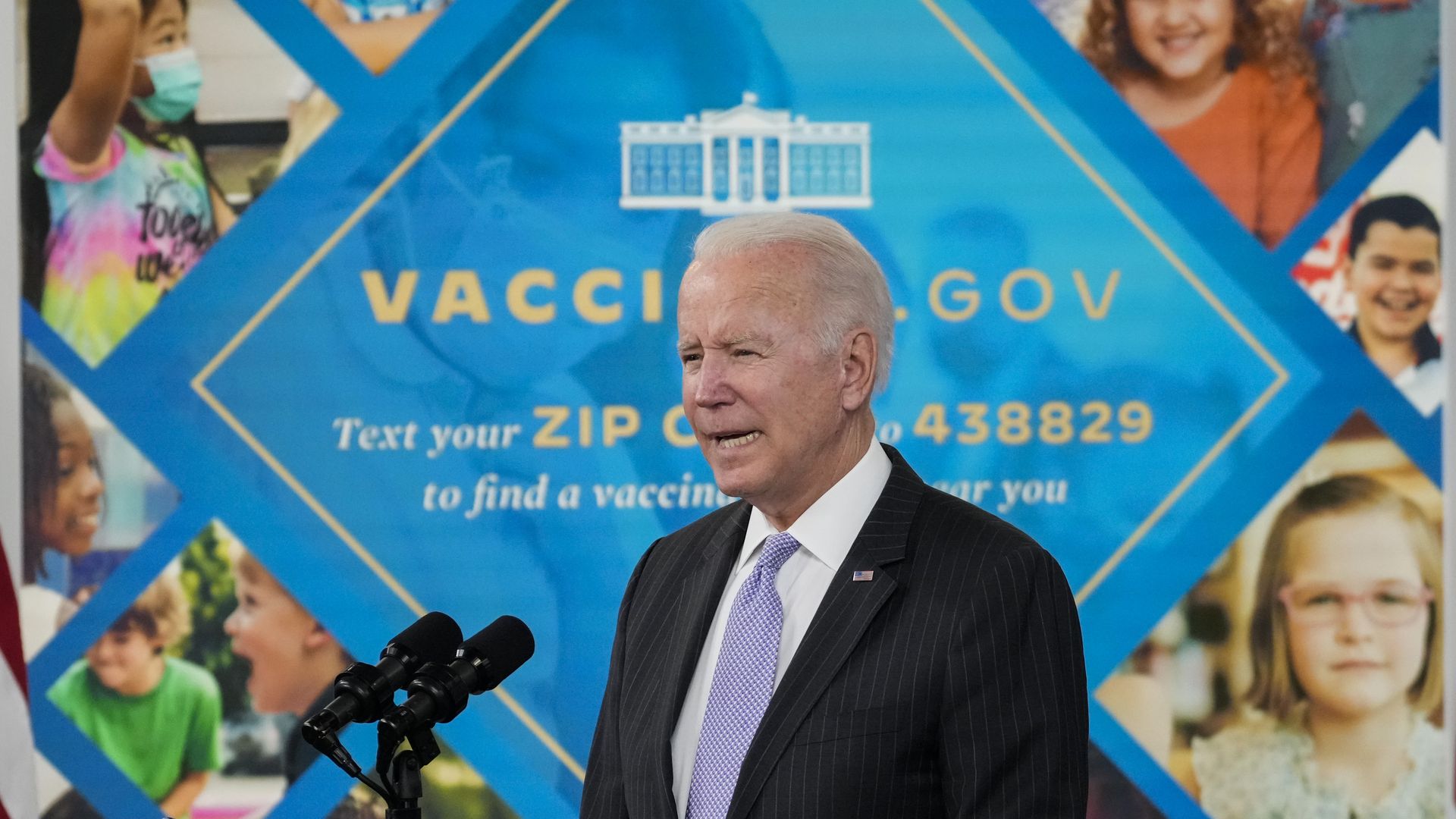
President Biden will announce Thursday that certain employers must ensure their workers are fully vaccinated or tested weekly by Jan. 4, 2022, or face federal fines starting at nearly $14,000 per violation, according to senior administration officials.
The big picture: The Department of Labor’s Occupational Safety and Health Administration (OSHA) will enforce the COVID-19 Vaccination and Testing Emergency Temporary Standard, which affects about two-thirds of all U.S. workers.
The United Kingdom's Medicines and Healthcare products Regulatory Agency on Thursday approved a pill developed by Merck and Ridgeback Biotherapeutics to prevent or treat COVID-19.
Why it matters: The U.K. is the first country to approve molnupiravir — one of the first antiviral drugs developed specifically for COVID-19. The authorization gives the U.K. another tool to treat symptomatic cases of the disease.
Mandatory vaccine deadlines have now come and gone for millions of workers — and most of them have either bit the bullet or taken advantage of wiggle room offered by their employers.
Why it matters: These mandates have become one of the most polarizing policies in America, but predictions that they'd drive workers away in droves, voluntarily or not, simply aren't coming to fruition.
An estimated 40% of U.S. health systems have instituted COVID-19 vaccine mandates, and though many are reporting high compliance, the requirements are exacerbating workforce shortages and threatening operations in others.
Why it matters: As a federal deadline requiring health care workers to get vaccinated approaches, some officials warn it could hurt health care delivery at small and rural hospitals.
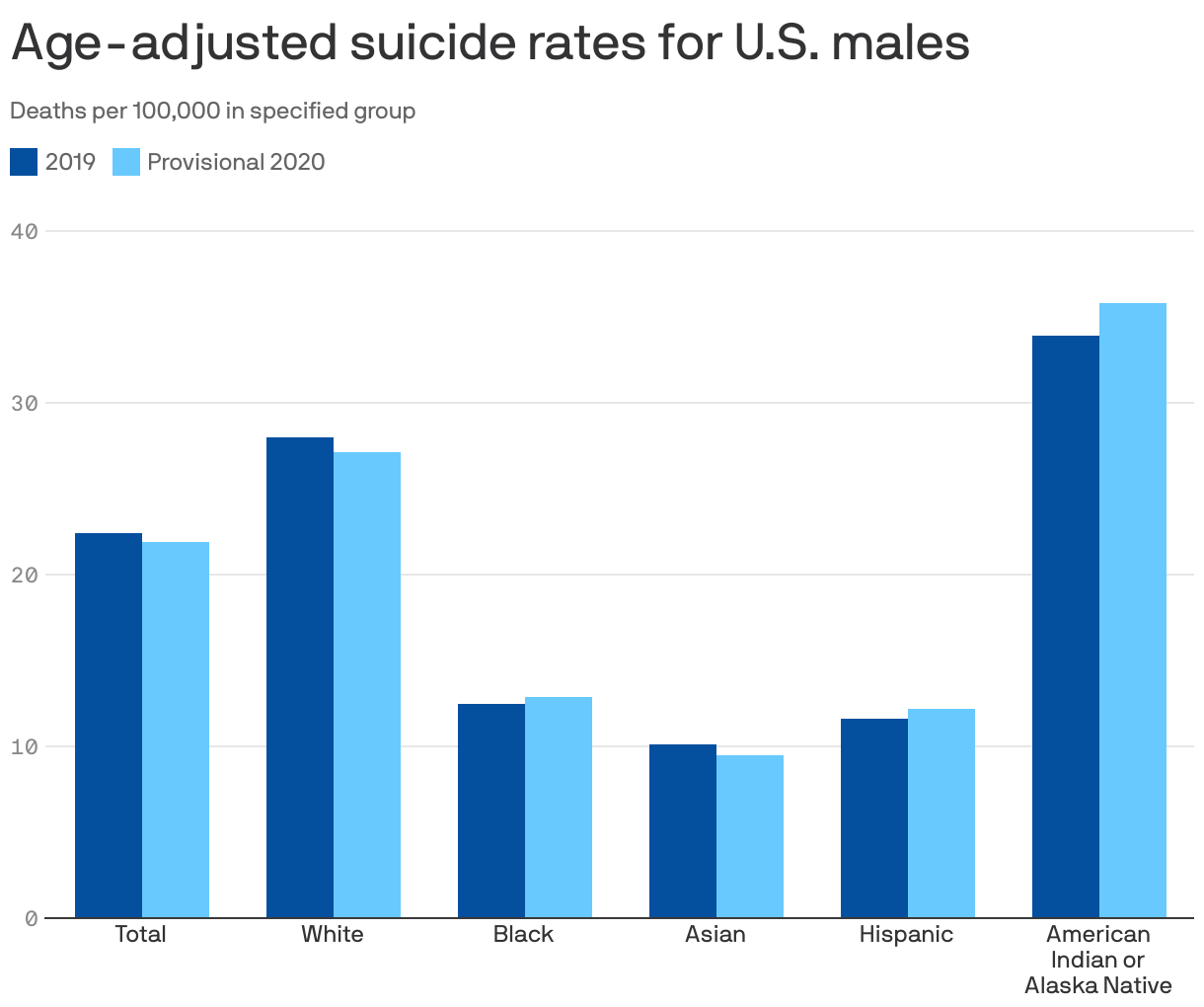
Data: Vital Statistics Surveillance Report; Chart: Thomas Oide/Axios
Suicide deaths dropped overall in the U.S. for the second year in a row by 3%, according to preliminary data out Wednesday from the CDC.
The big picture: It's potentially an unexpected bit of good news in light of other data which shown the pandemic resulted in higher rates of anxiety, isolation and financial hardship.
The Democrats' drug pricing plan doesn't just apply to Medicare — parts of it also extend into the commercial market, giving the federal government an unprecedented new role in regulating prices paid by those with private insurance.
Why it matters: Medicare negotiations may be the highlight of the plan, but this quieter expansion could signal a political appetite for cost-cutting reforms loathed by most of the health industry.
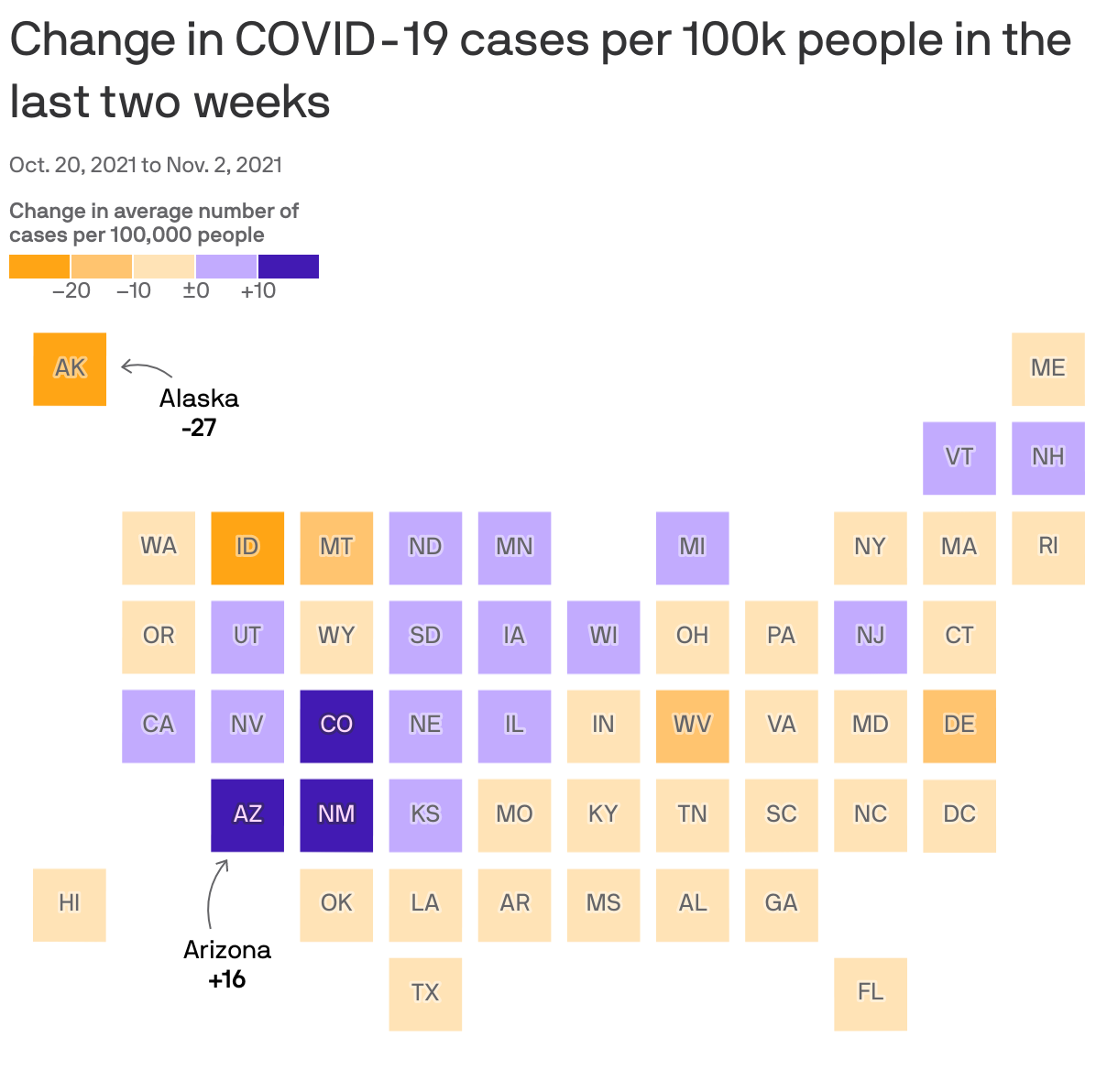
Data: New York Times; Cartogram: Will Chase and Kavya Beheraj/Axios
New COVID-19 infections fell by about 20% nationwide over the past two weeks, though parts of the West and Midwest are seeing their caseloads tick higher.
By the numbers: The U.S. is now averaging about 70,000 new cases and 1,400 deaths per day.