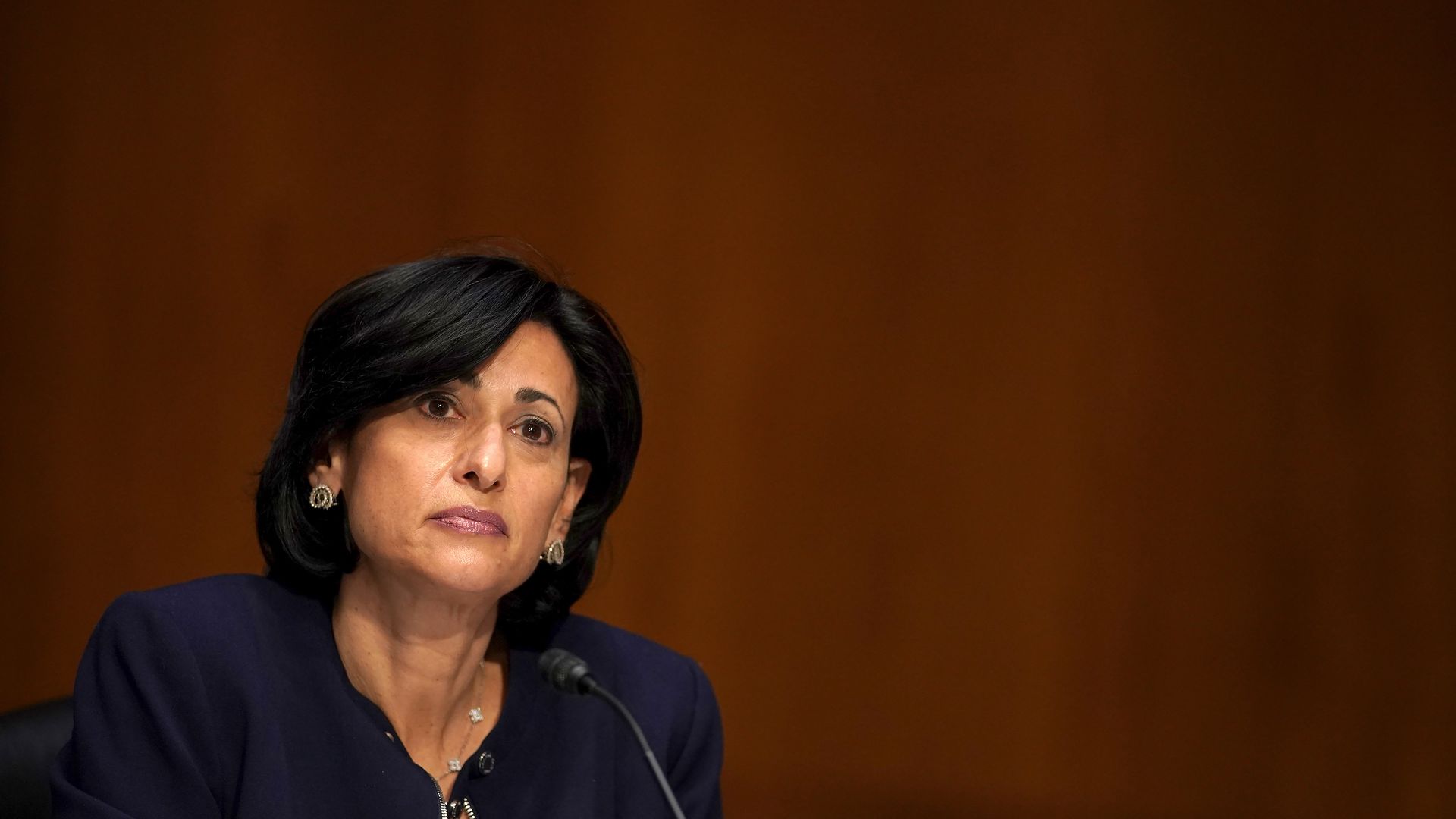
The Centers for Disease Control and Prevention is "not examining" changing its definition for what it means to be fully vaccinated against COVID-19, director Rochelle Walensky said Wednesday.
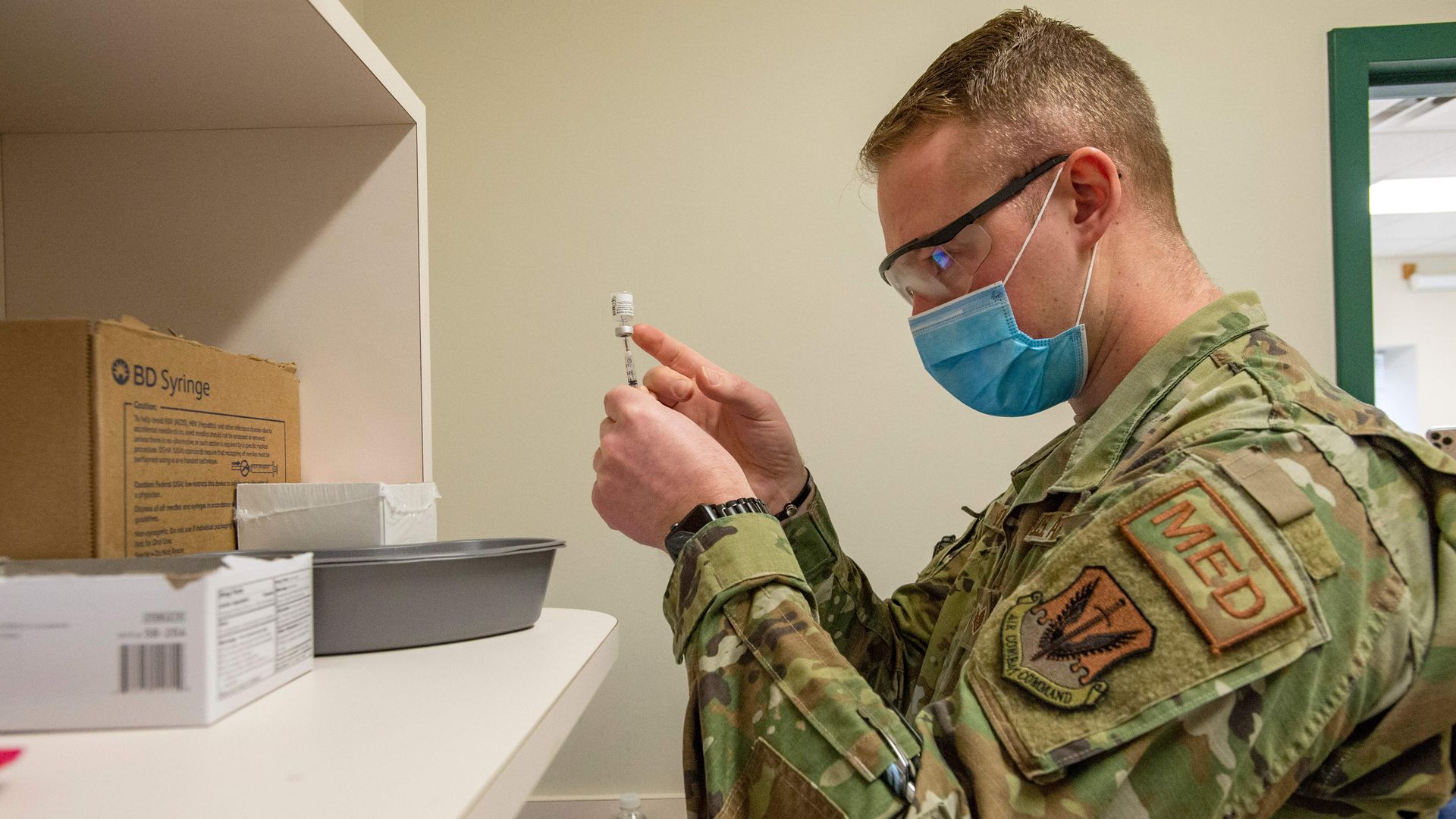
The Air Force said Wednesday that nearly 97% of its approximately 326,000 active duty service members have complied with Secretary of Defense Lloyd Austin's mandate and have received at least one dose of a coronavirus vaccine before the branch's Nov. 2 deadline.
Why it matters: Around 8,500 active members missed the deadline. Many of them have filed for medical exemptions and religious accommodations, which are being reviewed by the department.
One glaring hole in Democrats' drug pricing outline: It says that drug companies that refuse to negotiate with Medicare will be subject to an excise tax. But they don't say what that tax will be.
Why it matters: If the penalty for refusing to negotiate isn't large enough, drugmakers simply won't comply, undermining the entire concept.
Before the pandemic, if you woke up with a runny nose or a tickle in your throat, it was a simple enough decision to stay home and avoid infecting your co-workers. Now, as more Americans work from home, sick days are disappearing.
Why it matters: Working through sickness and fatigue makes it harder for people to recover quickly and completely, prolonging the harm to their health and productivity.
Shot: "Rich countries have given out more boosters in three months than poor countries have given total doses all year," the Financial Times reports.
Chaser: "Most of the negotiations for doses in the next year are coming from high-income countries and some middle-income countries," Pfizer CEO Albert Bourla said on an earnings call yesterday.
"I think we are producing enough. But for the low- and middle-income countries to receive ... a very severely discounted price ... they need to place orders ... The low- and middle-income countries will be behind in deliveries because they didn't place their orders."
Yes, but: The details matter. And the details as they stand suggest drug companies would still retain the power to set prices, and most drugs wouldn't be subject to government price negotiations.
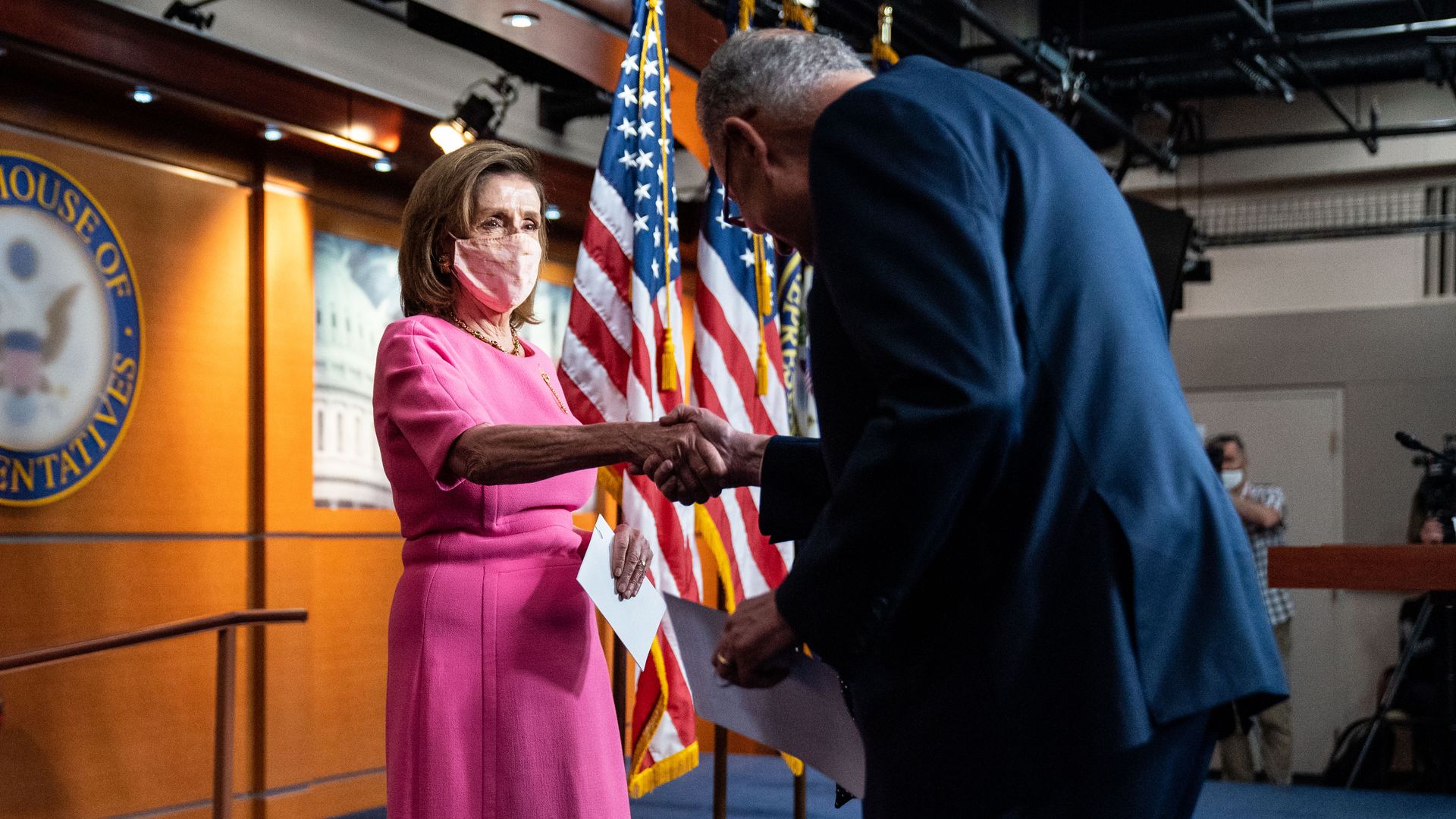
Democrats have agreed on a top-level deal that would allow Medicare to negotiate the prices of some drugs. But moderates and pharma allies successfully took some of the bite out of the party's preferred approach.
Why it matters: If the deal ultimately becomes law, Democrats will be able to claim victory on what's been a major priority for years, and many Americans struggling to afford their medication would receive relief.
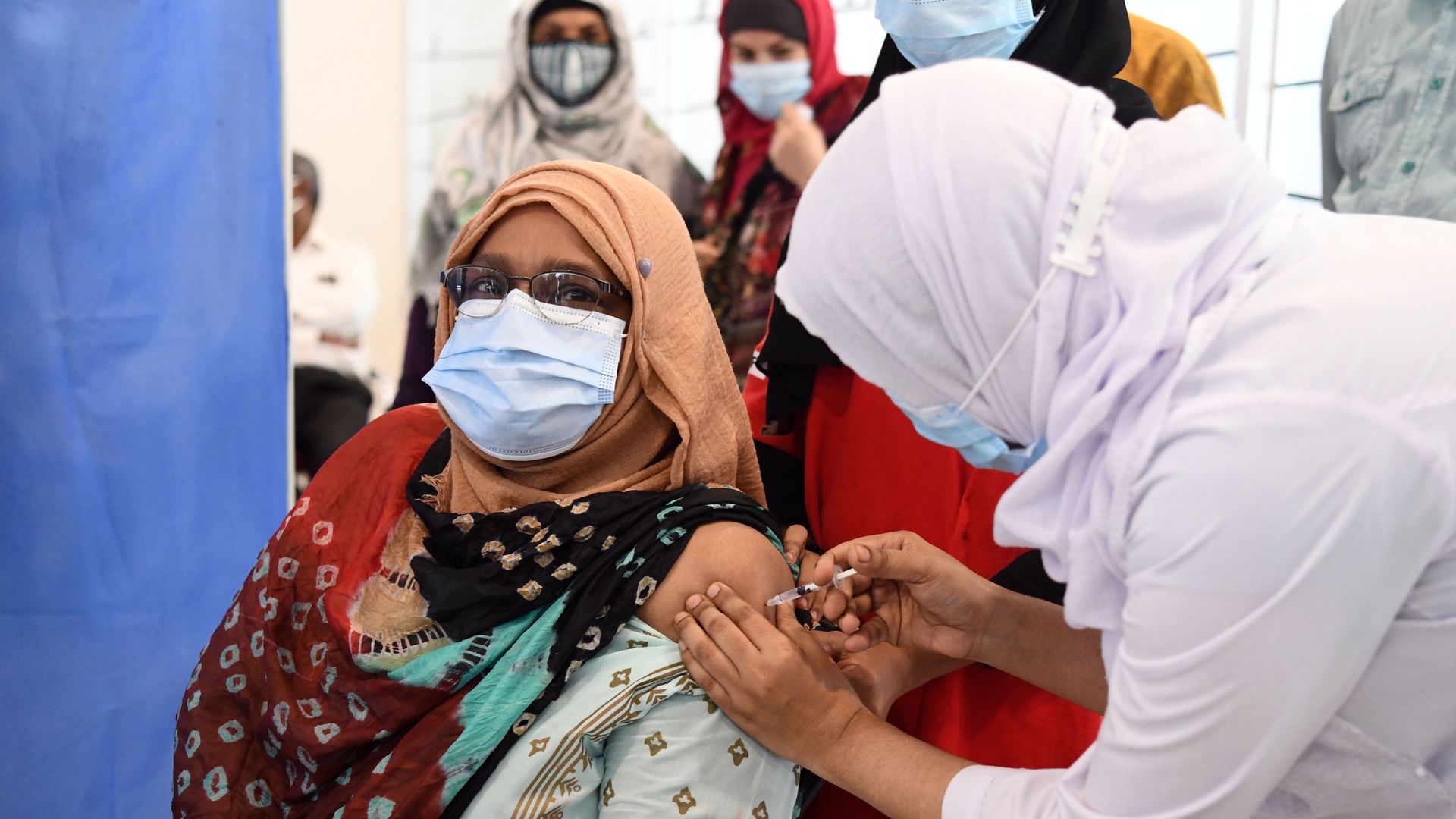
The CDC's approval Tuesday of Pfizer-BioNTech's COVID-19 vaccine for 5-11-year-olds may open a new debate: whether schools should ultimately mandate them for that age group.
Why it matters: Members of the advisory boards for both the CDC and the FDA raised concerns their votes allowing shots in arms for all kids regardless of medical status might ultimately trigger mandates in schools.