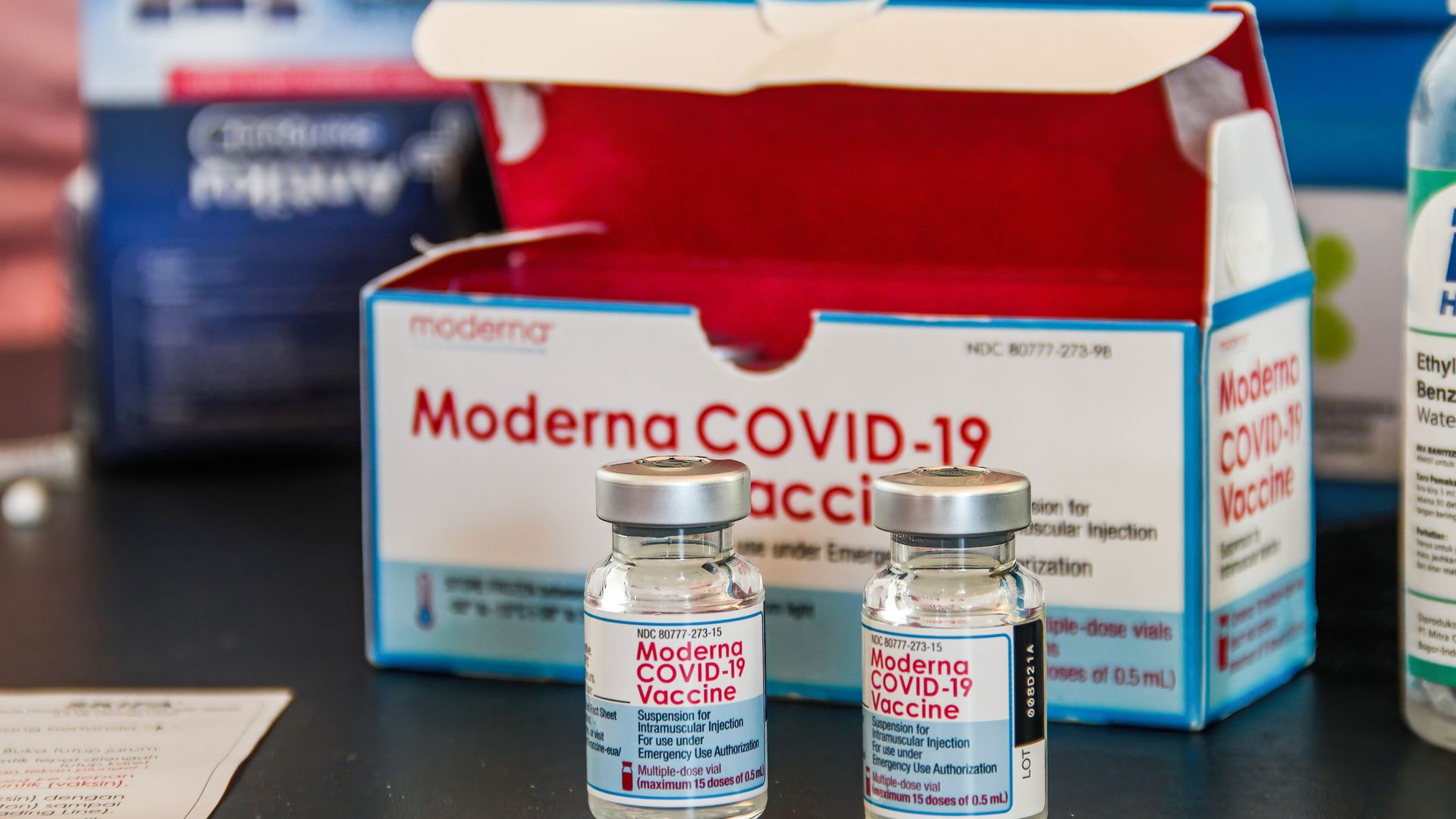
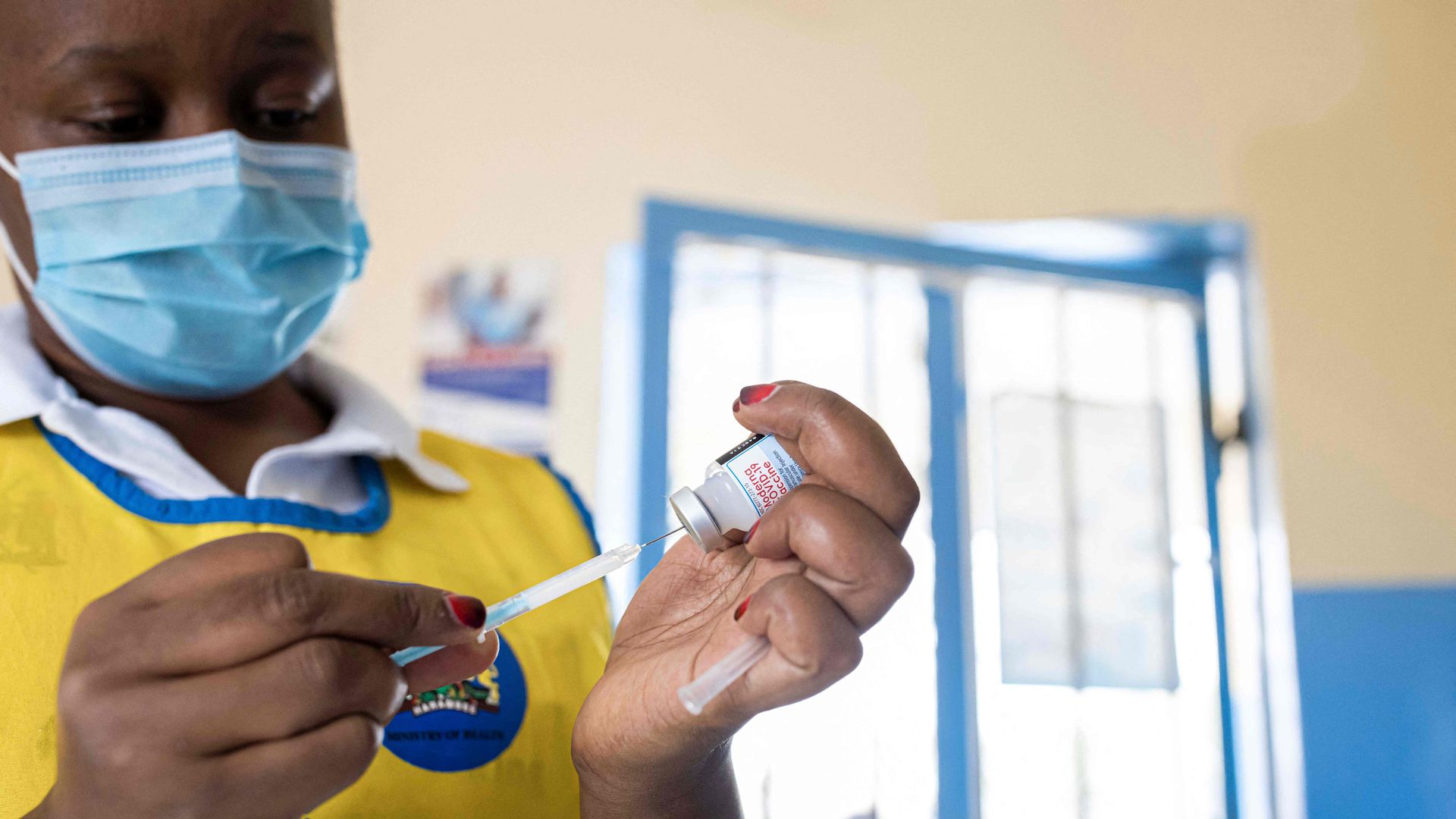
Moderna vaccine's efficacy declines a year after it's administered, compared to protection seen in recently inoculated individuals, the vaccine maker announced Wednesday.
Driving the news: Moderna made its case for supporting booster shots, citing clinical trial data that demonstrate breakthrough infections are less common among participants approximately eight months after receiving the first dose compared to approximately 13 months.
The gene-editing tool CRISPR is moving toward the market, promising better tests, disease cures — and maybe even a woolly mammoth.
The big picture: CRISPR is already a historic scientific achievement, but we're just now entering the moment when it will begin to impact patients and possibly the planet.
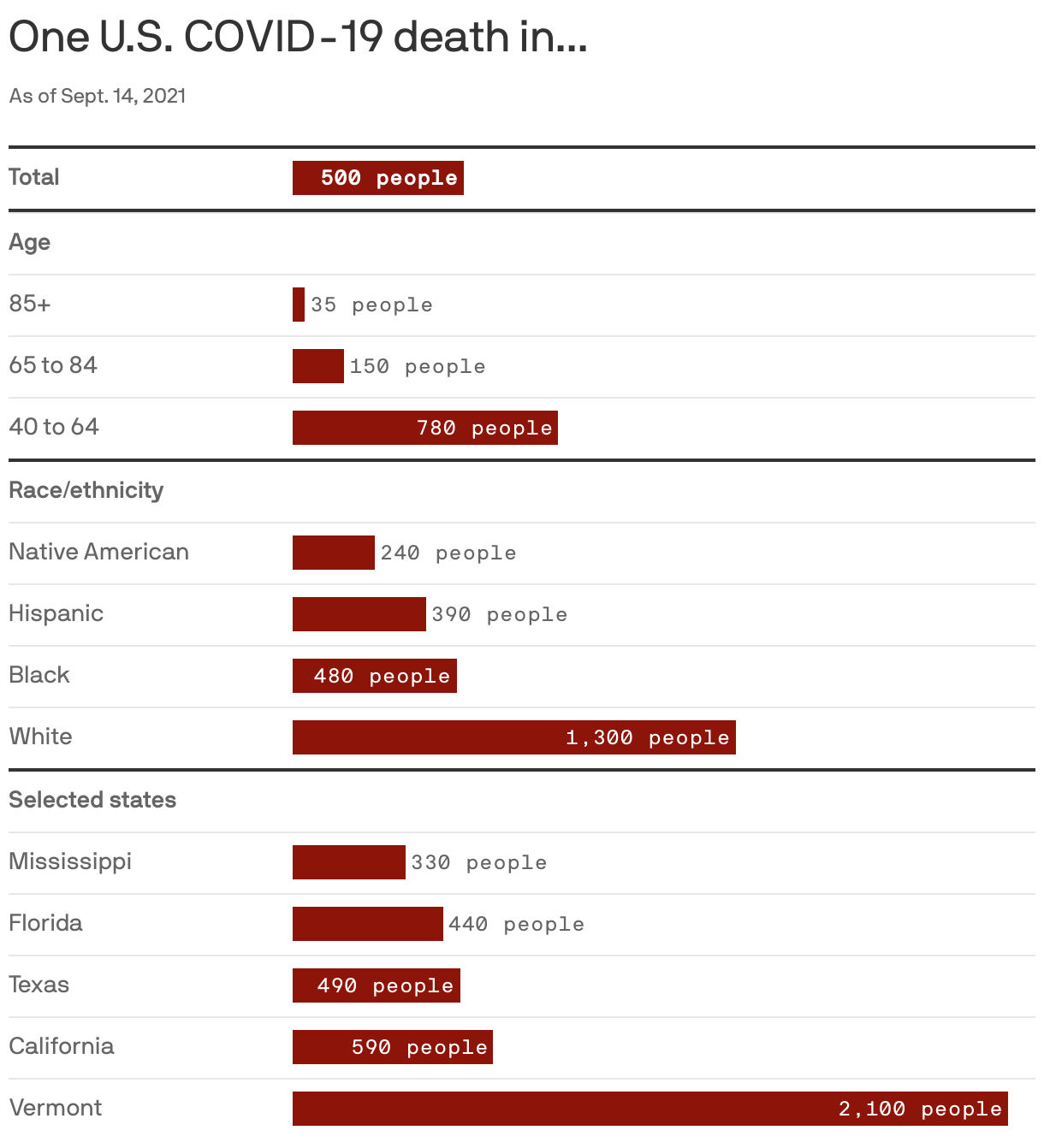
By the numbers: The total number of COVID-19 deaths recorded in the United States is 665,496 as of 5 p.m. ET on Wednesday, according to reporting by Johns Hopkins University.
30.1% of COVID-19 deaths in the U.S. involved individuals ages 85 and older as of Wednesday, despite only making up 2% of cases and an equal portion of the population.
Pfizer told the FDA Wednesday that data from its clinical trials suggests a third shot of its coronavirus vaccine may be necessary six months after the second dose because of waning efficacy.
Why it matters: The FDA's advisory committee on Friday is expected to review Pfizer's clinical trials and other supporting and conflicting data on coronavirus booster shots and make recommendations on whether more Americans 16 years and older should receive an extra dose.
The number of states where at least 35% of residents are obese has nearly doubled since 2018, according to data released by the Centers for Disease Control and Prevention.
Driving the news: Obesity rates in 16 states have now reached levels considered high by the CDC. That is up from 12 states in 2019 and nine in 2018.
The National Institutes of Health is launching a nationwide series of studies with as many as 40,000 people to research the long-term effects of COVID-19.
Why it matters: COVID symptoms that last more than four weeks, usually referred to as long COVID, have become an emerging public health concern as researchers do not know the cause.
European Commission President Ursula von der Leyen said Wednesday that the bloc would donate an additional 200 million coronavirus vaccine doses to Africa and low-income nations, AP reports.
Why it matters: The new donation, slated to be delivered by the middle of next year, comes as confirmed cases of the coronavirus have reached 225 million globally.
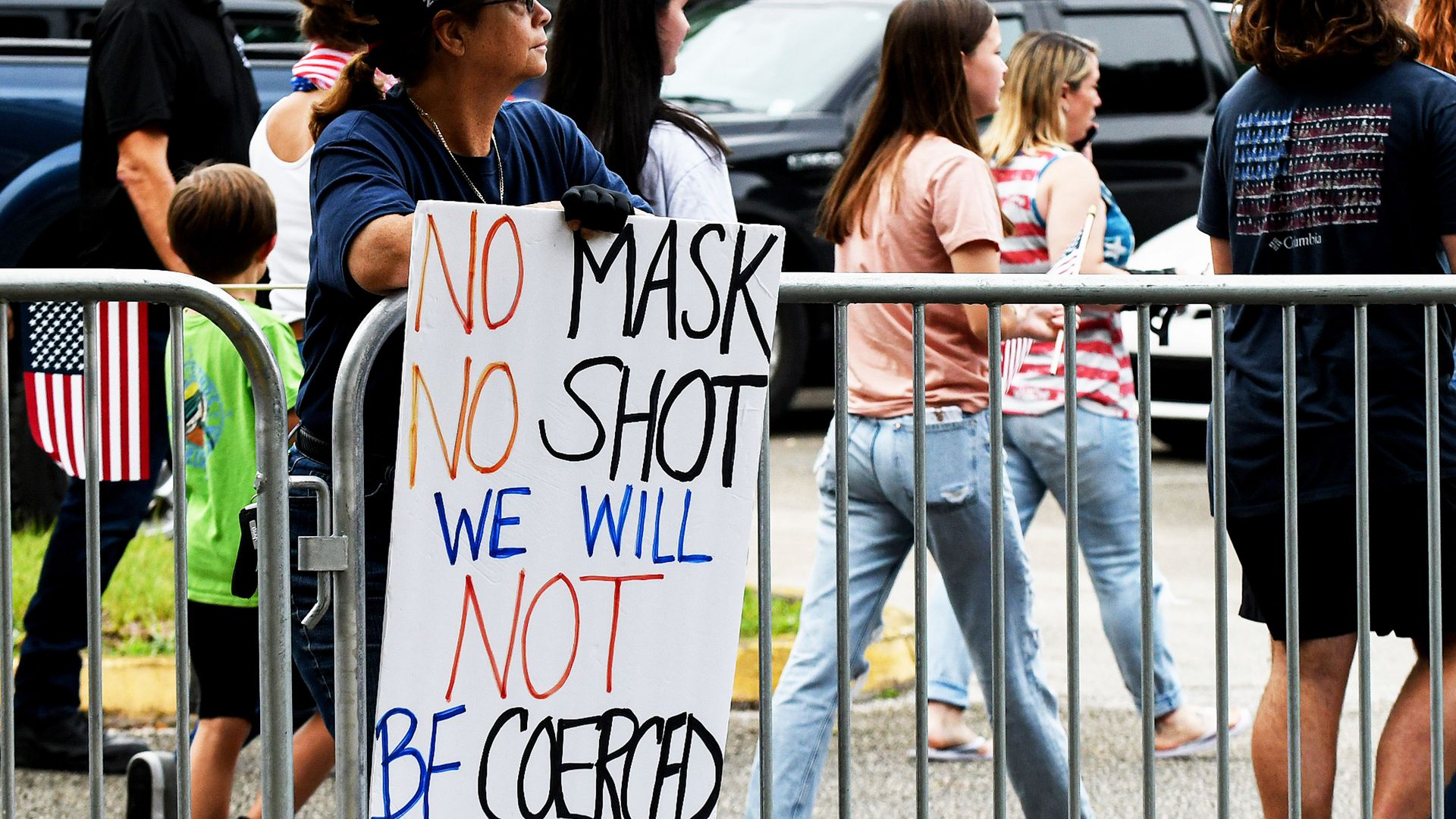
Republican lawmakers in more than half of U.S. states have weakened state or local officials' authority to implement policies to protect the public against the coronavirus and other infectious diseases, AP and Kaiser Health News report.
The big picture: Since the coronavirus pandemic began, lawmakers in all 50 states have introduced bills to curb state and local officials' public health authority, a KHN review found.
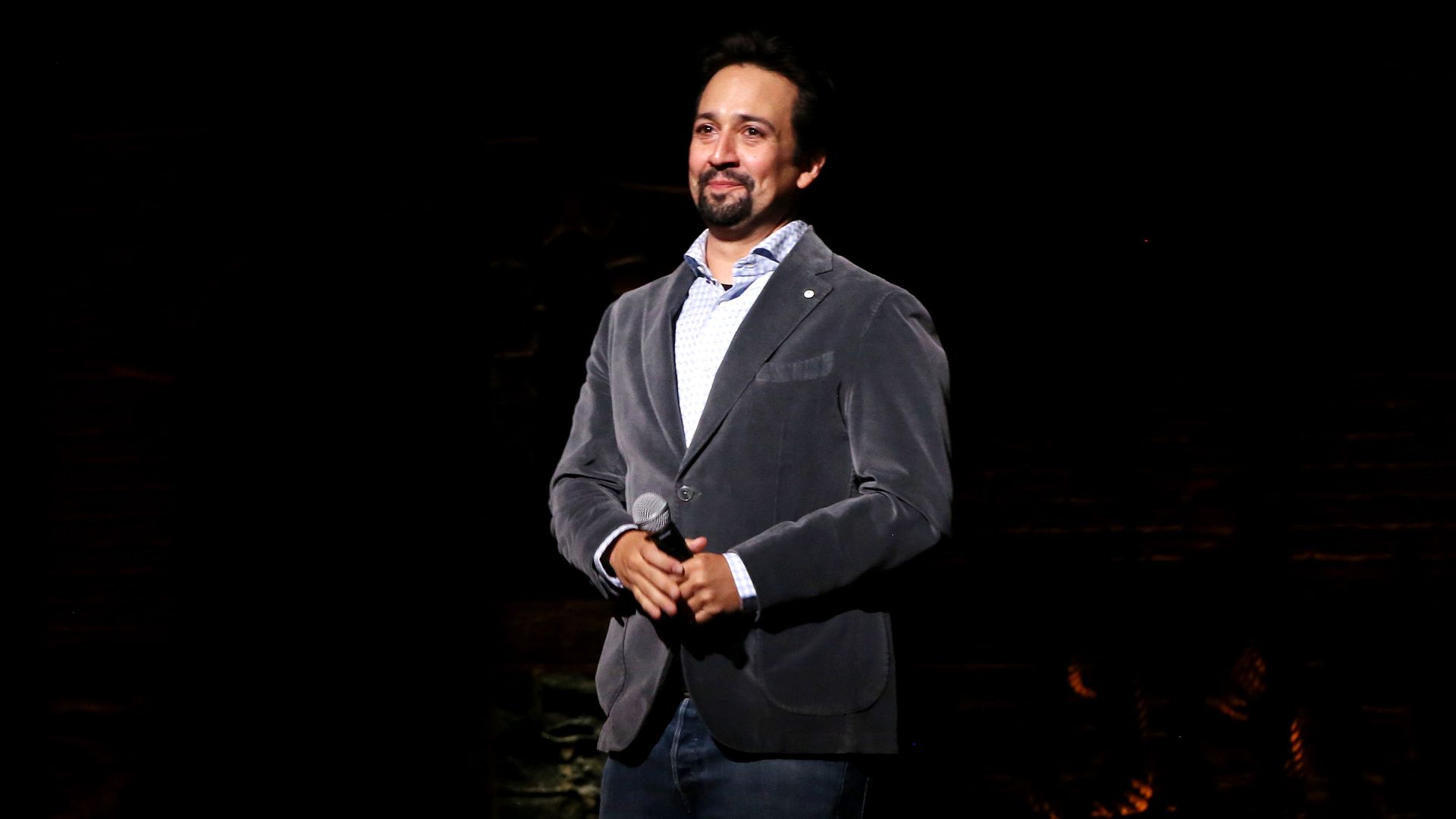
Some of Broadway's biggest shows returned Tuesday night, with theater icons Kristin Chenoweth, Julie Taymor and Lin-Manuel Miranda welcoming fully vaccinated and mask-wearing audiences.
Why it matters: The coronavirus pandemic forced Broadway shows to close for 18 months — the longest shutdown in Broadway history, the New York Times reports.
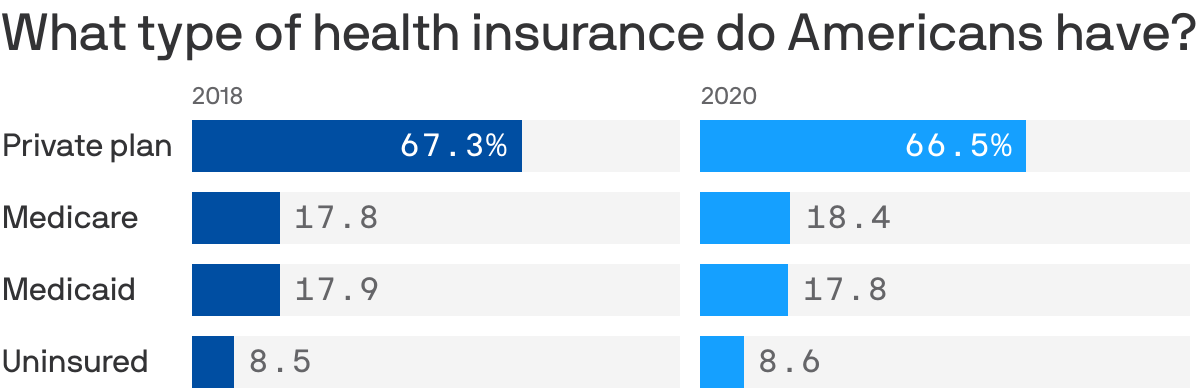
Roughly 8.6% of Americans didn't have health insurance in 2020, a figure that has stayed consistent since 2018, according to the latest U.S. Census Bureau data.
Why it matters: Government assistance, in the form of beefed-up Medicaid eligibility and heavily subsidized plans in the Affordable Care Act markets, kept people insured despite the pandemic-fueled recession.
Recent data suggests that Moderna's coronavirus vaccine may maintain a higher effectiveness over time than Pfizer's.
Why it matters: The effectiveness gap could always disappear with more data, and both vaccines remain very effective against severe disease. But if the gap does hold up, it raises questions about whether the two vaccines should be treated the same way policy-wise.
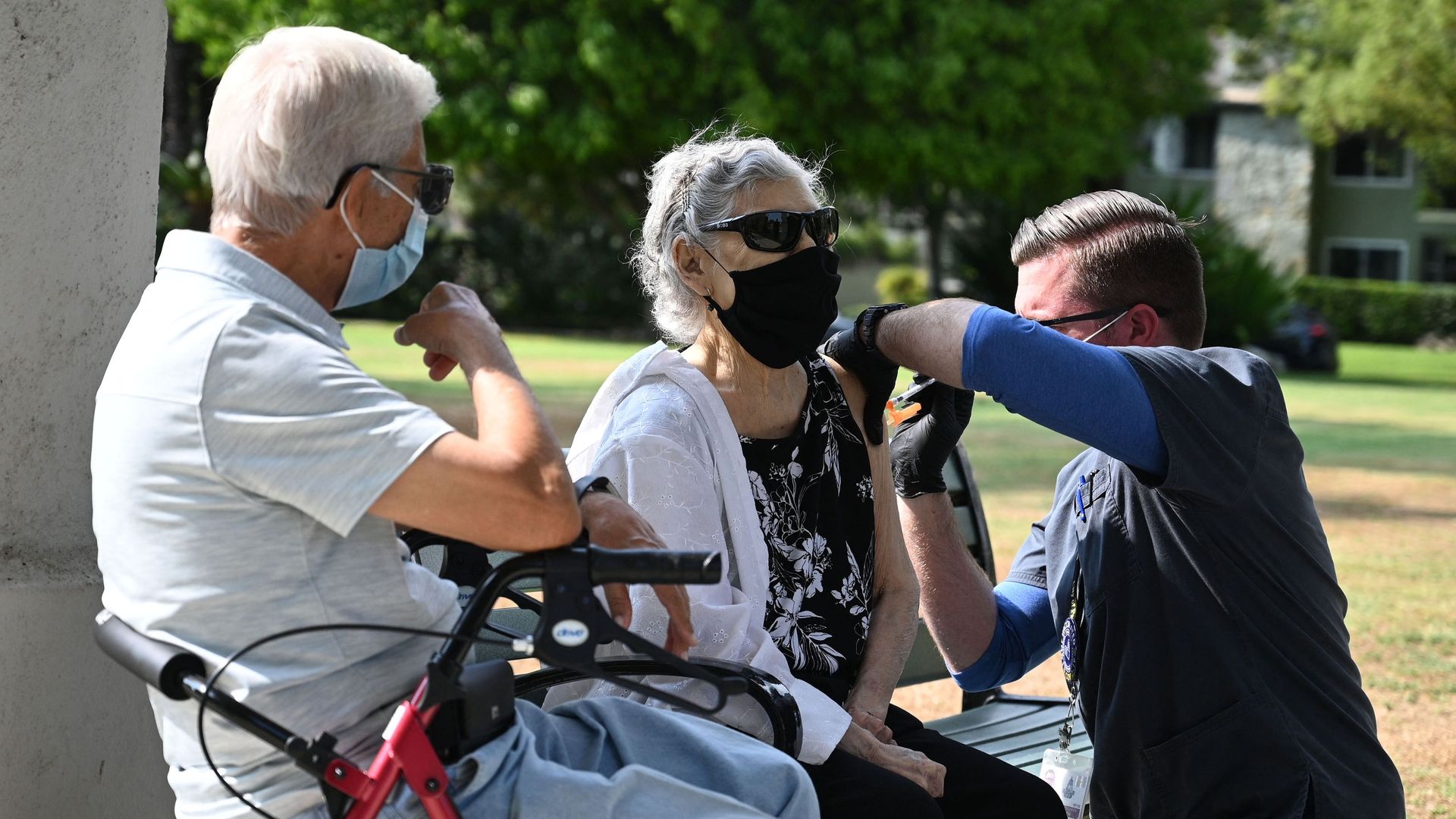
The U.S. Army announced on Tuesday that troops could face discipline if they are not fully vaccinated against COVID-19.
The big picture: The deadline for U.S. Army troops to be vaccinated is Dec. 15. 40% of Army troops had been fully vaccinated as of late August. National Guard units have until June 30 next year to meet the vaccination deadline.