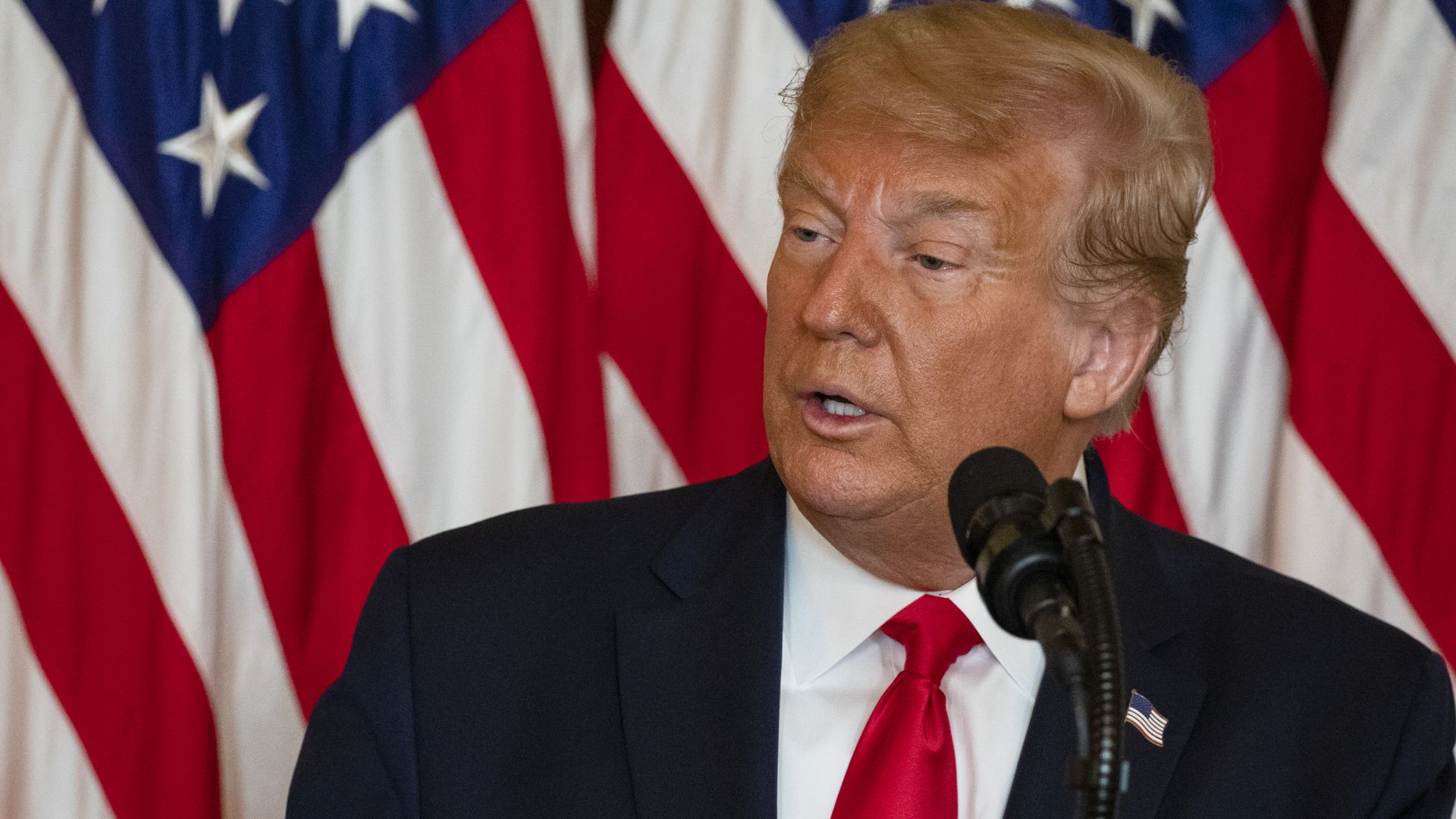
President Trump on Friday signed executive orders that revive several of the administration's previous drug pricing ideas — including attempts to require Medicare to pay no more for drugs than the lowest prices paid by other countries and changing how drug rebates work within industry middlemen.
Reality check: The Trump administration has not enacted any major policies on drug prices. Today's executive orders on their own have limited authority and could take a long time to go into effect, if they go into effect at all.
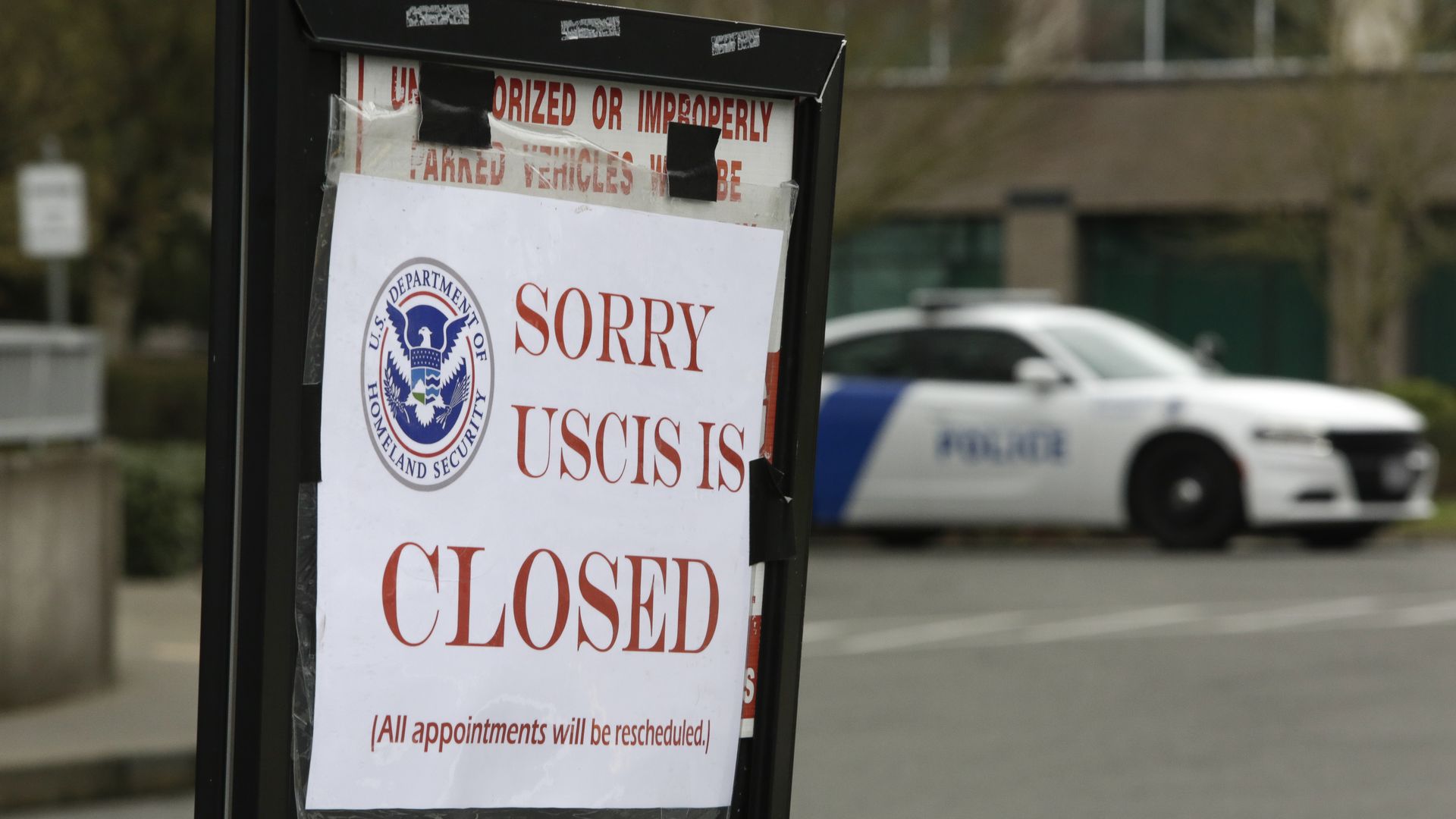
U.S. Citizenship and Immigration Services has delayed furloughing about 13,400 employees until August 30, spokesperson Jessica Collins said in a statement on Friday.
The big picture: The Trump administration has banned entry into the U.S. for foreigners on certain temporary work visas — including high-skilled H-1B visas — through the end of the year, Axios' Stef Kight reports.
At least 75 hand sanitizer brands, many carried by national retailers, may contain dangerous levels of methanol, the Food and Drug Administration warned on Friday.
Why it matters: High exposure to methanol, also called wood alcohol, when absorbed in the skin or ingested can lead to blindness, hospitalization and sometimes death, the agency said.
U.S. Immigration and Customs Enforcement issued a release on Friday barring new international students from entering the U.S. for their fall terms if their courses are entirely online.
Why it matters: Several U.S. colleges and universities have announced plans to hold most or all classes online because of the coronavirus pandemic.
The Food and Drug Administration has approved an advanced treatment for mantle cell lymphoma, a rare type of cancer affecting white blood cells. The one-time therapy, made by Gilead Sciences, is branded as Tecartus.
Why it matters: This is the third federal approval of a CAR-T therapy, a new-age cancer treatment in which a person's own immune system cells are extracted, reengineered, and then infused back into the person's bloodstream.
Americans seem resigned to the idea that life won't return to normal until we have an approved and widely-distributed vaccine for COVID-19. The question, therefore, is when that will be.
Axios Re:Cap digs into the question with Tom Frieden, who led the Centers for Disease Control and Prevention between 2009 and 2017.
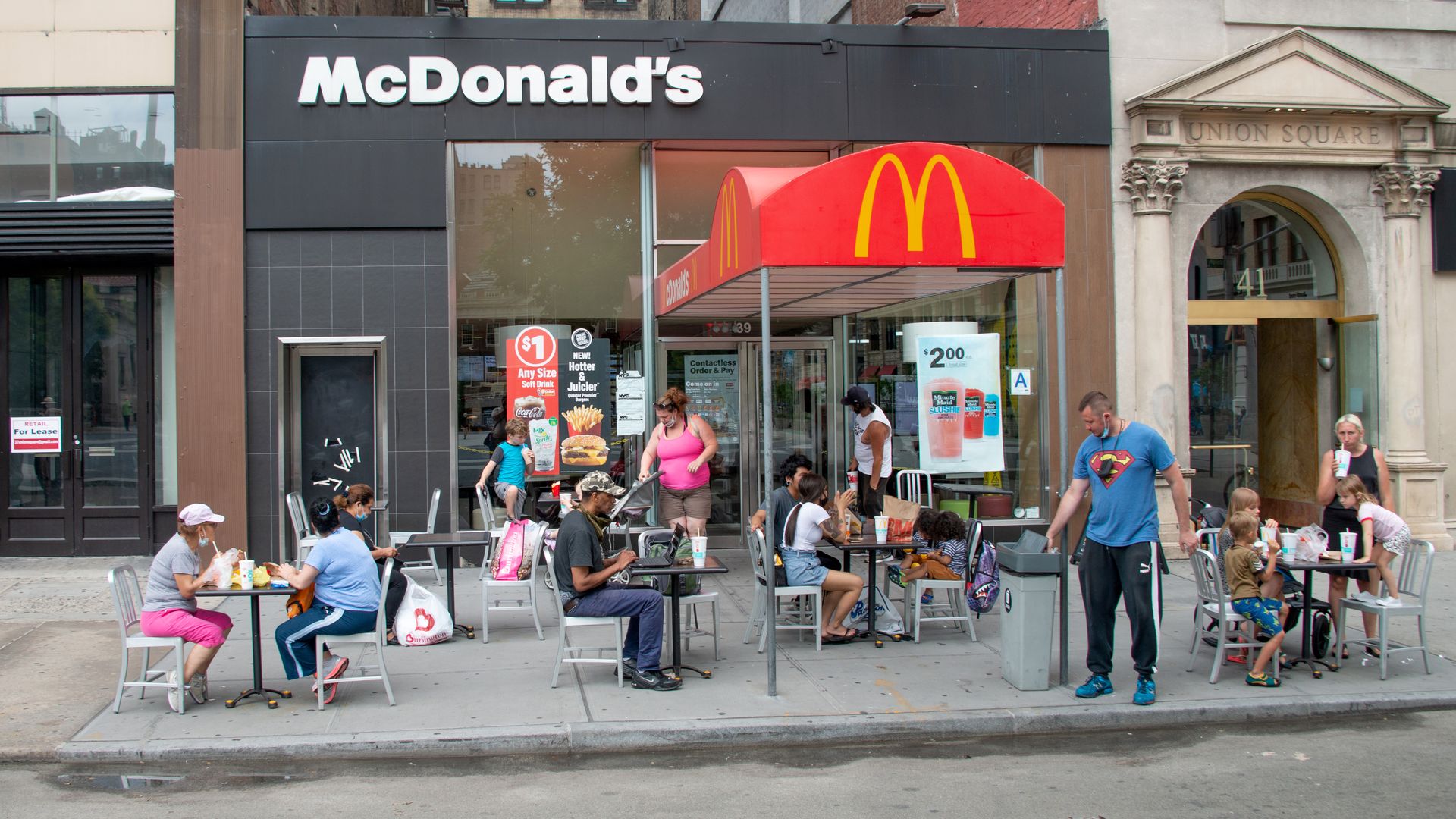
McDonald's will require customers to wear face coverings in its U.S. locations beginning Aug. 1, it announced Friday.
The big picture: 30 states, as well as Washington, D.C., have already issued some form of mask mandate. Other major nationwide retailers and restaurant chains, like Chipotle, Walmart and Starbucks, have also recently adopted mandates of their own.
Dr. Deborah Birx, the coordinator of the White House coronavirus task force, told NBC's "Today" on Friday that coronavirus surges in California, Florida and Texas have left the U.S. with "essentially three New Yorks."
The state of play: The U.S. cracked 4 million confirmed cases yesterday, taking only 15 days to jump from 3 million. That surge was largely driven by ballooning caseloads in those states — even as their situation has stabilized in recent days.
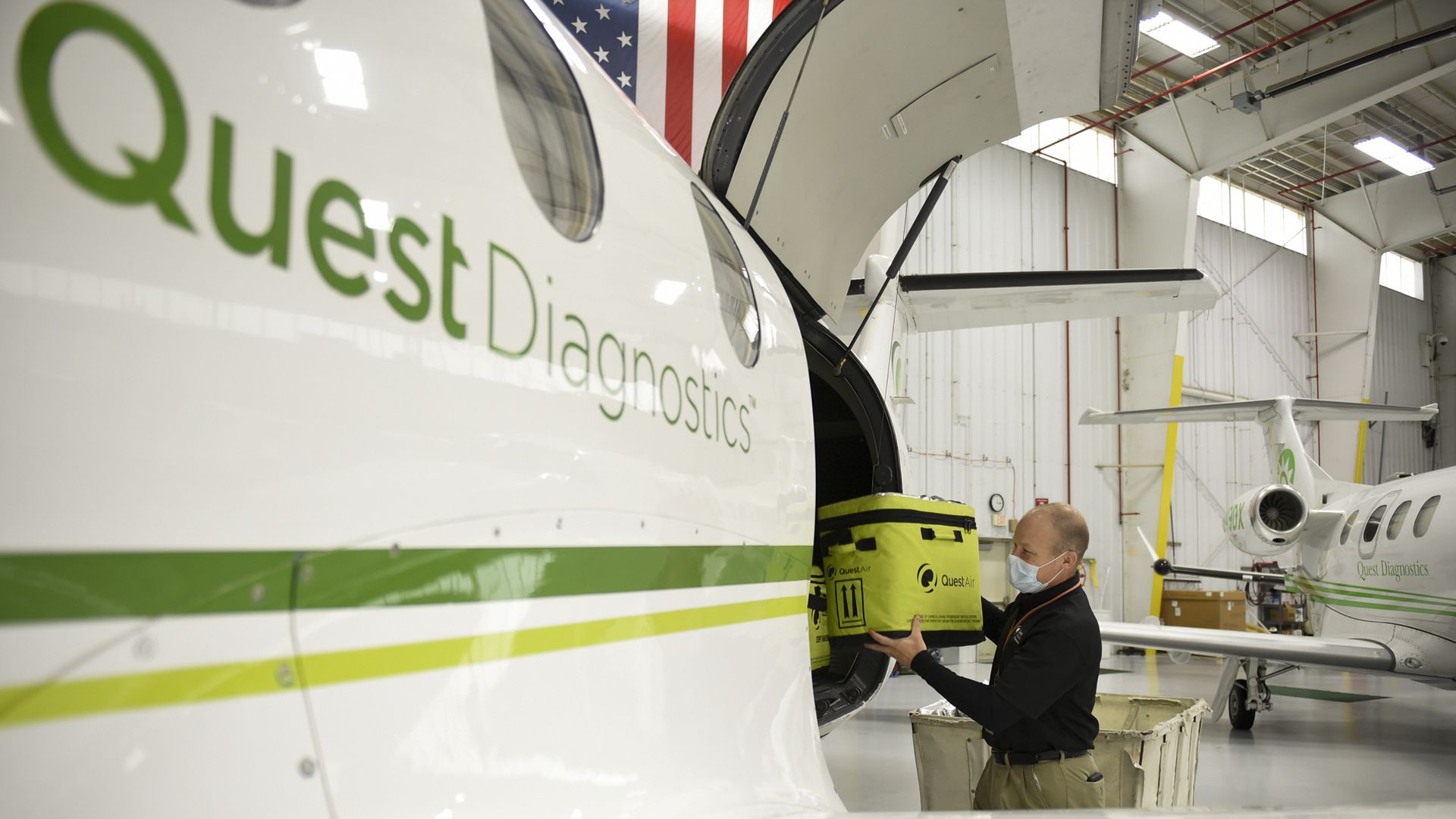
Quest Diagnostics, one of the largest lab testing companies, expects demand for coronavirus tests will grow even more over the next two months as faculty and students return to college campuses, more workers return to offices, more patients visit their doctor, and more people use retail testing locations.
Why it matters: These variables could further strain testing capacity, which has already been stretched to the limit due to the rising number of coronavirus infections.
Some coronavirus patients still have symptoms months after they are first infected, challenging the narrative that most people will survive the disease and move on.
Why it matters: As cases soar in the U.S., thousands more people will not only be hospitalized or die, but also will keep feeling the effects of the infection months from now.
The governors in four of the states hit hardest by the coronavirus have taken a massive hit in public approval over their handling of the pandemic, according to SurveyMonkey poll data shared exclusively with Axios.
Why it matters: Florida Gov. Ron DeSantis, Texas Gov. Greg Abbott, Arizona Gov. Doug Ducey, and Georgia Gov. Brian Kemp — all Republicans — saw their ratings take a nosedive this month as coronavirus cases skyrocketed in their states.
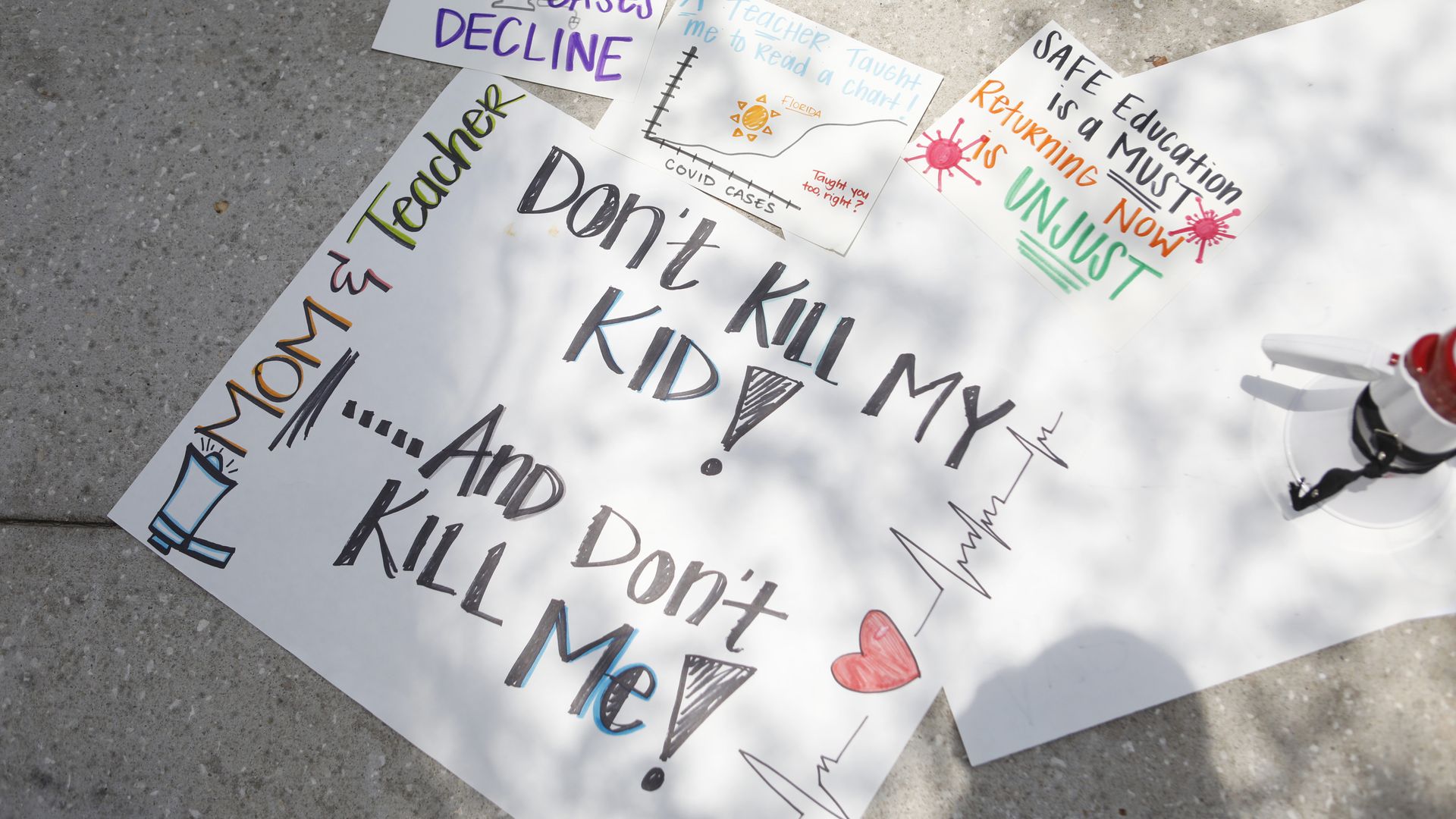
The Centers for Disease Control and Prevention released guidelines on Thursday, stressing the "importance of reopening America's schools this fall," saying K-12 schools are "an important part of the infrastructure of communities and play a critical role in supporting the whole child."
Why it matters: The reopening of schools has become a major debate in the U.S. as both parents and government officials weigh the pros and cons. The role that children play in spreading the novel coronavirus is still not known, but the CDC notes that death rates among school-aged children are much lower than among adults.