A cash rewards app that encourages people to use cleaner forms of transportation might also help coax virus-leery commuters back into shared rides, buses and trains.
The big picture: Since the coronavirus pandemic, most people surveyed say they'd feel safer driving their personal car to work, and the Centers for Disease Control and Prevention advises workers to avoid mass transit if possible. But cities can't return to normal without safe, affordable public transportation.
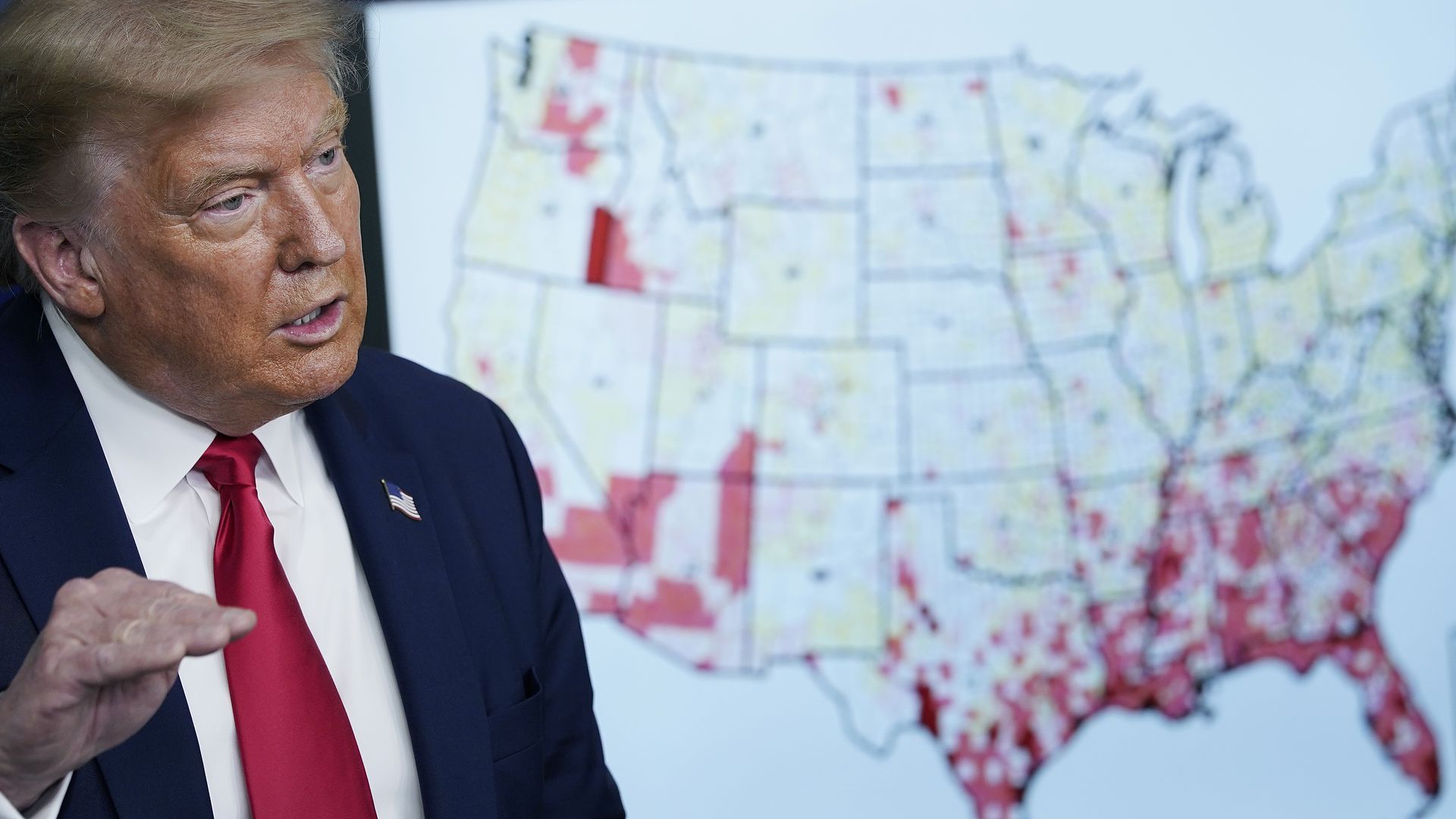
To show President Trump's "renewed focus" on combating COVID-19, the White House is launching a heavy regional media campaign in states that are coronavirus hot spots to educate the public on the importance of following mitigation measures, White House officials tell Axios.
Driving the news: The White House will be blanketing designated marketing areas throughout the Southwest and Midwest with White House doctors and administration officials on air.
Top Trump advisers and GOP leadership have told the president in recent weeks that he needs to switch gears on the coronavirus and go all in on messaging about progress on vaccines and therapeutics.
The big picture: The goal is to try to shift the focus of the election conversation to who would be better at reviving the economy. Administration officials say this is a key reason Trump restarted his briefings this week and that this rhetoric will only accelerate in the weeks to come.
Former CDC director Tom Frieden said on "Fox News Sunday" that the total number of coronavirus tests administered is "useless" if the results are delayed, and that a better metric is how many tests have been done that come back within 24 to 48 hours.
Why it matters: The Trump administration's testing coordinator Adm. Brett Giroir said Sunday that the average turnaround time for coronavirus test results in the U.S. is 4.27 days, and that this figure has increased because of massive demand.
House Speaker Nancy Pelosi said on CBS News' "Face the Nation" Sunday that Democrats will not support liability protections for employers of "essential workers" in the next coronavirus relief bill.
Why it matters: Senate Republicans' stimulus proposal is expected to include widespread liability insurance for schools, businesses, hospitals and more, which Majority Leader Mitch McConnell has called his "red line."
New Mexico Gov. Michelle Lujan Grisham (D) said on ABC's "This Week" that President Trump's coronavirus response is "the worst abdication of a national response and responsibility to protect Americans I've ever seen in my government career."
Why it matters: Grisham, who is considered a potential running mate for Joe Biden, says she spends most of her days "chasing testing supplies for our state." New Mexico has seen a recent uptick in new coronavirus cases, reporting its single-day record for new cases on Thursday and a near-record 324 new cases on Saturday.
Adm. Brett Giroir, the Trump administration's testing coordinator, said on CNN's "State of the Union" Sunday that the average turnaround time for coronavirus test results is 4.27 days and acknowledged that he's "never going to be happy" until that figure is reduced.
Why it matters: Long backlogs make testing less useful — public health officials need to know what their local situation is like now, not what it was like a week ago. Delays are especially problematic if people who are infected continue to go about their lives while they wait for their results.
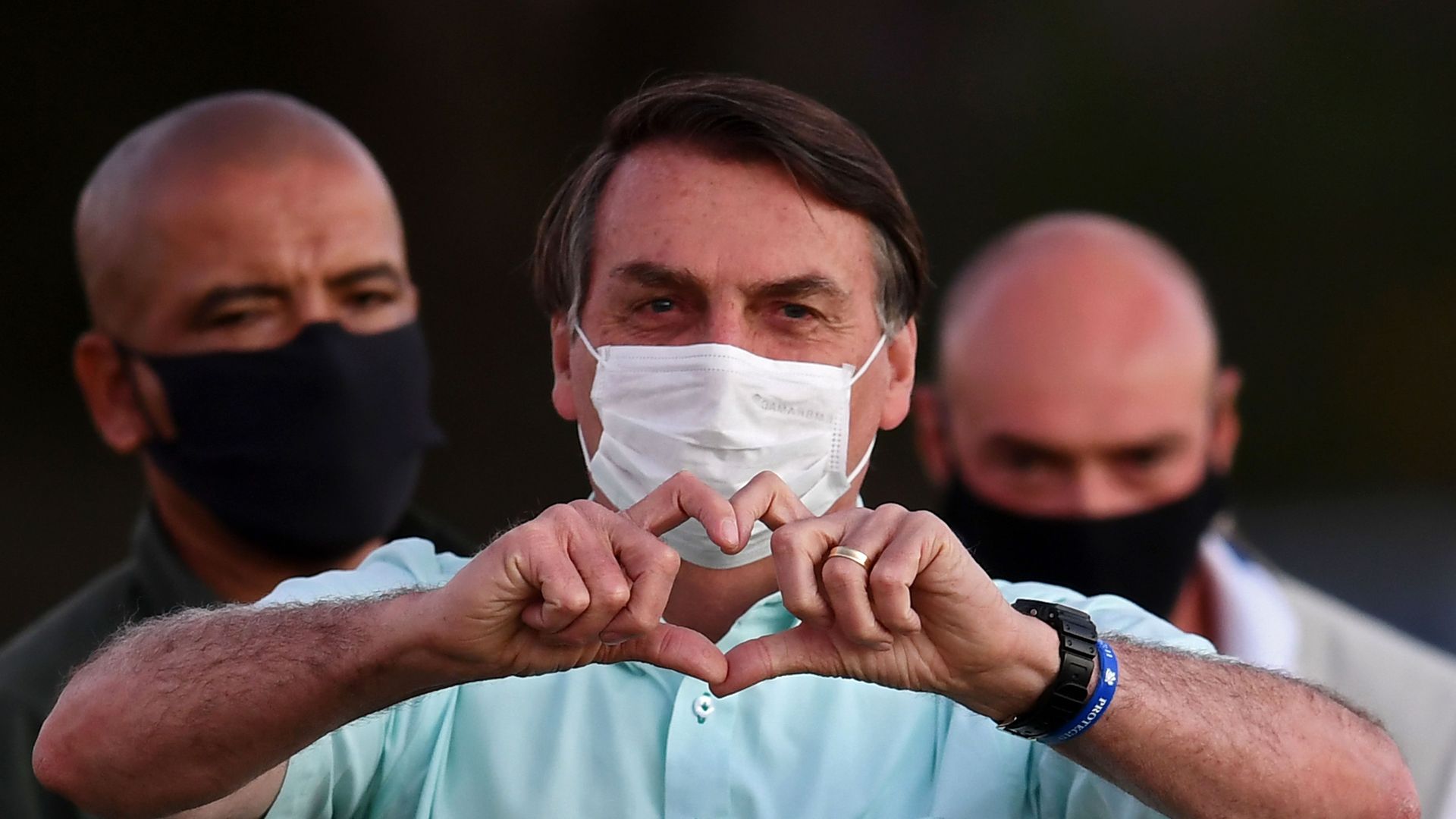
Brazilian President Jair Bolsonaro tweeted Saturday that he has tested negative for the coronavirus after three positive test results since July 7.
Why it matters: Bolsonaro, who has long downplayed the effects of COVID-19 as it ravages Brazil, is one of only a handful of world leaders known to have contracted the virus.
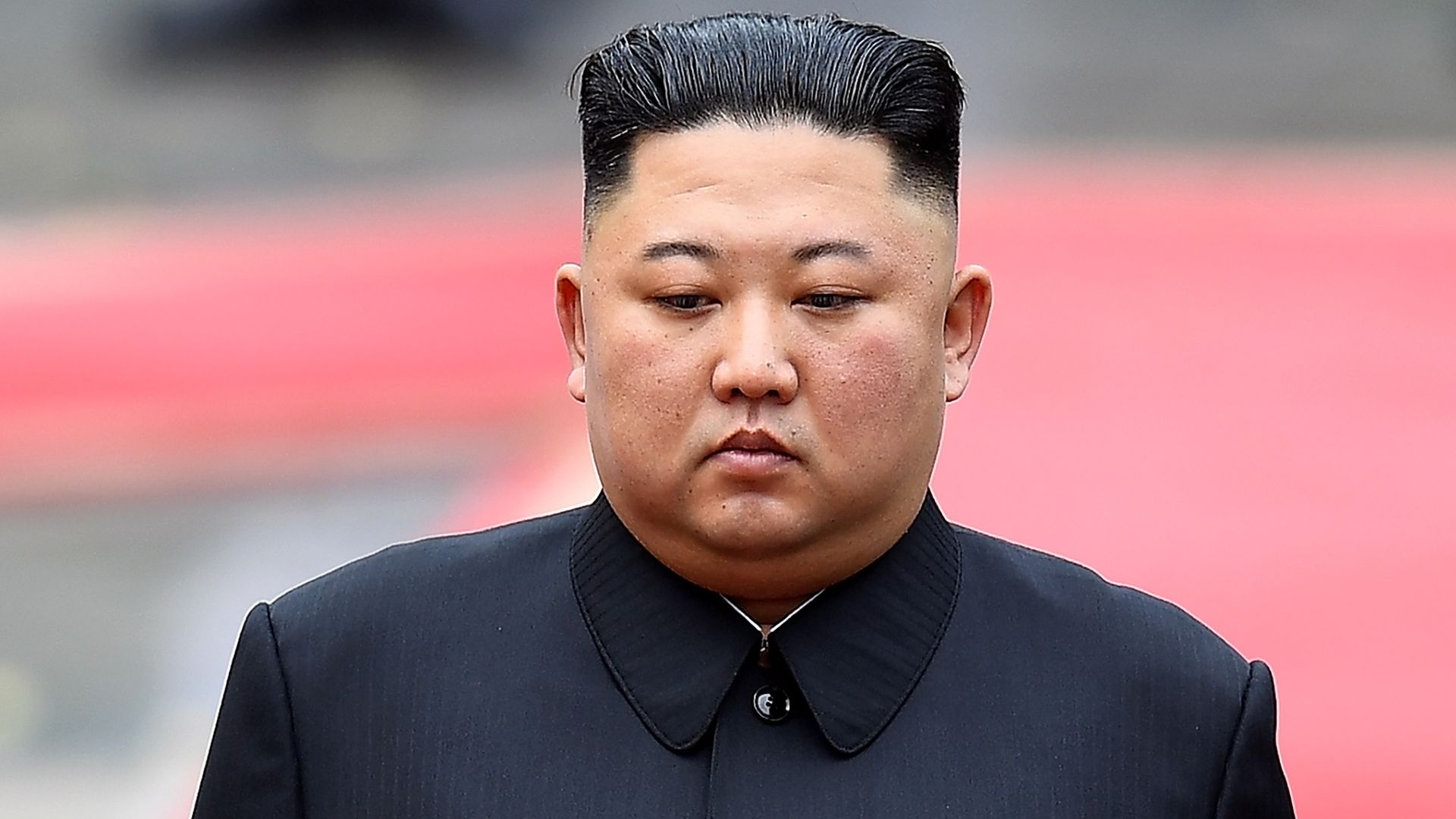
North Korean leader Kim Jong-un ordered Kaesong City, near the border with South Korea, to be placed on lockdown and declared a "maximum emergency" because of a suspected coronavirus case, state media reported on Sunday.
Why it matters: If the person is found to have COVID-19, it would mark the first time Pyongyang has publicly confirmed having a case in the country. The isolated state has previously insisted it's free of the pandemic, although experts have cast doubt on the claim.
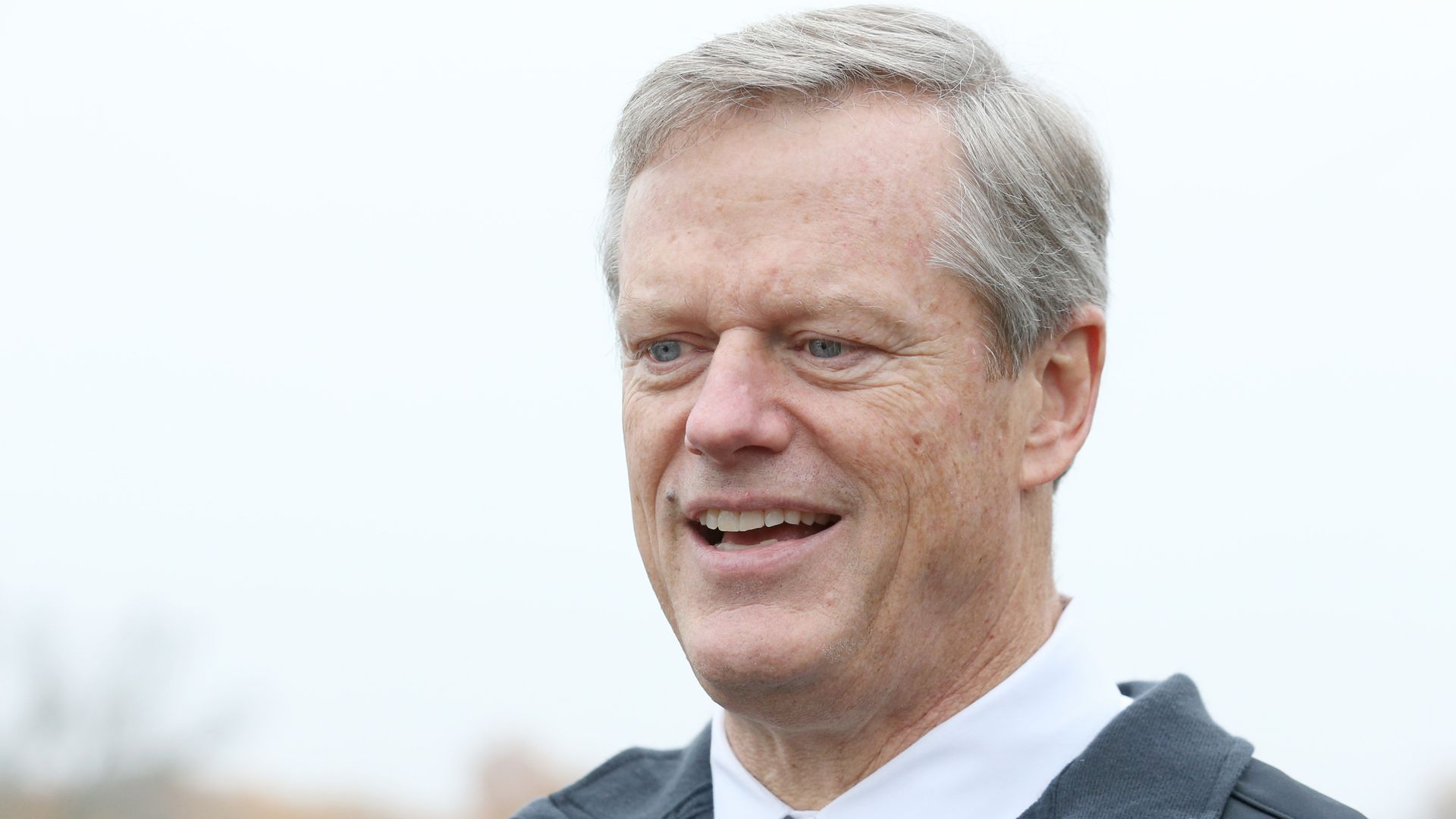
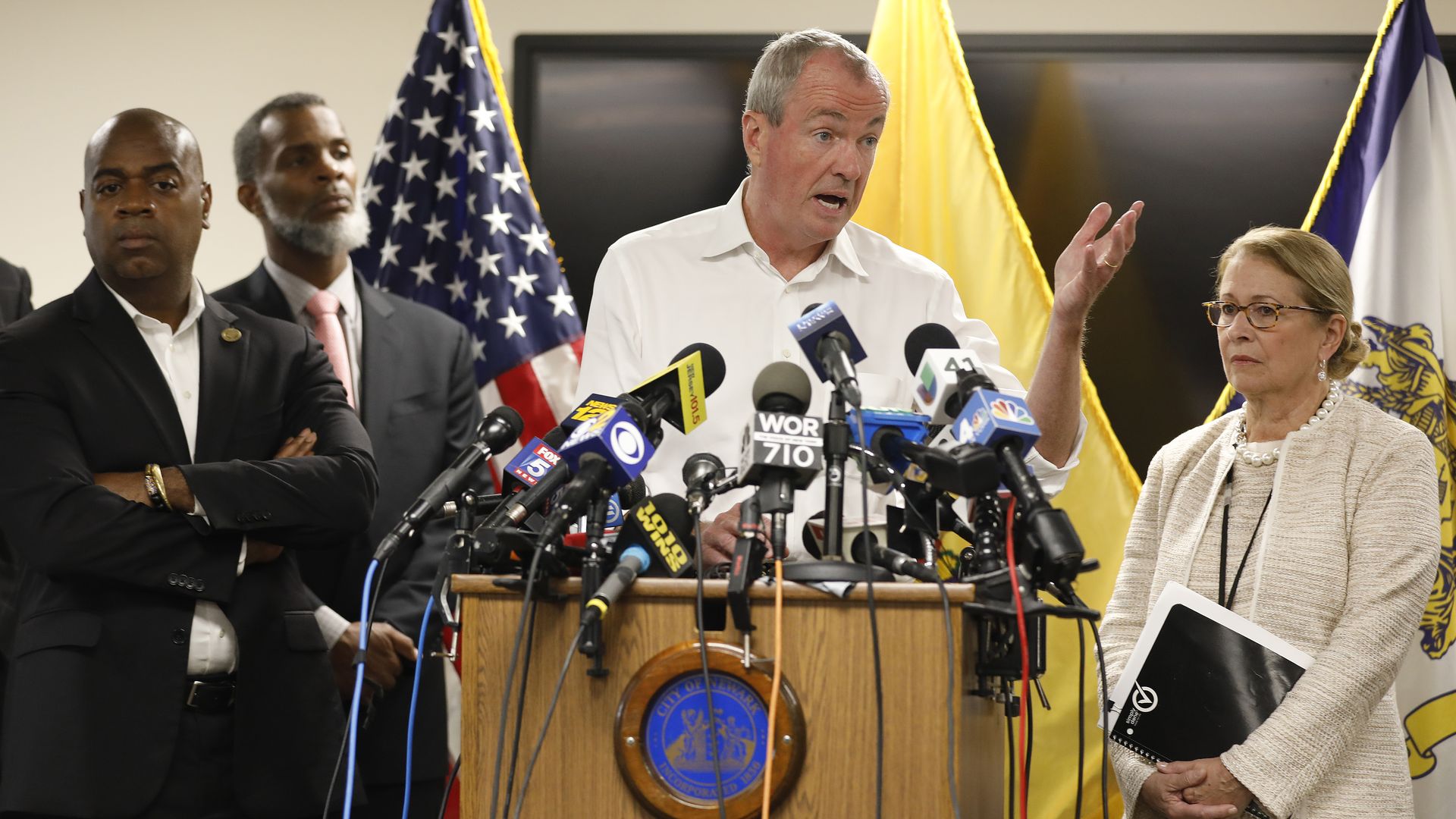
Massachusetts Gov. Charlie Baker issued new travel restrictions Friday, in which returning residents and non-residents could be fined up to $500 a day for failing to comply starting Aug. 1.
The big picture: States including New York are limiting travel from neighboring hot spots to prevent further spread of the coronavirus.
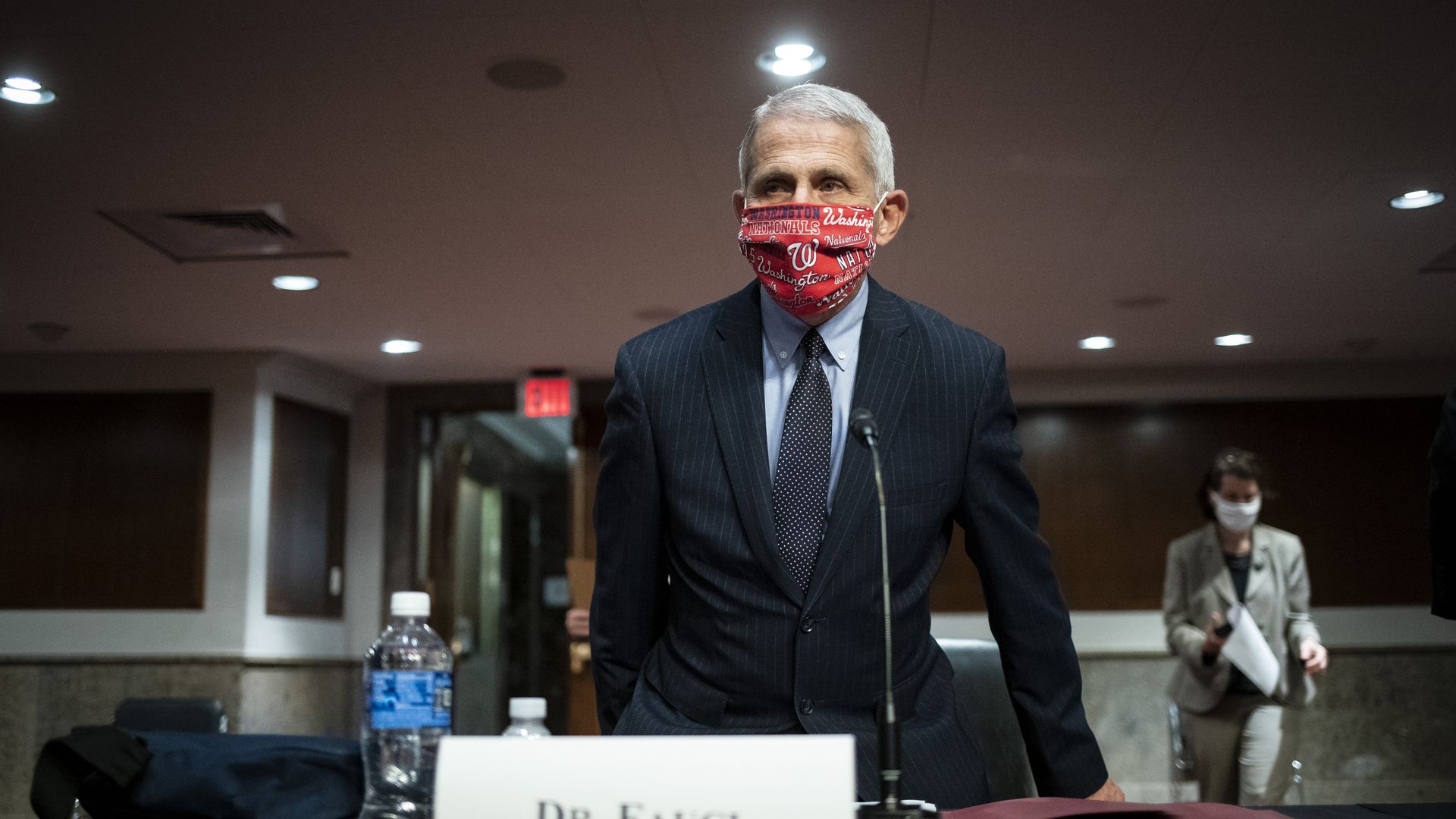
NIAID director Anthony Fauci told MarketWatch Saturday he won't get on a plane nor eat at restaurants due to the current state of the coronavirus pandemic.
The big picture: States are figuring out how to mitigate cases without completely halting their economies. But for the past two months, many are seeing cases and hospitalizations rise.
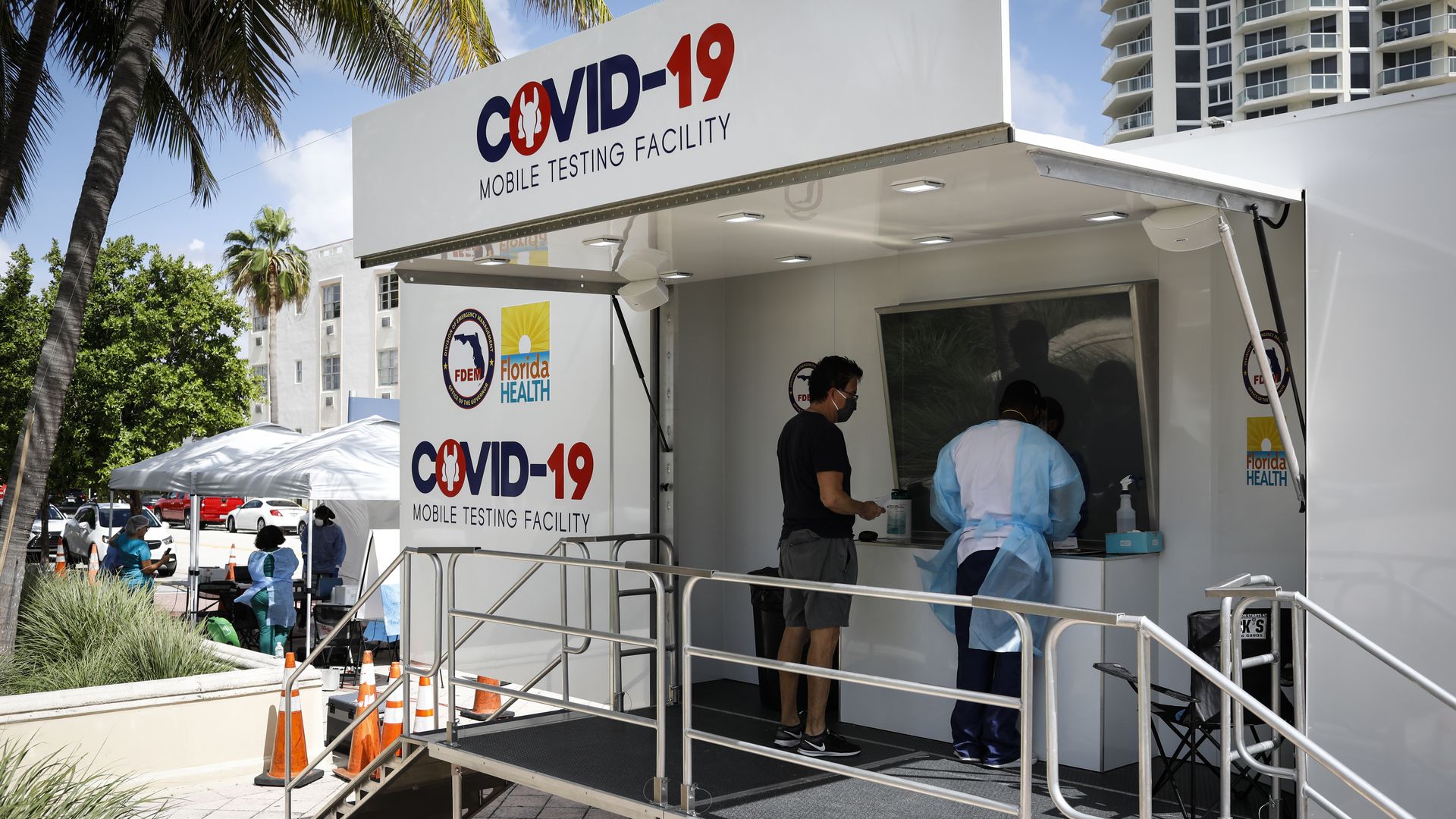
Florida reported about 414,000 coronavirus cases Saturday, becoming the second-highest state total in the U.S. after California.
Why it matters: Florida has become the domestic epicenter of the coronavirus pandemic, and is on track to keep getting worse. California has about 435,000 cases and New York has roughly 411,000, according to their respective health departments.
A startup that provides anonymous people-counting software for companies has seen business boom during the pandemic.
Why it matters: As everything from offices to restaurants begin to reopen, employers will need to closely monitor capacity to prevent dangerous crowding. Smart apps can help manage the numbers and keep outbreaks to a minimum.
President Trump's words and actions have shaped Republicans' perceptions and behavior on everything from wearing face masks to worrying about economic collapse, in an analysis of our Axios-Ipsos Coronavirus Index since the pandemic began.
Why it matters: When Trump talks, his base listens. That carries profound implications for efforts to limit the spread in the U.S., especially when he contradicts public health officials or state and local leaders.
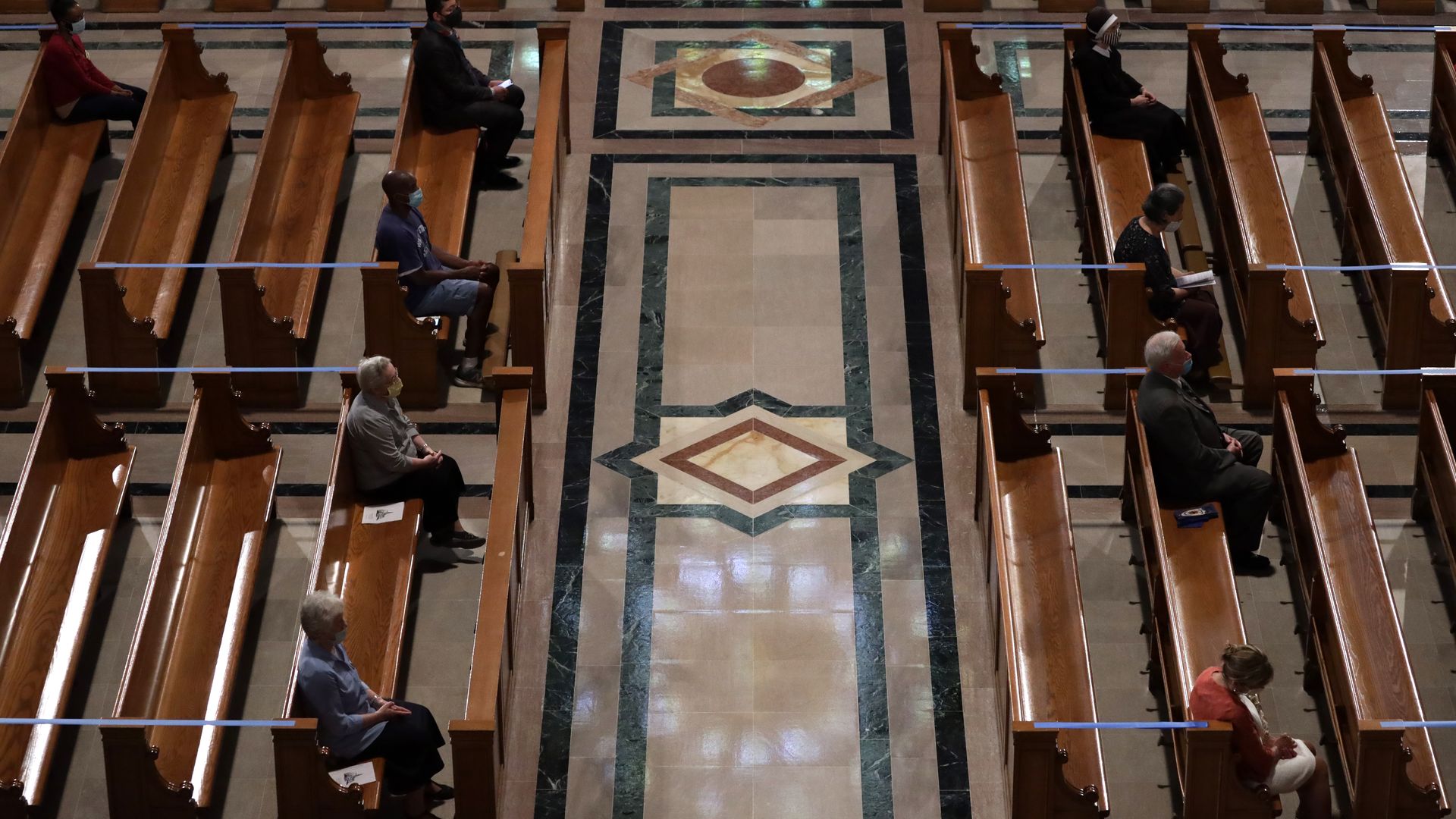
In a 5-4 decision, the Supreme Court rejected a request from a Nevada church to block enforcement of state restrictions on attendance at religious services.

/2020/07/26/1595804782729.gif?w=3840)