The Food and Drug Administration approved a treatment called Palforzia from Aimmune Therapeutics on Friday that would help treat those with peanut allergies.
Why it matters: Food allergies have been on the rise among children and adults, some with life-threatening conditions that cause an anaphylactic reaction from exposure.
A 7th coronavirus case has been confirmed by the Centers for Disease Control and Prevention where a man in the San Francisco Bay area became ill after traveling from Wuhan, China back to the U.S., the Santa Clara Health Department said Friday.
The big picture: Federal health officials expect more cases to be confirmed while the CDC continues to test cases and as state health departments remain on high alert. The U.S. on Friday declared a public health emergency and restricted travel based on the new virus's ability to spread from person-to-person.
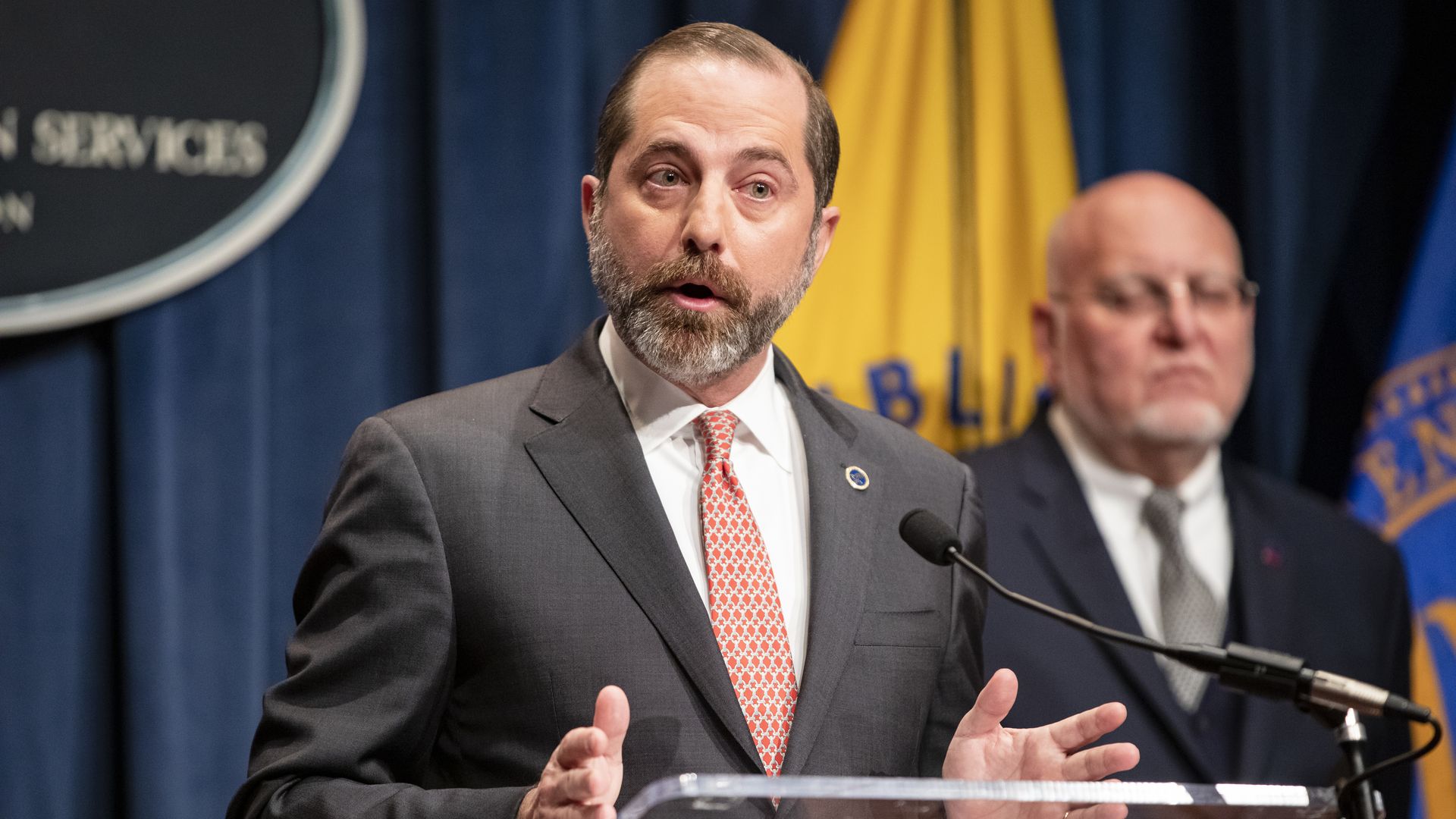
On Sunday, the United States will deny entry into the country to any foreign national who poses a risk of transmitting the coronavirus, Health and Human Services Secretary Alex Azar said Friday.
Why it matters: The public health emergency comes with a quarantine for U.S. citizens arriving from Hubei province, and a temporary ban on foreigners without family in the U.S. who have recently visited China.
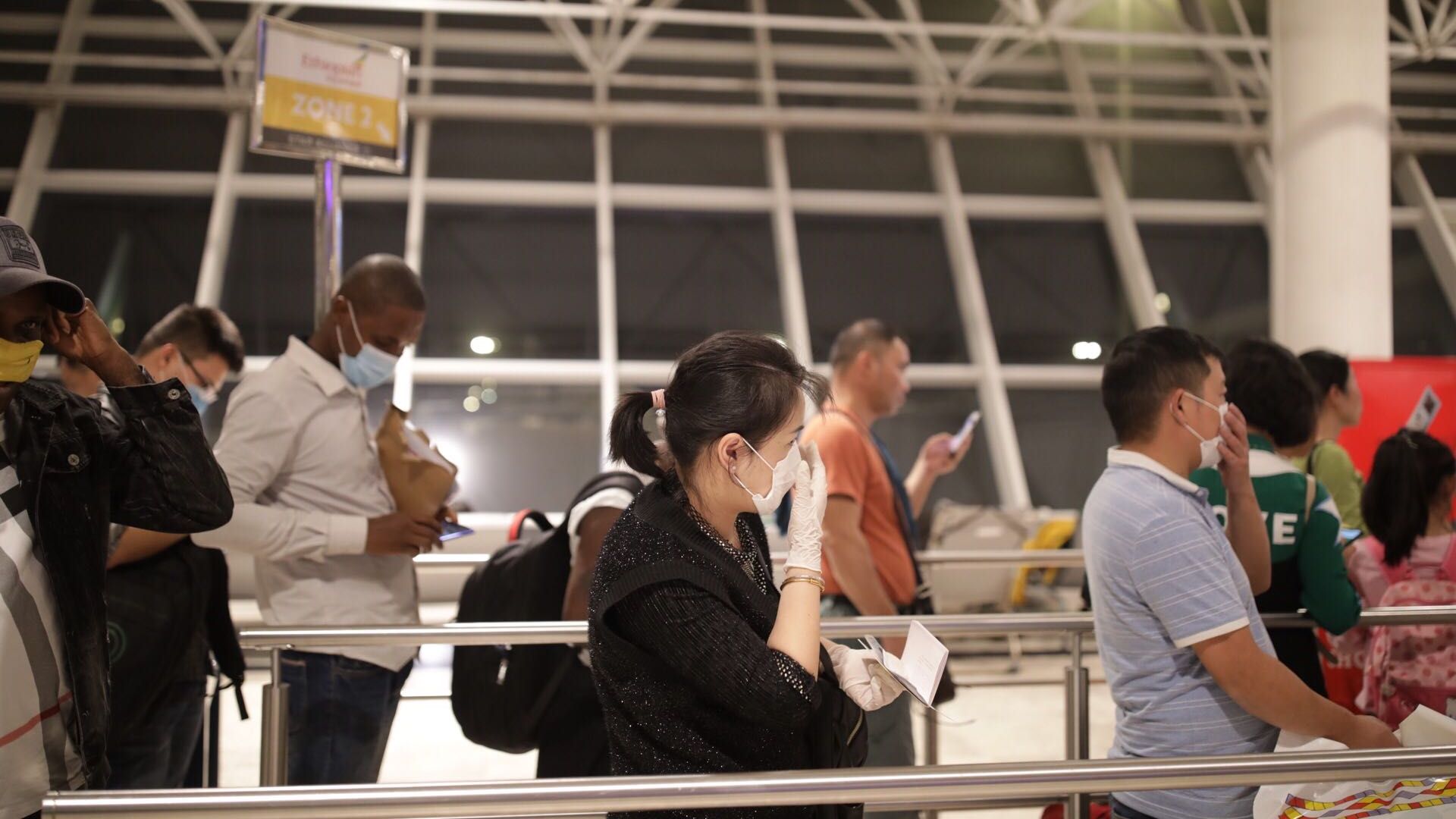
The Centers for Disease Control and Prevention issued a 14-day federal quarantine order for 195 U.S. citizens who were evacuated directly from Wuhan, China amid the coronavirus outbreak.
Why it matters: This is the first time the CDC has ordered a quarantine in nearly 50 years. The last time was in the 1960s to protect against smallpox. CDC officials emphasized this is purely preventative since the U.S. citizens were directly exposed to the coronavirus in Wuhan.
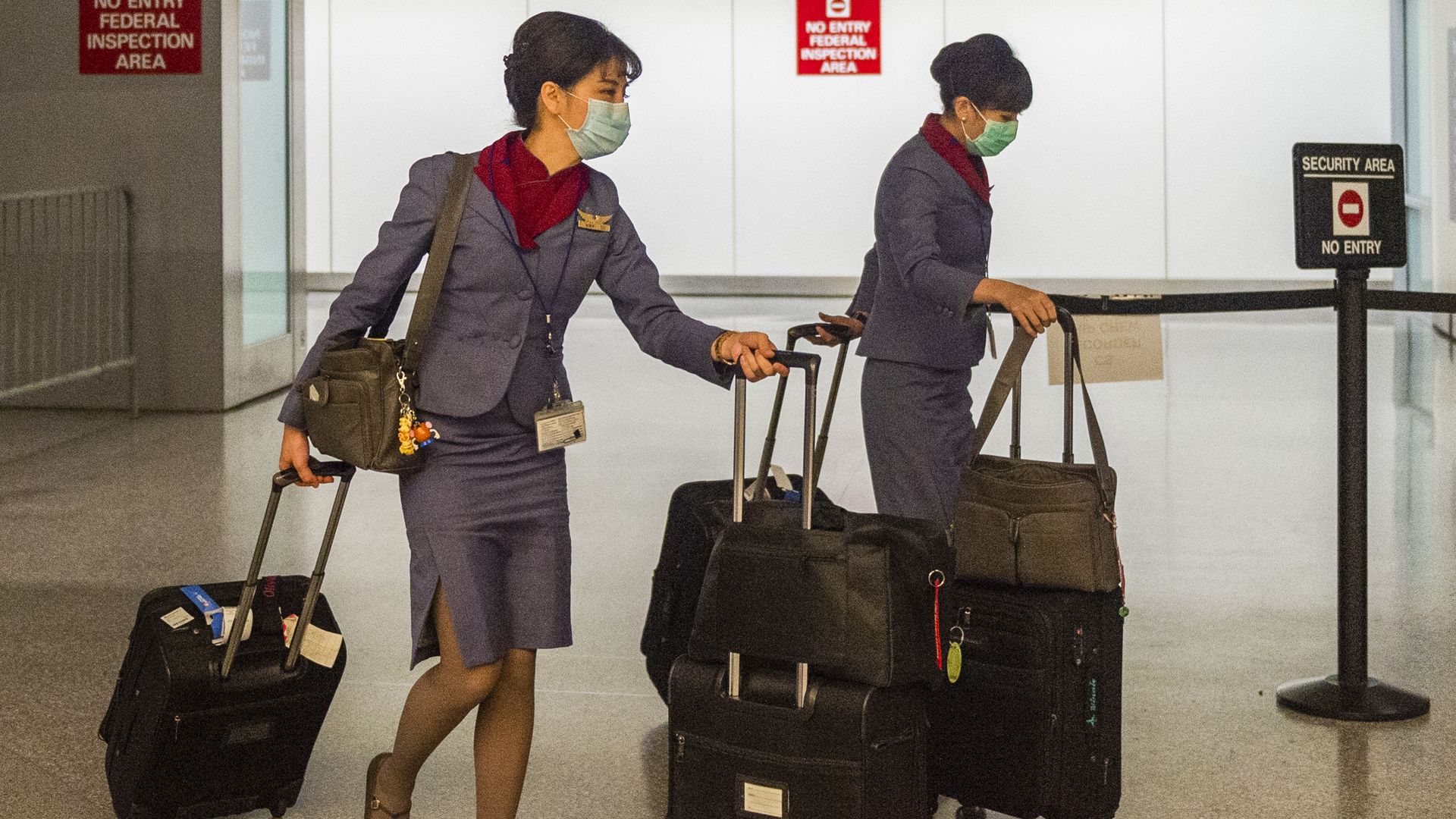
Several airlines — including major U.S. carriers like Delta, United and American — are suspending some or all of their China flights through February because of coronavirus fears.
The big picture: Airlines said demand for flights to China has plummeted due to the virus' spread. Large companies in other industries — from technology to packaged food — have suspended business trips, CNBC reports.
A San Diego Superior Court judge ordered Johnson & Johnson to pay $344 million for misrepresenting the risks of vaginal-mesh implants, Bloomberg reports.
The big picture: The fine isn't very large in the grand scheme of things, and although California was only the first state to bring its claims against J&J to trial, the company previously resolved similar claims by 41 other states for $117 million.
Opioid deaths in the U.S. decreased in 2018 after years of steady increases, while the U.S. life expectancy ticked up for the first time in four years, the Centers for Disease Control and Prevention announced Thursday.
Between the lines: The effort to combat the opioid epidemic appears to be working, although the problem is far from solved.
Facebook said Thursday it will take further steps to ensure its social network is home to accurate information about the fast-spreading novel coronavirus.
Approximately 6,000 Carnival cruise ship travelers have been released after a passenger from Macau experienced possible coronavirus symptoms but tested negative, the BBC reports.
The state of play: Officials feared the ship would be the first impacted by the coronavirus spread. Diseases can quickly flourish among cruise ship passengers because so many people are in such close proximity to each other.
An American Airlines pilots' union sued the company on Thursday to temporarily halt all flights between the U.S. and China, the Financial Times reports, citing "serious" health threats from the coronavirus.
What they're saying: "We estimate that as many as 300 passengers and crew travel to DFW alone from Chinese cities on each American Airlines flight,” said Eric Ferguson, president of the union — representing 15,000 pilots. American Airlines previously stated it would cancel flights between Los Angeles and China from Feb. 9 through March 27, citing a decline in demand.
The economic consequences of medical decisions can be enormous. One of the most financially momentous medical decisions that any doctor can make is to deny a woman an abortion.
Driving the news: A new NBER report looks at the difference in financial outcomes between women who narrowly qualified for abortions and those who narrowly didn't. The report finds "a large and persistent increase in financial distress" for the latter group.
The World Health Organization declared the fast-spreading strain of coronavirus a public health emergency of international concern, WHO Director-General Tedros Adhanom Ghebreyesus announced Thursday.
Why it matters: Ghebreyesus said the organization made the declaration not because of the outbreak in China, but out of fear it could spread to countries that do not have the capacity to contain it. The threat is WHO’s highest alert level.
Altria's decision to pay $12.8 billion last year for a 35% equity stake in vaping giant Juul is turning into one of the worst strategic investments in memory.
Driving the news: Altria on Thursday took a $4.1 billion impairment charge on its Juul investment, mostly blaming the "increased number of legal cases pending against Juul," which it says have increased more than 80% since last November 2019.
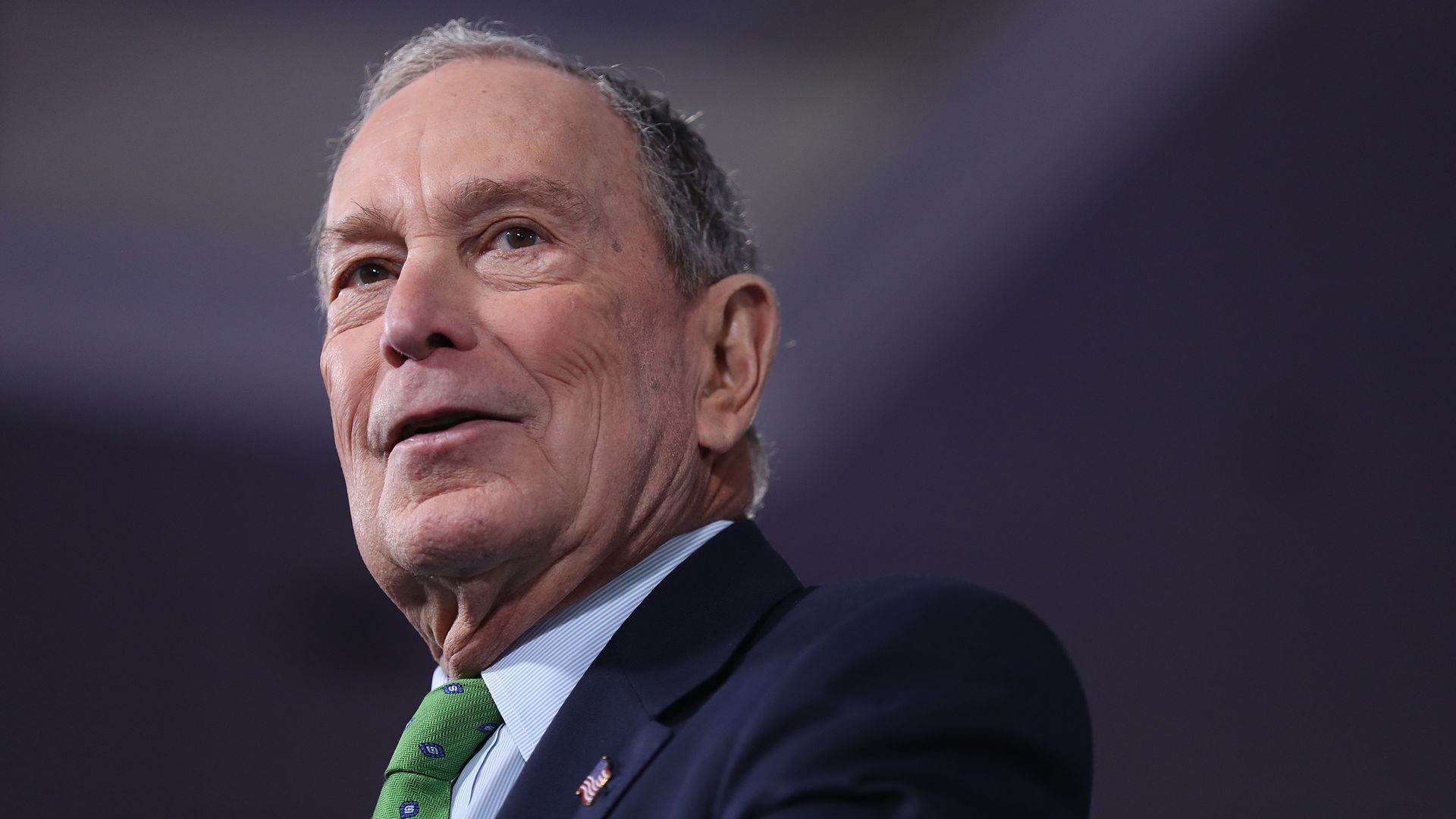
Mike Bloomberg will feature a 60-second campaign ad titled "George" after the Super Bowl halftime show highlighting Calandrian Simpson Kemp, a mother from Texas whose 20-year-old son was shot and killed during an altercation.
Why it matters: The $11 million ad will run in front of what is routinely the largest television audience of the year and will promote gun safety measures to curb gun violence.
Novartis said yesterday that Zolgensma — the gene therapy that's the most expensive drug in the world — brought in $186 million in the fourth quarter of 2019, STAT reports.
Why it matters: It suggests that the drug's enormous price tag isn't blocking patients from accessing it, although the costs are ultimately borne through premiums and by taxpayers.
The U.S. has the highest suicide rate among wealthy nations, according to a Commonwealth Fund report.
Between the lines: That's potentially because of our high rates of mental illness, inadequate mental health screening, low investments in social services and the cost of mental health care, the researchers said.
If you have any thoughts of self-harm or suicide, please pick up the phone right now and call the National Suicide Prevention Hotline at 1-800-273-8255.
While Democratic presidential candidates are deeply divided between Medicare for All and a public insurance option, Democratic voters seem to be cool with either one, according to a new Kaiser Family Foundation poll.
The big picture: Sizeable majorities of both Democrats and independents in the Kaiser poll said they approve of a single national health insurance system, and larger majorities said they like the idea of a public program competing alongside private insurance.