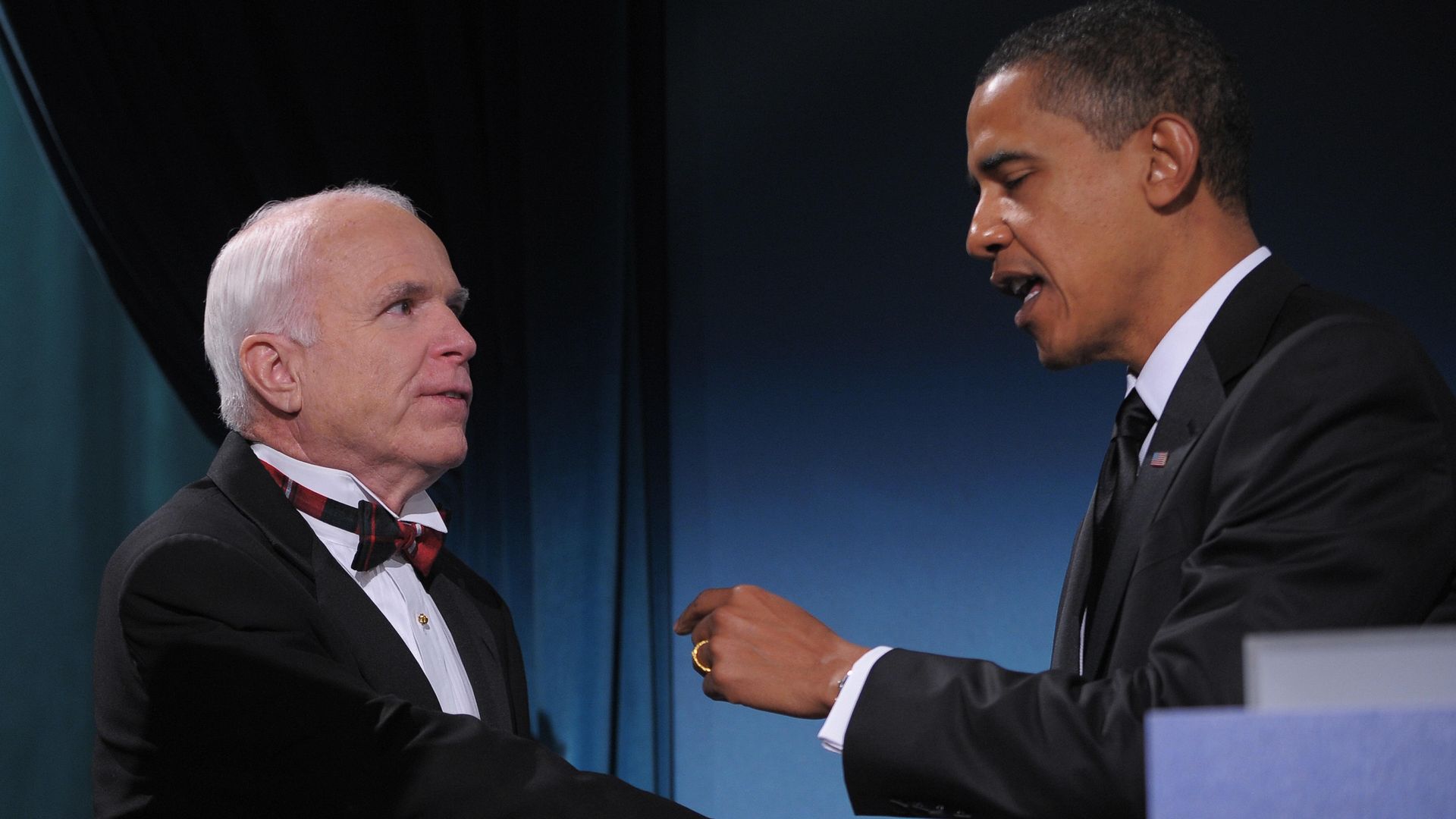
A series of excerpts from Sen. John McCain's forthcoming memoir "The Restless Wave" made their way online today, touching on juicy, wide-ranging topics like the senator's relationship with Barack Obama, his feelings about Vladimir Putin, and his handling of the infamous Steele dossier.
The big picture: Taken as a whole, the excerpts — published by The Wall Street Journal and The DailyBeast — show a longtime public servant attempting to downplay his vital contributions to some of the biggest news stories of our day, often attributing his actions to his duty as an American.
Here’s Arizona Democratic Senate candidate Kyrsten Sinema with an example of how Democrats will be talking about health care in the midterms: vaguely.
Her language: In an ad released yesterday, she talked about the need for “affordable” health care with the “lowest cost prescriptions.” She also says she wants to “fix what’s broken in the system, not go back to when Arizonans had no say about their health coverage.”
There are not a lot of voters heading into the midterms focused mainly on health care, but the ones who are, are Democrats. That is the undeniable thrust of the Kaiser Family Foundation's latest tracking poll.
Kaiser Family Foundation Health Tracking Poll conducted April 20–30, 2018; Graphic: Chris Canipe/Axios
By the numbers: Overall, just 20% of the people Kaiser surveyed said health care is the most important issue in the midterms — but a sizable majority of those people are Democrats.
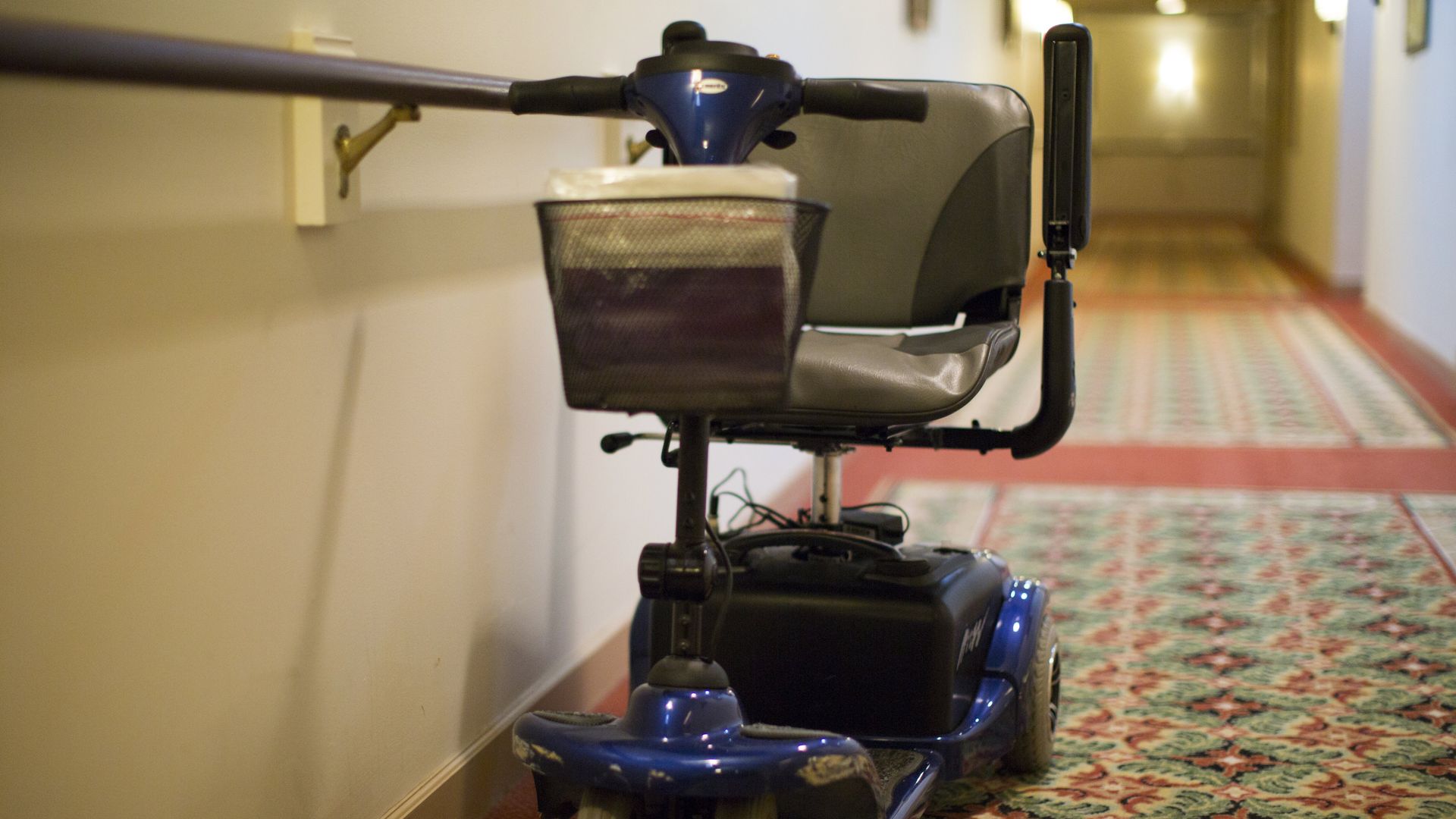
The Trump administration on Wednesday signed off on a regulation crafted during Tom Price's days that will revert to a system in which Medicare will pay medical equipment suppliers more money, starting June 1 and going through the end of the year.
The bottom line: Companies that make oxygen tanks, scooters, insulin pumps and other medical equipment will get $360 million in additional revenue this year, with taxpayers and seniors footing the bill.
There is an outbreak of Ebola in the northwest of the Democratic Republic of Congo, with 2 confirmed cases, per the BBC. The World Health Organization says there have been 21 suspected cases of viral hemorrhagic fever and 17 deaths over the past five weeks.
Flashback: This is the 9th time an Ebola outbreak has been recorded in the DRC, where the virus was first discovered in 1976. More than 11,000 people were killed in Guinea, Sierra Leone, and Liberia during the 2014 outbreak of Ebola in West Africa.
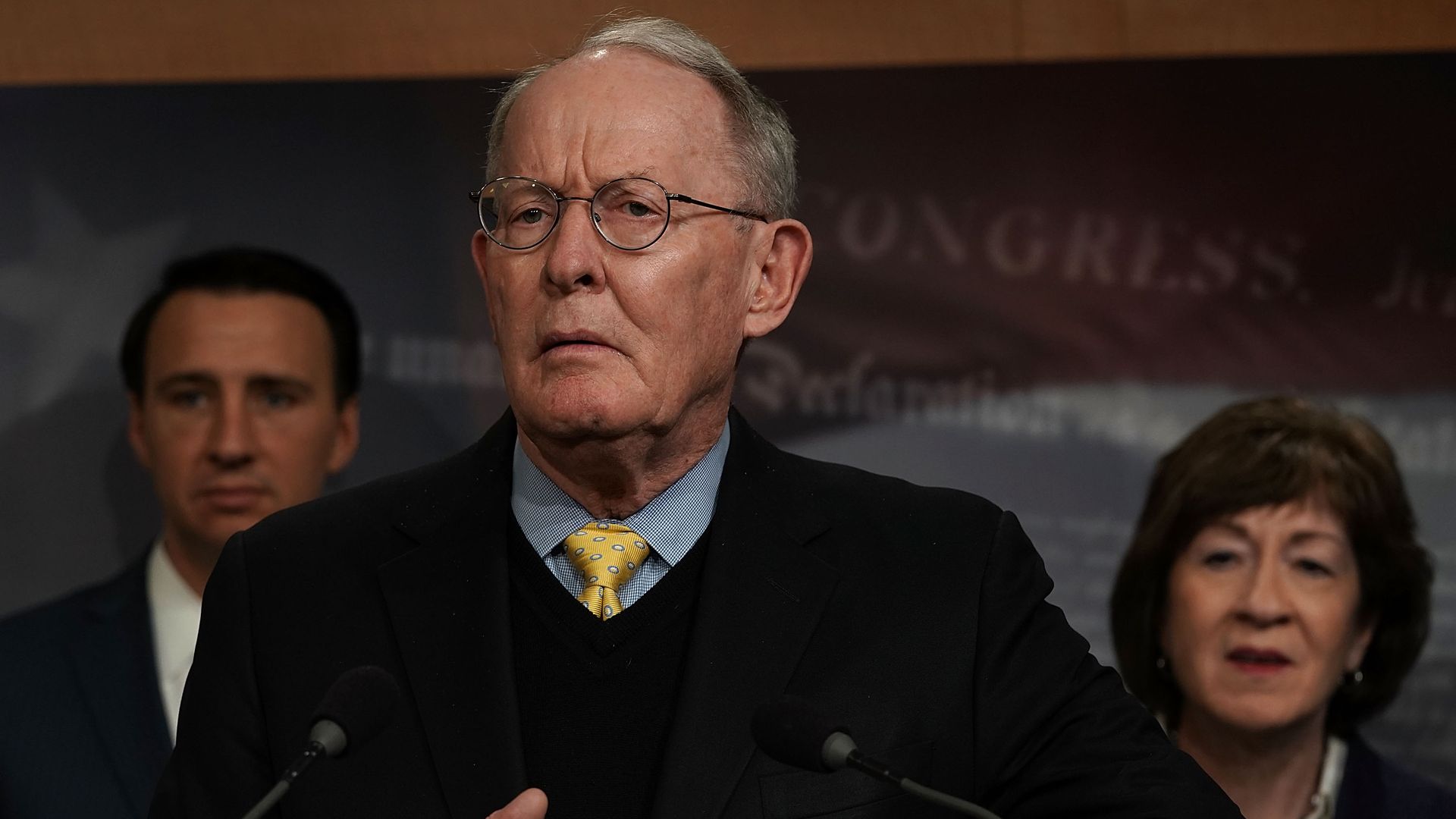
Sen. Lamar Alexander has officially thrown in the towel on a bipartisan bill to stabilize the ACA. He said in a letter to allies that "Democrats are not willing even to make modest temporary changes with which they agree. So now efforts to help Americans paying skyrocketing premiums will turn to the Trump Administration and the states."
Between the lines: Alexander praised the administration's proposal to expand access to association health plans — policies that allow similarly situated people to band together basically as if they were under the umbrella of one large employer.
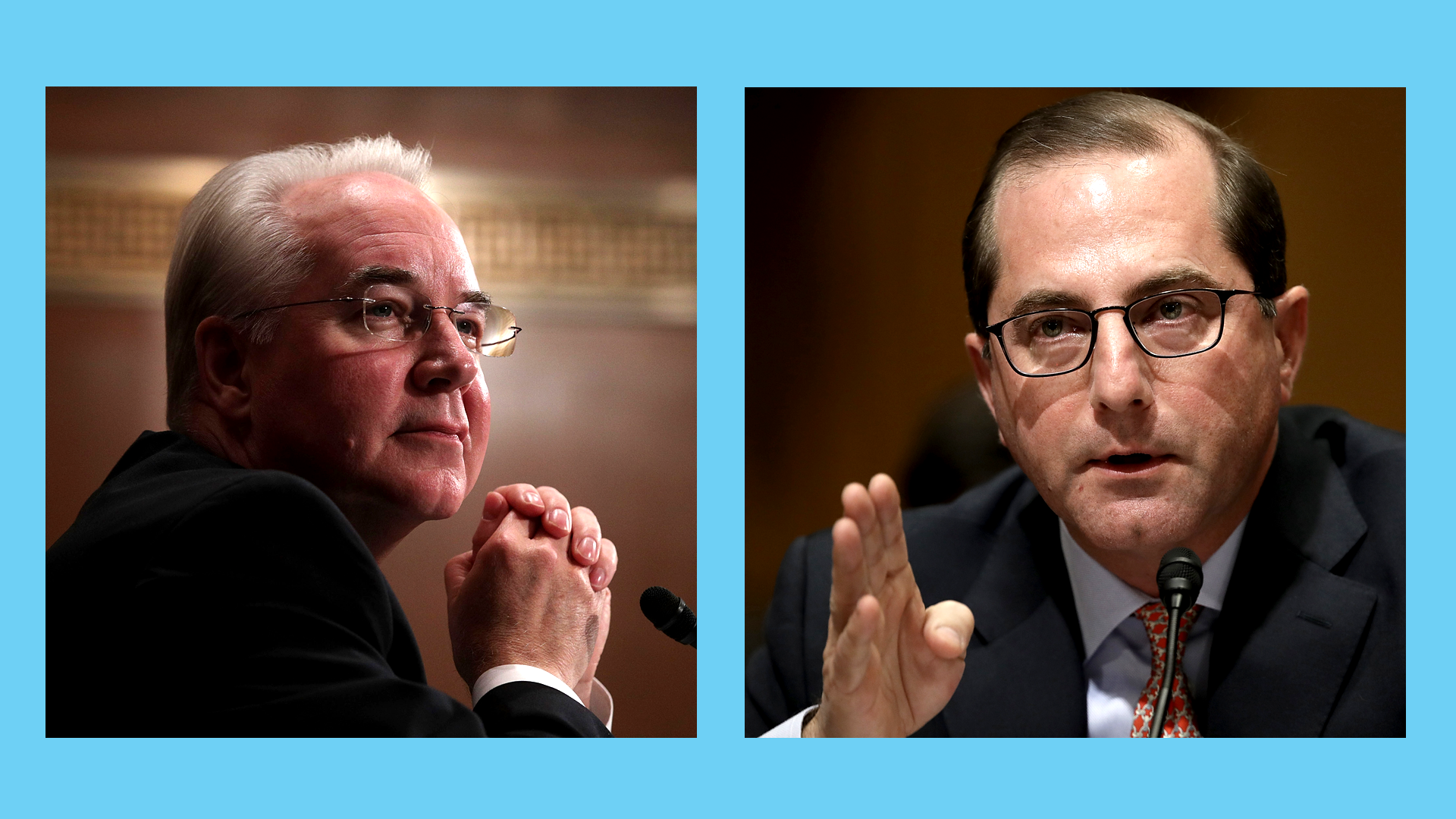
Health and Human Services secretary Alex Azar is a lot different than his predecessor, Tom Price. He's invested in policy goals that Price did not necessarily share, and his no-drama ethos and experience with the HHS bureaucracy will likely help him achieve them.
The big picture: Azar and Price do have one big thing in common: using the regulatory powers at their disposal to chip away at the Affordable Care Act, and presiding over efforts to roll back Medicaid. But underneath those shared goals are big differences in their leadership style and their other priorities.
The actual prices hospitals charge private health insurers are closely guarded trade secrets. But a widely circulated health economics paper, which received some new updates, uses actual claims data from three national insurers to show the inner workings of how hospitals get paid.
The bottom line: Hospitals make a lot of money off patients who get their health coverage through their jobs, and hospitals with little or no competition have the power to set their rates at will.