Tuesday's energy & climate stories

How freezing temperatures are affecting electric vehicles
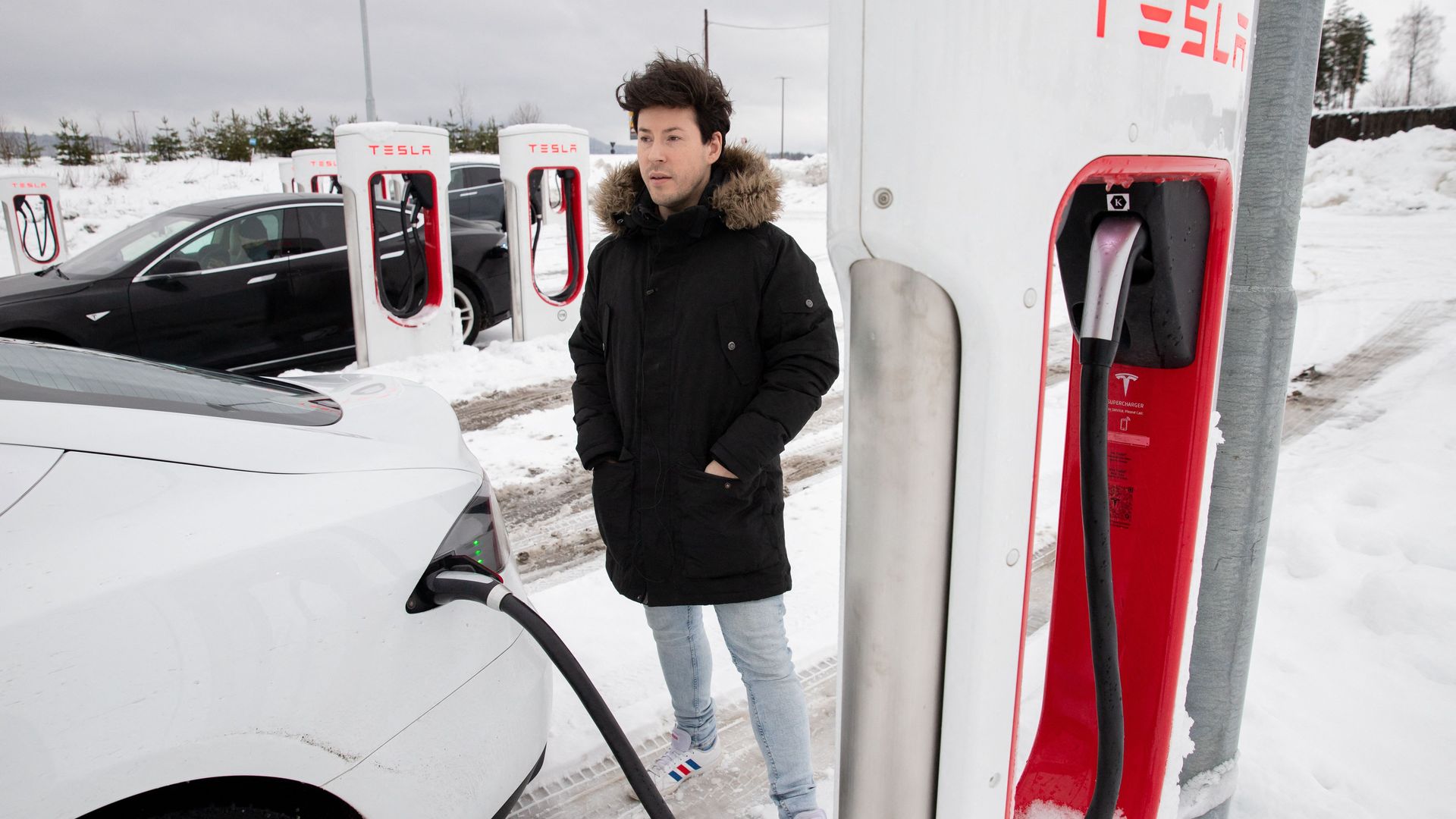
Electric vehicle drivers are reporting trouble charging their cars as an Arctic blast sweeps much of U.S.
The big picture: Not only does charging take longer in freezing temperatures, some electric vehicle owners are surprised to find how much their car's driving range is compromised by winter weather.

2023 shattered records for ocean heat content
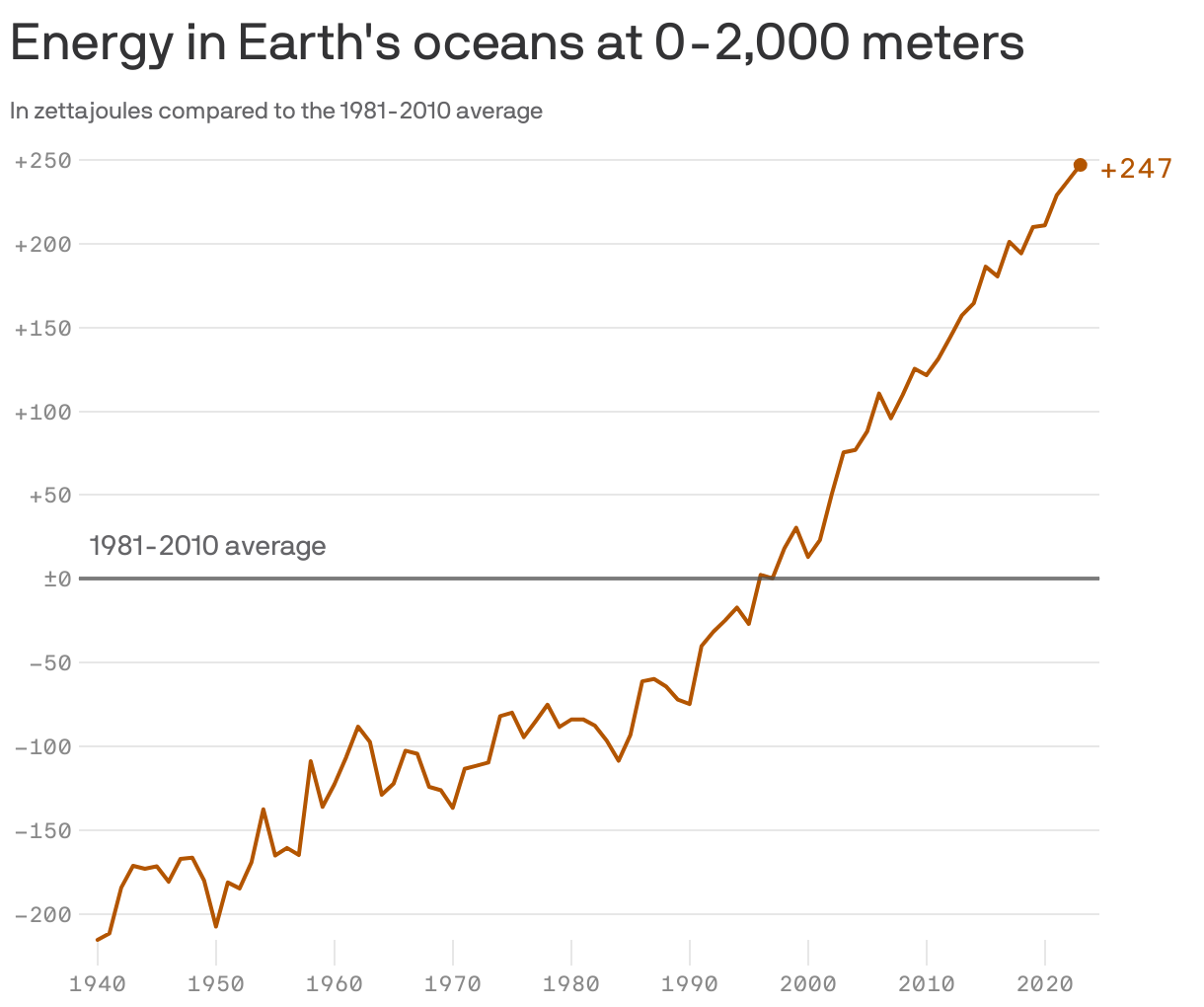
Last year broke a record for the most heat content present in the upper 2,000 meters (6,562 feet) of the oceans.
Why it matters: The oceans absorb about 90% of the extra heat in the Earth system trapped by greenhouse gases, making the metric a striking indicator of human-caused global warming.

Three things to watch as John Kerry heads for the exits
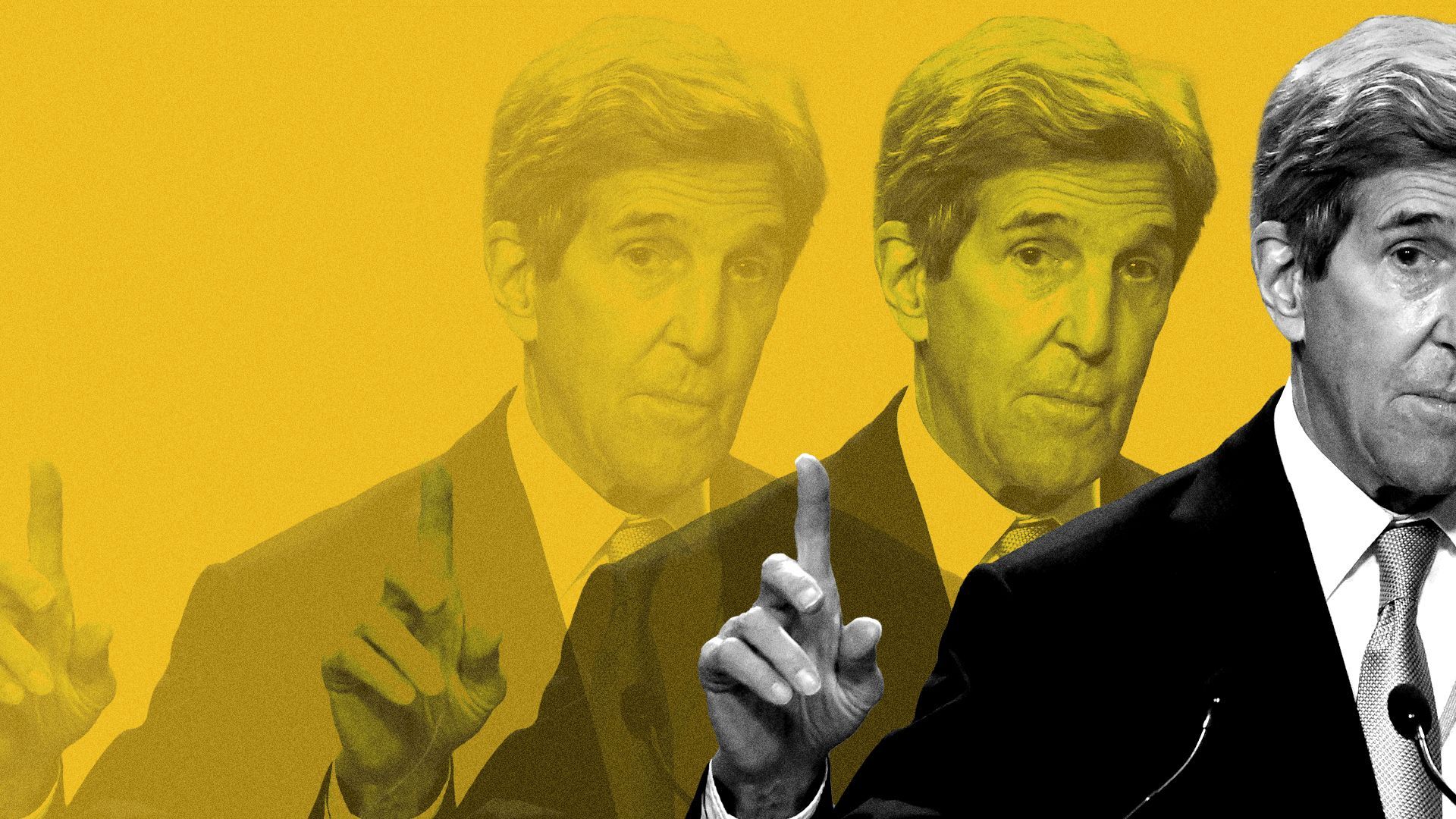
U.S. climate envoy John Kerry is leaving, the Biden administration announced over the weekend, which leaves climate policy up in the air.
What we're watching: U.S. climate relations with China. Kerry's longtime Chinese counterpart, Xie Zhenhua, just retired. So there's big change on both sides.
Snow drought finally ends along I-95 corridor
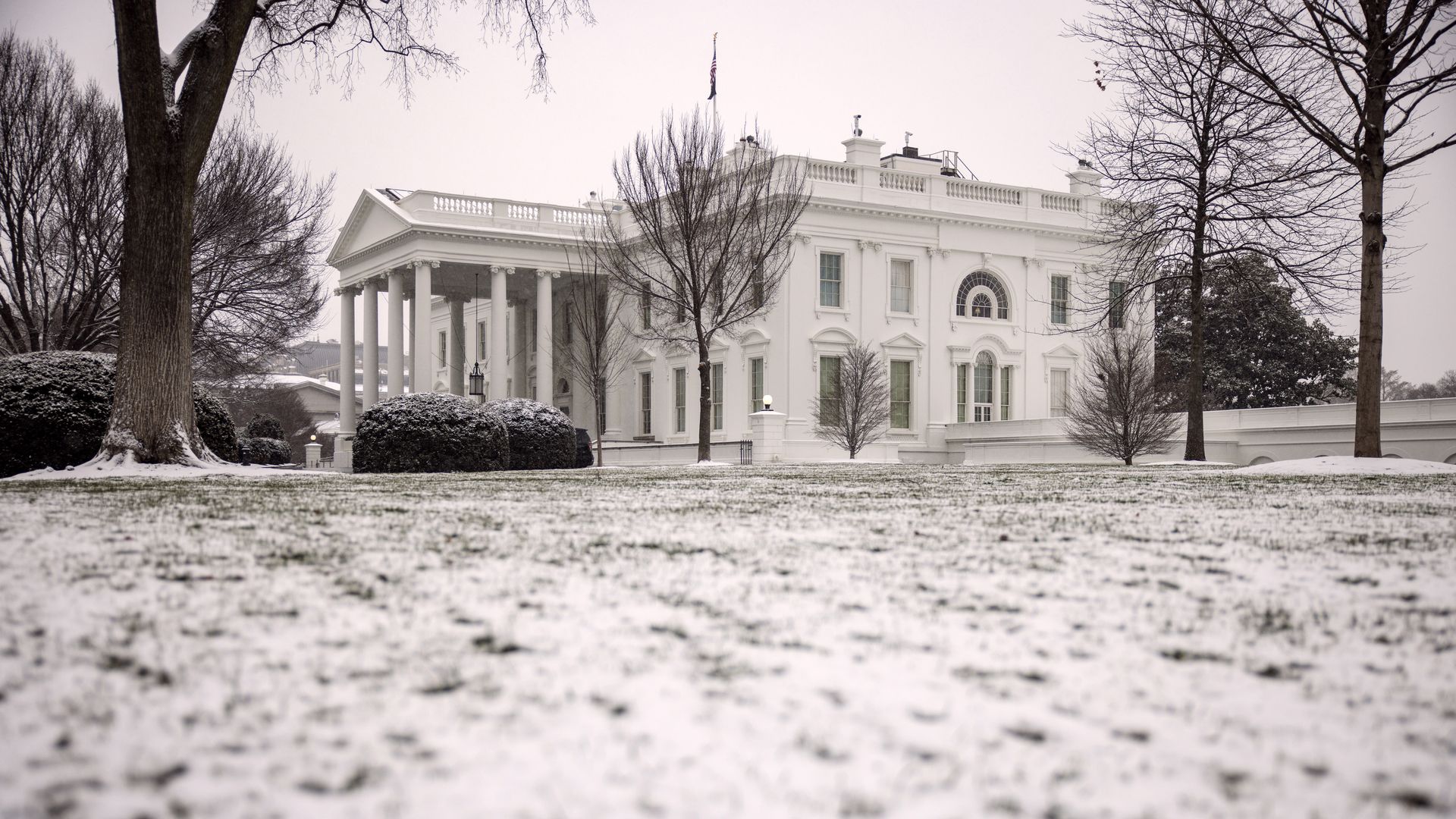
The snow drought that had gripped the heavily populated corridor from Washington to New York City has ended after about two years, thanks to a winter storm along the East Coast.
The big picture: The snow is accompanying an expansive and record-breaking Arctic air outbreak that is affecting much of the Lower 48 states.
Global climate policy faces stormy waters in 2024

As climate scientists debate whether the pace of global warming is accelerating, policymakers face myriad obstacles this year as they try to cut greenhouse gas emissions and finance the energy transition.
Why it matters: Rapid emissions cuts are required to avert the most dangerous impacts from climate change, studies show. In light of this, time is increasingly of the essence.
The big picture: Geopolitical chess pieces are moving in such a way that it's difficult to see how 2024 advances the agreements struck last year, including COP28's declaration to "transition away from fossil fuels."
- More than 100 days after the fighting between Israel and Hamas in Gaza began, the threat of a much wider regional war is more real than ever. Escalating tensions in the Red Sea, Yemen, Iraq, Syria and along the Israel-Lebanon border are stoking fears of a Middle East crisis.
- The war in Ukraine is showing few signs of resolution, and there is a growing danger that Russia could consolidate its battlefield gains in the absence of further U.S. assistance, which has been held up by Congress.
- In Europe, right-wing political parties have made headway in Germany, the Netherlands and France, in part by tapping into frustration with green energy policies.
- And, with Biden's climate envoy John Kerry stepping away from his post, the U.S. is losing its most prominent climate figure on the international stage. Kerry had the rare political capital to meet with heads of state and climate policy counterparts alike.
Of note: His departure may sap some of the ability of the U.S. to try to lead internationally on climate, though that also depends on who is picked to replace him.
- It may also shift the course of U.S.-China climate cooperation.
Zoom in: Jason Bordoff, who heads Columbia University's Center on Global Energy Policy, said 2024's most important climate work may get done on the national level, in order to better implement commitments that are way off track.
- "The better job we're able to do at taking national action consistent with international agreements, the easier future international agreements, and more meaningful future international agreements will be," he said.
- He noted the potential for geopolitical tension to get in the way of the clean energy transition. "I think the past year has offered people a painful reminder that war and conflict just sap resources and attention away from other priorities," he tells Axios.
The intrigue: Another factor that may contribute to a world that treads water on climate action this year is the uncertainty surrounding the U.S. presidential election.
- President Biden reentered the Paris Agreement and is working to implement the biggest climate legislation on record.
- Former President Donald Trump, the likely Republican nominee, withdrew the U.S. from Paris in 2017 and still casts doubt on the validity of mainstream climate science.
- The huge stakes of the election and closeness of the expected race could make some countries hedge their bets.
- Then again, it could also make some nations that are fully on board with climate action eager to speed up their work with the U.S., Bordoff adds.
Between the lines: The selection of Baku, Azerbaijan, as the site of the next climate summit means that a second petro-state in a row will be the host, raising questions about its impartiality.
- Much remains to be implemented after COP28, including operationalizing the climate loss and damage fund to provide money to developing nations hit hard by climate impacts.
- Countries also are supposed to come forward with new, stronger emissions reduction pledges by 2025, which would cover the period through 2035.
- There are also nitty-gritty details on climate adaptation efforts to be worked out, and many countries may push to get more clear and ambitious language than the energy transition sentence included in the Dubai agreement.
Yes, but: According to climate and energy expert Amy Myers Jaffe, countries are increasingly recognizing the need to decarbonize their economies and are pondering major steps to getting there, regardless of the COP process.
What they're saying: "I really do believe that the narrative that somehow all this progress has to come about through these nationally determined pledges, is is kind of old thinking," Myers Jaffe told Axios.
- "When I talk to these big capitals in these big emerging markets, the understanding that there's a future in an economy that's decarbonized seems pretty universal, where I think the sticking point is, is in global climate finance."

Over 120M under wind chill alerts as Arctic blast envelops much of U.S.
Editor's note: Follow the latest updates on the extreme U.S. weather here.
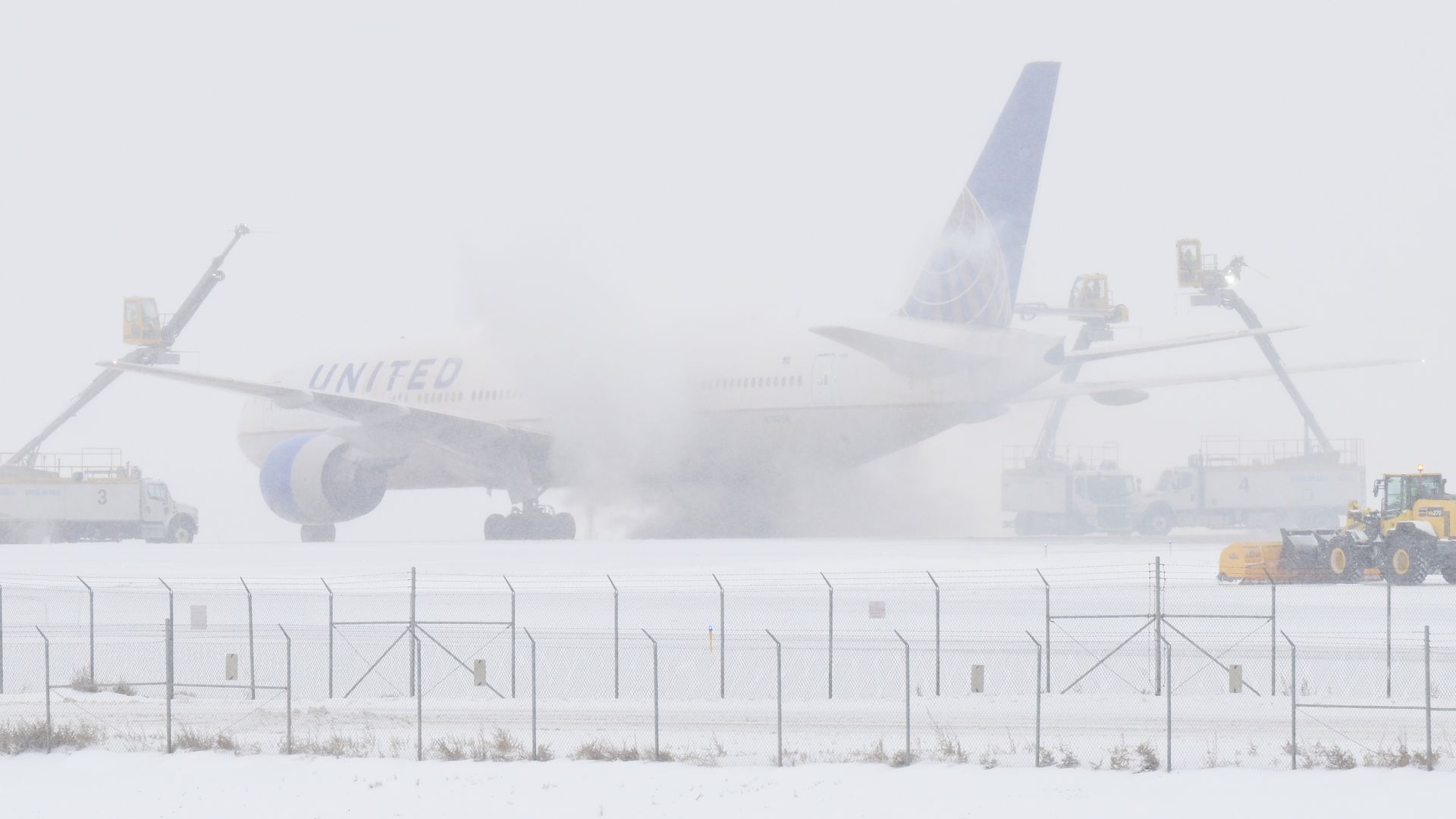
"Dangerously cold temperatures" and wind chills enveloped much of the U.S. on Monday, disrupting travel and closing schools — as the National Weather Service warned more records would be tied or broken.
The big picture: At least nine deaths have been attributed to the Arctic blast that's sweeping the country — including four since Friday in Oregon, which continued to experience widespread power outages and disruptions to public transportation on Monday due to what public agency TriMet described as a "historic winter storm."

Boeing adds more inspections for its 737-9 Max fleet
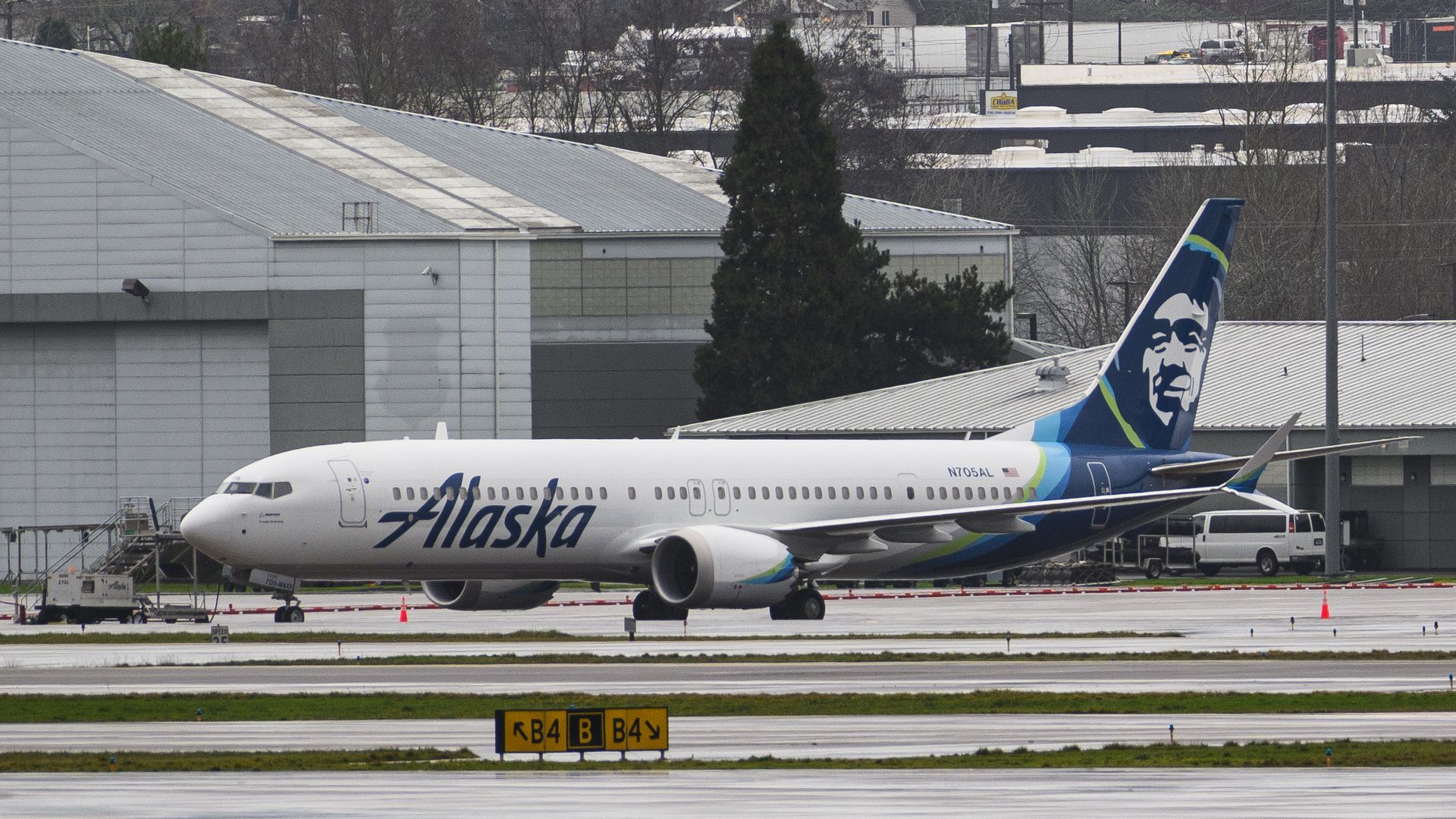
Boeing will add inspections for its 737-9 fleet after a mid-flight emergency revealed the potential of loose bolts on plugged exit doors for several planes.
Why it matters: The plane model is remaining grounded for the foreseeable future, as the company faces a lawsuit.
Arctic blast leaves over 110 million under wind chill warnings
Editor's note: Follow the latest updates on the extreme U.S. weather here.
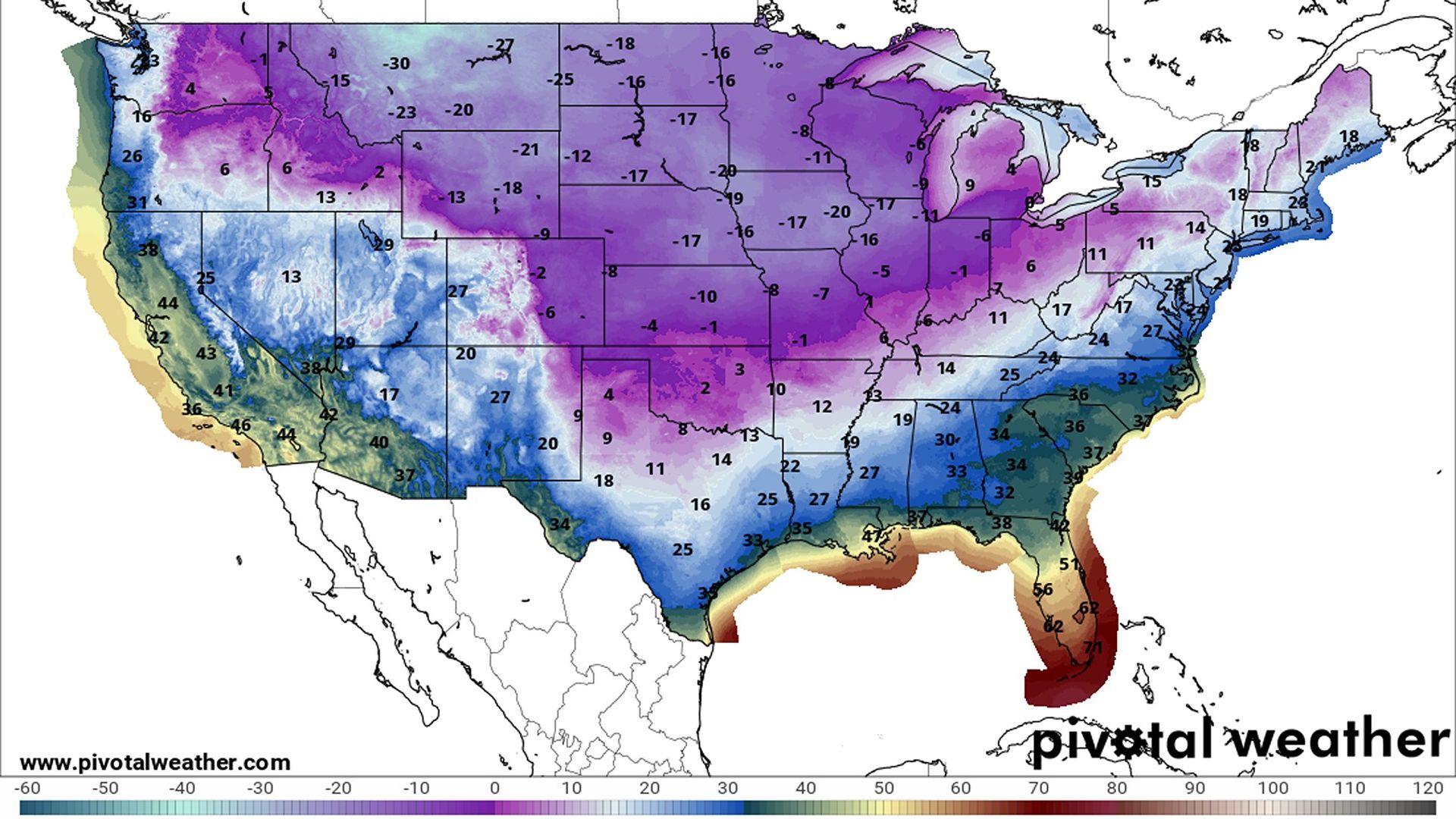
An Arctic outbreak tied to a piece of polar vortex was bringing subfreezing temperatures across the U.S., leaving over 110 million people under wind chill warnings and advisories Sunday evening.
The big picture: The National Weather Service warned parts of the Midwest would again experience "near-record, dangerously low temperatures and wind chills," with wind chills below negative 30 degrees below zero from the Northern Rockies to northern Kansas and into Iowa, as the state prepared for Monday's first-in-the-nation caucuses.