2023 shattered records for ocean heat content

Add Axios as your preferred source to
see more of our stories on Google.
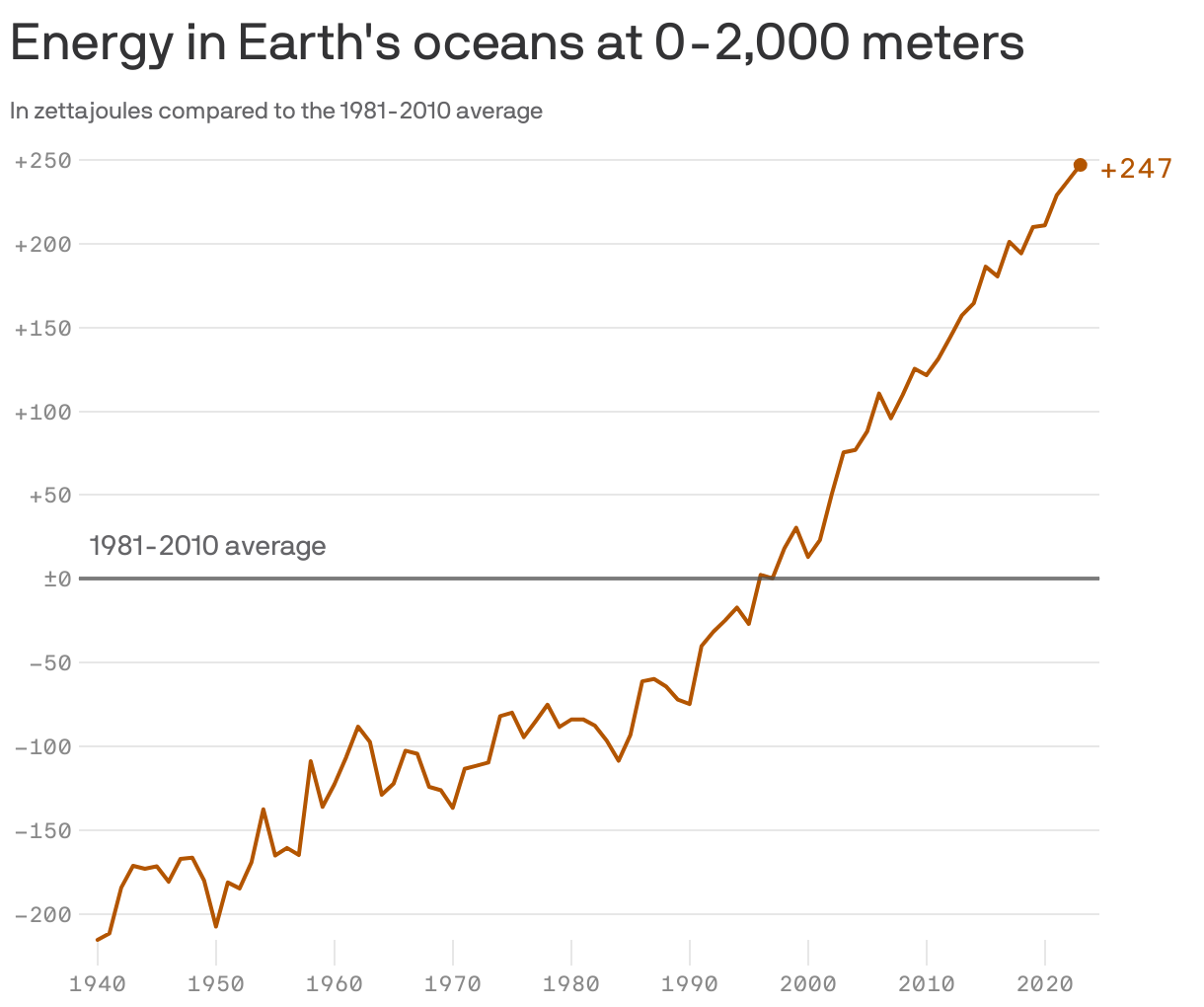
Last year broke a record for the most heat content present in the upper 2,000 meters (6,562 feet) of the oceans.
Why it matters: The oceans absorb about 90% of the extra heat in the Earth system trapped by greenhouse gases, making the metric a striking indicator of human-caused global warming.
- The new findings come from newly released NOAA data and a related new peer-reviewed study.
By the numbers: The five highest values of annual ocean heat content have come in the past five years, according to NOAA.
The big picture: "If you want to know how fast and how far global warming is going to go, the answer is in the oceans," study coauthor John Abraham told Axios.
- Sea surface temperatures were also off the charts in 2023, which helped drive extreme weather on land, too. However, surface temperatures are only a small part of the heating that took place in deeper waters, Abraham said.
- Parts of every ocean had record warm sea surface temperatures, particularly in the North Atlantic and equatorial tropical Pacific.
The bottom line: According to the temperature tracking group Berkeley Earth, "[n]o places on Earth experienced a record or near-record cold annual average" in 2023.
