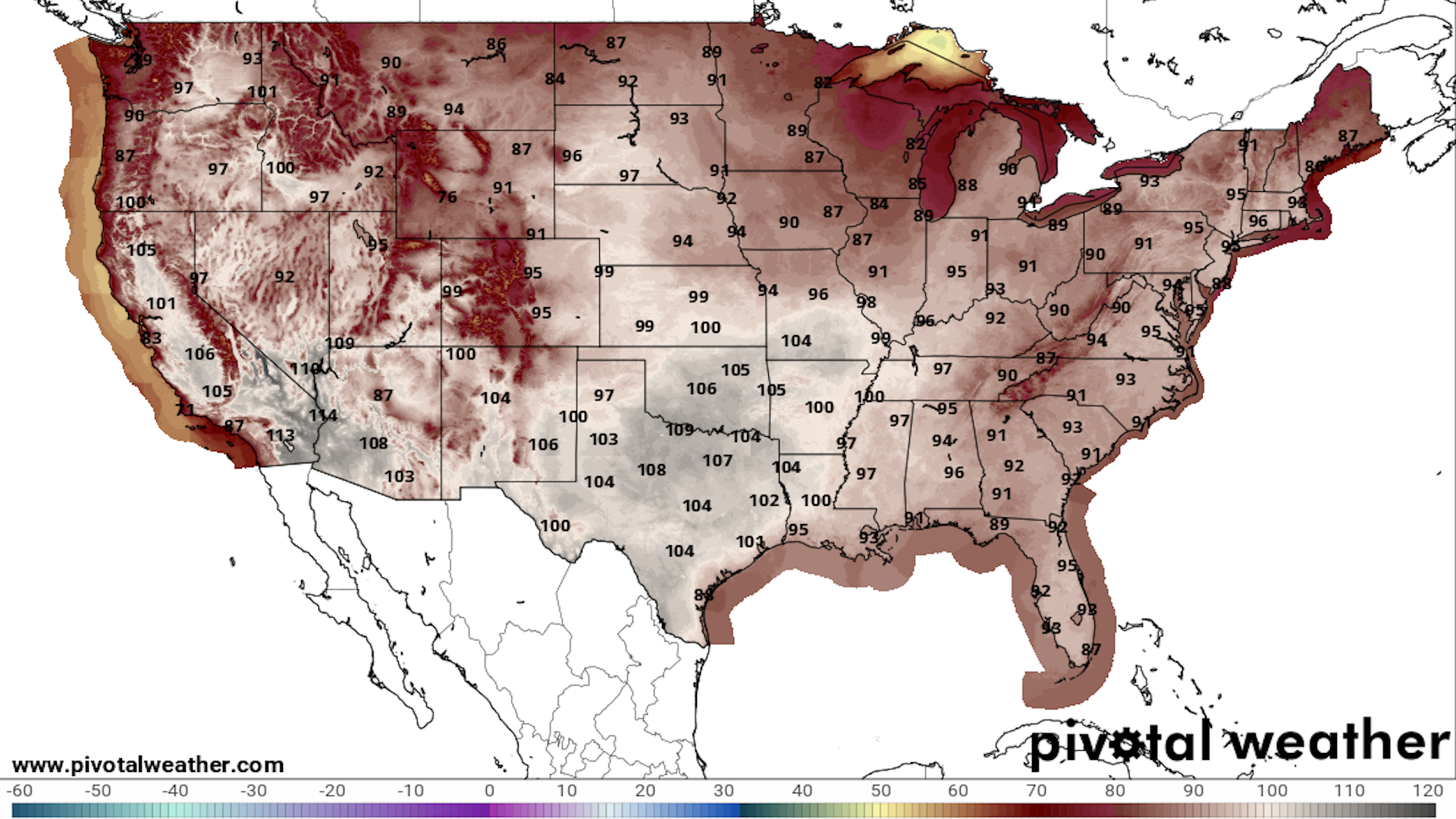
Over 104 million people are under heat warnings and advisories across the U.S. on Thursday as dangerous heat continues to roast the southwest, south-central, and eastern U.S. according to the National Weather Service (NWS).
Why it matters: Excessive heat events are the leading weather-related killer in the U.S. and can greatly strain the power grid, leading to power interruptions. Climate change from greenhouse gas emissions is causing heat waves to be more severe, frequent and longer-lasting.
The extreme heat pummeling the U.S. has been especially hard on Latinos, many of whom live in states with a shaky power infrastructure, work outside and struggle to cope with soaring energy bills.
The big picture: Extreme weather like heat waves increases energy demands and tests the limits of power infrastructure. Texas, Nevada, California, New York and Florida, among other states, have struggled with power outages in recent years.
The migratory monarch butterfly endemic to North America has been categorized as an endangered species by the International Union for Conservation of Nature.
Why it matters: The monarch's native population has shrunk between 22% and 72% over the past decade. Its decline is largely due to climate change, deforestation and pesticide use, which kills the milkweed the monarchs feed on, the IUCN said Thursday after adding the butterfly to its "red list" of threatened species for the first time.
Cities could dramatically reduce peak summer temperatures by replacing hot, dark surfaces — like streets, rooftops, playgrounds and parking lots — with cooler alternatives, according to the Smart Surfaces Coalition, a new advocacy group.
The U.S. Postal Service on Wednesday significantly boosted its commitment to replace its aging delivery fleet with more electric vehicles.
Why it matters: The agency faced a massive backlash from lawmakers, environmental groups and others after announcing in March that it would spend nearly $3 billion on an initial order for 50,000 new mail trucks from Oshkosh Defense, 90% of which would be gasoline-powered.
Sixteen states, four environmental groups and the United Auto Workers union sued to block the plan.
The Biden administration and many lawmakers also asked the agency to reconsider.
Driving the news: The new plan reflects "refinements" based on improvements in the agency's financial outlook and availability of technology, the USPS said in a statement.
The agency now says that at least half of the 50,000 vehicles it plans to purchase from Oshkosh Defense will be battery electric vehicles (BEVs).
In addition, the Postal Service said it will purchase another 34,500 vehicles from other manufacturers, "including as many BEVs as are commercially available."
Of the total 84,500 vehicles to be purchased, more than 40% will be electric.
What they're saying: “Public pressure is working," said Joe Britton, executive director of the Zero Emission Transportation Association.
"Today’s commitment to acquire at least a 40% electric fleet shows that the Postal Service understands the strategic disadvantage it would create for itself if it were to just rely on gas-powered vehicles for decades to come."
"Fleet electrification will deliver massive climate, economic and health benefits to the American people — and provide significant cost savings to the Postal Service itself."
President Biden and White House officials announced new moves Wednesday to help protect communities from extreme heat and spur offshore wind projects — and promised that more executive efforts are coming soon.
Why it matters: The White House is looking to show that Biden's climate agenda remains intact even though major clean energy investment legislation appears close to dead on Capitol Hill.
More than 100 million Americans are under heat warnings and advisories, with temperatures of up to 110°F, or possibly higher, hitting much of the U.S. on Wednesday.
Driving the news: From the Southern Plains to the Mid-Atlantic and the Northeast, the heat is pushing cities to take action to protect residents from sweltering and often life-threatening conditions.
A sprawling heat dome is bringing temperatures of up to 110°F, or possibly higher, to a broad swath of the U.S. on Wednesday, with more than 100 million people under heat warnings and advisories.
Driving the news: The extreme heat will be most intense in the southern Plains and lower Mississippi Valley, but the big cities of the Northeast will swelter as well.
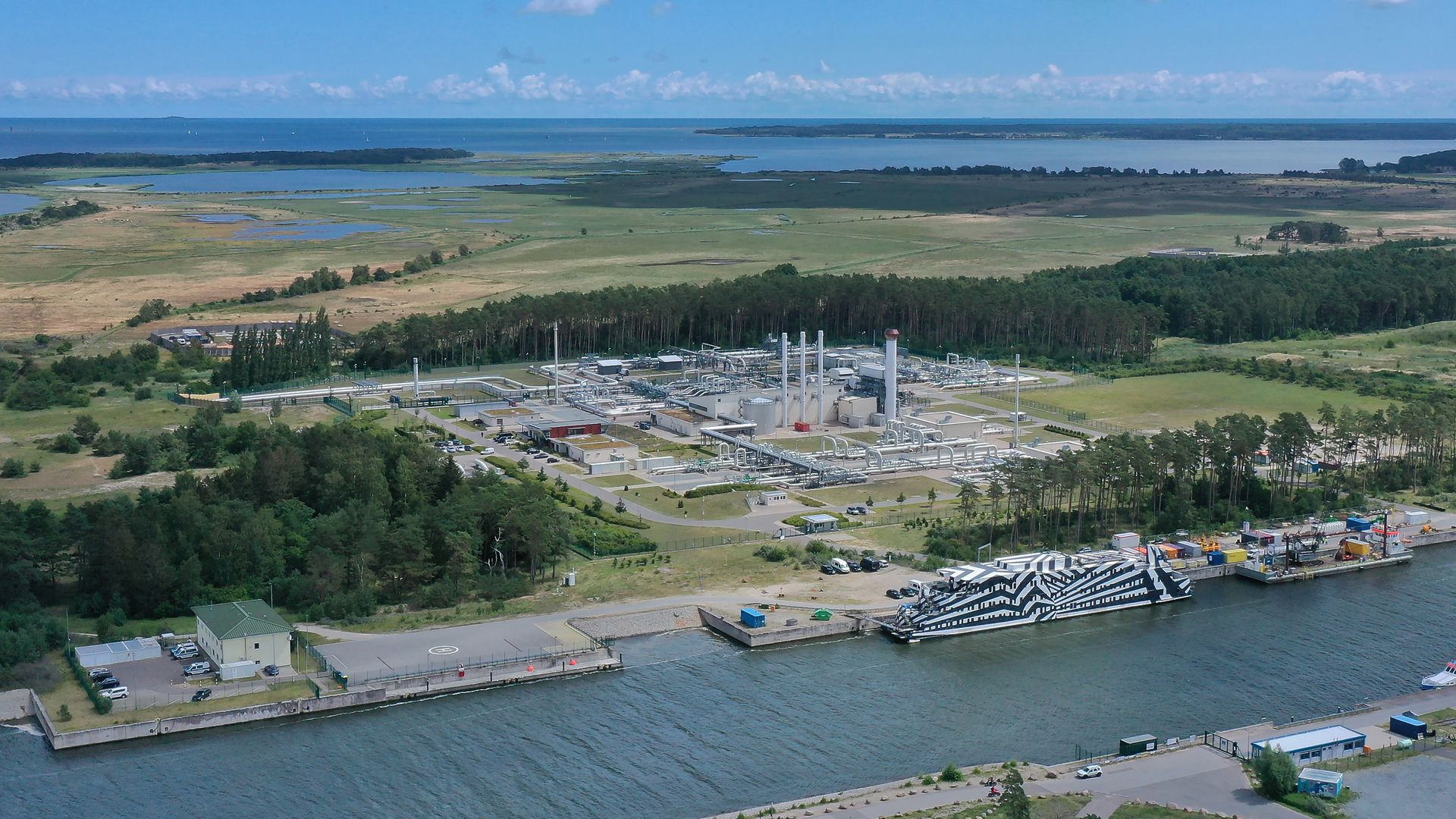
European Union leaders, citing risks from "the Kremlin's weaponization of gas exports," proposed plans Wednesday for all member states to reduce natural gas consumption by 15% until spring.
Why it matters: The plan reflects growing concern that Russia, the EU's top supplier, could cut exports of the key industrial, electric and residential fuel well beyond already reduced levels. “Russia is blackmailing us. Russia is using energy as a weapon,” European Commission President Ursula von der Leyen said.
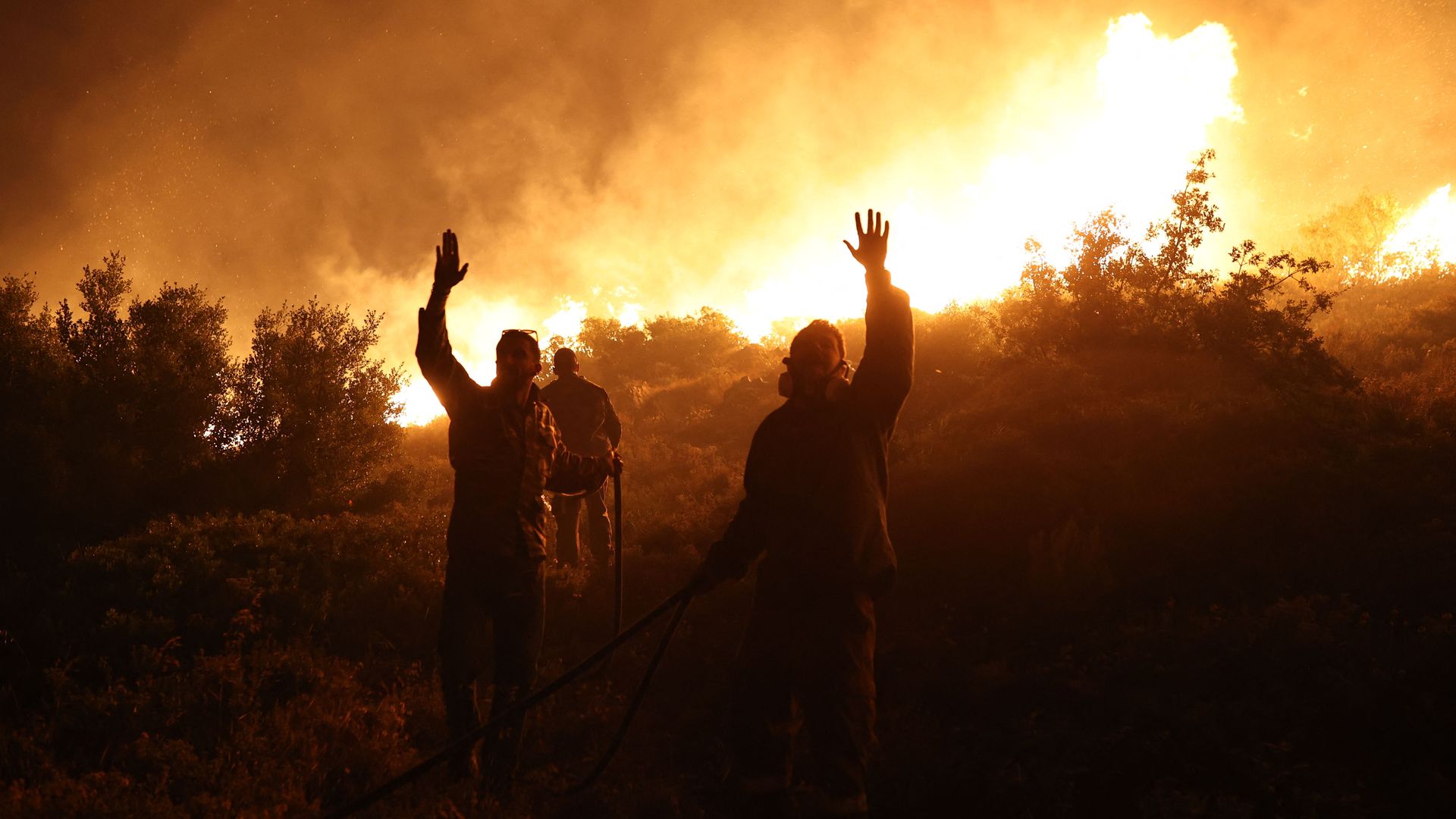
The heat wave in Europe should best be viewed as another deadly and startling warning regarding how far we've pushed the planet's climate into less hospitable territory, and how unprepared we are for what's coming.
Catch up fast: In the past week, temperature records dating back centuries have been obliterated, particularly on Tuesday in the U.K. The heat is shifting east, into a swath of Europe extending from Germany to Sweden.



/2022/07/19/1658271410583.gif?w=3840)