In the midst of an unprecedented heat wave, the U.K. on Tuesday broke its national record for the highest temperature ever registered, with a provisional reading of 104.36°F (40.2°C) at London's Heathrow Airport, according to the country's weather service.
Why it matters: This is the first time the U.K. has breached this temperature that is more common in tropical and desert climates, and studies point to climate change as a key factor behind the scorchingly hot temperatures.
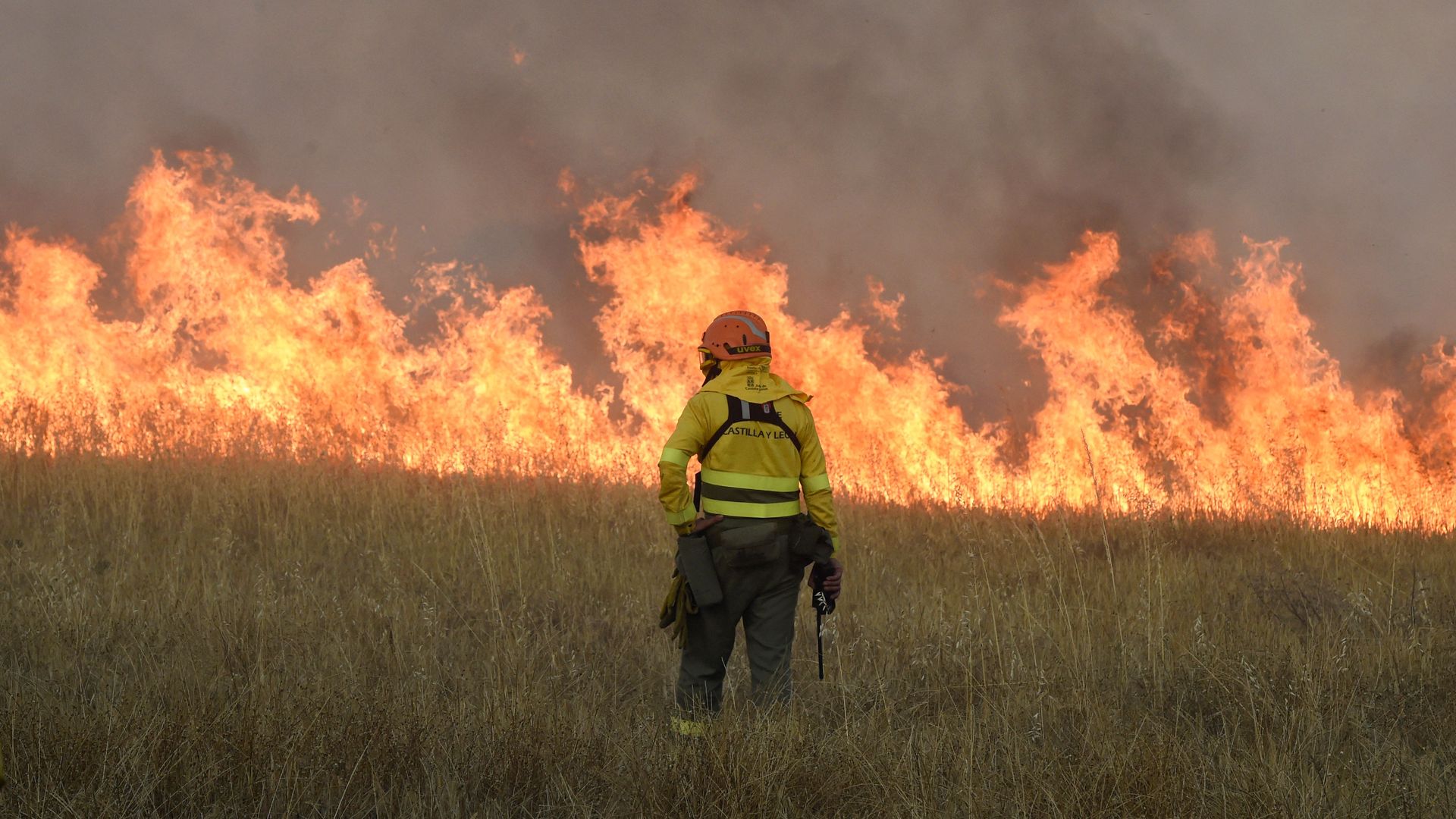
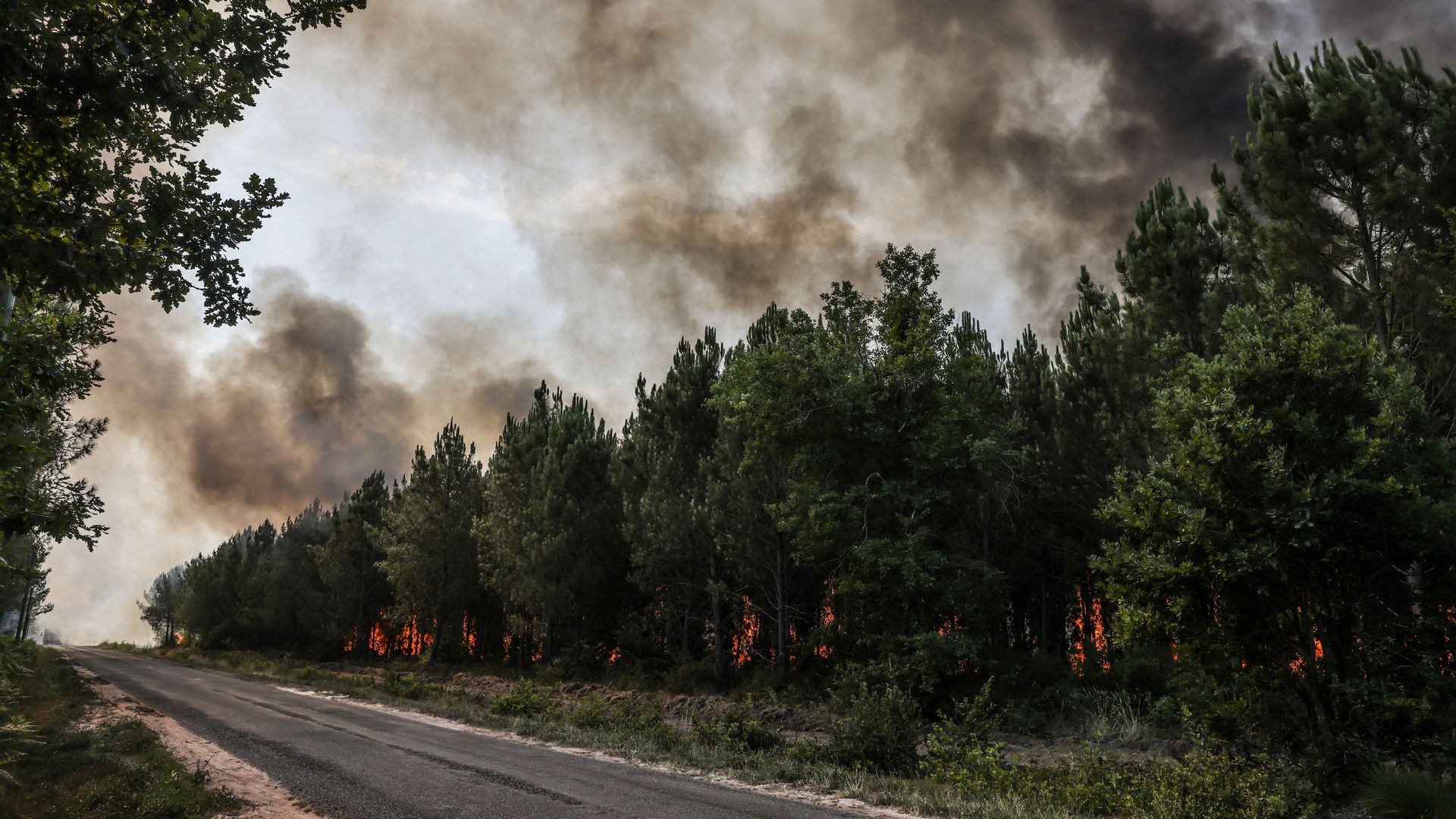
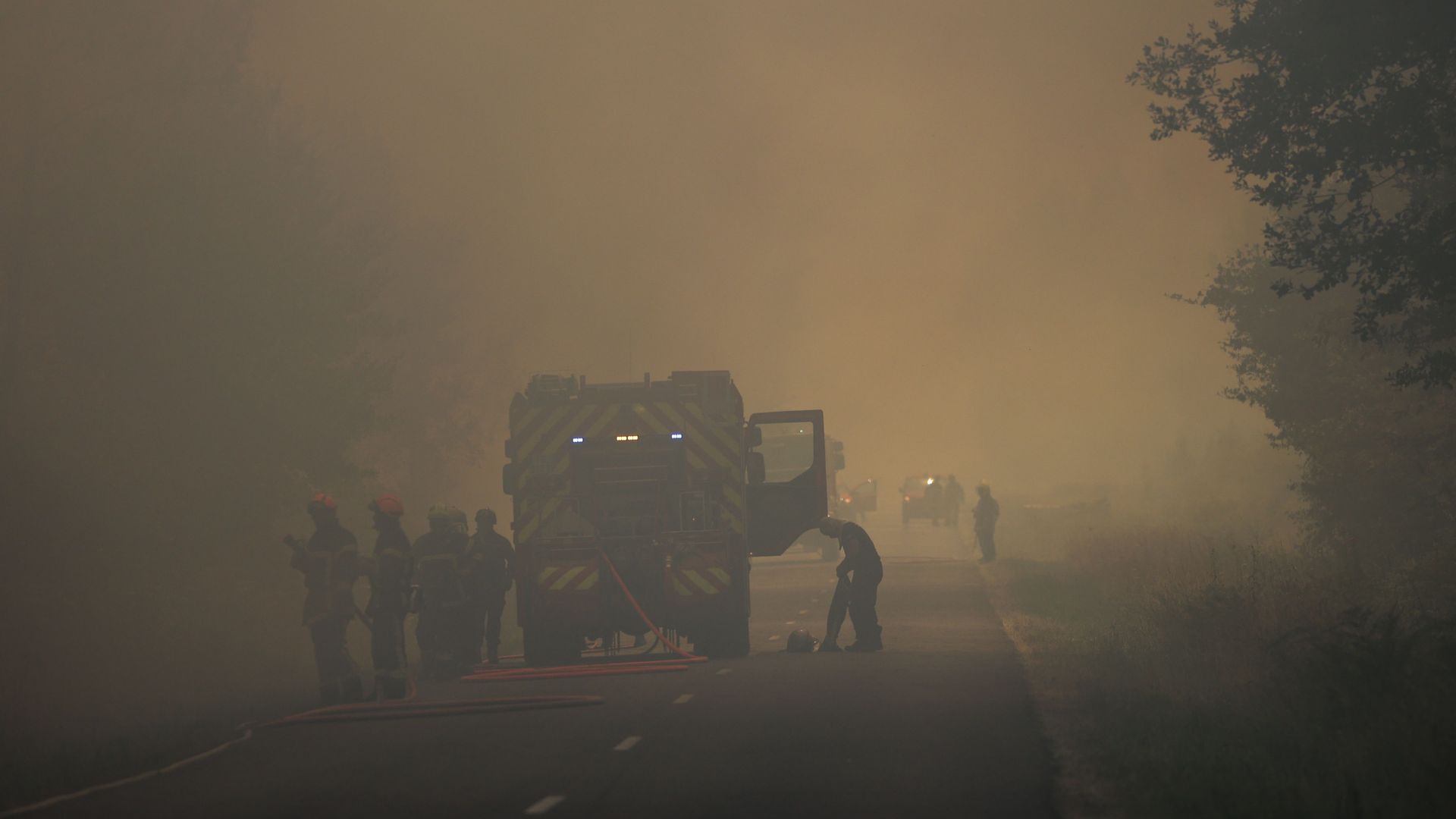
Firefighters in France, Portugal, Spain, the U.K. and other parts of Europe on Tuesday continued to battle raging wildfires that have forced thousands to flee and caused several deaths.
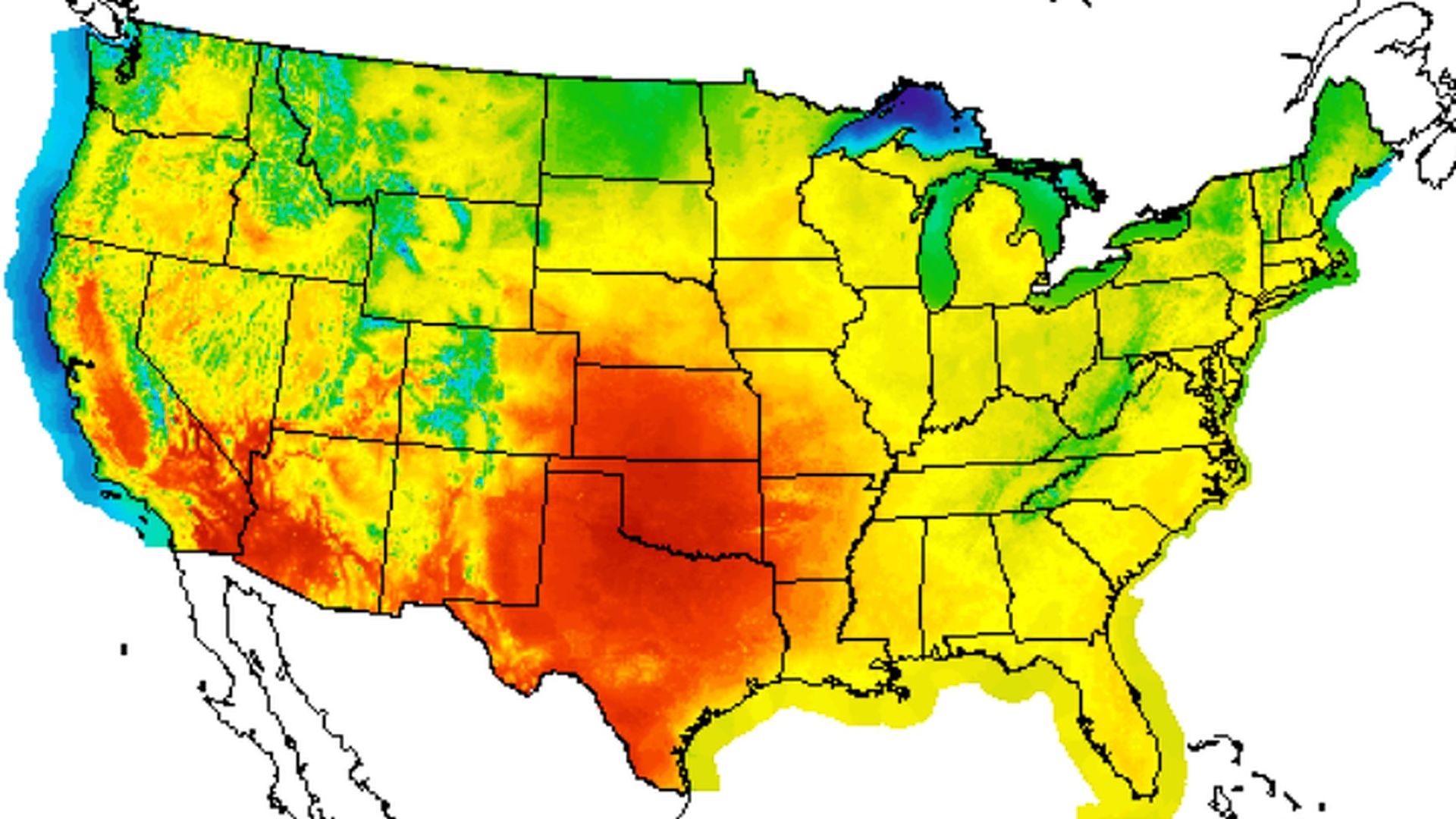
While the heat in Europe is garnering the most headlines, a potent heat wave is hitting the U.S. as well. The heat stretches from the Canadian border to the U.S. border with Mexico, with 100 million under heat warnings and advisories.
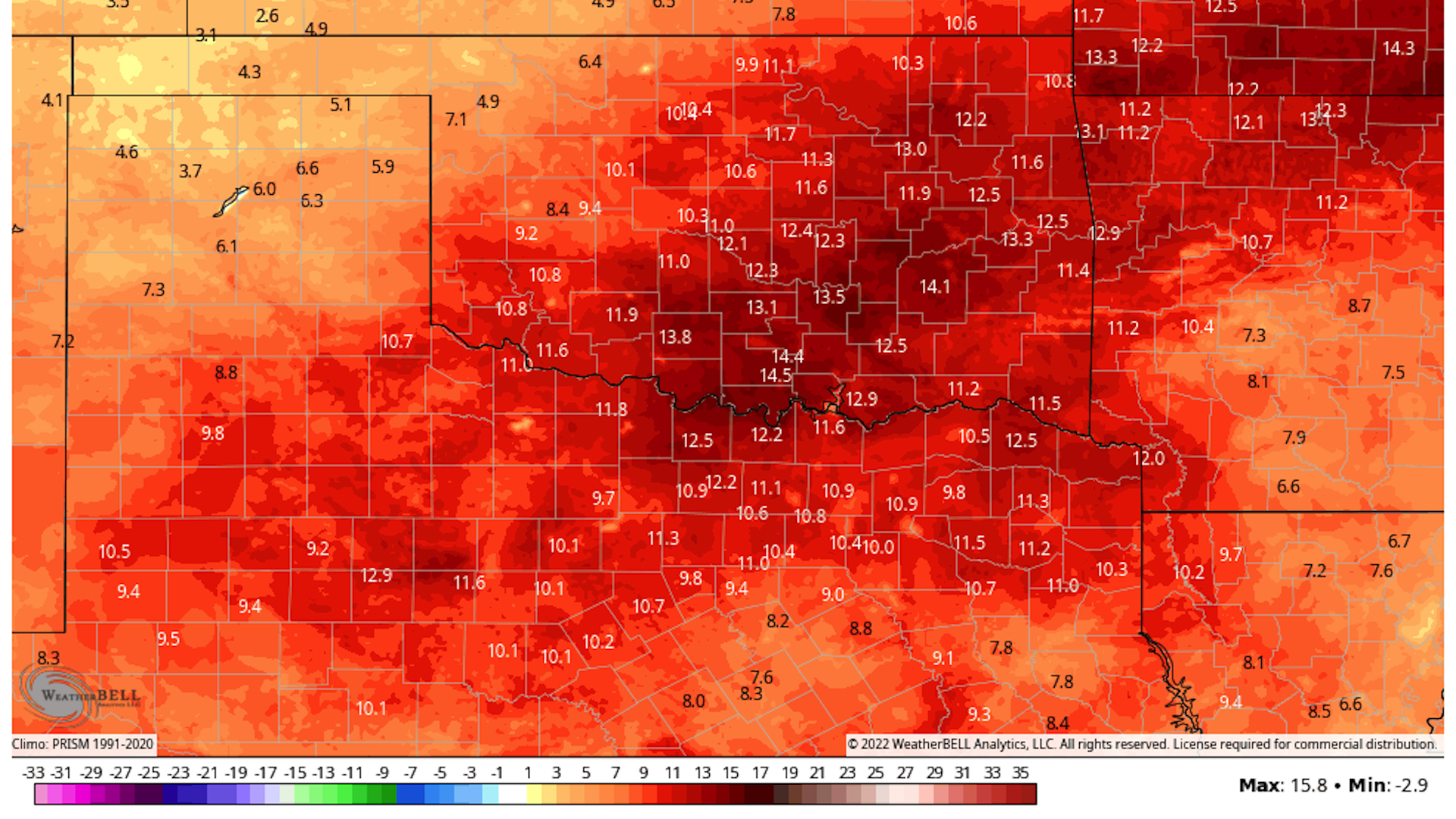
Driving the news: Heat warnings on Tuesday cover the entire state of Oklahoma and the vast majority of Texas, where the electrical grid will once again be tested.
The record-shattering heat plaguing the U.K. this week is wreaking havoc on local airports, as high temperatures damage runways that weren't built to withstand the sweltering conditions.
Why it matters: These airports' struggles are yet another example of infrastructure failing to keep up with our rapidly changing climate reality.
Plus, many European airports were in logistical shambles even before the mercury started rising, and heat-related issues stand to further muck up the works.
Driving the news: London Luton Airport and Brize Norton (a Royal Air Force base) reported runway issues as temperatures approached 100°F in parts of the U.K.
The details: Like many other U.K. airports, the fields mentioned above feature runways made of asphalt.
While generally cheaper and easier to maintain than concrete, asphalt is also more prone to dangerous softening in extreme heat. That's not usually a problem in the U.K. — but it is right now.
Runways themselves aren't the only issue. Other parts of the airports, like taxiways and gate areas, can also suffer heat damage.
Railways, too, are suffering in the high temperatures.
Yes, but: The issues at Luton and Brize Norton caused only minimal disruptions to civil and military aviation — though temperatures in the U.K. are expected to remain high, putting more airports at risk.
Heat has been a problem at U.S. airports too.
Vice President Kamala Harris' Air Force Two, for example, was delayed for nearly two hours at Chicago Midway last month due to temperature-related tarmac problems, per White House pool reporters.
The intrigue: Among the U.K. airports with asphalt runways? Farnborough, which is currently playing host to one of the aviation industry's most important trade shows.
No word yet if the heat's causing any issues as companies like Boeing and Airbus vie for sales of their latest and greatest jets.
A new trade group is advocating for early-stage companies seeking to commercialize technology for pulling CO2 from the atmosphere and making sure it doesn't return.
Why it matters: The Carbon Business Council's launch Tuesday signals the growing prominence of efforts to scale-up carbon removal as a tool against global warming.
Why it matters: The fact that we've arrived at this point — with deadly extreme heat virtually shutting down major industrialized nations, but without changing course to curb greenhouse gas emissions — is depressing and baffling to the scientists who have been warning about this moment for years.
The U.K. has likely endured its "warmest night," and its hottest day ever is forecast to follow on Tuesday as Europe's historic heat wave spreads north.
What's happening: Temperatures were above 25°C (77°F) in some parts of the U.K. overnight, per provisional Met Office data, as its first-ever Red warning for heat covers much of England. Temperatures could exceed 40°C (104°F) for the first time Tuesday. Southern Germany and eastern France were forecast to see similar temperatures.
Some 40 million Americans are under heat alerts due to "dangerous and intense," potentially record-breaking heat across the Plains and Mississippi Valley that's expected to expand into the Southeast this week.
The big picture: The National Weather Service issued a red flag warning for Texas, and there are heightened fire dangers in several states. Firefighters are already battling 89 large fires across 12 states. An excessive heat warning was in effect for all of Oklahoma for Tuesday, with highs of 110-112°F expected — 16°F above the state's average.
An unprecedented heat wave is underway in France and the U.K. that is likely to topple all-time national high temperature records and potentially kill several thousand people. The scorching heat is moving north into a more vulnerable region after tormenting Spain and Portugal.
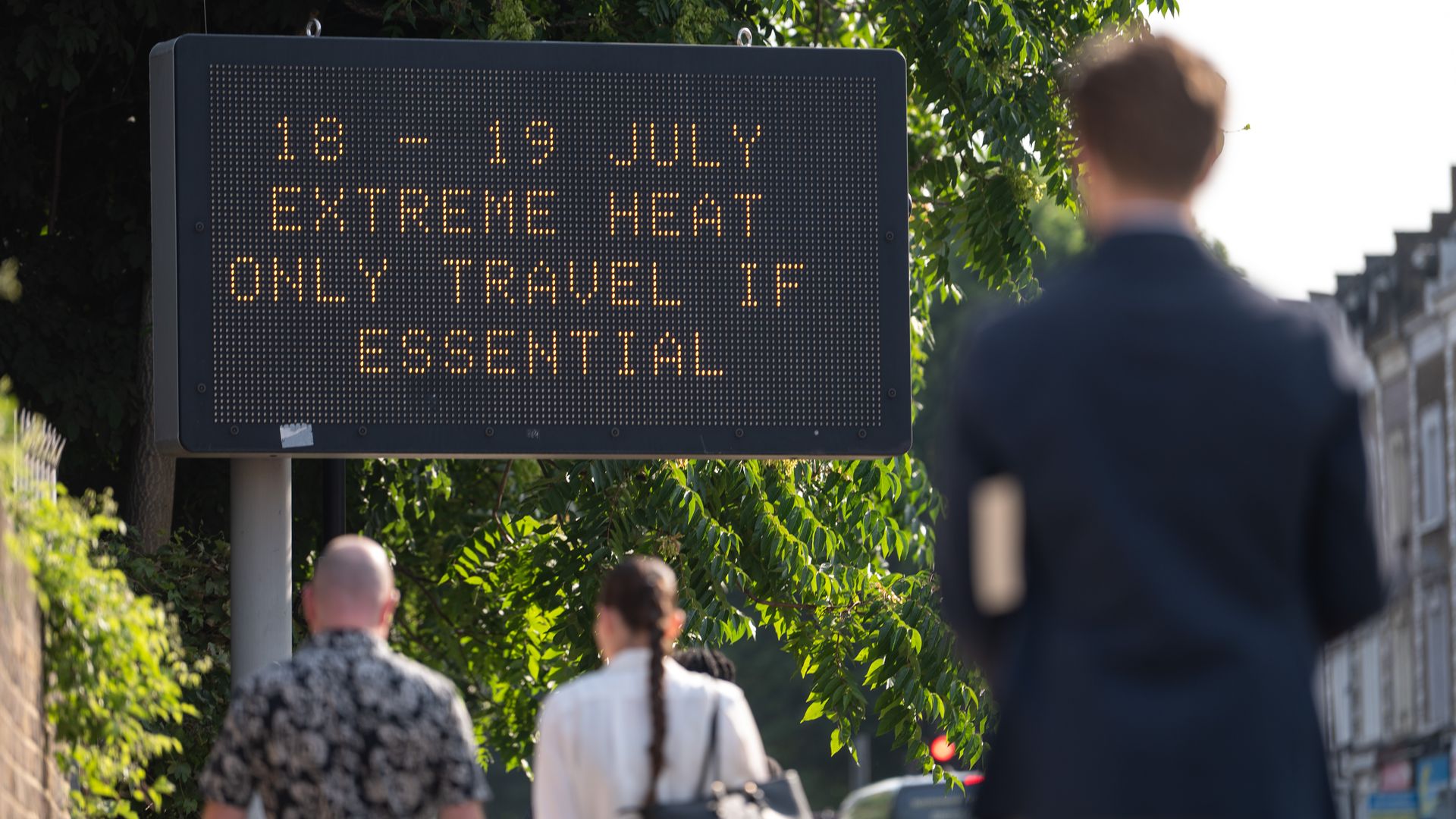
The manager of most of the United Kingdom's railway network warned passengers to not travel over Monday and Tuesday unless "absolutely necessary" because of a potentially record-breaking heat wave underway in France and the U.K.
Why it matters: Heat waves can have a brutal effect on infrastructure — like railways and tarmacs — not designed to withstand abnormally high temperatures, which can disrupt transportation for thousands of people when they should not be outside for a prolonged period of time.
U.K. Prime Minister Boris Johnson, who recently resigned from his post but is staying on until a replacement is chosen, has faced backlash for missing multiple emergency Cabinet meetings to discuss the country's dangerous heat wave.
Why it matters: The unprecedented heat wave is likely to set a new all-time national high temperature record, with the U.K. Met Office forecasting the country's first-ever occurrence of a temperature of 104°F (40°C) during the event, Axios' Andrew Freedman writes.
Wildfires are spreading across Europe and forcing more people to flee as a deadly heat wave envelopes much of the continent that officials warn is being aggravated by climate change.
The big picture: Firefighters are tackling blazes in searing heat in France, Spain, Portugal, Greece, Croatia and Slovenia, as well as Morocco's northern mountains — where a forest fire killed at least one person and caused over 1,000 families to evacuate.