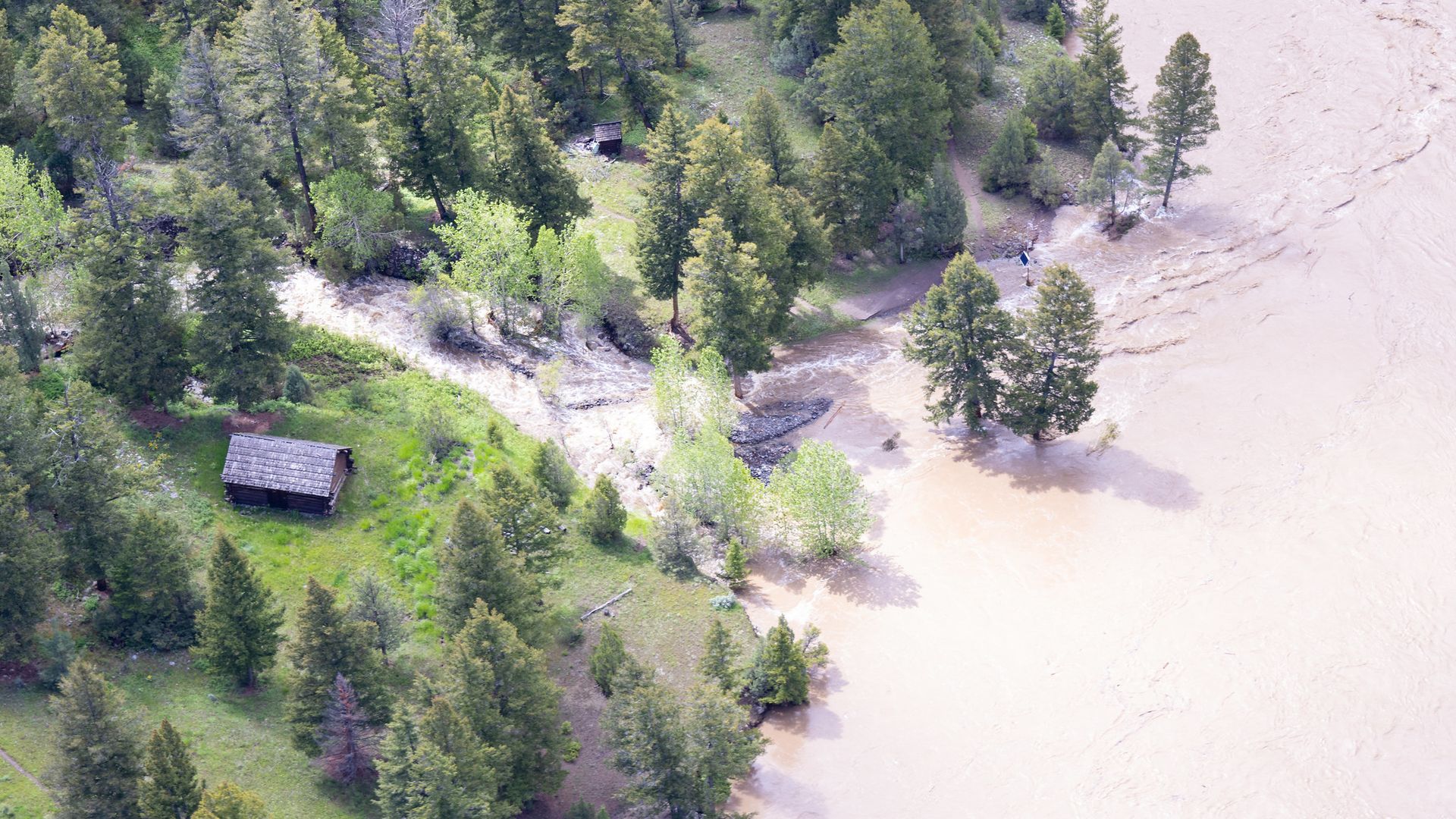
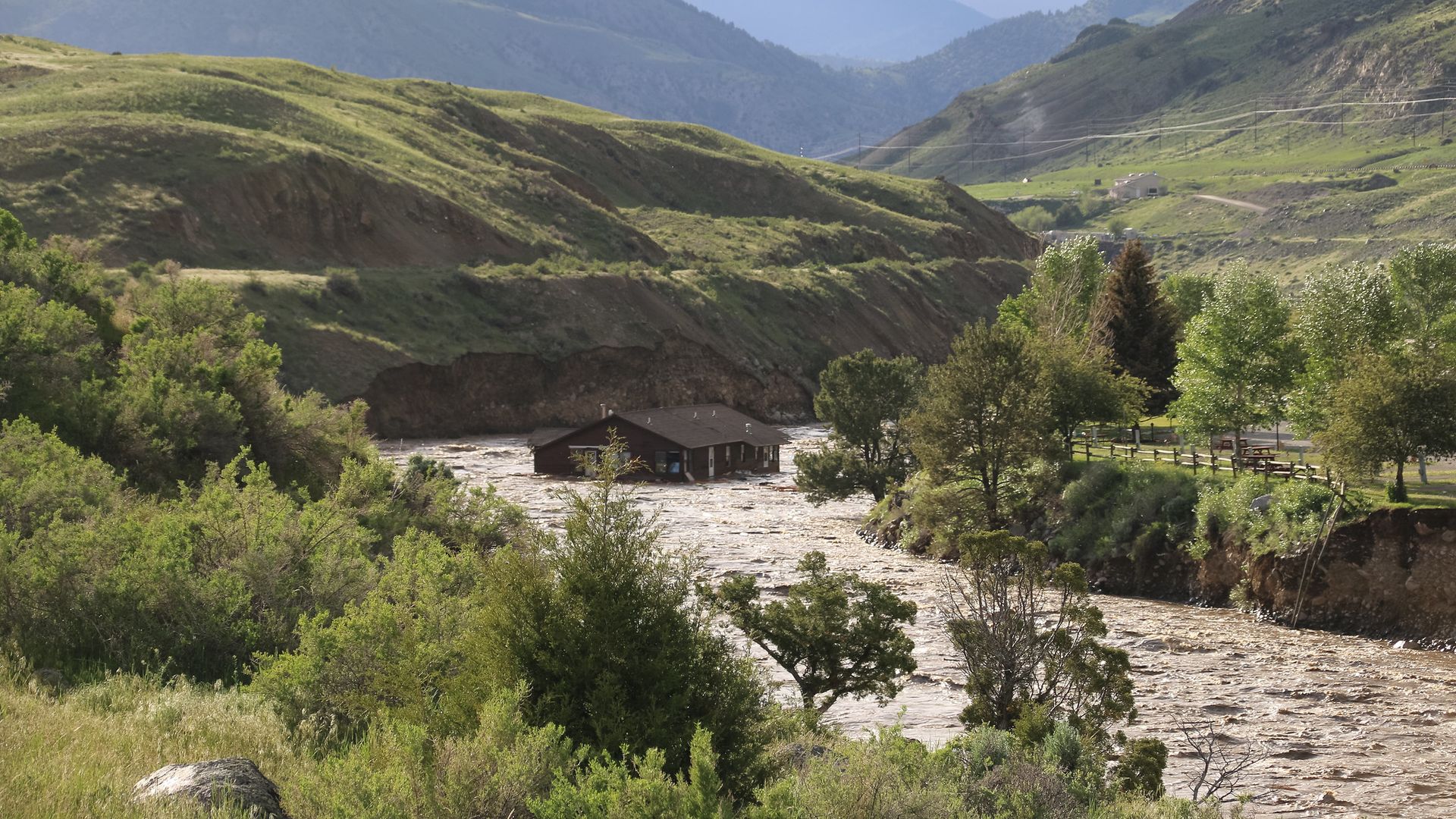
Why it matters: The catastrophic flood — which damaged roads and bridges at Yellowstone — has a 0.2% (or 1-in-500) chance of happening in any given year, the USGS said in a news release.
Yellowstone National Park has shared new photos and videos of the damage caused by recent massive flooding in the area.
Driving the news: Dangerous flooding — driven by rainfall and snowmelt — left bridges and roads washed out at Yellowstone. The park is still closed, but a "limited reopening" is "highly possible" for next week, the National Park Service said Friday.
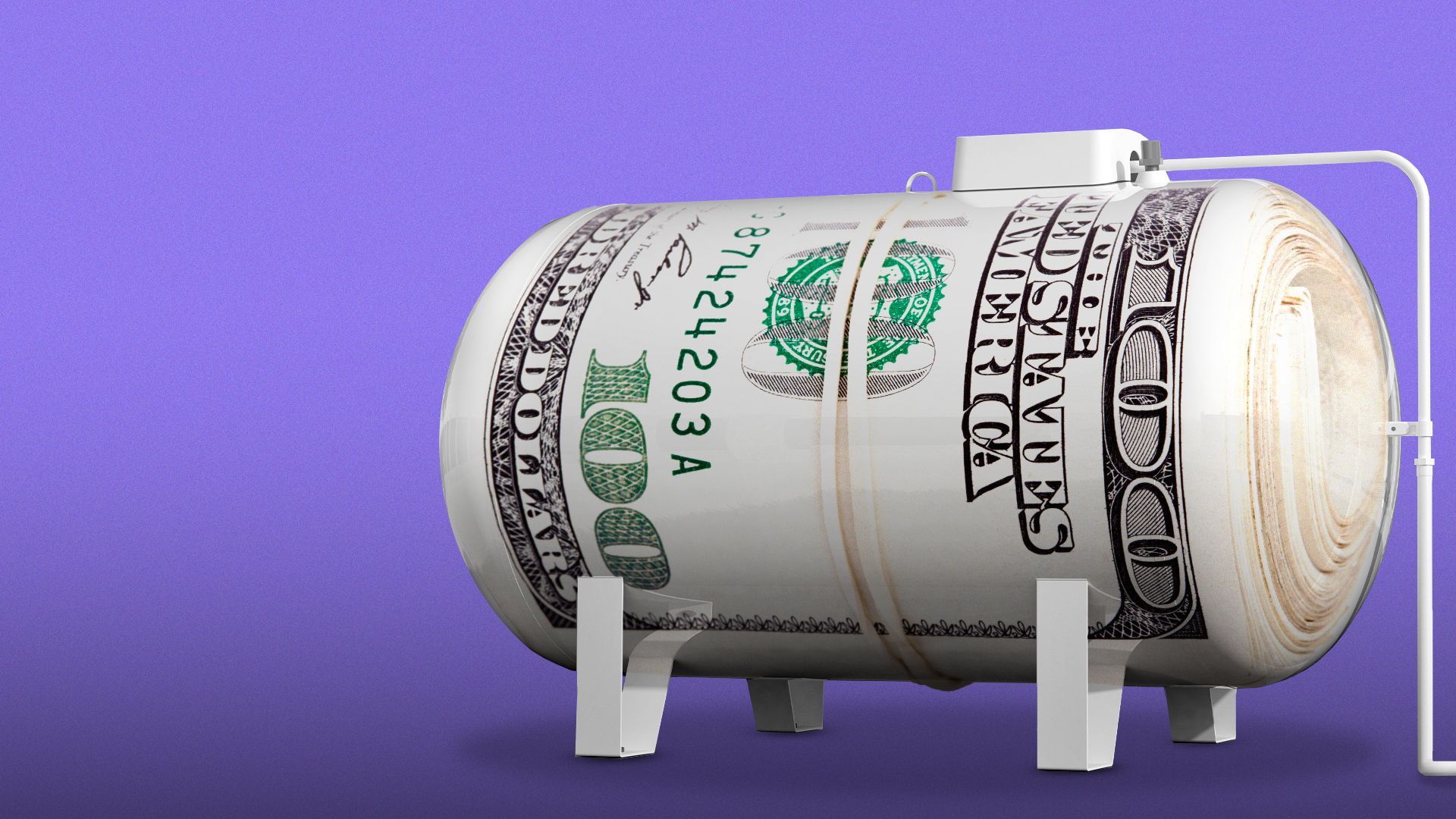
Targa Resources said that it will pay $3.55 billion in cash to buy Lucid Energy Group, a natural gas processor in the Permian Basin, from private equity firm Riverstone Holdings and Goldman Sachs.
Why it matters: U.S. shale, particularly in the highly productive Permian, is one of the merger market's only bright spots, with strategic buyers buoyed by climbing commodity prices and strengthened balance sheets.
Among the leaders participating in a virtual climate and energy meeting hosted by the White House Friday morning is a man who has become the voice of climate activists worldwide, UN Secretary-General António Guterres.
Driving the news: Guterres, who will deliver virtual remarks to the Major Economies Forum (MEF) on Energy and Climate, will portray further investments in fossil fuels as "a danger" and implore leaders to swiftly change course.
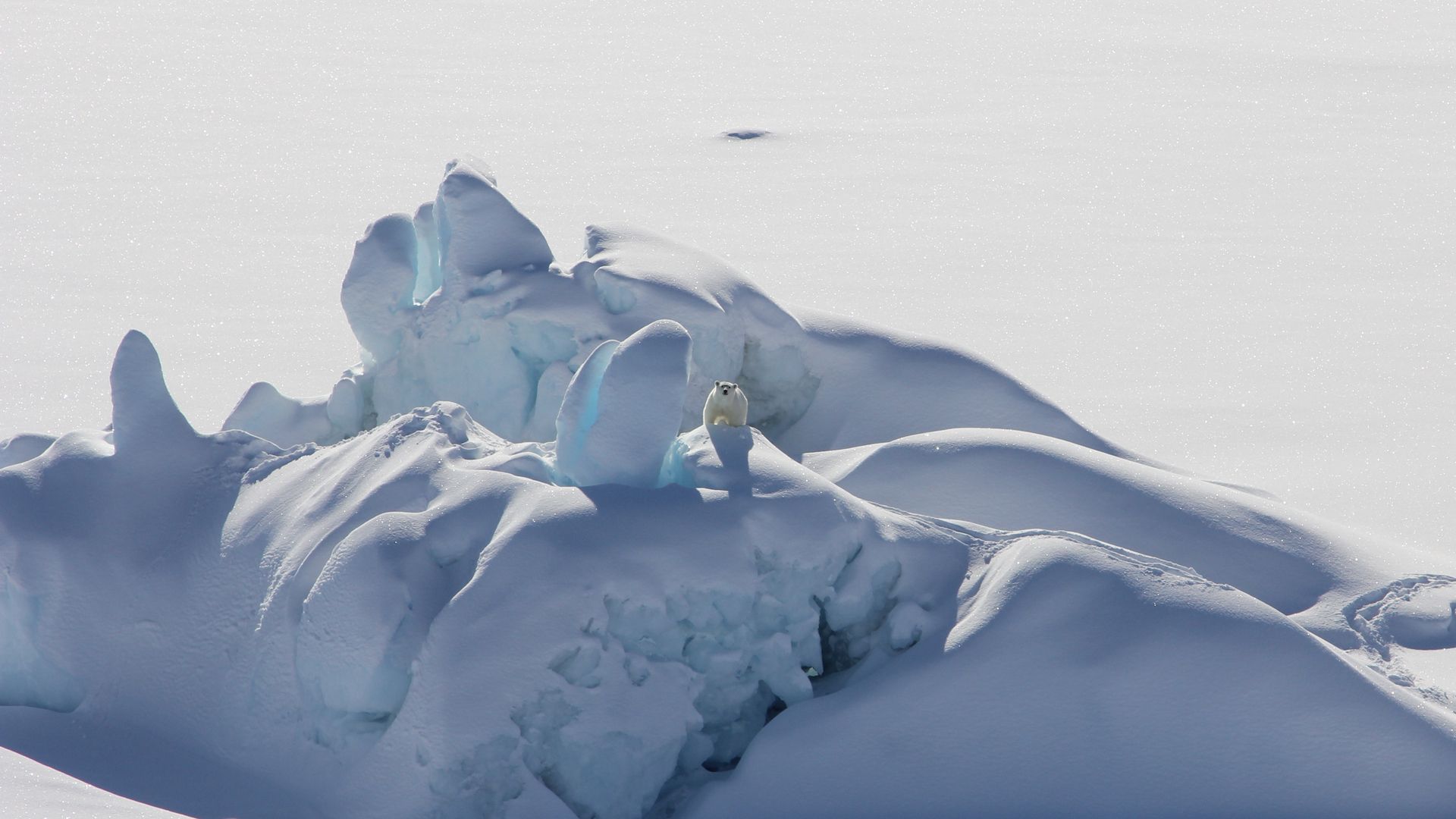
Scientists have identified a previously unknown group of polar bears in southeast Greenland living in an environment with relatively little sea ice, potentially pointing toward a way to preserve some of the iconic species as Arctic sea ice melts.
Why it matters: The research suggests polar bears can live in a wider variety of conditions than scientists previously thought — and, some scientists say, raises the possibility that some groups of polar bears in select locations could be more resistant to global warming's sweeping changes.
Driving the news: For some models, the price hikes are the fourth of the year, Reuters reported Thursday citing information from brokerage Credit Suisse.
Tesla officials, including CEO Elon Musk, spoke of material cost and price increases in April during the company's quarterly earnings call with analysts.
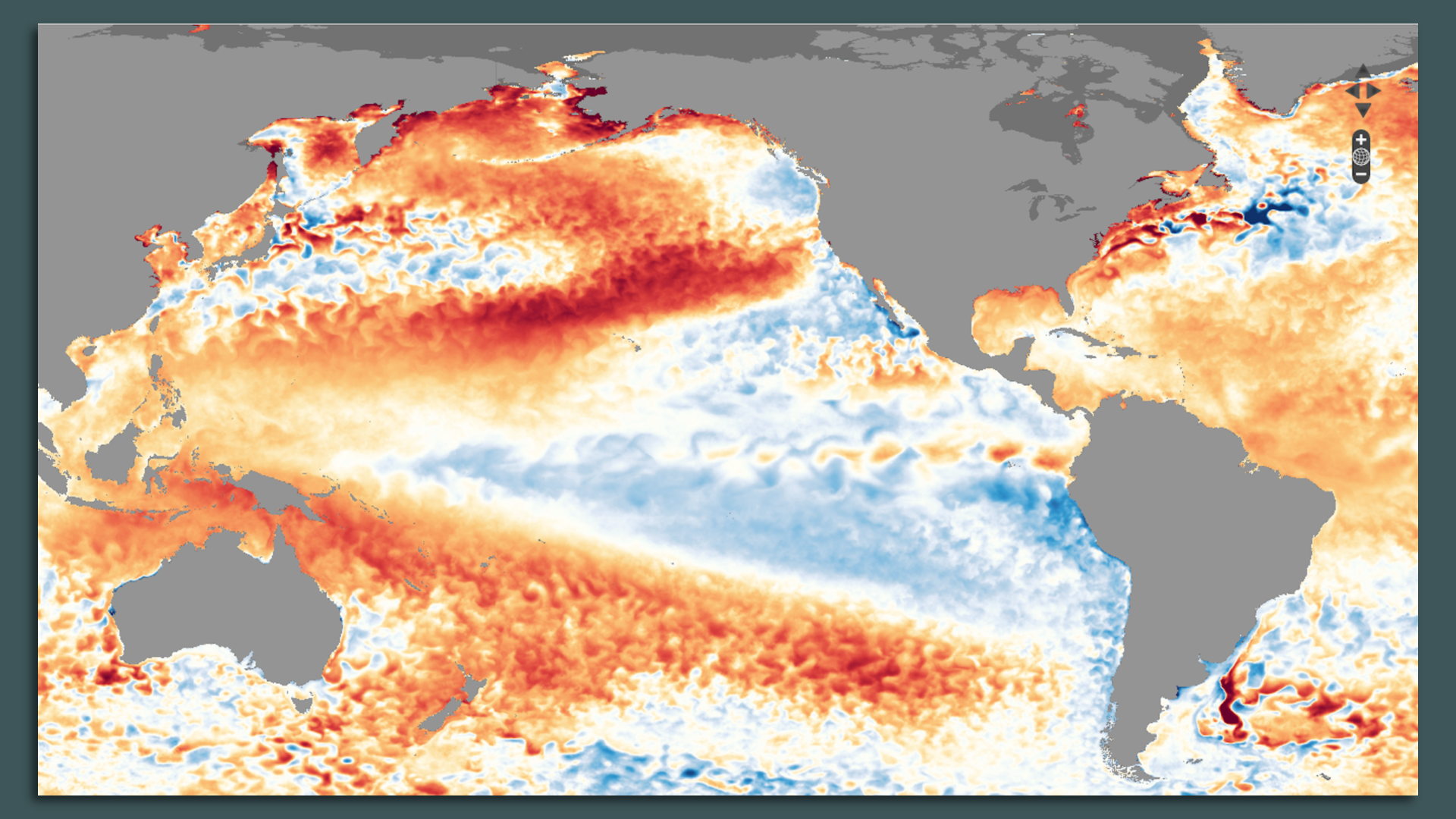
An ongoing La Niña event in the tropical Pacific Ocean is at near record intensity for this time of year and could extend its streak into a rare third fall and winter season, according to forecasters at the National Oceanic and Atmospheric Administration (NOAA).
Why it matters: La Niña, which is characterized by cooler than average sea surface temperatures in the equatorial Pacific Ocean, has repercussions for the Atlantic hurricane season.
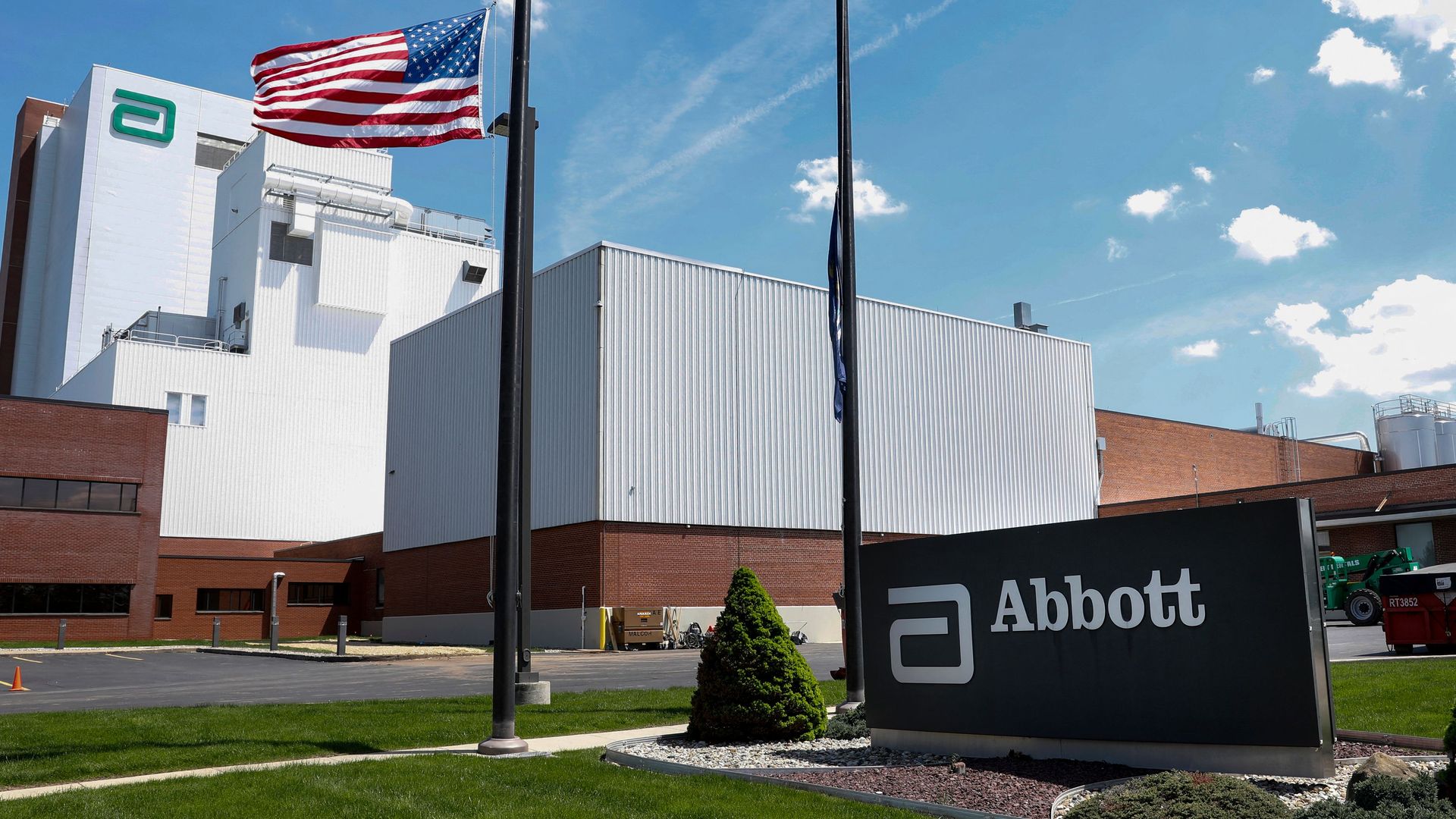
Baby formula manufacturer Abbott announced late Wednesday it has paused production at its plant in Sturgis, Michigan, due to a severe storm system that caused flooding.
Why it matters: The U.S. has faced a baby formula shortage because of supply chain issues compounded by the earlier closure of Abbott's Sturgis facility after an FDA product recall. The plant resumed production of EleCare and other specialty and metabolic formulas on June 4.
The California Public Utilities Commission announced plans Wednesday to fine three state utility companies more than $22 million in total for the "poor execution" of power shutoffs aimed at preventing wildfires in 2020.
Driving the news: The CPUC proposed fining Pacific Gas and Electric Company (PG&E) $12 million, Southern California Edison $10 million and San Diego Gas & Electric $24,000 and ordered the companies to take corrective action, per a statement from the regulator.
Ford is recalling 2.9 million vehicles due to a rollaway risk, per AP.
Why it matters: The National Highway Traffic Safety Administration has received multiple reports of property damage and injuries potentially related to the problem.
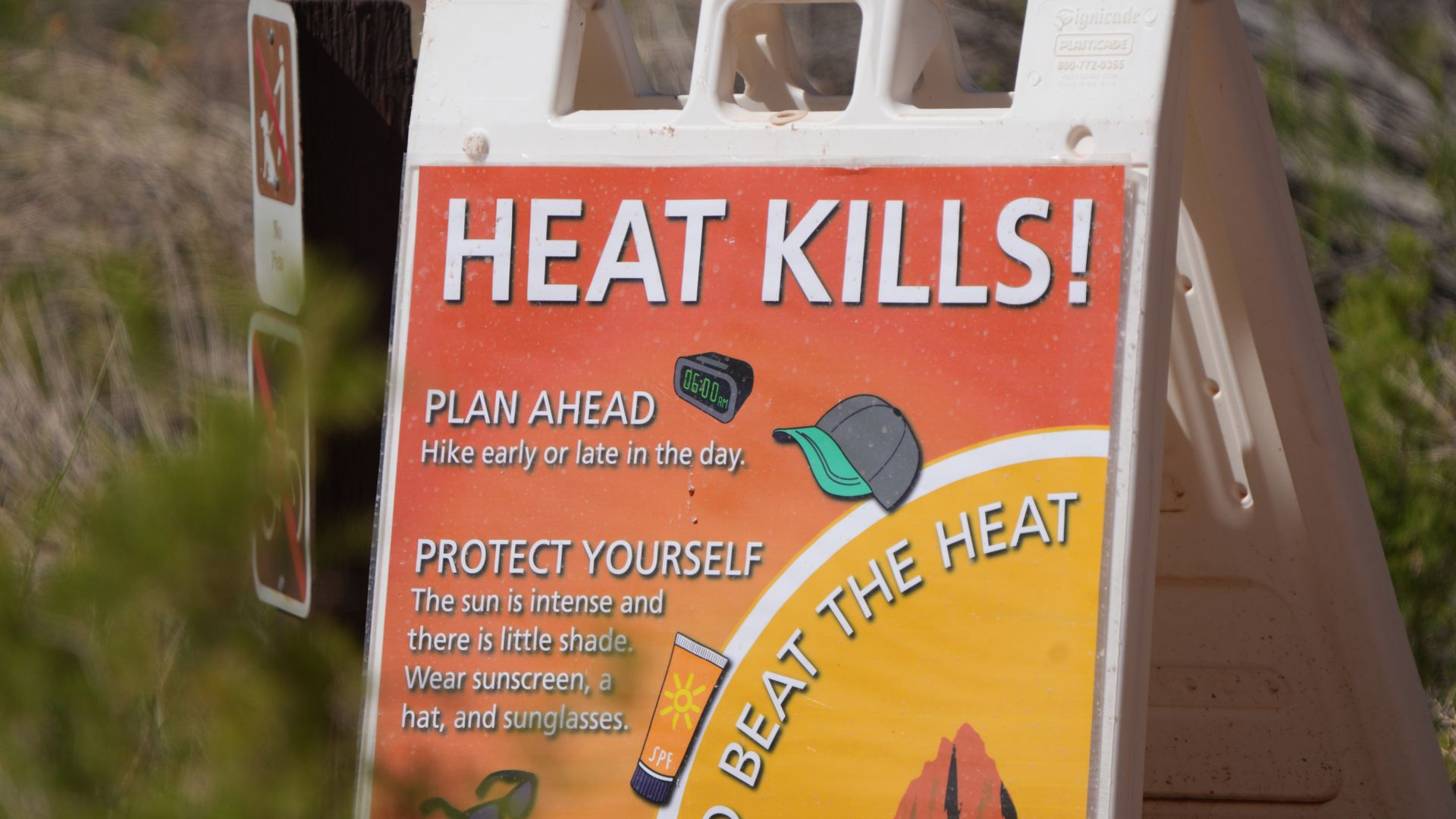
More than 100 million people are under heat warnings and advisories Wednesday, as an "extensive" heat wave is expected to bring above-normal to record-breaking temperatures in many places from Michigan to northern Florida, according to the National Weather Service (NWS).
The big picture: The heat wave is expected bring with it thunderstorms along its periphery, making "several tornadoes, large to very large hail, and damaging winds all appear likely" across parts of the Upper Midwest into Upper Michigan, according to the Storm Prediction Center.