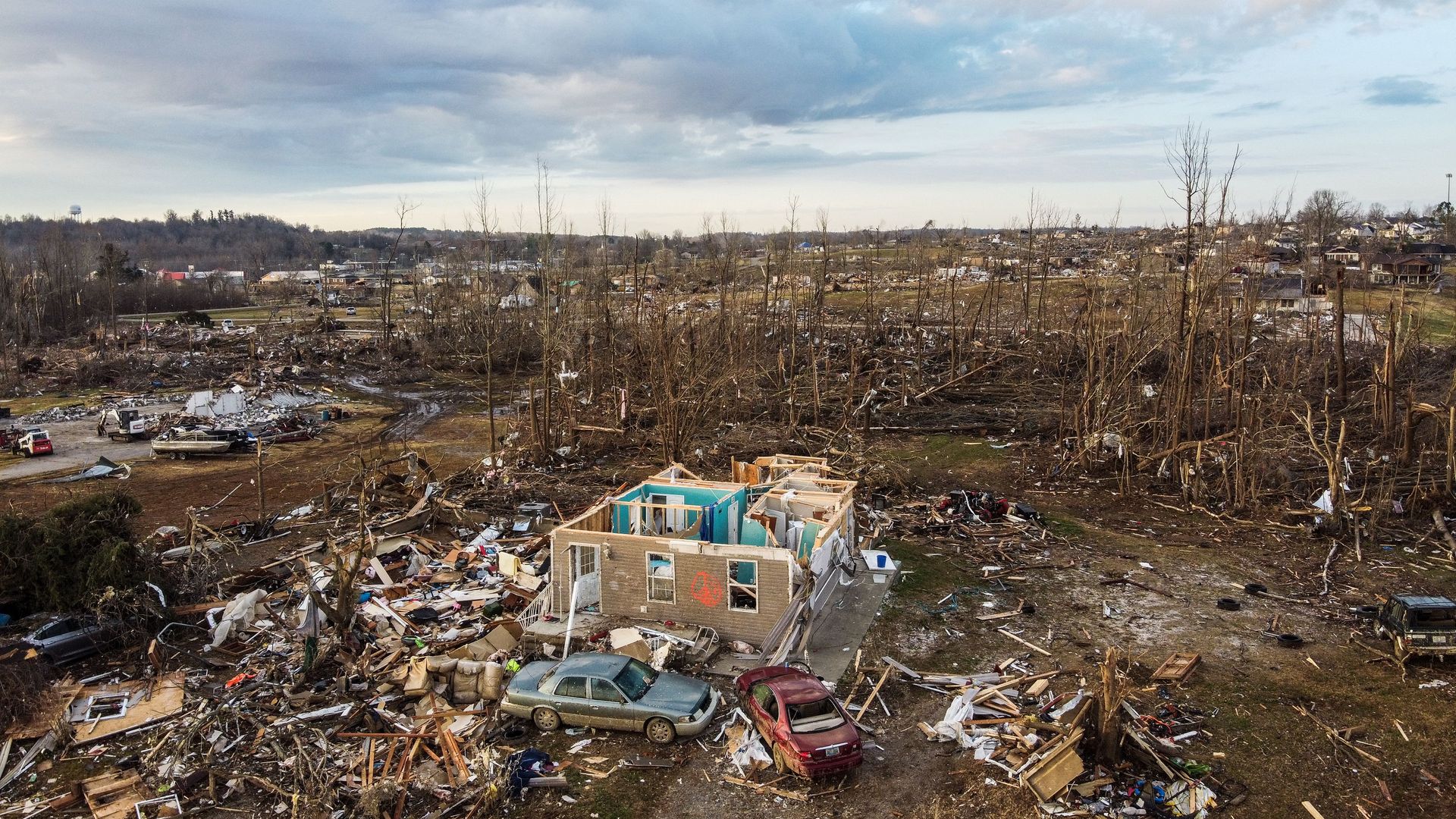
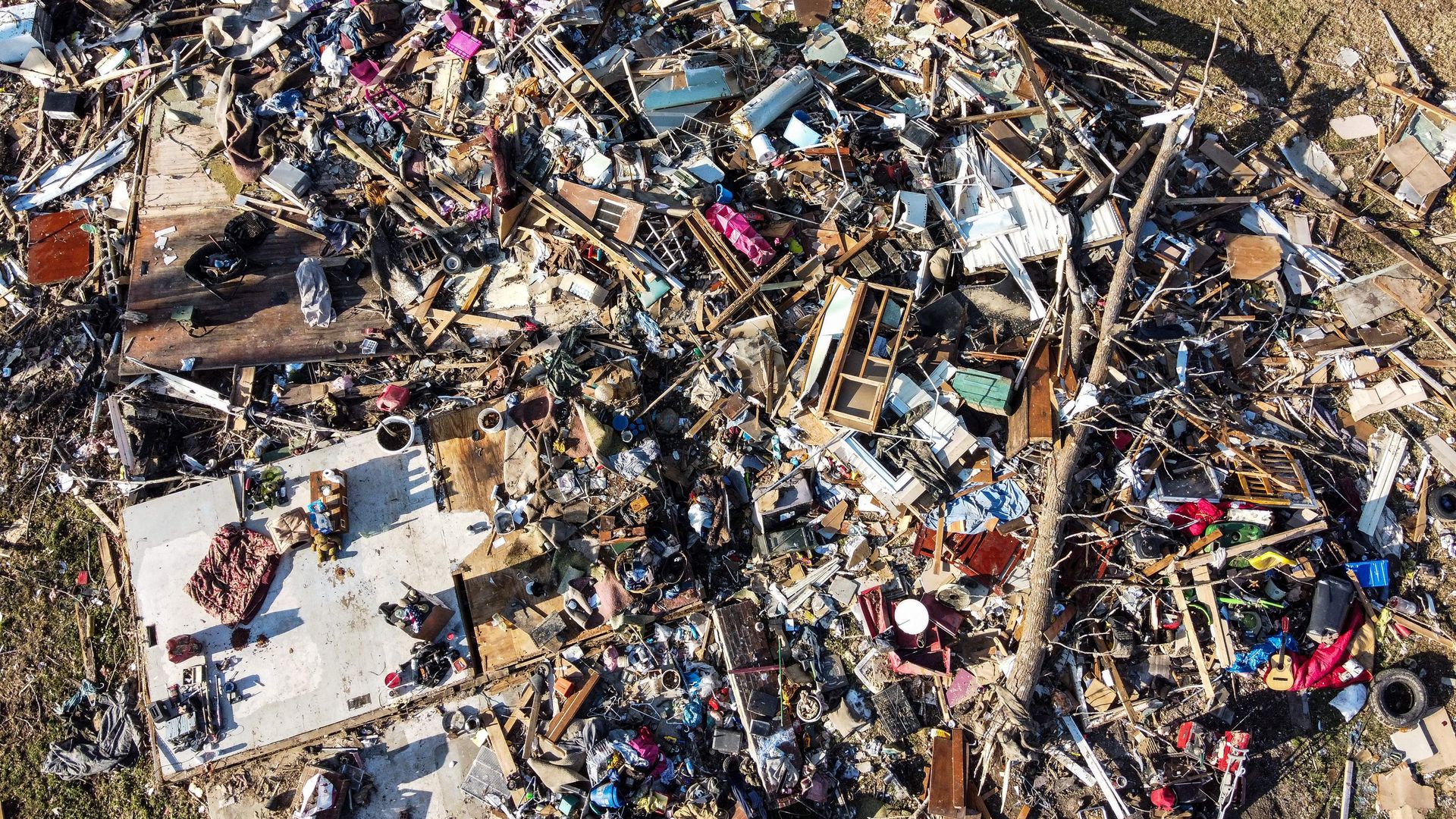
At least 39 tornadoes touched down in more than six states Friday into Saturday, as a powerful storm system moved across the Central and southern U.S., the National Weather Service has concluded. Those numbers will fluctuate, and are likely to increase, in coming days, the agency cautioned.
The big picture: The outbreak left at least 88 dead, dozens injured and caused billions in damage. NWS survey teams continue to assess damage to assign intensity ratings to individual tornadoes, and several have turned out to be on the high end of the Enhanced Fujita Scale.
President Biden on Wednesday visited tornado-ravaged Kentucky, calling what affected families in hard-hit Mayfield and other areas are going through "a God-awful mess."
The big picture: During his visit, Biden amended the federal disaster declaration he previously approved, making federal funds for debris removal and emergency protective measures, including direct federal assistance, available to cover 100% of the total "eligible costs" for for 30 days, the White House said.
The National Weather Service and emergency officials recommend that you be vigilant and make plans should you need to act quickly and seek shelter during tornados.
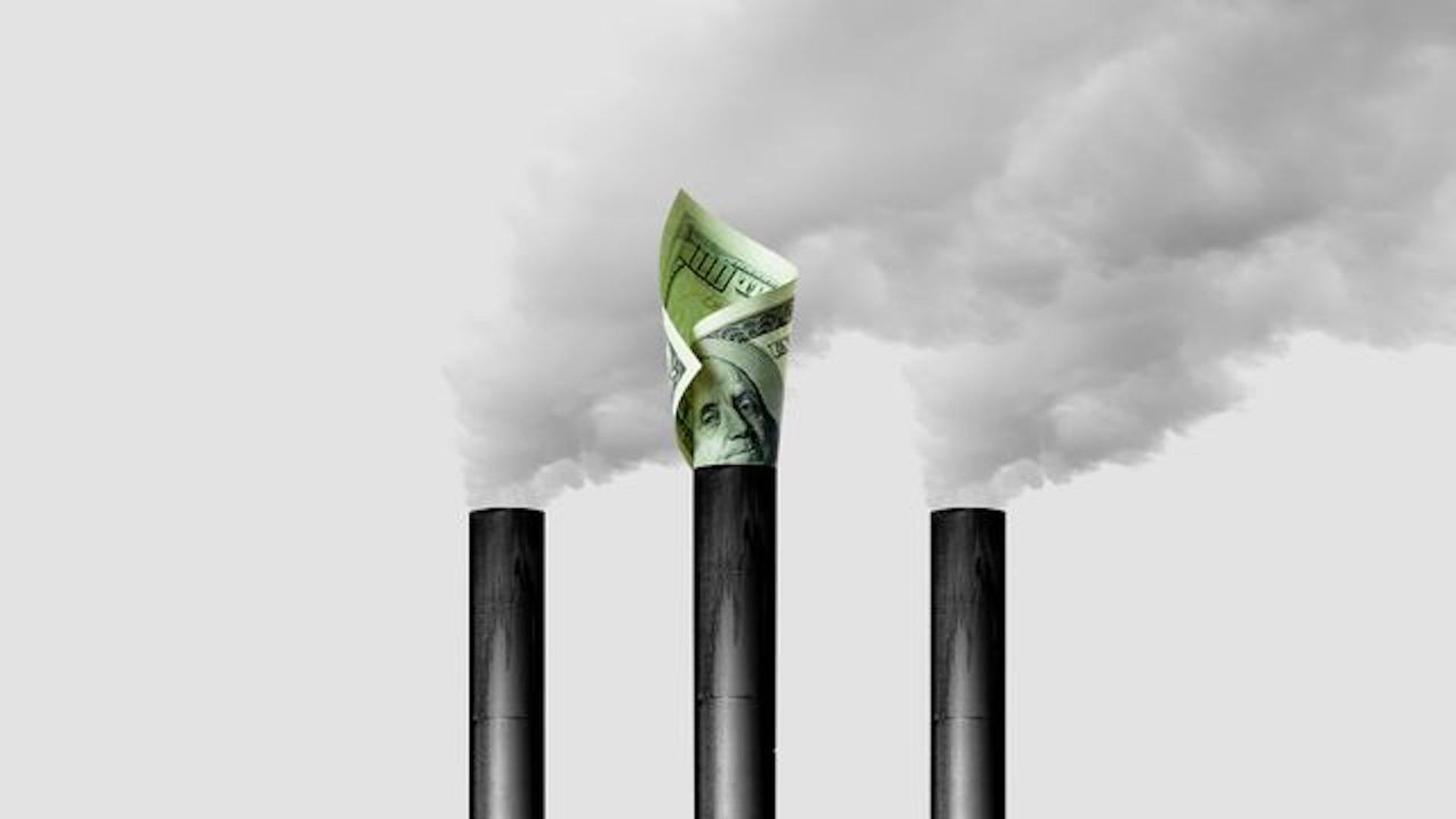
A carbon capture and storage (CCS) startup billing itself as the industry's first "vertically integrated super developer" has raised $30 million in Series A funding.
Driving the news: Carbon America this morning announced the funding from investors including Canada Pension Plan Investment Board, ArcTern Ventures, Energy Impact Partners and others.
The Biden administration and allied climate activists are hoping to transform today's relatively high energy costs from a political risk into an asset as they push for passage of sweeping climate legislation.
Driving the news: Axios got the first look at a new ad buy premiering in the D.C. media market today from the group Evergreen Action.
Global clean energy investment hit record levels in 2020 despite the pandemic, but the overall rise masked a decline in developing countries, new data shows.
Driving the news: The research firm BloombergNEF, in a summary, said investors "retreated hastily from less developed markets to refocus on wealthier countries as the Covid-19 pandemic spread."
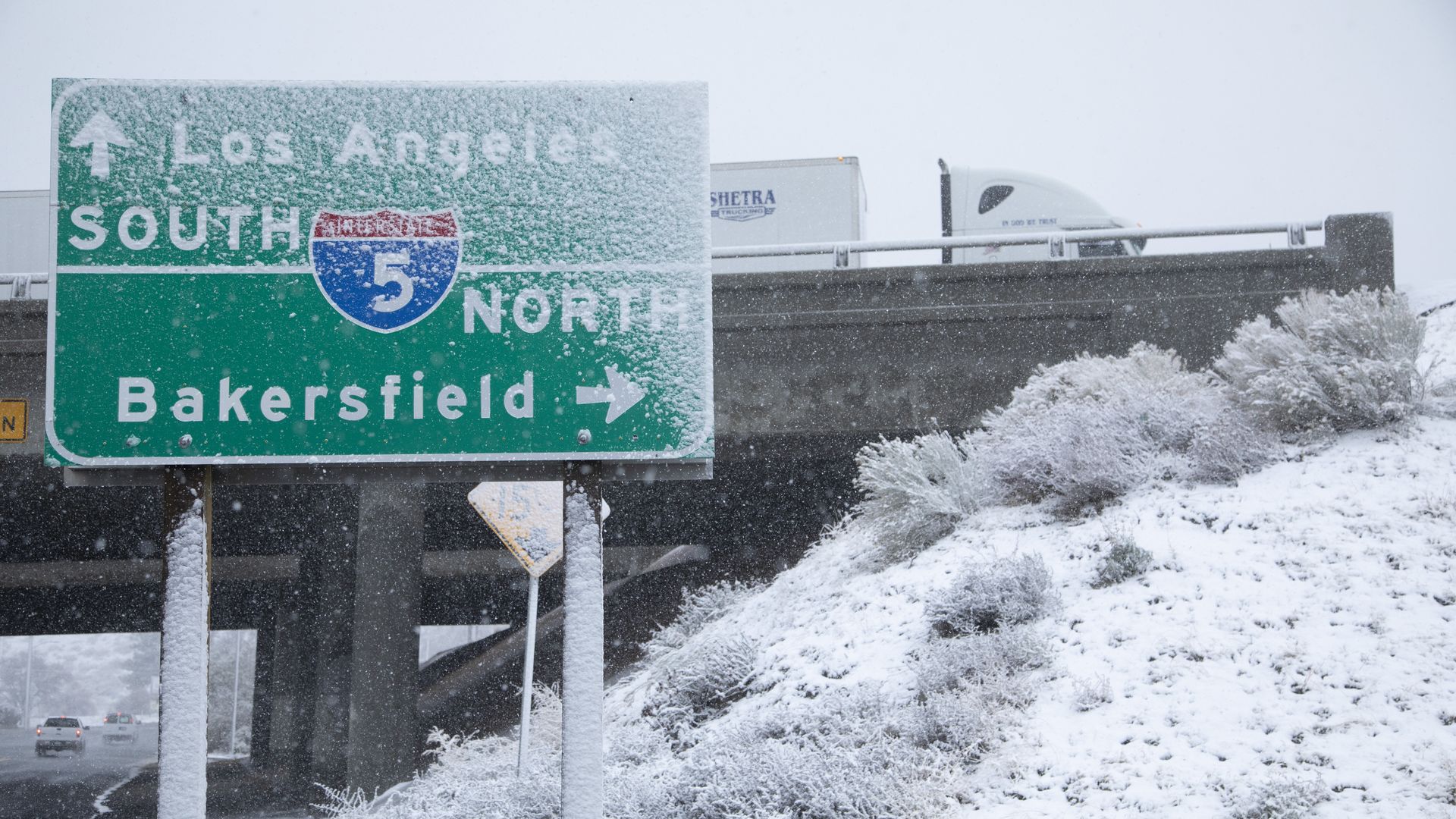
Several U.S. states were under threat from more extreme weather overnight, as heavy rains in Southern California caused flooding and mudslides — triggering mandatory evacuation orders and sparking rescue operations Tuesday.
Threat level: A "rapidly strengthening storm system" was set to generate high winds from the Southwest to the Upper Midwest, with gusts "up to and in excess of 75 mph in some areas," per the National Weather Service. The Southern and Central Plains face "abnormally high temperatures" and the threat of wildfires, the NWS said.
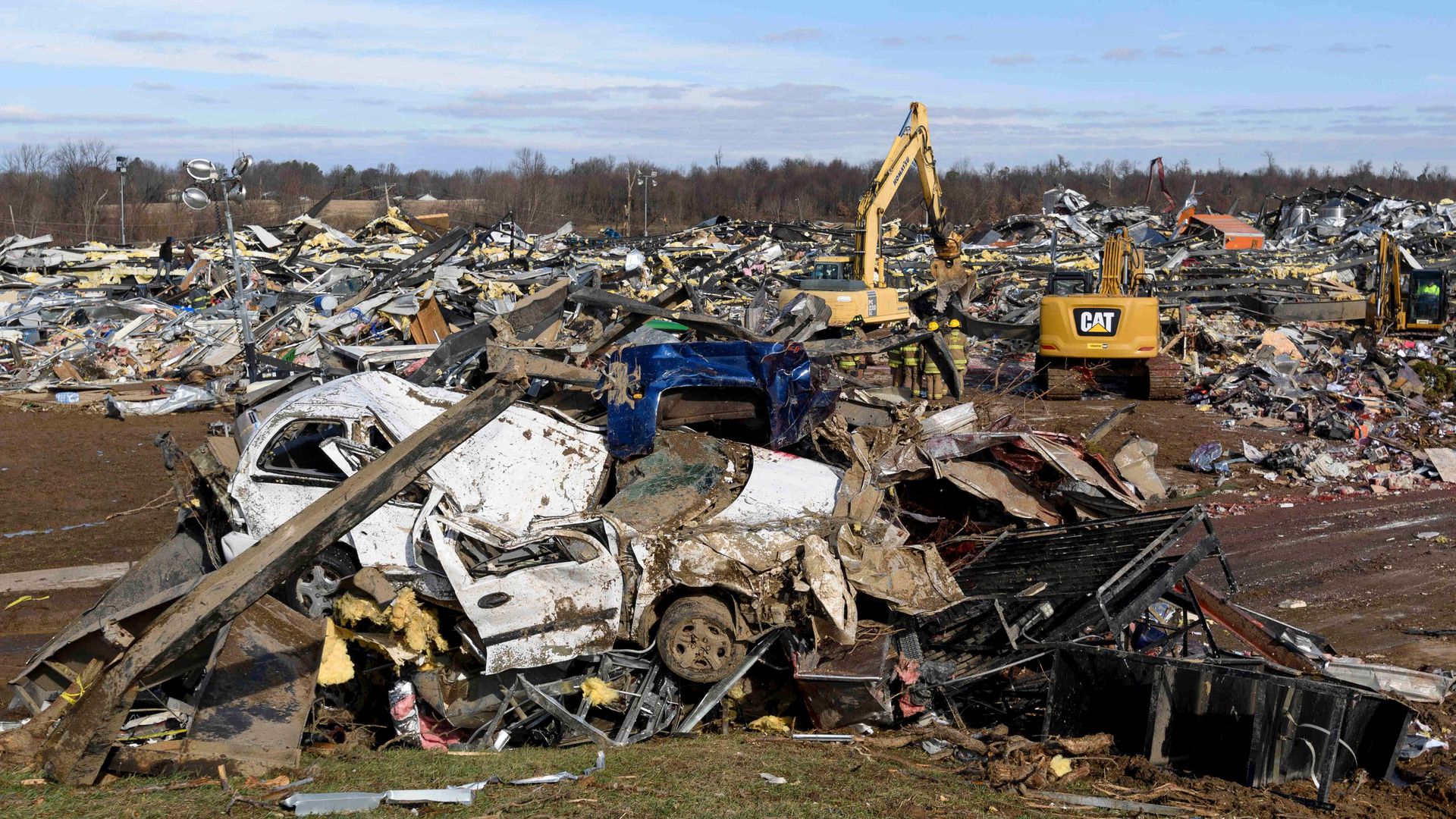
The Kentucky Division of Occupational Safety and Health Compliance will investigate Mayfield Consumer Products after tornados ravaged Mayfield, Ky., and killed at least eight of its factory workers over the weekend, Gov. Andy Beshear (D) said Tuesday.
Why it matters: An investigation is launched whenever a worker dies on the job, but multiple employees have told news outlets they were warned they'd be fired if they left their shifts early as the tornado approached.
The latest: President Biden on Monday night declared a major disaster in Tennessee and issued an emergency declaration in Illinois, along with orders for federal assistance to support recovery efforts in the states, one day after declaring a major disaster in Kentucky.
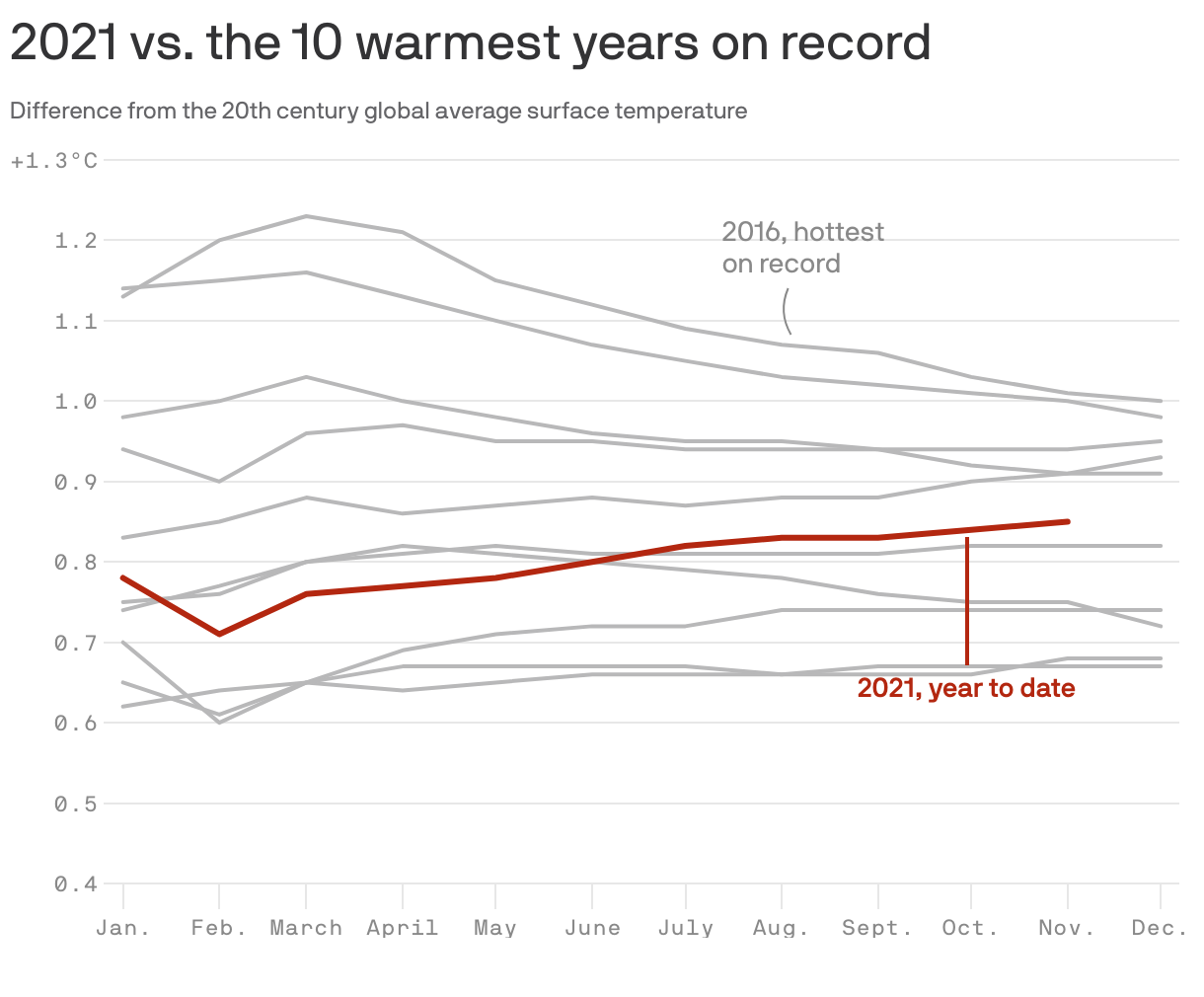
This week is bringing several fresh signals of a warming planet and the deepening perils that come alongside higher temperatures.
1. This year is a lock (at least 99% chance) to rank among the 10 hottest in temperature records that date back to 1880, the National Oceanic and Atmospheric Administration (NOAA) said.
The Amazon Climate Pledge Fund announced investments in two new companies on Tuesday, both as Series A funding rounds made alongside other investors.
Driving the news: The larger Series A round totals just under $20 million for Brooklyn-based Amogy, a company that aims to decarbonize transportation, starting with marine shipping.
A groundbreaking report finds that businesses in the U.S. could lose more than 3.1 million days of operation next year due to increasing flood risks from human-caused global warming. This total may grow to 4 million days by 2051, the report predicts, warning of ripple effects throughout local economies.
The big picture: Previous reports had looked at residential and critical infrastructure exposure. This is the first detailed report examining commercial real estate's increasing vulnerability.
The International Energy Agency said that rising COVID cases are likely to "temporarily slow, but not upend" the global oil demand recovery.
Driving the news: The agency's closely watched monthly analysis this morning slightly cut demand growth estimates for this year and 2022, but overall said:














/2021/12/14/1639490143956.gif?w=3840)