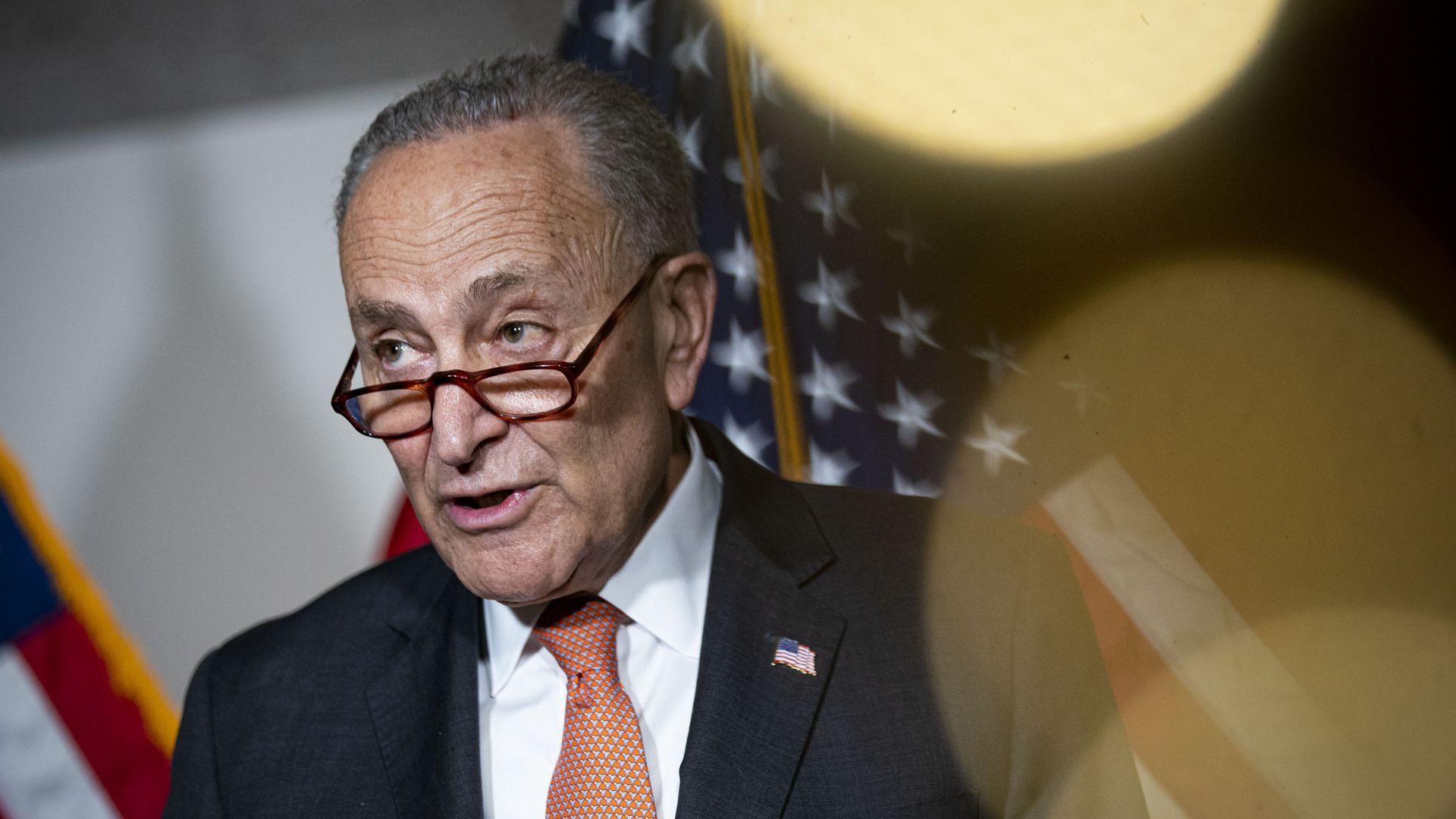
Senate Majority Leader Chuck Schumer (D-N.Y.) plans to formally trigger the budget reconciliation process on Wednesday, setting Democrats up to ram the White House's American Jobs and Family Plans through the Senate via a simple majority vote in July.
Why it matters: Announcing this strategy now could be dangerous to the group of 20 bipartisan lawmakers trying to hash out a deal on the "hard" infrastructure portion of President Biden's package.
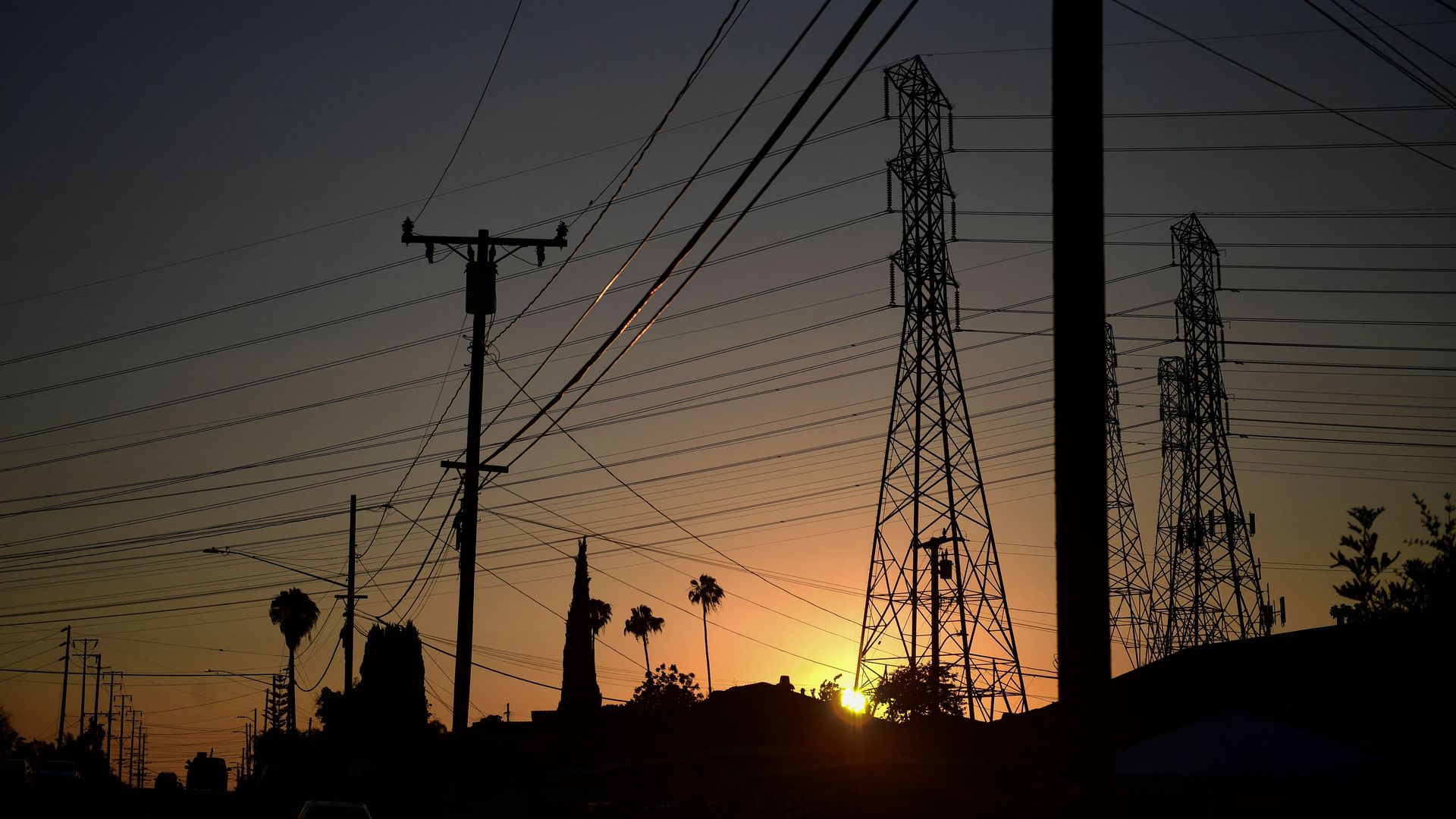
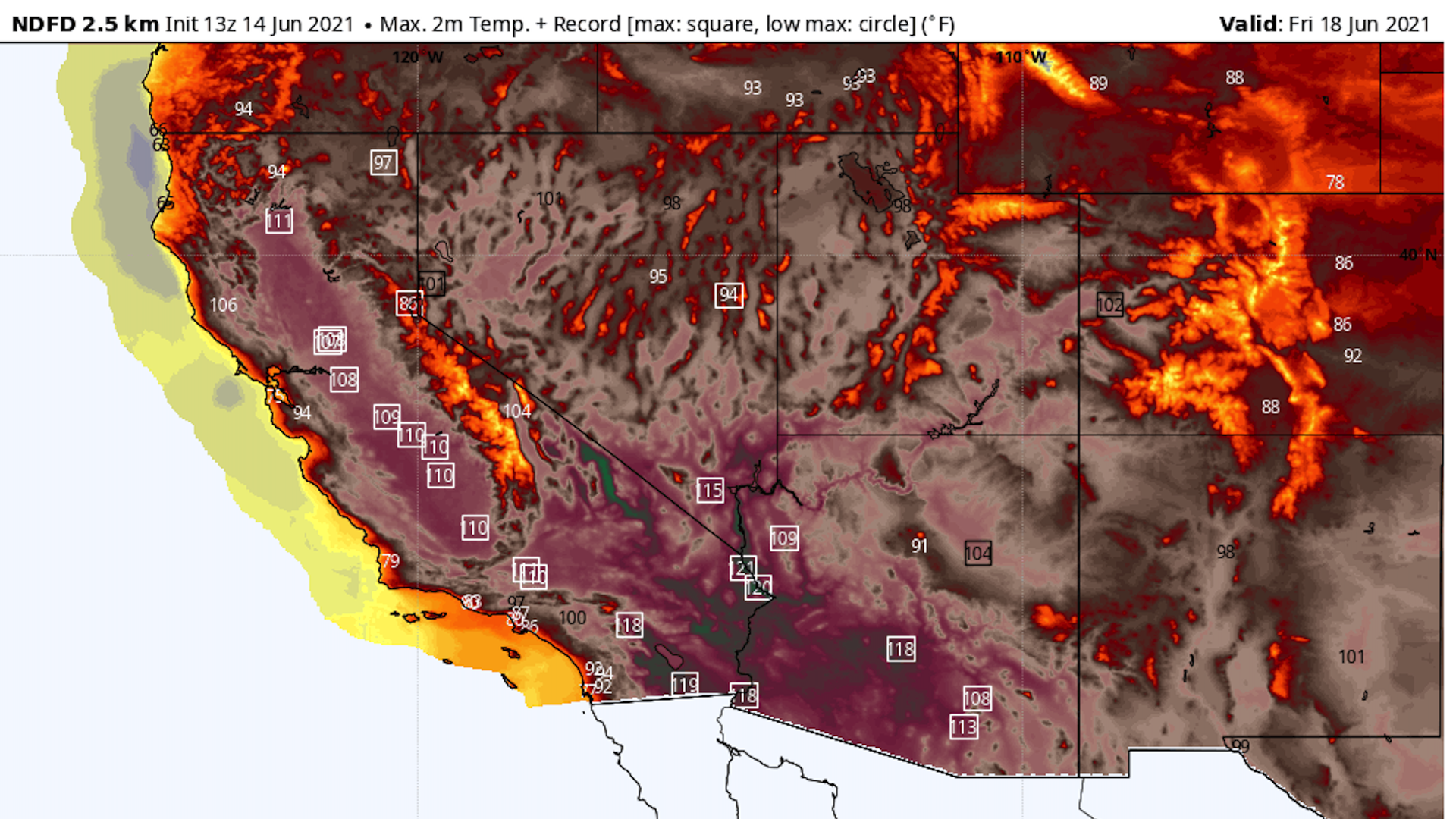
A dangerous and widespread mid-June heat wave is bringing blowtorch-like heat, skyrocketing power demand, and “critical” wildfire danger to much of the West Tuesday through this weekend.
Why it matters: The heat is building in a region that is experiencing a record drought, leading to dangerous fire weather conditions, straining electrical grids, and causing water supplies to dwindle further. The heat itself may prove deadly.
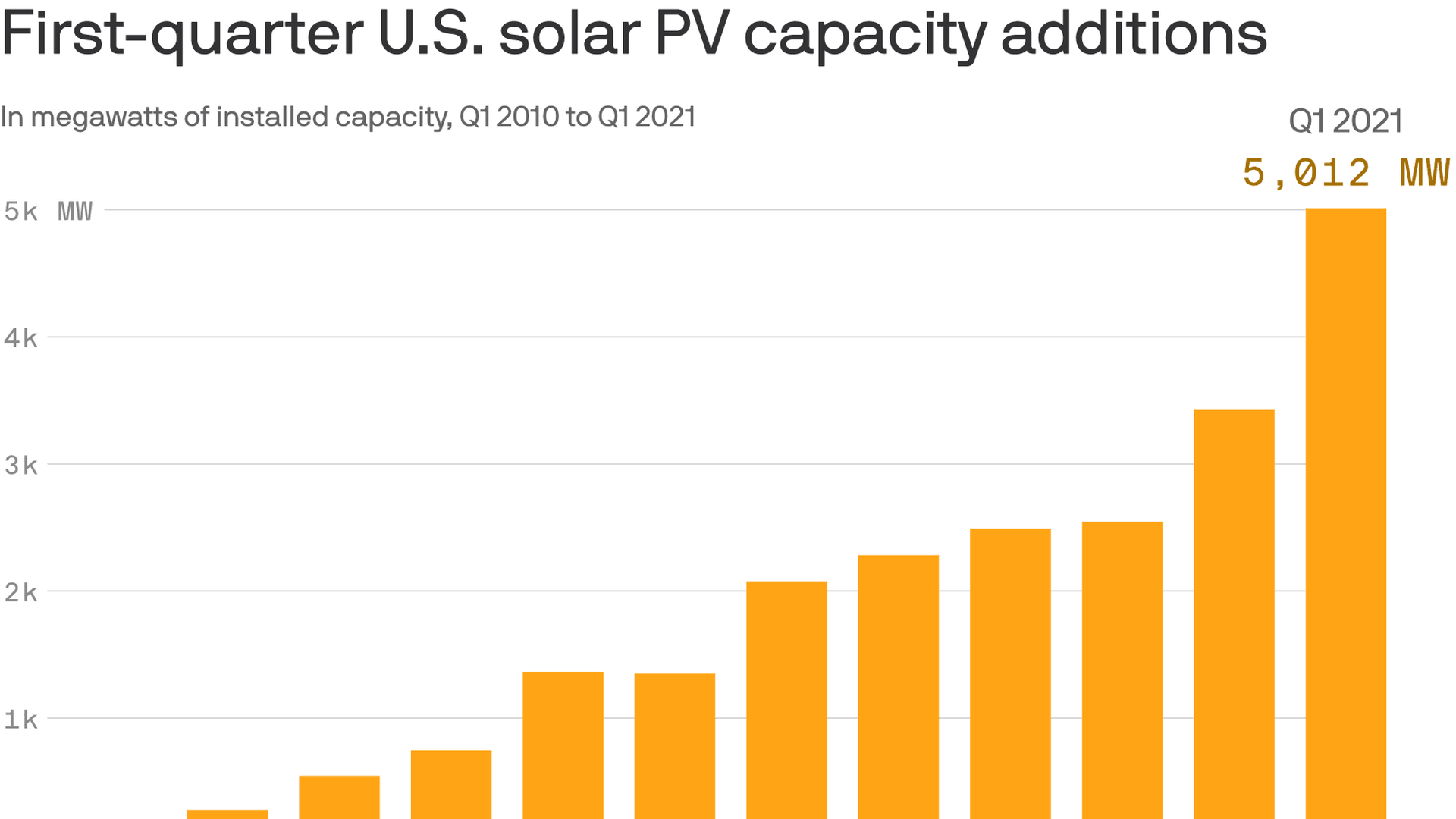
New industry data shows the first three months of 2021 saw the addition of over 5 gigawatts of new U.S. solar power generating capacity, the largest first quarter ever.
Why it matters: It's the latest sign of the sector's expansion. The analysis projects that annual solar growth will set fresh records this year through 2024 when current tax incentives fully phase out.
A new study finds a strong chance that climate change helped trigger the recent catastrophe that hit France's wine industry.
Driving the news: An extraordinary cold snap that gripped France in early April, just after a record-warm early spring, devastated grapes and other fruit crops.
With financial regulators marching toward rulemaking on the disclosure of risks associated with climate change, scientists have identified some ways new requirements could fall short.
Why it matters: Right now, large institutional investors, such as overseers of pension funds, and ordinary individuals lack a full picture of how much climate change risk is contained in their portfolio.
The clean, green, connected world that's right around the corner will require dirty, dangerous work to build.
Think: Hauling solar panels up to high roofs. Digging trenches for fiber-optic cables along busy highways. Climbing towering masts to rig cellular antennas.
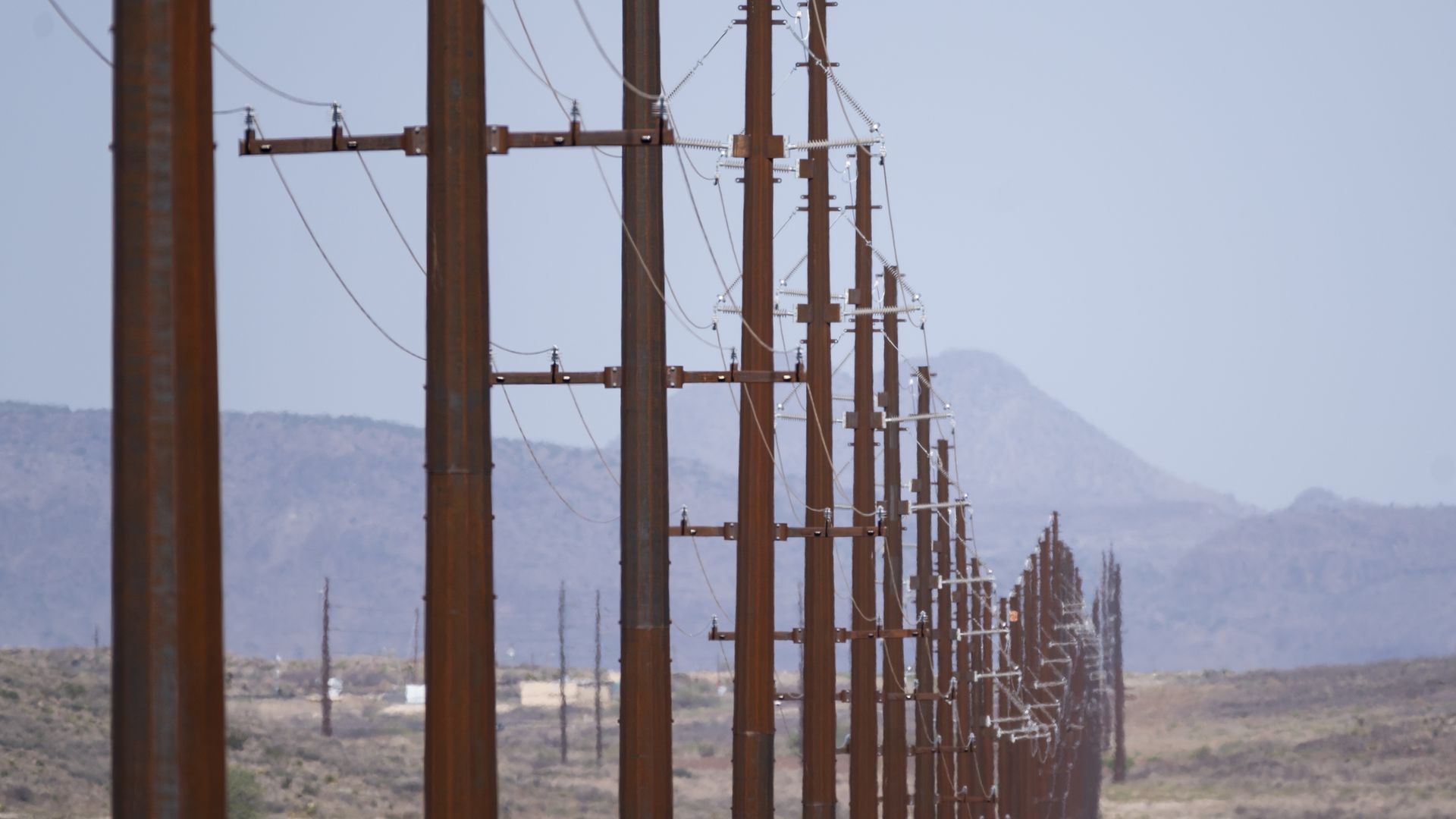
Texas' power grid operator has asked people to "reduce electric use as much as possible" until Friday following days of searing heat and a "significant number of forced generation outages."
Why it matters: The request by the Electric Reliability Council of Texas (ERCOT) comes months after a deadly winter storm blew out the state's power infrastructure and left millions of Texans without power for days.
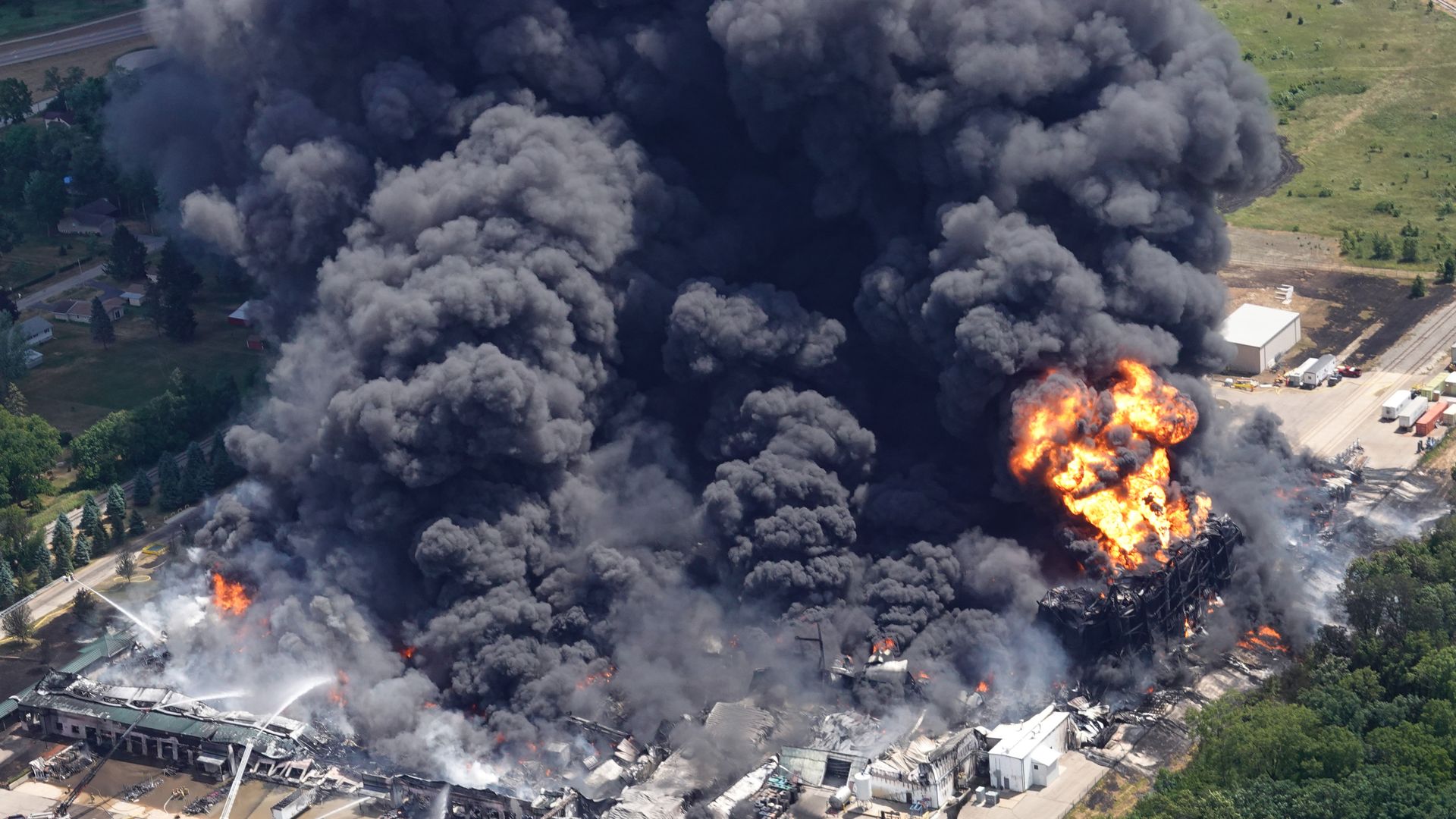
An explosion at a chemical plant in northern Illinois caused a massive fire that could burn for days and prompted evacuations of nearby residents, the Associated Press reports.
The state of play: The incident in Rockton occurred at the Chemtool Inc. plant, which produces "fluids, lubricants and greases" for a variety of different industries, per NBC 13.
A punishing mid-June heat wave is set to scorch much of the Southwest and West this week, with Las Vegas potentially eclipsing its highest temperature on record, which stands at 117°F.
Why it matters: The heat will build in a region that is experiencing a record drought, leading to dangerous fire weather conditions, high power demands, and causing water supplies to dwindle further. The heat itself could prove deadly.
Battery recycling startup Redwood Materials is amping up expansion plans, including adding more than 500 new manufacturing jobs in Nevada, as the United States gets serious about supporting a shift to electric vehicles.
Why it matters: The news coincides with an event being hosted today by Energy Secretary Jennifer Granholm to dive into the DOE's newly released blueprint for the lithium battery supply chain.
Leaders of the G7 agreed to a sweeping new agenda over the weekend. But while the communique they issued is lofty in goals, it lacks crucial details on climate.
Why it matters: The G7's paucity of specifics on climate finance and domestic coal consumption, in particular, calls into question the ability of the wealthiest nations to take sufficient action on global warming.