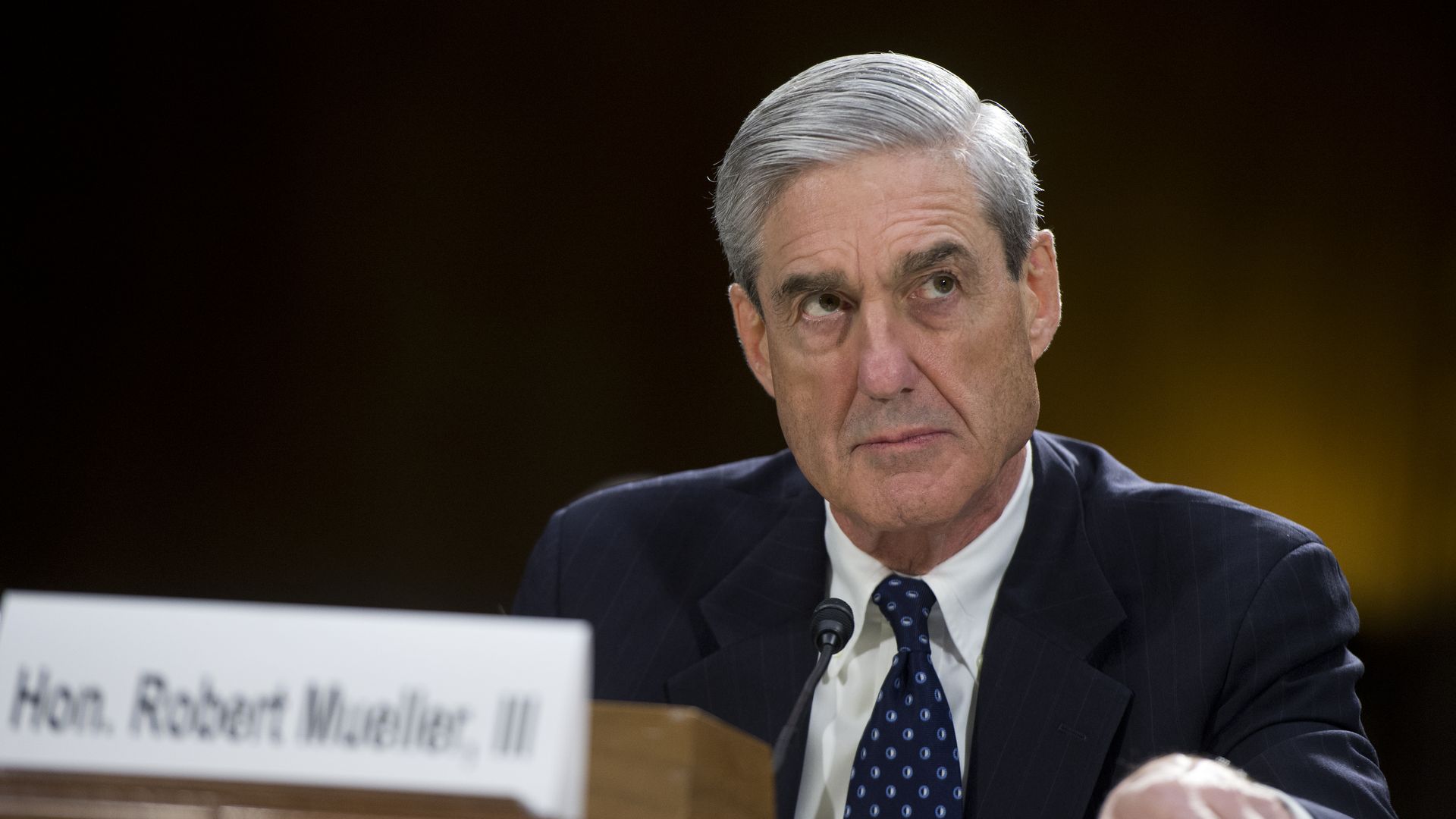
Upon the conclusion of special counsel Robert Mueller's investigation, Attorney General William Barr will be required to submit a memo to the House and Senate Judiciary Committees detailing each instance in which Mueller's supervisors rejected his requests, according to a Justice Department regulation highlighted by Politico.
Why it matters: Regardless of what it reveals, the memo will be meaningful in the context of Mueller's broader findings. If it's blank or sparse, it would suggest that Mueller was able to carry out his investigation unimpeded. If it contains evidence of Mueller being blocked from taking certain actions — such as a presidential subpoena or some explosive indictment — it could provide grounds for further investigation by Democrats.
Federal authorities leave it up to automakers to assess the safety of their own automated driving systems, but mounting investigations into Tesla crashes suggest regulators need to get tougher.
Why it matters: Tesla cars cannot drive themselves, but some owners are too trusting of their car's Autopilot assisted-driving technology and fail to stay alert. If the government finds Teslas are more prone to crashes than other vehicles with similar systems, it could determine Autopilot has a defect that poses "an unreasonable risk to safety" and order the company to conduct a recall.
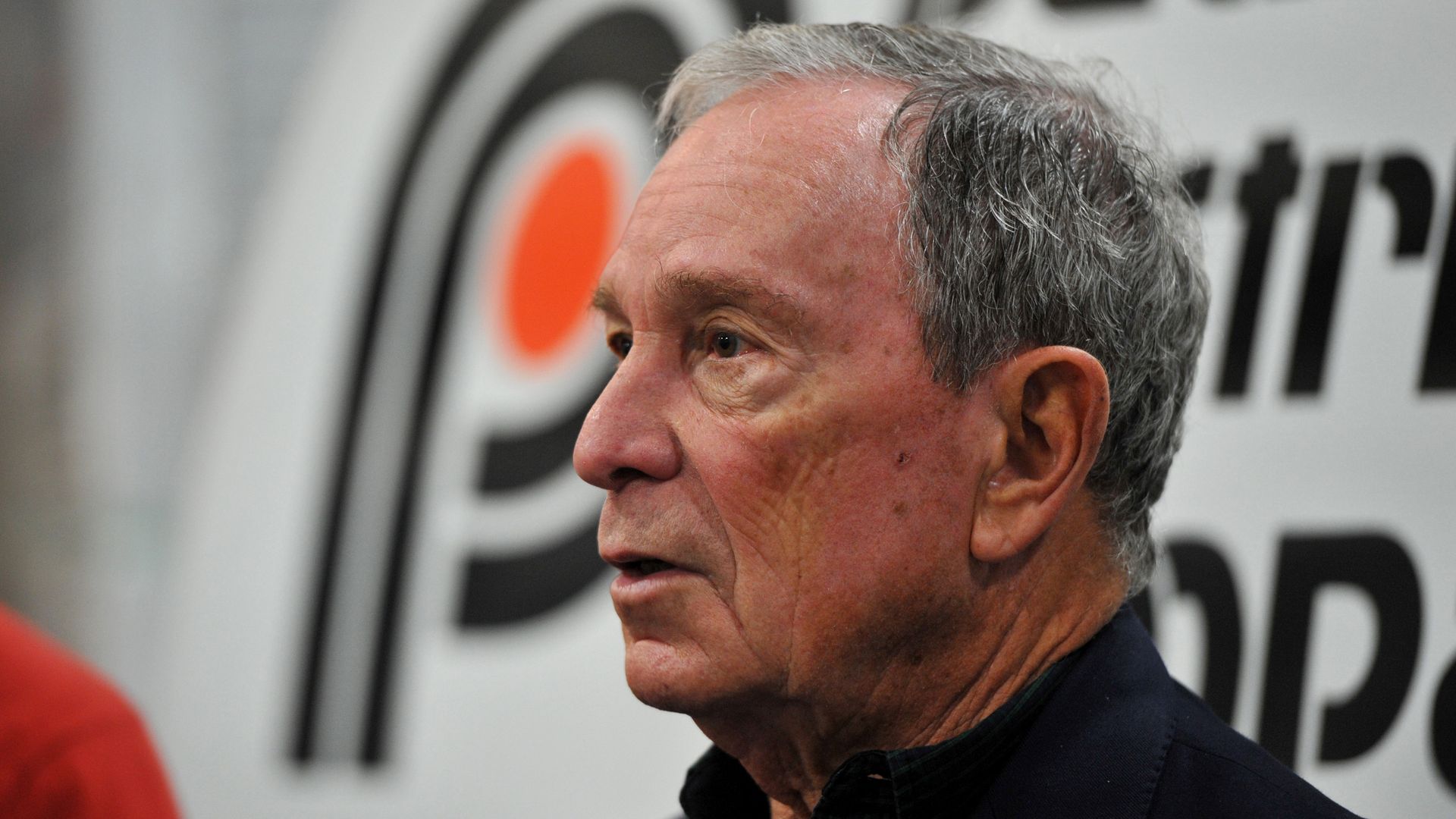
You may have read by now that Michael Bloomberg isn't running for president, but I'm more interested in something he is doing: expanding his climate campaign to fight oil-and-gas.
Where it stands: The billionaire activist announced something called the "Beyond Carbon" campaign yesterday. It's an expansion of his longstanding work with the Sierra Club to shut down coal plants via an effort called "Beyond Coal," a campaign that will also continue.
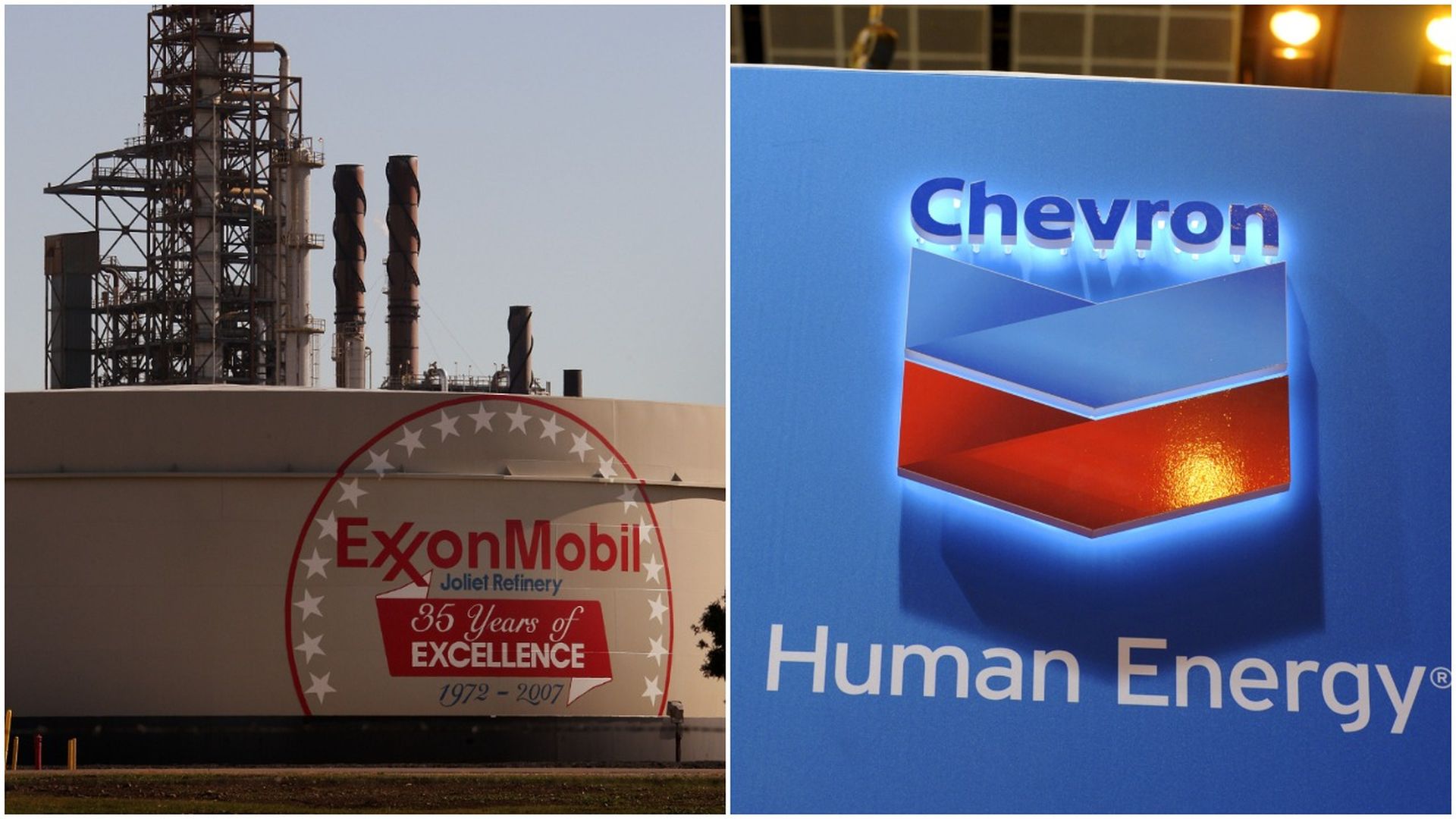
Chevron and ExxonMobil are both going very big on U.S. shale.
By the numbers: Exxon said yesterday that it plans to increase production by 80% to over 1 million barrels per day of oil equivalent in the Permian Basin by as soon as 2024. That news arrived just after Chevron, the second-largest U.S.-based major, said it's planning Permian production of 900,000 barrels per day of oil-equivalent by 2023. That's more than double current levels, per an investor presentation.
The Axios Harris Poll 100 ranks the reputations of the most visible U.S. companies, based on a nationally representative sample of 18,228 Americans, and the rankings are billed as "a measurement of what real people think right now about the companies in our cultural conversation."
The big picture: From the world's most influential tech companies to the places where Americans shop to eat everyday, there are three big trends that Harris uncovered in this year's poll.
Tesla's public reputation took a big hit in 2018, a tumultuous year for the electric automaker marked by a series of controversial comments by CEO Elon Musk, a new Axios-Harris Poll survey shows.
Why it matters: The drop in Tesla's ranking from number 3 to number 42 in the annual survey — the second-biggest decline after Facebook — shows the risks for companies with identities so closely aligned with one person.
Nearly 60 former national security and intelligence community officials sent a letter to the White House on Tuesday opposing the formation of a White House panel to conduct an "adversarial peer review" of climate science information. The panel would also be tasked with reviewing whether climate change really poses a national security threat, as numerous assessments have concluded.
Why it matters: The opposition from these former leaders indicates the extent to which many in the national security and intelligence community see such a panel as undermining national security. "It is dangerous to have national security analysis conform to politics," the letter states. "Our officials' job is to ensure that we are prepared for current threats and future contingencies. We cannot do that if the scientific studies that inform our threat assessments are undermined."
Jupiter Intelligence, a startup that sells climate change impact data to governments and private industry in order to assess the risks of subsequent severe weather, raised $23 million in Series B funding led by Energize Ventures.
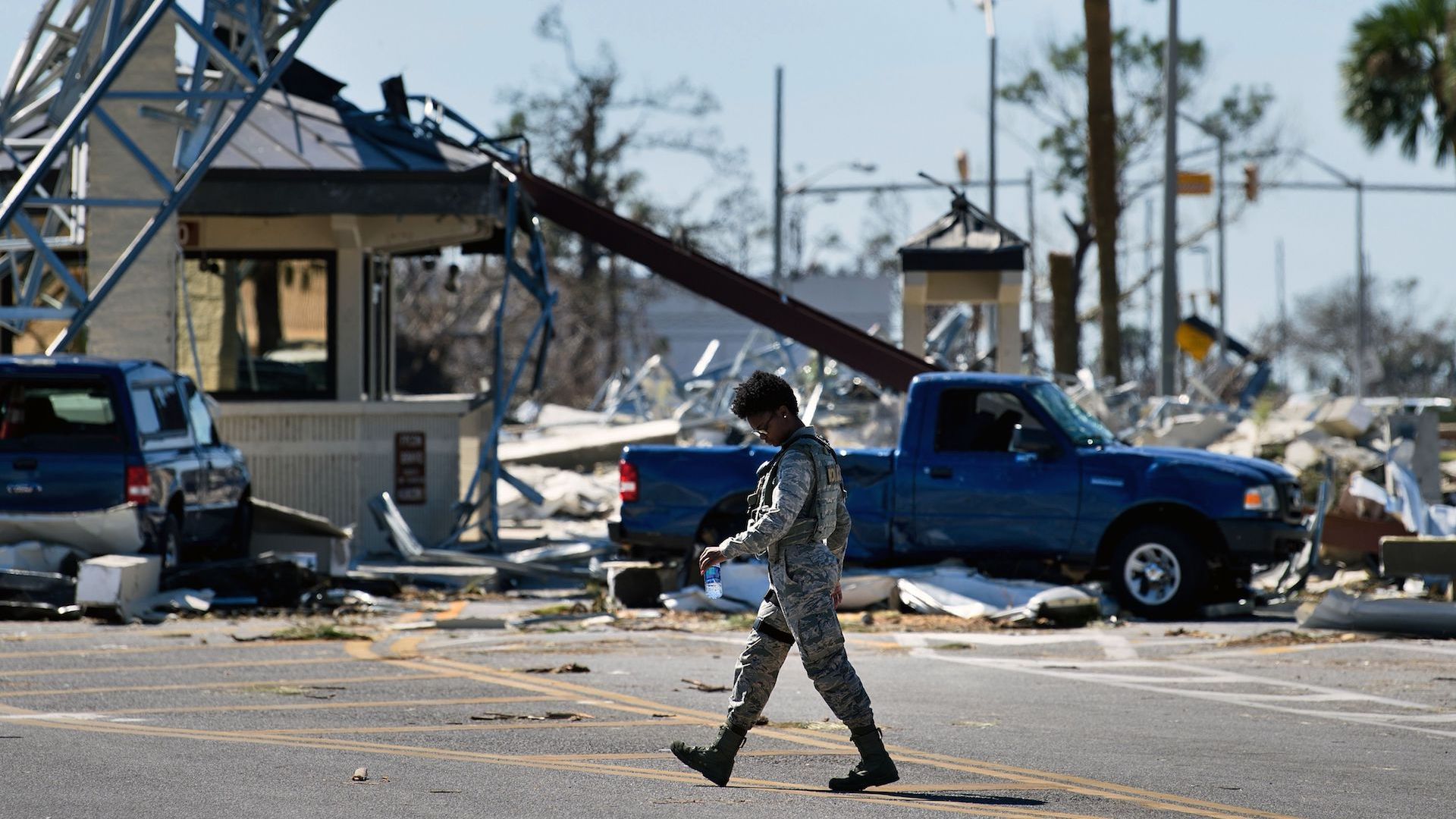
Why it matters: Our failure to effectively mitigate climate change means that we now must deal with its consequences. Those consequences include increased chances of natural disasters.
The German EV startup Sono Motors has released updated images of its Sion, a vehicle that can partially recharge using solar panels integrated into its design.
Why it matters: The company said the panels can add up to 34 kilometers a day of additional range under "peak" conditions. The company says the car will cost 25,500 euros (around $28,900).