Nearly 60 former national security and intelligence community officials sent a letter to the White House on Tuesday opposing the formation of a White House panel to conduct an "adversarial peer review" of climate science information. The panel would also be tasked with reviewing whether climate change really poses a national security threat, as numerous assessments have concluded.
Why it matters: The opposition from these former leaders indicates the extent to which many in the national security and intelligence community see such a panel as undermining national security. "It is dangerous to have national security analysis conform to politics," the letter states. "Our officials' job is to ensure that we are prepared for current threats and future contingencies. We cannot do that if the scientific studies that inform our threat assessments are undermined."
Jupiter Intelligence, a startup that sells climate change impact data to governments and private industry in order to assess the risks of subsequent severe weather, raised $23 million in Series B funding led by Energize Ventures.
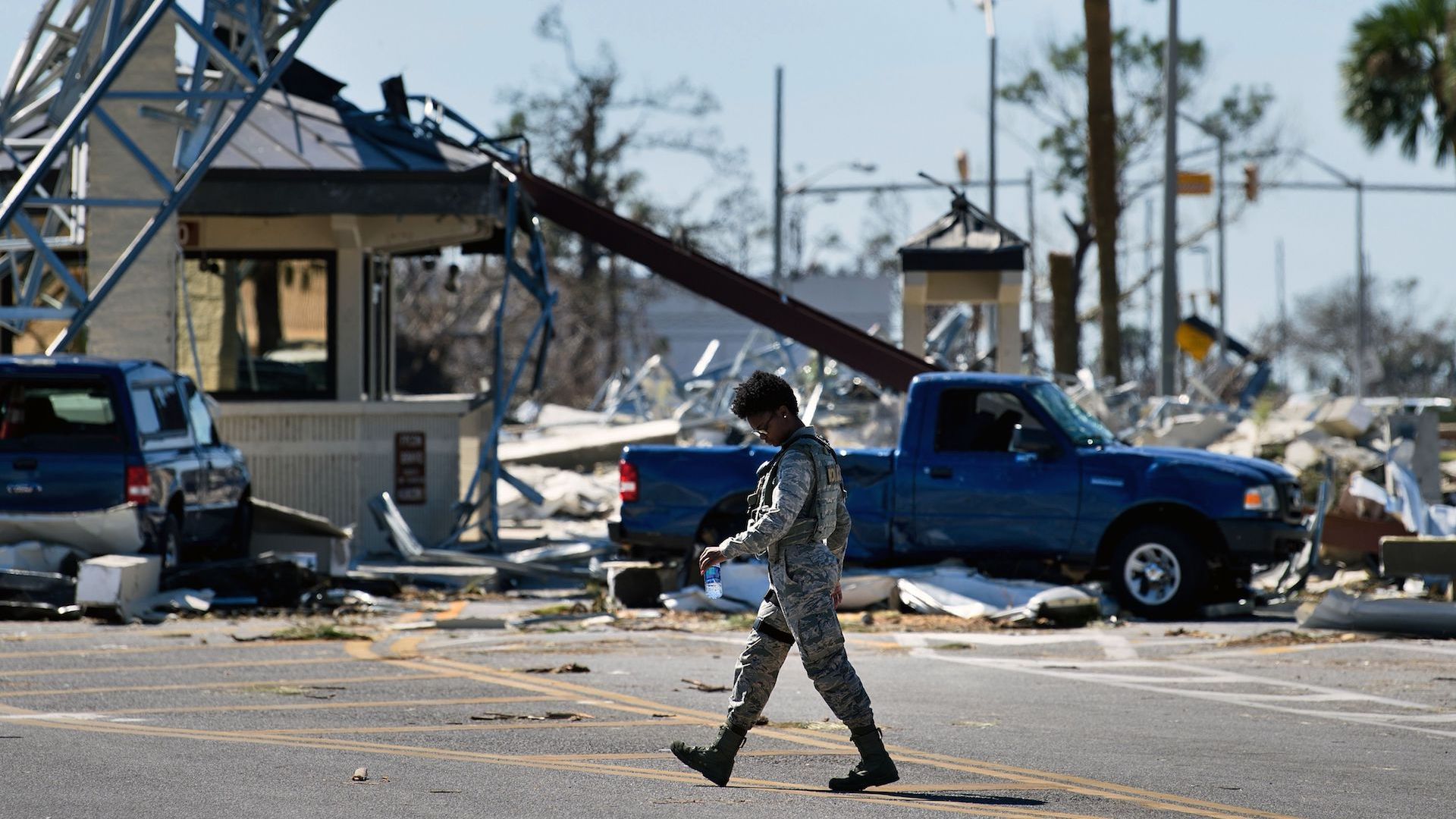
Why it matters: Our failure to effectively mitigate climate change means that we now must deal with its consequences. Those consequences include increased chances of natural disasters.
The German EV startup Sono Motors has released updated images of its Sion, a vehicle that can partially recharge using solar panels integrated into its design.
Why it matters: The company said the panels can add up to 34 kilometers a day of additional range under "peak" conditions. The company says the car will cost 25,500 euros (around $28,900).
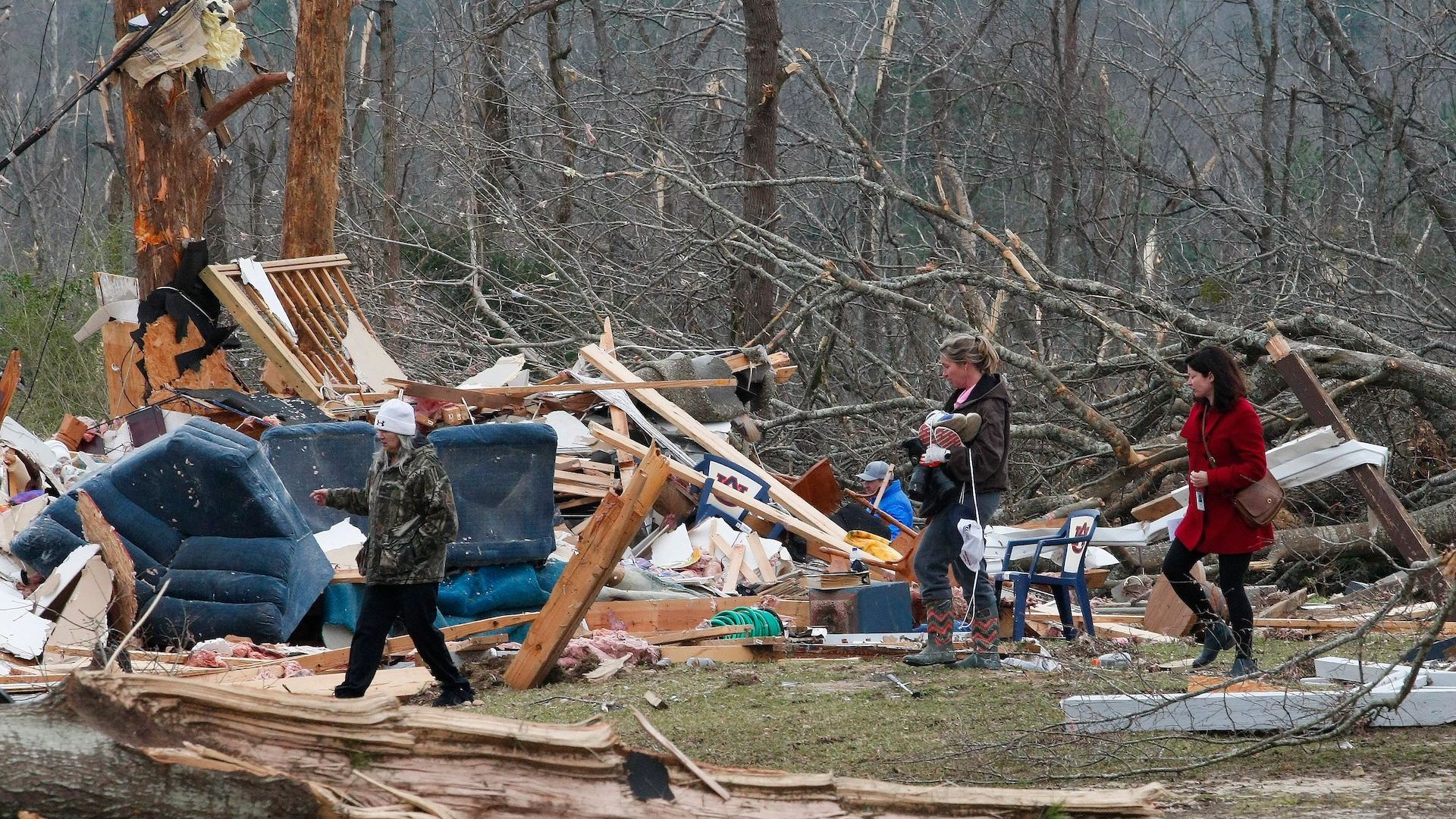
President Trump is promising the tornado-stricken state of Alabama that FEMA is on the way, while Puerto Rico's governor is fighting to make sure the administration doesn't divert its aid money to building a border wall.
Driving the news: Trump today on Alabama: "FEMA has been told directly by me to give the A Plus treatment to the Great State of Alabama and the wonderful people who have been so devastated by the Tornadoes."
California Assemblyman Chad Mayes (R-Yucca Valley) is proposing a new Enhanced Clean Energy Standard (CES) as the next step in curbing carbon emissions in California.
The big picture:Mayes' bill would create an enforceable 80% CES that's "technology neutral," meaning that utility companies would be required to limit greenhouse gas emissions, but would be free to choose the technology with which to do so. This approach has been popular among conservatives recently, and may please progressive climate activists, too.
The tornadoes that ripped through Lee County, Alabama, on Sunday evening, tearing homes apart like a half-mile-wide buzzsaw, are being blamed for at least 23 fatalities.
Why it matters: This death toll makes Sunday the deadliest tornado day in the U.S. since an EF-5 tornado struck Moore, Oklahoma, in May 2013, killing 24.
The share of U.S. adults who believe the GOP's position on climate change is outside the mainstream is higher than it was 4 years ago, according to an NBC/Wall Street Journal poll released over the weekend.
Why it matters: The results arrive as the 2020 election cycle is gathering steam and the Trump administration is moving ahead with efforts to dismantle Obama-era climate policies.
The Canadian dollar, which had been one of the best-performing G10 currencies in the world this year, fell significantly on Friday.
Driving the news: A slide in oil prices and reduced expectations for a rate hike from the Bank of Canada also hurt the loonie, which is edging towards its lowest level of the year against the U.S. dollar. Canada's economy grew at its slowest past in 2.5 years in the last quarter of 2018 and some economists say first quarter GDP growth this year will be even weaker.