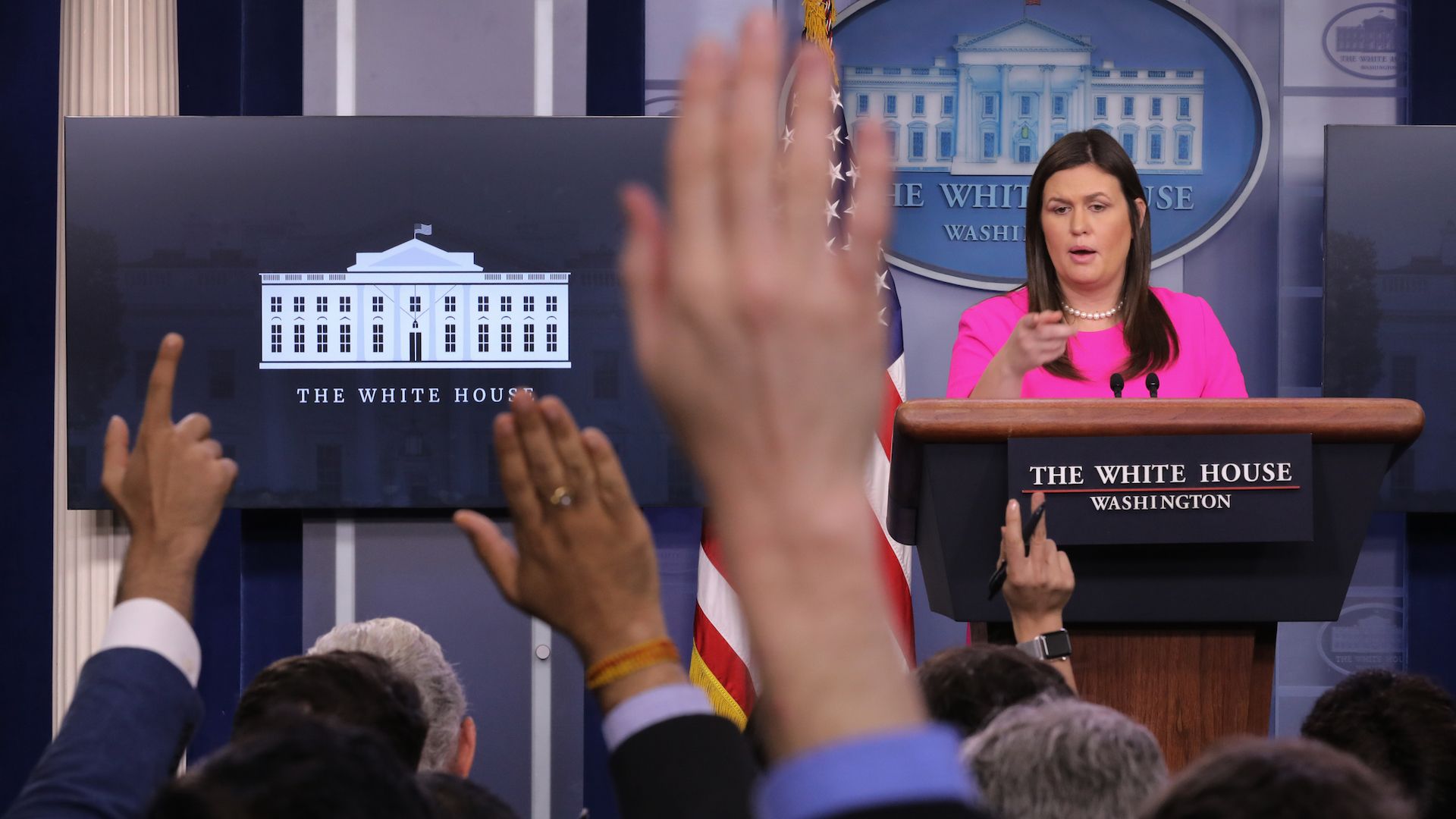
White House press secretary Sarah Sanders criticized the new climate report that the Trump administration published on Black Friday, saying its conclusions were "based on the most extreme model scenario" and were not based on "facts."
The big picture: The report, known as the Fourth National Climate Assessment, warns that the U.S. will suffer increasingly deadly and costly climate change impacts if greenhouse gas emissions are not sharply reduced in the next decade and more aggressive actions are not taken to adapt to extreme weather events and other climate impacts.
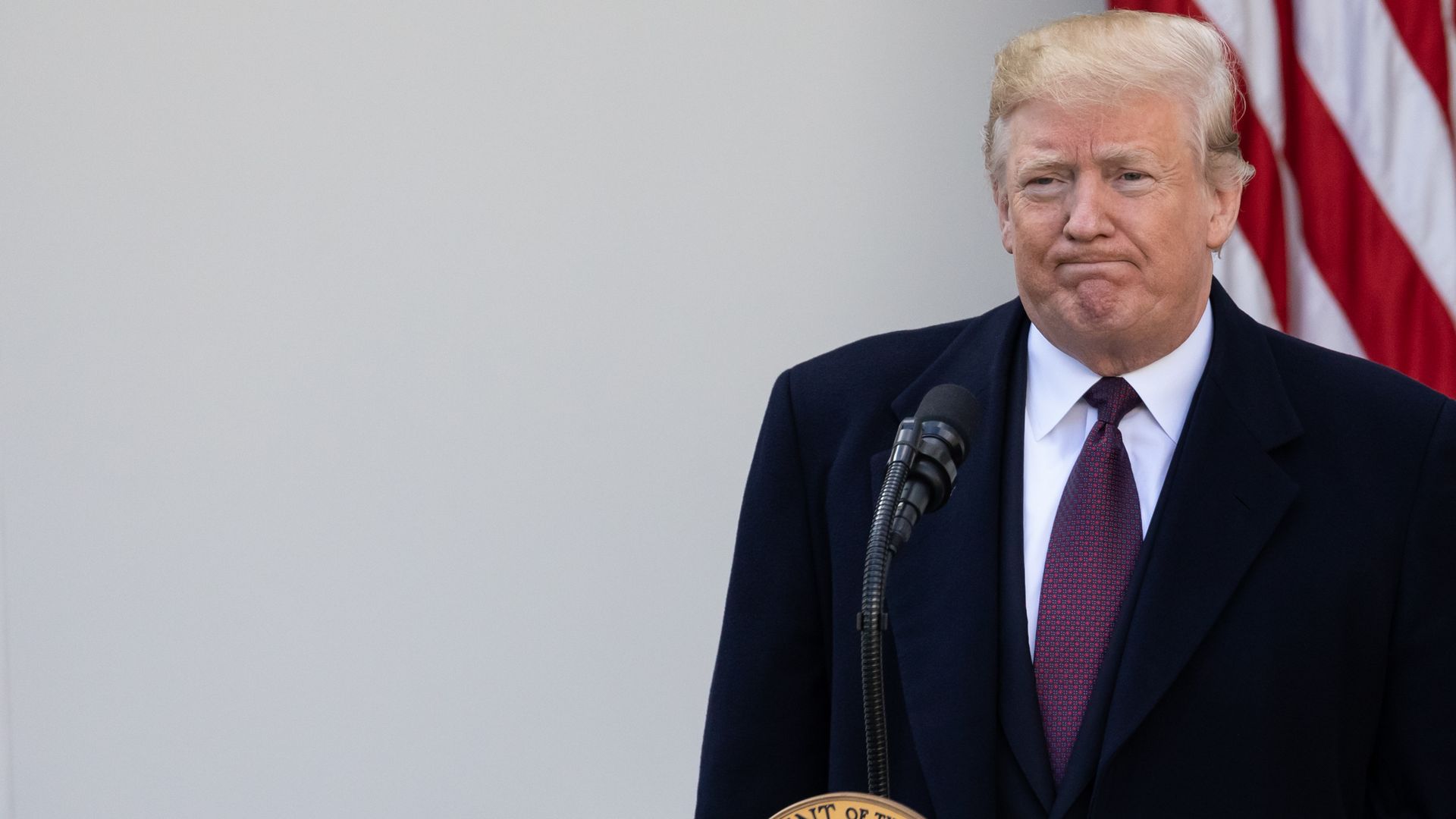
President Trump said on Twitter Tuesday that he is looking at ending electric vehicle subsidies for General Motors over its decision to idle four plants in the U.S. and cut 15% of its salaried workforce.
Be smart: As Axios' Dan Primack notes, there are no GM-specific electric vehicle subsidies. Instead, there are industrywide federal tax credits of up to $7,500 on EVs purchased in the United States, with aggregate caps of 200,000 vehicles per manufacturer. GM is currently bumping up against its cap, while Tesla has already hit it. Trump also could not end the credits without the help of Congress, which soon will have a Democrat-controlled House.
The United Nations warned in a new report Tuesday that countries aren’t on track to meet their commitments laid out in the 2015 Paris climate accord.
Why it matters: This report, by the UN’s Environment Programme, comes on the heels of two other seminal reports detailing not only dire consequences from a warmer planet, but also the low chances that the world is going to curb greenhouse gas emissions to what scientists say is needed.
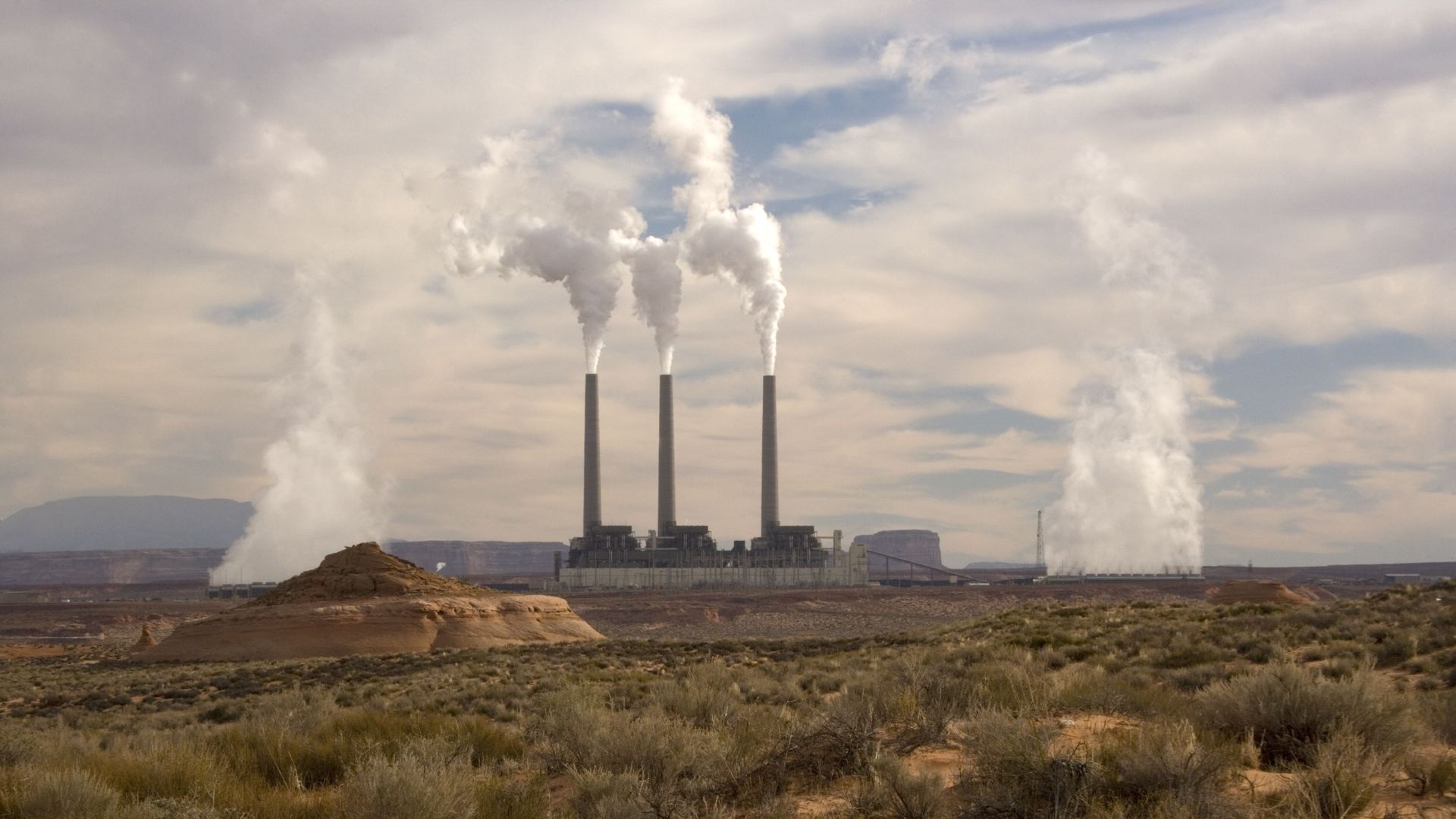
The big new federal report on the effects of climate change released on Black Friday explores how global warming could eventually increase U.S. power costs by tens of billions of dollars annually.
Why it matters: The energy chapter of the 1,656-page report lays out a suite of ways that higher temperatures and extreme weather affect power and fuel infrastructure and availability — and the financial toll.
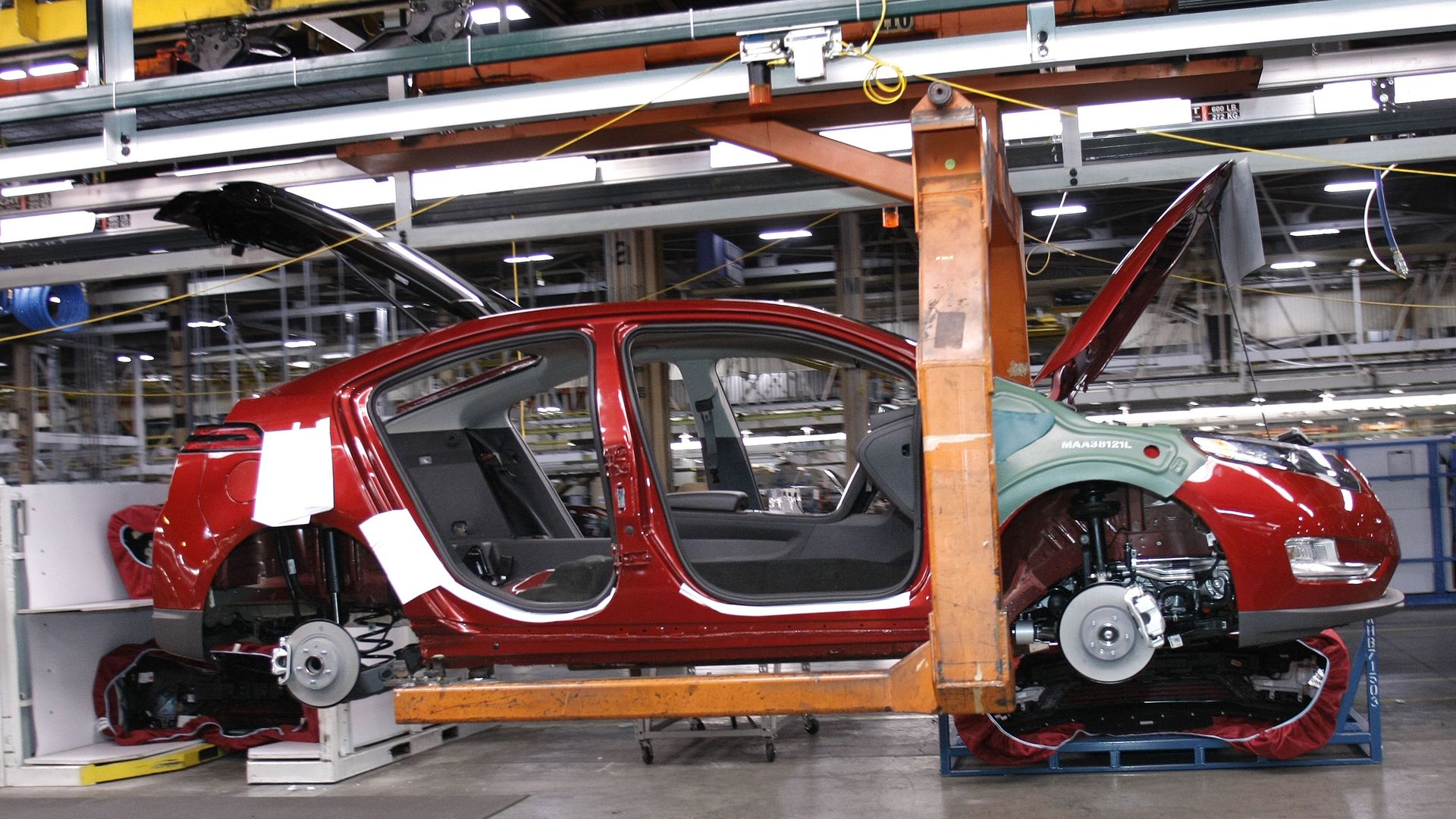
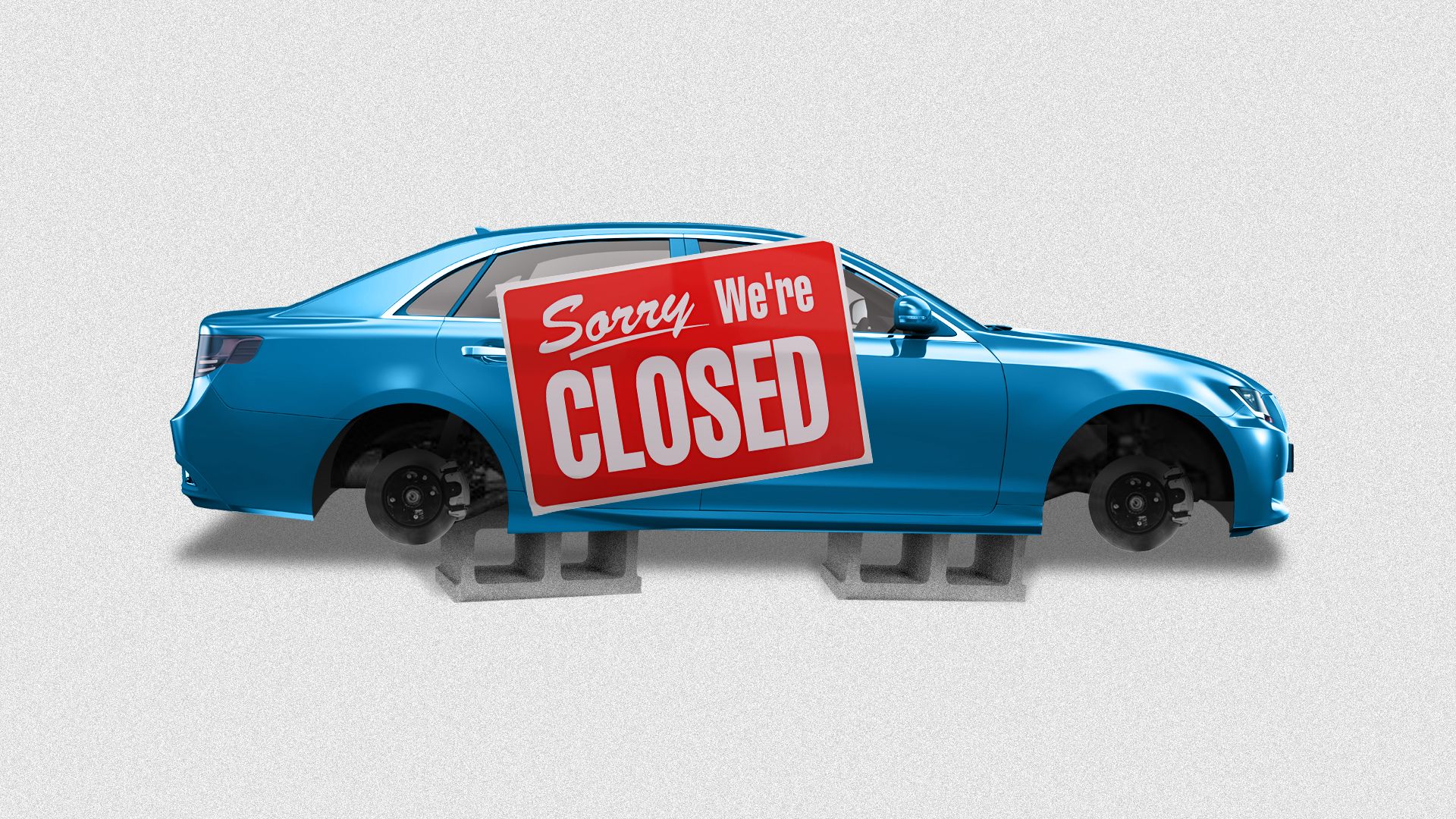
General Motors' plan to shutter several plants and cut thousands of workers is a glimpse into big changes that may loom as major automakers make the slow transition to electric vehicles.
Driving the news: As my Axios colleagues reported, GM said Monday that it will cut 15% of its salaried workforce, estimated to be more than 14,000 people in North America. It will idle factories in Michigan, Ohio, Maryland and Canada.
GM is laying off 14,300 employees. It's shuttering five factories in the U.S. and Canada, and says that two more closings will be announced internationally. By next year, it will no longer make the Buick LaCrosse, the Chevrolet Impala, or the Cadillac CT6 sedan. It's even killing the Chevy Volt plug-in hybrid.
The big picture: Welcome to the modern car industry, which is full of bad news. All the top-selling sedans in America — the Toyota Camry, Honda Civic, Honda Accord, Toyota Corolla, Nissan Altima, and Nissan Sentra — are Japanese.
In recent decades, climate change has exacerbated civil unrest, led to war, and put migrants on the road out of their countries, according to the National Climate Assessment released last week.
Why it matters: Until now, most climate assessments have focused on the threat to human lifestyles — to where and how we live. But the recent cycle of catastrophic fire, drought and floods, combined with the spread of extremist politics, suggests a new scale of danger to the developed and developing world.
Trump told reporters Monday afternoon that he has seen the latest climate report released on Black Friday by his administration, but said, "I don't believe it."
Why it matters: The report, known as the National Climate Assessment, warned of "hundreds of billions of dollars" in annual losses to some economic sectors without scaled up actions to adapt to current changes and slash emissions to avoid future warming.
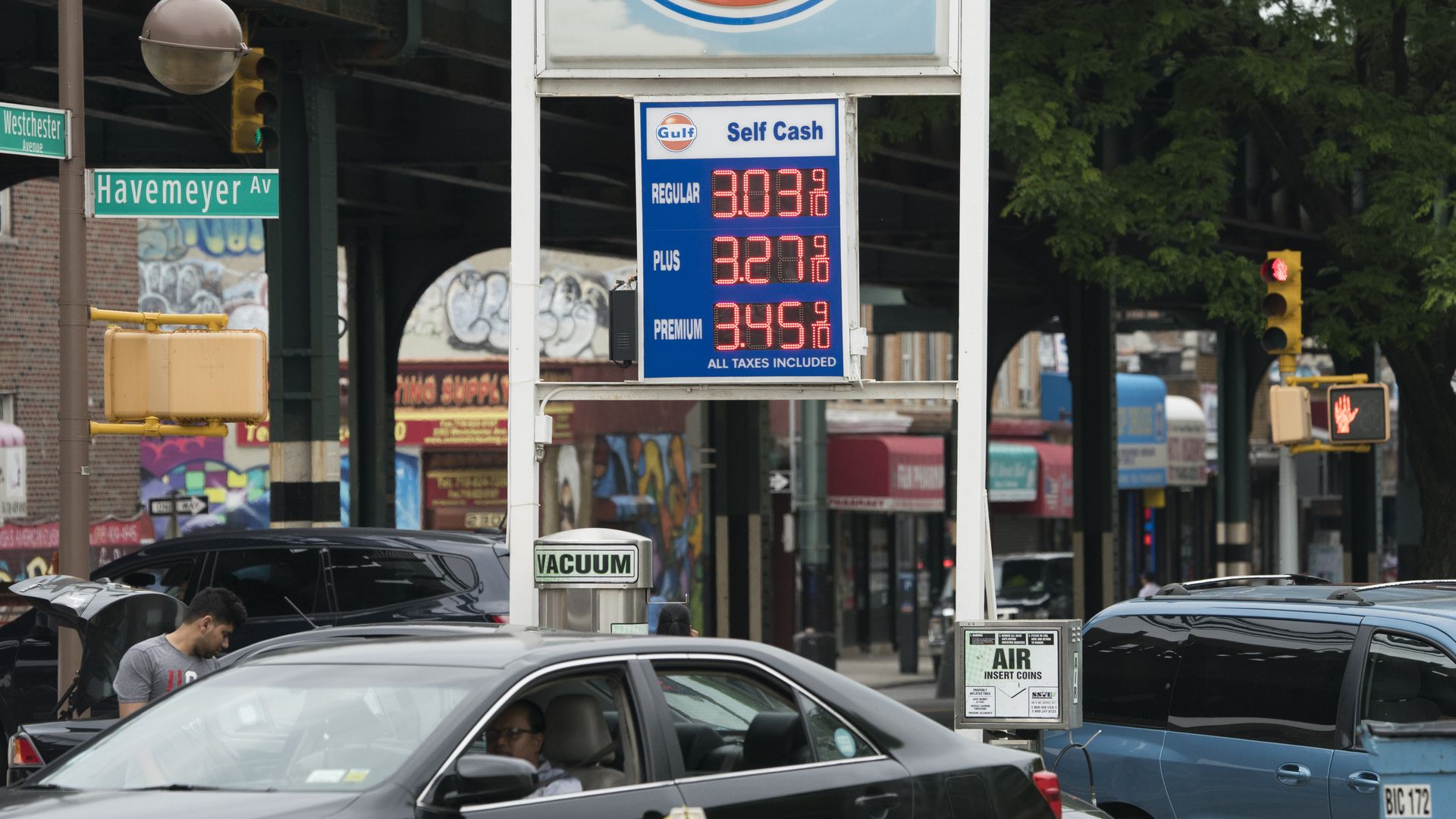
Crude oil prices ticked up a little in Monday trading, but not nearly enough to erase the losses from Friday, when a drop of several dollars put an exclamation point on a roughly seven-week decline, per Reuters.
Why it matters: As we wrote on Friday, the price declines will fuel the already intense focus on the Dec. 6 OPEC meeting, where the cartel and allied producers — notably Russia — will decide on potential output cuts aimed at tightening the market.
Tesla CEO Elon Musk says his electric car startup was close to death over the last year — within "single-digit weeks," he told "Axios on HBO" — during the troubled ramp-up of the mass market Model 3.
Driving the news: Musk has previously said that the company nearly went bankrupt in 2008, the year he took over as CEO, and that at the time Tesla had "less than a 10% likelihood to succeed." Over the past year, he has called the Model 3 buildout "production hell," and watched as his own erratic behavior — including an ongoing scrape with federal authorities — contributed to a plunge in Tesla’s share price.
Elon Musk, the inventor and CEO of Tesla and SpaceX, told "Axios on HBO" that humans must merge with machines to overcome the “existential threat” of artificial intelligence.
The big picture: Musk said artificial intelligence is "just digital intelligence. And as the algorithms and the hardware improve, that digital intelligence will exceed biological intelligence by a substantial margin. It's obvious." And he said we're way behind: "We're like children in a playground. ... We're not paying attention. We worry more about ... what name somebody called someone else ... than whether AI will destroy humanity. That's insane."
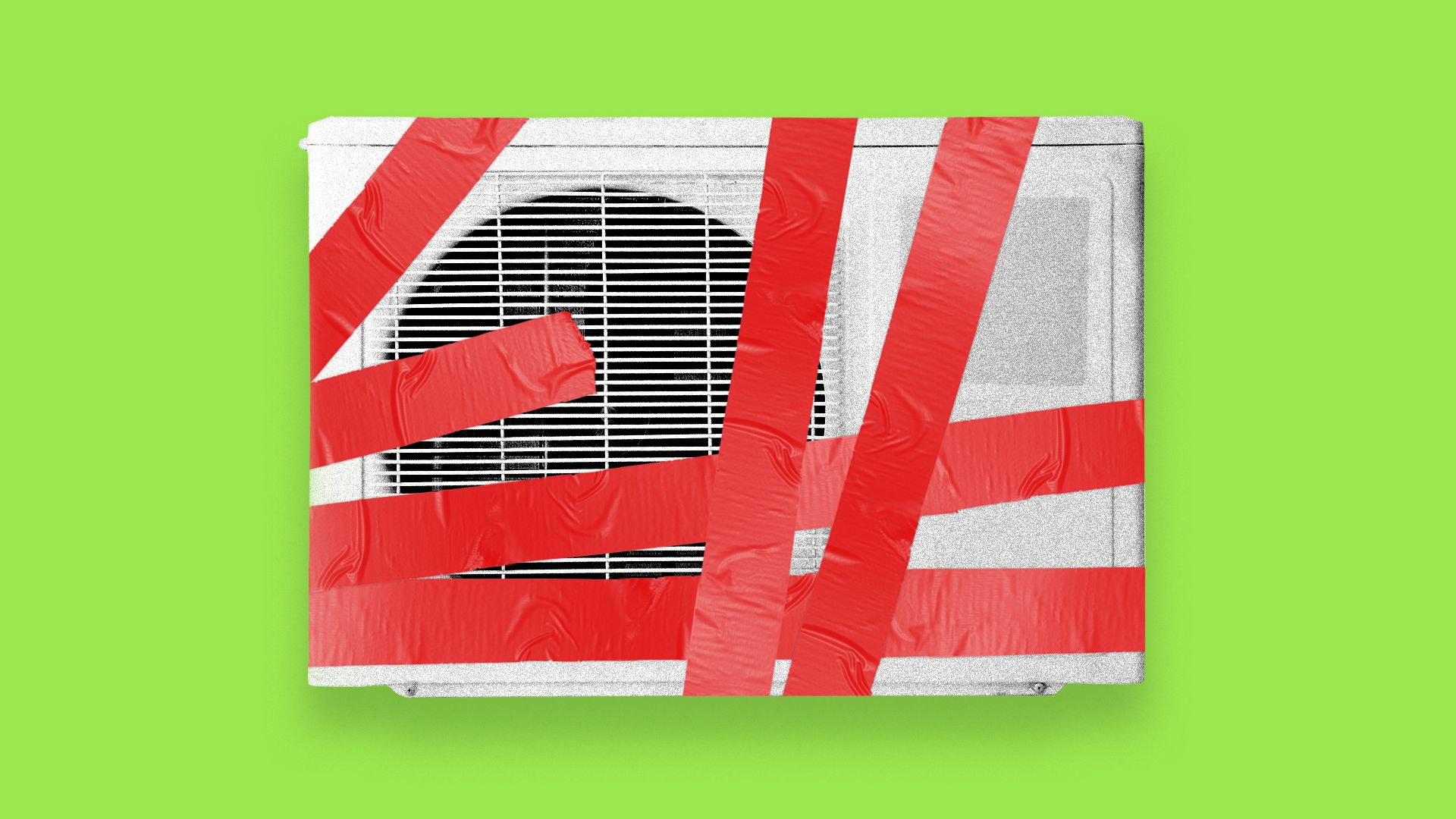
A coalition of manufacturers and chemical makers argue in a new report that the impact on consumers would be limited if the Trump administration and Congress approve a global deal on climate change first agreed to by the Obama administration.
The big picture: Named after the Rwandan city where it was signed in October 2016, the Kigali amendment to the Montreal Protocol, an environmental treaty, phases down the use of potent greenhouse gases known as hydrofluorocarbons (HFCs). HFCs are emitted from refrigerants in appliances like air conditioners.
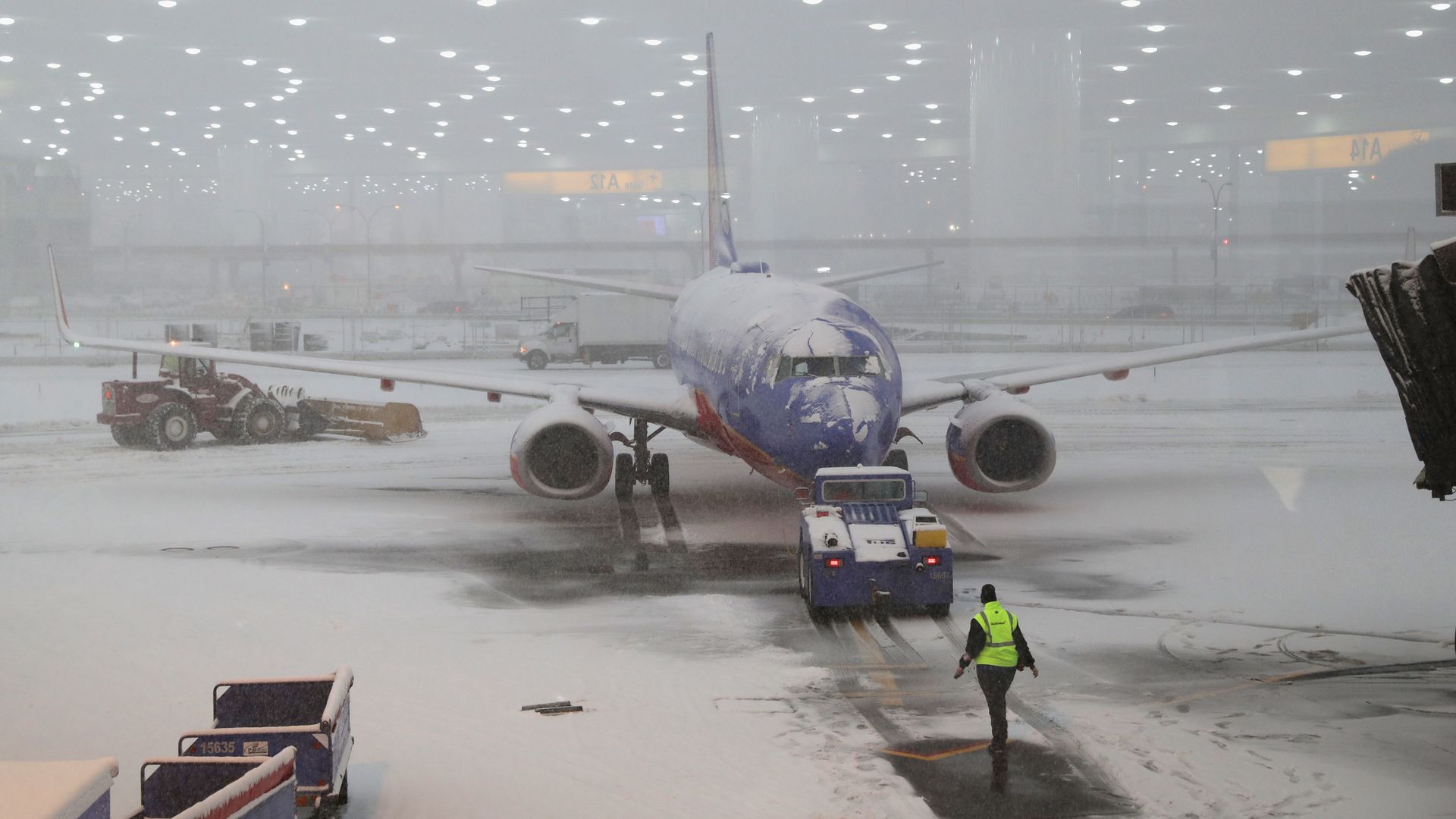
More than 1,600 flights were canceled Sunday and more than 3,600 delayed out of St. Louis and the Chicago area as a major winter storm approaches the midwest, according to data from Flight Aware.
The details: The cancellations are mostly concentrated in the Midwest with Chicago O’Hare airport experiencing more than 700 alone. A blizzard warning was issued by the National Weather Service which explained that a "[s]ignificant winter storm will bring heavy snow and some blizzard conditions from the Middle Mississippi Valley to the Great Lakes through Monday."