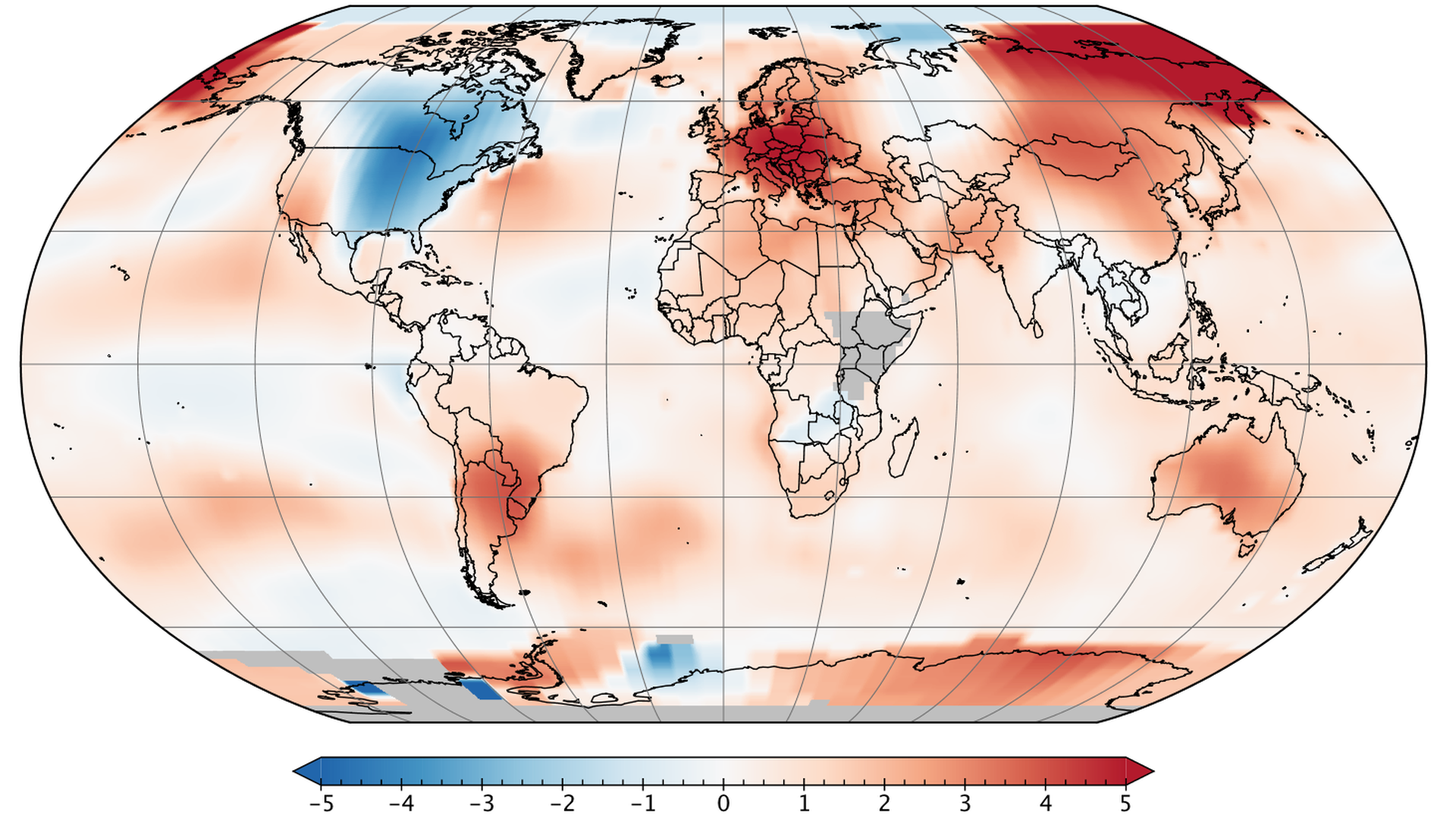
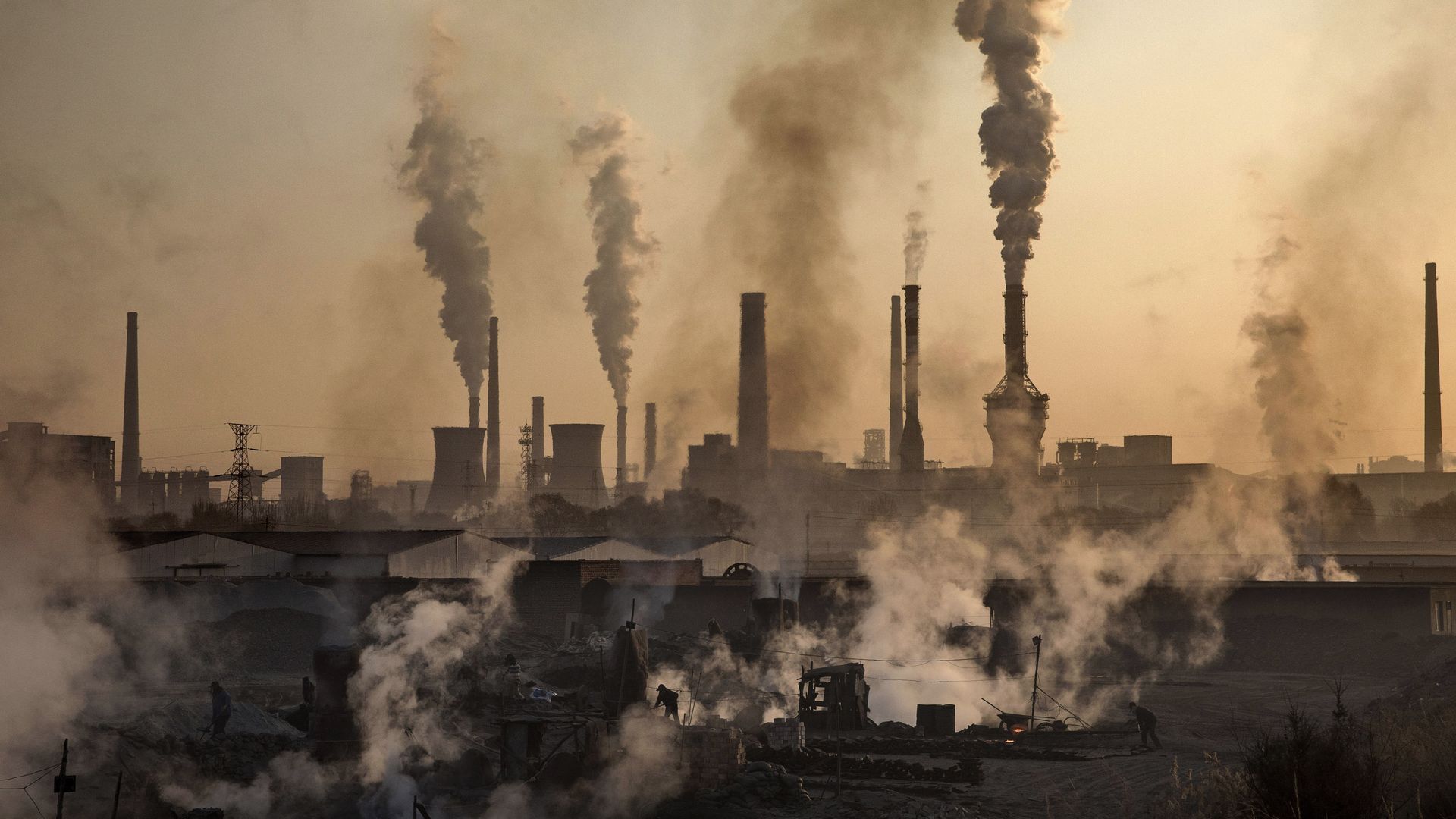
Despite the fact that millions shivered through an unusually cold and snowy start to spring in the U.S. and Canada, the world still had the third-warmest such month in 138 years of record-keeping, according to new NASA data out Wednesday.
Separate data released from the National Oceanic and Atmospheric Administration (NOAA) on Thursday also found April was the third-warmest such month, and the 400th straight month with a temperature above the 20th century average.
New research from NASA finds that human activities, including causing global warming and depleting groundwater for agriculture, are making for an increasingly water-stressed world. It's the first global accounting of trends in freshwater availability.
"No national, regional, or local water plan or assessment should overlook these estimates - they are the boundary conditions that shape water security."
— Marc Levy, a researcher at Columbia University's Earth Institute who was not involved in the new study
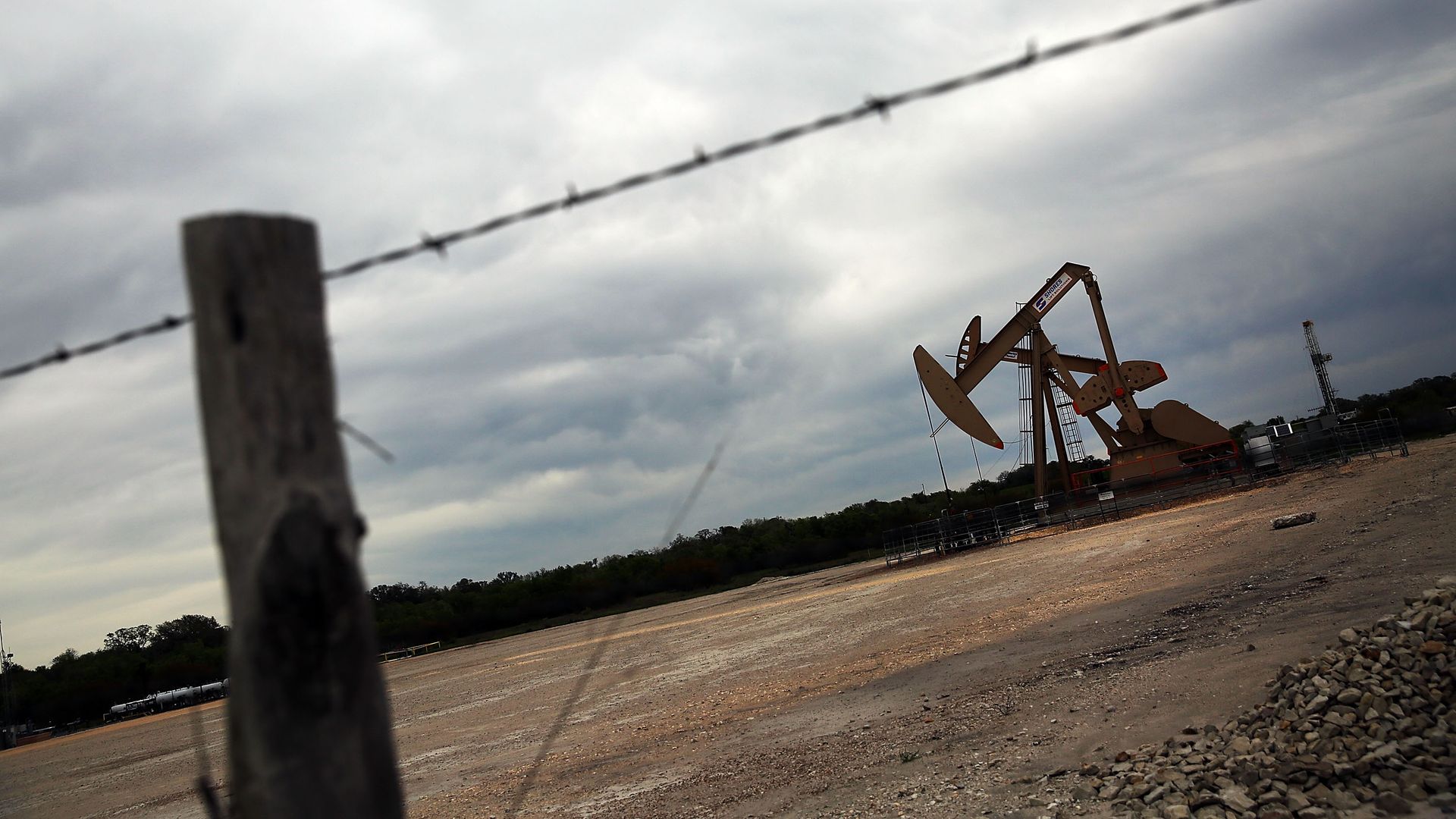
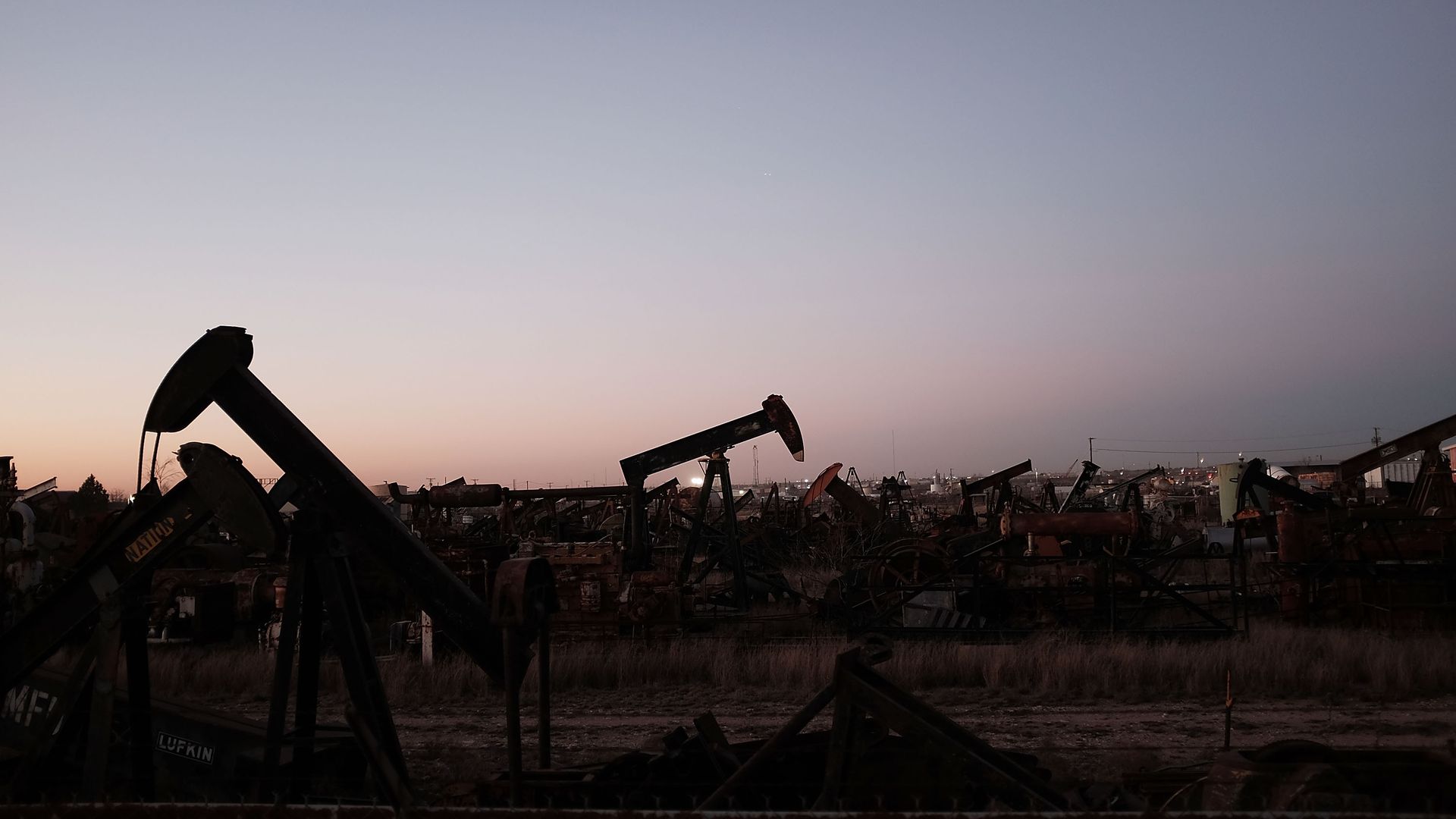
Market fears of snapback sanctions on Iranian oil exports have caused oil prices to rise, providing a stark reminder that the U.S. is still the world's largest oil consumer. In response to the trend, President Trump said that such prices "will not be accepted."
Why it Matters: In a global oil market dominated by OPEC and private U.S. shale producers, the Trump administration actually has little direct influence on prices and is largely at the mercy of market forces. Meanwhile, the administration has done little on clean energy, where policy could make a meaningful impact.
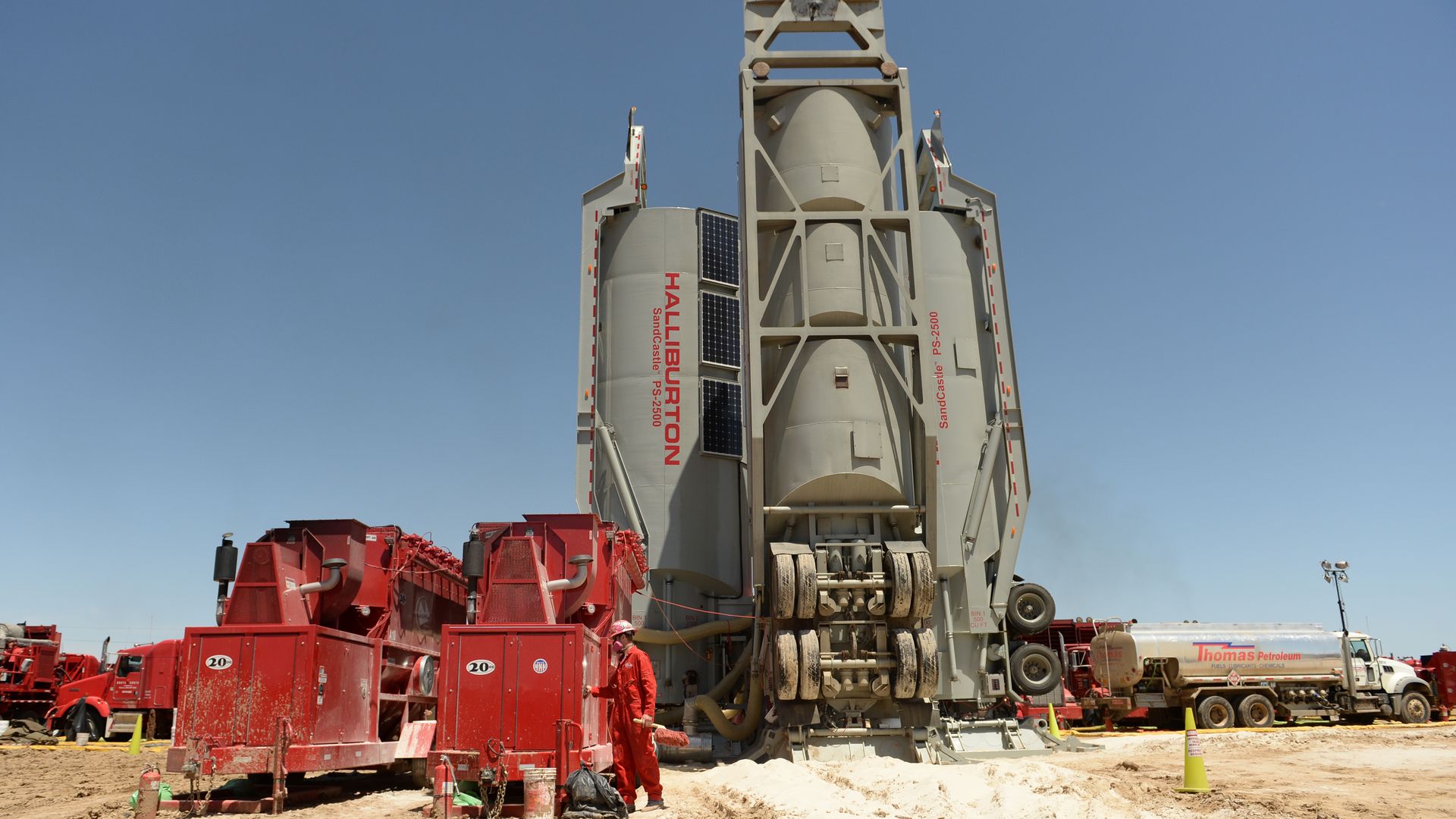
The United States' crude oil exports averaged 2.57 million barrels per day for the week that ended May 11, the highest level on record, according to newly released federal data.
Why it matters: The data shows how the shale oil production boom, combined with the lifting of extremely heavy export restrictions in a late 2015 law, is transforming the U.S. into an increasingly prominent player in global crude markets.
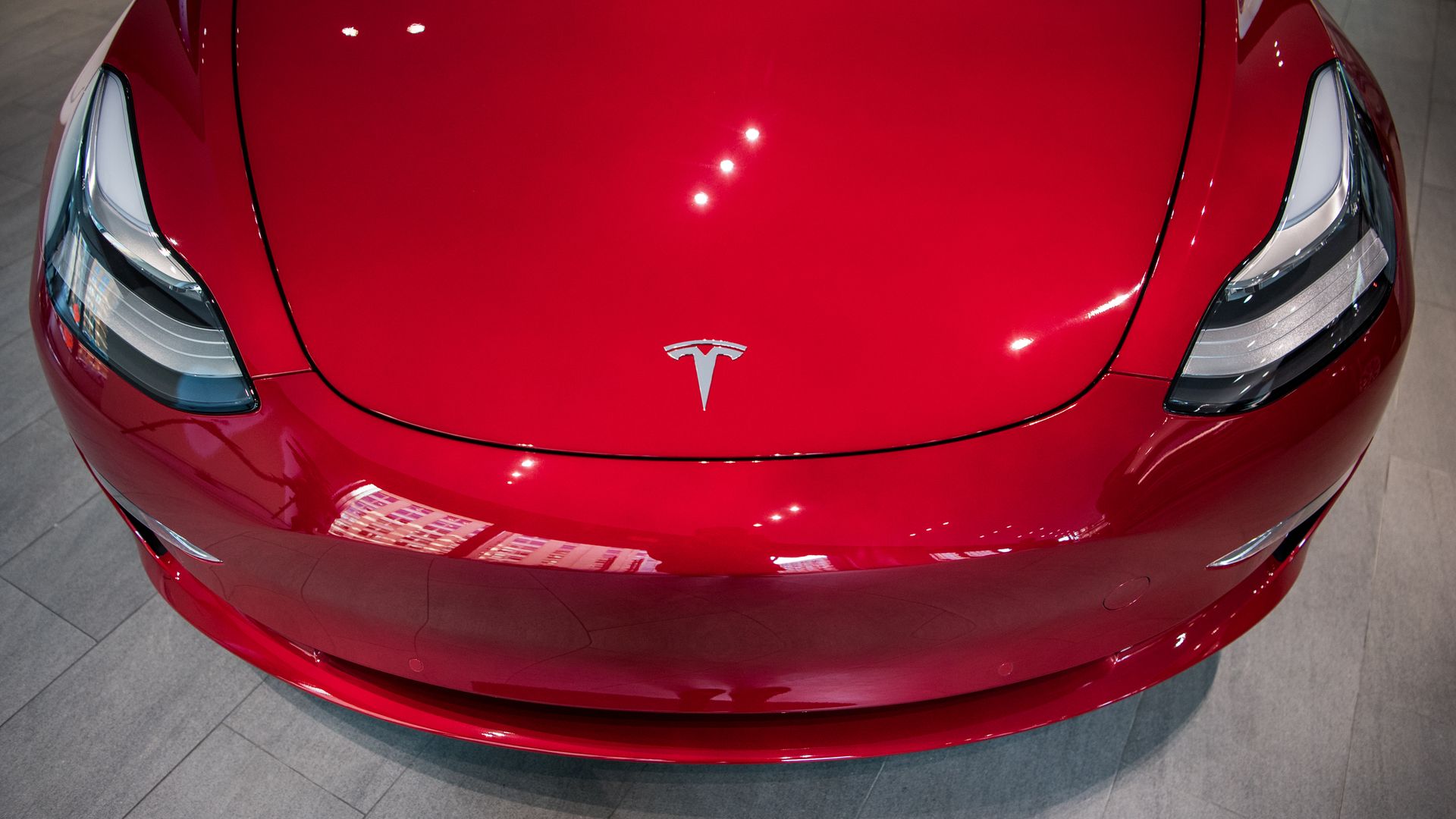
The last 24 hours have brought good and bad news for Tesla, which is grappling with the troubled production ramp-up of the Model 3 sedan and the exit of some top executives.
Why it matters: Investors and analysts are watching carefully to see whether Musk can make good on his pledge to finally reach a production rate of 5,000 Model 3s per week by mid-year.
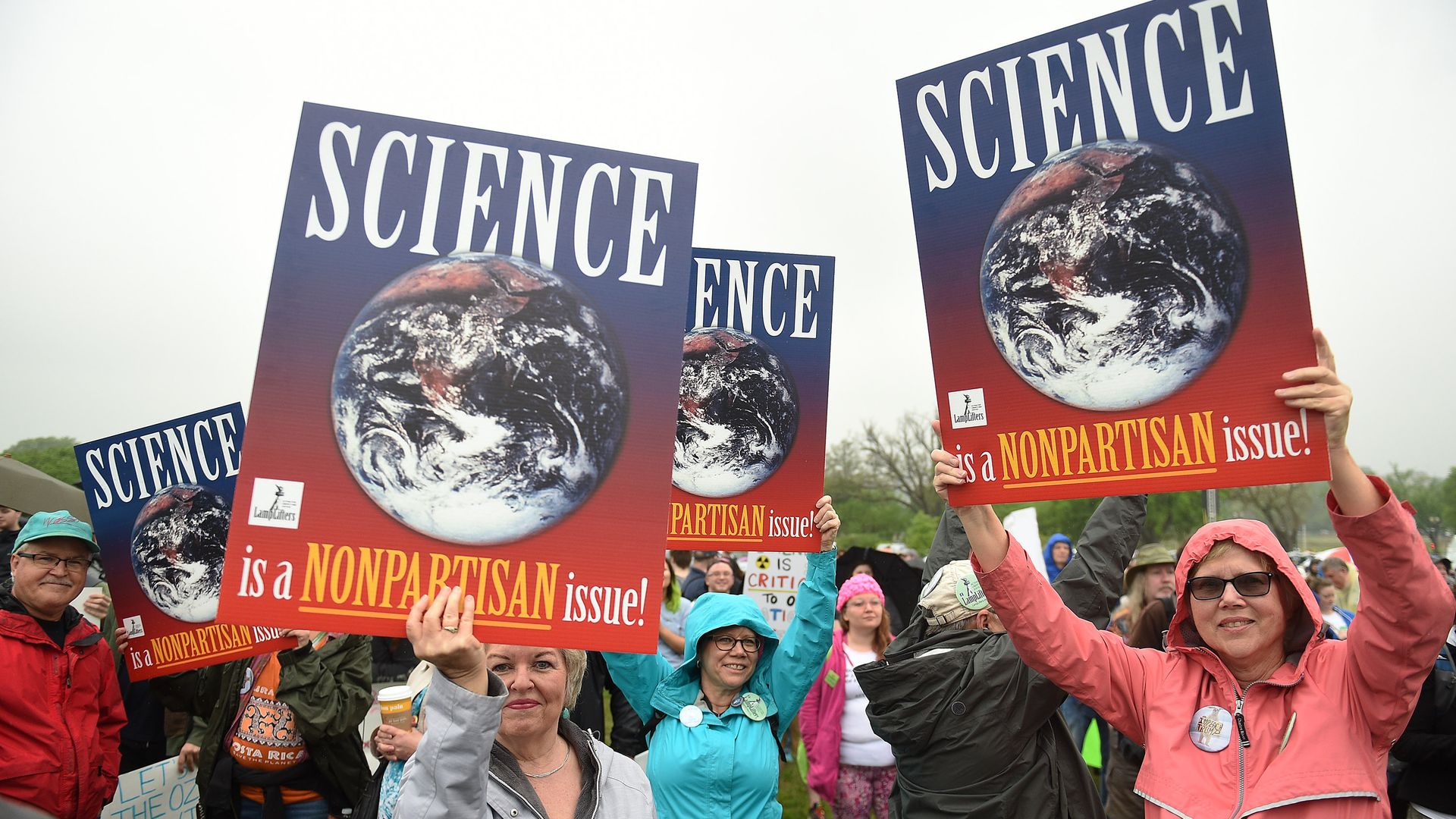
A just-released paper from the Niskanen Center charts how Capitol Hill's partisan divide on the environment grew so stark in recent decades while offering a few reasons why GOP lawmakers' posture on climate could shift in the future.
Why it matters: The paper delves into demographic, economic and political forces that could eventually lead Republicans to moderate their positions.
The International Energy Agency said Wednesday that revived U.S. sanctions against Iran and the ongoing collapse of Venezuela's output could jolt the global market.
Why it matters: The new edition of their closely watched report contains its first extended comment since the White House decision to bail on the Iran nuclear deal — noting that the decision has "switched the focus of oil market analysis from the fundamentals to geopolitics."
A majority of investors of Anadarko Petroleum Corporation approved a non-binding, but symbolically important, resolution related to climate change during the producer's annual meeting Tuesday, and similar votes at other energy companies are expected in the coming days.
Why they matter: They’re the latest in a trend of investors increasingly calling on publicly held fossil-fuel companies to be more transparent about how policies to cut greenhouse gas emissions could impact their bottom lines despite President Trump's retreat on the issue.
A day after a damaging weather event roared through Washington, a set of severe storms is hitting states in the Mid-Atlantic and New England regions, with expectations of derecho-like weather of wind damage, isolated tornadoes and large hail up to the size of a baseball.
Why it matters: The storms are likely to disrupt primary voting in central and eastern Pennsylvania, where every congressional district is holding a primary on Tuesday due to redistricting. They could also damage property and threaten lives from Washington to Boston, with New York City and Philadelphia at greatest risk.
Lime, one of the startups filling sidewalks with electric scooters, is raising up to $500 million in new funding, possibly via a combination of equity and debt, Axios has learned from multiple sources.
Why it matters: With the recent scooter craze, rival startups like Lime, Bird, and Spin are seeking to build giant war chests.
Two new analyses argue that a widely cited idea in climate policy and academic circles — to impose a carbon budget — has outlived its usefulness.
The argument: While the idea of a carbon budget has gotten a lot of traction in recent years, two pieces published Monday in Nature Geoscience say the specifics underpinning carbon budget studies have become so complicated and nuanced as to render the tool useless for actual policymaking.
The International Energy Agency forecast Tuesday that the number of air conditioners in buildings worldwide will more than triple by 2050, reaching 5.6 billion as demand surges in India, China and elsewhere.
Why it matters: Absent major efficiency gains, the added power demand will make it much harder to achieve the kind of worldwide carbon emissions cuts that would be needed to ward off potentially catastrophic warming levels.