President Trump’s Defense Department cut all but 1 of 23 mentions of “climate change” from the final draft of a Congressionally mandated report on climate risks — increased flooding, drought, wildfire and extreme temperatures — to U.S. military installations.
Why it matters: This wordsmithing signals to the thousands of men and women in uniform that climate change is not an important issue for them. Refusing to acknowledge climate change in U.S. national security policy doesn’t make the threat any less real — it only impedes the formulation of concrete, necessary plans.
Human activities are encroaching on the lands we've set aside to protect vulnerable species, according to new research.
Key findings: The study, published Thursday in Science, found that about 33% — or roughly 2.3 million square miles — of protected land worldwide is under "intense human pressure" from development, such as roads, growing urban areas, and agriculture. Only 42% of protected land is free of any "measurable human pressure," the researchers found.
NASA Administrator Jim Bridenstine moved closer Thursday to embracing the scientific consensus that human activities are the dominant cause of global warming.
Why it matters: His comments are the closest that any top Trump administration official has come to endorsing the mainstream scientific view on the effects of human-caused greenhouse gas emissions.
New data and analyses underscore both the promise and limits of President Trump's repeated claim that the U.S. should be an "energy dominant" country.
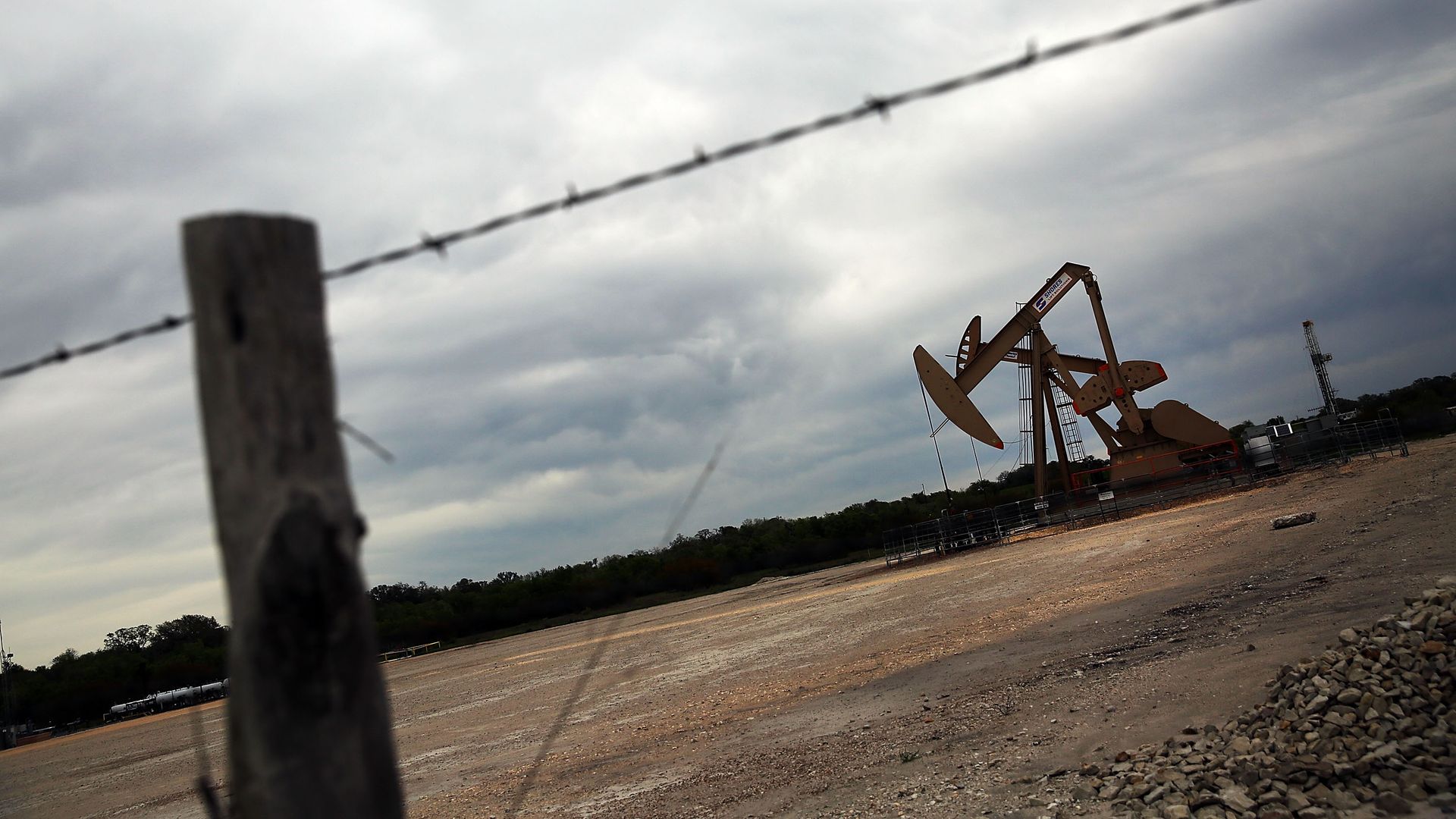
One factor: The Energy Information Administration said yesterday that U.S. crude oil exports hit a fresh record of 2.57 million barrels per day (mbd) last week — the highest level since the 2015 lifting of the crude export ban. U.S. overall crude production is also at record highs.
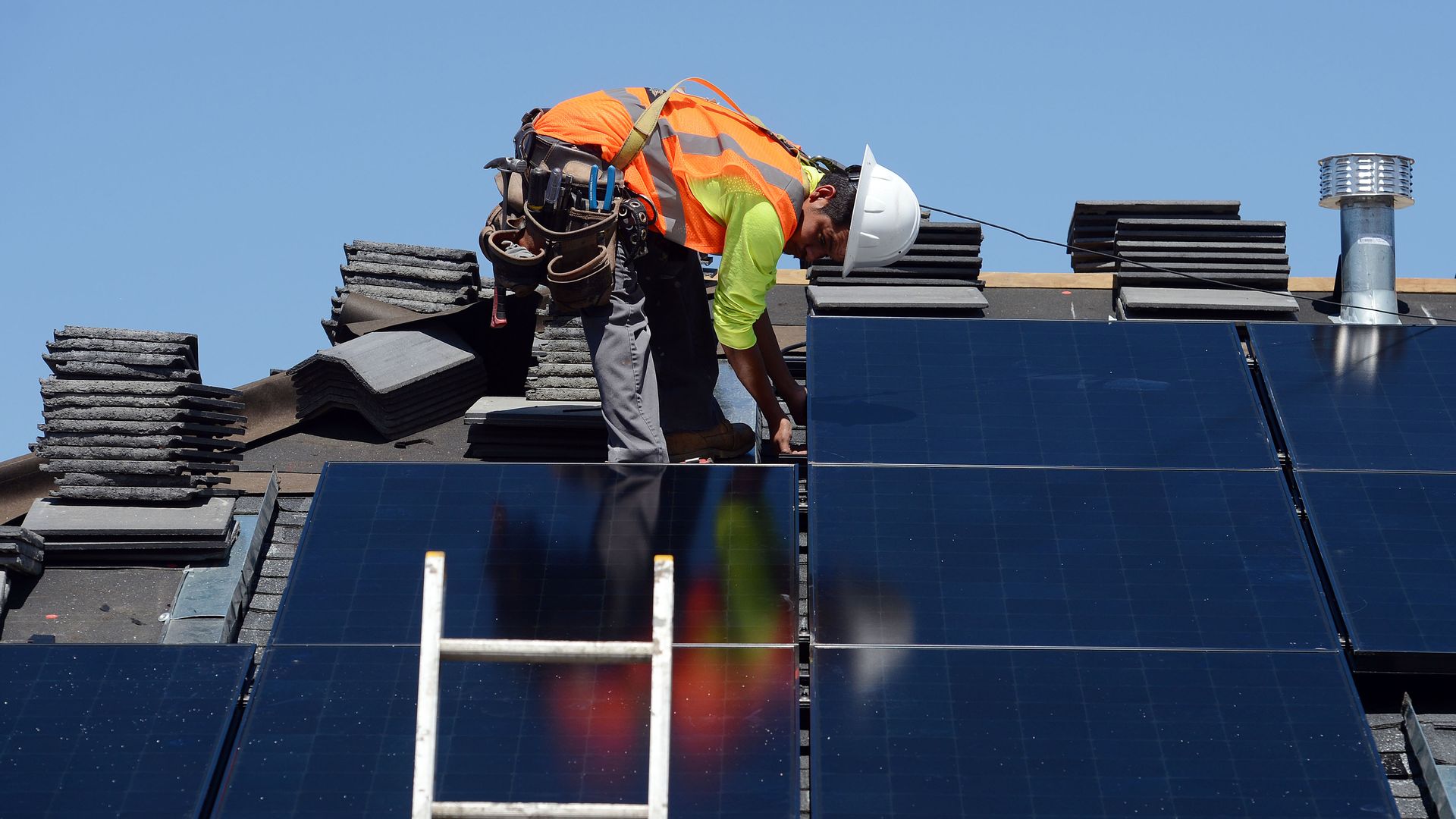
A detailed new report shows that employment in U.S. energy industries grew by 133,000 jobs in 2017 despite the first dip in solar-related employment in several years.
The big winner: The energy efficiency sector alone represented half the growth, adding a net 67,000 new jobs, according to the report.
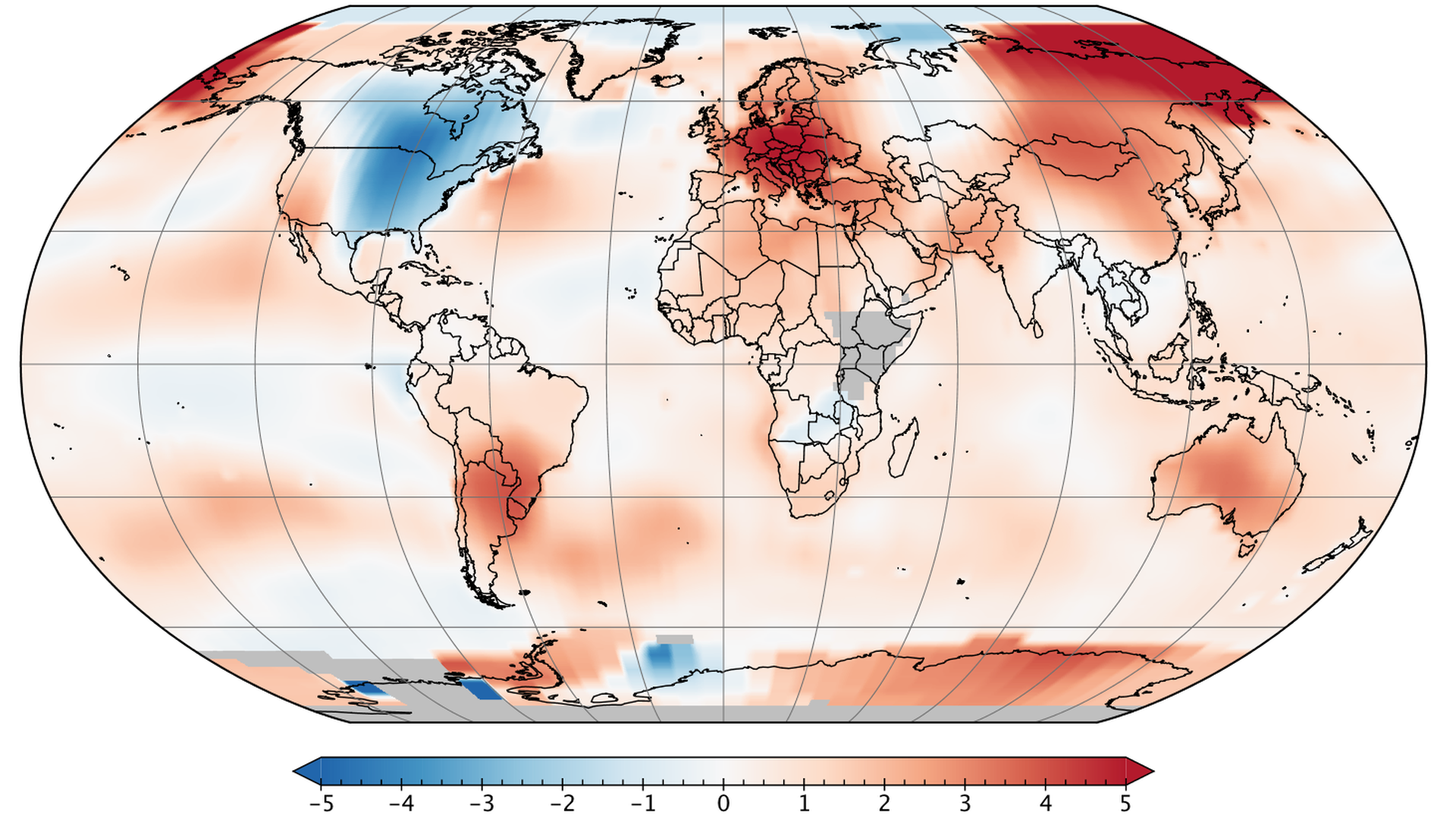
Despite the fact that millions shivered through an unusually cold and snowy start to spring in the U.S. and Canada, the world still had the third-warmest such month in 138 years of record-keeping, according to new NASA data out Wednesday.
Separate data released from the National Oceanic and Atmospheric Administration (NOAA) on Thursday also found April was the third-warmest such month, and the 400th straight month with a temperature above the 20th century average.
New research from NASA finds that human activities, including causing global warming and depleting groundwater for agriculture, are making for an increasingly water-stressed world. It's the first global accounting of trends in freshwater availability.
"No national, regional, or local water plan or assessment should overlook these estimates - they are the boundary conditions that shape water security."
— Marc Levy, a researcher at Columbia University's Earth Institute who was not involved in the new study
Market fears of snapback sanctions on Iranian oil exports have caused oil prices to rise, providing a stark reminder that the U.S. is still the world's largest oil consumer. In response to the trend, President Trump said that such prices "will not be accepted."
Why it Matters: In a global oil market dominated by OPEC and private U.S. shale producers, the Trump administration actually has little direct influence on prices and is largely at the mercy of market forces. Meanwhile, the administration has done little on clean energy, where policy could make a meaningful impact.
The United States' crude oil exports averaged 2.57 million barrels per day for the week that ended May 11, the highest level on record, according to newly released federal data.
Why it matters: The data shows how the shale oil production boom, combined with the lifting of extremely heavy export restrictions in a late 2015 law, is transforming the U.S. into an increasingly prominent player in global crude markets.
The last 24 hours have brought good and bad news for Tesla, which is grappling with the troubled production ramp-up of the Model 3 sedan and the exit of some top executives.
Why it matters: Investors and analysts are watching carefully to see whether Musk can make good on his pledge to finally reach a production rate of 5,000 Model 3s per week by mid-year.
A just-released paper from the Niskanen Center charts how Capitol Hill's partisan divide on the environment grew so stark in recent decades while offering a few reasons why GOP lawmakers' posture on climate could shift in the future.
Why it matters: The paper delves into demographic, economic and political forces that could eventually lead Republicans to moderate their positions.
The International Energy Agency said Wednesday that revived U.S. sanctions against Iran and the ongoing collapse of Venezuela's output could jolt the global market.
Why it matters: The new edition of their closely watched report contains its first extended comment since the White House decision to bail on the Iran nuclear deal — noting that the decision has "switched the focus of oil market analysis from the fundamentals to geopolitics."