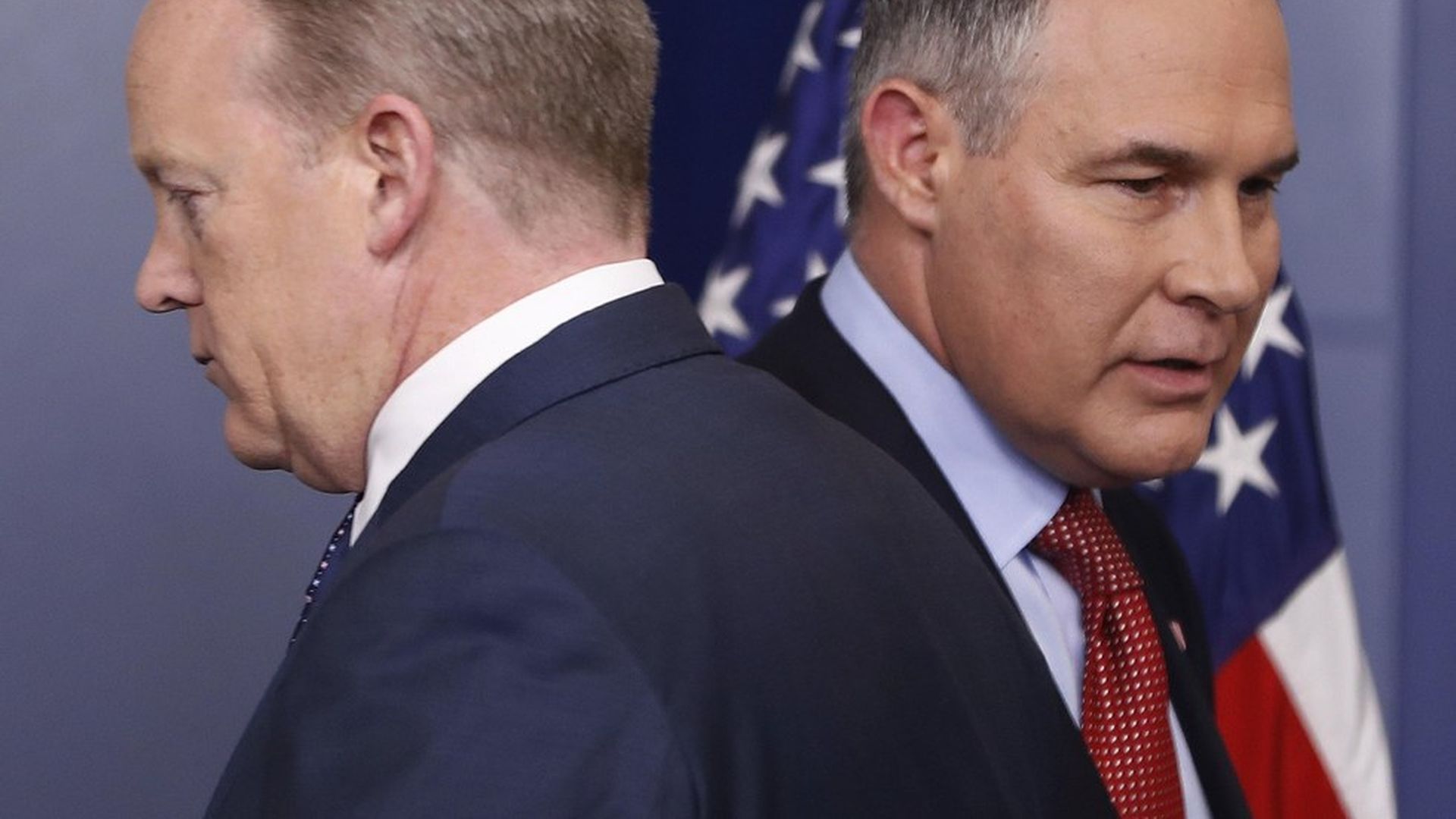
EPA chief Scott Pruitt kicked off Sean Spicer's daily press briefing Friday by commending President Trump for his decision to withdraw the U.S. from the Paris accord. "The president made a very courageous decision yesterday. He put America first," he said.
As soon as the briefing opened up to questions, Pruitt was immediately asked whether Trump believes climate change is real. Pruitt, like other senior WH officials who have repeatedly been asked the same question, refused to answer. He was asked 3 times. Spicer was later asked the same question, and he also failed to respond, instead saying "I have not had an opportunity to have that discussion."
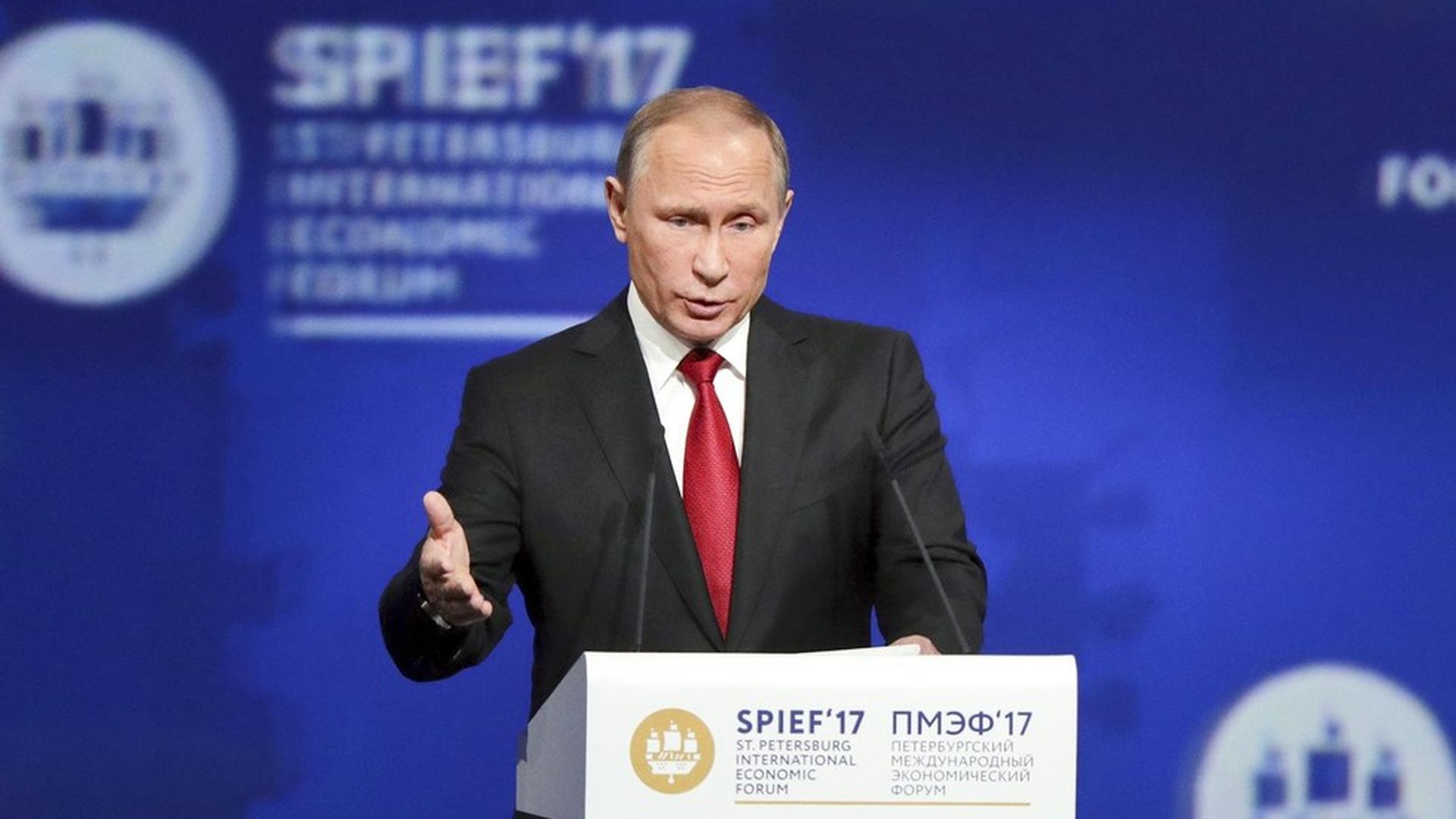
Vladimir Putin spoke with Megyn Kelly during a panel at St. Petersburg's Economic Forum on Friday. Kelly grilled him on questions about alleged Russian meddling in the U.S. election, NATO, and Syria, and Putin didn't shy away:
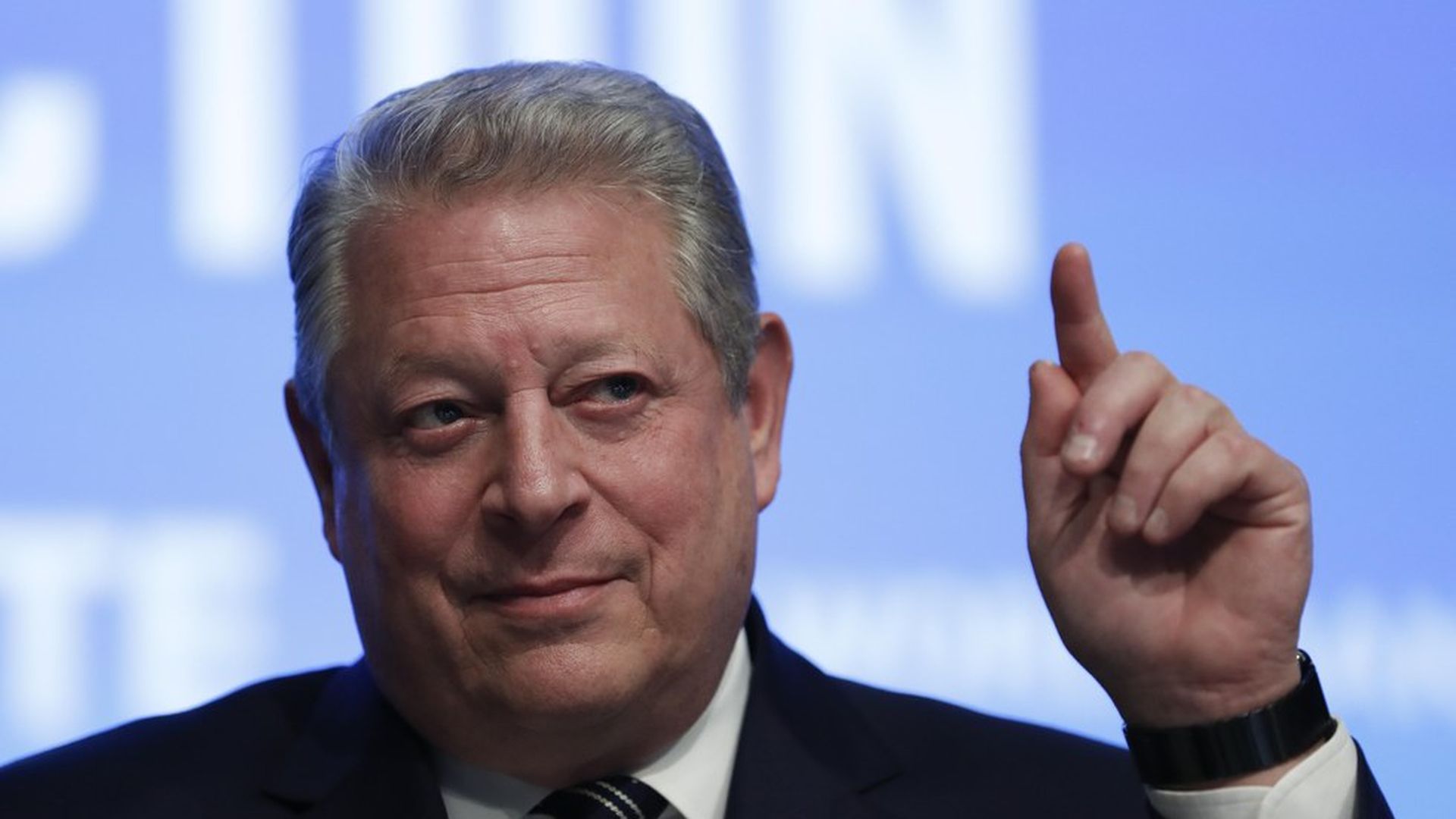
"Ten years ago, 'An Inconvenient Truth,' the documentary about Al Gore giving a slideshow presentation about an obscure scientific issue, became an unlikely blockbuster that sparked a global conversation about the climate crisis."
The most revealing moment of President Trump's announcement that he is withdrawing from the Paris climate deal came in an off-hand response of a White House official after Trump's speech. Asked whether Trump thinks climate change is real, the official said: "Can we stay on topic?"
Why this matters: To the Trump administration, the Paris climate deal has nothing to do with climate change. It's an economic issue. To Trump, withdrawing from the accord represents a triumph of populist America over greedy globalism.
Unlike other policy goals (healthcare and tax reform) Trump isn't even acknowledging climate change is a problem. That makes his overtures about being open to renegotiate and re-enter the Paris deal suspect. Speaking after Trump, administration officials didn't offer any specific ways in which Trump would do that, with one official beginning but not finishing the following sentence before switching topics: "You'll see actions in the coming weeks..."
Environmentalists and scientists aren't the only ones who are upset about President Trump's decision to pull the United States out of the Paris climate accord. Leaders at many of the country's largest hospital systems are grumbling behind the scenes that the withdrawal is a mistake after pleading with the Trump administration this month to stay.
Between the lines: Hospitals are on the front lines of climate change, as studies have shown climate change increases the incidence of infectious diseases, respiratory illnesses and other health problems.
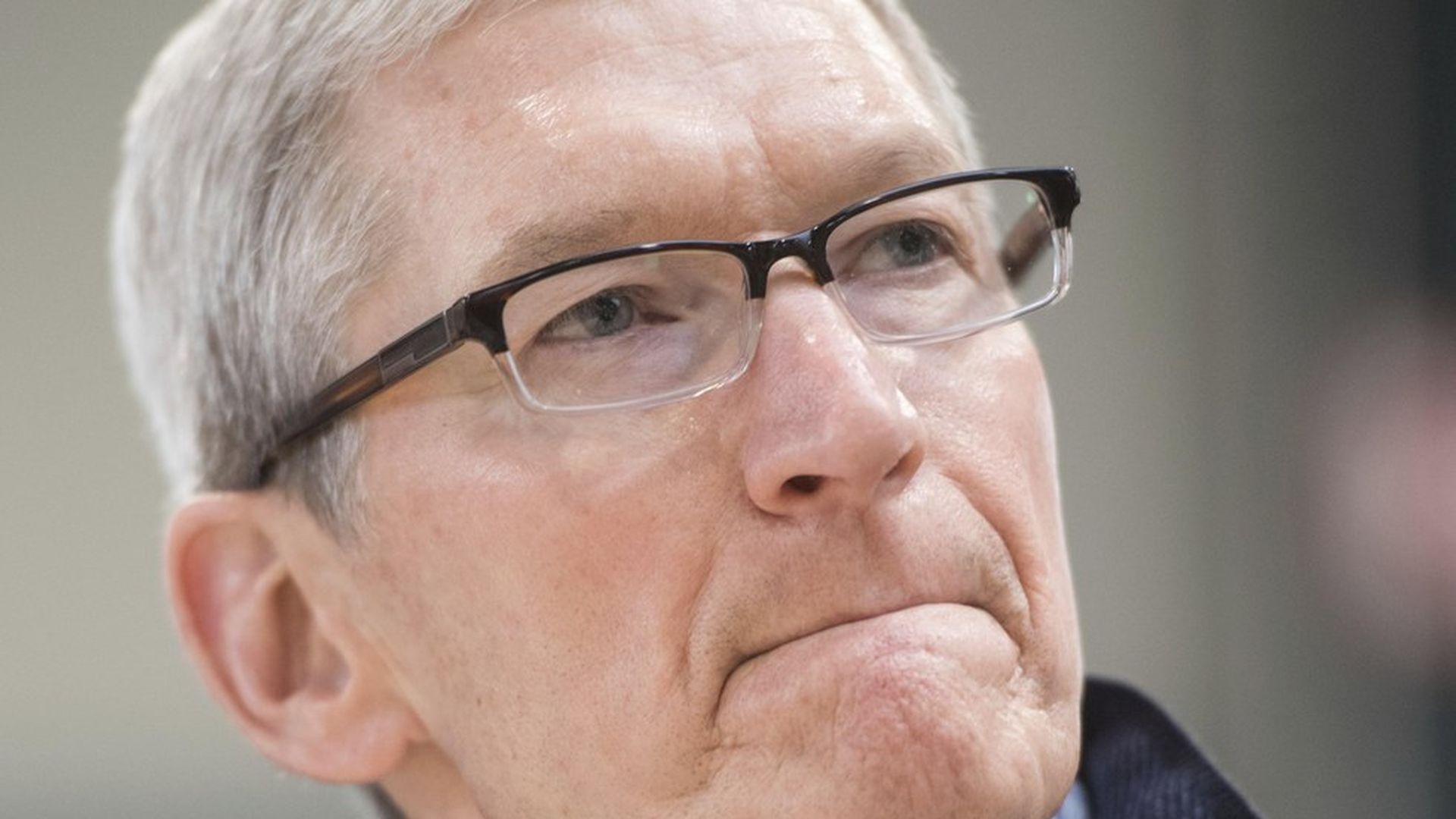
Apple CEO Tim Cook issued a strongly worded e-mail Thursday taking issue with president Trump's move to drop out of the Paris accord.
Climate change is real and we all share a responsibility to fight it. I want to reassure you that today's developments will have no impact on Apple's efforts to protect the environment.
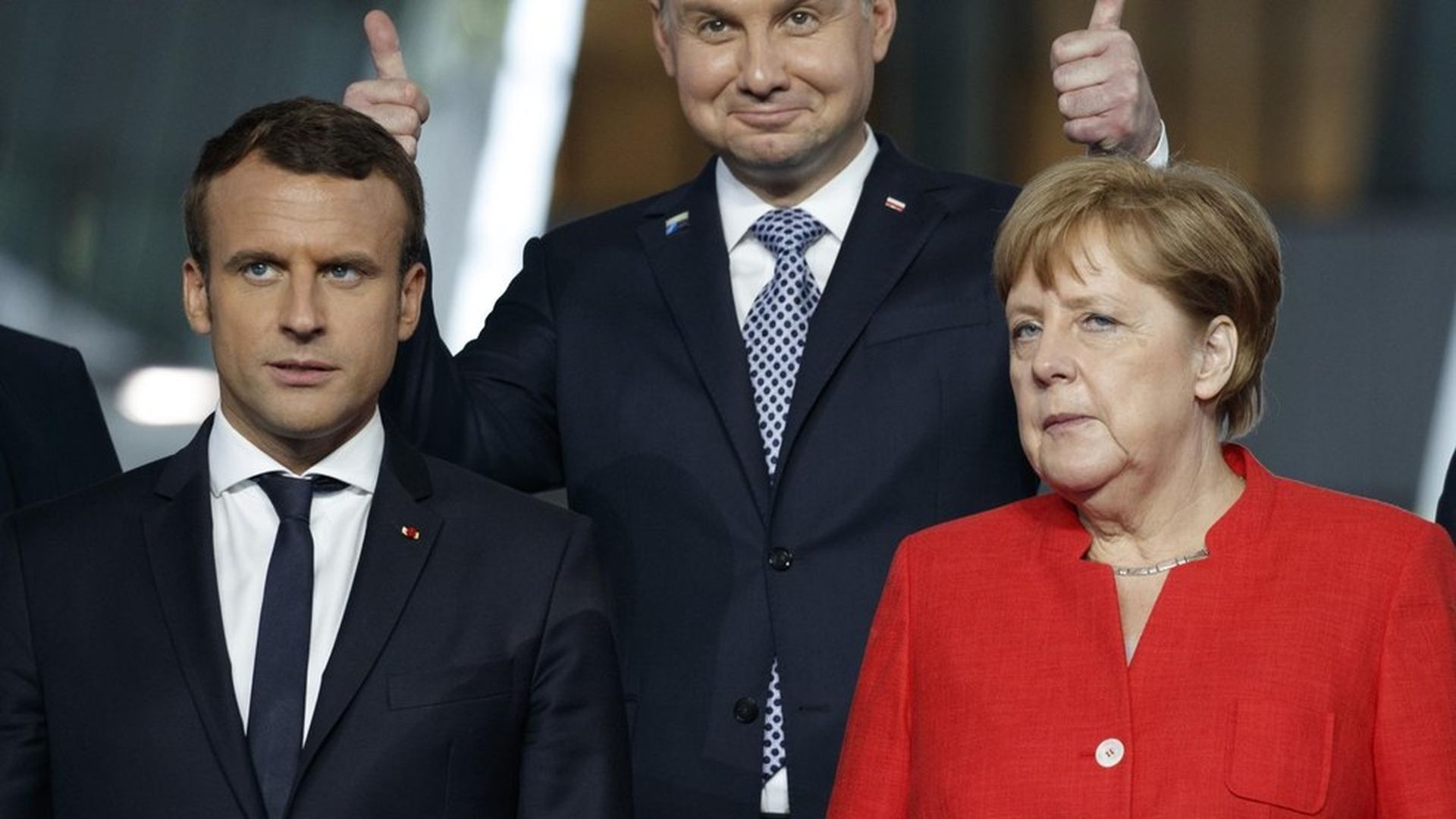
The heads of state and government of Germany, France, and Italy — fellow G7 leader Theresa May was notably absent — issued a joint statement that "[takes] note with regret" President Trump's decision to withdraw from the Paris climate agreement and hits back at Trump's call to renegotiate the deal.
Summing it up: "We deem the momentum generated in Paris in December 2015 irreversible and we firmly believe that the Paris Agreement cannot be renegotiated, since it is a vital instrument for our planet, societies, and economies."
And French President Emmanuel Macron gave a televised address on Trump's decision, stating that, "On climate, there is no plan B because there is no planet B," adding, "The United States has turned its back on the world, but France will not turn its back on Americans." The kicker:
Senior White House officials briefed reporters Thursday on the details behind President Trump's decision to pull the U.S. out of the Paris climate deal. They repeatedly insisted that Trump is "sincere" in his promise to renegotiate a better deal for the American economy, and stated that they have no doubts that other countries will work with them:
"Other countries and our allies have a strong interest in coming to an agreement with the US. There is no question that other countries are going to want to sit down with us and talk about a potential way forward."
Note: Shortly after Trump's official announcement to withdraw the U.S., the leaders France, Italy, and Germany released a statement noting their "regret" of the decision, and stated that they "firmly believe that the Paris Agreement cannot be renegotiated."
As President Trump was announcing that he will take the U.S. out of the Paris climate agreement, Elon Musk tweeted that he will no longer be working with the Trump administration.
Yesterday: The Tesla CEO, who served on the White House Manufacturing Jobs Initiative and business advisory council, said yesterday that he would "depart councils" if Trump went through with the withdrawal. As Axios' Alexi McCammond notes, Musk's Tesla was one of many major companies, including ExxonMobil and Apple, who urged Trump to remain in the Paris deal.
The White House is spinning the withdrawal from the Paris climate accord by focusing on how Trump is fulfilling a campaign promise, how much it would cost the U.S. to stay in (it's a "BAD" deal for Americans), and how the results from the deal would have been "negligible" anyways, according to documents obtained by Axios.
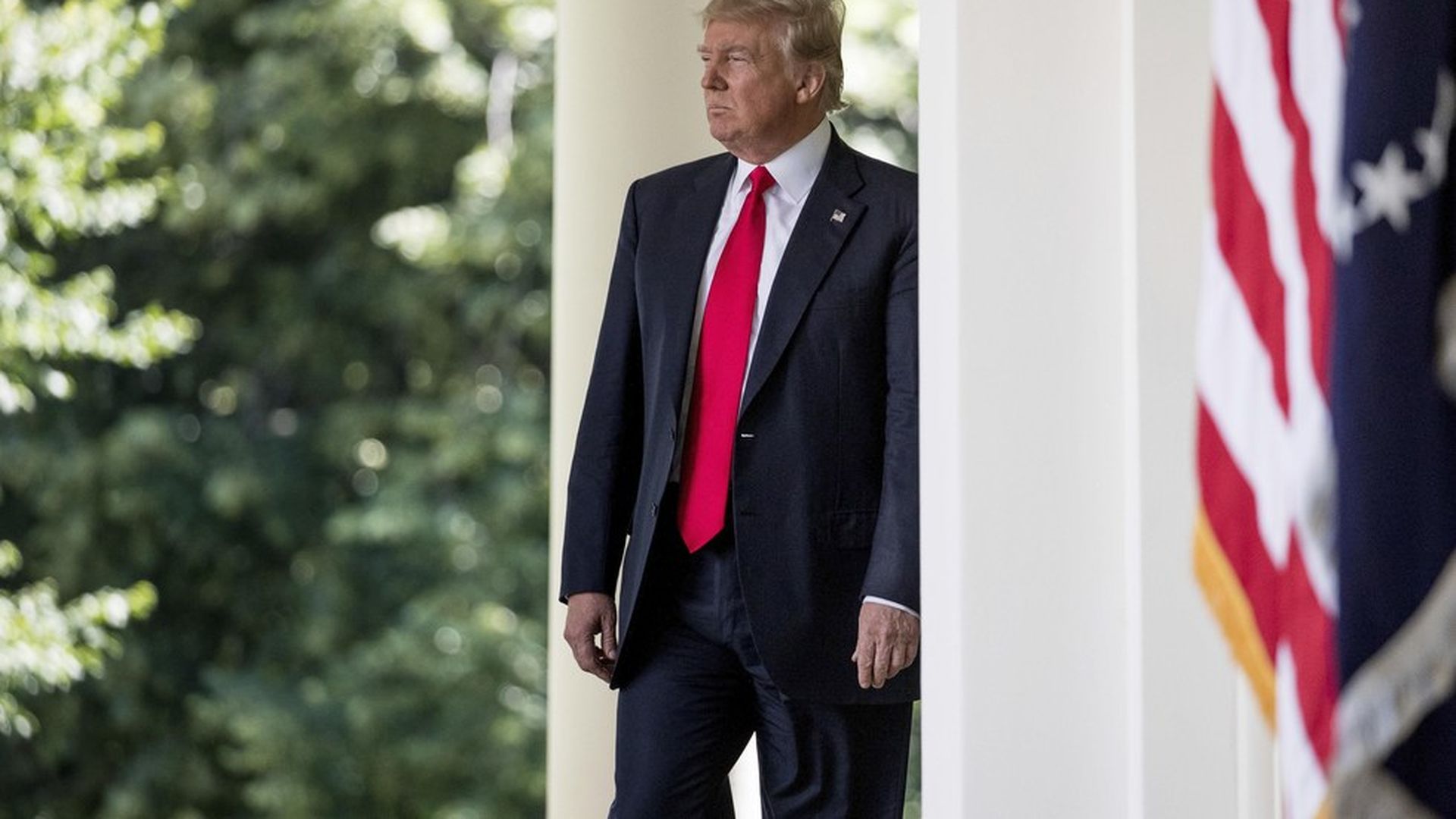
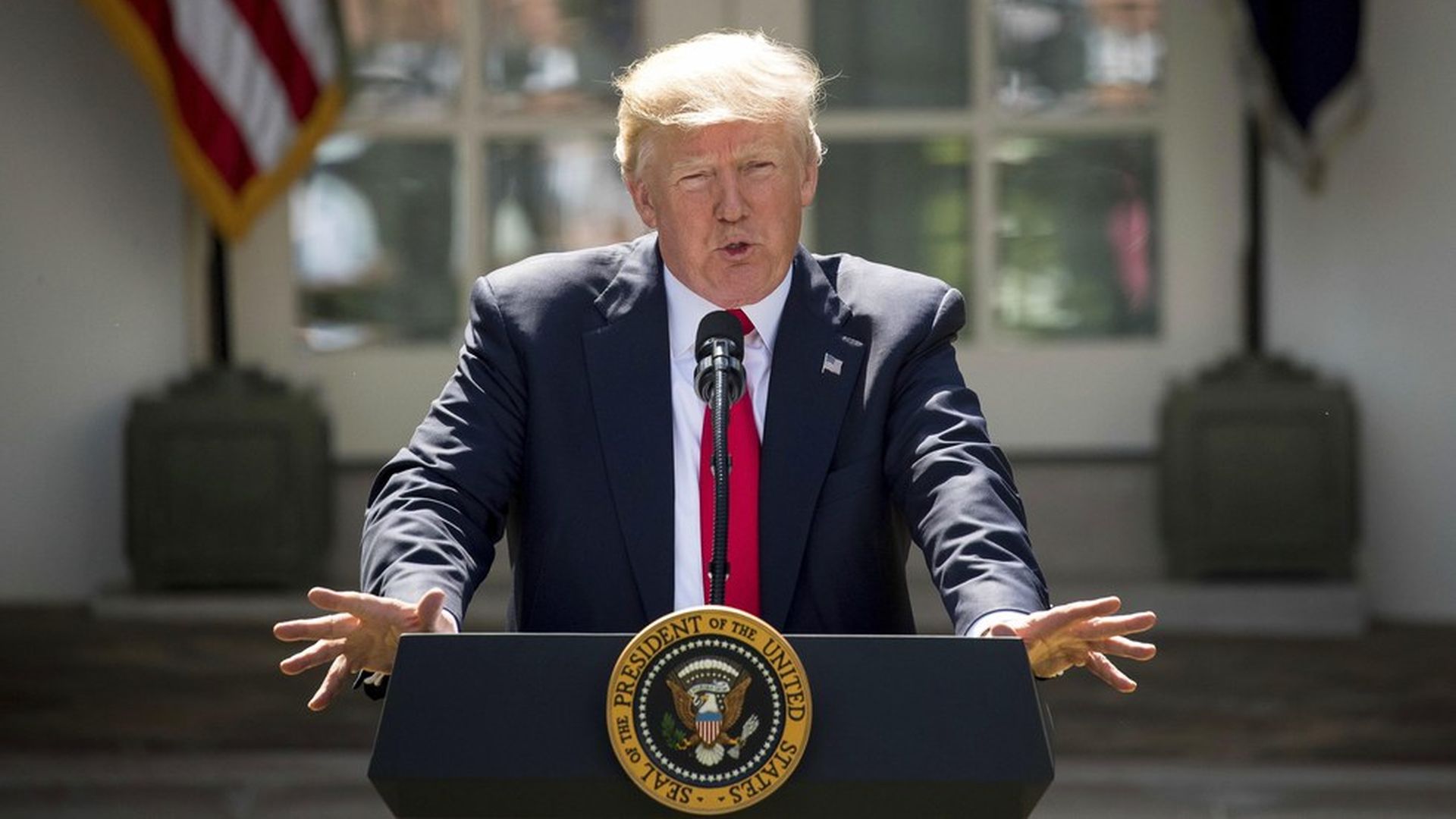
Keeping a key campaign promise, President Trump announced his intention to withdraw from the Paris climate agreement in a Rose Garden speech this afternoon, trumpeting an "America first" message that the United States will forge its own path on climate change — joining Nicaragua and Syria as the only nations outside of the agreement.
Trump's big line: "I was elected to represent the citizens of Pittsburgh — not Paris."
The key quote: "As of today, the United States will cease all implementation of the non-binding Paris accord and the draconian financial and economic burdens the agreement imposes upon our country."
The mechanism: The U.S. is expected to exit the Paris deal via the formal withdrawal procedures included in the agreement, a process that could take three to four years to complete. The administration chose not to exit the underlying U.N. climate change treaty — which would have been a faster but much more tumultuous choice.
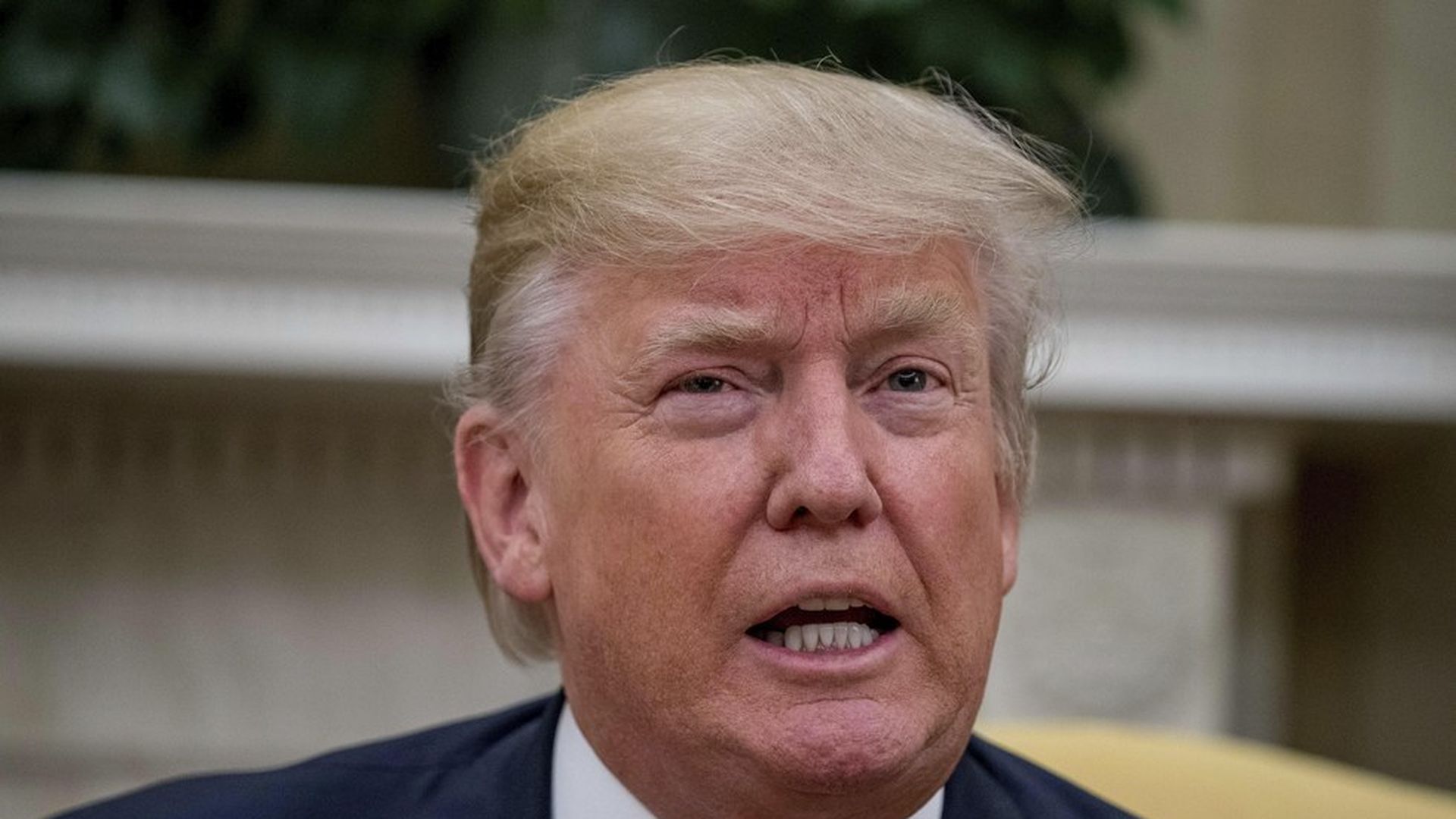
President Trump's decision to pull out of the global Paris climate agreement — joining Syria and Nicaragua as the only countries not in the pact — will signal to the world that his administration does not view climate change as a significant concern.
Focus on this: Trump's call to withdraw might sway other countries around the globe, especially developing countries like India, to move away from an active position on combatting climate change.
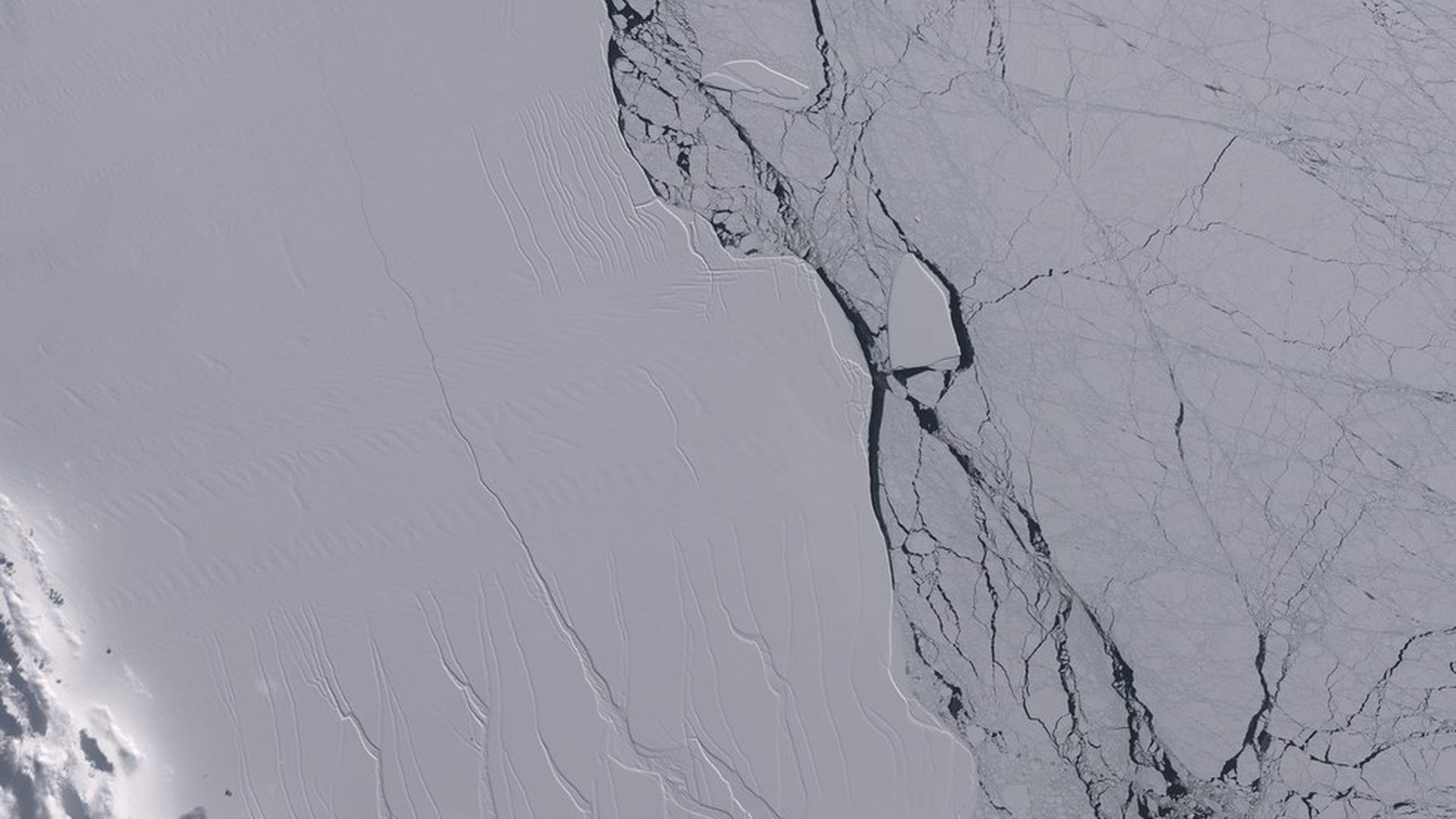
A long crack in the Larsen C ice shelf in Antarctica grew 11 miles last week, leaving only 8 miles until the 2,000 square mile iceberg is set free into the Southern Ocean."There appears to be very little to prevent the iceberg from breaking away completely," according to Project MIDAS researchers
Why it matters: The iceberg breaking off from the ice shelf will not raise the sea level itself, since the ice is already floating. But as the ice shelves thin, glaciers flow quicker into the sea, which could then cause sea levels to rise.
Keep in mind: Larsen C ice shelf has far less ice beneath it than other ice shelves that are losing mass, the Washington Post points out.
Big picture: Another global warming effect resurfaces just as Trump makes his decision on whether to stay in or leave the Paris Climate Agreement today.
The controversial Dakota Access Pipeline of the Texas-based Energy Transfer Partners began operations Thursday. It is now carrying oil from North Dakota through South Dakota and Iowa to Illinois, per the AP. The oil has started shipping for customers.
Context: It's a grim day for environmentalists — the massive pipeline that was halted under Obama but approved by Trump is starting up the same day Trump is to announce whether he will pull out of the Paris climate deal limiting global carbon emissions. Read Axios' scoop on how Trump has made his decision to withdraw from the accord.
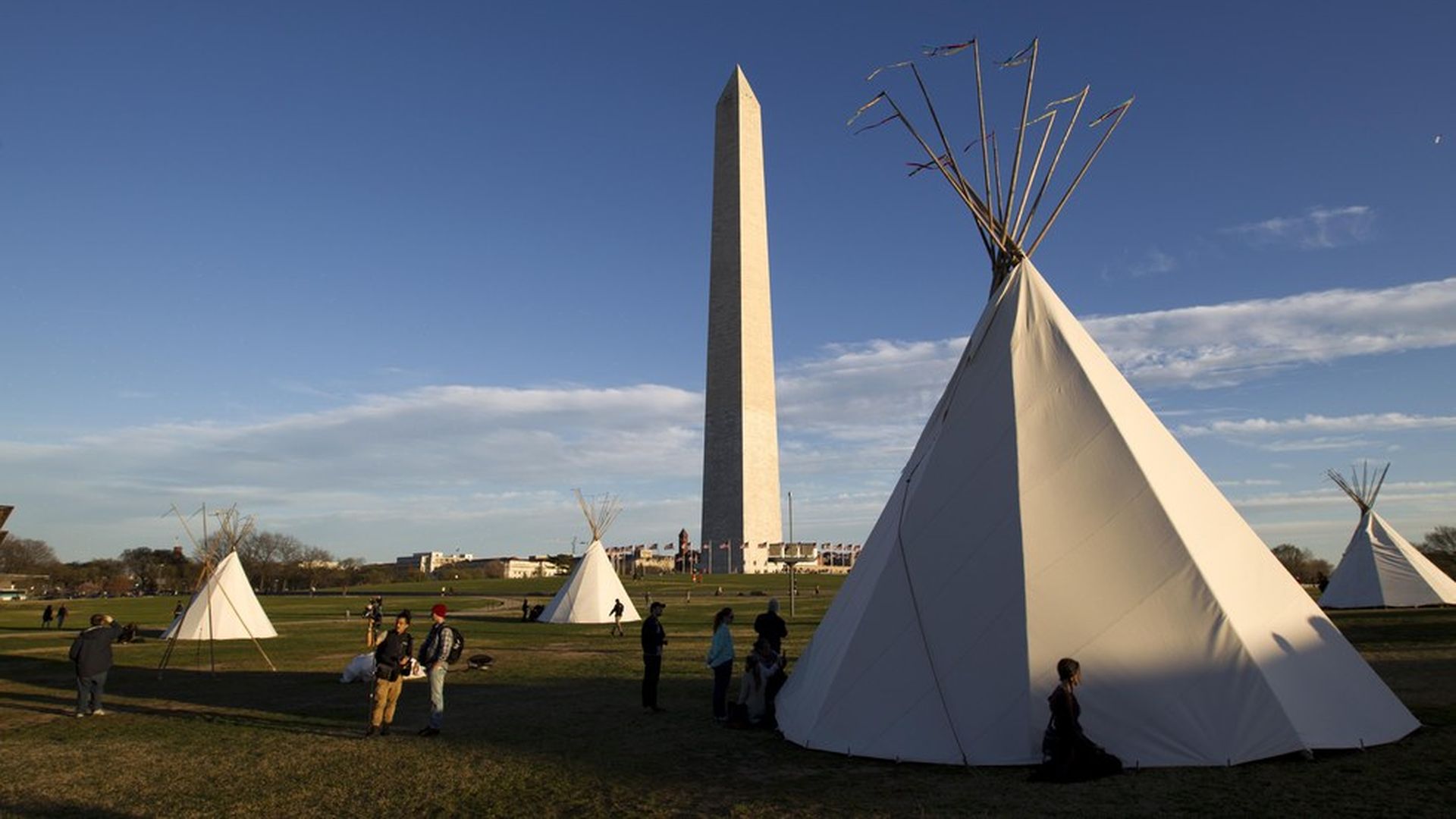
The pushback: Sioux tribes in North and South Dakota are still in federal court working to shut down the pipeline, which they fear could pollute water sources.







/2017/12/15/1513302698231.gif?w=3840)