Meta told staff Thursday it plans to lay off roughly 8,000 people, or around 10% of the company, two sources confirmed to Axios.
Why it matters: The cuts underscore how soaring AI costs are pressuring even the biggest tech companies to cut jobs to protect margins and reassure investors.
Opposition to President Trump's potential Spirit Airlines bailout is mounting in Congress, including among his fellow Republicans.
Why it matters: Lawmakers from both parties are questioning whether taxpayers should rescue a repeat-bankrupt airline with an uncertain path to profitability.
President Trump on Thursday announced a drug pricing deal with Regeneron — the last of 17 manufacturers the administration pressured last year to commit to his "most favored nation" policy.
Why it matters: The deals with the other companies to lower certain drug prices are being touted as one of the administration's signature health accomplishments, though Democrats question whether the confidential arrangements are really helping consumers.
The AI economy is being constrained by the physical world: The Iran war threatens to squeeze the industrial inputs that chip manufacturers depend on, the latest confirmation that once-reliable global chokepoints are now more fragile than ever.
Why it matters: It is part of a growing pattern defining the economic conditions of the 2020s: shocks exposing the fragility of supply chains that the world took for granted.
At the start of the war, stocks fell and oil prices rose on fears of the economic fallout from a historic energy shock — now that connection is fraying.
Why it matters: It highlights a key distinction between the stock market, which frequently seems to trade on vibes and memes, and commodities markets which ultimately are tethered to real physical goods.
Tesla reported an uptick in quarterly revenue and profit, but the costs of pivoting to an AI future are starting to add up.
Why it matters: CEO Elon Musk has directed the company to invest heavily in the development and production of humanoid robots, self-driving cars and AI chips.
Spirit Airlines is in talks with the White House over a potential bailout — a move that could test how far the Trump administration is willing to go to prop up a struggling private-sector company.
Why it matters: A bailout would mark the latest in a series of increasingly aggressive examples of economic interventionism on the president's part.
Huntsville, Ala.'s global reputation for aerospace, biotech and defense often grabs headlines. But the region's continued growth depends just as much on local entrepreneurs — and access to capital that helps them launch, hire and scale.
By 2033, the manufacturing sector is projected to need 3.8 million additional workers, with half of those jobs at risk of remaining unfilled. [1]
Why it's important: These talent shortages are currently slowing America's progress in defense, advanced manufacturing, semiconductor fabrication and energy — creating real risks to national security. [2]
WASHINGTON – Financial help remains out of reach for many Americans, but AI could offer new pathways to close that gap, Rep. Josh Gottheimer (D-N.J.) said at an Axios Live event.
Why it matters: Gaps in financial literacy leave many Americans vulnerable to poor financial decisions. AI could expand access to guidance, improve decision-making and help more people manage their money effectively.
Axios' Courtenay Brown, Ashley Gold and Neil Irwin hosted conversations with Gottheimer, Rep. Young Kim (R-Calif.) and Operation HOPE CEO John Hope Bryant. The April 21 event was sponsored by FICO.
What they're saying: "A lot of Americans have no access to financial assistance, and it's a huge issue because it leaves some out and they don't get the right advice, or any advice whatsoever," Gottheimer said.
Bryant said financial literacy "used to be a poor person's issue, now it's a middle-class issue."
Gottheimer pointed out that people with no financial background can use AI to sort through questions that come up throughout life, such as how to invest properly, when to buy a house, etc.
Yes, but: AI could be a "double-edged sword," Kim said.
"On one end, it provides access and opportunity, but on the other, it could be weaponized by bad actors to target Americans with more sophisticated scams," Kim said.
Gottheimer said a challenge is to make sure people aren't getting "crazy information" from AI and to ensure that the advice is disclosed as coming from a bot.
Content from the sponsor's segment:
In a View From the Top conversation, Rukiya Kelly, FICO's head of corporate impact and engagement, discussed combating fake financial influencers and AI chatbots spreading misinformation as more consumers turn to social platforms for financial advice.
"We have to, as credible organizations, reach people where they are," Kelly said. "If they are on those platforms, how do we get our credible information and trustworthy information to that consumer? I would say trust but verify."
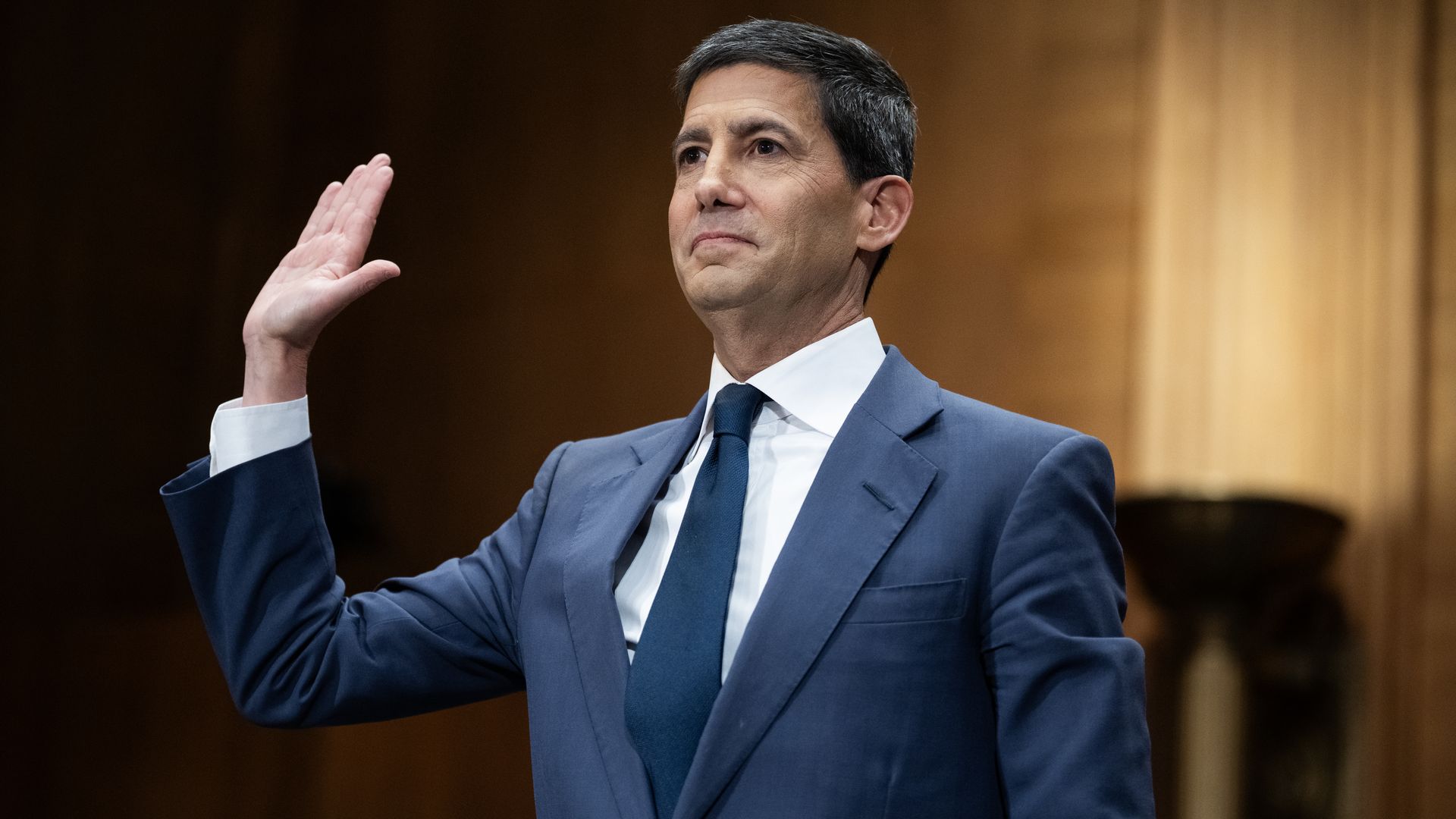
For four decades,the Federal Reserve has steadily moved toward telling the world more about its actions and intentions. Fed chair nominee Kevin Warsh wants to reverse course — envisioning a Fed that will talk less and say more.
Why it matters: This regime would bring more surprises — more policy meetings that catch financial markets off guard, less clarity on how to interpret incoming data and generally less public knowledge of what the central bank's leadership is thinking week to week and meeting to meeting.
The Trump administration in talks to bail out Spirit Airlines in a deal that would prop up the budget carrier as it scrambles to avoid liquidation, a person familiar with the matter tells Axios.
Why it matters: Spirit is one of the largest budget carriers in the U.S., but the company has been struggling to find a sustainable financial model as it grapples with rising jet fuel prices, higher labor costs and operational shortcomings.
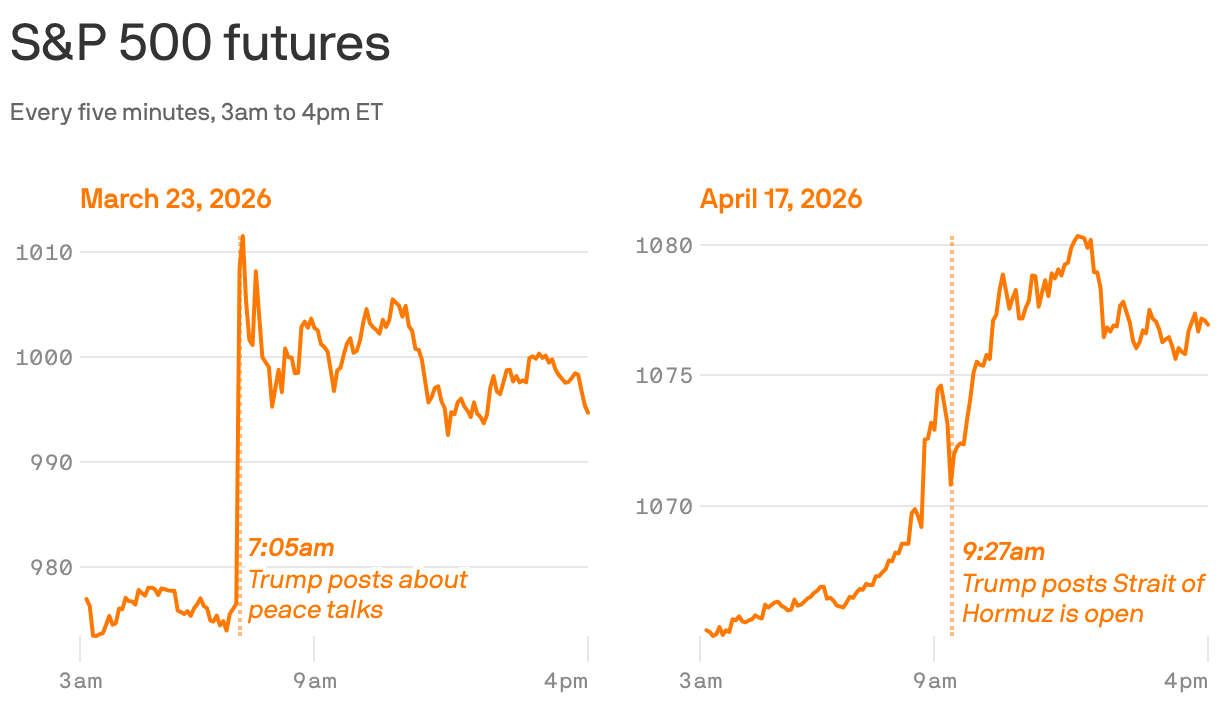
A well-timed, optimistic post on Truth Social from President Trump about the war in Iran can send stocks higher.
Why it matters: Social media posts from the White House have become key drivers of the oil and stock markets during the conflict, particularly as its resolution seems to keep moving further and further out of reach.
JPMorgan Chase is bringing its $1.5 trillion security-and-resiliency initiative to Europe.
Why it matters: European rearmament chatter is maturing, as Russia bombards Ukraine, President Trump flames NATO and air-and-missile defense demands are laid bare by the Iran war.