How Kevin Warsh wants to rewire Fed communications


Add Axios as your preferred source to
see more of our stories on Google.
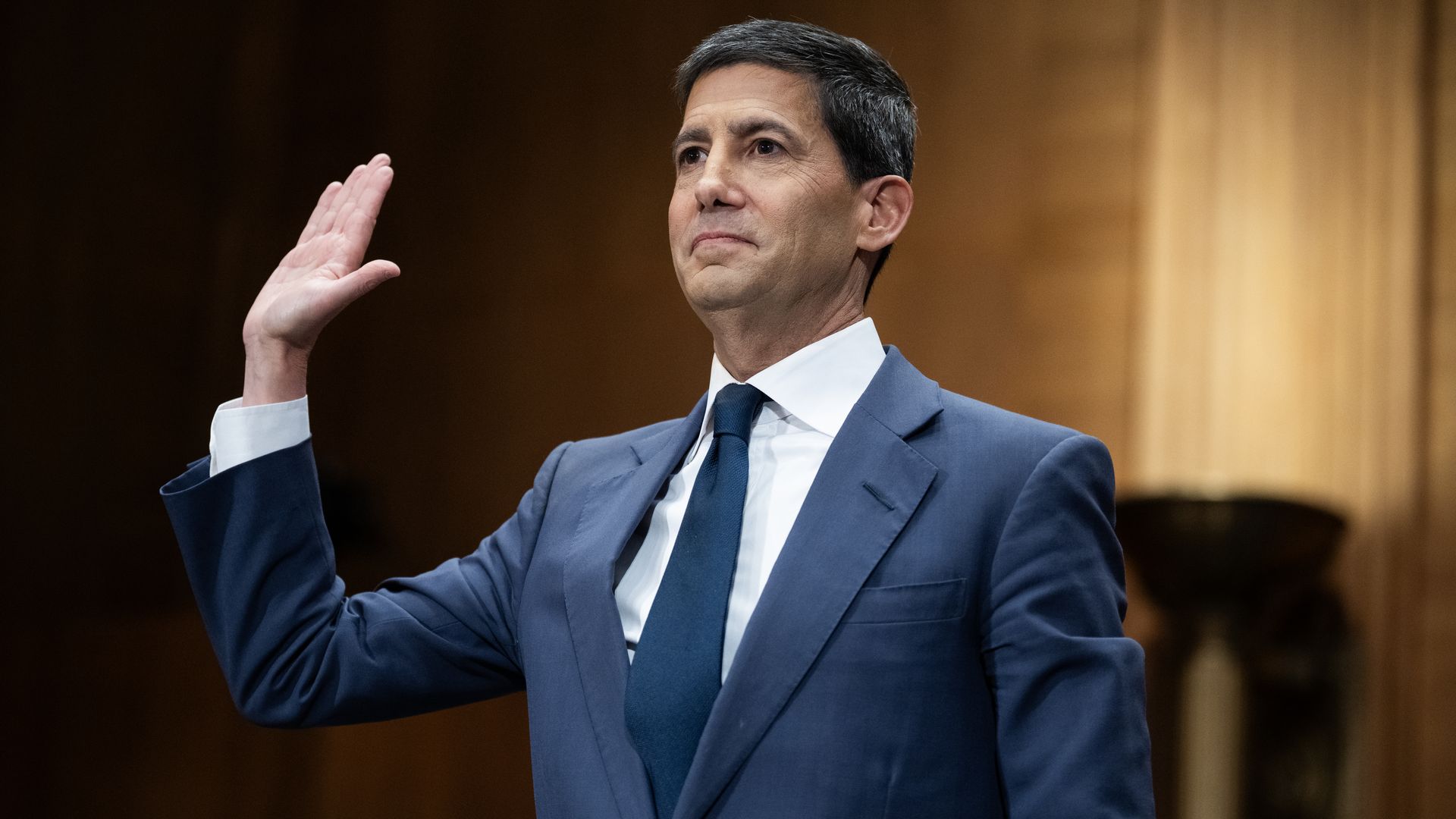
Federal Reserve chair nominee Kevin Warsh. Photo: Tom Williams/CQ-Roll Call, Inc via Getty Images
For four decades, the Federal Reserve has steadily moved toward telling the world more about its actions and intentions. Fed chair nominee Kevin Warsh wants to reverse course — envisioning a Fed that will talk less and say more.
Why it matters: This regime would bring more surprises — more policy meetings that catch financial markets off guard, less clarity on how to interpret incoming data and generally less public knowledge of what the central bank's leadership is thinking week to week and meeting to meeting.
- The benefit, in Warsh's view, is that it would help the Fed become less locked in on stale forecasts, foster better internal debates and have greater impact when it has something important to convey.
- It could mean bumpier market action on Fed days, however, as the central bank's actions would be less clearly telegraphed in advance.
Catch up quick: At his confirmation hearing Tuesday, Warsh spoke of a "regime change" in how the Fed communicates.
- He is down on forward guidance, the practice of Fed leaders projecting rates policy, arguing that it contributes to policy errors by making them feel constrained from adapting when conditions change (Exhibit A: the 2001 inflation outburst).
- He particularly dislikes the dot plot, a key component of quarterly guidance, in which Fed officials write down their expectations for the appropriate setting of interest rate policy four times a year.
- He seemed skeptical of continuing the recent tradition of the Fed chair holding a press conference after every meeting, and in general of the frequency with which Fed leadership has been speaking publicly.
The big picture: Warsh anticipates "messier" policy meetings, where decisions are made in the room rather than telegraphed far in advance and debates are real rather than quasi-scripted.
What they're saying: Currently, Fed officials "speak quite frequently," Warsh told the Senate Banking Committee.
- "I would say this: I think truth-seeking is more important than repetition. If one has a press conference, one wants to deliver some important news."
Zoom in: Once chair, Warsh can make some changes to the Fed's operating procedure unilaterally, like changing the cadence or duration of press conferences.
- Others, like the quarterly Summary of Economic Projections that includes the dot plot, are products of the Federal Open Market Committee, so Warsh would need to persuade his colleagues of a new approach.
- It is unclear how much the other Fed governors and 12 reserve bank presidents around the country would obey if Warsh simply asks them to give fewer speeches and TV interviews.
- Many of the Fed chair's powers are those of persuasion and leadership, rather than explicit control.
Flashback: The modern history of the Fed has been pushing toward more expansive public communication. In the early Greenspan era, the Fed's policy committee didn't even announce its interest rate moves; traders had to intuit them from action in money markets.
- That gradually gave way to policy statements announcing each meeting and the reasons for changes, then, especially under chair Ben Bernanke, a whole suite of steps toward clear communication and forward guidance.
- Bernanke and his successors, Janet Yellen and Jerome Powell, were betting that that abundant communication would make policy more effective, because markets would do the Fed's work for it in anticipating policy moves.
- Powell shifted to holding a press conference after every meeting, eight times a year, up from four under Yellen and zero when Bernanke started. He has often used the conference as an opportunity to elaborate on the rationale behind policy actions.
The bottom line: Once Warsh is confirmed, its days may be numbered.
