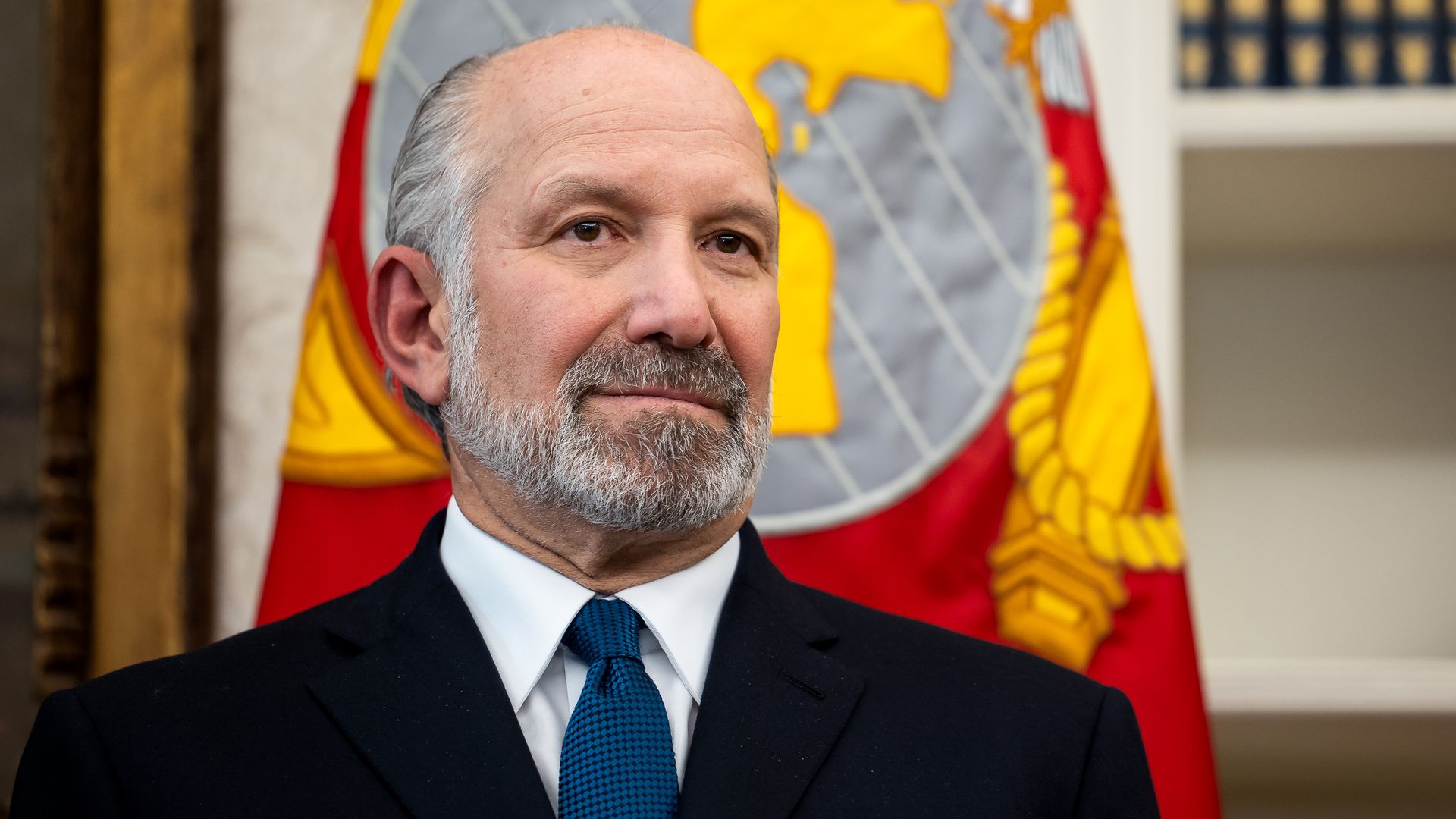
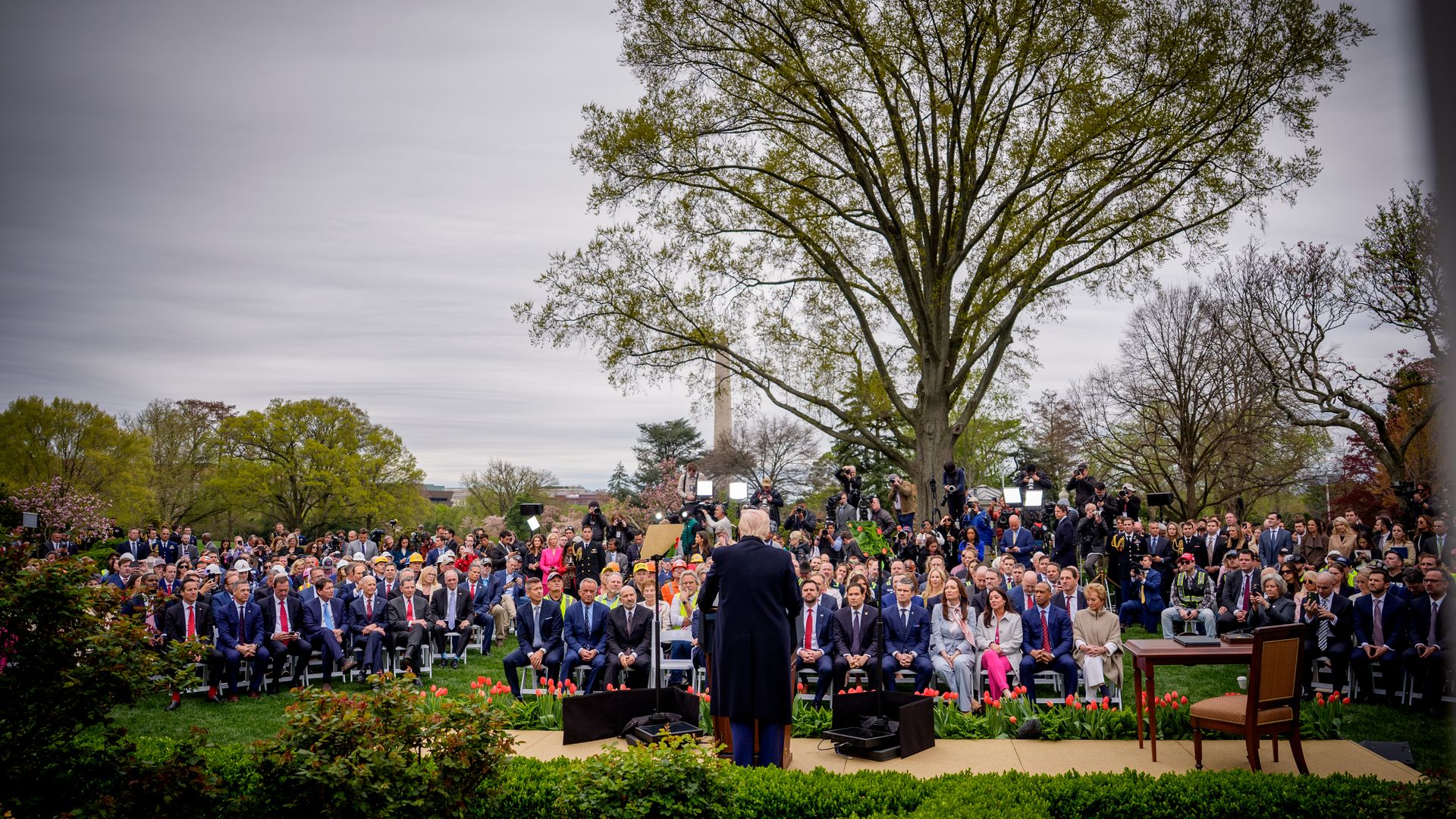
Commerce Secretary Howard Lutnick on Thursday touted the use of robotics in his pitch for an American "manufacturing renaissance."
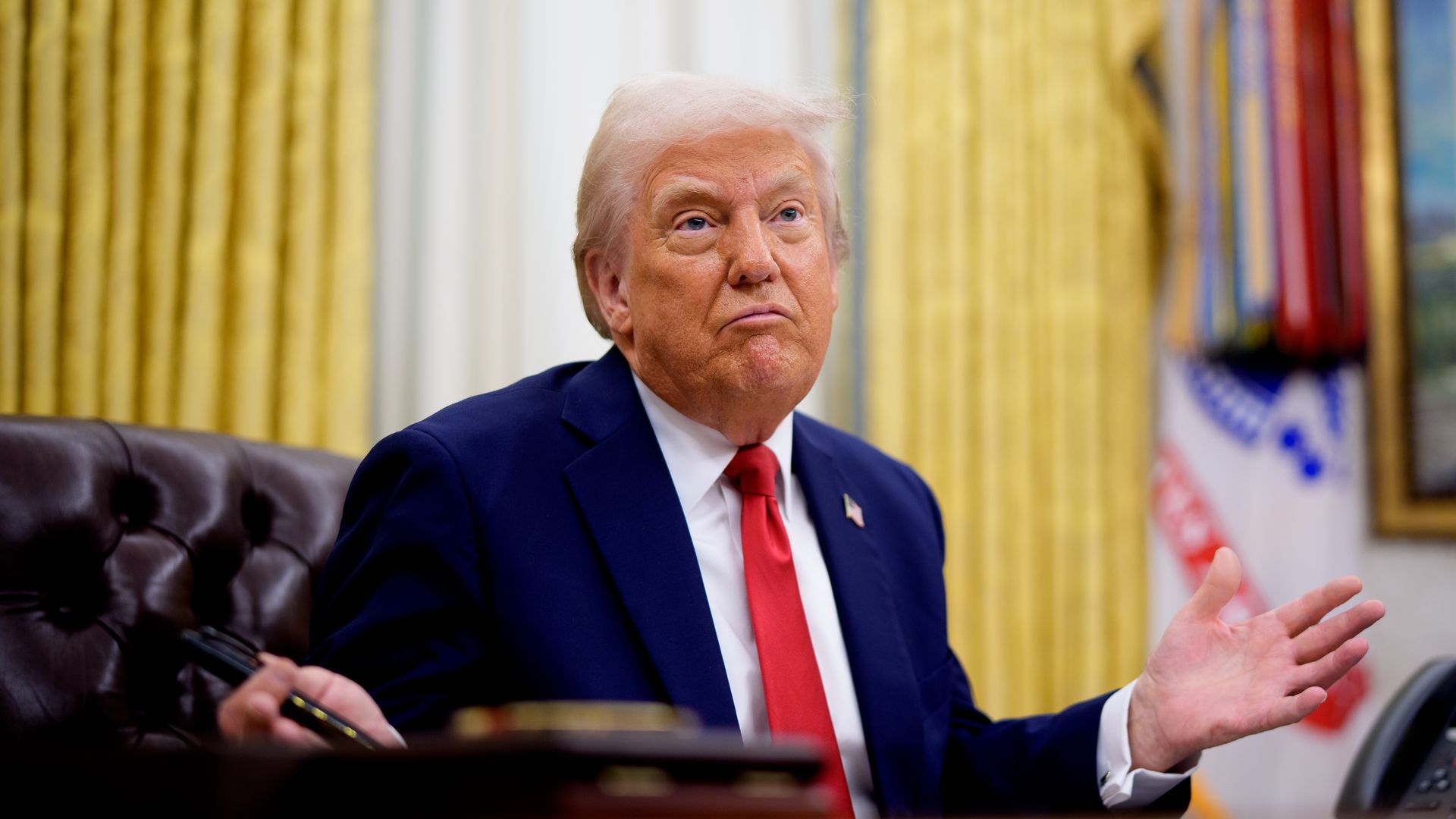
The big picture: While President Trump's tariffs are meant to boost American manufacturing and jobs, U.S. manufacturers will likely hurt from these tariffs, at least in the short run. Whether they lead to more jobs in the long term remains an open question.
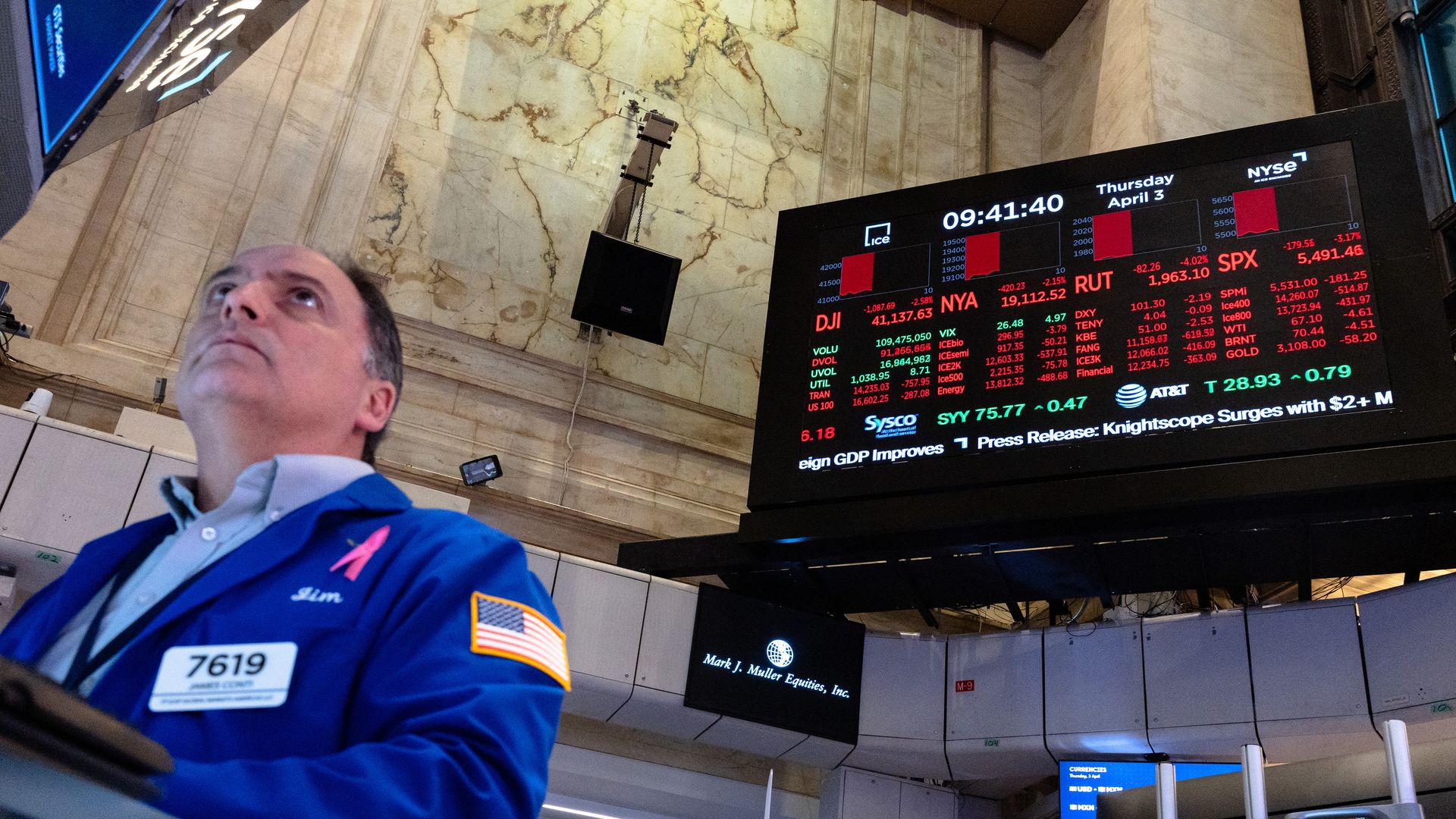
The S&P 500 plunged 4.8%, as over $2 trillion of its constituents' market caps went up in smoke. The tech heavy Nasdaq cratered 6%, while the Russell 2000 index of small caps shed 6.6%.
Zoom in: On a more targeted level, individual stocks were rocked as investors dove into the potential tariff exposures of individual industries and companies.
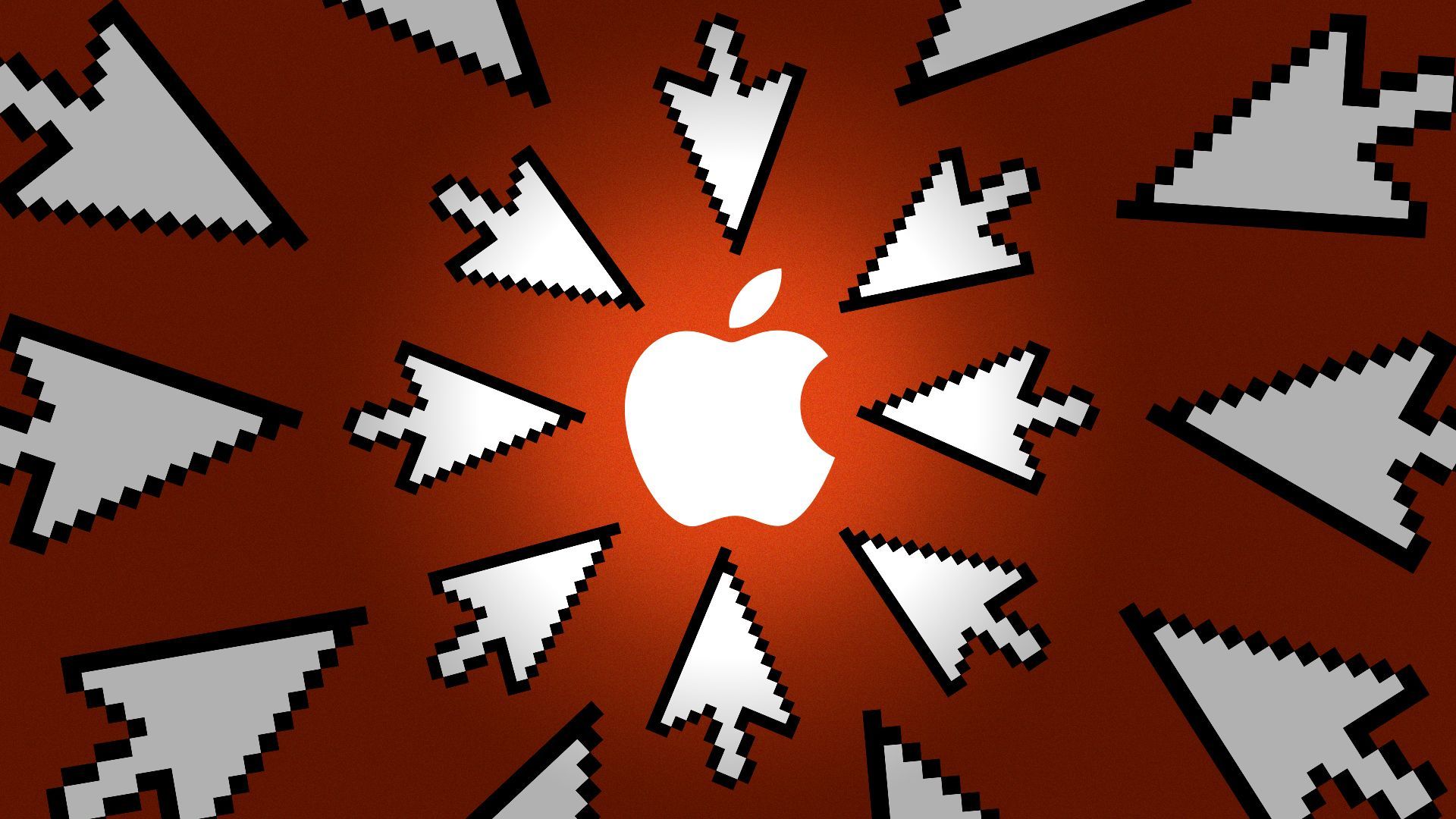
Apple's leaders, customers and fans are all holding their breath to see whether Trump's gigantic new tariffs will hamstring the iPhone maker.
Why it matters: Steve Jobs and Tim Cook built the most successful and arguably most beloved U.S. company for the last 25 years on a foundation of open trade, particularly with China.
The official formula for calculating the "reciprocal" tariffs on countries, as published by the U.S. Trade Representative, is much less complicated than it looks at first glance.
Why it matters: The word "reciprocal" notwithstanding, there's nothing in the formula that represents tariffs or any other trade barriers imposed on U.S. exports.
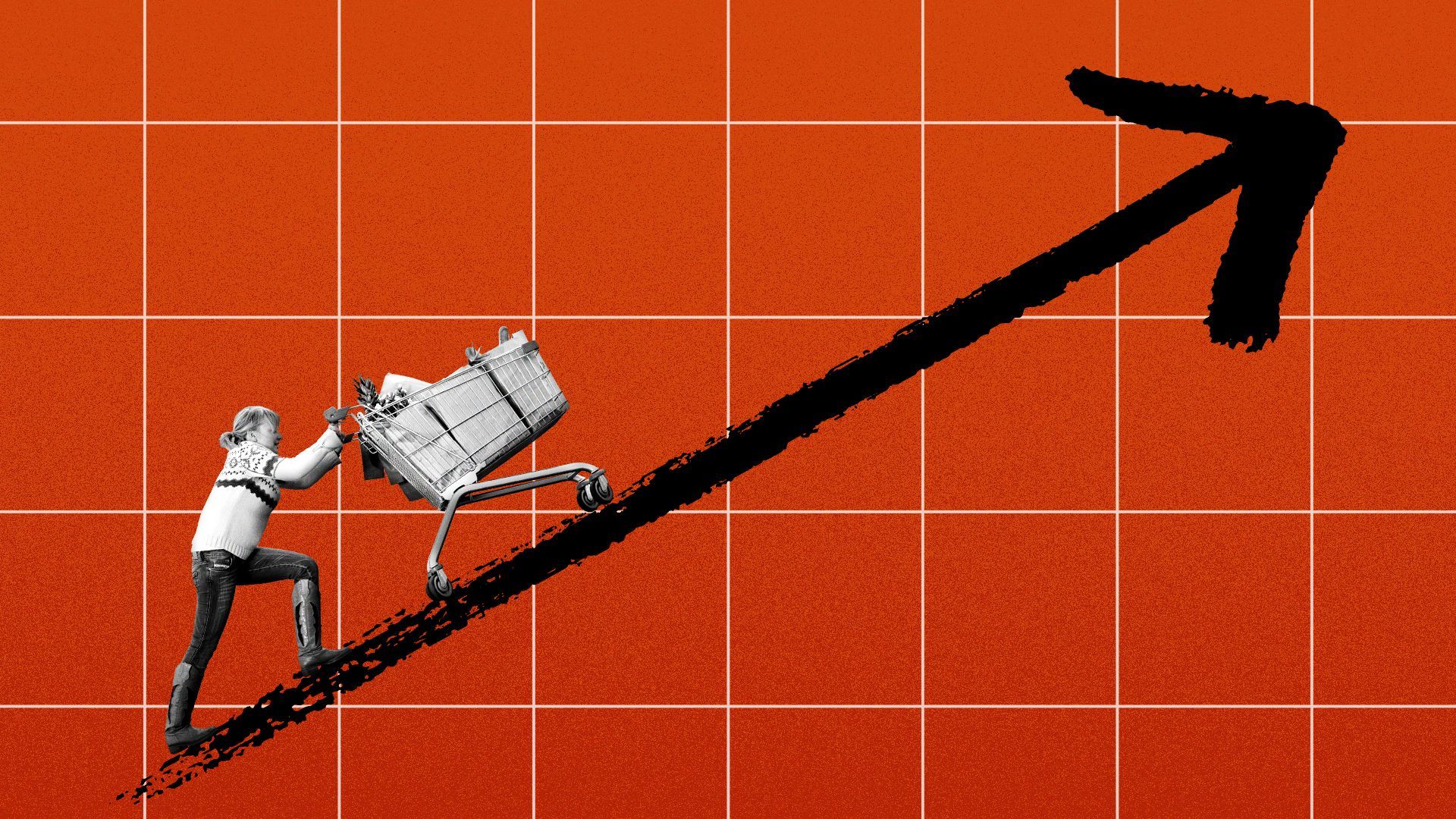
The president campaigned on a promise to bring down grocery prices, but the new tariffs announced Wednesday will do the opposite for many staple foods.
Why it matters: The supermarket is where Americans feel the most affected by inflation.
President Trump's announcement Wednesdaythat the U.S. will impose a baseline 10% tariff on imports, with heavier reciprocal levies on goods from some countries, has left world leaders reeling.
The big picture: The reciprocal tariffs will impact dozens of nations, including some of the country's largest trading partners.
The helmsmen of the stablecoin legislation in the House have said that it's important for the bill to be written in concert with the next one on the agenda — the law that will more broadly define how U.S. cryptocurrency markets should operate.
During yesterday's hearings, Hill told Democrats that some of their concerns about stablecoins were better dealt with in that so-called market structure legislation.
Hill's spokesperson confirmed to Axios that they see the two areas of legislation as a high priority, citing quotes from Hill and Steil in Punchbowl about how the two pieces of legislation go well together.
When President Trump signed the EO for a Strategic Bitcoin Reserve last month, he ordered a report from U.S. agencies on how much BTC they hold and where it is.
The report was due in 30 days, which is April 5. And that's a Saturday, so it would be due Monday.
Why it matters: If a lot of bitcoins get locked up by the U.S. government, that could cause a move up for the asset.
Yes, but: That bounce would likely be short-lived.
Notably, a spokesperson for the White House tells us the reports don't have to be made public.
Why it matters: The stock market is not the economy, but the reaction is an early, visceral demonstration of the fear the public has over rising prices, slowing growth and the possibility of a recession.
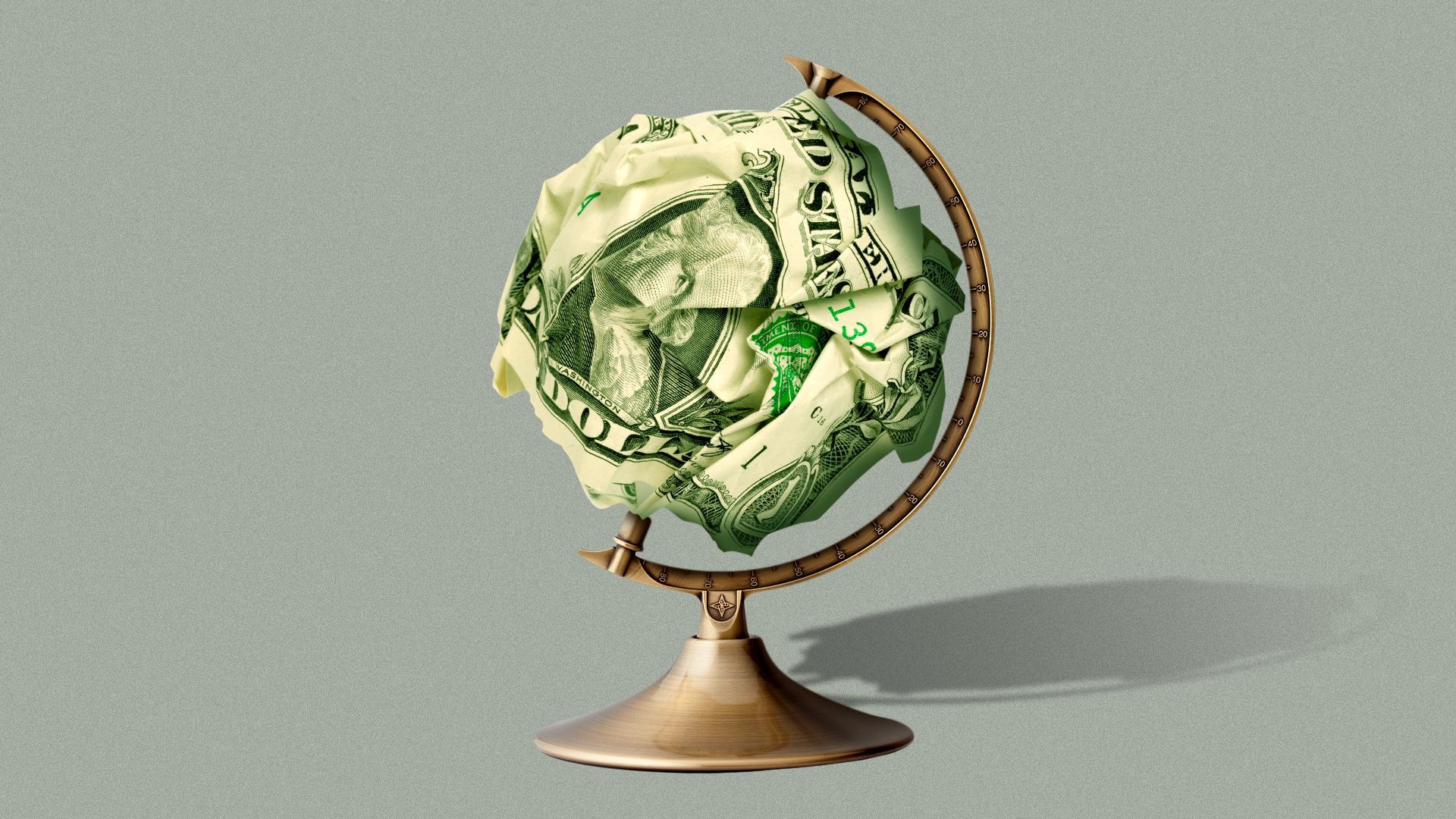
The world economic order is shiftingbeneath our feet,as historic allies look to America-proof their economies. President Trump's latest tariff announcement will accelerate the shift.
Why it matters: Global leaders and corporate executives alike are trying to figure out how to rejigger their economies to be less reliant on the U.S. in the longer run, even as they contemplate near-term retaliatory measures in hopes of lessening the tariff pain.
Corporate America's reaction to President Trump's tariffs has been muted so far, with many relying on trade associations or special interest groups to speak on their behalf.
Why it matters: Corporate America has recentlydrawn a hard line in the sand regarding how and when they comment on public policy, social issues or cultural moments.
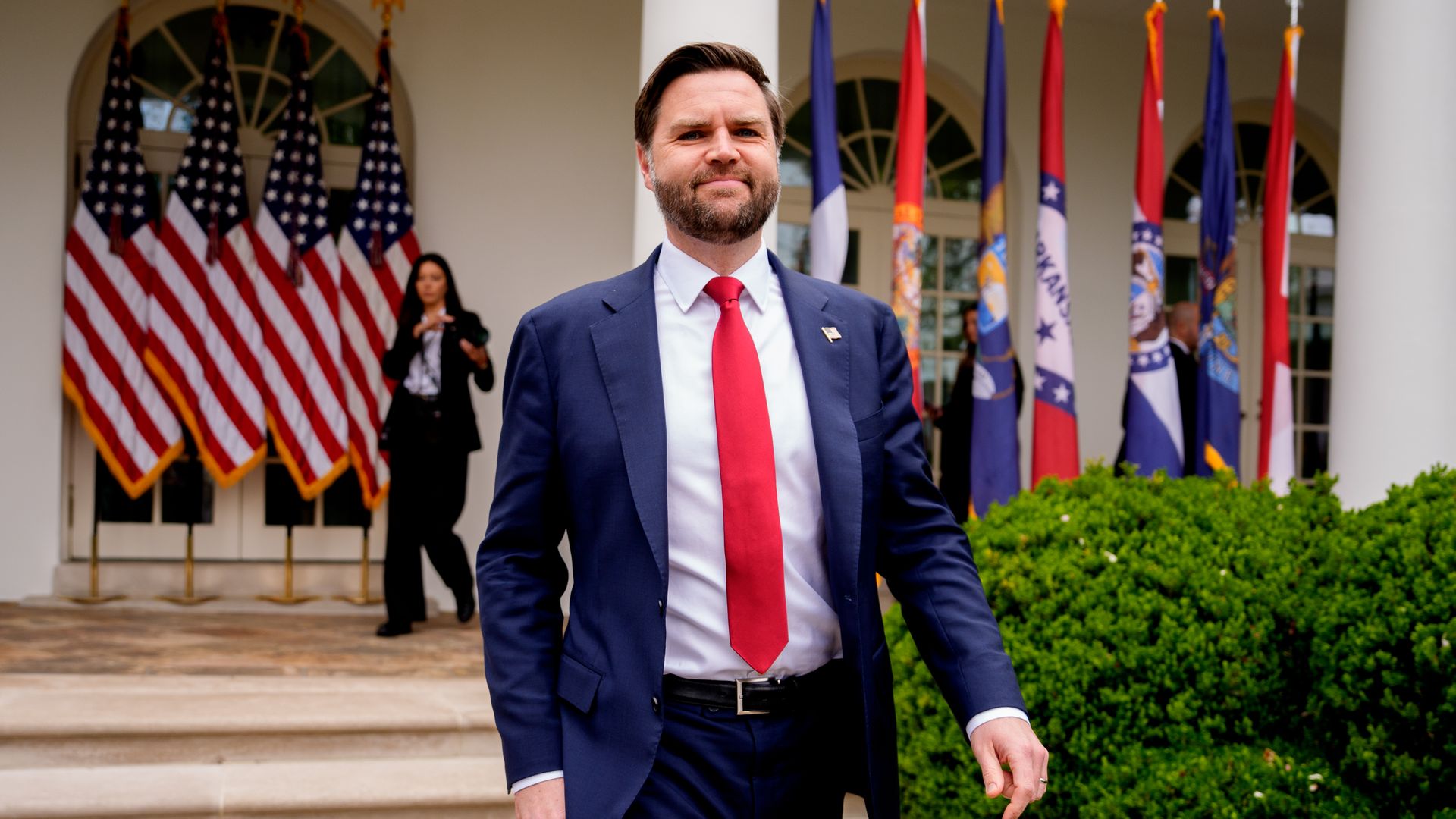
Vice President JD Vance said in a Thursday interview that President Trump's signature tax cuts are not a way to offset tariffs — but that they will help consumers cope with the "cost of inflation."
Why it matters: Vance's comments are the latest example of the Trump administration's mixed messaging on tariffs. Namely, tariffs won't raise prices, but if they do, tax cuts are coming in short order.
America is a large, rich country with a sweet tooth. Madagascar is a small, poor country with an abundance of vanilla. There's therefore a natural trade to be made: They send us their precious pods, we send them the dollars they need for day-to-day necessities.
Why it matters: By the logic of the Trump administration's new tariff regime, that's not a natural trade at all.
The carveouts for energy in President Trump's sweeping tariffs can't shield the sectors from collateral damage as markets digest the sweeping global penalties.
The latest: U.S. crude oil prices are down more than 6% this morning, even though oil, gas and certain minerals are exempted.
New OPEC+ plans to speed up supply additions are also weighing on oil prices.
A truly enormous shock is needed to tip the entire global economy into recession. Since World War II, there have been two of these events: the financial crisis of 2008-09, and the coronavirus pandemic of 2020.
Why it matters: President Trump's "Liberation Day" tariffs, if they stay in place and especially if they face retaliation from targeted nations, could be the third such economic earthquake in 17 years.
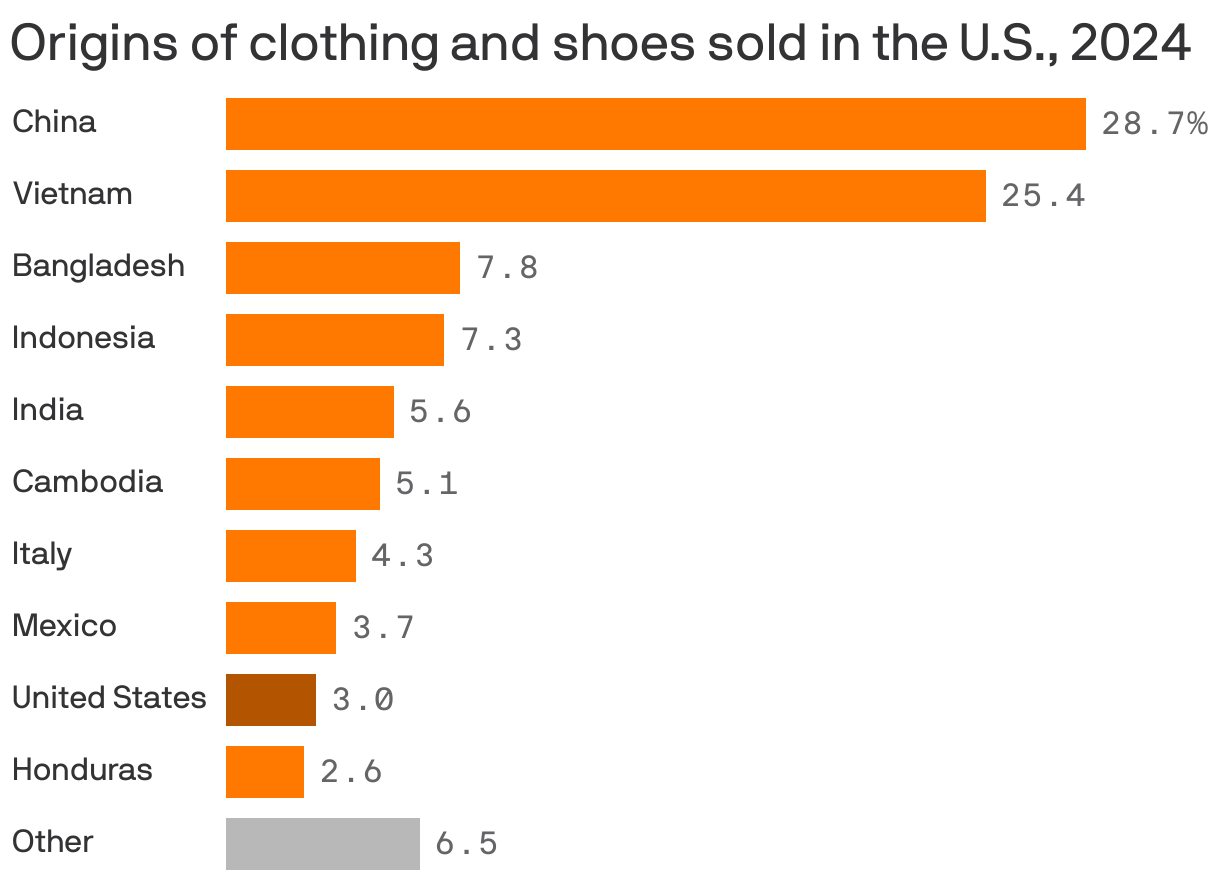
Data: U.S. International Trade Commission, American Apparel & Footwear Association. Chart: Axios Visuals
The clothes you buy stand to get a lot more expensive after President Trump announced new sky-high tariffs on imports from around the world, including from China, Vietnam and Bangladesh.
Why it matters: The U.S. imports nearly all of its clothing and shoes, with more than half from those three countries alone.
President Trump's "Liberation Day" tariff plan is one of the biggest, most abrupt economic gambles in presidential history.
He acted against the advice of most business leaders, many economists and even some Republican officials.
Why it matters: The reciprocal tariffs, which go into effect in one week, target vital trading partners with massive levies — the kind that could raise consumer prices, interrupt business activity and upend global trade.
Here's what's new on Netflix, Prime Video and Hulu.
What we're watching: A high-stakes medical drama, a new season of "Love on the Spectrum," and a series based on a true story about a terminally ill woman chasing her sexual fantasies.
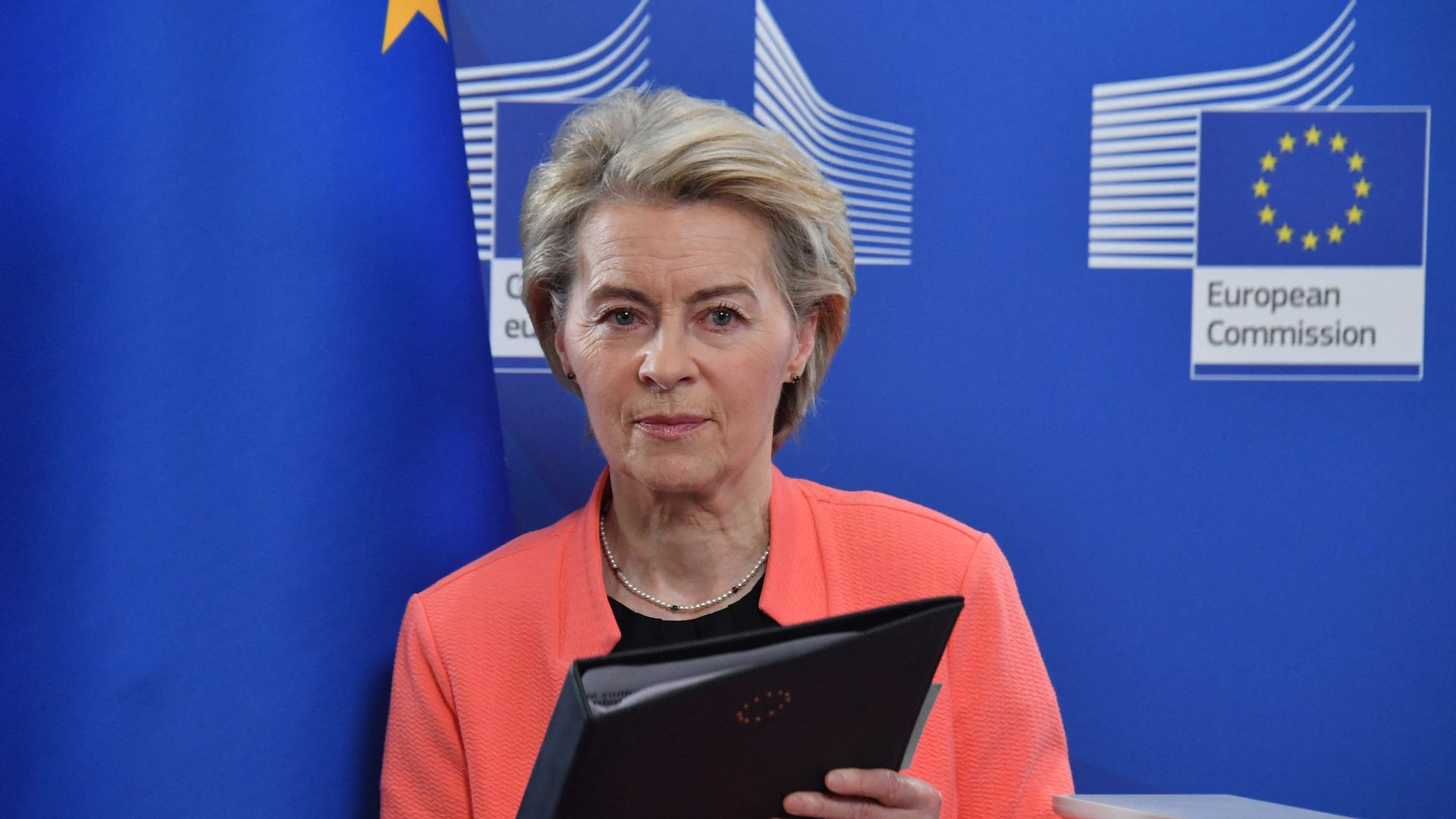
Officials in the European Union, China and North American neighbor Canada say they're preparing countermeasures in response to President Trump's announcement of sweeping tariffs on U.S. imports.
Why it matters: A global trade war is heating up following Trump's announcement of a baseline 10% tariff on U.S. imports, with higher levies hitting China, the EU and elsewhere, which threatens to trigger stagflation with profound consequences for global economies, per Axios' Ben Berkowitz.
President Trump'ssweeping tariffs announced Wednesday extend to countries and territories across the world — including the uninhabited Heard Island and McDonald Islands in the sub-Antarctic Indian Ocean.
The big picture: The remote UNESCO World Heritage-listed Australian territory, which features a mostly barren landscape, was included in the list of baseline 10% taxes on U.S. imports, along with mainland Australia.