Treasury Secretary Scott Bessent's tax-cut negotiators say big progress has been made on Capitol Hill, and are optimistic about final passage by summer despite the measure's complexity, Treasury officials tell Axios.
Why it matters: With markets plunging after President Trump's tariffs, top administration officials see the extension of Trump's first-term tax cuts — set to expire at year's end — as a chance to show consumers and businesses that he has a broad growth and affordability agenda to benefit them.
Elon Musk blasted top Trump administration trade adviser Peter Navarro and told an Italian political gathering he wants more free trade, not less.
Why it matters: The two-day rout in the stock market this week, after Trump announced sweeping new tariffs backed by Navarro, cost Musk nearly $18 billion just on his Tesla stock.
Economics 101 dictates that higher tariffs strengthen the value of a country's currency, but Trump's tariff announcement sent the value of the U.S. dollar plunging.
Why it matters: It's a sign that investors are worried about a recession, particularly in the U.S. — on top of concern that U.S. policies are making America a longer-term risky bet.
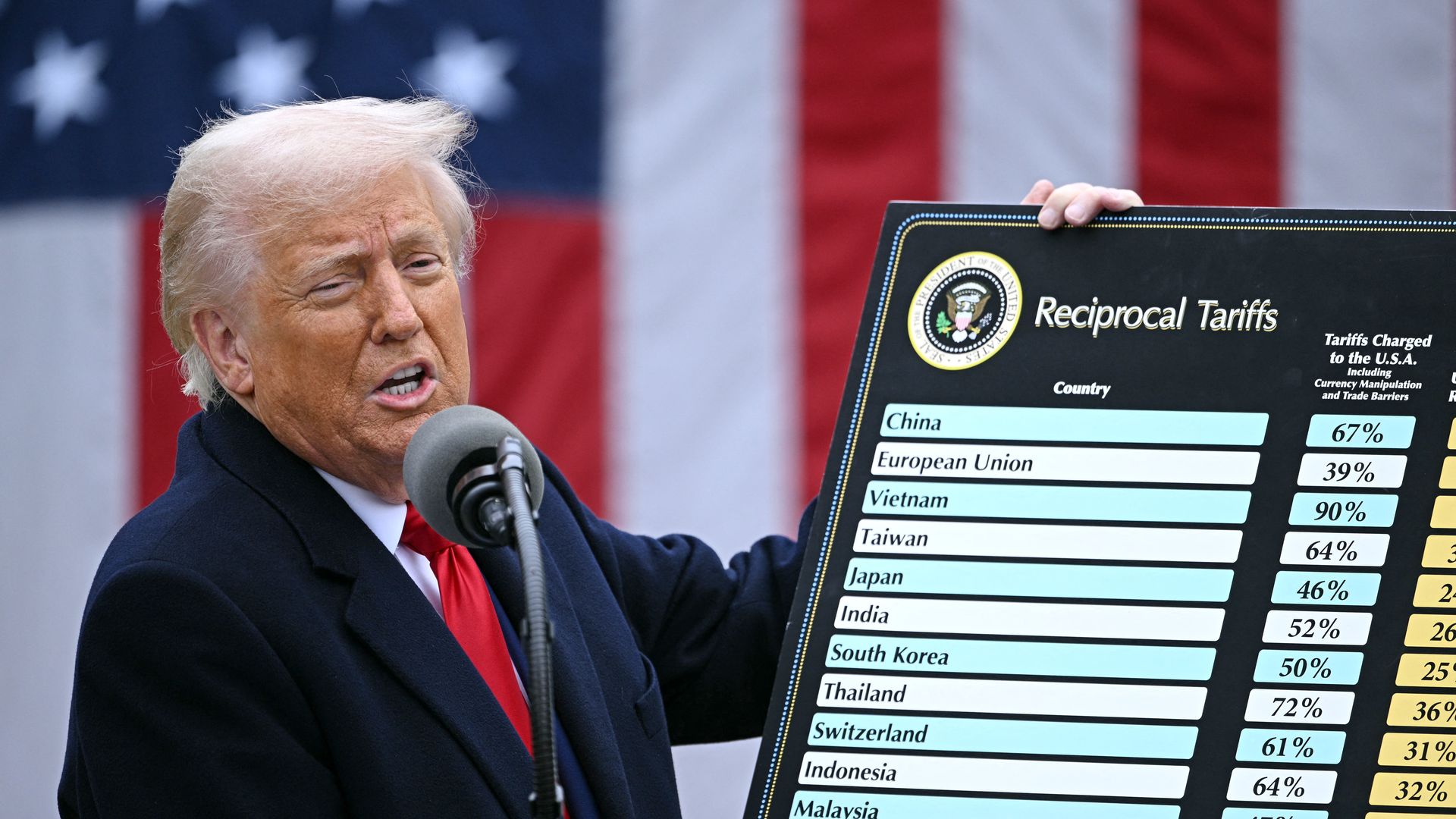
President Trump on Saturday touted his tariff regime as an "economic revolution" and told businesses to "hang tough" in the face of widespread market panic.
Why it matters: Economists say a recession is highly likely, potentially even a dire stagflation scenario, as Trump fundamentally re-orders the global economy.
Why it matters: Think fundamental re-ordering of the economy. Americans are staring down a disruption to their standard of living. Companies are about to find out how bad bad can get. The ripple effects may be felt for years to come.
President Trump's tariff revolution is rooted in a simple thesis: America has been humiliated and exploited by foreign nations for decades, and only he has the guts to make them pay.
Why it matters: Trump's personal victim complex has powered much of its political career. Now it's going global — with the entire world, not just Trump's domestic enemies, feeling the weight of retribution.
The big picture: With the historic two-day rout Thursday and Friday, the major indices — the S&P 500, the Nasdaq and the Russell 2000 — are all lower now than they were a year ago.
When everything gets more expensive everywhere because of tariffs, that starts a cycle for businesses, too — one that might end with layoffs, bankruptcies, and higher prices for the survivors' customers.
Why it matters: The cycle is just starting now, but the pain is immediate.
Let's go back to basics. What is a tariff, what role do they play in the economy, and how have they been applied, both historically and now?
The big picture: Tariffs were once the primary way the United States collected tax revenue, but over time elected leaders and economists alike have rejected them for their many downsides. President Trump is seeking to reverse that long tide.
The fallout of high tariffs on most Americans is simple and painful: They'll have less money to spend.
Why it matters: The tariffs will likely increase the prices of necessities like food, clothing and cars, and leave folks with less disposable income to spend on other things.
This is the hard truth for American manufacturers: Trump's tariffs are all but inescapable unless the global supply chain — the decades-long backbone of domestic manufacturing — is replicated stateside.
Why it matters: It won't happen overnight. For now, many businesses in the sector Trump hopes to revitalize face the prospect of higher costs and withering demand from foreign buyers.