New-car prices starting with the number "2" are making a comeback.
By the numbers: Inventory of new vehicles on sale for less than $30,000 is up 88% over the last year, Cars.com reported today.
Inventory of vehicles in the $30,000–$49,999 range is up 41.3%.
Context: Affordable new vehicles evaporated during the pandemic, when prices skyrocketed amid widespread vehicle shortages.
Reality check: New vehicles priced at less than $30,000 still represent only 14% of vehicle inventory, though that's up from 11% a year ago. And the under-$20K vehicle is gone.
The bottom line: Automakers are finally churning out some lower-cost vehicles now that production capacity has caught up to demand.
The Supreme Court on Thursday ruled in favor of Starbucks in a labor battle involving the firing of seven workers who tried unionizing one of the coffee giant's Memphis stores.
Why it matters: The decision overturns a National Labor Relations Board order to reinstate the fired workers and will make it harder for the administrative body to stop companies from violating labor laws.
The chair of the U.S. Securities and Exchange Commission, Gary Gensler, confirmed today that spot ether ETFs should be approved this summer.
Why it matters: A regulated, exchange traded product would allow institutional investors to take positions in the ether cryptocurrency, the coin of the Ethereum blockchain, just as they have in bitcoin since January.
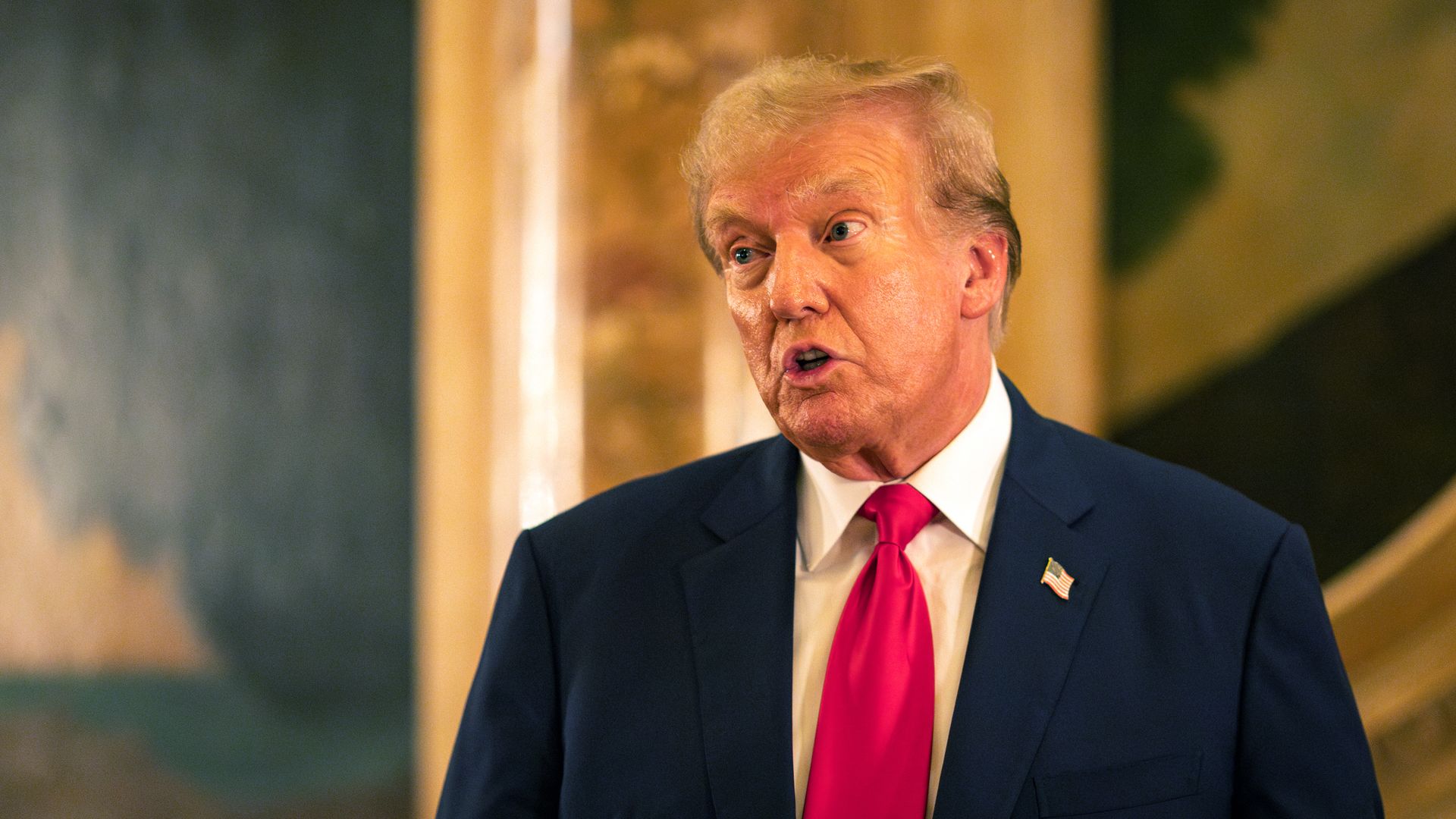
Donald Trump met with leading bitcoin mining executives at the former president's Mar-a-Lago residence Tuesday, engaging with them on related policy issues.
Why it matters: It's the latest development in the presumptive Republican presidential nominee's newfound embrace of the cryptocurrency industry, as he continues to force it into the 2024 election conversation.
Blockchains associated with Terraform Labs are still worth hundreds of millions of dollars.
Our thought bubble: 🤯
Catch up fast: When terraUSD blew up, Terraform Labs initiated a fork of the blockchain, with the idea being that other apps built on it could live on, even if the stablecoin died.
A group of diehards kept the original blockchain running, though, stablecoin and all.
By the numbers: Put those two chains together and you get tantalizingly close to a billion dollars in supposed value.
Staking yield is paid in ether (ETH). So, in theory, a user could earn more ETH but, in real terms, that gain could all be lost quickly if the value of ETH were to take a dive.
However, though ETH's price increase has been slower than BTC's, it's been trending up over the last year.
The Remilia Corporation, which has been behind some of the weirder projects where art and cryptocurrency make a sort of bizarre lovechild, just announced the Milady Cult Token (CULT).
New trade restrictions on China are a test of whether the U.S. and Europe can pursue strong industrial policy and fight climate change simultaneously.
Why it matters: These huge carbon emitters are looking to speed deployment of renewables and electric vehicles, and China is a huge producer of low-cost equipment.
Do Americans think of inflation as a rise in prices? Or, per my story from last month, has the vernacular meaning of the word changed to just mean high prices? The good folks at Morning Consult surveyed 2,201 Americans to find out.
The big picture: Some 86% of Americans are worried about inflation, and many of them still define inflation as being a rise in prices, rather than just high prices. But they tend to look at that rise over four years, not one.
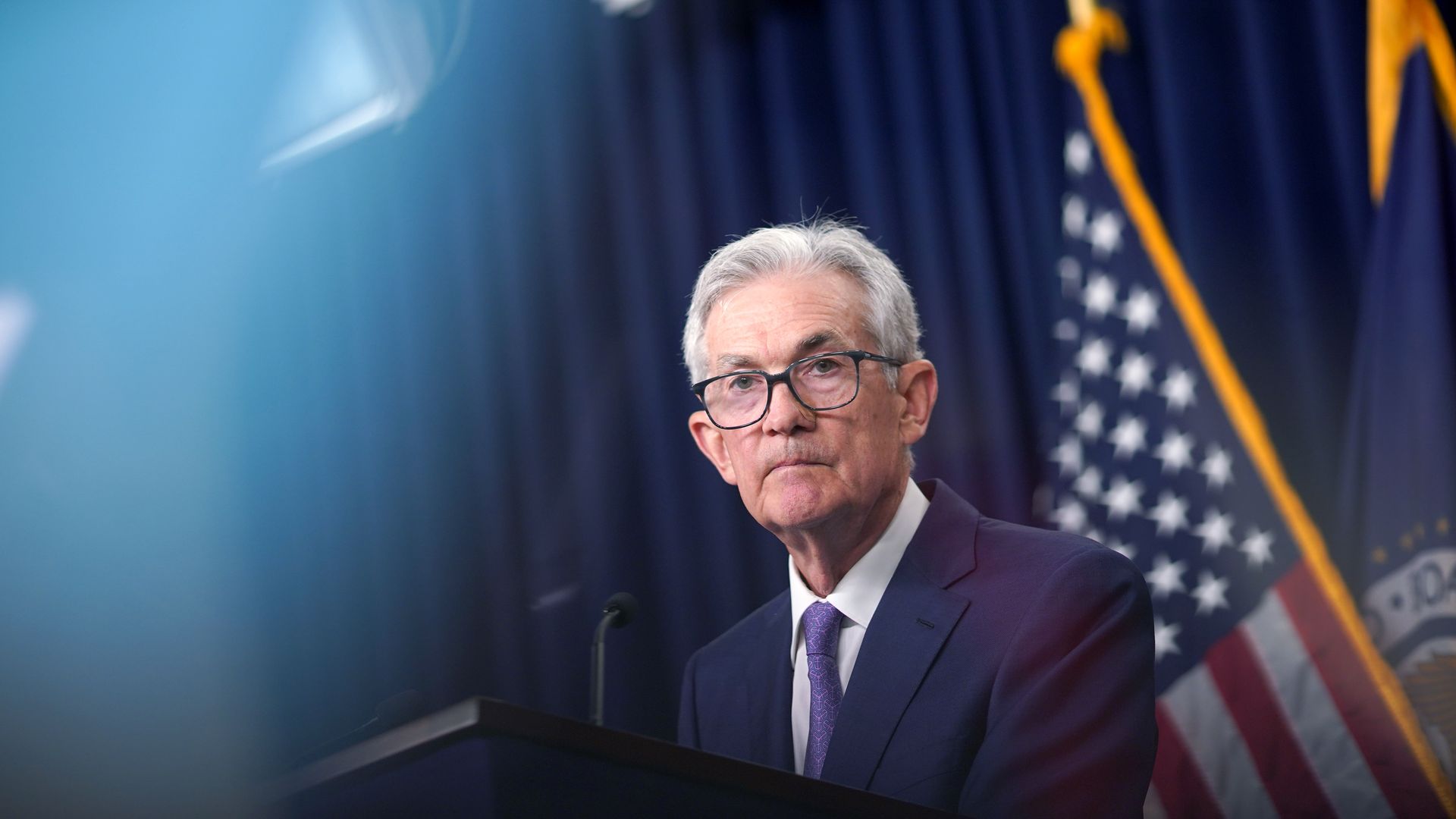
The Federal Reserve kept its target interest rate unchanged and released new projections showing the central bank's leaders now expect to cut interest rates only once this year.
Why it matters: Leaders of the central bank are looking for more evidence price pressures are receding before proceeding with a much-anticipated pivot to cheaper money.
A blank-check company led by crypto investors announced a deal that, at first glance, looks very uncrypto.
Why it matters: Dig deeper, and it looks like an epic troll or a Trojan horse of a deal.
Context: Listing on public exchanges via a special purpose acquisition company, or SPAC, has largely fallen out of favor following scrutiny from the SEC. (Part of the issue was how they performed after listing.)
Stablecoin issuer Circle and crypto exchange Bullish (the company that bought CoinDesk) kiboshed their mergers when it became apparent that the route to the public market had significant hurdles.
It's starting to feel a little bit like late 2023: For the second straight month, the Consumer Price Index was cooler than expected — a sign that inflation might be back on a downward path.
Why it matters: The first few months of the year stoked fears that price pressures were reaccelerating. So far, the second quarter appears much different — with a soft landing path for the economy looking like a reality.
The International Energy Agency isn't backing off its controversial projection of peak oil demand by 2030 — and it's warning petro-companies not to dismiss the analysis.
Why it matters: The future of consumption has repercussions for oil-producing nations and corporate strategies — and the planet's warming climate.
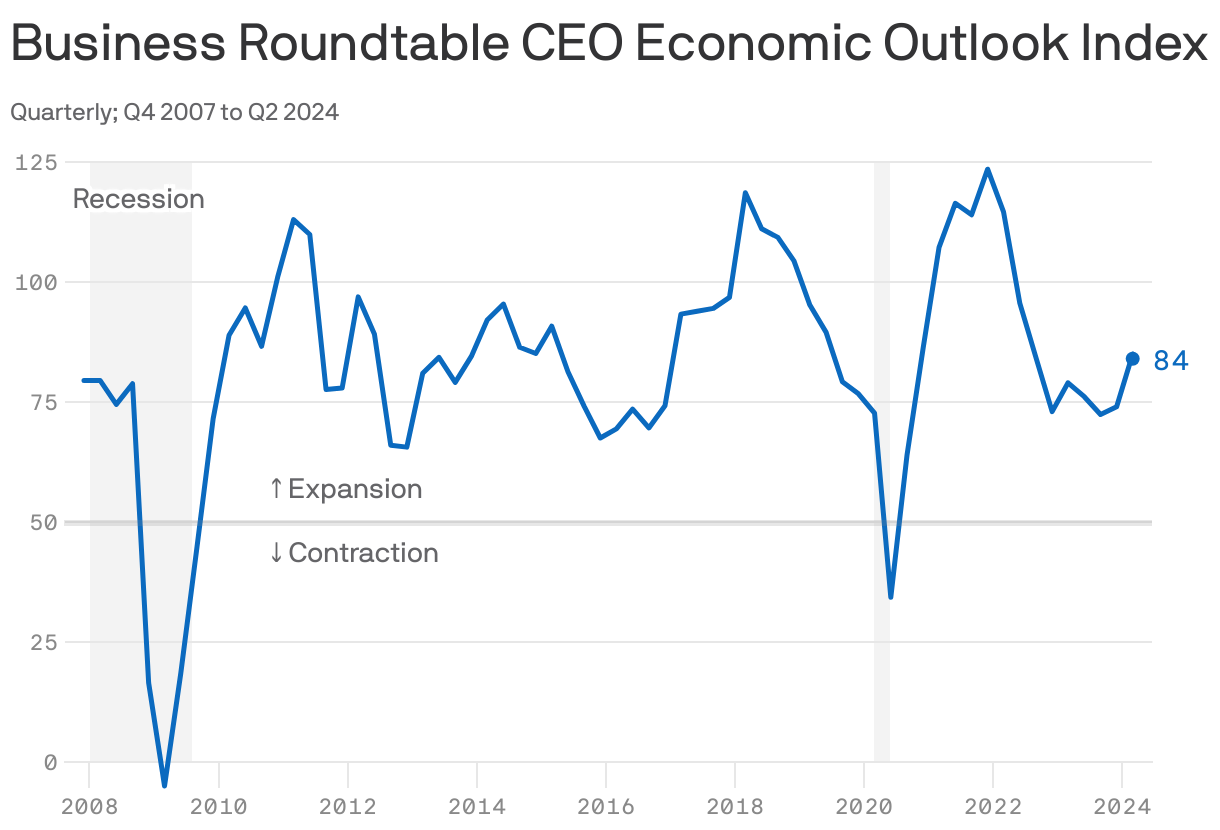
From the C-suites of big companies to the halls of the Federal Reserve, economic decision-makers are waiting to see whether the next shift is toward recession, reacceleration or something in between.
Why it matters: The economy has hit a midyear holding pattern in which policy is static, growth and inflation have leveled out and CEOs aren't making major adjustments to hiring plans as they await the results of the U.S. presidential election and a Fed policy pivot.