Apple shares reversed course from yesterday to close at a new record following a slew of bullish Wall Street takes on the company's AI announcements.
Why it matters: Today's 7.3% pop suggests many investors believe that Apple's AI strategy may help reinvigorate sales of its single most important device, the iPhone.
The public's sentiment toward electric vehicles is deteriorating.
Why it matters: EV companies like Tesla, Rivian and Lucid — plus automakers like GM, Hyundai and Mercedes-Benz — have staked their success on a future fueled by little or no gasoline.
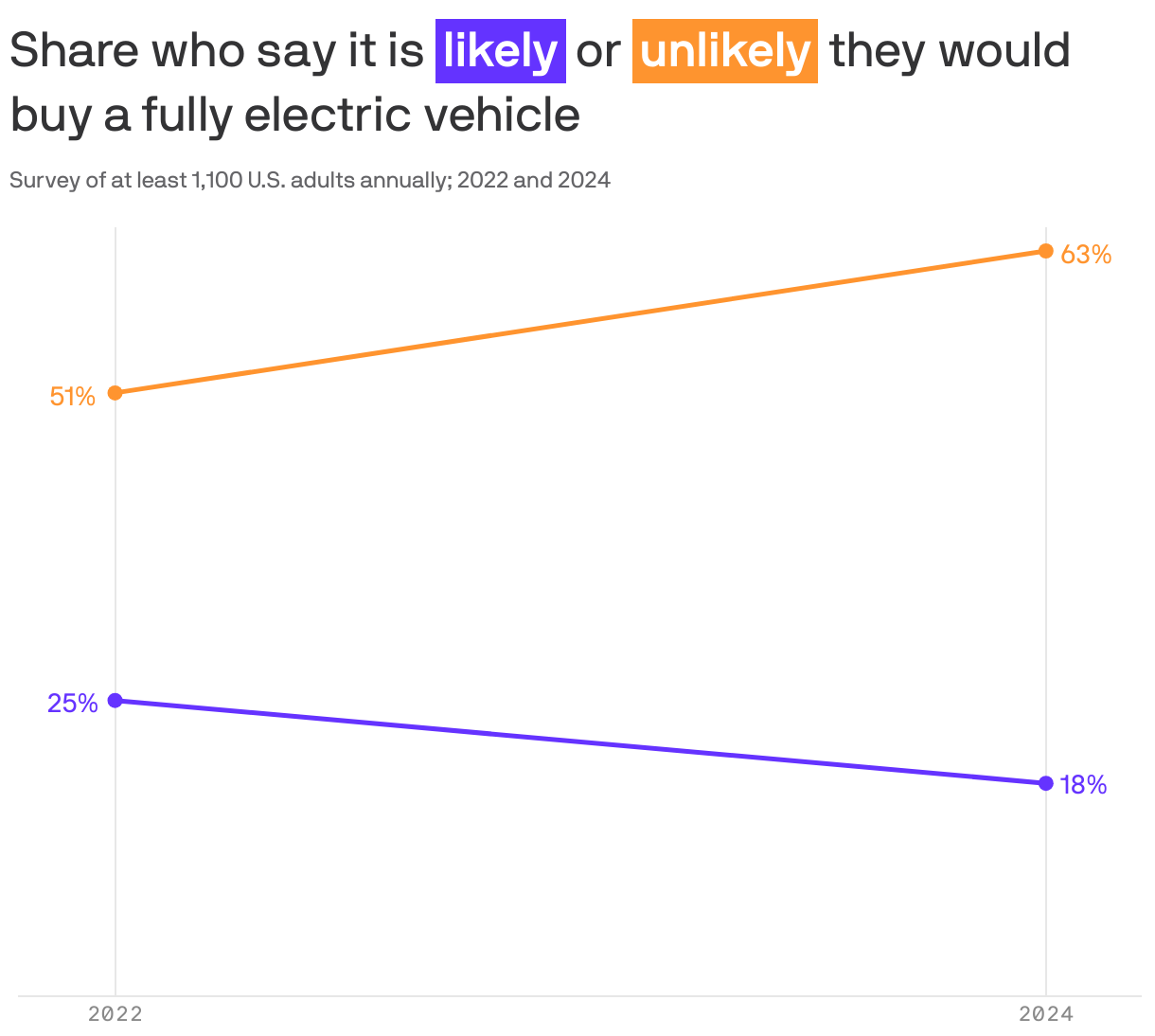
By the numbers: 63% of adults say it's unlikely or very unlikely that they will buy an EV for their next vehicle, up from 51% in 2022, according to a new AAA survey of 1,152 Americans.
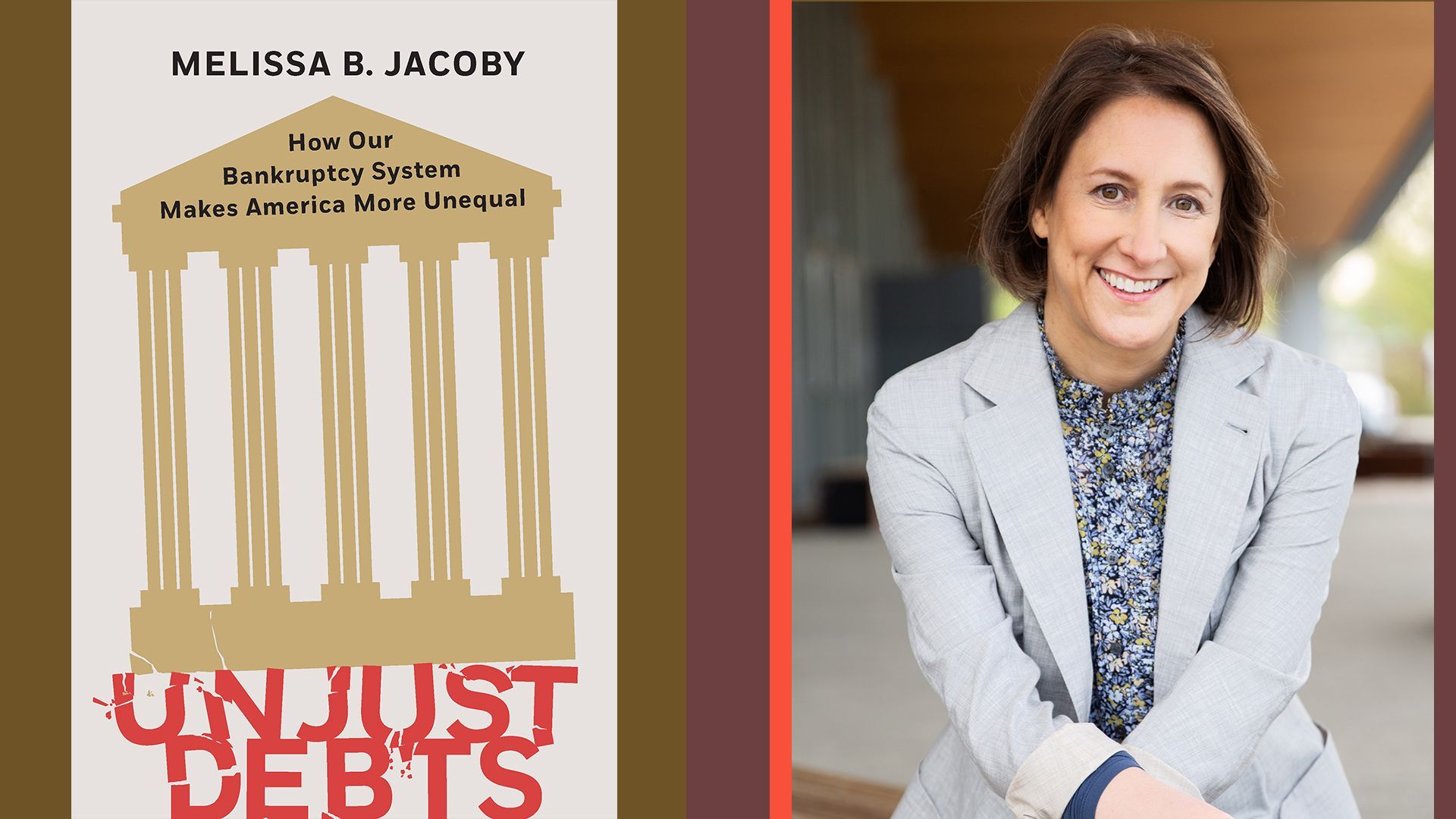
Bankruptcy is supposed to provide American individuals and businesses with a way to escape crushing debts, but one expert believes it's become an unjust — and often racist — system.
Why it matters: Bankruptcy is so foundational to America's economic system that the nation's founders enshrined it in the U.S. constitution, giving Congress the power to allow burdened debtors to shed creditors.
Canada-based crypto miner Bitfarms yesterday adopted a poison pill — a move sometimes employed by a company under threat.
Why it matters: Bitfarms is reaching for a corporate defense strategy that would dilute shareholder value in an attempt to gird itself from the possibility of a hostile takeover.
How it works: Under Bitfarms' poison pill plan, if any entity accumulates more than 15% of the company after June 20 and until Sept. 10, the company would issue new shares to dilute that acquirer's stake.
First came the economic shocks, now comes the steadying. The world economy might be stabilizing after years of unprecedented disruption.
Driving the news: The global economy will grow at a rate similar to 2023's, according to the World Bank's latest projections published Tuesday morning.
The world's largest convenience store is now open in Luling, Texas, with 120 fuel pumps, a massive 75,000 square feet store and the "world's cleanest bathrooms."
Why it matters: Texas-based Buc-ee's — renowned for huge locations and super-clean bathrooms — has developed a cult-like following across the South.
"Bad Boys: Ride or Die" gave the summer box office a badly needed jolt over the weekend.
Why it matters: Domestic ticket sales so far this year are down 24% over the same period last year and down 42% from 2019, Comscore says, per The Hollywood Reporter.
Apple's generative AI play unveiled this afternoon can be summed up in three words: personalized, private, practical.
Why it matters: Apple has been the slowest of the major tech companies to detail a generative AI strategy, and today's announcements represent its broadest effort yet to hang the banner of modern AI over its popular products, Axios' Ina Fried notes.
Zoom in: Consumers are worried about how their data will be used by tech companies to train their models.
To that end, Apple said Monday that "many" of the models needed to run AI will be done so "entirely on device" and that the company has also created "private cloud compute" when more computational power is needed from servers that "never" store or share data.
ProShares, the firm behind the largest futures-based bitcoin ETF, launched a pair of ether funds that aim to double daily returns on ether, whether the price goes up, or down.
Why it matters: These so-called leveraged ETFs beat the eight spot ether ETFs to market.
ETHT is for the number-go-up folk. ETHD, for the number go down believers.
Between the lines: These things can juice returns, but can also cut them to ribbons, because of the cost of the strategy — what's called "decay" — that eats into those returns. (They can go very wrong in other ways.)
Wednesday afternoon, the fate of global financial markets will hang on an array of dots that give clues into how much rate-cutting the Federal Reserve will deliver this year. But Wall Street may be putting too much weight on the so-called dot plot.
Why it matters: The dots create a lot of market noise, but they contain less true signal about the policy outlook.
While most U.S. homeowners are sitting on a mountain of home equity after years of rising house prices, in some pockets of the country an increasing share of mortgage holders are underwater on their loans.
Why it matters: That means these folks owe more on the mortgage than their home is worth, which puts them in a horrendous financial situation if they need to sell their house.