"Seriously underwater" mortgages live in the South and Midwest

Add Axios as your preferred source to
see more of our stories on Google.
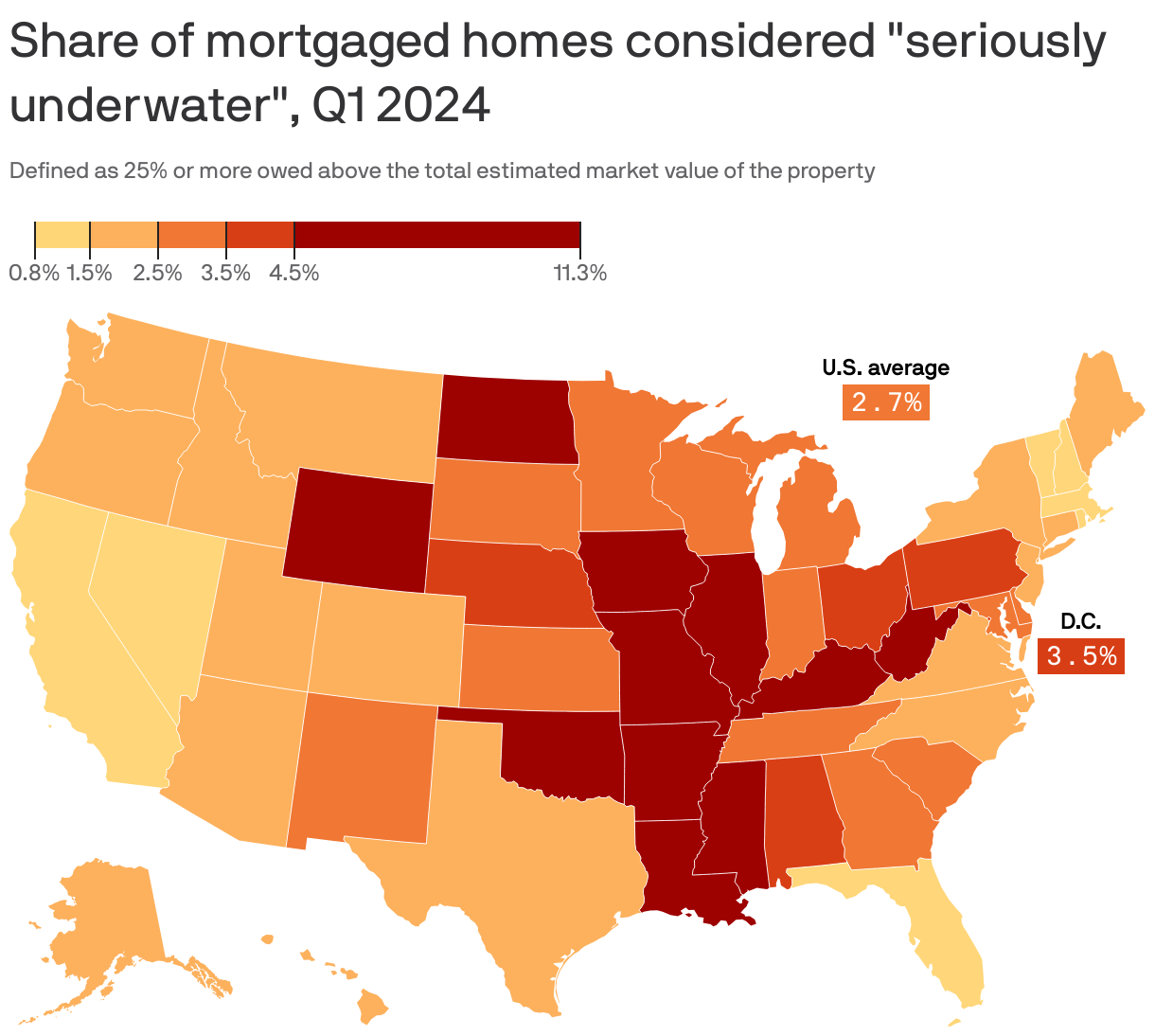
While most U.S. homeowners are sitting on a mountain of home equity after years of rising house prices, in some pockets of the country an increasing share of mortgage holders are underwater on their loans.
Why it matters: That means these folks owe more on the mortgage than their home is worth, which puts them in a horrendous financial situation if they need to sell their house.
State of play: The South and Midwest have the highest share of underwater mortgages, per Attom.
- That's because in these areas home values have fallen from their peak during the pandemic housing boom.
- And people who bought at the top are seeing their home value dip below what they paid (or borrowed) for the house.
Zoom in: Louisiana has highest share of underwater mortgages (11.3%), up about a percentage point from a year ago. Home values dropped 6% from their summer 2022 peak, per Redfin data.
- In Wyoming, No. 2 on the list, the share grew from 3.3% to 8.8%, and home values are down roughly 12% since June 2023.
Reality check: These shares are still relatively small. After the housing crisis of 2008 1 in 4 homes with mortgages were underwater.
- Unemployment was high in that recession and many people who couldn't pay back their loans by selling their house were forced into foreclosure or short sales.
- Right now unemployment in the U.S. is low — and the economy is strong.
What they're saying: Don't panic. "It could be a temporary increase and not necessarily a major concern," National Association of Realtors chief economist Lawrence Yun tells us.
Yes, but: If the labor market or economy takes a turn, underwater homeowners are more at risk.
- With today's high mortgage rates, the most financially secure people are buying in cash, Redfin chief economist Daryl Fairweather says.
- Recent buyers who took out a mortgage likely have less cash to fall back on.
What's next: "This year's spring buying season will be of heightened importance in telling us if there is a new long-term market pattern developing," according to Attom CEO Rob Barber.
