"Unjust Debts": Author argues bankruptcy has become an unjust system

Add Axios as your preferred source to
see more of our stories on Google.
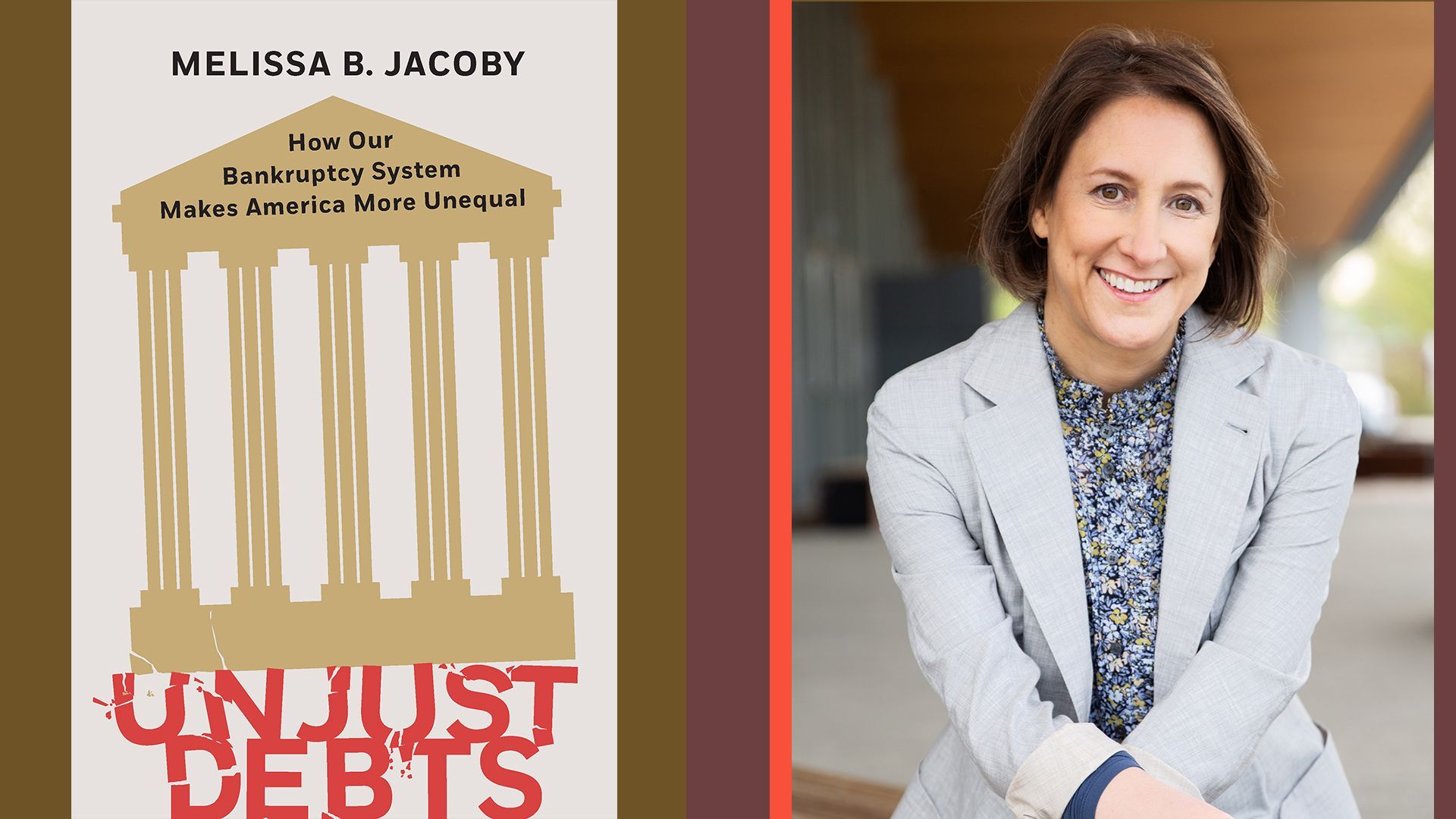
Photo illustration: Annelise Capossela/Axios. Photo: Courtesy of Teddy Denton
Bankruptcy is supposed to provide American individuals and businesses with a way to escape crushing debts, but one expert believes it's become an unjust — and often racist — system.
Why it matters: Bankruptcy is so foundational to America's economic system that the nation's founders enshrined it in the U.S. constitution, giving Congress the power to allow burdened debtors to shed creditors.
Driving the news: In her new book, "Unjust Debts: How Our Bankruptcy System Makes America More Unequal," University of North Carolina law professor Melissa Jacoby argues that the system has evolved to hurt many of the people it's supposed to help.
Between the lines: Her concerns include...
- How people of color are at a disadvantage in personal bankruptcy cases.
- How companies take advantage of bankruptcy to discharge lawsuits from individuals they've harmed.
- And how students can't get enough debt relief through bankruptcy.
Here's Nathan's Q&A with Jacoby, condensed for space and edited for clarity.
Nathan: Is bankruptcy fair?
Jacoby: Today, the system as it operates is not fair.
Do you think student loans should be cancelable in bankruptcy?
I do believe that more student loans should be cancelled in bankruptcy, especially private.
I don't think bankruptcy can be the total solution to American student loan difficulties.
You learned bankruptcy in law school from Elizabeth Warren when she was a professor. What did she teach you?
She taught me a lot of optimism about the bankruptcy system, why it is so important in a market-based society, why it's good for everybody to have this kind of safety valve.
She also instilled in you some of the inequalities in the system.
She taught me that we have to always be looking at whether the system is fair to everybody, as well as whether it is seen as fair to the outside world. Those are both very important to the legitimacy of any law.
Debtors often use bankruptcy to get rid of creditors who sued them for one reason or another. But it sounds like you have a problem with that in some cases.
When we talk about people who have been injured (and when) a company is accused, bankruptcy is not well equipped to deal with that.
I'm worried those [companies] are not living up to their compensation promises.
Isn't the counterpoint that we live in this extremely litigious society, lawsuits are out of control, we need some way to push back, and this is the way to do that?
I certainly hear companies make the argument that the problem is the litigation industry.
In recent years, we've seen some companies and organizations accused of abusing the bankruptcy system: Johnson & Johnson, Purdue Pharma, the NRA and Boy Scouts of America are just a few examples. Is there some sort of through-line here that connects these?
There should be some threshold of financial distress because bankruptcy is an exception to the rules.
