Big warning for Big Oil: A "staggering" imbalance may await

Add Axios as your preferred source to
see more of our stories on Google.
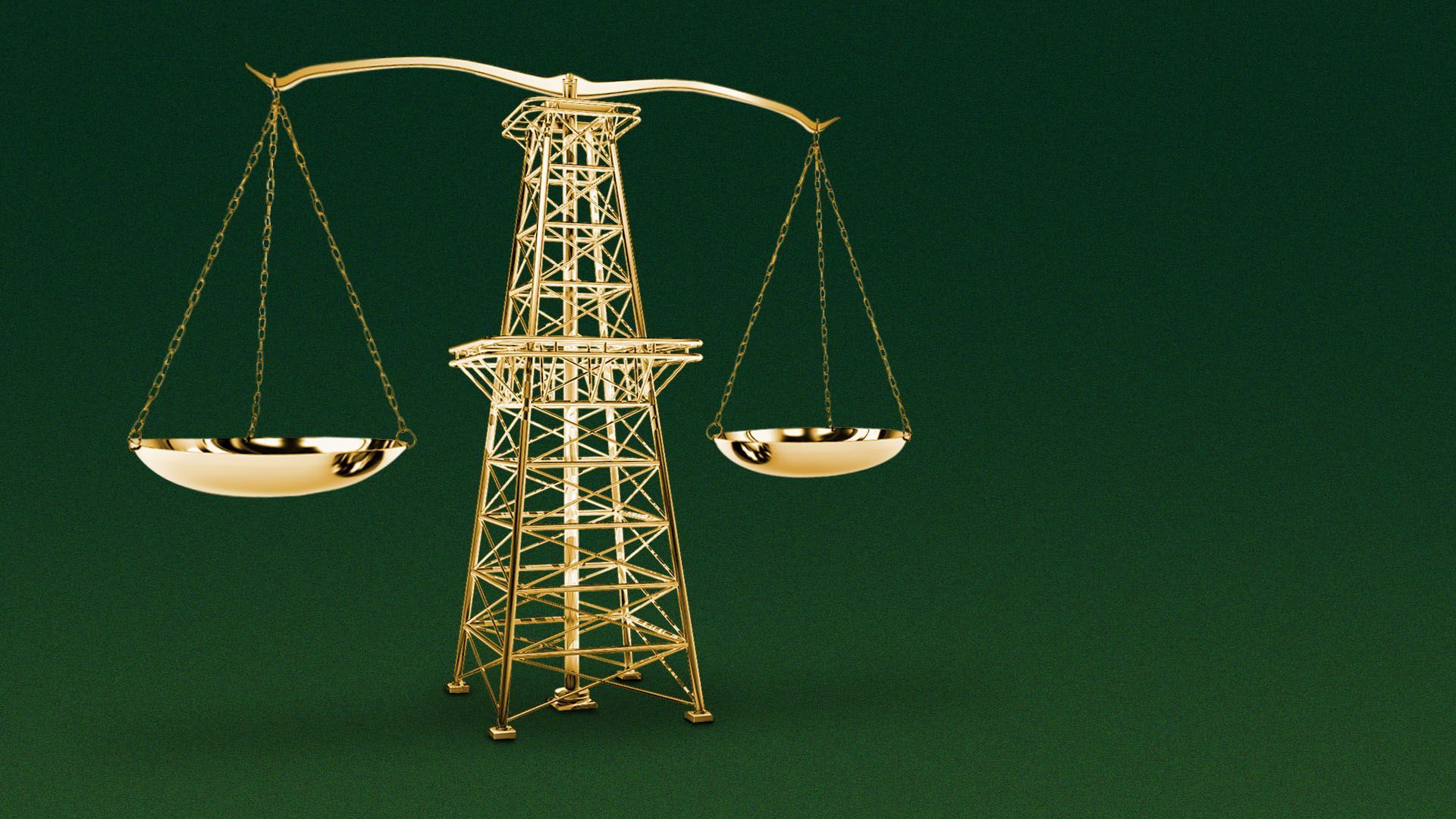
Illustration: Tiffany Herring/Axios
The International Energy Agency isn't backing off its controversial projection of peak oil demand by 2030 — and it's warning petro-companies not to dismiss the analysis.
Why it matters: The future of consumption has repercussions for oil-producing nations and corporate strategies — and the planet's warming climate.
- IEA's projections are among the most closely watched but face criticism from some Republicans and analysts who accuse IEA of blurring climate advocacy and clear-eyed study.
The big picture: The agency's just-published 2030 outlook sees a huge gap opening in coming years between how much the world can pump and how much the world needs.
- They predict oil demand, which was around 102 million barrels per day last year, will level off at 105.4 mbd near 2030.
- But total production capacity rises more aggressively, reaching nearly 114 mbd by 2030, exceeding demand by a "staggering" amount.
What they're saying: This "unprecedented" cushion means "oil companies may want to make sure their business strategies and plans are prepared for the changes taking place," IEA boss Fatih Birol said in a statement.
- The organization credits electric vehicles, increased efficiency, and fuel substitution in places that still use oil for electricity as reasons to expect demand growth to finally halt.
The other side: The agency faces criticism over its insistence that global oil thirst will stop growing in just a few years.
- Doubters point to fast-rising energy needs in developing countries; huge uncertainties around electric vehicles' growth (more on that below); and questions about governments' follow-through on climate policies.
