Supreme Court gives Starbucks a win in union battle

Add Axios as your preferred source to
see more of our stories on Google.
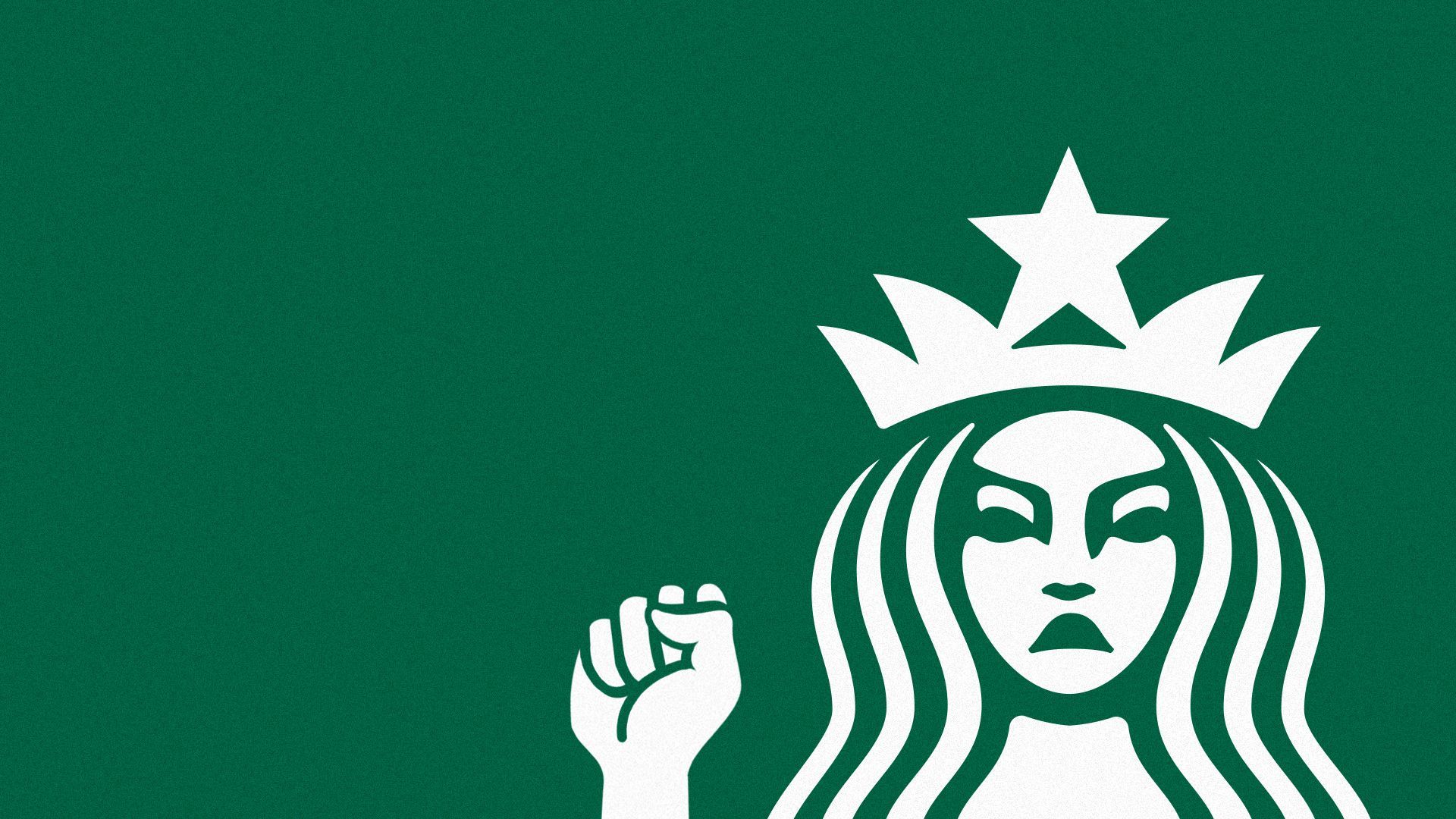
Illustration: Aïda Amer/Axios
The Supreme Court on Thursday ruled in favor of Starbucks in a labor battle involving the firing of seven workers who tried unionizing one of the coffee giant's Memphis stores.
Why it matters: The decision overturns a National Labor Relations Board order to reinstate the fired workers and will make it harder for the administrative body to stop companies from violating labor laws.
- The decision against the self-named "Memphis Seven" is also a blow to union organizers, at a time of growing labor activism in the U.S.
Follow the money: The case is part of a wider corporate effort to weaken the NLRB — which has been flexing its muscles under its pro-labor president Jennifer Abruzzo.
- Earlier this year, Elon Musk's SpaceX — also facing a complaint over unlawful firing — filed suit in Texas arguing the agency is unconstitutional.
At issue in the case, Starbucks Corp. v. McKinney was the NLRB's power to stop an unfair labor practice while a case proceeds on the merits.
- It's a crucial piece of the agency's power to enforce labor laws. "It's an incredibly important tool," Sharon Block, a former NLRB member and professor at Harvard Law School told Axios.
- Without the injunction power, these cases take years to get through the courts — by the time a ruling comes down finding a company illegally fired someone, they've long moved on and any momentum for unionizing workers has been lost.
Catch up fast: Back in 2022, a group of unionizing Starbucks workers in Memphis appeared in a TV news segment about their efforts. Because it was filmed in the store after hours, Starbucks said the workers violated store policy and fired them.
- The union filed a charge with the NLRB, claiming the firing was illegal and interfered with their right to organize — one of nearly 800 unfair labor complaints at NLRB regional offices since the campaign began.
- The NLRB sought an injunction reinstating the fired workers while the case proceeded — a federal court ordered they get their jobs back and an appeals court affirmed the ruling.
What they found: The Supreme Court overturned the lower court ruling.
- Eight justices, in a majority opinion by Justice Clarence Thomas, said the court did not use the proper standard — a four-part test, not a two-part test — and had given too much discretion and deference to the NLRB.
- Justice Ketanji Brown Jackson dissented in part, and concurred in part.
- She wrote that Congress intended to give the labor board deference when it comes to these injunctions – and that their whole purpose is to protect worker rights as complex cases like these get tied up in courts.
- "Unfortunately, today's decision appears to be another installment in a series of labor cases in which this Court has failed 'to heed Congress's intent with respect to the Board's primary role in adjudicating labor disputes,' " she wrote, quoting herself in another labor case last year that went against labor.
What's next: The case now goes back to the appeals court.
What they're saying: "Working people have so few tools to protect and defend themselves when their employers break the law," said Lynne Fox, president of Workers United — which represents Starbucks workers — in a statement.
- "That makes today's ruling by the Supreme Court particularly egregious."
- Starbucks' statement focused on the details of the case — the idea that there needs to be one clear standard for issuing these injunctions.
- "Consistent federal standards are important in ensuring that employees know their rights and consistent labor practices are upheld no matter where in the country they work and live."
- The Supreme Court "moved to rein in the agency, forcing them to abide by the same rules that all other entities must play by," said Kristen Swearingen, who chairs a coalition representing 500 major business groups — including the Chamber of Commerce and the National Retail Federation.
The big picture: More than 10,000 Starbucks employees at 437 outlets are now unionized — a massive organizing campaign that helped revitalize the labor movement.
- Earlier this year, Starbucks and representatives from Workers United said they were entering into contract negotiations after the big chain recently changed its tune on how it relates to unionizing efforts.
- In her statement, Fox said in light of its new position, Starbucks should have dropped the case.
- "It's incongruous to want to build a productive, positive relationship with workers and at the same time lead an attack on one of the few mechanisms they have to defend themselves against unscrupulous employers."
Editor's note: This story was updated with additional reporting.
