Fresh produce is the albatross around grocers' necks — it's got a razor-thin profit margin, it spoils quickly, and illnesses can prompt public hysteria. But now, they hope blockchain is a solution.
What's going on: IBM is using blockchain to track the journey of a bunch of spinach from the farmer to the shopper's cart. Knowing, and trusting, the vegetable's precise origin will reduce cases of people getting sick from food, IBM says.
President Trump said that China has been "attempting" to influence the upcoming midterm elections while chairing a United Nations Security Council meeting on Wednesday. China's foreign minister denied the claim.
What we don't know: How they've been interfering — if at all — or for how long. President Trump claimed the Chinese "do not want me or us to win because I am the first president ever to challenge China on trade, and we are winning...at every level." Secretary of State Mike Pompeo said earlier that there's "no question" the midterms will be safe from foreign influence.
WeddingWire — a Chevy Chase, Maryland-based portfolio company of Permira and Spectrum Equity Investors — has agreed to buy XO Group (NYSE: XOXO), owner of TheKnot.com, for $933 million, or $35 per share (27% premium to Monday’s close).
The big picture: There were reportedly around 2.2 million weddings in the U.S. last year with a total spend of over $56 billion. Per the WSJ's Kimberly Chin, "Both brands will be operated as separate consumer products so that wedding professionals and their partners can have both offerings, XO Group said Tuesday. XO Group Chief Executive Mike Steib and WeddingWire CEO Tim Chi will also become co-CEOs of the combined company upon the deal’s completion."
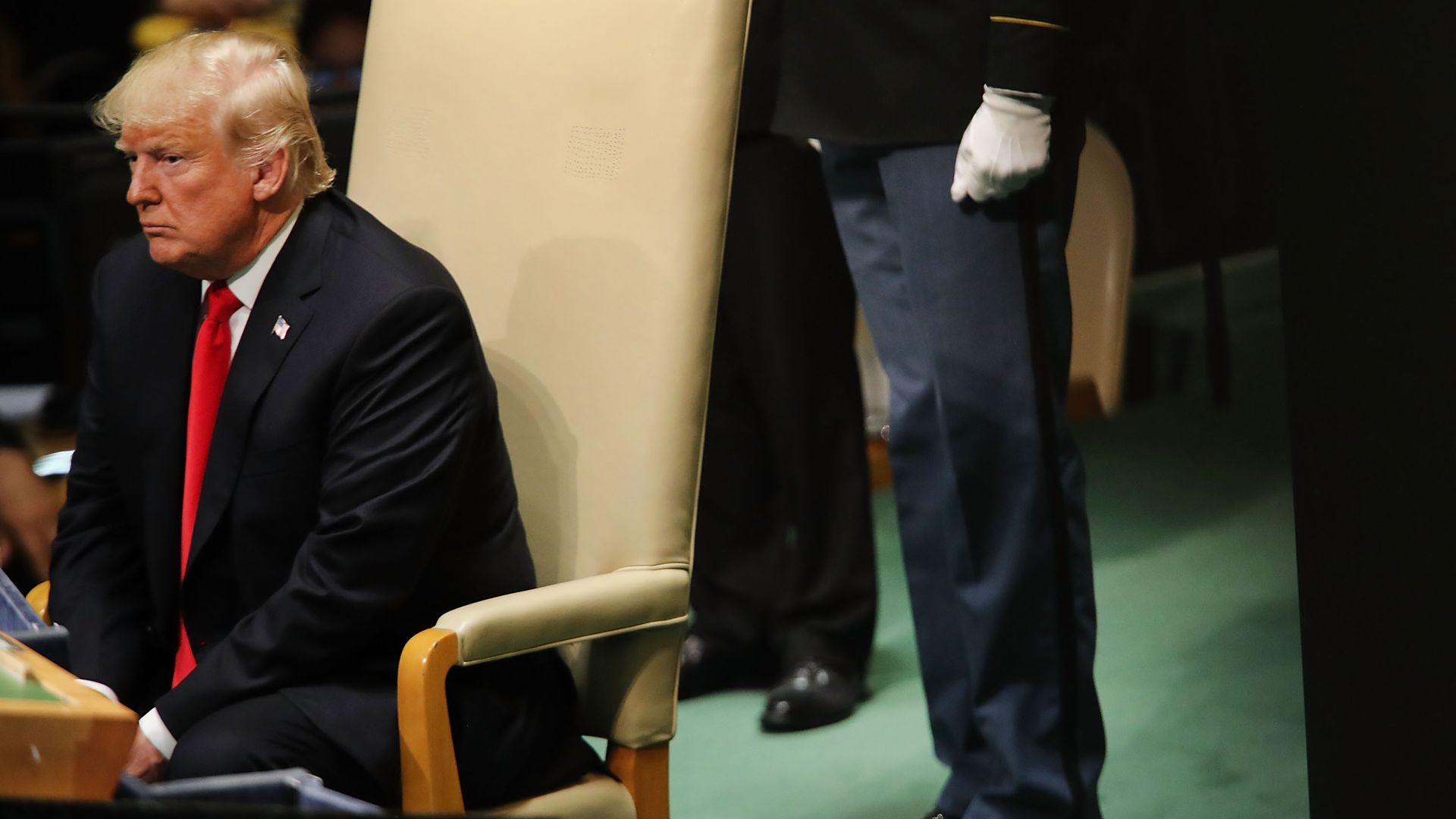
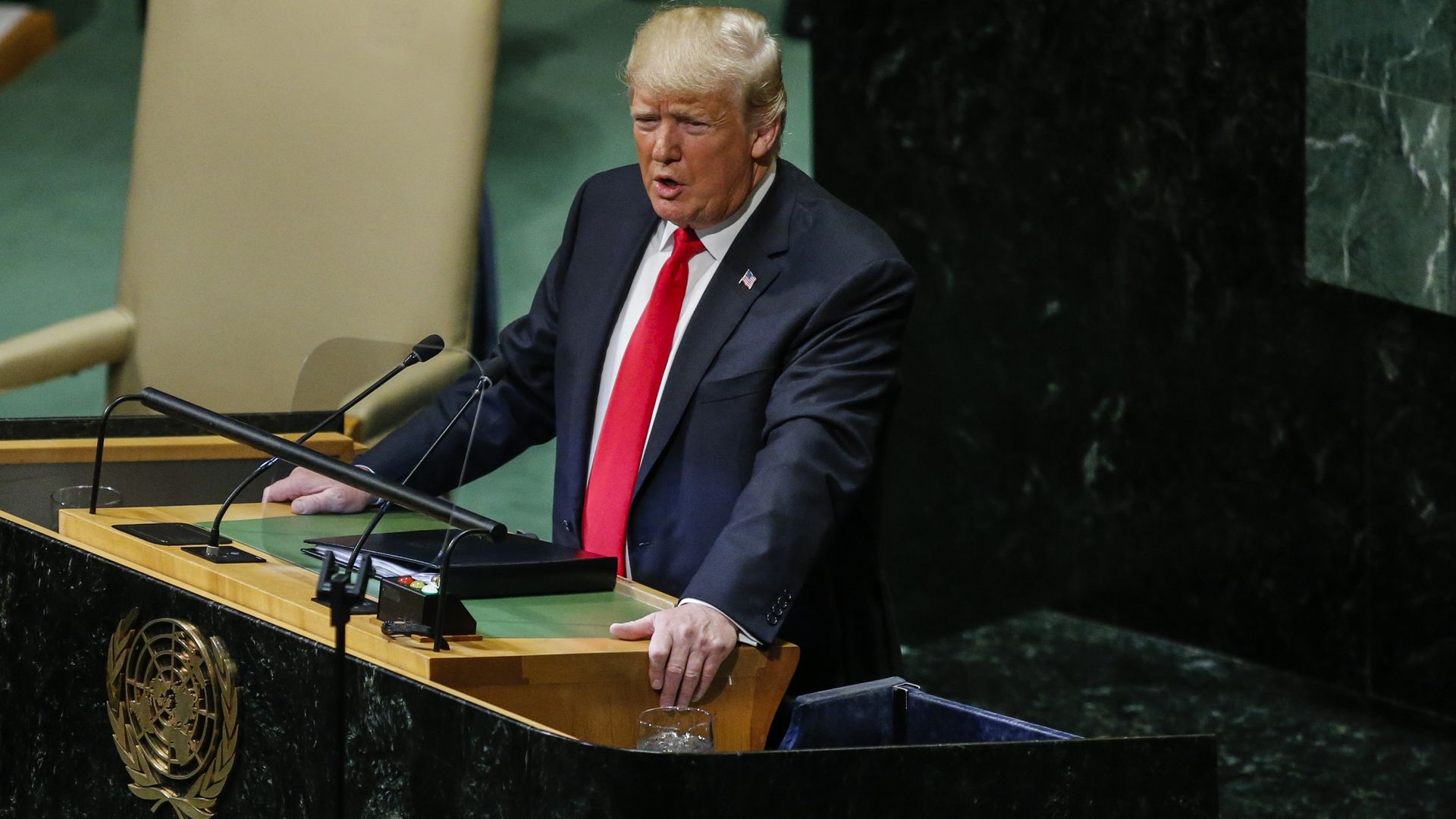
President Trump's blunt-force diplomacy at the United Nations yesterday reflected one of the quirks of his style on the world stage.
The big picture: He shuns European allies. Stunningly, he made zero mention of Britain or France, and his only mention of the Germans was to say that if they don’t change course, they’ll become "totally dependent on Russian energy." And he saves his sweetest words for individual world leaders — even adversaries, conveying his "great respect and affection" for his "friend" President Xi Jinping of China, and thanking North Korea's Kim Jong-un for his "courage."
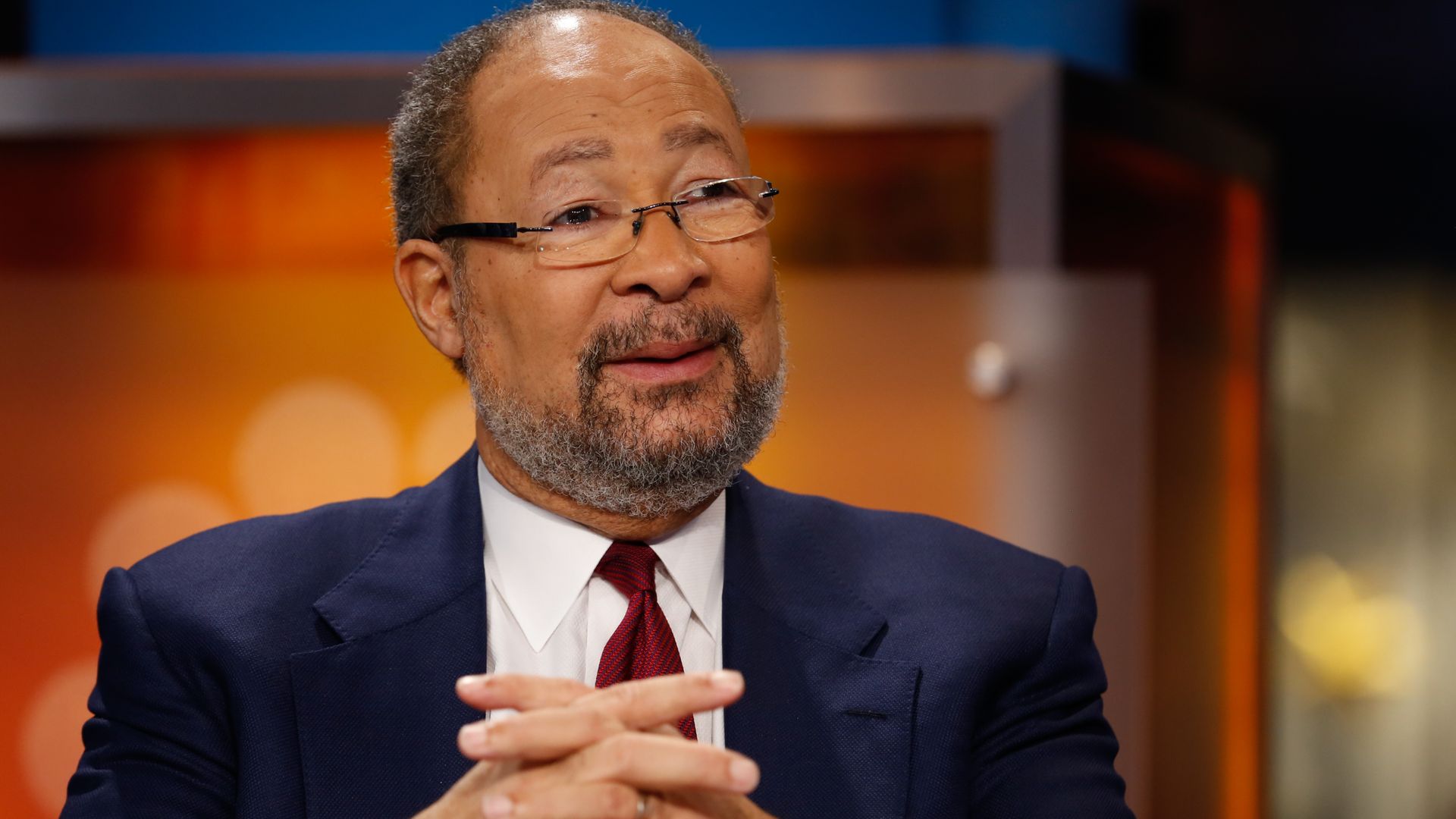
CBS has tapped Richard Parsons to serve as the board's interim chairman following the departure of longtime leader Les Moonves who was accused of sexual misconduct by multiple women, the Associated Press reports.
The details: Parsons was one of five added to CBS' board this month as an investigation into Moonves' actions continues, per the AP. He formerly served as a chairman of Time Warner and Citicorp. Two current board members are also stepping down.
The Trump administration is not only seeking what it calls fairer trade with Beijing, but much more — to upend the bedrock of the Chinese economy by forcing out the chain of manufacturing supply from the country, and pushing it elsewhere.
Why it matters: There are doubts about this end game of Trump's trade war. After decades of development and tens of millions of dollars of investment, few U.S. companies seem likely to move their manufacturing facilities out of China.
Despite topping earnings and revenue expectations, shares of Nike fell as much as 4% after the company reported first quarter results Tuesday.
By the numbers: Nike killed it in the North America market, raking in $4.14 billion in revenue vs. $4.09 billion expected. And that's without Nike's reported boost in online sales since its controversial ad featuring Colin Kaepernick. But investors are still concerned about higher production costs, and less-than-expected revenue in some international markets.
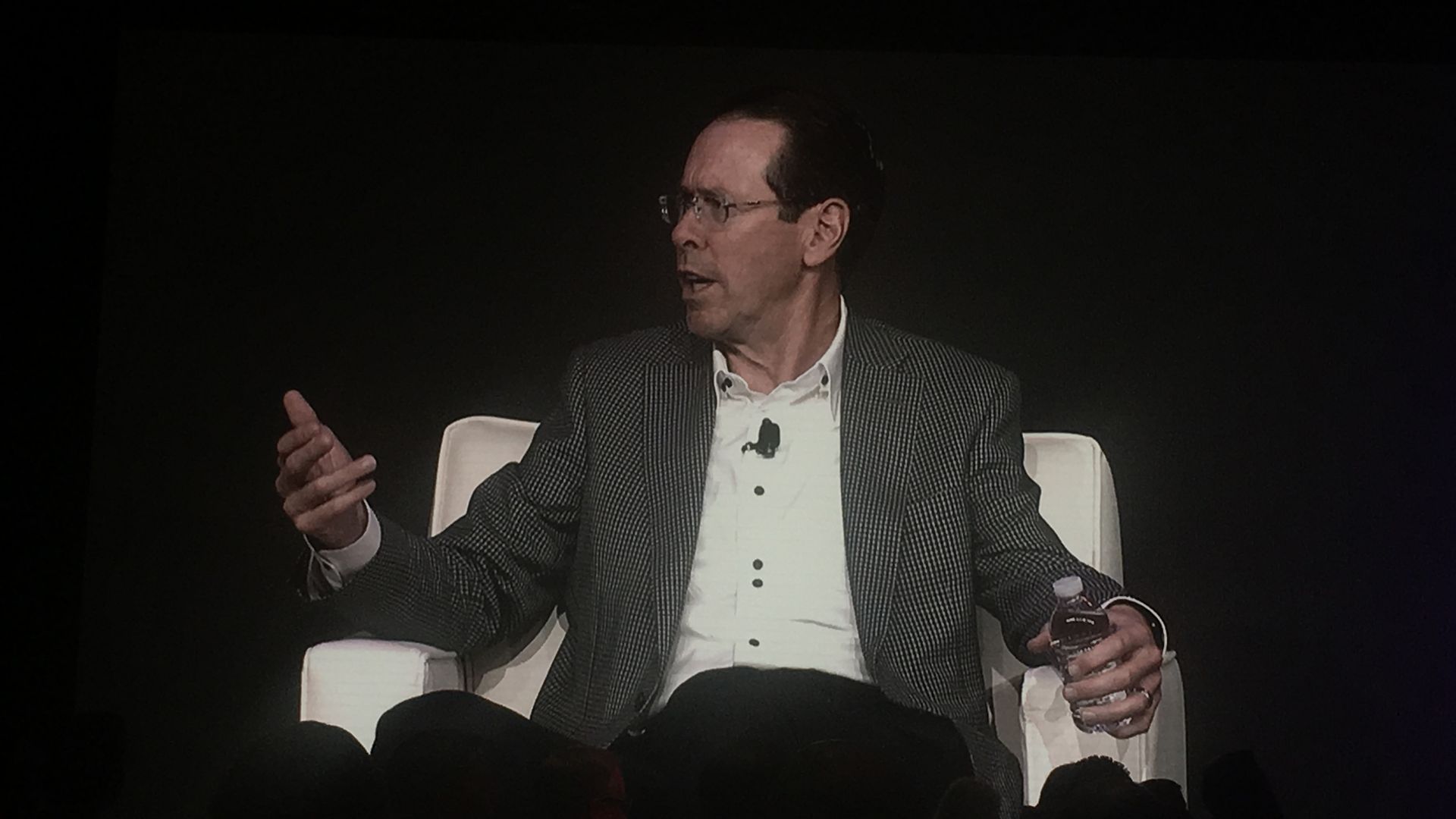
AT&T CEO Randall Stephenson says he hasn't seen any indiction that President Trump's dislike for CNN will impact future AT&T deals or regulation, explaining at the company's Relevance Conference Tuesday, "so far we've seen no evidence that that's the case... the contest is over and it seems that everybody is moving on."
Why it matters: President Trump's opposition to AT&T's historic $85 billion deal to acquire Time Warner was met with criticism due to his outward distaste for CNN. A sitting U.S. president is not supposed to meddle with regulatory affairs at independent agencies like the Justice Department.
A U.S. Navy warship was denied a request to dock in Hong Kong by the Chinese government amid a bitter trade war between the two nations, Reuters reports.
The timing: It comes one day after the U.S. issued a new round of tariffs against China, which levied its own round of retaliatory tariffs simultaneously. A Chinese Foreign Ministry spokesman said that previous requests for U.S. warships to dock in Hong Kong have been evaluated "case by case, in accordance with the principle of sovereignty and the detailed situation" when asked about the denial.
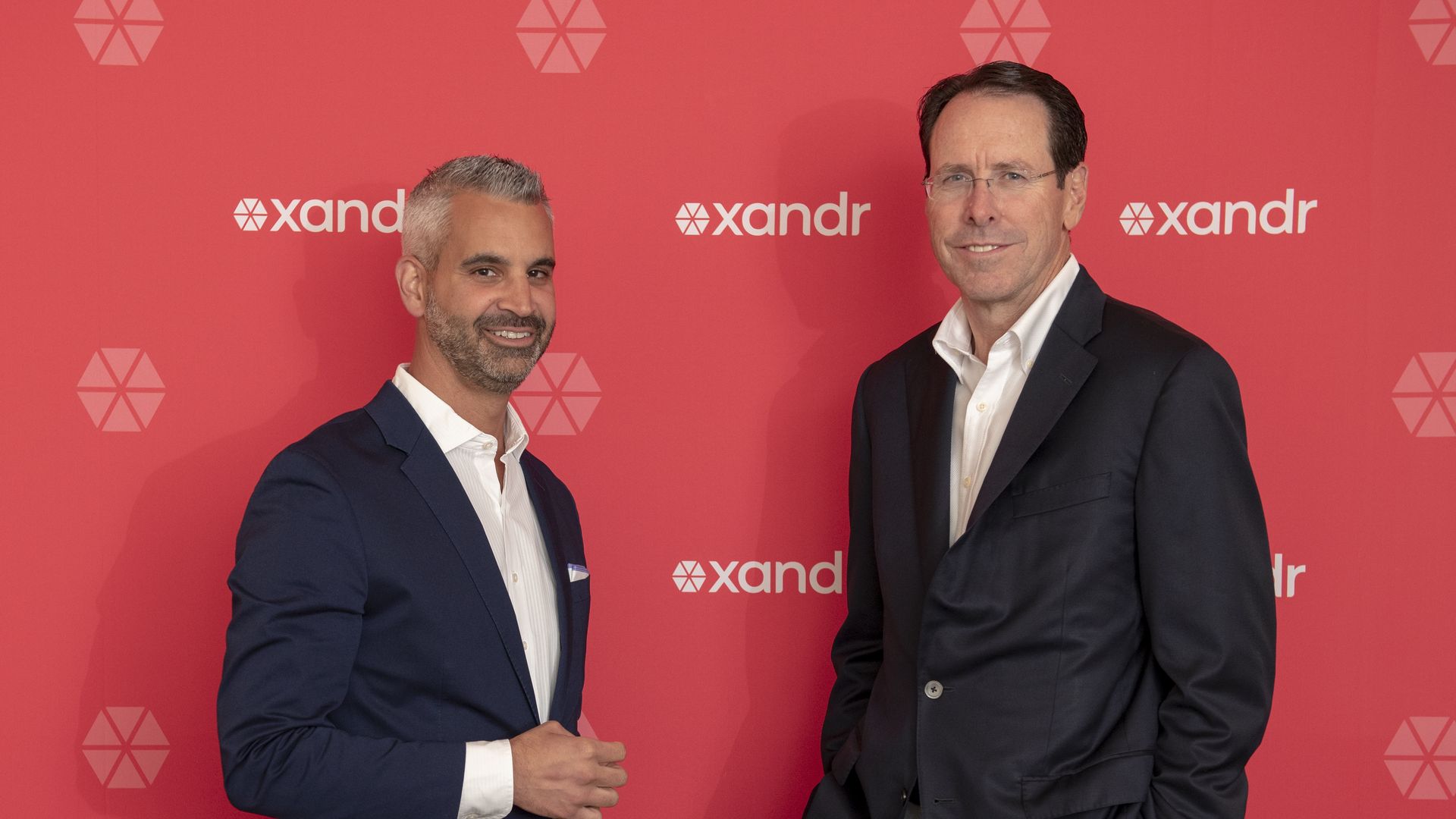
AT&T is naming its new advertising company "Xandr," combining AT&T's advertising infrastructure, as well as assets from its recent Time Warner and AppNexus acquisitions.
Why it matters: AT&T is hoping to bolster its advertising business to help subsidize Pay-TV losses as more people cut the cord.
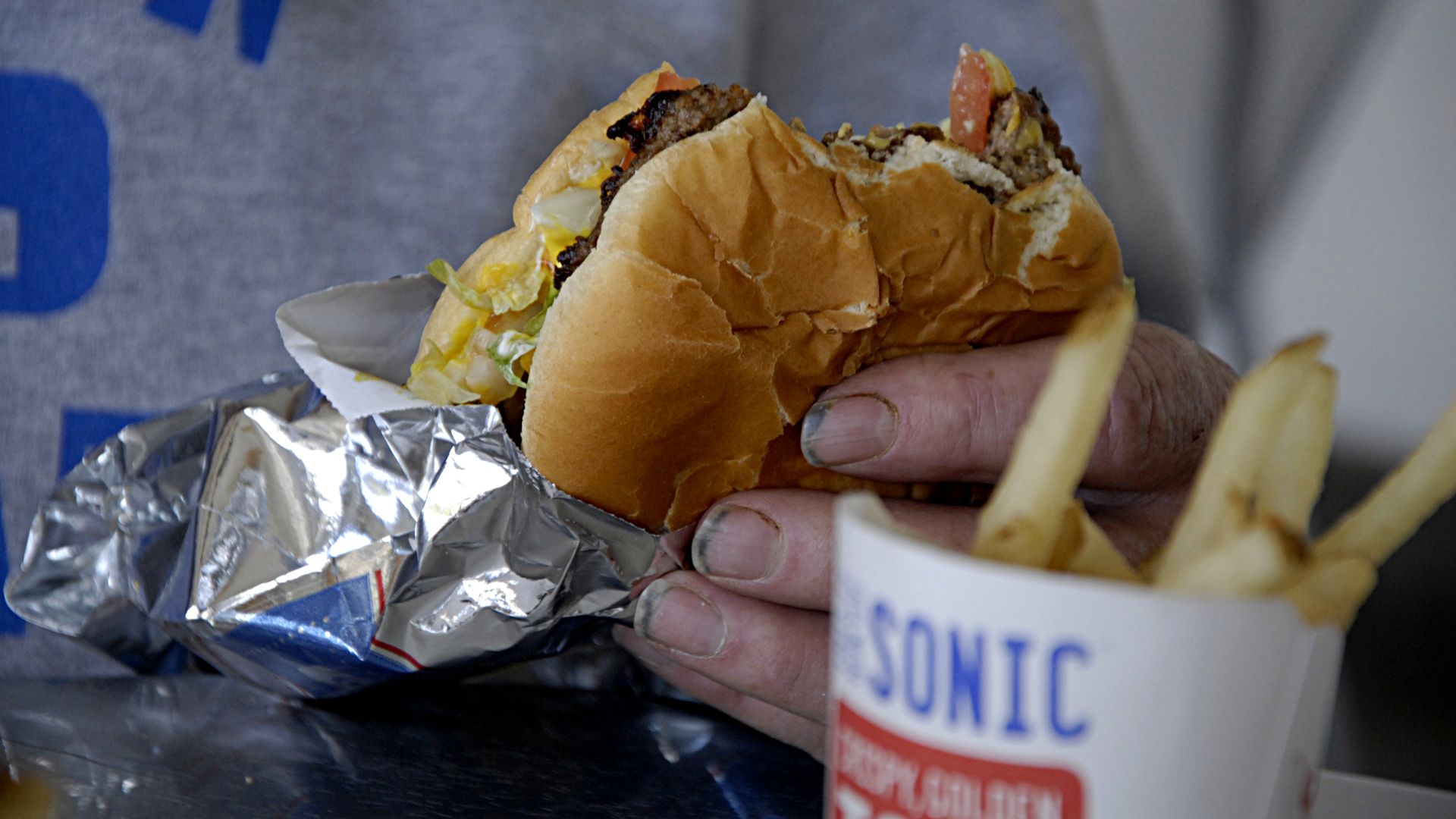
Fast food chain Sonic Corp. will be acquired by Inspire Brands, the parent company of Arby’s and Buffalo Wild Wings, in a deal worth $2.3 billion. Inspire Brands is partially owned by private equity firm Roark Capital.
Why it matters: Sonic is the latest restaurant to go private, following more intense competition in the fast food arena. The company has banked on drive-in nostalgia, but its shares have underperformed burger competitors like McDonald‘s and Red Robin.
Streaming revenues have reached an all-time high as more people pay for services like Spotify and Apple Music. Those types of services made up roughly 75% of all U.S. streaming revenue in the first half of this year, according to the latest estimates from the Recording Industry Association of America.
Why it matters: While the streaming economy has been a steal for consumers who can get access to millions of songs on-demand for less money per month than the cost of a CD-ROM, it's been difficult for rights holders and musicians, which is why so many of them lobbied for MMA.
The growth of addressable TV advertising (ads that can be digitally targeted by household) has become a powerful tool for midterm election advertisers.
Why it matters: Adoption of addressable TV has otherwise been moving rather slowly.
Major changes are underway in the very top ranks of the biggest broadcast networks, which despite ratings declines, still drive many millions of viewers and billions in revenue.
Why it matters: Network television was for years considered the bastion of news and entertainment, but it's facing massive viewership declines and is losing top talent to big tech companies, like Netflix and Amazon. Abrupt leadership exits are further compounding those problems.
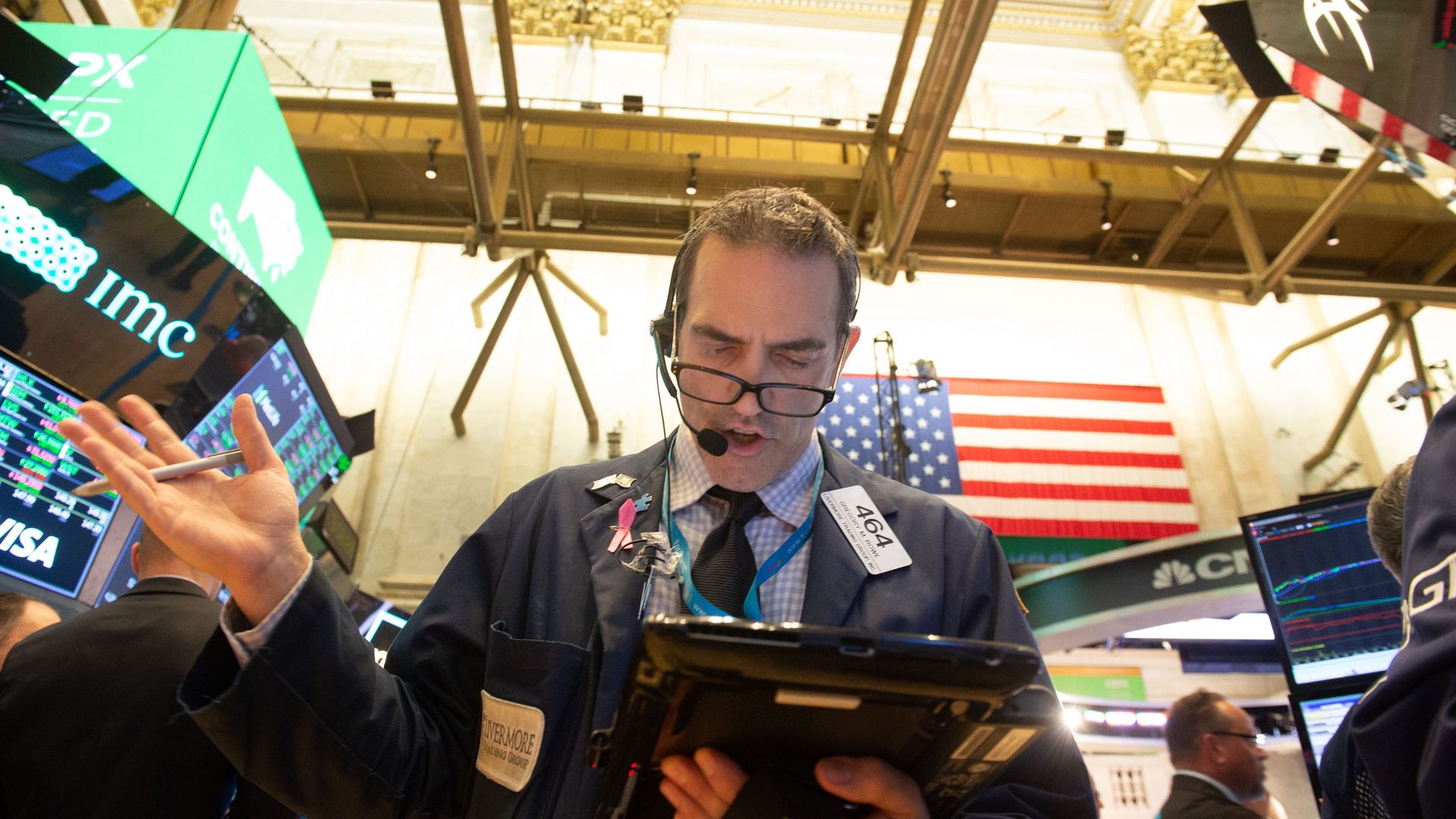
"North American companies unleashed a dealmaking spree totaling more than $50bn [yesterday], as executives ignored a pending trade war and uncertainty around US midterm elections to swallow European rivals in a series of industry-changing mergers," per the Financial Times (subscription).
Why it matters: "Boardroom confidence, cheap debt and record stock prices have spurred a wave of activity that left global dealmaking at a record high of $3.2tn in 2018. ... Companies are racing to remake themselves by snatching trophy assets or consolidating with rivals before the business cycle turns."
Spending on TV political advertising for the midterms will be nearly as high as presidential election spending two years ago, according to estimates from MAGNA.
Between the numbers: This year's midterm spend is up so much compared to the 2014 midterms due to more competitive races. The Cook Political Report, which ranks races by competitiveness, cites 95 House races as being "competitive" this year and eight Senate races as "toss-ups" compared to 68 House races being "competitive" at this time in 2014 and nine Senate races as "toss-ups."

/2018/09/26/1537971787199.gif?w=3840)